Your 13 Most Common Aruba Questions, Answered Honestly
Your 13 Most Common Aruba Questions, Answered Honestly
Aruba draws a lot of first-time Caribbean visitors — Americans especially, since it's a short direct flight from most East Coast cities. The same questions come up again and again, so here they are with straight answers.
Getting There and Entry
Q: Do you need a visa?
A: US, UK, EU, and Canadian citizens enter visa-free for up to 30 days (extendable). Aruba is part of the Kingdom of the Netherlands but runs its own immigration. Fill out the online ED card at edcardaruba.aw before arrival — it significantly speeds up the immigration line.
Q: What language do they speak?
A: The native language is Papiamento — a creole mix of Portuguese, Spanish, Dutch, and African languages. But English is universally spoken in tourist areas. Dutch is the official government language. Spanish is common due to proximity to Venezuela.
A few Papiamento words go a long way: "Bon dia" (good morning), "Bon tardi" (good afternoon), "Danki" (thank you). Locals genuinely appreciate the effort.
Q: Is Aruba in the hurricane belt?
A: No. Aruba sits at 12°N latitude, below the hurricane belt, just 29 km off Venezuela's coast. It has never had a direct hurricane hit in recorded history. Book a trip during traditional "hurricane season" (June-November) without a second thought.
Beaches
Q: Eagle Beach vs. Palm Beach — which one?
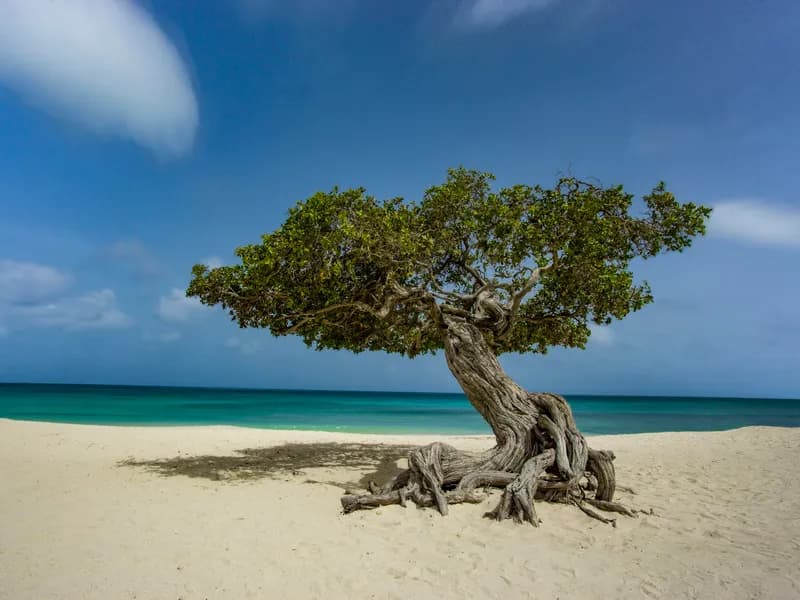
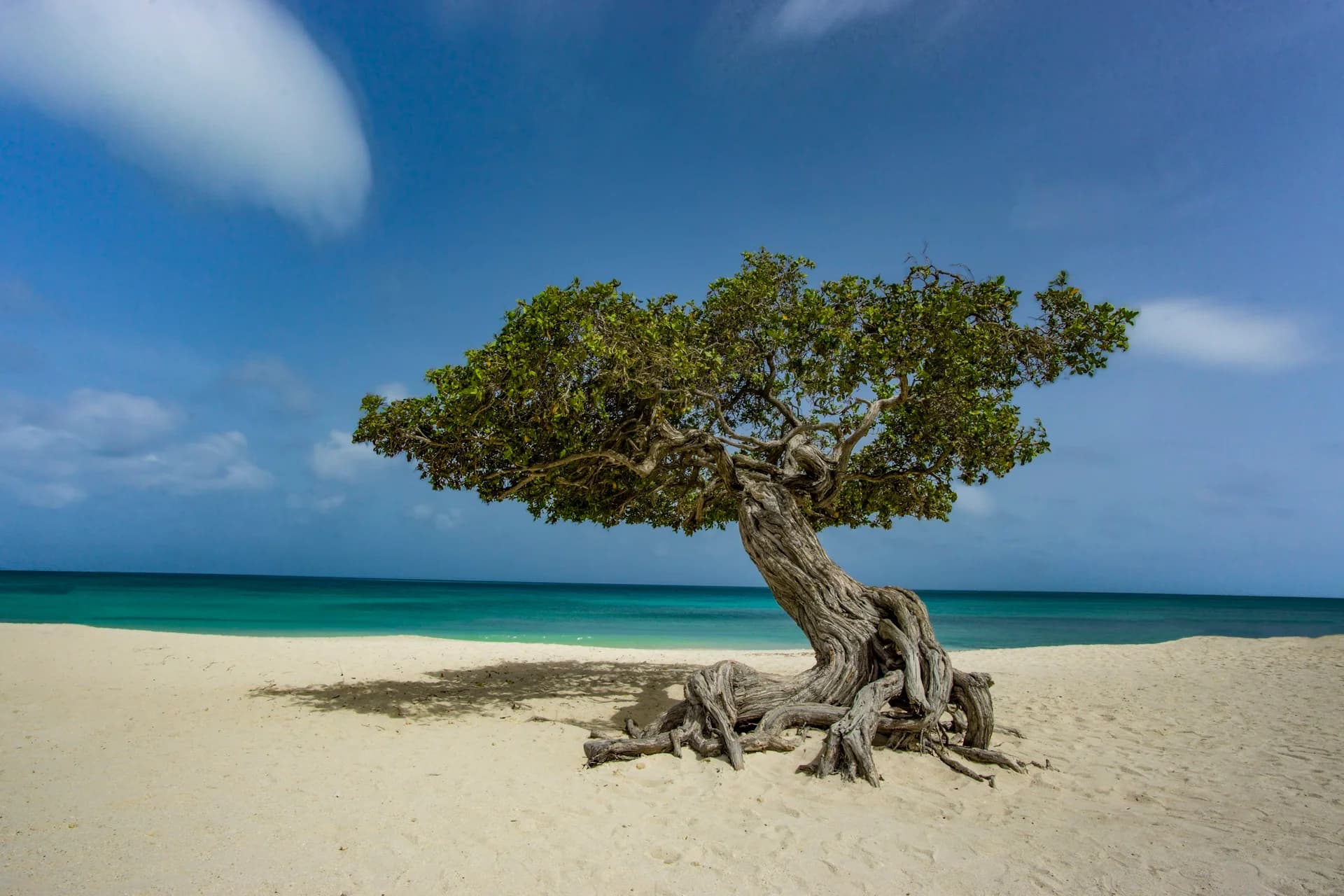
A: Eagle Beach for quiet beauty — wider, fewer resorts, famous wind-bent fofoti trees, more space. Palm Beach for action — resorts, beach bars, water sports, restaurants, nightlife walking distance.
If you have time for both, do both. If you pick one: Eagle Beach for couples and relaxation, Palm Beach for families and socializing.
Q: Is Flamingo Beach worth $125?
A: It depends what you value. The flamingos are real, beautiful, and will eat from your hand. The photos are Instagram gold. The beach is nice (not exceptional). The day pass includes boat transfer and a food/drink credit.
If flamingo photos are on your bucket list: yes, worth it. If you're budget-conscious or care more about natural experiences: put the money toward Arikok National Park plus a snorkel trip instead. The flamingos are managed, not wild — it's closer to a zoo encounter than a wildlife sighting.
Day passes are limited (30-50 per day) and sell out. Book early.
Q: Can you swim on the east coast?
A: No. The windward (east) coast has powerful currents and crashing waves. People drown here. Only swim at designated leeward (west) coast beaches — Eagle, Palm, Baby Beach, Arashi, Malmok. The Natural Pool (Conchi) is the one exception on the east side, and even there, stay out during rough seas.
Getting Around
Q: Do you need a rental car?
A: For the hotel zone and beaches: no. Arubus public buses connect Oranjestad and the resorts ($2.30 one way). Taxis work for short trips (agree on fare first — airport to hotel zone ~$25).
For Arikok National Park, Baby Beach, and the north coast: yes, rent a car ($40-60/day). For the Natural Pool specifically, you need a 4x4 or UTV ($150-250 half day).
Drive on the RIGHT. Roads are good. The island is small — 30 km long. You can drive end to end in 45 minutes.
Budget
Q: How expensive is Aruba?
A: Mid-range Caribbean pricing. Less expensive than Bermuda, TCI, or the Bahamas. More expensive than Dominican Republic, Jamaica, or Curacao.
| Item | Cost |
|---|---|
| Hotel (mid-range) | $150-400/night |
| Restaurant dinner | $20-45/person |
| Grocery beer | $2 |
| Bar cocktail | $10-14 (happy hour: $4-6) |
| Arikok entry | $11 |
| UTV rental (half day) | $150-250 |
| Snorkel trip | $40-70 |
| Daily budget (mid-range) | $100-150/person |
Q: What about tipping?
A: Most restaurants add a 15% service charge — check your bill before tipping extra. If it's not included, tip 15-18%. Hotel housekeeping: $2-3/day. Tour guides: $5-10. Taxi drivers: round up.
Activities
Q: What's the best snorkeling?
A: Malmok Beach / Boca Catalina — shallow reef close to shore, calm water, sea turtles common. Free shore entry. Arashi Beach is also excellent for shore snorkeling.
For a boat trip: the Antilla shipwreck (a WWII German freighter sunk in shallow water) is Aruba's most famous dive/snorkel site. Tours ~$45-70.
Q: Is the California Lighthouse worth visiting?
A: For 20 minutes, yes. Climb to the top for 360° island views (~$7 entry). The surrounding sand dunes are pretty. It's a great sunset spot. Just don't spend a whole afternoon there — pair it with Arashi Beach or a snorkel at Malmok, both nearby.
Q: What's the Bon Bini Festival?
A: A free weekly celebration every Wednesday evening at Fort Zoutman in Oranjestad. Local music (tumba, waltz, calypso), traditional dances, food stalls, and craft vendors. It's genuinely local, not a tourist performance. Starts around 7PM. Go hungry — the bitterballen and pastechi (meat-filled pastries, $2-3 each) are excellent.
Safety
Q: Is Aruba safe?
A: Yes — one of the safest Caribbean destinations. Violent crime against tourists is extremely rare. Standard precautions apply: don't leave valuables unattended on the beach, lock your rental car, avoid isolated areas at night.
The biggest safety risk is sunburn. The trade winds make the heat feel mild while UV radiation stays intense. Reapply sunscreen every 90 minutes or you will burn.
Q: Is the water safe to drink?
A: Yes. Aruba's desalination plant produces clean tap water. No need to buy bottled — this is one of the few Caribbean islands where that holds true.
Quick Reference
| Best For | Spot |
|---|---|
| Quiet beach | Eagle Beach |
| Active beach | Palm Beach |
| Kids | Baby Beach |
| Snorkeling (shore) | Malmok / Boca Catalina |
| Adventure | Arikok National Park |
| Sunset | California Lighthouse |
| Food | Oranjestad waterfront |
| Happy hour | Palm Beach strip, 4-7PM |
| Culture | Bon Bini Festival (Wed) |
| Day trip | Natural Pool (Conchi) via UTV |
Aruba is the Caribbean's reliable choice — hurricane-free, English-friendly, safe, and beautiful. It won't surprise you with cultural depth or off-the-beaten-path discoveries (Curacao next door is better for that). What it delivers, every single time, is excellent beaches, a desert landscape no other Caribbean island can match, and a wind that never stops blowing.