What Most Visitors Get Wrong About Cancún (Straight From Locals)
What Most Visitors Get Wrong About Cancún (Straight From Locals)
Maria Elena Caamal Pech has lived in Cancún since 2014, working first as a hotel concierge in the Hotel Zone before founding her own food tour company, Sabor Real Cancún, in 2019. Her take on the city — sharpened over years of tacos near Parque de las Palapas — is exactly the kind of local wisdom that turns a package holiday into a real trip.
Start with what makes the city worth loving.
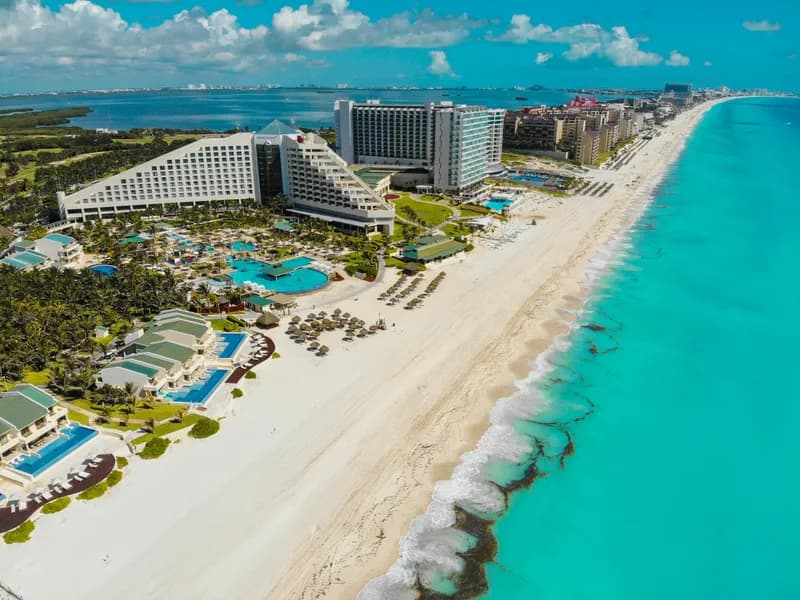
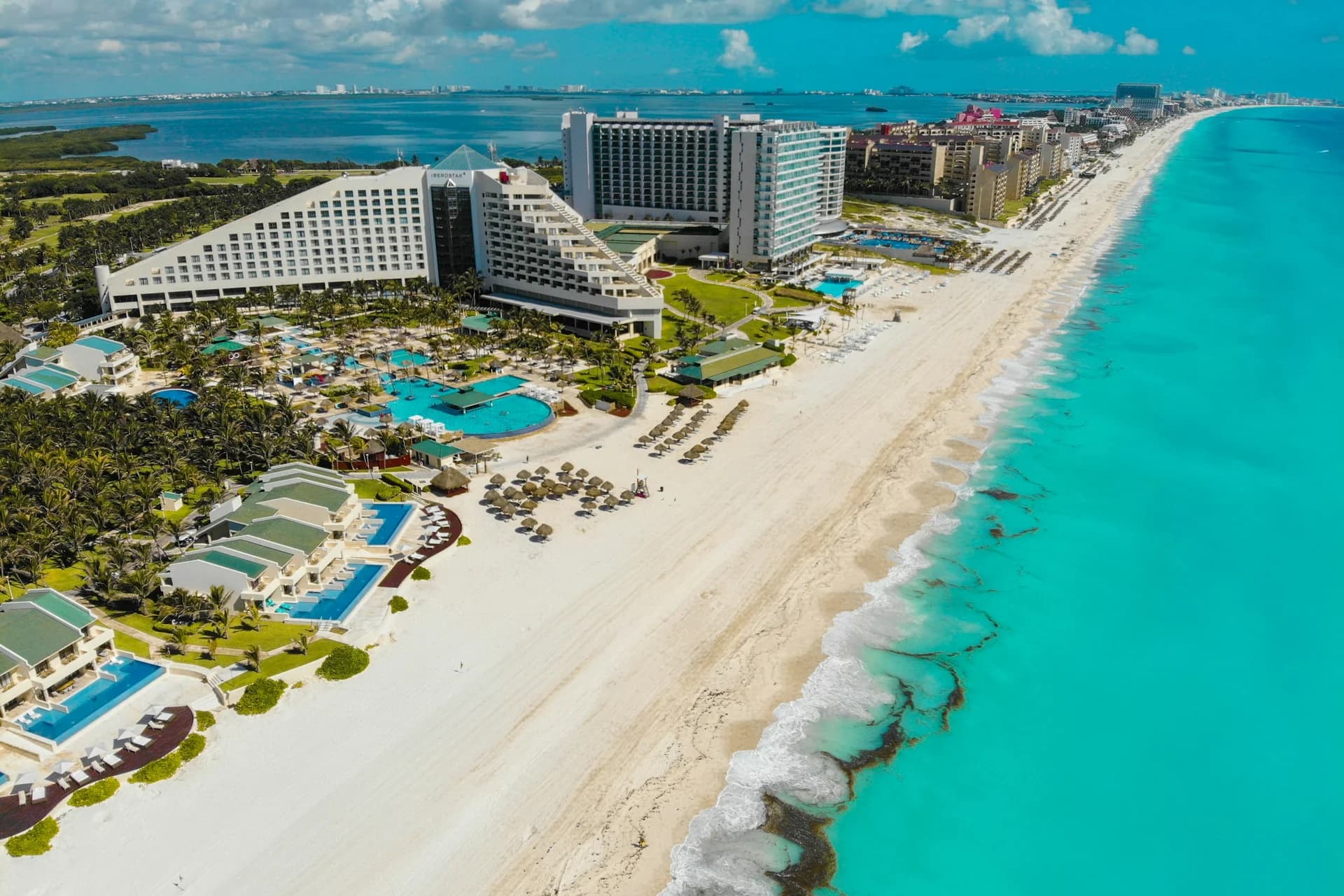
It begins with the light. Cancún's light is different from the rest of the Yucatán — something about the Caribbean reflection. At 6AM the water is an impossible shade of green-blue, and by noon it has turned completely turquoise. Even after a decade in the city, the view from the bridge over the lagoon is worth stopping for.
Then there's the food. Forget the assumption that Cancún means hotel buffets and overpriced shrimp cocktails. Downtown — where locals actually live — the food scene is extraordinary. You'll find Yucatecan, Oaxacan, Veracruzano, and Lebanese cooking here (there's a large Lebanese community that most visitors never hear about). The tacos al pastor at the stands near Parque de las Palapas at 11PM rank among the best in Mexico.
The single biggest mistake tourists make.
Never leaving the Hotel Zone. Ask any longtime resort concierge and you'll hear the same number: roughly 70% of guests never cross the bridge to downtown. They spend a week eating hotel food, lying on a hotel beach, and fly home believing they've experienced Mexico. What they actually experienced was a resort that happens to sit in Mexico.
The R-1 bus costs 12 pesos — less than a dollar — and runs straight from the Hotel Zone to downtown. Thirty minutes, and you're in a completely different world: real food, real prices, real people.
Where to go for that first meal downtown.
Start at Parque de las Palapas. It isn't a restaurant — it's a park ringed with food stalls. Begin with marquesitas, crispy rolled crepes filled with Edam cheese and Nutella or cajeta, for maybe 30 pesos. Then head to whichever taquería has the longest line of locals, because in Mexico that line is how you choose. A plate of tacos al pastor with everything runs 40-60 pesos.
For a sit-down meal, Labna on Avenida Nader has been serving authentic Yucatecan fine dining since 1990. The queso relleno and sopa de lima are the real thing, and mains land around 200-350 pesos — still half what you'd pay in the Hotel Zone for lesser food.
Mercado 28 — tourist trap or worth it?
Both, honestly. The souvenirs are marked up for visitors, so haggling is essential: start at 40% and work your way up. But the food stalls in the back are the real deal — the ladies making cochinita pibil tortas treat everyone the same, tourist or local. For souvenirs, Mercado 28 does have genuinely good vanilla, silver, and hammocks if you know how to negotiate.
For the true market experience, though, go to Mercado 23. That's where locals shop. No souvenirs — just produce, chiles, achiote paste, and abuelitas selling tamales out of coolers. Chaotic and wonderful.
The cenote most tourists skip.
Everyone crowds Ik Kil because it sits next to Chichén Itzá, and it is beautiful — no argument there. But Cenote Multun-Ha near Cobá is the local favorite: a serene open cavern with turquoise water and tree roots trailing down into it, and entry runs only about 100 pesos. On a weekday morning, you might have it entirely to yourself.
The cenotes along the road between Tulum and Cobá are all remarkable, and there are hundreds of them. If you spot a hand-painted sign on the highway, pull over. Some of the finest cenotes in the Yucatán are run by families charging 50-100 pesos, and it's just you and the cave — and a few hours south, the lagoon at Bacalar layers seven shades of blue over its own sunken cenotes with almost none of the crowds.
How bad is the timeshare pitch, really?
Bad. Someone at the airport offers a "free tour" or "discounted activities," and it turns into a 3-4 hour high-pressure sales presentation instead of a vacation. The discounts at the end rarely make up for the hours lost.
The move is simple: say "no gracias" and keep walking. Don't make eye contact, don't slow down. The reps are trained to be persistent, and engaging at all costs you ten minutes.
What tourists get wrong about safety.
Two things. First, the Hotel Zone and downtown tourist areas are genuinely safe — police everywhere, cameras everywhere. The violence that makes the news almost never involves tourists and unfolds in areas visitors would never go. Walking home through downtown at midnight feels completely fine.
Second, people let their guard down at the beach. Don't leave your phone and wallet on a towel and go swimming. Skip freestanding ATMs and use the ones inside banks. Basic common sense that applies to any big city.
The best time to visit that isn't high season.
September. Everyone points to December through April — dry season, perfect weather — and they're right. But September is gorgeous. It's technically hurricane season, which mostly means a 20-minute afternoon rain shower. The water still sits at 28°C, hotels drop to half price, the restaurants aren't packed, and you can claim a spot on the beach at Playa Delfines without arriving at dawn.
Better still, the cenotes are at their fullest and most dramatic after the rains.
With only 48 hours, here's the plan.
Day one: morning at Playa Delfines (sunrise if you can manage it — no line for the Cancún sign), then the R-1 bus downtown for a late breakfast at Parque de las Palapas. In the afternoon, take the ferry to Isla Mujeres, rent a golf cart, circle the island, eat at Rooster Café on Playa Norte, and catch the sunset from Punta Sur before returning on the evening ferry.
Day two: a MUSA snorkeling tour in the morning (those underwater sculptures are like nothing else on earth), then lunch at a downtown taquería, and an afternoon at either Mercado 28 or a cenote near Puerto Morelos. Farewell dinner at La Habichuela.
Skip Chichén Itzá on a 48-hour trip — it deserves a full day, and the 5-hour round trip eats too much of your time.
What to understand about Yucatecan culture.
The Yucatán isn't "Mexican" in the way most Americans imagine. It has its own culture, its own cuisine, its own identity — much as the colonial highlands around San Miguel de Allende can feel like a different country again. The food carries Mayan traditions and Dutch colonial cheese (that's where the Edam in marquesitas comes from). Locals say "xiik" instead of "sí" sometimes, and speak their own version of Spanish.
And the Maya aren't a historical curiosity. Millions of Mayan people live in the Yucatán today. At Chichén Itzá, the vendors selling hammocks and jaguar whistles are Mayan. When you eat cochinita pibil, you're eating Mayan-origin food. This isn't a dead civilization — it's a living culture.
If living indigenous culture draws you, Cusco offers a similar experience — Inca heritage runs through everything in Peru, from the stone foundations to the language.
The one thing worth changing about tourism in Cancún.
Rethink the all-inclusive resort. It's a hard thing to say about a former employer, but those resorts create a bubble that actively discourages people from experiencing the real Cancún. Someone flies four hours to Mexico and then spends a week eating hamburgers by a pool — tipping the pool boy and the bartender, but never spending a single peso downtown where the money actually helps local families.
So come to Cancún — but leave the resort. Take the bus. Eat the street food. Talk to people. Get a little lost downtown. That's when the real trip starts.
For more practical tips, check out our complete Cancún guide or read our Cancún vs Playa del Carmen comparison.
Sabor Real Cancún runs daily food tours of downtown Cancún starting from Parque de las Palapas. Tours cost ~800 MXN per person and include 6-8 food stops.