
Carmel-by-the-Sea for Art and Architecture Lovers
Carmel-by-the-Sea for Art and Architecture Lovers
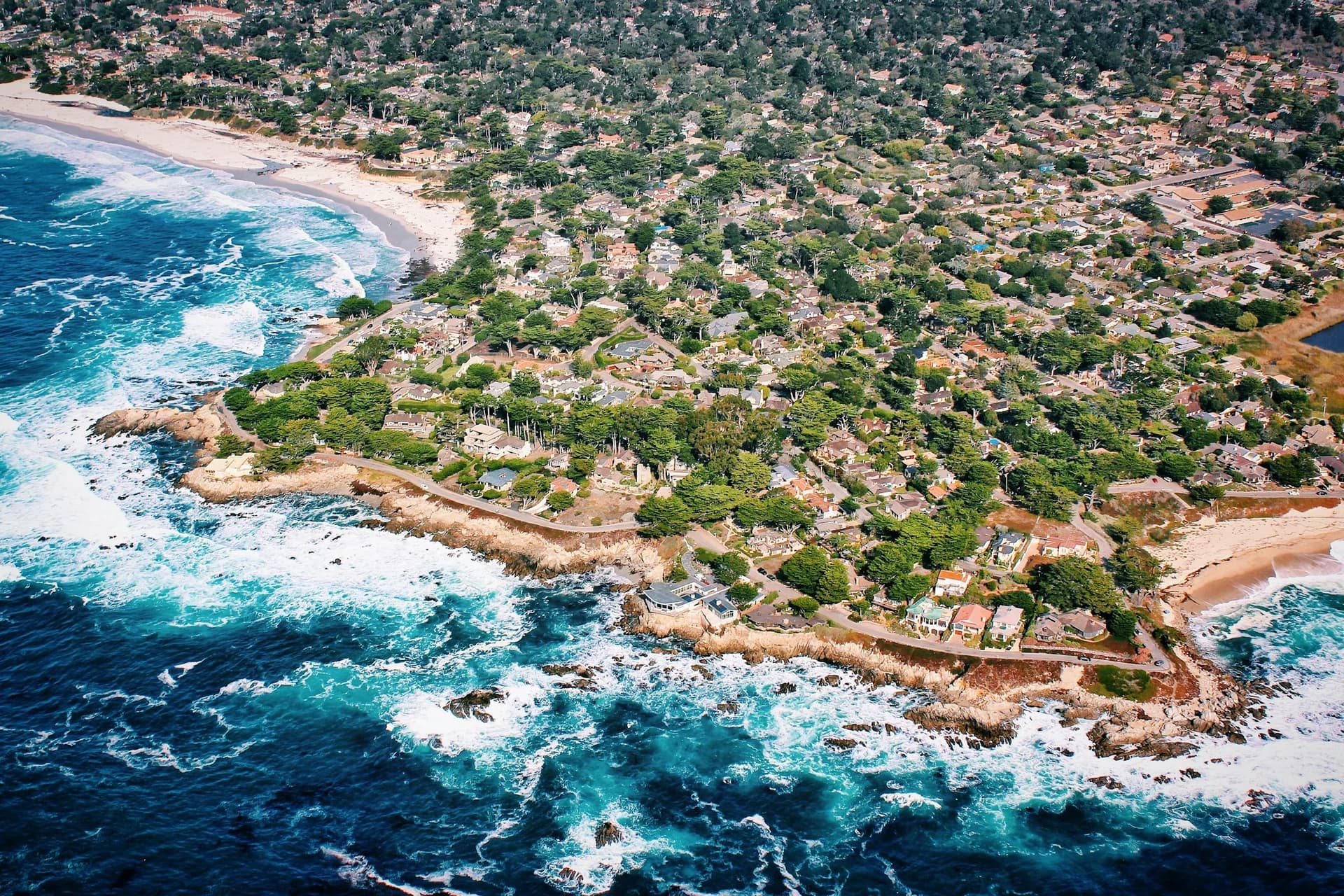
Carmel-by-the-Sea has more art galleries per capita than almost any town in America. Over 100 galleries packed into one square mile, alongside Hugh Comstock's fairy-tale cottages from the 1920s, one of California's most beautiful Spanish missions, and a photography legacy that includes Edward Weston and Ansel Adams.
For anyone who thinks a beach town is just surfboards and fish tacos, Carmel is the corrective.
The Comstock Cottages: Architecture as Whimsy
In the 1920s, builder Hugh Comstock designed a series of cottages for his wife's doll-making business that looked like they'd escaped from a storybook. Curved rooflines, hand-carved doors, stone chimneys, and gardens that seem to have grown rather than been planted.
Key cottages to find:
- Hansel & Gretel (Torres & 6th) — The original, now a private residence
- The Tuck Box (Dolores & 7th) — Now a tearoom, still perfectly preserved
- Comstock Studio (Lincoln & 6th) — Where he worked
The Carmel Heritage Society walking tour map covers 20+ cottages. Self-guided, free, and the best architectural walk in California that doesn't involve a Frank Lloyd Wright house. Allow 1.5 hours.
What makes these buildings special isn't just the design — it's that the town never replaced them. No developer bulldozed Hansel & Gretel for condos. Carmel's municipal code essentially freezes the village in a permanent state of charm, which is either preservation or quaintness depending on your perspective. I lean preservation.
The Gallery Scene
Ocean Avenue and the blocks surrounding it contain over 100 galleries ranging from plein air landscape painting to contemporary sculpture. The concentration is remarkable for a town of 3,900 people.
Highlights:
- Weston Gallery — Photography gallery featuring Edward Weston, Ansel Adams, and contemporary photographers. The Adams prints of Yosemite and the California coast are exquisite.
- Carmel Art Association — The oldest professional artists' organization in California (est. 1927). Member shows rotate monthly. Free entry.
- Galerie Plein Aire — Contemporary California landscape painting at its finest.
- Richard MacDonald — Large-scale figurative bronze sculptures. The gallery on Lincoln is gallery-as-experience.
Most galleries are free to browse. Thursday evenings in summer often feature gallery walks with refreshments.
Carmel Mission Basilica
Founded by Father Junipero Serra in 1770, the mission is one of the most architecturally significant in California. The Moorish-influenced star window, the courtyard garden, and the barrel-vaulted ceiling are stunning. Serra is buried here.
Entry $10. Open daily 9:30AM-5PM. Allow 1 hour. The Munras Museum inside has Spanish colonial artifacts and a replica of Serra's spartan sleeping cell.
As architecture, it's a masterclass in how Spanish colonial design adapted to California materials — adobe walls, clay roof tiles, native stone. The bell tower against a blue sky is the photograph.
Tor House: Robinson Jeffers' Stone Tower
Poet Robinson Jeffers built this stone house and tower by hand (literally, stone by stone) on Carmel Point between 1919 and 1962. Tours run Friday and Saturday by reservation ($12). The tower has views of Point Lobos and the Pacific that explain everything about Jeffers' nature poetry.
This is architecture as autobiography — a man building his own monument, one granite boulder at a time. It's one of the most personal houses in America.
Photography Heritage
Carmel has deep ties to American photography. Edward Weston lived and worked here from the 1930s until his death in 1958. Ansel Adams was a frequent visitor. The Weston Gallery on Sixth Avenue displays original prints from both, alongside contemporary work.
Point Lobos, 4 km south, was Weston's primary subject for decades — the same cypress trees, the same rocky coast, the same quality of light that drew him here in the first place. Walking the Bird Island Trail with Weston's images in mind is a photography education.
The Architecture of Restraint
What makes Carmel architecturally unique isn't any single building — it's the municipal philosophy. No neon signs. No street numbers. No traffic lights. No chain stores. Building heights are limited. Trees are protected by law. The result is a village that looks substantially the same as it did 50 years ago.
This isn't accidental. Carmel has been fighting for its character since the 1920s, when artists and writers (including Jack London and Mary Austin) established a bohemian colony here specifically because of the natural beauty. The town's strict codes are their legacy.
Practical Tips for Art Lovers
- Allow a full day for galleries and architecture combined
- The Carmel Art Walk (Thursday evenings in summer) is the best gallery event
- Weston Gallery requires a knock on the door — ring the bell, it's intentional
- The mission is less crowded before 11 AM
- Tor House tours book up quickly — reserve online at torhouse.org
- Point Lobos parking fills by 10 AM on weekends — arrive early
- Bring a good camera — the light in Carmel is extraordinarily photogenic
Carmel-by-the-Sea was built by artists and it still runs on their principles: beauty matters, charm is worth protecting, and the best things are handmade. The 100+ galleries, the Comstock cottages, the mission, and the Tor House are all expressions of the same idea — that a town can be a work of art if the people who live there insist on it.


