Charleston in Spring: Why March Through May Is the Only Time to Go
Charleston in Spring: Why March Through May Is the Only Time to Go
Go to Charleston in summer and you'll spend three days sweating through your shirt, swatting mosquitoes, and paying full price for the privilege. Go in March, and it's a different city entirely.
Spring in Charleston isn't just the best season. It's when the city becomes the place everyone photographs but few actually experience.
Why This Season
Charleston's spring is a convergence of everything working at once: the azaleas bloom (late March through April), the temperature sits between 20-28°C, the humidity hasn't arrived yet, and the city's gardens — Magnolia Plantation, Middleton Place, Hampton Park — are at their absolute peak.
Summer (June-September) brings 35°C heat with 80%+ humidity that makes walking the historic district genuinely uncomfortable. The mosquitoes in summer are aggressive enough to file taxes. Winter is mild but the gardens are dormant and some outdoor restaurants close.
Spring gives you Charleston as it's meant to be experienced: outdoors, walking, with the windows down.
Weather Breakdown
| Month | Avg High | Avg Low | Rain Days | Humidity |
|---|---|---|---|---|
| March | 20°C (68°F) | 10°C (50°F) | 8 | 62% |
| April | 24°C (75°F) | 13°C (56°F) | 7 | 60% |
| May | 28°C (82°F) | 18°C (64°F) | 8 | 66% |
March can be cool, especially in the evenings — bring layers. By May, it's warming up but still manageable. April is the sweet spot: warm days, cool evenings, minimal rain.
Spring Events and Festivals
Spoleto Festival USA (Late May - Early June)
Seventeen days of opera, theater, dance, classical music, and visual art across venues throughout the city. Founded in 1977, Spoleto is one of America's premier performing arts festivals. Tickets: $25-100+ per event.
The companion festival — Piccolo Spoleto — runs simultaneously with hundreds of free and low-cost performances, art shows, and events.
Charleston Wine + Food Festival (March)
Four days of culinary events featuring top chefs from around the country alongside Charleston's own James Beard-winning talent. Tasting events, dinners, demonstrations. Tickets sell out fast — book in January.
Charleston Farmers Market (April - November)
Every Saturday, 8AM-1PM in Marion Square. Local produce, Lowcountry specialties, benne seed wafers, sweetgrass baskets, and hot boiled peanuts. Free to attend.
Azalea Season (Late March - April)
Magnolia Plantation's gardens explode with azaleas in late March. The reflections in the cypress swamp are ridiculous — the kind of scene that looks photoshopped in real life. Entry: $20 grounds. Go on a weekday morning to beat the weekend crowds.
Seasonal Food
Spring is when Charleston's Lowcountry cuisine is at its best:
Shrimp season opens in May. Local white shrimp — caught in the tidal creeks around the barrier islands — starts appearing on restaurant menus. The difference between local shrimp and the frozen kind is like the difference between a fresh tomato and ketchup.
She-crab soup reaches peak season in spring when the crabs are full of roe. Rich, creamy, sherry-laced. The Ordinary (oyster bar on King Street) serves one of the best versions: $14.
Strawberry season hits in April. South Carolina strawberries are sweeter and more fragrant than California berries. Find them at the farmers market or order strawberry shortcake at any Lowcountry restaurant.
Oyster season winds down by May, so early spring is your last chance for local oysters until fall. Pearlz Oyster Bar does a raw bar with Lowcountry oysters from $2 each at happy hour.
What Spring Does to Gardens
This is the real reason to time your visit for spring. Charleston's plantation gardens are nationally renowned, and March through May is when they justify their reputation.
Magnolia Plantation (15 min from downtown): America's oldest public gardens, established 1676. The azalea garden in late March-April is extraordinary — thousands of plants in hot pink, white, and coral reflected in black cypress-swamp water. The Audubon Swamp Garden boardwalk is stunning. Entry: $20 grounds, +$8 house tour, +$8 boat tour.
Middleton Place: 65 acres of the oldest landscaped gardens in America. Camellias bloom January-March, azaleas March-April, roses May-June. Entry: $29.
Hampton Park (free): the city's largest park, 2 miles from downtown. Local joggers, dog walkers, and some of the oldest live oaks in the city. Spring wildflowers line the paths.
Packing for Spring Charleston
- Light layers (cotton, linen — it can be 15°C in the morning and 27°C by afternoon)
- Walking shoes (cobblestone streets are uneven)
- A light rain jacket (spring showers are brief but real)
- Sun hat and sunscreen (the sun strengthens quickly in April-May)
- Something smart-casual for dinner (collared shirt for upscale restaurants)
- Bug spray starting in May (mosquitoes arrive with the warmth)
Crowd Levels and Pricing
Spring is Charleston's peak season, so prices run higher than winter — but the experience justifies it:
| Category | Winter (Dec-Feb) | Spring (Mar-May) |
|---|---|---|
| Historic district hotel/night | $120-220 | $180-350 |
| B&B/night | $150-280 | $220-400 |
| Restaurant reservations | Walk-in possible | Book 1-2 weeks ahead |
| Plantation gardens crowds | Light | Moderate-heavy |
Book accommodations at least 3-4 weeks ahead for April-May. Spoleto week (late May) sells out months in advance.
Budget tip: weekday visits (Tuesday-Thursday) in March or early April have the best weather-to-crowd ratio. The azaleas are blooming, the festivals haven't started yet, and you can walk into most restaurants without a reservation.
A Perfect Spring Day in Charleston
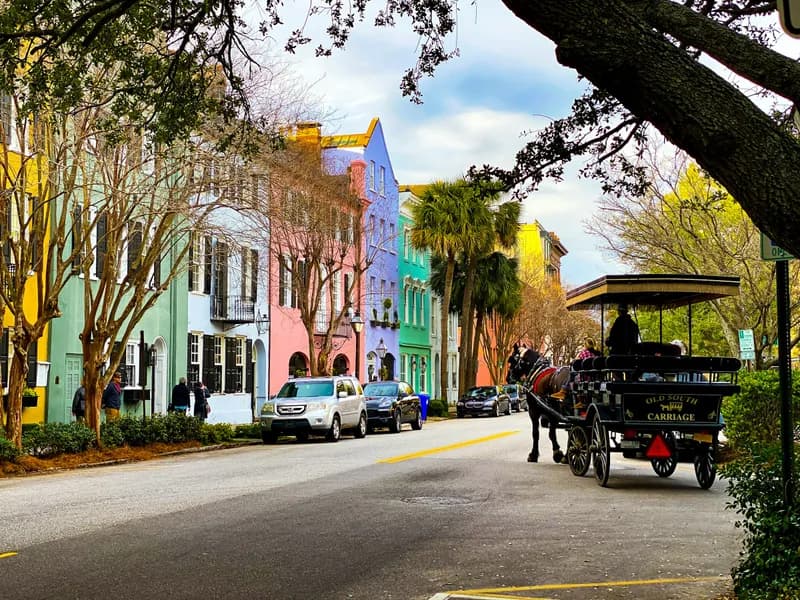
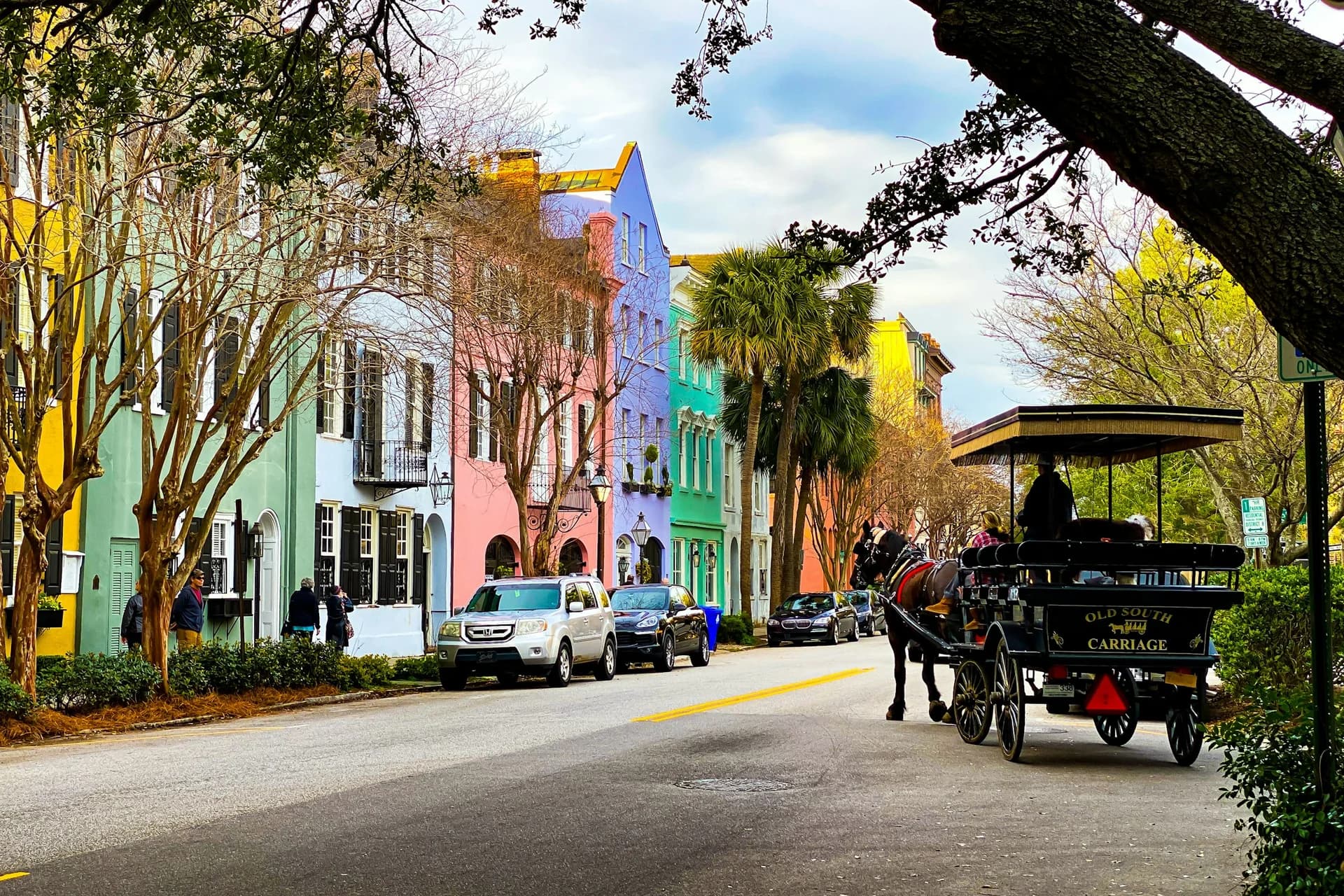
7:30AM: Walk Rainbow Row on East Bay Street in the morning light. The east-facing pastel facades glow golden at this hour, and almost no one else is there.
8:30AM: Coffee and a pastry at Brown Dog Bakery on Cannon Street ($5-7). Sit outside.
9:30AM: Walk the Battery promenade along the harbor. The harbor air is cool in the morning and the antebellum mansions along South Battery are at their most photogenic.
11AM: Magnolia Plantation. Spend 2-3 hours in the gardens. The Audubon Swamp Garden boardwalk is the highlight. If the azaleas are blooming, the reflections in the black water are worth every penny of the $20 entry.
1:30PM: Lunch at Husk. Farm-to-table Lowcountry cuisine in a restored 1893 Queen Anne house. The menu changes daily based on local sourcing. Lunch mains: $18-28. Reservation recommended, but lunch is easier to snag than dinner.
3PM: Charleston City Market. Four blocks of local crafts. Watch the Gullah-Geechee sweetgrass basket weavers — a tradition connecting back to West African rice culture. Baskets start at $50 for small pieces.
5PM: Cocktails at The Rooftop at The Vendue hotel. 360-degree views of the harbor and historic district. Spring evenings are perfect for rooftop drinking — warm enough for short sleeves, cool enough that you don't melt into your chair.
7:30PM: Dinner at FIG (Food Is Good) on Meeting Street. Seasonal Lowcountry cooking that's won James Beard awards. Reserve 2 weeks ahead for spring. Tasting menu: $65-85.
9:30PM: Walk the historic district after dinner. The gaslights on the side streets create a golden glow. Spanish moss catches the breeze. Spring evenings in Charleston smell like jasmine and salt air.
This is the city at its best. And it only happens for about eight weeks a year. For more insights, check out our Charleston's Food Culture. For more insights, check out our [Charleston vs Savannah](/blog/charleston-vs-savannah-southern-cities-compared) comparison.