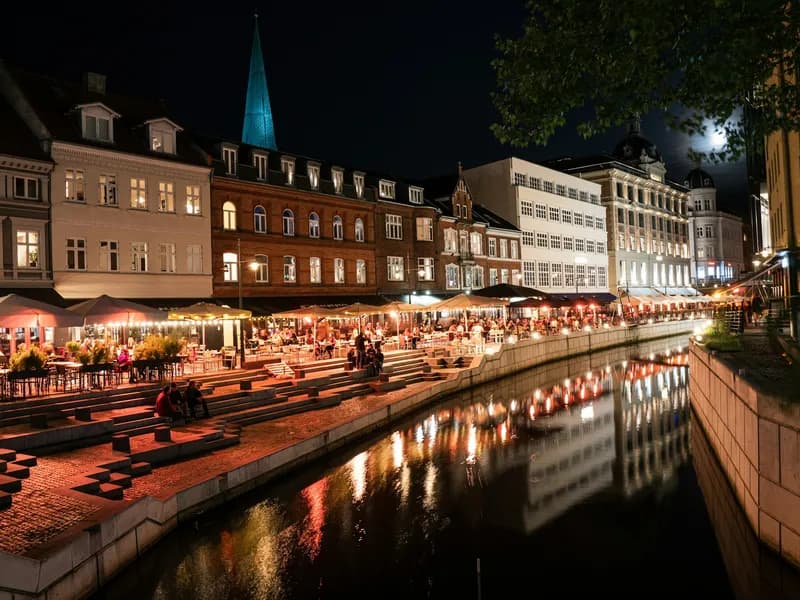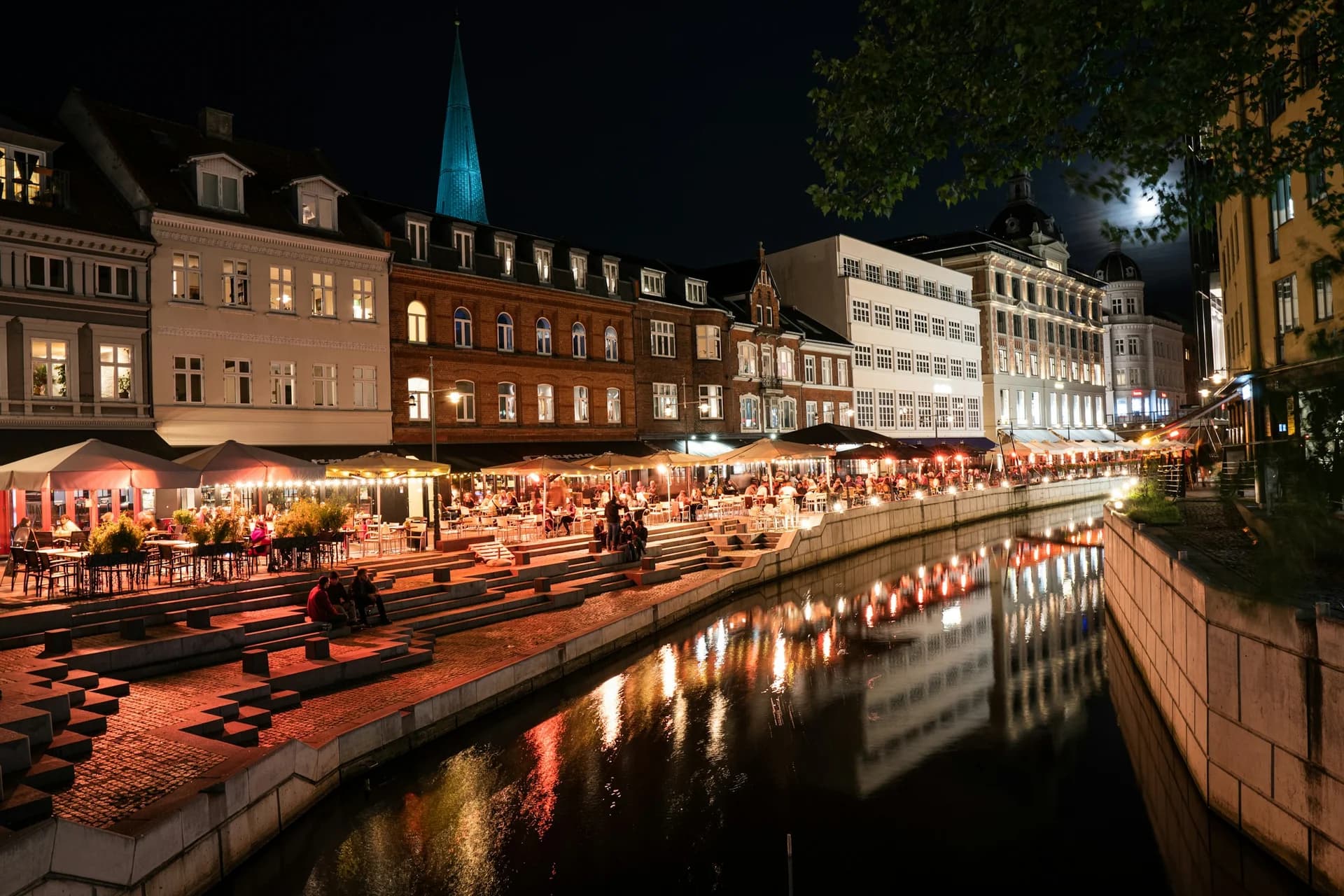
The Complete Aarhus Travel Guide: Denmark's Best-Kept Secret
The Complete Aarhus Travel Guide: Denmark's Best-Kept Secret
Aarhus is the city Danes send you to when they want you to see the real Denmark. Copenhagen gets all the press, all the flights, all the Instagram attention — but ask a local where the country's true character lives, and the answer points north to Jutland. Give Aarhus three days and the reasoning becomes obvious.
Aarhus is Denmark's second-largest city with 355,000 people, perched on the Jutland Peninsula's east coast. It's a university town with more energy per capita than most European capitals, and it wears its Viking heritage alongside cutting-edge Scandinavian design without a hint of contradiction.
Best Time to Visit
May to September is the window. Denmark sits between 54 and 58 degrees north, which means summer days stretch well past 10PM and there's a collective euphoria in the air that you won't find in winter. Temperatures hover around 15-22°C — perfect for cycling and outdoor cafes.
Aarhus Festival (late August/early September) is the city's biggest event, with 10 days of music, theatre, and art installations spilling across every public space.
October to March is cold, grey, and rainy. But this is also when you get the hygge experience — candles in every window, blankets at every cafe table, and a warmth indoors that feels earned because of the weather outside.
Getting There
Aarhus Airport (AAR) is 35 km north but has limited routes. Your better bet is often Billund Airport (BLL), 100 km south, with more international connections. A shuttle bus runs between Billund and Aarhus in about 80 minutes for around 150 DKK (~$22).
From Copenhagen, the train takes about 3 hours and costs 250-400 DKK. It's a pleasant ride through the Danish countryside.
Where to Stay
City Center / Latin Quarter — Best for first-timers. Walking distance to ARoS, the cathedral, and the bar scene. Hotels from 800-1,500 DKK/night.
Trøjborg — A quiet residential neighborhood 10 minutes north by bike. Better cafes, local restaurants, and guesthouses from 600 DKK/night.
Frederiksbjerg — The foodie neighborhood south of the center. Great for self-catering with the Frederiksbjerg Torv market nearby.
Budget option: Danhostel Aarhus by the harbor from 250 DKK/night for a dorm bed. It's clean, central, and surprisingly social.
What to Do
ARoS Aarhus Art Museum
The city's crown jewel. Olafur Eliasson's 'Your Rainbow Panorama' — a circular walkway of colored glass on the roof — is worth the 160 DKK (~$23) entry alone. But the museum inside is substantial too. The 'Boy' sculpture in the lobby stands 5 meters tall and lands as slightly unsettling in the best way. Open Tue-Sun 10AM-9PM, until 10PM on Wednesdays. Allow 3 hours.
Den Gamle By (The Old Town)
This open-air museum isn't what you'd expect. It's not a sleepy collection of old buildings — it's a living, functioning recreation of Danish urban life from the 1500s to the 1970s. Seventy-five buildings relocated from across Denmark, staffed by costumed interpreters who will argue with you about the merits of 1970s kitchen design. Entry 175 DKK (~$25). The jazz bar in the 1970s section is the most quietly magnetic spot in the entire city.
Moesgaard Museum (MOMU)
A 15-minute bus ride south gets you to one of Europe's most striking museum buildings — a modernist box with a grass-covered sloping roof that locals actually ski down in winter. Inside: Viking artifacts and the 2,000-year-old Grauballe Man, a perfectly preserved Iron Age bog body whose face still holds its expression, a haunting brush with deep history. Entry 170 DKK (~$24). Take bus 18.
Aarhus Cathedral
Denmark's longest and tallest church at 93 meters, dating to the 12th century. The medieval frescoes inside are remarkably well-preserved and the pre-Reformation altarpiece is one of Scandinavia's finest. Free entry. Allow 45 minutes.
Marselisborg Palace and Deer Park
The Danish royal family's summer residence. The surrounding park is free, and the adjacent deer park has 100+ wild deer that will walk right up to you. Best at dawn or dusk. Three kilometers south of the center along a beautiful coastal bike path.
Food Guide
Street Food Market
A former bus garage converted into a covered food hall with 30+ stalls. Korean fried chicken, smoked salmon open sandwiches, Mexican tacos — all for 60-120 DKK ($9-17). Near the train station. This is your lunch spot.
La Cabra
Specialty coffee that rivals anything in Stockholm. The filter coffee ranks among the best in Scandinavia — small space, big reputation. In the Latin Quarter on Mejlgade.
Budget Eating
Supermarkets Netto and Rema 1000 are your friends. A loaf of rugbrød (rye bread), some leverpostej (liver pate), and pickled herring will set you back 50 DKK and give you the most Danish lunch possible. Eat it on a bench by the harbor like the locals do.
Budget Breakdown
| Category | Daily Budget |
|---|---|
| Accommodation | 600-1,200 DKK (~$87-174) |
| Food | 300-500 DKK (~$43-72) |
| Transport | 50-100 DKK (~$7-14) |
| Activities | 150-350 DKK (~$22-51) |
| Total | 1,100-2,150 DKK (~$160-311/day) |
The Aarhus Card (449 DKK for 48 hours) includes free public transport and museum entry. It pays for itself if you visit ARoS, Den Gamle By, and MOMU.
Getting Around
Rent a bike. Seriously, just rent a bike. Aarhus is flat and has dedicated bike lanes everywhere. Donkey Republic app or Cycling Aarhus will get you a rental from 60 DKK/day. Most attractions are within a 15-minute ride of each other.
The Letbanen light rail and city buses cover what cycling doesn't, but honestly, the bike is faster, cheaper, and more fun.
Safety
Denmark is one of the safest countries on Earth. Aarhus is no exception. The biggest dangers are accidentally stepping into a bike lane (Danes cycle fast and will not stop) and the 700 DKK fine for cycling at night without lights.
Essential Tips
- Cash is basically dead here. Card and contactless payment work everywhere — even market stalls and public toilets. You don't need Danish Kroner in cash.
- Don't jaywalk. Danes wait for the green light even when the street is visibly empty. It's a cultural thing.
- English is universally spoken. You won't need a phrase book.
- The Dokk1 library on the waterfront is architecturally stunning and free. Great rooftop views of the harbor.
- The Infinite Bridge art installation on Varna Beach is a circular walkway over the water. Free, permanent, and gorgeous at sunset.
Aarhus isn't trying to be Copenhagen. It's something better — a city confident enough in its own identity that it doesn't need to compete. Give it three days. You'll leave wondering why nobody told you about it sooner.