
The Complete Guide to Volcanoes National Park: Gorillas, Golden Monkeys, and the Virungas
The Complete Guide to Volcanoes National Park: Gorillas, Golden Monkeys, and the Virungas
Overview
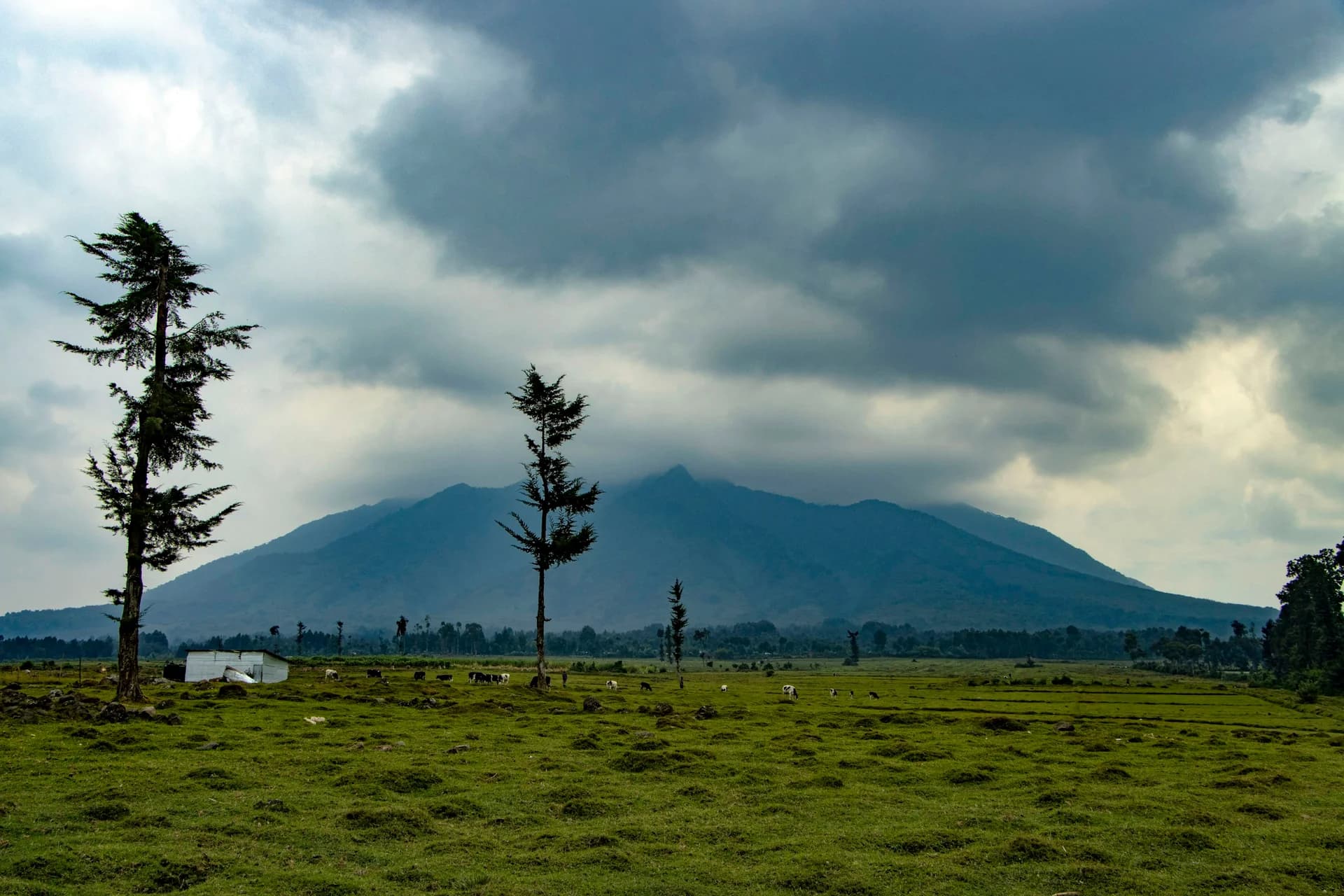
Volcanoes National Park covers 160 square kilometers of the Virunga mountain chain in northwest Rwanda. Five of the eight Virunga volcanoes fall within the park boundaries: Karisimbi (4,507m), Bisoke (3,711m), Sabyinyo (3,634m), Gahinga (3,474m), and Muhabura (4,127m).
The park is famous for one thing: mountain gorillas. About half the world's remaining 1,000+ mountain gorillas live here, in habituated family groups that can be visited by trekking through dense bamboo forest on the volcanic slopes.
But the park offers more than gorillas — golden monkey tracking, volcano hikes, Dian Fossey's tomb, and some of the most dramatic volcanic scenery in Africa.
Best Time to Visit
Dry Season (June-September, December-February): Easiest trekking conditions. Trails are drier (still muddy, just less muddy). Best for photography. Peak demand — book permits 4-6 months ahead.
Wet Season (March-May, October-November): Heavier rain means muddier, harder treks. But fewer visitors, lusher vegetation, and sometimes lower-altitude gorilla groups (easier access). Permits occasionally available on shorter notice.
Gorilla trekking operates year-round regardless of weather.
Getting There
Fly into Kigali International Airport (KGL) — direct flights from Amsterdam, Brussels, Istanbul, Nairobi, Addis Ababa, and Johannesburg.
From Kigali, drive 2.5 hours northwest to the park headquarters in Kinigi (near Musanze/Ruhengeri town). The road is good — paved and scenic, winding through Rwanda's famous hills and terraced farms.
Most visitors arrange transport through their lodge or tour operator. Self-driving is possible but unnecessary.
Where to Stay
Budget ($50-100): La Locanda, Red Rocks Rwanda (community guesthouse with cultural programs), Mountain Gorilla View Lodge (basic but gorilla-adjacent).
Mid-Range ($150-400): Le Bambou Gorilla Lodge, Five Volcanoes Boutique Hotel, Virunga Lodge (spectacular views, solar-powered).
Luxury ($500-2,000+): Bisate Lodge (Wilderness Safaris, built into a volcanic amphitheater, from $1,200/night), One&Only Gorilla's Nest ($1,500+/night), Singita Kwitonda Lodge ($2,000+/night — the most expensive lodge in Rwanda).
All accommodations are outside the park. Most are within 15-30 minutes of Kinigi headquarters.
The Main Event: Gorilla Trekking
Cost: $1,500 USD per person per trek.
What's included: Park entry, one gorilla trekking experience (up to 1 hour with gorillas), armed ranger escort, and guide.
How it works: Report to Kinigi headquarters at 7AM. Briefing covers gorilla behavior, rules, and your assigned family group. Groups of 8 trekkers plus guides and trackers enter the forest. Trackers who left at 4AM radio the gorillas' location. Trek duration: 30 minutes to 7 hours depending on gorilla location.
Rules: 7-meter minimum distance (gorillas may approach closer — stay still). No flash photography. No eating or drinking near gorillas. No trekking if you're sick. Maximum 1 hour with the gorillas.
12 habituated families are available for visits, each with distinct characteristics. The Susa group (the largest, 30+ members) is popular but often requires a longer trek. Amahoro group tends to be closer to the trailhead.
Beyond Gorillas
Golden Monkey Tracking ($100)
Golden monkeys are endemic to the Virunga and Albertine Rift area — about 5,000 remain in the wild. They live in bamboo forest at lower elevations than gorillas, making the trek shorter (1-3 hours round trip).
The monkeys move fast — swinging through bamboo, feeding on leaves, and playing. The experience is more dynamic than gorillas (which mostly sit and eat). Fewer tourists do this, making it feel more exclusive.
Dian Fossey Tomb Trek ($75)
A 2-3 hour guided hike to the Karisoke Research Centre — Dian Fossey's old camp at 3,000m where she studied gorillas for 18 years before her murder in 1985. Her grave is there, next to the graves of gorillas she worked to protect.
The camp is in ruins but the location is powerful. The forest is thick, the silence is deep, and the history is heavy. This trek is best done the day before or after your gorilla trek for emotional context.
Volcano Hikes ($75)
Mount Bisoke (3,711m): 6-7 hour round trip to a crater lake at the summit. Strenuous but not technical. The crater lake is otherworldly — green water surrounded by the rim of an extinct volcano.
Mount Karisimbi (4,507m): Rwanda's highest peak. 2-day trek with overnight camping at 3,700m. Requires good fitness and proper gear. Summit day starts at 3AM. The views from the top — across the Virungas to DRC and Uganda — are extraordinary.
Mount Sabyinyo (3,634m): 5-6 hours. The summit straddles the Rwanda-Uganda-DRC border. You can stand in three countries simultaneously.
Cultural Experiences
Iby'Iwacu Cultural Village ($30-50): A community project run by former poachers who've transitioned to tourism. Traditional dance, archery, banana beer brewing, and conversations about why conservation matters from people who used to be on the other side.
Cave Exploration ($50): Musanze Caves, a 2km lava tube system from ancient volcanic eruptions, offers a guided underground experience. Not claustrophobic — the tunnels are large.
Budget
| Item | Cost |
|---|---|
| Gorilla permit | $1,500 |
| Golden monkey permit | $100 |
| Dian Fossey trek | $75 |
| Volcano hike | $75 |
| Budget accommodation (per night) | $50-100 |
| Mid-range accommodation (per night) | $150-400 |
| Meals (per day, mid-range) | $30-60 |
| Kigali-Musanze transport | $40-80 |
| Porter (per trek) | $17 |
Budget 3-day trip: $1,800-2,200 (gorilla trek + budget lodge + transport) Mid-range 4-day trip: $2,500-3,500 (gorilla trek + golden monkeys + mid-range lodge) Luxury 4-day trip: $5,000-10,000+ (gorilla trek + volcano hike + luxury lodge)
Safety & Health
Rwanda is one of the safest countries in Africa. The park area is well-managed with armed rangers on every trek. Malaria risk is low at this altitude but take prophylaxis as a precaution. Altitude sickness is possible on the volcano hikes — hydrate and acclimatize if arriving from low elevation.
Why $1,500?
The permit price funds the entire conservation ecosystem: ranger salaries, anti-poaching operations, community revenue sharing (10% goes directly to surrounding communities), veterinary care for gorillas, and habitat protection.
In 2005, Rwanda had 620 mountain gorillas. In 2026, the population exceeds 1,000. The $1,500 permit is why.
Is it a lot of money? Yes. Is it worth it? Standing 3 meters from a silverback who weighs twice what you do, watching a baby gorilla tumble through bamboo, and knowing that your money directly funded this animal's survival — yes. Without reservation.


