The Complete Malta Travel Guide: Knights, Temples, and 50-Cent Pastries
The Complete Malta Travel Guide: Knights, Temples, and 50-Cent Pastries
Malta is what happens when 7,000 years of history get compressed into an island the size of a city. Megalithic temples older than the Pyramids. A fortress capital built by warrior-monks. Game of Thrones filming locations. And a pastry that costs 50 cents and is better than it has any right to be.
Overview
Malta is a three-island archipelago (Malta, Gozo, Comino) in the central Mediterranean, 93 km south of Sicily. Population: 520,000, making it one of the world's most densely populated countries. The official languages are Maltese (a Semitic language related to Arabic) and English — everyone speaks both.
Don't let the small size fool you. Malta's density of historical sites, beaches, diving spots, and cultural experiences per square kilometer is among the highest in Europe.
Best Time to Visit
April to June and September to November. Temperatures range from 20-28°C, the sea is swimmable from May through November, and crowds are manageable.
July-August is 30-35°C with intense sun and cruise ship traffic. Valletta gets uncomfortably crowded when ships dock. Winter (December-February) is mild (12-16°C) and ideal for sightseeing and temple visits.
Getting There
Malta International Airport (MLA) receives flights from across Europe — Ryanair, Air Malta, and Wizz Air offer budget options. London to Malta: about 3 hours. Rome to Malta: 1.5 hours. Direct flights from most major European cities.
Where to Stay
Valletta — Best for culture, dining, and walkability. Boutique hotels from 100-250 EUR. Central to everything on the main island.
Sliema/St. Julian's — Seafront promenade, shopping, restaurants. More modern, slightly cheaper. Good bus connections.
The Three Cities (Birgu/Senglea/Cospicua) — Across the harbor from Valletta. Authentic, cheaper, less touristy. A water taxi crosses to Valletta in 5 minutes.
Gozo — Stay overnight for the full experience. Rural guesthouses from 60 EUR/night. Quieter and more relaxed than Malta.
What to Do
Valletta (Full Day)
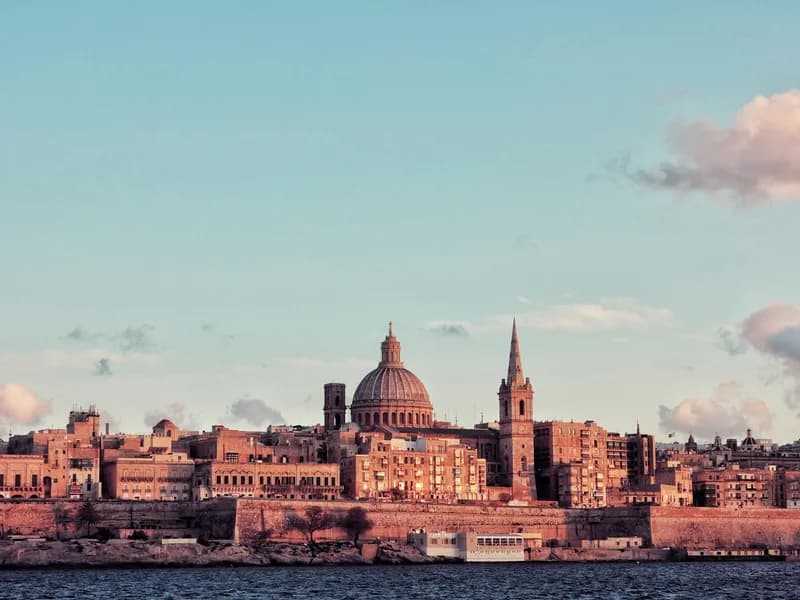
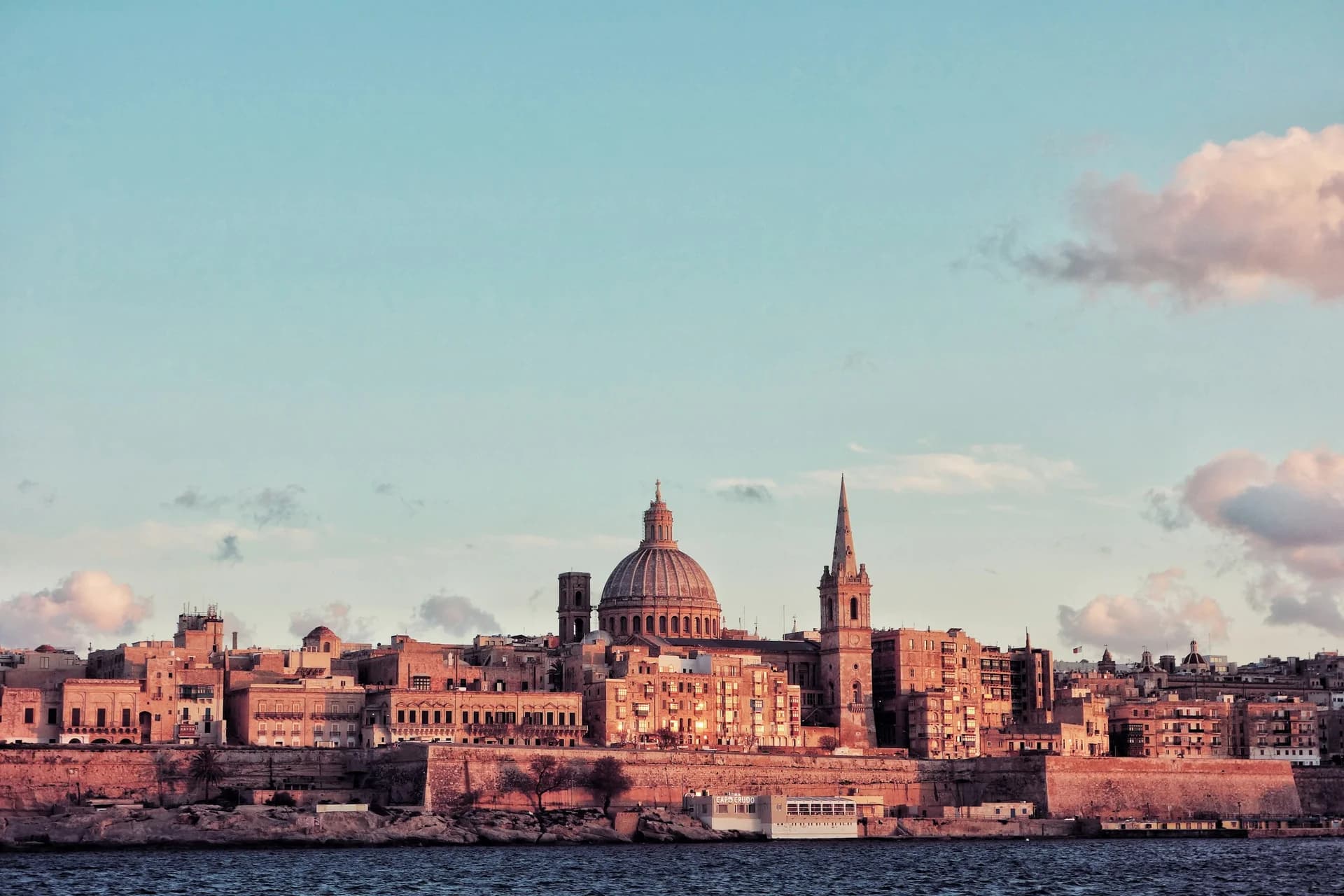
Europe's smallest capital deserves a full day. Start at City Gate, walk Republic Street to Fort St. Elmo. Key stops:
- St. John's Co-Cathedral (15 EUR): Caravaggio's masterpiece, gold-encrusted interior, jaw-droppingly ornate.
- Upper Barrakka Gardens (free): Panoramic Grand Harbour views. Noon cannon salute.
- Fort St. Elmo (10 EUR): Where the Great Siege of 1565 was fought. National War Museum inside.
- Strait Street: The former red-light district, now a charming bar and restaurant strip.
Mdina — The Silent City (Half Day)
A fortified medieval city on a hilltop with limestone streets, Norman and Baroque architecture, and virtually no cars. Population: about 300. Free to enter. St. Paul's Cathedral (5 EUR). Visit at dusk when day-trippers leave and the city earns its nickname.
Fontanella Tea Garden on the ramparts has panoramic views and famously large cakes.
Megalithic Temples (Half Day)
Hagar Qim and Mnajdra temples (combined entry: 10 EUR) sit on a clifftop with sea views. Built 3600-3200 BC — older than Stonehenge. The visitor center provides essential context.
The Hypogeum (35 EUR, book months ahead) is an underground temple complex from 4000 BC. Only 80 visitors/day. One of the most extraordinary archaeological sites in the Mediterranean.
Blue Grotto (2-3 Hours)
Sea caves on Malta's south coast where water glows luminous blue from reflected sunlight. Boat tours from Wied iz-Zurrieq: 8 EUR, 25 minutes. Best before 1PM when sunlight enters the caves. Free clifftop viewpoint. Combine with nearby Hagar Qim temples.
Gozo Island (Full Day or Overnight)
25-minute ferry from Cirkewwa (4.65 EUR round trip). The Citadella in Victoria is free. Ramla Bay is the best sandy beach. Ggantija Temples (9 EUR) predate Hagar Qim. The Inland Sea at Dwejra — a landlocked lagoon connected to the open sea by a tunnel — is fascinating.
Rent a quad (30 EUR/day). Gozo is quieter, cheaper, and more rural than Malta.
Diving
Mediterranean water with 30-40m visibility. Top sites: Um El Faroud wreck, Cirkewwa's Madonna Statue, Blue Hole on Gozo. Two-dive packages: 70-90 EUR. PADI open water certification: from 350 EUR.
Game of Thrones Locations
Malta doubled as King's Landing in Season 1. Mdina Gate = King's Landing entrance. Fort Ricasoli = Red Keep exterior. Azure Window site on Gozo = Dothraki wedding (collapsed 2017, ruins remain). San Anton Palace gardens (free). Guided tours: 45-60 EUR for a full day.
Food
Maltese cuisine blends Italian, North African, and British influences:
- Pastizzi: Ricotta or pea-filled flaky pastry, 0.50-1 EUR. Crystal Palace in Rabat is the best.
- Ftira: Maltese bread with tomato, olives, capers, tuna. 5-8 EUR.
- Fenkata: Rabbit stew — the unofficial national dish. 15 EUR.
- Kannoli: Maltese-style ricotta cannoli. 2-3 EUR.
Eat at the Three Cities for Valletta-quality food at local prices. Avoid Paceville for anything except nightlife.
Budget
| Category | Cost |
|---|---|
| Budget accommodation | 40-60 EUR/night |
| Mid-range hotel | 80-150 EUR/night |
| Restaurant meal | 12-20 EUR/person |
| Beer | 3-4 EUR |
| Coffee | 1.50 EUR |
| Bus day pass | 3 EUR |
| Bus week pass | 21 EUR |
| Daily budget (mid-range) | 80-130 EUR/person |
Safety
Malta is one of Europe's safest countries. Violent crime is virtually nonexistent. Main concerns:
- Rocky coastlines require water shoes
- Jellyfish common August-September
- Blue Lagoon dangerously overcrowded in summer
- Sun intensity — SPF 50 minimum
- Driving is stressful (left-hand traffic, aggressive local drivers)
Useful Phrases
Everyone speaks English, but Maltese greetings are appreciated:
- Bongu (good morning)
- Sahha (cheers/health — used when eating/drinking)
- Grazzi (thank you)
- Kemm? (how much?)
Getting the Most Out of Malta
Malta rewards slow exploration. The island is dense with history — you'll stumble on fortifications, chapels, and ancient walls just by walking the back streets of any town. The Three Cities (Birgu, Senglea, Cospicua) across the Grand Harbour from Valletta are often overlooked but offer the best combination of history, authentic restaurants, and local atmosphere without the cruise-ship crowds.
For divers, Malta is a serious destination — the water clarity is extraordinary, and the wreck diving ranks among the Mediterranean's best. Even non-divers should snorkel at Comino's Blue Lagoon or the caves around Gozo's Dwejra coast.
The island's public transport is genuinely good — the bus network covers everything for a fraction of taxi costs. And the 50-cent pastizz from Crystal Palace in Rabat might be the best food deal in all of Europe. Don't leave without trying one. Or ten. For the best time to plan your visit, check our season-by-season Malta guide. And if you're drawn to the Crusader history, Rhodes offers the same Knights Hospitaller legacy in a Greek island setting.