
Dubrovnik for History Lovers: A Deep Dive Into the City's 1,400-Year Story
Dubrovnik for History Lovers: A Deep Dive Into the City's 1,400-Year Story
Most visitors come to Dubrovnik for the Game of Thrones locations or the Instagram-perfect walls. But Dubrovnik's real story is more dramatic than any TV show. This was a city-state that rivaled Venice for Mediterranean dominance, maintained its independence for 450 years through pure diplomatic genius, survived a devastating earthquake, and was shelled by Serbian forces in 1991 within living memory.
Here's the history that makes those walls mean something.
Why Dubrovnik's History Is Special
The Republic of Ragusa (as Dubrovnik was known) existed as an independent state from 1358 to 1808. In that time, it built one of the largest merchant fleets in the Mediterranean, established Europe's first quarantine system (during the Black Death — the word "quarantine" comes from the Ragusan practice of isolating ships for 40 days), and abolished slavery in 1416 — over 400 years before the United States.
The republic's motto: "Libertas" (Liberty). You'll see it carved into fortress walls, on coat of arms, and on the flag that still flies from the Rector's Palace.
The Essential Historical Sites
City Walls (€35, Included in Dubrovnik Card)
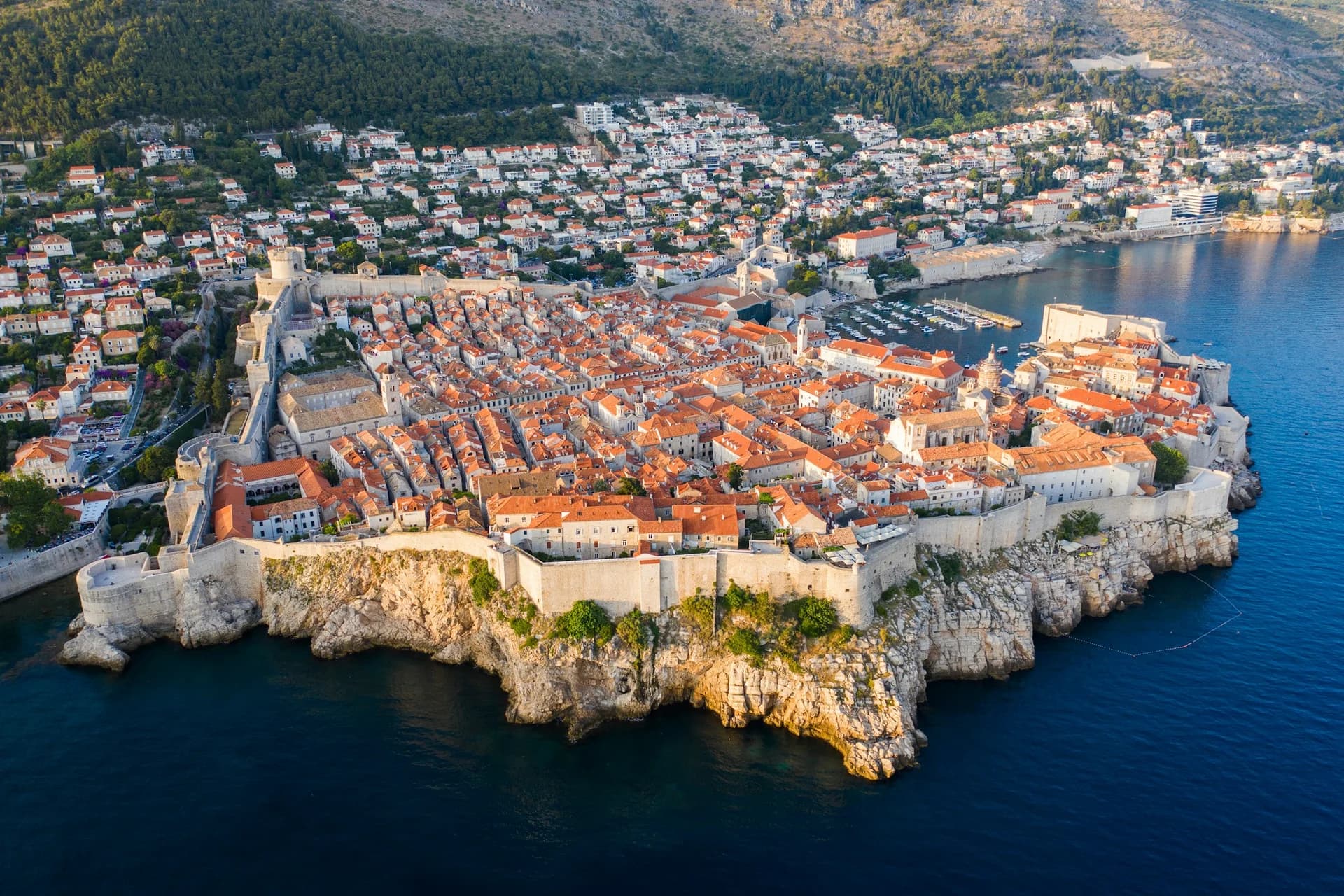
The walls were built and reinforced from the 8th to the 16th century to protect against Ottoman and Venetian threats. They're up to 25 meters high and 6 meters thick with 16 towers. The wall walk (2 km) lets you trace the entire defensive perimeter.
Historical context: these walls were never breached by a foreign army in 1,000 years. The Ottomans tried multiple times. Venice coveted Ragusa constantly. The walls held. Only Napoleon finally ended the republic in 1808 — not through siege but through diplomatic betrayal.
Rector's Palace (€12 or Dubrovnik Card)
The seat of the Ragusan Republic's government. The Rector was elected for a single month to prevent tyranny — during his term, he couldn't leave the building. The palace's Atrium hosts summer concerts and the museum inside displays the republic's coat of arms, weaponry, and administrative records.
Lovrijenac Fortress (Included in Wall Ticket)
Built on a rock outside the western wall with a specific purpose: to prevent Venice from building a fort on the same spot. Legend says Dubrovnik learned Venice planned to construct a fortification here and built Lovrijenac in 33 days to claim the position first.
Above the entrance: "Non Bene Pro Toto Libertas Venditur Auro" — Freedom is not sold for all the gold in the world.
The 1667 Earthquake Trail
On April 6, 1667, a catastrophic earthquake destroyed most of Dubrovnik, killing an estimated 5,000 people (half the population). The city rebuilt itself — the Stradun's uniform baroque architecture dates from this reconstruction. Look for the pre-earthquake buildings that survived: the Sponza Palace (1516), the Dominican Monastery (14th century), and portions of the Franciscan Monastery.
The Franciscan Monastery houses Europe's third-oldest functioning pharmacy (since 1317), still operating today.
The 1991 Siege Memorial
During the Croatian War of Independence, Serbian and Montenegrin forces shelled Dubrovnik for seven months in 1991-1992. Over 2,000 shells hit the Old Town, damaging 68% of its buildings. The Old Town's Stradun has a map near the Pile Gate showing where each shell fell.
The cable car station on Mount Srd houses a small museum about the siege, with photographs, weapons, and video footage. The cross on top of Srd was a military position during the defense. Many of the soldiers who defended the city were barely 20 years old.
The rebuilding was meticulous — UNESCO-supervised restoration used original stone and techniques. Today, most visitors can't tell which roof tiles are medieval and which were replaced in the 1990s. That's the point.
Top 10 Historical Experiences
- Walk the walls at 8AM — Before cruise crowds, when you can hear the sea and feel the scale of 1,000 years of defensive engineering
- Rector's Palace — The one-month presidency system that prevented tyranny
- Sponza Palace — Pre-earthquake survivor housing the city archives
- Franciscan Monastery pharmacy — Operating since 1317
- Lovrijenac Fortress — The "Freedom" inscription and its anti-Venice origin story
- Mount Srd museum — The 1991 siege in photographs and artifacts
- Dominican Monastery — 14th-century cloister with a world-class art collection
- Onofrio's Fountain — Engineering marvel from 1438 that brought water to the city
- Synagogue — The second-oldest active synagogue in Europe (1408)
- The earthquake map on the Stradun — Where each shell fell in 1991
Best Time for History Themes
May-June and September-October. Not just for weather — these months have fewer crowds, meaning you can actually hear the guides at historical sites and spend time reading plaques without being jostled. The Dubrovnik Summer Festival (July 10 — August 25) stages classical performances inside the walls, including at Lovrijenac Fortress — history and art intersecting.
Budget for the History Trail
The Dubrovnik Card (€55/7 days) covers walls, Lovrijenac, Rector's Palace, Maritime Museum, and 6 other museums plus bus transport. Without the card, individual entries total over €80. The card is a no-brainer for history-focused visits.
The Bottom Line
For more on Dubrovnik, check out our The Day I Walked Dubrovnik's Walls and Understood Why They Call It the Pearl.
Dubrovnik's beauty is obvious. But its significance — as a republic that defended liberty for 450 years, survived catastrophic earthquake and modern warfare, and rebuilt itself each time — makes the beauty meaningful. Those walls aren't just photogenic. They're a 1,000-year argument for freedom.
Read the plaques. Visit the siege museum. Stand at Lovrijenac and read the inscription. Then the sunset from those walls will hit differently.


