Four Nights in Granada: Tapas, Flamenco, and the Alhambra at Dawn
Four Nights in Granada: Tapas, Flamenco, and the Alhambra at Dawn
Two nights is the plan most travelers make. Four is the number Granada quietly talks them into. This is a city that catches you off guard — usually around the third free tapa of the evening, when you realize €8 has bought three beers and somehow enough food to call it dinner.
Spain's last Moorish stronghold. Home to the Alhambra. The city where bars serve free food with every drink, where dinner starts at 10PM, and nobody blinks.
Here is how four nights unfold.
Day 1: Arrival and the Tapas Education
Fly into Málaga — Granada's own airport has limited flights — and take the ALSA bus: €13, 90 minutes through olive groves and rolling brown hills. Granada's bus station sits a 15-minute walk from the center. Base yourself on Cuesta de Gomérez, the street that climbs to the Alhambra entrance, where a clean room with a balcony runs around €65/night.
Drop the bag. Walk downhill to Plaza Nueva. The tapas education begins.
Here's how it works. You walk into a bar. You order a drink — a caña (small beer) for €2.50 or a glass of wine for €3. The bartender brings the drink and, without being asked, sets a tapa beside it. First bar: olives and bread. Second bar: a croquette and a slice of tortilla española. Third bar: a small plate of patatas bravas.
By the third bar on Calle Navas, you've spent €8.50 and you're no longer hungry. This is dinner in Granada. It costs less than breakfast in Copenhagen.
Bodegas Castañeda on Calle Elvira is the standout. Ancient wooden bar. Hams hanging from the ceiling. Order a vermut and the tapa arrives as a plate of manchego with membrillo (quince paste) — €3.50, all in. You'll wonder where the catch is. There isn't one.
Day 2: The Alhambra
Book the ticket three months ahead (alhambra-patronato.es, €19, Nasrid Palaces slot at 9AM). This is the single most important move in Granada: reserve the Alhambra the moment you decide to come. Tickets sell out 2-3 months in advance.
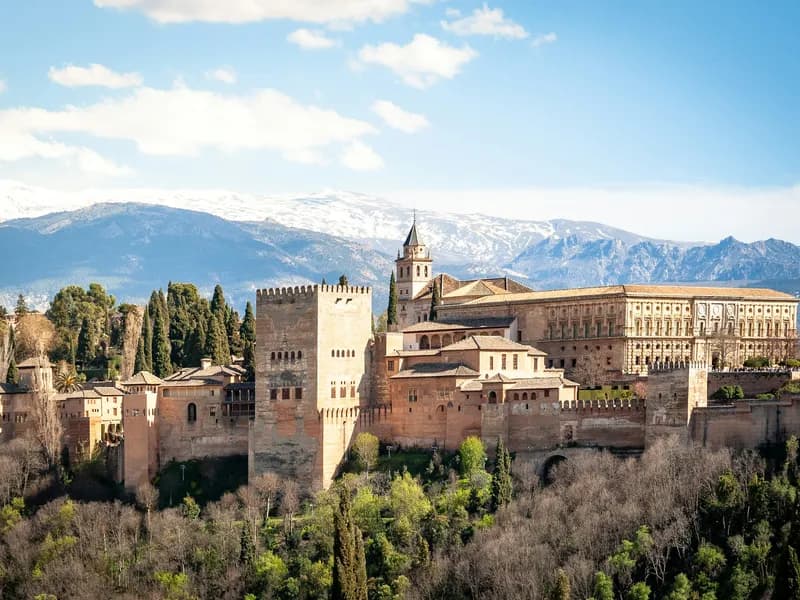
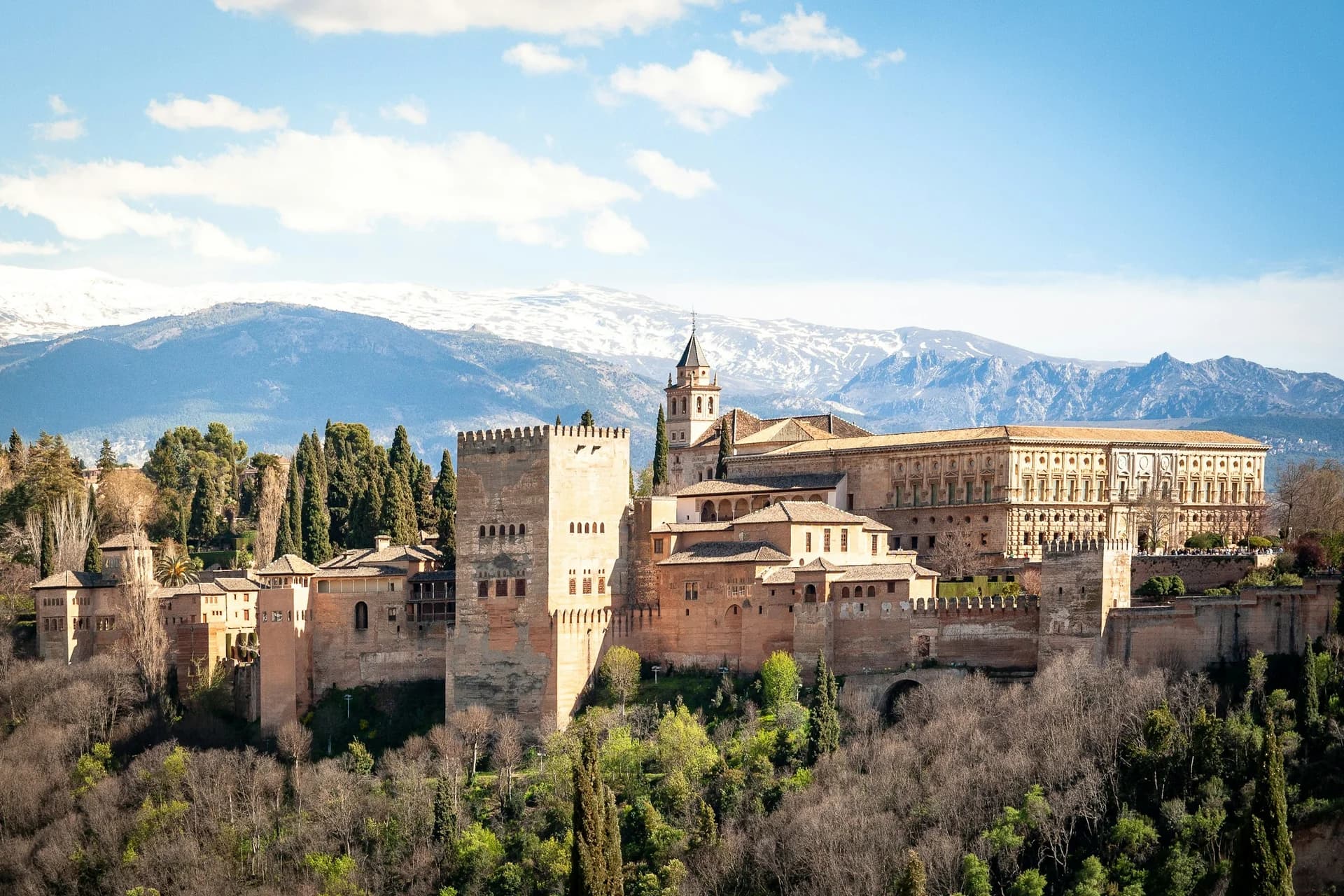
The walk up from Plaza Nueva takes 15 minutes along a shaded forest path. Arrive by 8:45AM and the morning light lies soft and golden on the red-ochre walls — Alhambra means "The Red One" in Arabic, and at this hour you understand exactly why.
The Nasrid Palaces are the main event. Move through the Mexuar, the Comares Palace, and the Court of the Lions and the effect borders on disbelief. Geometric tile patterns (zellige) cover every surface. The plasterwork (yesería) is carved so finely it reads as lace. The Alhambra doesn't decorate walls — it dissolves them.
The Court of the Lions stops everyone. Twelve marble lions hold up a fountain in a courtyard of 124 white marble columns. Water channels flow from the fountain in four directions, standing for the four rivers of paradise. Linger 20 minutes and no guard will rush you. They understand.
The Generalife gardens come as relief after the intensity of the palaces — water channels, roses, cypress trees, and views of the Albaicín across the valley. The Alcazaba fortress (the oldest part, 9th century) hands you the tactical view: why this hill, why this city.
Plan for 3.5 hours. Five would not be too many.
Day 3: Albaicín, Sacromonte, and Cave Flamenco
Morning: walk the Albaicín. This is the medieval Moorish quarter — UNESCO-listed, steep as a goat track, and gloriously confusing. The streets follow no logic; they follow 800-year-old property lines and water channels. Get lost twice and you'll find a hidden carmen (walled garden), a tiny mosque that's been a church that's been a house, and eventually Mirador de San Nicolás.
The view from San Nicolás is the postcard shot: the Alhambra set against the Sierra Nevada, snow-capped even in October. Arrive at 5PM — 30 minutes before sunset, as recommended. The crowd is thick but manageable. A guitarist plays. The light turns the Alhambra from red to gold to purple.
Hold out until 4PM for lunch, because that's when lunch happens in Spain. In the Realejo neighborhood (south of the center), a beer can arrive with a tapa that's a full bowl of lamb stew — an actual bowl, for €3 — generous enough to make you wonder if some social contract has been quietly broken.
Evening: Cueva de la Rocío in Sacromonte. A flamenco show in a whitewashed cave carved into the hillside — €28 including a drink. The performers — a singer (cantaor), a guitarist, and two dancers — are ten feet away. The singer's voice fills the cave in a way that's less musical than physical. The dancer's heels on the stone floor sound like gunfire.
Flamenco in a theater is a performance. Flamenco in a Sacromonte cave is something between a ritual and a challenge. The dancers meet your eye. The singer's face contorts with something that isn't sadness — it's duende, the Spanish idea of raw emotional truth. You leave a little shaken, in the best way.
Day 4: The Quiet Parts
No big sights. Just the city.
Morning: Granada Cathedral and Royal Chapel. The cathedral is enormous Renaissance marble — impressive but cool in feeling. The Royal Chapel next door (separate €5 entry) holds the tombs of Ferdinand and Isabella, the Catholic monarchs who completed the Reconquista. The lead coffins rest below the marble effigies, and a small museum displays Isabella's crown and scepter.
Afternoon: Hammam Al Ándalus — Arab baths restored in the Moorish style, below the Alhambra. €39 buys 1.5 hours across hot, warm, and cold pools plus a steam room. Book online a week ahead. The architecture echoes the Alhambra's — star-shaped light openings in the ceiling, marble columns, the sound of water everywhere. After three days on the Albaicín's hills, the hot pool feels like redemption.
Evening: a final tapas crawl, this time through the streets around Plaza de Gracia, deeper into the local neighborhoods. The tapas here are bigger, the bars less polished, the clientele students and families. A caña with a plate of fried eggplant drizzled in molasses. A glass of tinto with a bowl of migas (fried breadcrumbs with peppers and jamón). A brandy with a wedge of homemade cake.
Total evening food cost: €11. More than enough.
Why Granada Earns the Return
Granada is the most underpriced city in Western Europe, and it rewards a second visit before the first has even ended. The Alhambra alone justifies the trip. The free tapas make it sustainable on any budget. The flamenco is the real thing. And the layering of Moorish, Spanish, and modern culture — all of it visible, all of it still in conversation — creates a city unlike anywhere else in Spain.
Come in March-May or September-November. Skip July-August (35°C+ and the locals clear out). Book the Alhambra the moment you decide to go. Wear flat shoes. Eat dinner at 10PM. Trust the bartender's choice of tapa.
And if you find yourself at Mirador de San Nicolás as the sun drops behind the Alhambra and the Sierra Nevada turns pink and someone is playing guitar and your €2.50 beer arrives with a free plate of jamón — just stay. Cancel the next stop. Extend the hotel. Granada takes care of the rest.
For all the practical details, our Granada FAQ answers every question about Alhambra tickets and tapas customs. Our complete guide covers where to stay and how to plan. And if you love affordable European food cities, Naples and Krakow deliver the same spirit.