The French Pacific Nobody Talks About: A Week in New Caledonia
The French Pacific Nobody Talks About: A Week in New Caledonia
The croissant is perfect. Flaky, buttery, warm. Picture eating it at 7AM on a bench overlooking Anse Vata beach in Noumea, watching the turquoise Coral Sea catch the morning sun, trying to reconcile two facts that should not coexist: you're in the South Pacific, and the bakery behind you could have been airlifted from the 6th arrondissement.
New Caledonia does this to you. It keeps not making sense — in the best way.
The Setup
New Caledonia is a French overseas territory — like Réunion in the Indian Ocean, a piece of France marooned in the tropics — a chain of islands roughly the size of New Jersey, 1,200km east of Australia. The main island, Grande Terre, holds the capital Noumea and most of the population (about 270,000). South of it, the Isle of Pines is a dreamscape of columnar pines and impossibly white beaches. To the east, the three Loyalty Islands (Lifou, Mare, Ouvea) are raised coral platforms with some of the clearest water in the Pacific.
And surrounding everything, the world's second-largest barrier reef. A UNESCO World Heritage Site. Enclosing a lagoon of 24,000 square kilometers.
The language is French. 28 Kanak languages are also spoken. English is limited outside resorts. The currency is the CFP Franc (XPF), pegged to the Euro. And the prices — well. They're French.
Noumea: Paris with Palm Trees
You land at La Tontouta Airport (NOU), 50km from Noumea. The shuttle bus costs XPF 2,000 ($17). A taxi runs XPF 8,000-10,000 ($69-86). The drive into town passes nickel mining country and red laterite hills before the cityscape appears — low-rise, modern, surprisingly cosmopolitan.
Noumea has the vibe of a small French city that happens to be surrounded by reef. Baie des Citrons and Anse Vata are popular city beaches — sandy, swimmable, with cafes spilling onto the promenade. The morning market at Port Moselle is where the real eating happens: fresh sashimi, tropical fruit, baguettes, and Melanesian root vegetables sold by Kanak women.
The Tjibaou Cultural Centre stops you in your tracks. Designed by Renzo Piano (the architect behind the Pompidou Centre in Paris), it's a series of curved wooden structures inspired by traditional Kanak hut architecture, housing exhibitions on Melanesian culture, art, and political history. Entry is XPF 500 (~$4.30). Plan on three hours. The exhibit on the independence movement is more politically nuanced than most cultural centres dare to be. This is a country still negotiating its identity, and the Tjibaou doesn't shy away from that.
Dinner at a waterfront restaurant: grilled parrotfish with ratatouille and a glass of local rose. XPF 3,200 (~$28). Order in rusty high school French; the waiter answers in perfect English. Noumea.
The Isle of Pines: This Should Be Illegal
The Air Caledonie flight from Noumea to the Isle of Pines takes 25 minutes and costs XPF 15,000-25,000 round trip (~$130-215). The alternative is the Betico ferry (2.5 hours, XPF 5,000-8,000), which is more atmospheric but weather-dependent.
Nothing prepares you for the Isle of Pines. Columnar pines — tall, narrow, prehistoric-looking — tower over white sand beaches and water so clear it seems to not be there at all. Kuto Bay is the main beach. Kanumera Bay, a 10-minute walk away, is quieter and more sheltered.
But the knockout is the natural aquarium at Oro Bay. A shallow, protected pool of coral reef accessible by wading from the beach. The fish density is absurd. Parrotfish, butterflyfish, needlefish, and enormous sea cucumbers, all in water warm enough to stay in for hours. Snorkel gear essential. No rental available — bring your own.
Stay two nights in a gite (self-catering bungalow) for XPF 9,000/night (~$78). The owner, a Kanak woman named Marie-Louise, brings fresh papaya and baguettes each morning. At night, the silence is complete. No traffic. No music. Just tree frogs and the sound of a lagoon with nobody in it — the polar opposite of a sunset-packed Aegean caldera.
The Reef: World's Second Best
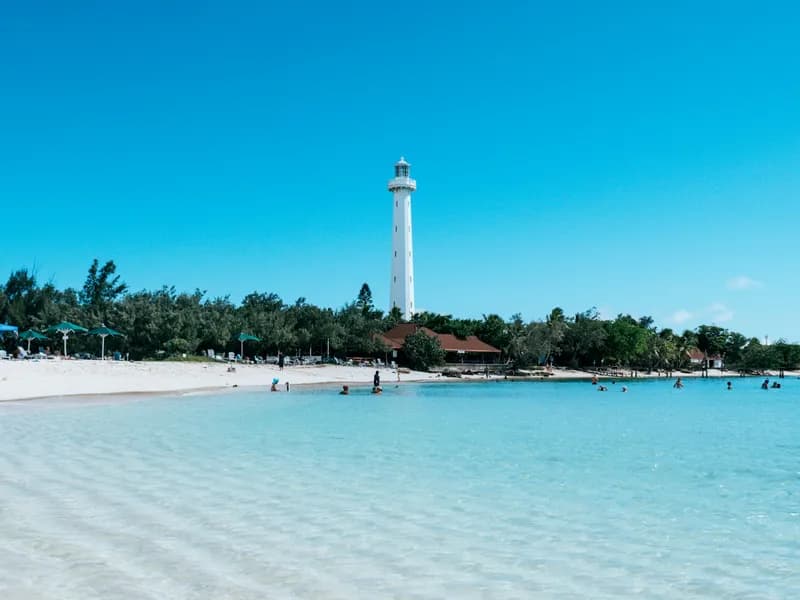
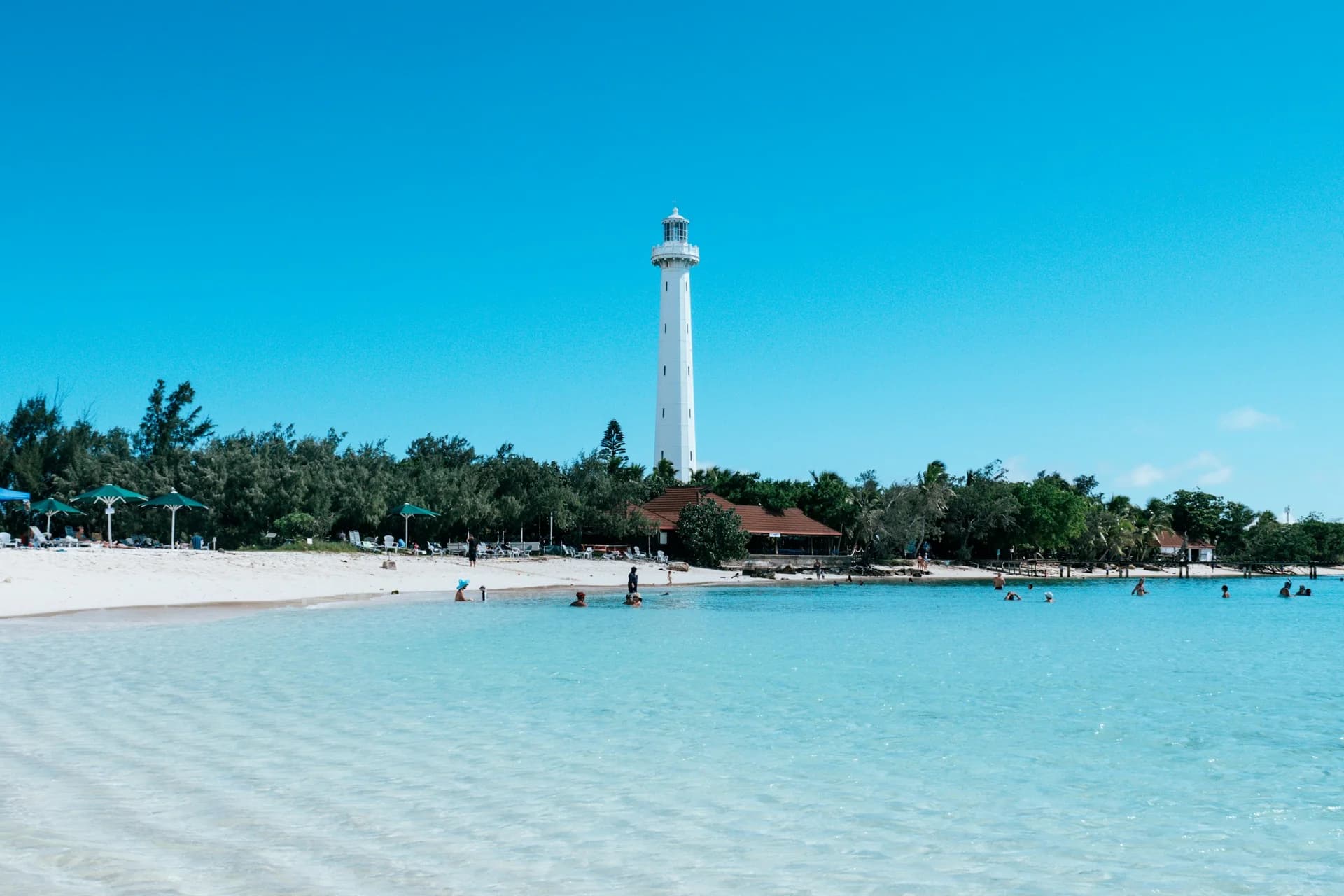
The Amedee Island day trip from Noumea is the most accessible reef experience — a small island with a lighthouse, surrounded by snorkeling that rivals anything on the Great Barrier Reef. XPF 12,000-16,000 (~$103-138) including boat transfer, lunch, and snorkel gear.
You can see a dugong here. Worth saying again. A dugong — the animal that inspired mermaid legends — grazing on seagrass thirty meters from the beach. Guides say they're regular visitors. Sea turtles surface twice in a single snorkel. Manta rays patrol the deeper reef edges.
For serious divers, the outer reef passes offer drift diving with pelagics. Dive operators in Noumea run full-day trips to the reef for XPF 15,000-20,000. But even snorkeling from the beach at Amedee delivers more marine life than five Caribbean trips combined.
Kanak Culture: The Real Heart
On the Loyalty Islands, tourism meets traditional governance. Before entering Kanak tribal lands, the coutume (customary gift exchange) is expected and important. Bring a pareo (sarong cloth) and some money (XPF 1,000-2,000). Ask your accommodation host about local protocol. This isn't a tourist transaction — it's a gesture of respect that acknowledges you are entering someone's ancestral territory.
Lifou, the largest Loyalty Island, rewards the effort. Jinek Bay has cliff jumping into impossibly clear water and sea turtle encounters within swimming distance of the shore. The accommodation is basic — a family-run pension with three rooms and meals cooked by the owner's mother. Dinner is bougna: chicken and vegetables wrapped in banana leaves and slow-cooked with coconut milk over hot stones.
The silence on Lifou at night is different from the Isle of Pines. More absolute. Walk to the cliff edge after dinner and watch the Milky Way reflected in still water. No light pollution. No other tourists in sight. Just the stars and the reef and the deep time of a place that has been inhabited for 3,000 years.
Blue River: The Other Planet
Blue River Provincial Park, 60km southeast of Noumea, is surreal. Red laterite soil — genuinely, aggressively red — supports a scrubby bushland ecosystem with species found nowhere else on Earth. The cagou, New Caledonia's national bird, lives here: a ground-dwelling bird the size of a small heron that barks like a dog. You'll hear one before you see it. Unmistakable.
Kayaking on the blue river through submerged dead trees — drowned forest, they call it — is like paddling through a Salvador Dali painting. The water is dark blue, the trees are bone-white, and the silence is wrong in a way that makes you hyper-aware of your own breathing.
Entry is XPF 500 (~$4.30). Guided kayaking is extra. Allow half a day. Worth every minute.
The Practicalities
Getting there: Aircalin from Sydney or Auckland (2.5 hours each), Tokyo (8 hours), or via connections from Paris.
Car rental: Essential for Grande Terre. XPF 5,000-10,000/day (~$43-86). Drive on the right. West coast roads are good. East coast and northern roads can be unpaved.
Budget reality: Hotel rooms from XPF 8,000/night ($69). Restaurant meals XPF 1,500-3,500 ($13-30). You'll spend more here than in Fiji or Vanuatu. But you'll be eating croissants, so there's that.
Language: French is essential outside Noumea. Google Translate helps. A few words of French go an enormous distance with locals.
Political situation: Check travel advisories before booking. New Caledonia has experienced unrest related to independence discussions. Tourist areas are generally safe, but protests can affect roads and flights. Travel insurance with cancellation coverage is strongly recommended.
The Departure
Leave Noumea on a Sunday morning and the Port Moselle market is setting up as the taxi passes. Fresh bread carries through the car window. The lagoon is that particular shade of turquoise that your phone camera will never capture accurately.
New Caledonia is the South Pacific destination that doesn't advertise itself. It doesn't need to. It has the world's second-largest reef, French food, Melanesian culture, and islands that look like they were invented by a painter with no restraint.
The fact that nobody talks about it is, honestly, part of the appeal.
Go before they start talking about it.