
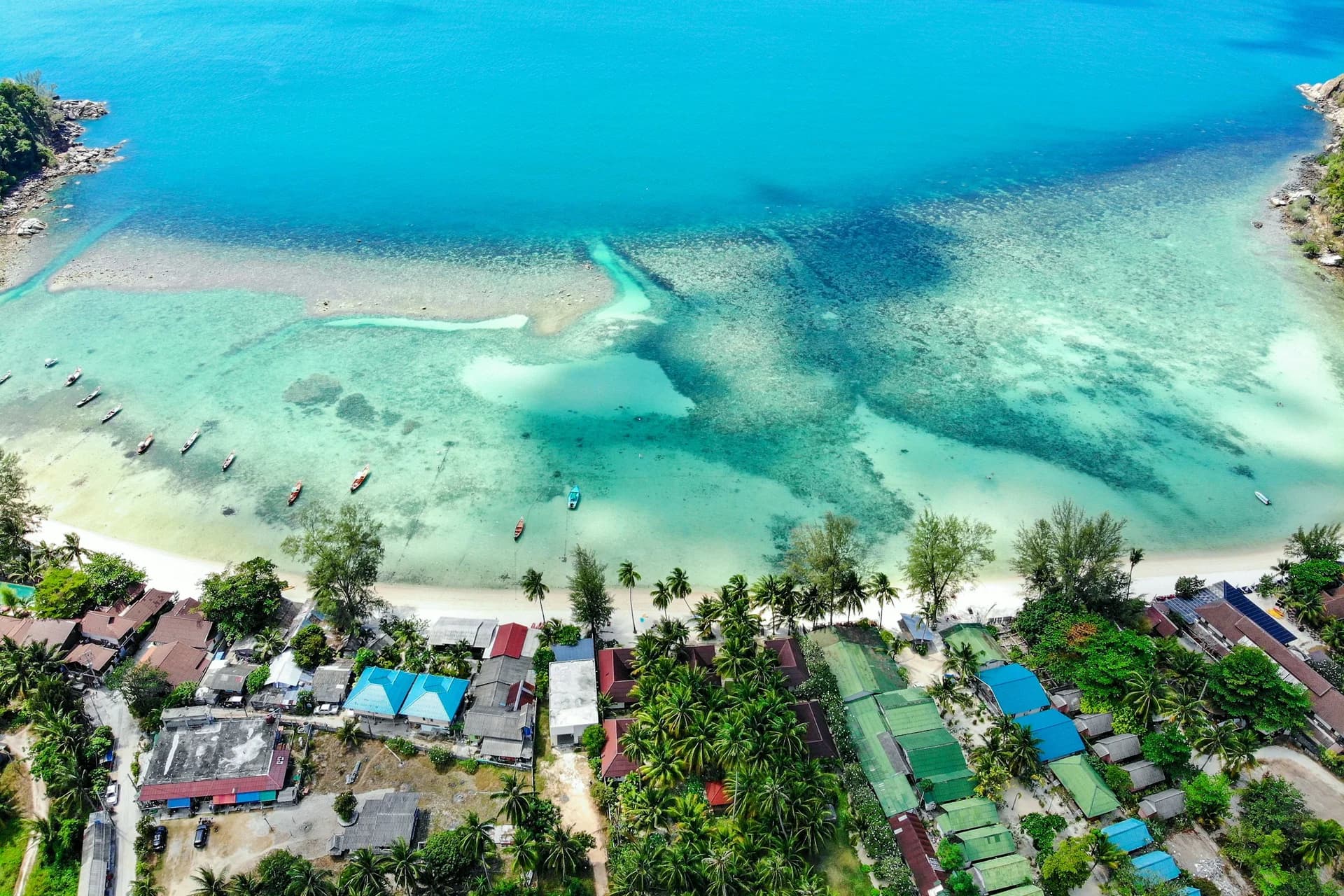
Koh Phangan Survival Guide: 18 Things Smart Travellers Do Differently
Koh Phangan Survival Guide: 18 Things Smart Travellers Do Differently
Koh Phangan rewards the prepared and punishes the careless. There's no airport, the island splits into two totally different scenes, and the most famous night out here comes with a genuine hazard list. None of that should put you off — it just means a little know-how goes a long way. Here's what to sort before you go, and what travellers wish someone had told them on day one.
Getting there and getting around
1. There is no airport — plan the ferry into your day. You'll fly into Koh Samui (USM) — most international routes connect through Bangkok first — and take a Lomprayah or Seatran catamaran across to Thong Sala pier (30 to 45 minutes, 300 to 400 baht). Cheaper but slower: fly to Surat Thani (URT) and take a combined bus-and-ferry ticket (~4 hours, 500 to 700 baht). Book Lomprayah ahead at lomprayah.com.
2. Sit up top on the catamaran. The approach past Koh Ma and the west coast is the first good view of your trip. Don't spend it below deck.
3. Fix songthaew prices before you climb in. Shared truck-taxis are the island's main transport. Thong Sala to Sri Thanu runs about 100 to 150 baht. Agree the number first, every time.
4. Think hard before you rent a scooter. Rentals are 200 to 300 baht a day, but the roads are steep, sandy, poorly lit, and often not covered by your travel insurance without a valid motorcycle licence and helmet. If you're not a confident rider, take songthaews — especially at night.
5. Never scooter down into Haad Rin. The access road is nicknamed Death Hill for a reason. Countless tourists crash it, most of them after parties. Take a songthaew (150 to 250 baht).
Money, visas and the boring-but-vital stuff
6. Bring more cash than you think. ATMs charge a 220 baht foreign-card fee per withdrawal and regularly run dry on party weekends. Draw a buffer in Thong Sala before you need it.
7. Know your visa window. Citizens of 57 countries get 60 days visa-free on arrival. Overstaying costs 500 baht a day at departure. If you're here for a yoga teacher training or long retreat, arrange a proper visa in advance — the exemption can't always be extended on the island.
8. Budget in two tiers. Everyday Thai meals run 60 to 120 baht. Western food and beach-bar cocktails cost several times more. Eat local most days and the island is astonishingly cheap.
Where to base yourself
9. Match your base to your trip. Haad Rin for party access. Sri Thanu / Haad Chao Phao for the quiet wellness coast. Thong Sala for ferry links and street food. Chaloklum for authentic fishing-village calm. You cannot be near everything — choose deliberately.
10. Book full-moon accommodation weeks ahead. Around a Full Moon Party, Haad Rin room rates double or triple, and many places impose 3-to-5-night minimum stays. Booking late means paying triple or staying elsewhere and taxiing in.
11. Consider staying out of Haad Rin entirely. Base in Thong Sala, Sri Thanu or Chaloklum and songthaew in for the party. You'll sleep better and pay less every other night.
Surviving the Full Moon Party
12. Never leave a drink unattended. Spiking happens. Watch your bucket get made, and keep it in your hand.
13. Skip the fire ropes and flaming limbo. Serious burns are one of the most common injuries of the night. The photo isn't worth the skin graft.
14. Wear shoes, not flip-flops. By 2AM the sand hides broken glass. Closed shoes, every time.
15. Agree a meeting point before you go in. Phone signal collapses under the crowd. Pick a landmark and a time so you can find your group when data dies.
16. Never swim during the party. There are drownings most seasons, almost always drink-related. Stay on the sand.
Two islands, one set of manners
17. Respect the local side. A large Thai-Muslim and wellness community lives away from Haad Rin. Cover shoulders and knees at temples like Wat Phu Khao Noi, and don't wander through villages in beachwear. Nudity and drugs are illegal — police run undercover stings and drug tests around full-moon events, with heavy fines or jail time.
18. Give the quiet coast a full day. Most people wish they'd spent less time recovering in Haad Rin and more time at Bottle Beach, Than Sadet Waterfall, or a sunrise yoga class in Sri Thanu. Balance the island and it rewards you twice over.
Timing your trip around the weather and the moon
Two calendars run Koh Phangan, and you'll want to check both. The dry season runs December to April — calm seas, clear water for the Koh Ma snorkel, and temperatures of 28 to 32°C. October and November are the wettest, with monsoon swells that can make ferry crossings rough, though the interior waterfalls run strongest from November into January. Then there's the lunar calendar: the Full Moon Party lands on the night of every full moon, year-round. If the party is a must-do, check the moon dates before you book flights so you're on the island the right night — and if you'd rather avoid the crowds entirely, aim your stay for the days well before or after. Half-moon and Black Moon parties also run on their own schedule, so ask locally when you arrive.
Packing essentials for Koh Phangan
- Closed shoes — for the party sand and the jungle trails to Domsila Viewpoint.
- A dry bag — for longtail boat rides to Bottle Beach, where waves come over the bow.
- Reef-safe sunscreen — you'll be snorkelling the Koh Ma sandbar and swimming daily.
- A basic first-aid kit — the island clinic is limited; serious cases go to Koh Samui.
- Cash, in small notes — for songthaews, beach bars, and boat operators who don't take cards.
- Offline maps — download Koh Phangan on Google Maps before you arrive; signal is patchy in the interior.
What travellers wish they'd known
The single biggest lesson from anyone who's done this island right: the Full Moon Party is one night, and Koh Phangan is a whole island. Plan the party carefully so it's a great memory, not a bad one — then give at least half your trip to the waterfalls, the north-coast beaches, the yoga coast, and the seafood at Chaloklum. That's the balance that turns a rowdy stopover into one of the best weeks of a Thailand trip.


