
Rwanda in Green Season: The Case for Gorilla Trekking in the Rain
Rwanda in Green Season: The Case for Gorilla Trekking in the Rain
Everyone says visit Volcanoes National Park in dry season. June to September. December to February. The trails are easier, the weather cooperates, and your $1,500 gorilla permit isn't spent trudging through knee-deep mud.
They're not wrong. But they're not telling you the full story.
April — peak wet season — makes a case worth hearing. Here's why.
The Mud Argument
Yes. The trails are muddier in wet season. Significantly muddier. Ankle-deep mud on the approach, slippery roots on the ascent, and sections where the trail becomes a stream.
But here's the thing: the trail to the gorillas is always muddy. Even in dry season, the bamboo forest floor is damp. The Virunga volcanoes create their own microclimate — rain can fall any time of year. Dry season just means slightly less mud, not no mud.
With gaiters, waterproof boots, and a porter carrying your pack, the mud is manageable. Not pleasant. Manageable.
The Real Advantages
Fewer Trekkers
Wet season is the low season. Not all 96 daily permits sell out. The forest feels quieter. Your group of 8 might be one of only 6-8 groups in the park that day instead of 12. Approaching gorillas without hearing another group through the bamboo is worth the extra mud.
Gorillas Stay Lower
In wet season, the bamboo grows rapidly at lower elevations, providing abundant food. Gorilla families often stay at 2,700-3,200m instead of climbing to 3,500-4,000m. Translation: shorter treks. In April, the Amahoro family turns up after 45 minutes of walking. In dry season, that same family might be 3-4 hours up the mountain.
The Forest Is Alive
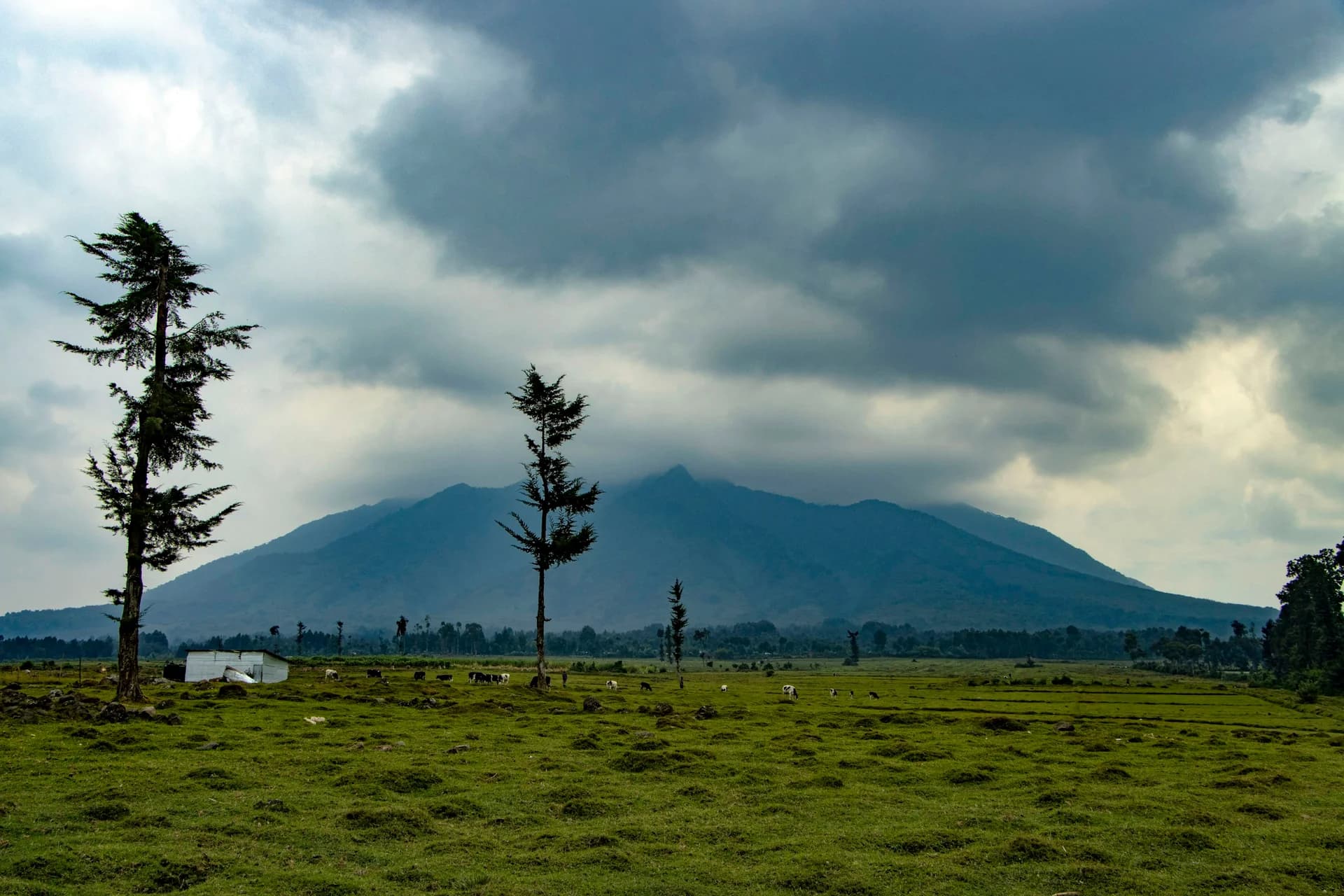
Wet season turns the Virunga forest into something from a nature documentary. The bamboo is thick and green. Mist rises from the canopy. Streams are full. Wildflowers bloom on the volcanic slopes. Chameleons are easier to spot (they move more in the wet). Birds — Ruwenzori turacos, Rwenzori batis — are nesting and active.
The forest in dry season is beautiful. In wet season, it's theatrical.
Photography Light
Counterintuitively, wet season light can be better for gorilla photography. The overcast sky acts as a giant diffuser — no harsh shadows, no blown-out highlights. The light in the bamboo forest is even and soft. You'll miss the dramatic sunbeam-through-canopy shots, but you'll get richer colors and more detail in the gorillas' dark fur.
Bring a camera that handles high ISO well. The forest is dark even on bright days, and you'll need ISO 1600-6400 to freeze gorilla movement.
Weather Patterns
Wet season in the Virungas means afternoon rain. The morning pattern is similar to dry season — often clear or lightly overcast from dawn to noon. Treks start at 7-8AM and most groups reach the gorillas by 9-11AM, often before the heaviest rain.
March-May is the long rains (heavier, more consistent). October-November is the short rains (lighter, less predictable). If you want the wet season advantages with slightly better weather odds, aim for November.
Cost Considerations
The gorilla permit is $1,500 regardless of season. But:
- Flights to Kigali are often 20-30% cheaper in March-May
- Lodge rates drop 15-40% at many properties
- Tour operator packages offer better value
A mid-range 4-day trip that costs $3,000 in July might cost $2,200-2,500 in April. The gorillas don't know what season it is.
What You Need
Wet season packing differs from dry season in degree, not kind:
- Waterproof hiking boots (not water-resistant — waterproof)
- Gaiters (rent at park HQ, RWF 5,000/$4)
- Rain jacket (hardshell, not softshell)
- Waterproof pants (over your hiking pants)
- Dry bag for camera and electronics
- Gardening gloves (stinging nettles are worse in wet season)
- Extra socks (your feet will get wet regardless)
- Waterproof daypack cover
The Golden Monkey Bonus
Golden monkey tracking ($100) in wet season is exceptional. The bamboo is at peak growth, which concentrates the monkeys at lower elevations where bamboo is thickest. The 1-2 hour trek is shorter and the monkeys are active — feeding, playing, and moving through bright green bamboo.
Fewer visitors also means more flexibility from guides in terms of positioning and time.
What a Wet Season Trek Looks Like
Groups leave Kinigi around 7:15AM under overcast skies. The trail enters the bamboo forest and turns muddy within minutes. Your porter — often a young Kinigi local carrying your daypack and offering a steadying hand on every slippery section — earns his RWF 20,000 inside the first 20 minutes.
Forty-five minutes of climbing, and the lead tracker radios ahead. The Amahoro group is 200 meters on. You drop your walking stick, leave your pack, and follow the guide into a bamboo clearing.
And there they are. A silverback — Ubumwe — two adult females, three juveniles, and a baby maybe 4 months old. The silverback works through bamboo shoots, cracking the stems with his teeth and stripping the tender center. He looks up, assesses the situation, and goes back to eating.
The baby crawls forward, falls over, gets up, falls over again. A juvenile swings from a bamboo stalk until it bends to the ground and deposits him in a heap. The females groom each other. The silverback watches it all from a seated position, chest-drumming when a juvenile drifts too close to you.
Rain arrives for the last 10 minutes of the hour. Light rain, barely noticeable. The gorillas don't care. The mist adds atmosphere to every photo. Standing there — soaked, muddy, at 3,000 meters in a Rwandan bamboo forest, watching a species pulled back from the edge calmly living its life — is worth every squelching step.
The descent takes 30 minutes. Your boots weigh twice what they did going up, solid with mud. Your porter is grinning. "Good trek," he says. "Short one today."
Tip him double.
Should You Go in Wet Season?
If you're flexible, reasonably fit, and own waterproof gear — yes. The advantages (fewer people, shorter treks, lower costs, lusher forest) outweigh the disadvantage (more mud). The gorillas are just as magnificent in the rain.
If you have mobility concerns, significant camera gear you can't waterproof, or a strong aversion to discomfort — dry season is the safer choice.
But remember: the gorillas live in this forest year-round. Every day is wet season for them. Meeting them in the rain feels honest.
Because that's their world. And for one extraordinary hour, it's yours too.


