What 10 Years in Scottsdale Taught Me About the Desert
What a Decade in Scottsdale Teaches You About the Desert
People arrive in Scottsdale for a year of sunshine and a quick escape from the rain back in Seattle. A decade later, plenty of them can't imagine leaving. The desert has a way of getting its hooks in — quietly, then completely.
Here's what longtime locals tell friends who visit, and what every newcomer wishes someone had told them on arrival.
Q: What surprises newcomers most?
The community. The assumption is snowbirds and golf retirees — and yes, those people exist. But there's a whole other Scottsdale: young professionals, artists, chefs, outdoor athletes, and remote tech workers who hike every morning before the laptop opens.
Old Town on a Saturday night is packed with people in their twenties and thirties. The food scene runs restaurants that would be destination dining in any city. The art galleries aren't stuffy — Thursday ArtWalk feels more like a block party than a museum visit.
The retirement-community reputation is outdated by about fifteen years.
Q: How do you actually survive summer?
You adapt — or you leave, as plenty do. The snowbird population reverses: Scottsdale locals become the snowbirds, heading to San Diego, the Pacific Northwest, or Colorado for July and August.
For those who stay, life rearranges around the heat. In July you hike at 4:30AM — headlamp, water bladder, done by 7AM. Grocery shopping, errands, anything outside happens before 9AM. The rest of the day belongs to pools, air conditioning, and indoor escapes.
The pools are spectacular. Most apartment complexes and all resorts have resort-style pools. When it's 45°C outside and you're floating with a cold beer, the heat becomes a feature, not a bug.
Respect it, though. Touching a metal seatbelt buckle in August can give you a second-degree burn. Walking a dog on asphalt at 2PM will burn their paws. The heat is a real, physical danger that kills people every year — treat it that way.
Q: What's the best hike that tourists don't know about?
Everyone does Camelback. It's iconic, it's hard, and on weekends it's a traffic jam of Instagram hikers.
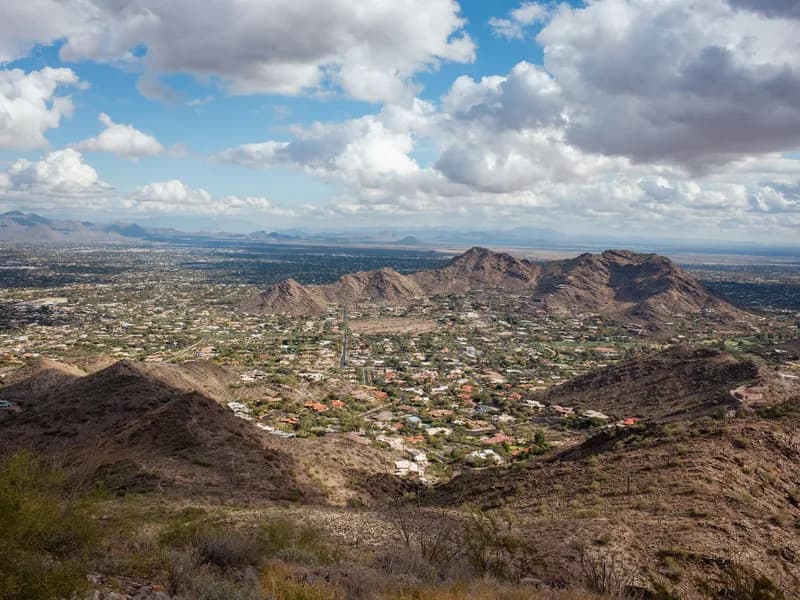
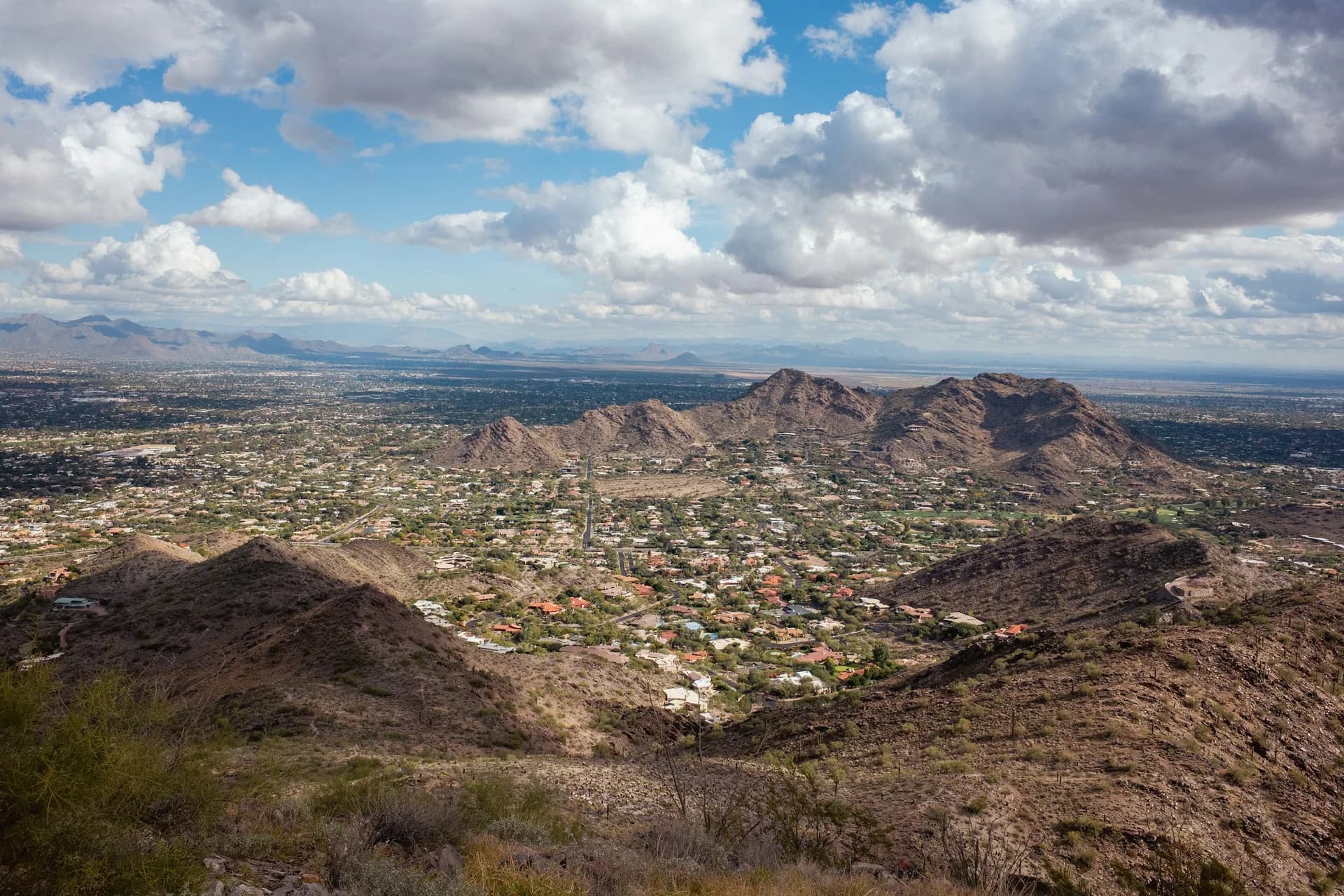
The smarter pick: Pinnacle Peak Trail. A 3.5-mile round trip in north Scottsdale, moderate difficulty, with massive views of the McDowell Mountains and Four Peaks. The trailhead has good parking and restrooms, and it's never as crowded as Camelback.
For something longer, take the Gateway Loop in McDowell Sonoran Preserve. 4.5 miles through classic Sonoran Desert — saguaros, barrel cactus, and almost guaranteed roadrunner sightings. Locals run this loop hundreds of times and it never gets old.
Q: What should tourists eat?
First: a Sonoran hot dog. Find a cart — they cluster near Old Town or outside hardware stores (seriously). Bacon-wrapped hot dog, pinto beans, onions, tomato, mustard, jalapeño salsa, mayo, tucked into a bolillo roll. $4-5. It's Arizona's greatest contribution to American cuisine, full stop.
For a proper dinner: The Mission in Old Town. Grab a seat on the patio, order the tableside guacamole and the carne asada, and drink mezcal cocktails until the desert cools down. Budget $50-70 per person with drinks.
For breakfast: the Original Breakfast House. Massive portions, cowboy-sized omelets, bottomless coffee. $12-18 for a meal that lasts until dinner.
Skip the touristy restaurants on Scottsdale Road near Camelback. They charge resort prices for average food. Walk two blocks off the main strip and everything improves.
Q: What's the wildlife really like?
Living in the Sonoran Desert means coexisting with animals that were here first.
-
Javelinas: They look like small wild pigs, travel in herds, and smell terrible. Don't approach them — they have tusks and will charge if cornered. They raid garbage cans and eat prickly pear cactus, and they'll turn up in a driveway at 6AM more often than you'd believe.
-
Coyotes: You hear them howling at dusk, and they're everywhere. Keep small pets inside at dawn and dusk. They're beautiful and completely uninterested in humans.
-
Rattlesnakes: Western diamondbacks are the most common — expect to see two or three a year on trails. Stay on the path. Don't stick your hands under rocks. If you see one, freeze, then back away slowly. They want the encounter even less than you do.
-
Roadrunners: Yes, they're real. Yes, they're fast. No, they don't look like the cartoon. About two feet tall, mottled brown feathers, lizards on the menu. Watching one sprint across a trail is genuinely delightful.
-
Gila monsters: Rarely seen — count yourself lucky to spot two in ten years. Venomous but slow-moving. If one crosses your path, give it space and enjoy the moment.
Q: What's the art and culture scene actually like?
Better than it has any right to be for a city of 242,000.
The Scottsdale ArtWalk on Thursday nights turns Old Town into a free gallery crawl with wine. Over 100 galleries participate, with quality ranging from tourist-shop southwestern kitsch to museum-grade contemporary work.
SMoCA is genuinely world-class for its size. The James Turrell skyspace — an outdoor installation where you sit on a bench and watch the sky change color through a geometric opening in the ceiling — is meditative and strange, and it belongs on every visitor's list.
Taliesin West tours are essential. Seeing Frank Lloyd Wright's desert laboratory — how he used desert rocks, canvas, and redwood to blur the line between building and landscape — can change how you think about architecture.
Musical Theatre of Arizona stages surprisingly strong productions. Canal Convergence (November, free) is a public art festival with light installations along the Scottsdale Waterfront.
Q: What's the honest take on the golf culture?
You don't have to golf to get the appeal — 200+ courses, most with mountain and desert views that make you forget you're chasing a ball.
The best public course for scenery: Troon North's Monument Course. Even a terrible round comes surrounded by saguaros and Pinnacle Peak.
Golfers should know: summer green fees run 50-70% cheaper. Tee off at dawn, play 18 holes before the sun tries to kill you, and save $150 in the process.
Q: What would locals change about Scottsdale?
The sprawl. Everything requires a car. There's no meaningful public transit. You drive to the grocery store, drive to the trailhead, drive to dinner — the American suburban model at its most extreme.
Then there's water. The desert is getting drier. Lake Mead and Lake Powell sit at historic lows. Scottsdale has done a better job than most Arizona cities with water conservation, but the fundamental question — should 5 million people live in a desert with 200+ golf courses? — hangs over everything.
It's a place worth loving with eyes open to its contradictions.
Q: Should you visit Scottsdale?
If you love desert landscapes, outdoor activity, spa culture, food, and art — absolutely. October through April, it's one of the best destinations in the American West. For more insights, check out our Your Scottsdale Questions Answered. For more insights, check out our 10 Reasons Scottsdale Belongs on Your US Travel List.
If you need nightlife, walkability, or public transit, look elsewhere.
And if you visit in summer, respect the heat. It's not a joke and it's not an exaggeration. Carry water, start early, and remember that the desert is beautiful precisely because it's unforgiving.