Sedona in Fall: Why October Is the Month to Go
Sedona in Fall: Why October Is the Month to Go
Ask most people when to visit Sedona and they'll say spring. March through May gets the marketing push — wildflowers, warm days, golden light. And spring is good.
But October is better. The summer heat has broken. The crowds have thinned. The cottonwood trees along Oak Creek turn brilliant gold and orange against the red rock backdrop. And the night sky is at its clearest and darkest.
I've been to Sedona in every season. October is when it peaks.
The Weather
| October | March-April (Spring) | July (Summer) | |
|---|---|---|---|
| High | 26°C (78°F) | 22-27°C (72-80°F) | 38°C (100°F) |
| Low | 10°C (50°F) | 7-12°C (45-54°F) | 21°C (70°F) |
| Rain days | 3-4 | 3-4 | 5-6 (monsoon) |
| Crowds | Moderate | High | Moderate |
October sits in the sweet spot. Warm enough for all-day hiking without carrying excessive water (though you still need 1 liter per hour). Cool enough for comfortable sleep. No monsoon thunderstorms. No scorching midday heat forcing you indoors.
The mornings start crisp — 10°C at sunrise, fleece weather. By noon it's t-shirt temperature. Perfect layering conditions.
Fall Colors Against Red Rock
Sedona doesn't do fall foliage like New England. It does something better.
The cottonwood trees along Oak Creek Canyon turn brilliant gold and amber in mid-to-late October. Against the red sandstone formations, the color contrast is extraordinary — gold leaves, red rock, blue sky. It's a color palette that shouldn't exist in nature.
Where to see it:
- Oak Creek Canyon Drive (Hwy 89A north of Sedona) — The 15-mile scenic drive through the canyon is stunning in fall. The road winds between red cliffs with cottonwoods lining the creek below. Pull off at the West Fork trailhead.
- West Fork Trail — A 6.9-mile round trip through a narrow canyon with 13 creek crossings. In October, the canyon walls frame corridors of golden cottonwoods reflected in the creek. It's the single best fall color hike in Arizona.
- Slide Rock State Park — The swimming area is closed by October, but the orchard and creek views are gorgeous with fall color. Entry: $20-30/vehicle.
Hiking Season Peaks
October is the best hiking month in Sedona. Full stop.
In summer, you're limited to dawn and early morning — midday temperatures make hiking dangerous. In winter, shorter days limit trail time. In spring, crowds pack every trailhead.
October gives you a full 8-hour hiking window. Trailheads that fill by 7AM in spring don't fill until 9-10AM. You can start a hike at 8AM and finish by mid-afternoon without heat stress.
Best October hikes:
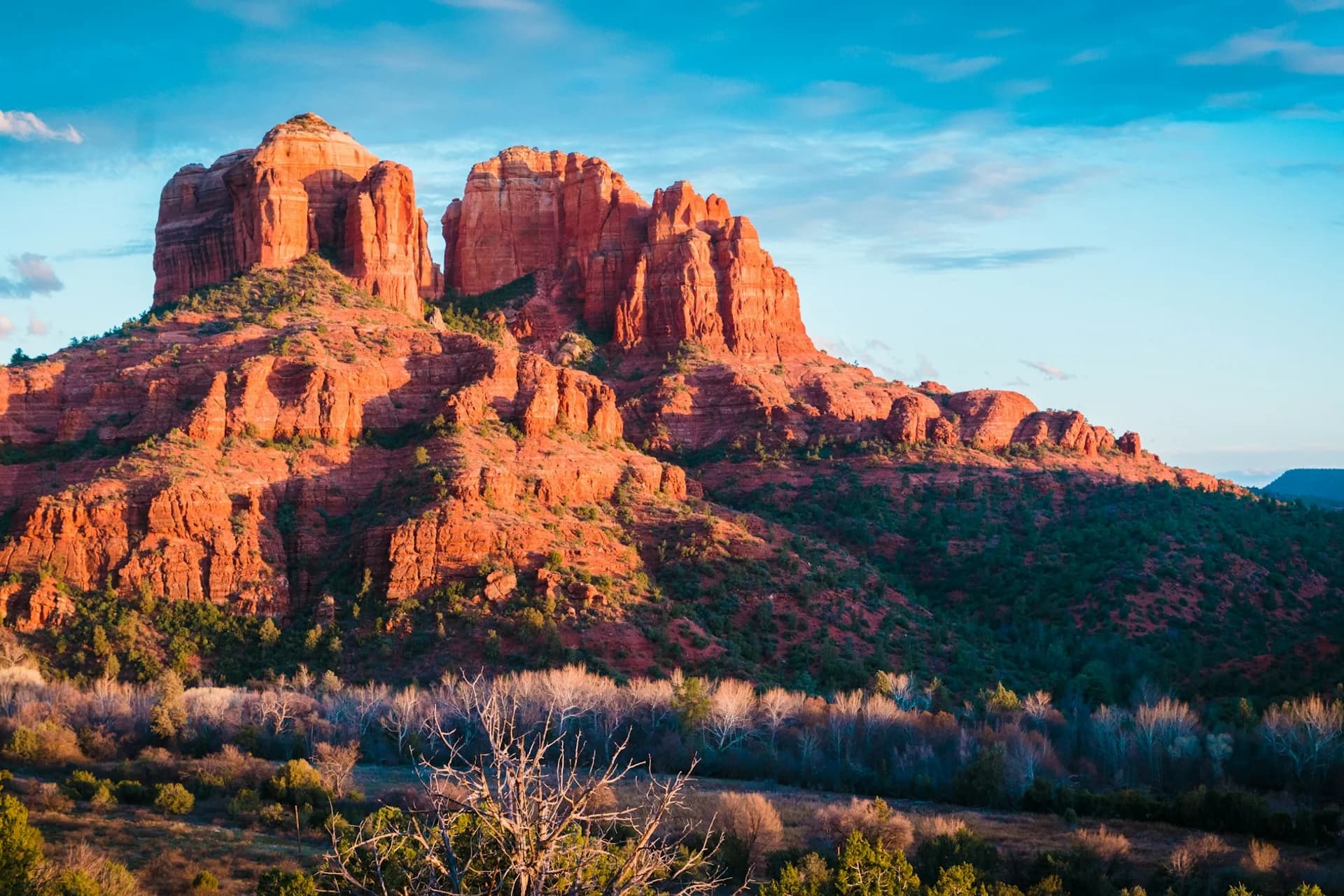
- Cathedral Rock (1.2 miles, strenuous scramble) — At sunrise, the red rock glows orange-gold. Less crowded than spring. Arrive by 6:30AM for parking.
- Devil's Bridge (4.2 miles, moderate) — The largest natural sandstone arch in Sedona. October light on the bridge is warm and dramatic.
- West Fork (6.9 miles, moderate) — The fall colors make this the month for this trail.
- Bear Mountain (4.9 miles, difficult) — Panoramic views from 6,500 feet. Challenging but the October light rewards the effort.
Red Rock Pass ($5/day, $15/week) is required at most trailheads.
Stargazing Peaks
Fall skies in Sedona are the clearest of the year. The summer monsoon moisture has cleared. The air is dry and stable. Darkness comes earlier (sunset around 5:45PM by late October) giving longer viewing windows.
The Milky Way is still visible in early October, arcing across the western sky before it dips below the horizon for winter. The Andromeda Galaxy becomes easier to spot with the naked eye as the sky darkens earlier.
Best spots:
- Airport Mesa overlook — Easy access, panoramic dark sky
- Posse Grounds Park — Less well-known, equally dark
Guided astronomy tours ($60-90/person, 2 hours) are available year-round but October's conditions are optimal. Book around the new moon for darkest skies.
Events and Festivals
Sedona International Film Festival (Late February — but pre-book for October arts events)
October itself features:
- Sedona Arts Festival (early October) — Over 100 artists displaying and selling work. Local galleries host openings.
- Tlaquepaque Arts Village events — This Spanish-colonial-style shopping village hosts art shows, live music, and seasonal celebrations throughout October.
- Red Rock Fantasy / Scenic Drives — Fall light makes the scenic drives (179 and 89A) particularly photogenic. Late afternoon golden hour hits Cathedral Rock from the Crescent Moon picnic area with spectacular results.
What to Pack
- Layers: base layer, fleece, light wind jacket
- Sturdy hiking shoes with good grip (the slickrock trails demand it)
- Sunscreen and hat (UV is intense at altitude even in fall)
- 1-2 liters of water per hike
- Camera with a polarizing filter (cuts glare on red rock and intensifies the blue sky)
- Warm layer for evening stargazing (temperatures drop to 8-10°C after dark)
- Binoculars for stargazing
Crowd Levels
October crowds are moderate — significantly lighter than March-April peak season, but heavier than winter. Weekdays are noticeably quieter than weekends.
The big advantage: popular trails that require 6AM arrivals in spring allow 8-9AM starts in October. Devil's Bridge, which has a 30-minute photo line in April, might have a 5-minute wait.
Budget Considerations
October hotel rates are lower than spring peak but higher than summer (when the heat keeps people away). Expect $180-350/night for mid-range properties.
The budget play: stay in Cottonwood or Camp Verde (15-20 minutes away, $90-150/night) and drive in daily. The drives themselves are scenic.
The Contrarian Take
Everybody talks about Sedona's red rocks. Fair — they're extraordinary. But fall Sedona's secret is the creek canyons. Oak Creek Canyon and West Fork Trail in October are Arizona's answer to a New England fall — gold and amber leaves, clear water, red rock walls. It's a side of Sedona that desert-focused visitors completely miss.
If you only have one day in Sedona in October, skip Cathedral Rock (controversial, I know) and hike West Fork instead. You'll see something you can't see any other month.