The Morning the Red Rocks Swallowed Me Whole: A Sedona Story
The Morning the Red Rocks Swallow You Whole: A Sedona Story
Come to Sedona for the energy if you want — but the real draw is the hiking. The red rock formations, the canyon trails, the desert landscapes you've seen in photographs. The vortex stuff, the crystal shops, the aura readings register as background noise. Tourist trappings, easy to dismiss.
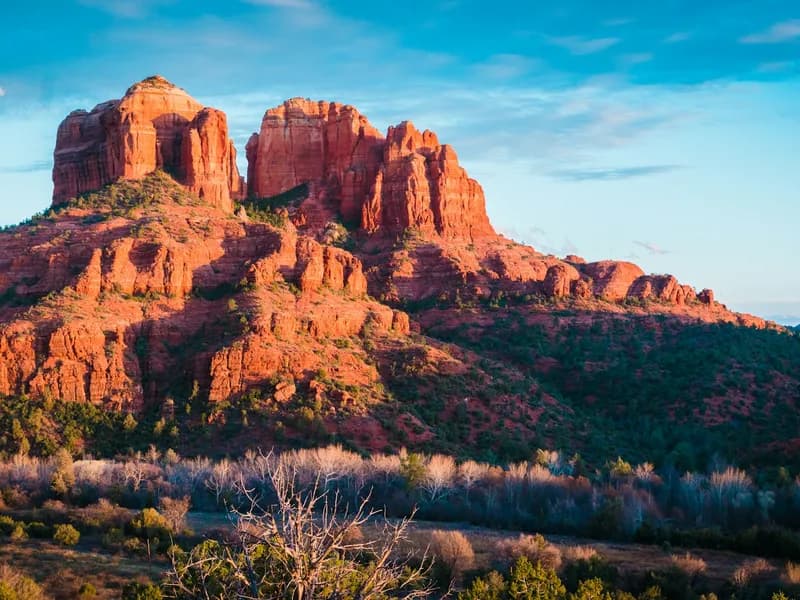
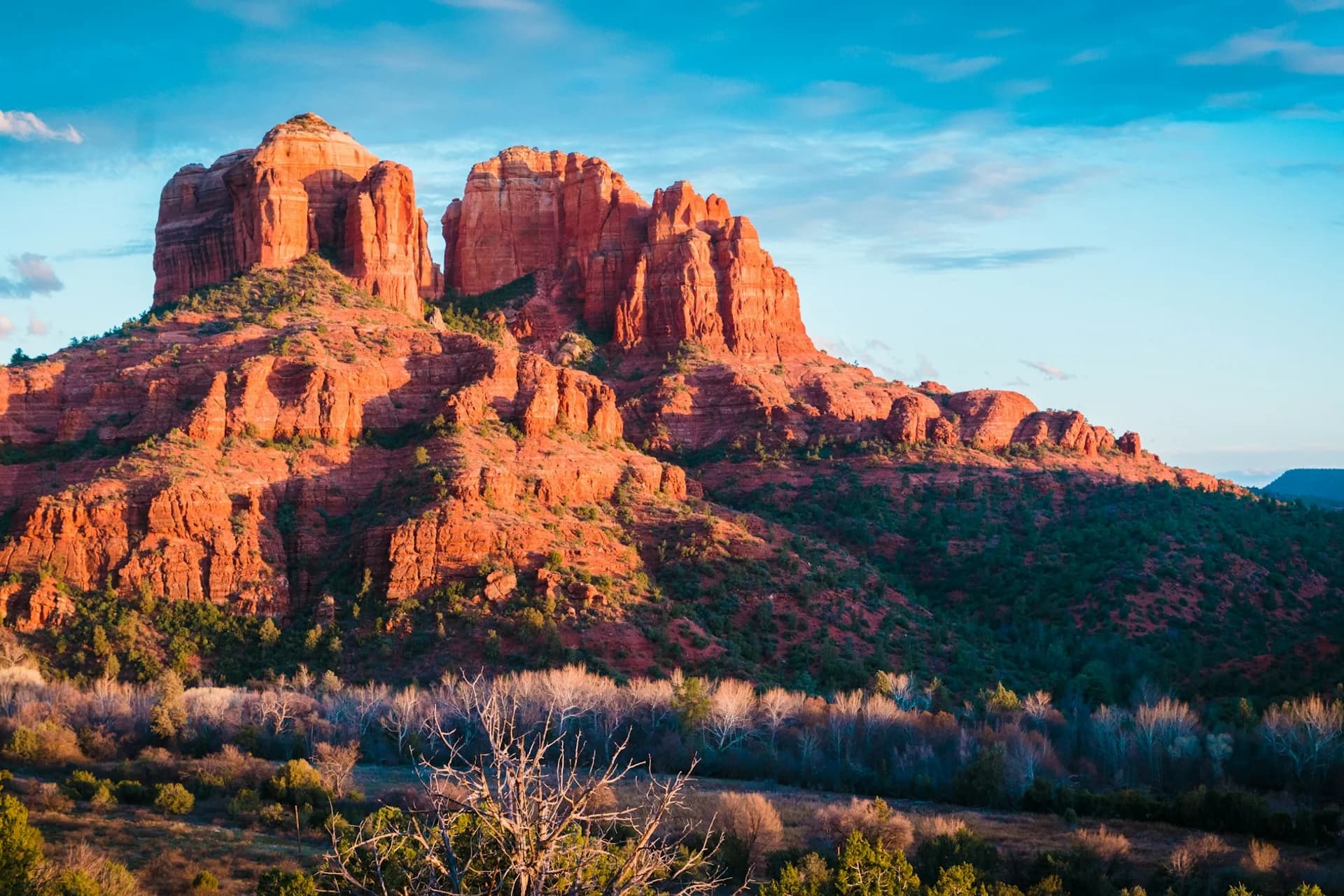
Then you watch sunrise from the saddle of Cathedral Rock and something shifts. Not spiritual awakening. Not energy transfer. Something simpler and harder to wave away: you feel profoundly, unexpectedly moved — and the why stays with you long after.
4:47 AM — The Trailhead
Cathedral Rock at sunrise asks you to arrive in darkness. The trailhead parking lot holds maybe 30 cars and fills by 7AM even on weekdays. At 4:47AM, yours can be the only vehicle in it.
The Red Rock Pass ($5 from the kiosk — exact cash or check, the machine doesn't take cards) is the first small hurdle, so come prepared. Skip the scramble for change by buying a weekly pass ($15) at the Sedona Chamber of Commerce the day before and clipping it to your visor.
The trail starts gentle. A well-marked path through juniper and piñon pine. The air runs cool — maybe 12°C — and smells like sage and something mineral. Desert smell. Clean in a way city air never manages.
Switch on your headlamp and start walking.
5:15 AM — The Scramble
Cathedral Rock's trail is only 1.2 miles round trip. But the second half isn't a trail — it's a scramble over slickrock, smooth sandstone worn by thousands of feet into shallow grooves that double as handholds — the same red slickrock that turned Utah's Moab into a mecca for climbers and mountain bikers. In the dark, under a headlamp beam, the rock glows dull red.
The exposure is real. Not technical climbing, but steep enough that a fall would hurt. Grippy soles grab the sandstone well — essential, as every guidebook warns. You wedge your fingers into cracks, pull yourself over ledges, and resist the urge to look down.
The stars are still out. Out here, with Sedona's already-minimal light pollution behind you, they're staggering. The Milky Way reads as a visible band. Jupiter burns as a bright point. Kill the headlamp for 30 seconds and stand still on the rock, surrounded by stars and silence.
Then keep climbing.
5:48 AM — The Saddle
The saddle of Cathedral Rock is a notch between two spires. You sit on smooth sandstone and the world opens in every direction — Sedona's valley below, the red formations of Bell Rock and Courthouse Butte to the south, the dark line of the Mogollon Rim to the north.
Arrive early enough and you'll have it completely to yourself. The first light just touches the eastern sky — a thin line of pale gold below indigo.
Sit down, eat a granola bar, and wait.
6:04 AM — The Light
Here's what catches everyone off guard: the speed of it. One moment the rocks are dark red, nearly black in predawn shadow. Then the sun crests the rim and the light hits the formations like a switch.
The red sandstone ignites — there's no better word for it. The rocks go from dark to vivid orange-red in seconds, as if generating their own light. The shadows retreat down the cliff faces, revealing textures and striations invisible moments before.
The valley below stays in shadow, but the spires around you light up like stage sets. The contrast — dark valley, blazing red rock, pale blue sky — is almost too much. Your eyes won't know where to focus.
Linger 40 minutes. Take photos. None of them will capture it.
The Vortex Question
Cathedral Rock is one of Sedona's four main vortex sites — places where the earth is said to emit spiraling energy. The others are Airport Mesa, Bell Rock, and Boynton Canyon.
Skeptics have plenty of company here. Energy vortexes don't have to be part of your worldview. But sitting on that saddle at sunrise, you start to understand — at least partway — why people believe.
The juniper trees near the vortex points grow in distinctive twisted patterns. Locals call them "twisted trees" and point to them as evidence of spiraling energy. A botanist would call it wind exposure and rocky soil. Both explanations are probably true.
What's undeniable: the combination of altitude, silence, physical exertion from the climb, and the overwhelming visual spectacle of sunrise creates a state of focus and calm that's rare in ordinary life. Whether you file it under "energy" or neuroscience or simple awe, the effect is real.
The Rest of the Day
After descending Cathedral Rock (trickier going down — the smooth rock turns slippery), drive to the Chapel of the Holy Cross. This is the church built directly into a red rock cliff face in 1956, designed by a student of Frank Lloyd Wright. Free entry, open 9AM–5PM.
The chapel is small — 50 seats, maybe. But the rear wall is a floor-to-ceiling window with the red rocks filling the frame. The effect is deliberate and powerful. Architecture as spiritual experience. You don't need to be Catholic to sit in a pew for 10 minutes and feel something land. It's the same fusion of faith, art, and high-desert light that draws people to Santa Fe, a few hundred miles east in New Mexico.
Afternoon: Devil's Bridge Trail. A 4.2-mile round trip to the largest natural sandstone arch in Sedona. The arch is 54 feet across and you can walk across it — carefully, no rails, considerable drop on both sides. If that exposure thrills more than it terrifies, Zion's slot canyons are the natural next chapter. The Instagram line at the top runs about 15 minutes. Wait it out. The photo is worth it.
Evening: a Pink Jeep Tour ($109, 2 hours). Easy to write off as touristy, overpriced, gimmicky — and wrong on every count. The Broken Arrow route climbs terrain that would destroy a rental car — steep slickrock ledges, tight gaps between formations, angles that shouldn't be possible in a vehicle. The drivers are excellent and the backcountry access justifies the price.
Night — The Sky
Sedona holds an International Dark Sky designation. That means light pollution has been actively reduced to preserve visibility of the night sky.
Drive to the Airport Mesa overlook after dinner. Park. Turn off every light. Look up.
The Milky Way arcs as a visible band across the sky. Not a photograph. Not a planetarium. The actual Milky Way, visible with the naked eye. You can pick out the Andromeda Galaxy as a faint smudge, and trace Orion, the Pleiades, Jupiter.
Stargazers often set up telescopes here ($60–90 guided astronomy tours are available). On any given night, someone is pointing out Saturn's rings to a wide-eyed kid. The gasp is universal.
Drive back to the hotel at 10PM — sunburned, trail-dusty, and inexplicably happy.
What You'll Take Away
Sedona doesn't require belief. You don't have to buy into vortexes or crystal healing or aura photography to have a transformative experience here. The landscape does the work.
The red rocks are 300 million years old. Water, wind, and time have shaped them into formations that look designed but weren't. Standing among them — especially at sunrise, especially alone — creates a feeling best described as appropriate smallness. You're a small thing in an old place, and for once, that feels good.
Arrive a skeptic and you may well leave one. But a moved one.
Practical Notes
- Red Rock Pass: $5/day or $15/week from trailhead kiosks. Required for parking at most trailheads.
- Sedona is 2 hours north of Phoenix (PHX). A car is essential.
- Bring 1 liter of water per hour of hiking. The desert is bone-dry.
- Start hikes before 8AM in summer to avoid 40°C heat.
- Hotels average $200–400/night. Save by staying in Cottonwood (20 min away, 40–60% cheaper).
- Day trip to the Grand Canyon South Rim: 2 hours north via Oak Creek Canyon (a stunning drive).