Sedona for the Soul: A Wellness and Spirituality Deep Dive
Sedona for the Soul: A Wellness and Spirituality Deep Dive
Sedona attracts two kinds of visitors: hikers who come for the red rocks, and seekers who come for something less tangible. This guide is for the second group — and for the hikers who are curious but wouldn't admit it at a dinner party.
The wellness and spiritual scene in Sedona isn't performative. It's not a trend. The New Age community has been here since the 1980s, and it's woven into the town's identity as deeply as the hiking trails and Pink Jeep Tours. Whether you're a true believer or a skeptic willing to try something different, Sedona delivers experiences you won't find anywhere else.
The Four Energy Vortexes
Sedona's vortex sites are specific locations where the earth is said to emit concentrated spiraling energy. There are four main ones, each with a different quality:
Airport Mesa — The Electric Vortex
The most accessible vortex. A short, easy trail from the Airport Mesa parking area leads to a rocky overlook with panoramic views. The energy here is described as "electric" — uplifting, activating, good for reflection and intention-setting.
The juniper trees near the vortex point grow in distinctive twisted spirals. This is the most visible "evidence" of the vortex — though botanists attribute it to wind patterns and shallow soil.
Best for: First-time vortex visitors. Sunrise and sunset are most powerful.
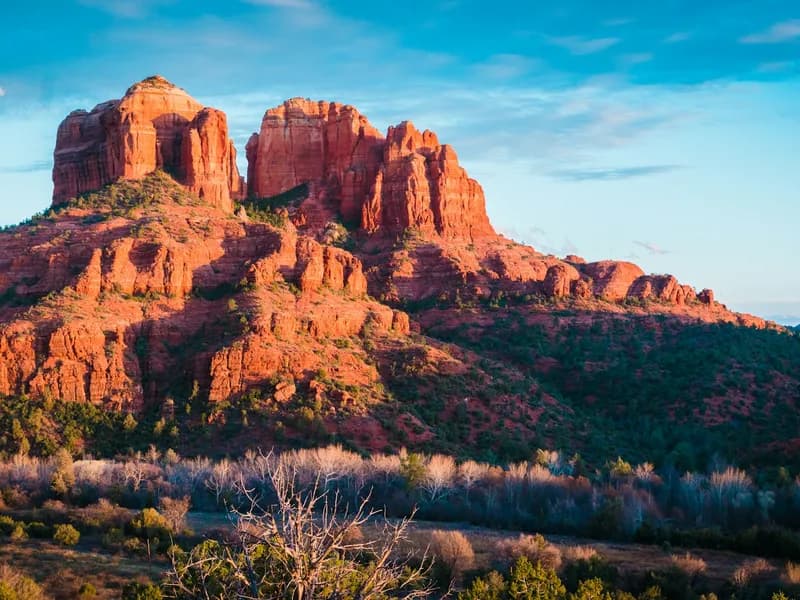
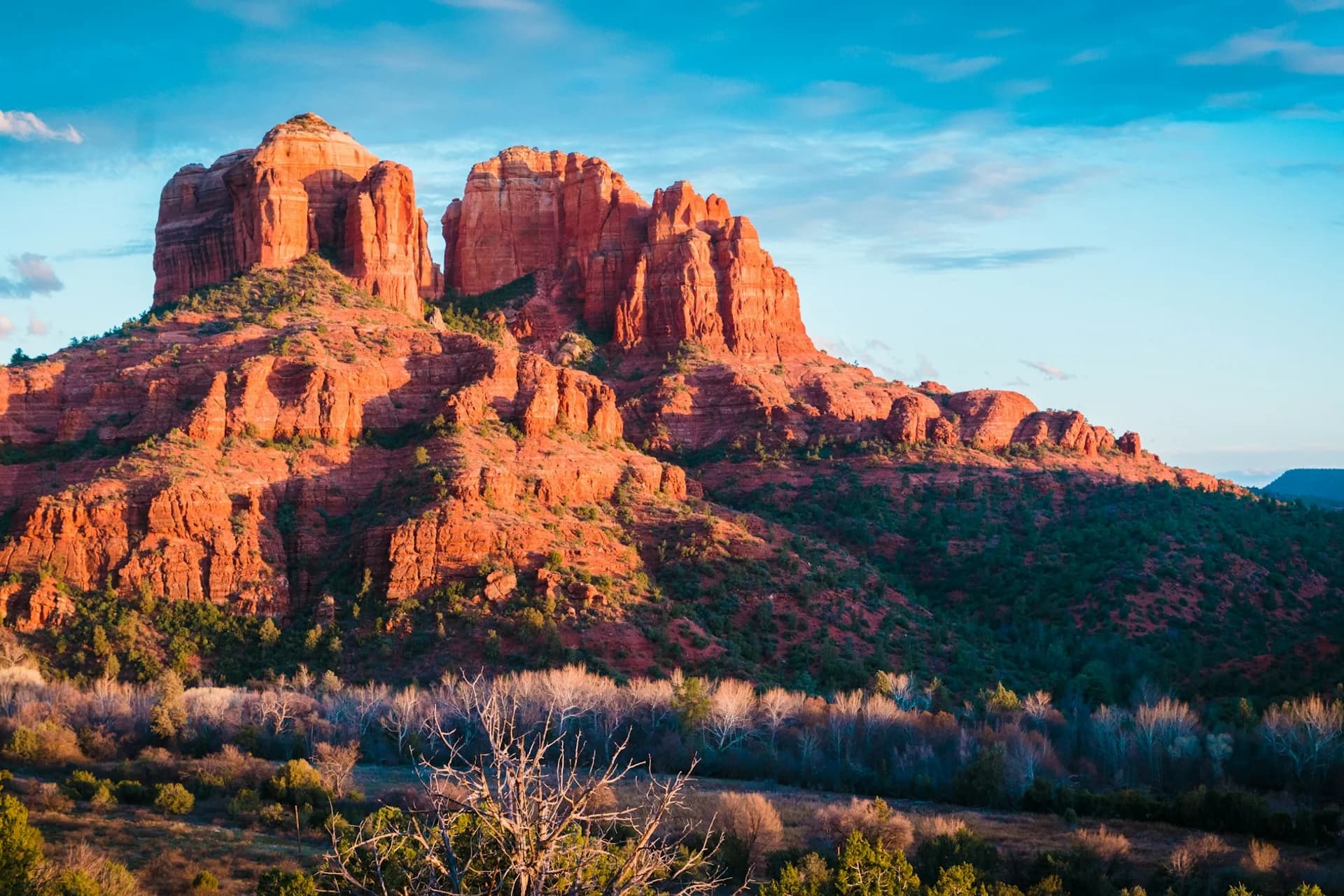
Cathedral Rock — The Magnetic Vortex
The most famous and the most physically demanding to reach. The 1.2-mile scramble to the saddle is steep and exposed. The energy is described as "magnetic" — grounding, calming, introspective.
At sunrise, the combination of physical exertion, altitude, silence, and the overwhelming red rock light creates a state of focus and calm that's difficult to replicate anywhere else. Even hardcore skeptics report feeling "something."
Best for: Meditation. Bring a cushion and sit in the saddle for 20-30 minutes.
Bell Rock — The Balance Vortex
The easiest vortex hike — a gentle trail around the base of a bell-shaped formation. The energy is described as balanced between electric and magnetic. Good for beginners and families.
You can climb partway up Bell Rock on marked paths. The views from even the lower ledges are excellent.
Best for: Balanced energy. Good any time of day.
Boynton Canyon — The Strongest Vortex
Located at the back of a canyon surrounded by towering red walls. The hike is 6.1 miles round trip (moderate). The vortex point is at a small knoll called Kachina Woman.
Many visitors describe Boynton Canyon as the most emotionally intense of the four. The enclosed canyon creates a cathedral-like atmosphere. Sound carries strangely. Echoes linger.
Best for: Experienced seekers. Allow a full morning.
All four sites are free with a Red Rock Pass ($5/day).
Guided Vortex Experiences
If you want more than a self-guided visit, Sedona has dozens of vortex guides. Prices range from $80-150 per person for a 2-3 hour experience.
A good guide will take you to a vortex site, share the geological and spiritual history, lead a meditation or breathwork session, and leave you with quiet time alone at the energy point.
Look for guides with years of local experience rather than generic tour companies. Ask your hotel for recommendations — the locally trusted guides are worth the premium over mass-market tours.
Sound Healing
Sedona's sound healing scene is established and serious. Practitioners use crystal singing bowls, Tibetan bowls, gongs, chimes, and tuning forks to create frequencies that proponents say align the body's energy centers.
Sessions run $40-80 for a group experience, $100-200 for private. You lie down (usually outdoors or in a studio with red rock views), close your eyes, and let the sounds wash over you.
I've done two sessions. The first time, I fell asleep within 10 minutes (apparently common). The second time, I stayed awake and found the experience genuinely relaxing — the overlapping frequencies create a meditative state that's easier to achieve than solo meditation.
Whether you attribute the effects to sound vibrations or simple relaxation, the result is the same: you leave feeling calmer.
Crystal Shops and Aura Readings
Sedona's crystal shops are everywhere and range from tourist trap to genuinely knowledgeable. The better shops have staff who can explain the properties attributed to each crystal and help you choose based on your intentions.
Crystal Magic on Highway 179 has one of the largest selections. Center for the New Age offers aura photography ($30) — a camera that maps your electromagnetic field as colored light around your body. It's fun even if you take it with a grain of salt.
Aura readings ($50-100) go deeper — a practitioner interprets your energy field and discusses what the colors might mean for your current state.
Dark Sky Stargazing
Sedona's International Dark Sky designation makes it one of the best stargazing locations in the American Southwest. On a clear, moonless night, you can see the Milky Way with your naked eyes.
Self-guided: Airport Mesa overlook or Posse Grounds Park. Free. Bring a blanket and patience. Give your eyes 20 minutes to adjust to the darkness.
Guided astronomy tours: $60-90 per person, 2 hours. Professional-grade telescopes. Guides point out constellations, planets, galaxies. On a good night, you can see Saturn's rings, Jupiter's moons, and the Andromeda Galaxy.
Best on new moon nights. Fall and winter have clearer skies and earlier darkness.
Wellness Retreats and Spas
Sedona has world-class spas that incorporate the landscape into the experience:
Mii amo at Enchantment Resort — One of the top destination spas in the world. Multi-day programs starting at $1,500/night. Set in Boynton Canyon. The combination of red rock setting, top-tier practitioners, and structured programs is extraordinary.
Sedona Rouge Hotel & Spa — More accessible pricing ($150-250 for spa treatments). Good massages and body work.
Amara Resort — Creekside spa with red rock views. Treatments $120-250.
For budget wellness, the vortex hikes and stargazing are free (with a $5 parking pass). Sedona's spirituality doesn't require a price tag.
Slide Rock State Park
Not strictly "wellness," but sliding down an 80-foot natural waterslide carved into red rock along Oak Creek is therapeutic in its own way. Entry: $20-30/vehicle. The water is cold (~15°C) even in summer. Wear water shoes.
Arrival before 9AM in summer is critical — the park closes when the parking lot fills.
The Contrarian Take
Here's what the wellness marketing won't tell you: you don't need to buy anything to have a spiritual experience in Sedona. Not a crystal. Not a tour. Not a $200 aura reading.
Wake up early. Hike to a vortex site alone. Sit in silence for 20 minutes. Watch the light change. That's it. The landscape does the work. The 300-million-year-old red sandstone, the silence, the scale — these are the real teachers.
Everything else is packaging. Sometimes valuable packaging. But the core experience is free.
Practical Details
- Sedona is 2 hours north of Phoenix (PHX). Car required.
- Red Rock Pass: $5/day, $15/week
- Bring 1 liter of water per hour of outdoor activity
- Hotels: $200-400/night. Budget option: Cottonwood or Camp Verde (20 min away, 40-60% cheaper)
- Best months: March-May and September-November (mild temperatures, clear skies)
- Summer: 40°C+ heat makes midday outdoor activity dangerous
- The Sedona Trolley tour ($15, 55 minutes) is a low-effort overview