
The Strangest City I've Ever Visited: 48 Hours in Ashgabat's Marble Wonderland
The Strangest City on Earth: 48 Hours in Ashgabat's Marble Wonderland
Sixty-seven countries in, you start to think you've seen every kind of strange a city can offer — Pyongyang's eerie emptiness, Dubai's vertical excess, Brasilia's planned geometry. None of them prepare you for Ashgabat.
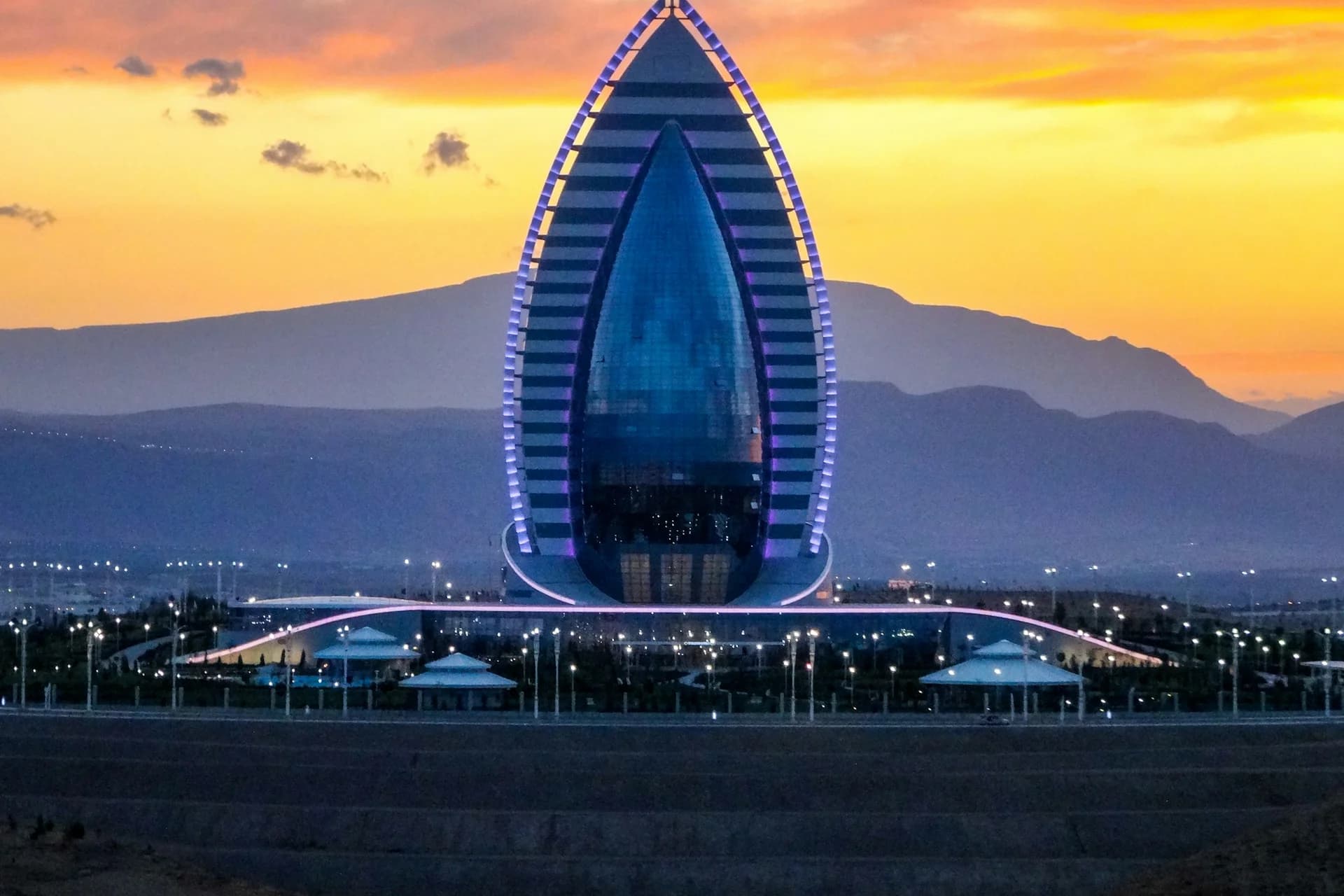
Turkmenistan's capital holds the Guinness World Record for the most white marble-clad buildings: 543 structures coated in white marble, lining boulevards that run eight lanes wide and almost completely empty of cars. Gold statues of the former president rotate to face the sun. The world's largest enclosed Ferris wheel sits inside an eight-pointed star building. And 270km north, a 70-meter-wide natural gas crater has been burning in the desert since 1971, because Soviet geologists thought setting it on fire would make it go out in a few days.
This is not a normal travel destination. It is the most surreal place you can put on a passport.
Getting In: The Visa Challenge
Turkmenistan runs one of the world's most restrictive visa regimes. You need a Letter of Invitation (LOI) from a licensed Turkmen tour operator, then you apply at an embassy ($35-155). Transit visas (5 days, through-travel only) are easier. Processing takes 2-4 weeks, so start 6+ weeks before your trip.
Independent travel is technically possible but practically difficult without a registered guide. Most visitors come on organized tours. Accept that, and book through a reputable agency.
Day 1: The Marble City
The first thing you notice is the silence. Ashgabat has 1.1 million people, yet the streets feel empty. The buildings are white, pristine, and look like nobody has ever walked through their doors. The boulevards are so wide and so clean that strolling them feels like trespassing on a movie set that hasn't started filming.
Walk from your hotel to the Wedding Palace — a massive eight-pointed star building — and you'll cover it in 20 minutes without passing another pedestrian. Not one. Cars slip by occasionally, but the sidewalks are entirely yours.
The Earthquake Monument features a golden bull holding the cracked earth above its head, with a woman and child emerging from the rubble — a tribute to the 1948 earthquake that destroyed the entire city and killed an estimated 110,000 people. The current white marble city was built entirely afterward, mostly in the last 30 years, financed by natural gas wealth — the same resource-wealth ambition that rebuilt Astana into Kazakhstan's showpiece capital.
The Turkmen Carpet Museum (50 TMT, ~$14 at official rate) houses over 2,000 handwoven carpets, including the world's largest hand-knotted carpet at 301 square meters. The five carpet gul (medallion) patterns represent the five Turkmen tribes and appear on the national flag. The craftsmanship — 300+ knots per square inch on some pieces — is extraordinary.
Day 1 Evening: Alem and the City at Night
The Alem Entertainment Center holds the world's largest enclosed Ferris wheel (47.6m). Entry: 10 TMT (~$2.85). The ride hands you aerial views of Ashgabat's skyline, and from above the strangeness amplifies — white buildings stretching in every direction with no visible sign of human activity between them.
After dark, the government buildings and monuments glow green and gold. The Turkmenistan Tower, the Ministry buildings, and the TV Tower (375m) light up against the desert blackness. It's beautiful in a way that's impossible to separate from its strangeness.
Day 2: The Door to Hell
The Darvaza Gas Crater lies 270km north — a 4-5 hour drive through the Karakum Desert. There's no public transport. A proper tour includes a private car, driver, and camping equipment.
The crater is a 70m-wide hole in the desert floor that has been burning continuously since 1971. Soviet geologists drilling for natural gas hit a cavern, the ground collapsed, and they set the leaking methane alight, expecting it to burn off in a few days. Fifty-five years later, it's still going.
By day, it's a sandy pit with flames flickering at the edges. By night — and this is exactly why you camp overnight — it turns otherworldly. The crater glows bright orange against the desert dark. The heat radiates 30 meters from the rim. Standing at the edge, looking down into an inferno that's burned for more than half a century, is one of the most alien experiences available anywhere on planet Earth.
Camp at the rim and you'll find no facilities — no toilets, no water, no food vendors. Bring everything. The temperature drops from 35°C to 12°C after midnight, and the stars above the desert are staggering — zero light pollution for 200km in every direction.
Tours from Ashgabat: $150-300/person, including transport and camping gear.
The Ancient Ruins
Nisa (18km from Ashgabat, 30 TMT) is a UNESCO site — the ruins of Old and New Nisa, once the royal residence of the Parthian Empire (3rd century BC). Little standing architecture remains, but the hilltop views across the valley to the Kopetdag Mountains are striking. The ivory rhytons unearthed here now sit in the Hermitage Museum in St. Petersburg.
Merv (350km east, usually a separate trip) is even more impressive — a massive Silk Road city that was once the world's largest, destroyed by the Mongols in 1221, and one link in a caravan chain that runs on east through Tashkent and the Uzbek Silk Road cities.
The Bazaar: Weekend Only
Tolkuchka Bazaar on the city's outskirts runs Saturday-Sunday, 6AM-1PM. Thousands of vendors sell everything from Turkmen carpets and sheepskin hats (telpek) to livestock. The carpet section is the star — authentic handwoven rugs at a fraction of Western prices. Negotiate hard. Bring cash.
If you buy a carpet, you'll need an export certificate from the Carpet Museum to take it out of the country. The process takes 1-2 days, so buy early in your trip.
Practical Realities
Photography: Don't photograph military, government buildings, police, or the Presidential Palace. The marble architecture is generally fine, though plain-clothes security may approach you.
Money: Turkmenistan runs an official rate (1 USD = 3.5 TMT) and a black market rate (1 USD = 18-20+ TMT), which creates massive price distortions. Your tour operator handles most expenses. Bring USD in good condition. ATMs are unreliable, and cards are rarely accepted.
Safety: Virtually zero crime, with a heavy police and security presence. Carry your passport. Don't discuss politics publicly. Internet is heavily censored.
Getting there: Flights reach Ashgabat International (ASB) from Istanbul, Dubai, and Moscow. The airport sits 10km from the center.
Ashgabat is not a destination for spontaneous backpackers or comfort seekers. It's for travelers who want to see something they've never seen before — a city built from scratch in white marble by a gas-rich state with unlimited ambition and unusual taste, guarding a burning crater in the desert that's been on fire since Nixon was president. You can't replicate this experience anywhere else on earth. That alone makes it worth every step of the visa hassle.


