Trade Winds and Desert Cactus: Why Aruba Is Nothing Like You'd Expect from a Caribbean Island
Trade Winds and Desert Cactus: Why Aruba Is Nothing Like You'd Expect from a Caribbean Island
The first thing you'll notice about Aruba isn't the beach. It's the wind.
A constant, unrelenting 25 km/h trade wind that never stops. Not a gentle breeze — a proper wind that leans against you when you walk, sculpts every tree into a permanent sideways bow, and — here's the dangerous part — makes 33°C heat feel like a pleasant 26°C while quietly burning your skin off.
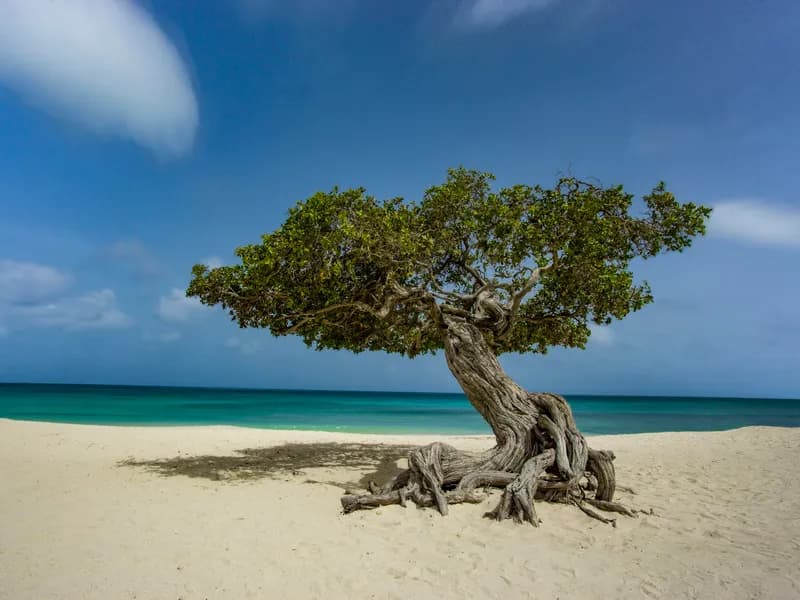
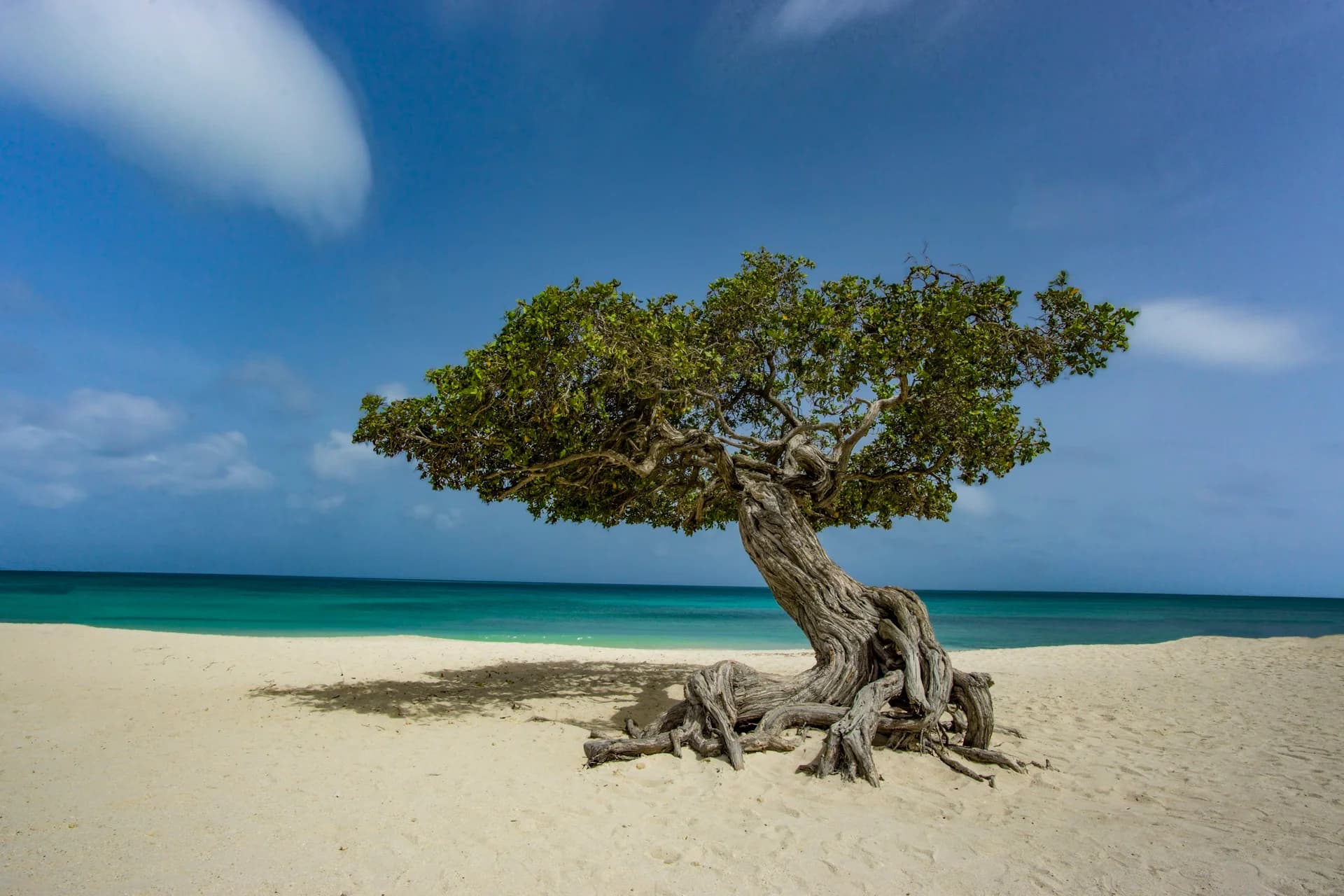
The second thing you'll notice is the cactus. Aruba's interior looks like Arizona transplanted to the Caribbean. Wattapana trees (divi-divis) bent 90 degrees by the trade winds. Kadushi and yatu cacti standing three meters tall. Rock formations weathered into bizarre shapes. Not a single coconut palm in sight.
You book a Caribbean island and land in a Dutch desert by the sea. It's the kind of surprise that reorders everything you thought you knew about this part of the world.
The Beaches That Started Everything
Let's get the obvious out of the way: yes, the beaches are spectacular.
Eagle Beach is wide, white, and famous for its iconic wind-bent fofoti trees — the most photographed natural feature on the island. The sand is powder. The water is calm and clear on the leeward (western) side. Sun loungers rent for ~$15/day, but staking out a spot under a palapa (thatched umbrella) is free if you arrive before 9AM.
What makes Eagle Beach different from, say, Seven Mile Beach in Jamaica or Grace Bay in TCI is the space. It's wide enough that even at peak season, you're never shoulder-to-shoulder with strangers. And the fofoti trees — sculpted into dramatic S-curves by decades of trade wind — give it a character that no other Caribbean beach has.
Palm Beach, a kilometer north, is the resort strip — high-rises, beach bars, water sports. It's where the action is. Eagle Beach is where the quiet is. When you want the calmer half of the island, point yourself at Eagle.
The Desert Nobody Expects
Arikok National Park covers 20% of the island and looks nothing like the Caribbean. The terrain is rocky, dry, and punctuated with cacti. The trails wind through volcanic formations, past Arawak cave paintings (2,000+ years old), and along a rugged windward coastline where waves explode against rock with the kind of violence that makes you step back involuntarily.
Entry is ~$11 USD. The main park road is drivable in a regular car, but reaching the Natural Pool (Conchi) — a volcanic rock pool on the northeast coast filled by waves crashing over the outer wall — requires a 4x4, UTV ($150 half day rental), or horseback tour.
Rent a UTV and you'll spend four hours bouncing along rocky trails to Conchi, and every jolt earns its reward. The pool is small — maybe 15 meters across — sheltered by a natural rock wall that blocks the Atlantic waves (mostly). Swimming there, with waves crashing over the wall and spray showering down, feels like a hot tub designed by geology.
Arikok is the experience that separates Aruba from every other Caribbean beach destination. Nobody comes to the Caribbean expecting desert hikes and volcanic rock pools. That's exactly why you should.
Flamingo Beach — The Expensive Photo Op
Renaissance Island is a private island where flamingos roam the beach. It's accessible only to Renaissance Resort guests or via a day pass (~$125 USD including boat transfer and food/drink credit).
The flamingos are beautiful, pink, and utterly tame — they eat pellets from your hand and pose for photos with the patience of professional models. The beach is nice. The drinks are included.
But here's the honest steer: $125 for a few hours with flamingos on a small beach runs steep. The flamingos aren't wild; they're managed. The photo opportunities are excellent, but they're curated rather than organic. If Instagram content is the goal, book it. If you're after authentic nature encounters, spend the $125 on Arikok plus a snorkel trip instead.
Day passes are limited to 30-50 per day. Book early.
Baby Beach — The Anti-Eagle
At Aruba's southeastern tip, Baby Beach is a shallow lagoon where the water stays waist-deep far from shore. The name comes from its suitability for children — calm, warm, and gentle. But it's also excellent for adults who want to snorkel along the reef at the lagoon's edge.
Rum Reef Bar sits right on the beach and serves cocktails and snacks at non-resort prices ($6-10 for drinks). Float the afternoon away in the shallow water with a $7 rum punch in hand, watching pelicans crash-dive for fish, and you'll start wondering why anyone books a hotel 30 minutes north.
Baby Beach is 30 minutes from the hotel zone. Bring shade — there are no palm trees. Bring water. Bring snorkel gear.
Oranjestad — The Dutch Town
Aruba's capital is a compact, walkable town with Dutch colonial architecture in colors that look like a paint store exploded with good taste — coral pink, turquoise, yellow, mint green. A free trolley runs along the main street (L.G. Smith Boulevard).
The Wednesday evening Bon Bini Festival at Fort Zoutman features Aruban music, traditional dancers, and food stalls. Free entry. The vibe is local rather than touristy — families, kids running around, grandparents clapping along to the tumba music.
The fish market on the waterfront sells the morning catch — red snapper, mahi-mahi, wahoo — and nearby restaurants will cook it for you for the price of a main course ($15-20).
The Wind Factor
You cannot overstate the trade winds. They're constant. They're strong. And they're deceptive.
The wind makes 33°C feel comfortable, which means you won't realize you're sunburning until dinner, when your shoulders glow red. Reapply sunscreen every 90 minutes — the breeze masks the burn until it's too late, so treat that schedule as non-negotiable.
The wind also divides the island into two coastlines:
- Leeward (west): Calm, swimmable, resort beaches. Eagle, Palm, Baby Beach.
- Windward (east): Wild, dangerous, no swimming. Arikok's coast, Natural Bridge (collapsed in 2005, the baby natural bridge remains), crashing waves.
Never swim on the windward coast. The currents are lethal.
The Hurricane-Free Advantage
Aruba sits at 12°N, just 29 km off Venezuela's coast, below the hurricane belt. It has never had a direct hurricane hit in recorded history. This makes it one of the safest year-round Caribbean destinations — no hurricane season anxiety, no trip insurance drama, no last-minute cancellations.
The trade winds that sculpt the divi-divi trees are the same system that steers hurricanes north and away from Aruba. The island is windy precisely because it's safe.
The Verdict — Over a Drink
Aruba isn't the Caribbean island for cultural depth. Curacao next door has more history, more architecture, more edge. Jamaica has more music and food personality. Barbados has more character in its rum shops.
But Aruba is the Caribbean island that works. Every time. The weather is reliable, the beaches are excellent, the infrastructure is solid, and the combination of desert landscape and turquoise water is something no other island offers.
The divi-divi tree on Eagle Beach, bent permanently sideways by the wind — that's Aruba in a single image. Shaped by forces beyond its control, but standing. Beautiful despite (or because of) the asymmetry.
You'll come for the beach. You'll remember the cactus.