A Week in Dubai: The Journal of Someone Who Expected to Hate It
A Week in Dubai: The Journal of Someone Who Expected to Hate It
Arrive in Dubai with your guard up — most travelers do. Everything written about it suggests a city built on excess: air-conditioned everything, artificial islands, the world's largest of every category. A place, the skeptics warn, with all the depth of a hotel lobby.
They're right about some things. Wrong about most. And the wrongness is where the trip gets good.
Day 1: The Arrival Adjustment
Land at DXB at 11PM and the first surprise is the air — 28°C outside the terminal, in November. The airport is enormous but efficient: immigration in 15 minutes, visa stamp free for US citizens (30-day stay, no advance application needed).
An Uber to Bur Dubai runs AED 65 ($18). Plenty of drivers have lived here a decade, like the one from Pakistan, nine years in, who swears by a Deira spot charging AED 20 for biryani. "Dubai is cheap if you know where to look," he says — and he's right. Write down the restaurant name.
From the car window, the first read on the city is that it's spread out. Really spread out. There's no single center — it's a collection of neighborhoods stitched together by highway. The Marina skyline glows in one direction. Old Deira glows in another. They look like two different cities, because in a way they are.
Hotel rooms hover around AED 280/night for a solid 4-star in Bur Dubai — clean, huge, with a view of the Creek. Fall asleep wondering which version of Dubai the week will reveal.
Day 1 spend: AED 350 (Uber $65, hotel n/a)
Day 2: Old Dubai and the AED 1 Experience
Walk to the Al Fahidi Historical Neighbourhood — 15 minutes from Bur Dubai — and this is where the cynicism starts cracking.
Al Fahidi is a restored 19th-century neighborhood of wind-tower houses, narrow shaded lanes, and small galleries. The wind towers — passive air conditioning that funnels breezes into the rooms below — are beautiful engineering. The Dubai Museum in Al Fahidi Fort costs AED 3 and tells the story of a fishing village that became all of this.
Then comes the moment that reframes the city: the abra ride. AED 1 to cross the Dubai Creek on a wooden water taxi, packed in beside commuters and traders. The Creek smells of salt and diesel. Wooden dhows from Iran sit docked along the bank. This is the Dubai that existed before the Burj Khalifa — and it's still here, still working.
From the Deira side, walk through the Spice Souk, where the air goes thick with saffron, cardamom, and dried lime. A vendor will happily explain the saffron grades; a packet from Iran goes for AED 40, the kind that runs $80 back home.
Lunch at an unnamed place on Al Rigga Road: chicken biryani for AED 18, better than versions costing four times as much in London. Plastic chairs, a TV playing cricket, a menu you order by pointing at a picture on the wall. It's perfect, precisely because it isn't trying to be.
Day 2 spend: AED 85 (museum $3, abra $1, spices $40, food $41)
Day 3: The Burj and the Fountain
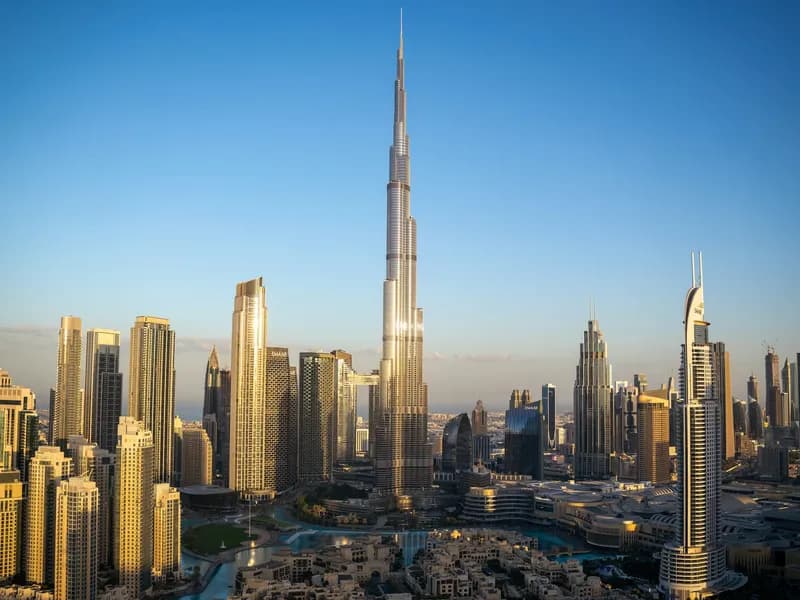
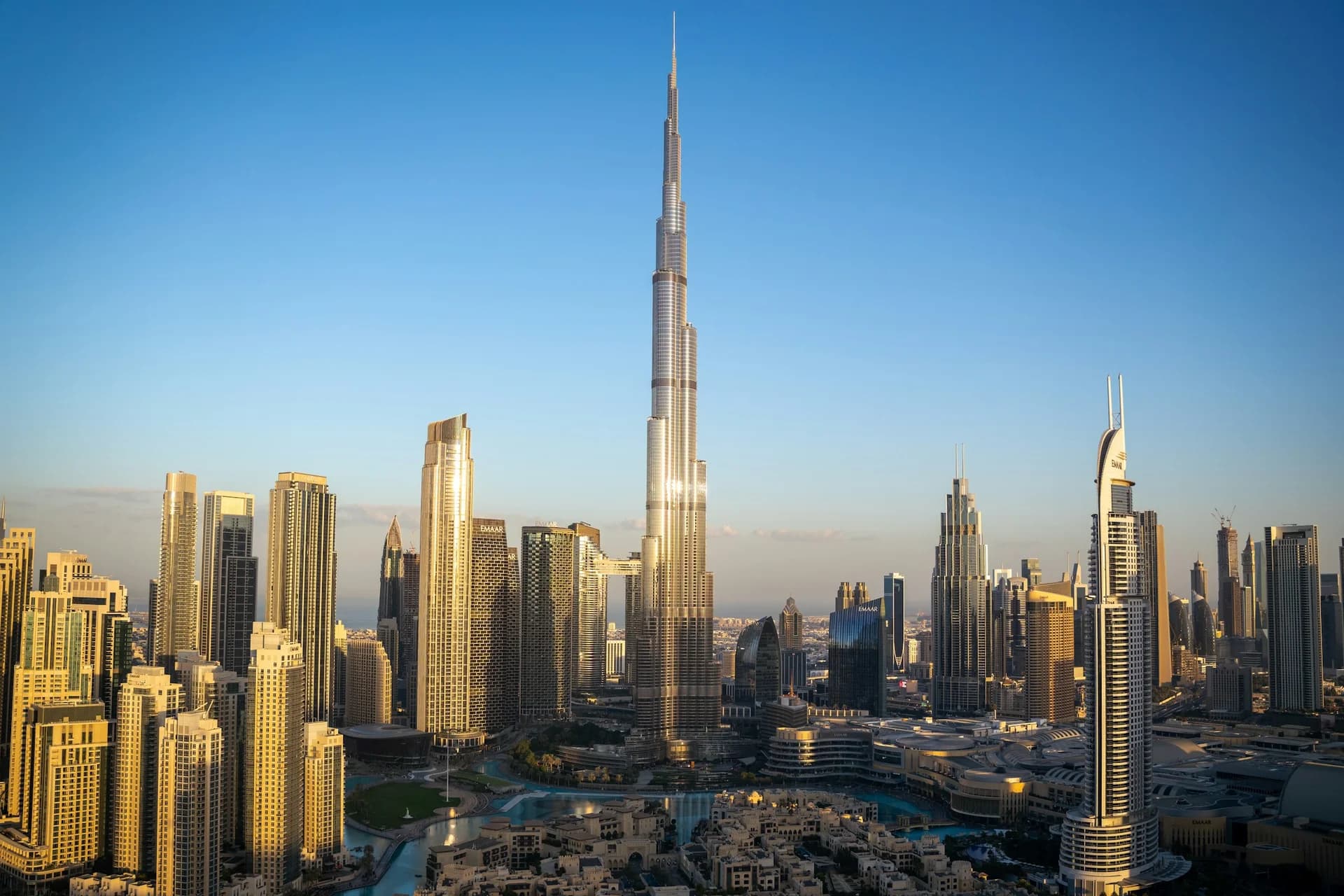
Go up the Burj Khalifa. AED 169 buys the Level 124/125 deck. Book a sunset slot — it's the right call. Watching the sun drop behind the horizon while the city below turns from gold to electric blue is a genuine, earned moment.
Here's the contrarian truth, though: the Dubai Fountain at ground level after dark may be the better show. Every 30 minutes from 6PM, 900+ water jets dance to music against the illuminated Burj. It's free. Stay for three shows in a row — an Arabic ballad, something classical, a pop song you won't recognize. The ballad wins; the water moves like it's breathing.
You can skip Dubai Mall entirely and not feel the loss. The exterior alone is vast enough to generate exhaustion before you walk in. The aquarium inside is said to be excellent. The mall holds 1,200+ shops, roughly 1,180 more than anyone needs.
Dinner at a Sri Lankan place in Karama: AED 22 for a rice and curry plate. The neighborhood hums — shops open, families walking, the call to prayer from a nearby mosque mixing with Hindi pop from a barber shop. This is the Dubai the brochures forget to mention.
Day 3 spend: AED 220 (Burj $169, food $51)
Day 4: The Desert
Book a desert safari with Arabian Adventures — AED 300 for the evening package, hotel pickup at 3:30PM, return by 9PM.
The dune bashing genuinely thrills. A Land Cruiser slides sideways down 50-degree dunes while everyone inside oscillates between terror and laughter. Your driver, 15 years into the job, will look terminally bored — which is somehow both reassuring and alarming.
The camp delivers the full set: camel riding (brief, memorable), sandboarding (harder than it looks), henna painting, and a BBQ dinner under the stars. The belly dance show is tourist-grade and that's fine. The desert itself is the headline — the silence, the amber dunes running to the horizon, the stars coming out over an empty landscape just 30 minutes from a city of 3.6 million.
Find a dune after dinner, away from the camp lights, and listen to nothing at all. In a city where everything is engineered and air-conditioned, the raw emptiness of the desert lands as the most honest thing on the whole itinerary.
Day 4 spend: AED 300 (safari only)
Day 5: JBR and the Beach
Dubai's public beaches are excellent — a pleasant correction to the assumption that everything beachside hides behind a paywall.
JBR Beach is 1.7 km of free public sand with the Marina skyline rising behind it. Rent a sun lounger (AED 50) and trade the morning between warm Gulf water and a book. The water sits at 27°C in November. Come from a northeastern US November and it feels almost illegal.
Walk the JBR boardwalk for lunch — a shawarma wrap from a street cart (AED 12), eaten on a bench while Ain Dubai, the world's largest observation wheel, turns slowly against the sky.
In the evening, a rooftop bar in the Marina charges AED 75 for a cocktail, which stings. But the view of the Marina towers lit against the water is exactly the Dubai the skeptics came expecting — and sometimes the theme-park version is worth the ticket price.
Day 5 spend: AED 195 (lounger $50, food $70, cocktail $75)
Day 6: The Verdict Takes Shape
Spend the morning at the Gold Souk, if only out of obligation. 300+ gold shops, each more gleaming than the last. The vendors are persistent without tipping into aggressive. Learn how it works: prices track the daily rate plus a negotiable "making charge." Skip the gold; pick up a small brass lamp at a hardware shop on the souk's edge for AED 30 instead.
In the afternoon, revisit the Creek by metro — Gold Class, front cabin, AED 8, genuinely one of the best public-transport experiences in any city. The view from the front window, weaving between skyscrapers, is worth double the fare.
For dinner, head to Al Ustad Special Kebab in Bur Dubai, running since 1978. Iranian kebabs on fluffy rice with saffron butter, AED 45. The walls are papered in photos of celebrities who've eaten there, and the food justifies every frame.
Day 6 spend: AED 115 (souk $30, metro $16, food $69)
Day 7: Departure and the Grudging Admission
Walk the Creek on your final morning at 7AM. The light is soft gold. Abras are already running. A man fishes off the bank. The Deira waterfront carries the quiet energy of a place that's been doing the same thing for a century.
Here's what holds up about Dubai: it's not the soulless shopping mall the headlines promise. It's a city of layers. The Burj Khalifa layer, the mall layer, the desert-safari layer — those are real, impressive in a look-what-humans-can-build way. But underneath runs a trading city that's been here for generations: the Creek, the souks, the Deira and Bur Dubai neighborhoods where people live ordinary lives over AED 20 dinners.
Dubai isn't deep in the way Istanbul or Cairo are deep. It doesn't have millennia of continuous culture to lean on. What it has instead is the audacity to build a global city in 50 years — and the old trading bones underneath that keep it grounded.
Come to dismiss it, and you'll likely leave respecting it. That's the best revision a city can earn.
Total 7-day spend (excluding accommodation): AED 1,265 (~$345 USD)
Worth returning? In winter, absolutely. Not summer — 45°C is where respect for human engineering meets its limit.
For the practical guide, read our 8 things to do in Dubai beyond the Burj. Weighing both emirates? Check our Dubai vs Abu Dhabi comparison.