
Amritsar

Key Facts
Best Time to Visit
October to March (cool, 5-25°C). Avoid May-June (45°C+). Diwali and Baisakhi (April) are spectacular at the Golden Temple
Language
Punjabi, Hindi, English in tourist areas
Currency
Indian Rupee (INR)
Time Zone
IST (UTC+5:30)
Airport
Sri Guru Ram Dass Jee International Airport (ATQ), 11km from city center
Population
1.2 million (city proper)
Climate
Semi-arid, extreme summers (45°C+), cool winters (2-15°C), monsoon July-September
Safety Rating
Generally Safe (Level 1). The Golden Temple complex is extremely safe with 24/7 security
Top Highlights

Golden Temple (Harmandir Sahib)
Sikhism's holiest shrine — a gold-covered temple at the center of the sacred Amrit Sarovar pool, open 24 hours to all faiths and nationalities. Free entry, free meals (langar serves 50,000-100,000 people daily), and free accommodation (basic dorm rooms at the temple complex). Cover your head (scarves provided free at entry), remove shoes, and wash your feet at the entrance. Visit at 4AM for the Palki Sahib ceremony (carrying the holy book). The reflection of the illuminated temple at night is unforgettable.
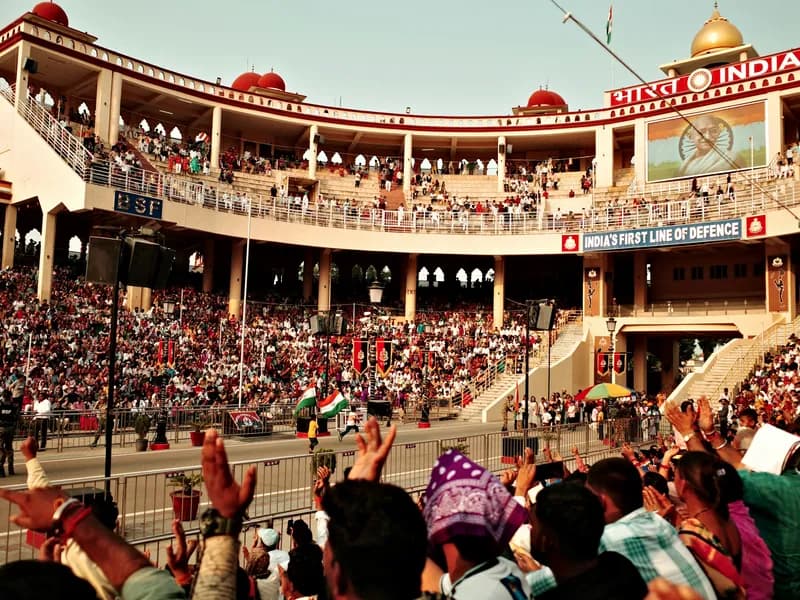
Wagah Border Ceremony
A dramatic flag-lowering ceremony every evening at the India-Pakistan border, 28km from Amritsar. Soldiers from both sides perform an elaborate, high-kicking drill while crowds cheer. Free entry but arrive 2-3 hours early to get a front seat (gates open at 3:30PM in winter, 4:30PM in summer). Ceremony starts 45 minutes before sunset. Take a shared auto (50-100 INR) or hire a taxi (800-1,000 INR return). Bring ID — security checks at entry.
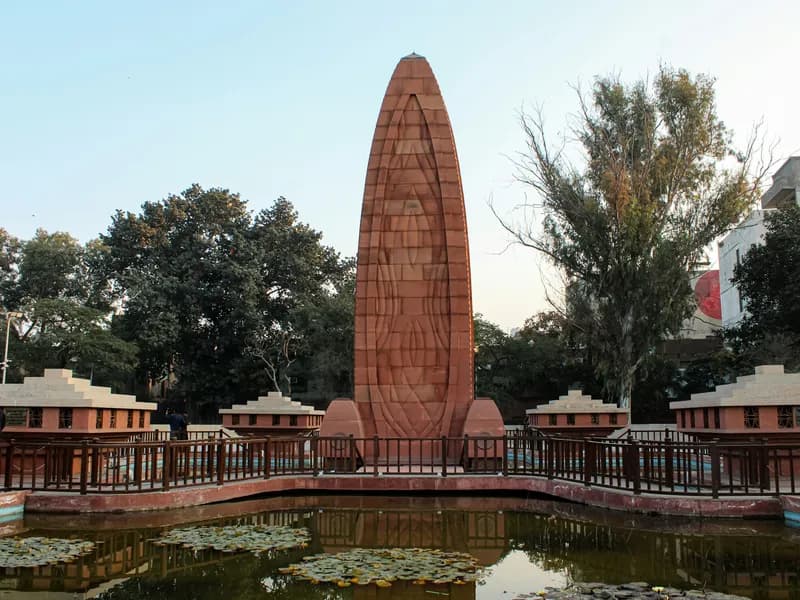
Jallianwala Bagh
The memorial garden where the 1919 Amritsar massacre occurred — British troops fired on unarmed civilians, killing hundreds. The preserved bullet holes in the walls and the narrow exit passage are haunting. Free entry. Open 6:30AM-7:30PM. A 5-minute walk from the Golden Temple. The evening light-and-sound show (free, in Hindi and English) tells the story powerfully. Allow 45-60 minutes. Recently renovated with a museum gallery.

Langar at the Golden Temple
The world's largest free community kitchen serves simple vegetarian meals (dal, roti, rice, kheer) to up to 100,000 people daily regardless of religion, caste, or nationality. Everyone sits on the floor as equals. Volunteer to help — washing dishes, peeling vegetables, or serving food is a humbling experience. Meals are served continuously from 6AM to midnight. The industrial-scale roti-making machines are mesmerizing.

Old City Food Walk
Amritsar is India's undisputed street food capital. Must-try: Kulcha at Bharawan Da Dhaba (amritsari kulcha with chole, 80-120 INR), lassi at Giani Di Hatti (a thick, creamy glass for 80 INR), and fish fry at Makhan Fish Corner (200-300 INR). The old city streets around the Golden Temple are dense with food stalls — best explored on foot between 10AM-1PM or 6-9PM. A guided food tour (500-1,000 INR) hits all the best spots.
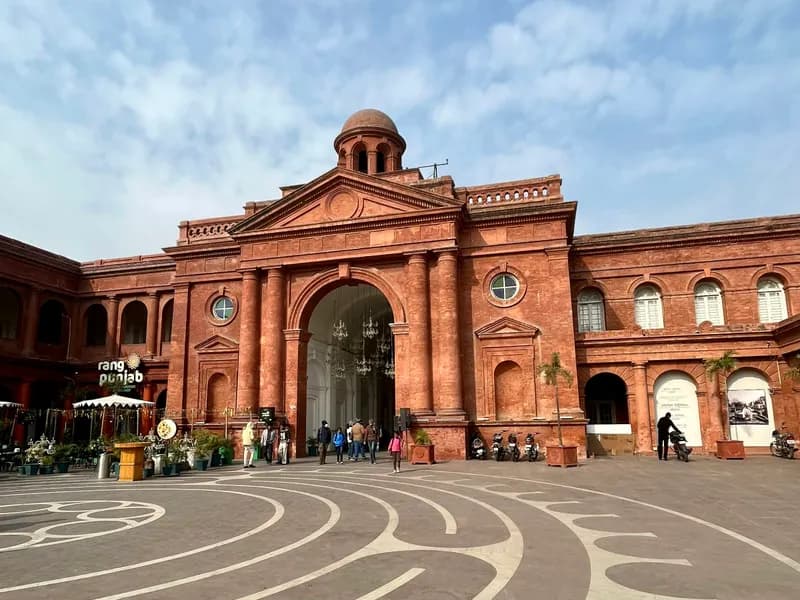
Partition Museum
India's first museum dedicated to the 1947 Partition, housed in the historic Town Hall building. Powerful exhibits of personal artifacts, oral histories, and photographs documenting the largest mass migration in human history. Entry: 10 INR for Indians, 250 INR for foreigners. Open 10AM-5PM, closed Monday. Deeply moving — allow 1.5-2 hours. Located near the Golden Temple in the old city.
Planned Itinerary
7-Day Amritsar Itinerary
Arrival & Golden Temple at Night
Arrive at Sri Guru Ram Dass Jee International Airport (ATQ), 11km from the city center. Check in and head straight to the Golden Temple — its night reflection is the most iconic sight in Amritsar.
Airport transfer(30 minutes)
Auto-rickshaw 200-300 INR, Ola/Uber 250-400 INR. Hotels near the Golden Temple are walkable to all major sights
Check in near Golden Temple(1 hour)
Hotels on Queens Road or near Hall Bazaar. Budget: 800-1,500 INR, comfortable: 2,000-5,000 INR
Evening visit to Golden Temple (Harmandir Sahib)(2.5 hours)
Open 24 hours, free entry. Cover your head (free scarves at entrance), remove shoes, wash feet at the entrance pool. Walk clockwise around the Amrit Sarovar pool. The gold-covered temple reflected in the illuminated pool at night is transcendent. Enter the main shrine — queue moves steadily
Langar (free community dinner)(45 minutes)
The world's largest free kitchen serves 50,000-100,000 daily. Everyone sits on the floor as equals. Simple vegetarian food — dal, roti, rice, kheer. Volunteer to help serve or wash dishes for a humbling experience
Golden Temple Dawn & Jallianwala Bagh
Experience the sacred Palki Sahib ceremony at dawn, then visit the site of the 1919 massacre.
Palki Sahib ceremony (4AM)(1.5 hours)
The Guru Granth Sahib (holy book) is ceremonially carried from the Akal Takht to the main shrine. Wake at 3:30AM — the procession through the marble parikrama is deeply moving. Watch from the main hall
Breakfast at Kesar Da Dhaba(1 hour)
One of Amritsar's oldest restaurants (since 1916). Dal makhani cooked overnight is legendary — order it with tandoori roti and lassi. 200-350 INR for a full meal
Jallianwala Bagh(1.5 hours)
5-minute walk from the temple. Memorial of the 1919 massacre. Bullet holes preserved in the walls. The narrow exit passage is haunting. Free entry. Recently renovated museum gallery adds context. Allow time to absorb the weight of the place
Partition Museum(1.5 hours)
India's first museum on the 1947 Partition. Town Hall building near the temple. 250 INR foreigners, 10 INR Indians. Oral histories, personal artifacts, photographs. Deeply moving. Closed Monday
Old City Food Walk(2 hours)
Amritsar is India's street food capital. Walk from the temple through the old city lanes. Amritsari kulcha at Bharawan Da Dhaba (80-120 INR), lassi at Giani Di Hatti (80 INR), and fish fry at Makhan Fish Corner (200-300 INR)
Wagah Border Ceremony
Afternoon at the dramatic India-Pakistan border flag-lowering ceremony — the most patriotic spectacle in India.
Relaxed morning at hotel(3 hours)
After the 4AM temple visit, sleep in
Lunch at Makhan Fish Corner(1 hour)
Amritsari fish fry (250-300 INR), fish tikka, and butter chicken. One of the city's most beloved spots
Wagah Border Ceremony(4 hours)
28km from Amritsar. Shared auto 50-100 INR or taxi 800-1,000 INR return. Arrive 2-3 hours early for good seats (gates open 3:30PM winter / 4:30PM summer). Seating is gender-segregated. The high-kicking soldiers, crowd energy, and patriotic chanting are electric. Ceremony at sunset
Heritage Walk & Cooking Class
Explore the walled old city's hidden gems and learn to cook Punjabi cuisine.
Heritage walk through the old city(2.5 hours)
Walk from Hall Gate through the narrow gullies past hidden havelis, century-old temples, and artisan workshops. The old city reveals layers of Sikh, Hindu, and Muslim heritage. Guided walks available through the Punjab Heritage Association (500-1,000 INR)
Guru Ka Mahal (Guru Ram Das birthplace)(30 minutes)
A sacred but uncrowded gurdwara in the old city marking the birthplace of the founder of Amritsar. Free entry
Punjabi cooking class(3 hours)
Learn to make dal makhani, butter chicken, aloo paratha, and lassi. Several homestays and cooking schools offer sessions for 800-1,500 INR. You eat what you cook. The secret to Punjabi cooking is unholy amounts of butter and time
Phulkari textile shopping(1.5 hours)
Phulkari (Punjabi embroidered textiles) are Amritsar's signature craft. Hall Bazaar and Katra Jaimal Singh market have the widest selection. Authentic hand-embroidered dupattas start at 500 INR; machine-made from 200 INR
Day Trip to Pul Kanjri & Ram Tirath
Visit lesser-known historical sites outside the city — a colonial-era pleasure garden and an ancient Hindu pilgrimage site.
Drive to Pul Kanjri(45 minutes)
35km west near the Pakistan border. A colonial-era pleasure resort built by Maharaja Ranjit Singh with pools, gardens, and a gurdwara. Free entry. Almost no tourists — just you and the ruins
Ram Tirath Temple(1.5 hours)
Ancient Hindu pilgrimage site 11km west. Associated with the Ramayana — believed to be where Sita gave birth to Lava and Kusha. Free entry. The annual November fair draws thousands
Afternoon free time(2 hours)
Rest or revisit the Golden Temple — each visit reveals new details
Dinner at Brothers Dhaba(1 hour)
Another legendary Amritsar eatery. Tandoori chicken (250 INR full), dal fry, and rumali roti. The open tandoor kitchen is a show
Golden Temple Volunteering & Free Day
Volunteer at the langar kitchen and spend your last afternoon at leisure.
Langar kitchen volunteering(3 hours)
Join the volunteer assembly line in the world's largest kitchen. Peel vegetables, roll rotis, or serve food. No registration needed — show up and ask to help. The industrial-scale roti-making machines are mesmerizing. A profoundly humbling experience
Free afternoon(3 hours)
Return to any restaurant that captivated you. Browse the jewelry shops in Hall Bazaar. Sit in the Golden Temple complex and absorb the peace
Final Golden Temple visit at sunset(1.5 hours)
The Rehras Sahib (evening prayer) at sunset is powerful. The temple transitions from daylight gold to illuminated glory. Attend the evening Palki Sahib ceremony as the holy book is carried back to the Akal Takht
Last Breakfast & Departure
One final Amritsari meal before heading to the airport.
Breakfast of amritsari kulcha and chole(1 hour)
At Kulcha Land or Bharawan Da Dhaba. The combination of stuffed kulcha bread with spicy chickpeas is the taste you'll miss most. 80-120 INR
Last shopping — pinni and petha sweets(30 minutes)
Pinni (wheat and jaggery sweets) and petha at Novelty Sweets or Ramjas Sweets. Traditional Amritsar gifts. 200-500 INR per box
Transfer to ATQ airport(30 minutes)
Auto 200-300 INR. The airport is compact — arrive 2 hours early for domestic, 3 for international
14-Day Amritsar Itinerary
Arrival & Golden Temple at Night
Arrive at ATQ, check in, and experience the temple's illuminated reflection.
Airport transfer(30 minutes)
Auto 200-300 INR
Golden Temple evening visit(2.5 hours)
Free. Cover head, remove shoes. Walk clockwise. Night reflection is transcendent
Langar dinner(45 minutes)
Free communal kitchen. Dal, roti, rice, kheer
Dawn Ceremony & Jallianwala Bagh
4AM Palki Sahib ceremony and the 1919 massacre memorial.
Kesar Da Dhaba breakfast(1 hour)
Since 1916. Dal makhani. 200-350 INR
Jallianwala Bagh(1.5 hours)
Free. Bullet holes, narrow exit, museum
Partition Museum(1.5 hours)
250 INR foreigners. Closed Monday
Old City food walk(2 hours)
Kulcha (80-120 INR), lassi (80 INR), fish fry (200-300 INR)
Wagah Border Ceremony
The dramatic India-Pakistan border ceremony.
Makhan Fish Corner lunch(1 hour)
Fish fry 250-300 INR
Wagah Border(4 hours)
28km. Arrive 2-3 hours early. Taxi 800-1,000 INR return
Heritage Walk & Cooking
Old city exploration and Punjabi cooking class.
Heritage walk(2.5 hours)
500-1,000 INR guided
Cooking class(3 hours)
800-1,500 INR. Dal makhani, butter chicken, paratha
Phulkari shopping(1.5 hours)
Hand-embroidered from 500 INR
Pul Kanjri & Ram Tirath
Colonial ruins and ancient Hindu pilgrimage outside the city.
Pul Kanjri(1.5 hours)
35km west. Free. No tourists
Ram Tirath Temple(1.5 hours)
11km west. Free
Brothers Dhaba dinner(1 hour)
Tandoori chicken 250 INR
Volunteering & Free Day
Langar kitchen volunteering and leisure.
Langar kitchen volunteering(3 hours)
No registration. Show up and help
Sunset Golden Temple(1.5 hours)
Rehras Sahib evening prayer
Rest Day
Recover and enjoy Amritsar at a slower pace.
Gobindgarh Fort(2 hours)
Restored Sikh-era fortress with museums, exhibits, and a 7D movie on Sikh history. 100-450 INR depending on attractions. The whispering walls exhibit is clever
Dinner at Crystal Restaurant(1.5 hours)
Upscale Punjabi dining. Butter chicken, amritsari naan, and dal. 400-600 INR per person
Day Trip to Dalhousie
Hill station in the Dhauladhar range — colonial-era charm, pine forests, and cool mountain air.
Drive to Dalhousie(4 hours)
190km northeast. Hire car 3,000-4,000 INR for the day. The road climbs through Pathankot and into the hills
Khajjiar (Mini Switzerland)(2 hours)
A saucer-shaped meadow surrounded by deodar cedars at 1,920m. Free. 22km from Dalhousie. The green meadow with snow peaks behind has earned the nickname. Horse rides 200-300 INR
Dalhousie town walk(1 hour)
Colonial churches, the Mall Road, and views of snow-capped Pir Panjal range
Day Trip to Dharamsala & McLeod Ganj
Home of the Dalai Lama and Tibetan government-in-exile — 4.5 hours northeast.
Drive to McLeod Ganj(4.5 hours)
230km. Hire car 4,000-5,000 INR for the day
Tsuglagkhang Complex(1.5 hours)
The Dalai Lama's temple and residence. Free. The Tibet Museum documents the Tibetan struggle. If the Dalai Lama is giving public teachings (check dalailama.com), attend — it's free and open to all
Bhagsu Nag Waterfall(1 hour)
15-minute walk from McLeod Ganj. The falls are modest but the cafe scene at the top is excellent — Tibetan momos and ginger lemon honey
Rest Day & Spa
Recovery after two long day trips.
Ayurvedic massage(1.5 hours)
Several spas in Amritsar offer traditional Punjabi champi (head massage) and full body treatments. 500-1,500 INR
Revisit Golden Temple(2 hours)
Each visit reveals new details — watch the seva (volunteer service) culture in action
Tarn Taran & Rural Punjab
Visit the second-largest sarovar (sacred pool) in the Sikh world and experience rural Punjab.
Drive to Tarn Taran Sahib(45 minutes)
25km south. Gurdwara with the largest sarovar after the Golden Temple — and virtually no tourists. The reflecting pool is vast and serene. Free
Rural Punjab village visit(2 hours)
Arrange through your hotel to visit a farming family. See mustard fields (winter), wheat harvest (spring), and experience Punjabi hospitality — they'll feed you until you can't move. 500-1,000 INR per person
Evening lassi crawl(1 hour)
Compare lassis at Giani Di Hatti, Ahuja Lassi, and Novelty. Each claims to be the best
Sikh Art & History Deep Dive
Museums, galleries, and deeper understanding of Sikh heritage.
Central Sikh Museum (inside Golden Temple)(1.5 hours)
Paintings depicting Sikh history, Guru portraits, and artifacts from Sikh martyrs. Free. On the upper floor of the clock tower entrance
Akal Takht(45 minutes)
The highest seat of Sikh temporal authority, facing the Golden Temple. Rebuilt after the 1984 Operation Blue Star. The bullet marks and history are poignant
Lunch at Beera Chicken Corner(1 hour)
Amritsari butter chicken that rivals any in the city. 200-300 INR per person
Hall Bazaar evening walk(1.5 hours)
Traditional textiles, jootis (Punjabi shoes), and street food. The narrow lanes behind Hall Gate hide the best finds
Free Day — Revisit Favorites
Last chance for anything you missed.
Morning: Your choice(3 hours)
Final 4AM ceremony? Another food walk? More phulkari shopping?
Departure
Final amritsari kulcha and airport transfer.
Kulcha breakfast(1 hour)
Bharawan Da Dhaba. 80-120 INR
Pinni and petha sweets shopping(30 minutes)
200-500 INR per box
21-Day Amritsar Itinerary
Arrival & Golden Temple at Night
Arrive at ATQ, check in, and witness the illuminated temple.
Golden Temple evening(2.5 hours)
Free. Night reflection
Dawn Ceremony & Jallianwala Bagh
4AM ceremony and massacre memorial.
Wagah Border
India-Pakistan border ceremony.
Wagah ceremony(4 hours)
Taxi 800-1,000 INR return
Heritage Walk & Cooking
Old city and Punjabi cooking class.
Cooking class(3 hours)
800-1,500 INR
Pul Kanjri & Ram Tirath
Colonial ruins and ancient temple.
Langar Volunteering & Free Day
Kitchen volunteering and leisure.
Rest Day
Gobindgarh Fort and relaxed pace.
Gobindgarh Fort(2 hours)
100-450 INR
Day Trip to Dalhousie & Khajjiar
Hill station and Mini Switzerland.
Drive to Dalhousie(4 hours)
Car 3,000-4,000 INR
Khajjiar meadow(2 hours)
Free. Horse rides 200-300 INR
Day Trip to McLeod Ganj
Dalai Lama's home and Tibetan culture.
Drive to McLeod Ganj(4.5 hours)
Car 4,000-5,000 INR
Tsuglagkhang Complex(1.5 hours)
Free. Tibet Museum
Rest Day
Recovery and golden temple revisit.
Ayurvedic massage(1.5 hours)
500-1,500 INR
Tarn Taran & Rural Punjab
Second-largest sarovar and farming village.
Tarn Taran Sahib(1.5 hours)
25km south. Virtually no tourists
Village visit(2 hours)
500-1,000 INR
Sikh Art & History
Museums and deeper heritage.
Side Trip to Chandigarh — Day 1
Le Corbusier's planned city 4 hours south — modernist architecture, rock gardens, and a different India.
Train or drive to Chandigarh(4 hours)
Shatabdi 450-800 INR or car 3,500-4,500 INR
Rock Garden of Nek Chand(2 hours)
A visionary art installation made entirely from recycled waste — 18 acres of mosaic sculptures. 50 INR. One of India's most creative spaces
Capitol Complex (Le Corbusier)(1.5 hours)
UNESCO World Heritage. The High Court, Secretariat, and Assembly buildings are masterpieces of modernist architecture. Free exterior access; interior visits require permit from tourism office
Overnight in Chandigarh(overnight)
Hotels in Sector 22 area. 1,500-3,000 INR
Chandigarh — Day 2 & Return
Sukhna Lake and return to Amritsar.
Morning walk at Sukhna Lake(1.5 hours)
Artificial lake at the Shivalik foothills. Pedal boats 100 INR. Morning joggers and families. Peaceful
Sector 17 Plaza and shopping(1.5 hours)
Chandigarh's main commercial area with Le Corbusier's pedestrian-first design. Good for books and Indian fashion
Rest Day
Recovery after side trip. No agenda.
Countryside Cycling & Village Life
Bicycle through Punjab's green countryside.
Guided bicycle tour of rural Punjab(5 hours)
Several operators offer cycling tours through villages, mustard/wheat fields, and along canals. 1,500-2,500 INR including bicycle, guide, and village lunch. The flat terrain makes for easy riding. Real Punjab beyond the city
Sikh Music & Art Workshop
Deeper cultural immersion into Sikh artistic traditions.
Kirtan (devotional music) session at Golden Temple(2 hours)
The continuous live kirtan in the main hall is profoundly meditative. The ragis (musicians) perform different ragas throughout the day. Sit and listen — no time limit, no expectation
Phulkari embroidery workshop(2.5 hours)
Learn the Punjabi embroidery technique from a local artisan. 800-1,500 INR. Take home a small piece you stitched yourself. Contact through textile shops in Hall Bazaar
Dinner at Surjit Food Plaza(1 hour)
Famous for keema naan (minced meat stuffed bread) — 120 INR. Less touristy than Bharawan
Day Trip to Anandpur Sahib
The birthplace of the Khalsa — one of the most important Sikh sites outside Amritsar.
Drive to Anandpur Sahib(4 hours)
230km south. Car 3,500-4,500 INR
Takht Sri Keshgarh Sahib(1.5 hours)
Where Guru Gobind Singh founded the Khalsa in 1699. The gurdwara sits dramatically against the Shivalik Hills. Free entry
Virasat-e-Khalsa (Khalsa Heritage Museum)(2 hours)
Stunning modernist museum of Sikh history. 30 INR. The architecture alone is worth the visit — dramatic angled forms reflecting Sikh warrior culture
Rest Day
Fourth rest day. Gentle pace.
Golden Temple afternoon meditation(2 hours)
Sit by the sarovar in the afternoon when the crowds thin. The sound of kirtan, the reflection, the devotees — let it wash over you
Street food favorites(1.5 hours)
Revisit whatever you loved most
Farewell Day
Last full day — favorites and farewell.
Final 4AM Palki Sahib ceremony(1.5 hours)
After three weeks, this ceremony hits differently
Morning food walk(2 hours)
Hit every favorite one last time
Farewell dinner at Bharawan Da Dhaba(1.5 hours)
Full circle. Amritsari kulcha and dal. The meal that defines this city
Departure
One last morning in the Holy City.
Travel Tips
Visa & Entry
Indian Visa Required for Most Nationalities
Most foreign nationals need an Indian e-visa (apply at indianvisaonline.gov.in, $10-25, processed in 3-5 days). The e-tourist visa allows 30-day, 1-year, or 5-year stays. US and UK citizens pay $10-100 depending on type. Carry a printed copy of the e-visa. Amritsar also has an immigration checkpoint for those crossing to/from Pakistan at Wagah-Attari (separate visa required for Pakistan).
Local Customs
Golden Temple Protocol
Head covering is mandatory (free scarves/bandanas at entry). Remove shoes at the shoe counter (free, secure storage with token). No smoking, alcohol, or tobacco products inside the complex. No leather items inside. Walk clockwise around the pool. Menstruating women are welcome (unlike some Hindu temples). Photography is allowed but be respectful — do not photograph devotees praying without consent.
Gotcha: Wagah Ceremony Gets Cancelled
The Wagah Border ceremony is cancelled on Indian Republic Day (Jan 26), Independence Day (Aug 15), and during diplomatic tensions or extreme weather. Check before making the 28km trip. Seating is gender-segregated (men and women sit on different sides). VIP seating can be arranged through the BSF office but requires advance booking. The Indian side is far more energetic than the Pakistan side.
transport
Trains from Delhi Are the Best Value
The Shatabdi Express (6 hours, AC chair car 800-1,200 INR) and Vande Bharat (5 hours, 1,200-1,800 INR) connect Delhi to Amritsar. Flights are 1.5 hours (2,000-5,000 INR). Within the city, auto-rickshaws run 30-150 INR per trip — negotiate before boarding. Cycle-rickshaws in the old city cost 20-50 INR for short distances. Ola and Uber work but availability varies.
Budget
Incredibly Cheap for World-Class Experiences
The Golden Temple is completely free (entry, meals, and basic accommodation). Street food meals cost 50-200 INR. Hotel rooms range from 800 INR (budget) to 5,000 INR (comfortable). A full day of sightseeing including Wagah Border transport, food, and tips can be done for under 2,000 INR (~$24). Amritsar is one of the most rewarding budget destinations in the world.
Safety
Avoid Touts Near the Golden Temple
Self-appointed 'guides' outside the Golden Temple offer free tours that end at overpriced shops. The temple needs no guide — follow the crowd and walk clockwise. Shoe storage is free — do not pay anyone claiming to 'watch your shoes.' Official information counters inside the complex can answer questions. The temple's own SGPC guides offer free tours if you ask at the information office.
Related Articles
SeasonalAmritsar During Baisakhi and Diwali: When the Golden Temple Reaches Another Level
The Golden Temple is extraordinary every day. During Baisakhi in April and Diwali in October, it becomes something even Amritsar regulars struggle to describe.
Travel Guides10 Unforgettable Things to Do in Amritsar Beyond the Golden Temple
The Golden Temple is the reason you come. The kulcha, the border ceremony, the partition stories, and the midnight lassi are the reasons you stay.
Travel GuidesYour 14 Biggest Amritsar Questions, Answered Honestly
Is the Golden Temple really free? How early should you go? What happens at the Wagah Border? And why does everyone keep feeding you? Every question, straight answers.