
Antalya

Photo: Irina Belaya / Unsplash
Key Facts
Best Time to Visit
April-June and September-October for warm, comfortable weather; July-August is hot and crowded
Language
Turkish; English, German, and Russian common in tourist areas
Currency
Turkish Lira (TRY)
Time Zone
TRT (UTC+3), no daylight saving
Airport
Antalya Airport (AYT), 13 km northeast of the centre — a major charter and holiday hub
Population
approx. 1.3 million (city proper); approx. 2.6 million (province)
Climate
Mediterranean — hot dry summers (30-35°C), mild wet winters (10-16°C)
Safety Rating
Generally Safe (Level 1-2) — low everyday crime; standard tourist caution
Beaches
Konyaaltı (pebble) and Lara (sand), plus Blue Flag resort beaches in Belek and Side
Top Highlights

Kaleiçi (Old Town)
The walled historic core of Ottoman timber houses, boutique hotels, and bazaar lanes spilling down to the Roman harbour. Free to wander; allow half a day. Enter through Hadrian's Gate and get pleasantly lost — most streets eventually lead to the marina and its sunset cafés.

Hadrian's Gate
A triple-arched marble gateway built in 130 AD to honour the visiting Roman emperor Hadrian, and the grandest surviving entrance to old Antalya. Free and open 24/7. Look down at the worn original road surface preserved below the modern walkway — chariot ruts are still visible.

Düden Waterfalls
The Lower Düden falls plunge ~40 m straight off a cliff into the Mediterranean — best seen from a harbour boat tour. The Upper Düden falls, set in a park you can walk behind, charge a small entry (~₺30). Allow 1-2 hours; the boat view of the lower falls is the photo highlight.

Aspendos Theatre
One of the best-preserved Roman theatres in the world (2nd century AD), seating 15,000 and still hosting opera and concerts. Entry ~₺200; about 45 km east of Antalya. Allow 1.5 hours and combine with the nearby aqueduct — go early before the heat and tour buses.

Antalya Museum
A superb archaeology museum displaying statues, sarcophagi, and mosaics from Perge and the surrounding ancient cities, including the Hall of Gods. Entry ~₺200; open Tue-Sun, allow 1.5-2 hours. Reachable by the nostalgic tram from Kaleiçi — a cool, shaded escape on a hot day.
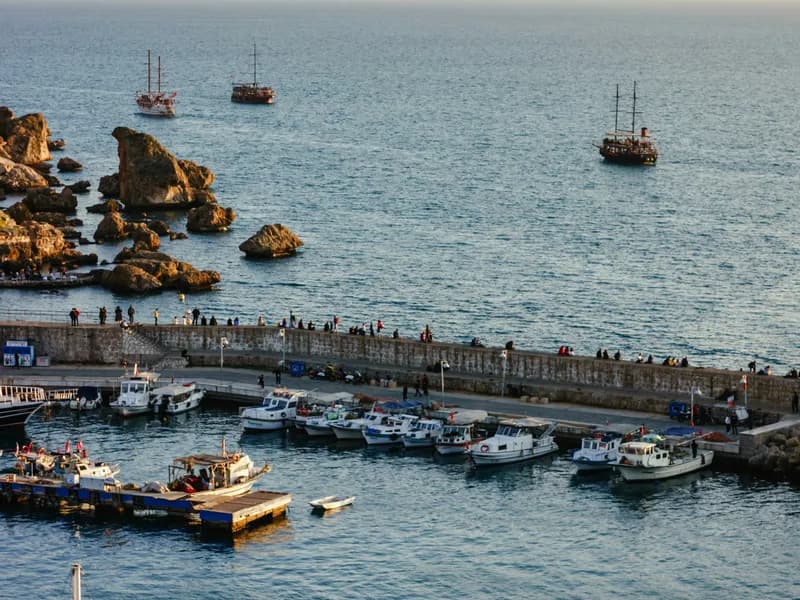
Old Harbour (Yat Limanı)
The Roman-era marina tucked beneath the old-town cliffs, departure point for coastal boat tours past the Düden falls and hidden coves. Free to stroll; boat trips run ~₺300-600 for a few hours. Sunset here, with the Taurus range glowing across the bay, is Antalya at its best.
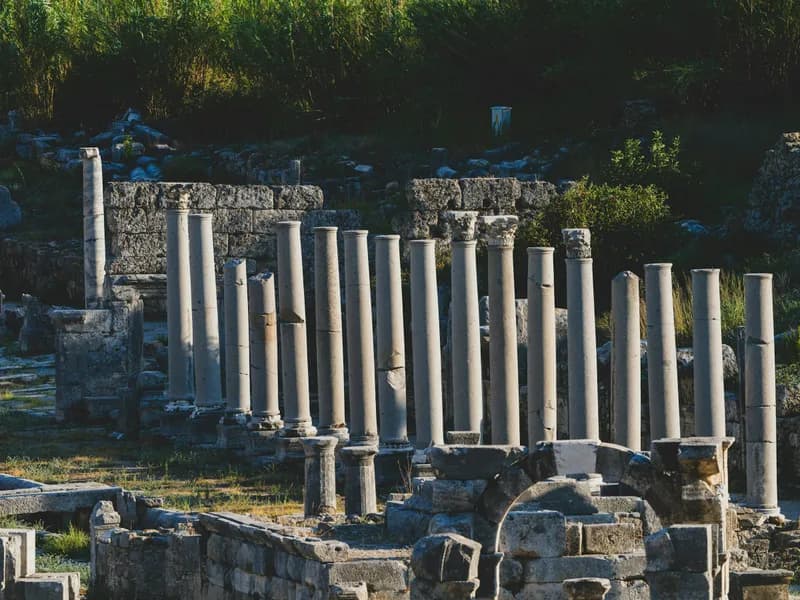
Perge Ancient City
An expansive Greco-Roman city with a colonnaded main street, stadium, agora, and Roman baths, about 18 km east of Antalya. Entry ~₺150; allow 1.5 hours and bring water and a hat — there's almost no shade among the ruins. Far quieter than Aspendos and easy to explore freely.
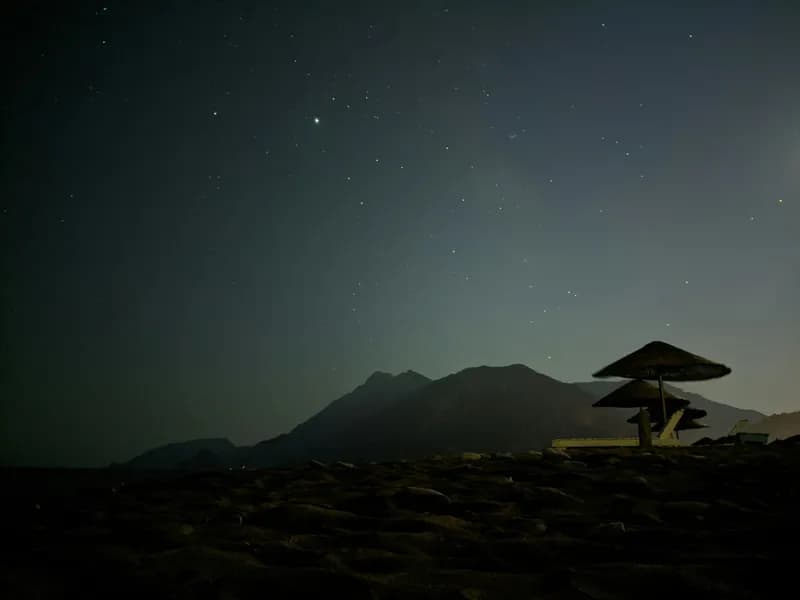
Mount Chimaera (Yanartaş)
A hidden gem near Olympos where natural gas vents have burned eternal flames out of the rocky mountainside for thousands of years — best after dark. Entry ~₺50; a 20-30 minute uphill hike from the car park. About 80 km southwest; pair with the ruins and beach at Olympos.
Planned Itinerary
7-Day Antalya Itinerary
Arrival & First Steps into Kaleiçi
Land at Antalya Airport (AYT), settle into the old town, and ease in with a sunset stroll down to the Roman harbour. Keep it light — you'll have walked a fair bit by dinner.
Airport transfer to Kaleiçi(30-40 minutes)
The HAVAŞ shuttle and the AntRay tram both run from AYT, but with luggage a taxi to the old town is easiest — agree ~700-900 TRY or insist on the meter (note lira prices shift fast).
Check in to a Kaleiçi boutique hotel(1 hour)
Base yourself inside the walls near Hadrian's Gate — converted Ottoman houses on Hesapçı or Hıdırlık streets put everything in walking distance.
Walk through Hadrian's Gate(30 minutes)
Built in 130 AD for the visiting emperor; free and open 24/7. Peer at the worn original road below the walkway — the chariot ruts are still there.
Sunset at the Old Harbour (Yat Limanı)(1 hour)
Wander down the cliff lanes to the Roman marina as the Taurus Mountains glow pink across the bay — the signature Antalya view, and free.
Dinner at a harbour-side meyhane(2 hours)
Order grilled levrek (sea bass) and a glass of rakı at one of the marina terraces — roughly 700-1000 TRY for two. Stick to places showing prices to avoid the overcharging scam.
Kaleiçi Deep Dive & the Bazaar
A full, unhurried day inside the walled old town — getting lost is the point. Mosques, Roman fragments, the bazaar, and an afternoon by the sea cliffs.
Yivli Minare (Fluted Minaret)(45 minutes)
Antalya's 13th-century Seljuk landmark and city symbol. Modest dress to enter the mosque; the courtyard is free and a good orientation point.
Get lost in Kaleiçi's lanes & bazaar(2 hours)
Browse carpets, ceramics, and Turkish delight. Haggling is expected — start near half the asking price and settle around two-thirds. Accept the offered çay; it's hospitality, not obligation.
Lunch of gözleme and ayran(1 hour)
Find a courtyard café in the old town; a stuffed gözleme flatbread and an ayran runs ~200-300 TRY.
Hıdırlık Tower & Karaalioğlu Park(1.5 hours)
The 2nd-century Roman tower marks the old-town edge; the shaded clifftop park beside it has the best free sea views and benches for the heat of the day.
Evening drinks on the harbour terraces(2 hours)
Settle in for mezes and a cold Efes as the marina lights come up.
Antalya Museum & Konyaaltı Beach
Pair a world-class archaeology museum with a beach afternoon — both sit at the western, Konyaaltı end of town and link neatly by the nostalgic tram.
Nostalgic tram to Antalya Museum(20 minutes)
Tap an AntalyaKart on the old red tram from Kaleiçi to the Müze stop — a cheap, breezy ride that drops you at the door.
Antalya Archaeological Museum(2 hours)
Statues, sarcophagi, and mosaics from Perge plus the Hall of Gods. Entry ~200 TRY; open Tue-Sun. A cool, shaded escape that primes you for the ruins to come.
Lunch near Konyaaltı(1 hour)
Walk down toward the beachfront for a fish lunch or a simple pide before swimming.
Swim & relax at Konyaaltı Beach(3 hours)
A long pebble beach backed by the Beydağları mountains — bring water shoes, the stones get scorching. Sunbed and umbrella ~150-250 TRY.
Sunset along the Konyaaltı promenade(1 hour)
The palm-lined boardwalk frames the mountains dropping into the sea — a relaxed evening walk before heading back.
Aspendos, Perge & the Aqueduct (Day Trip East)
A big ancient-history day east of the city. Hire a car or join an organised tour — public transport to the ruins is slow and infrequent. Start early to beat the heat and tour buses.
Perge Ancient City(1.5 hours)
About 18 km east — a Greco-Roman city with a colonnaded street, stadium, and Roman baths. Entry ~150 TRY. Almost no shade, so bring a hat and water; far quieter than Aspendos.
Aspendos Theatre(1.5 hours)
Roughly 45 km east; one of the best-preserved Roman theatres on earth (2nd century AD), still seating 15,000 for concerts. Entry ~200 TRY. Climb to the top tier for the acoustics test.
Aspendos Aqueduct(30 minutes)
The towering Roman water-pressure towers a short drive from the theatre — fewer visitors and great photos.
Lunch by Köprüçay River(1.5 hours)
Riverside trout restaurants near the Aspendos turn-off serve fresh alabalık (trout) on shaded platforms over the water — ~400-600 TRY for two.
Return to Antalya & easy evening(1 hour)
Back to Kaleiçi for a quiet dinner; you've earned a slow night after the ruins.
Düden Waterfalls & a Harbour Boat Tour
Antalya's signature waterfall-into-the-sea, seen from both land and water. A relaxed, scenic day with plenty of swimming.
Upper Düden Falls park(1.5 hours)
Walk behind the cascade through the cave passage in a leafy park; small entry ~30 TRY. Reachable by city bus/dolmuş from the centre.
Lunch back in town(1 hour)
Grab a quick lahmacun or a döner near the harbour before the boat.
Boat tour from the Old Harbour(3 hours)
Cruise past the Lower Düden Falls plunging ~40 m straight off the cliff into the Mediterranean — the photo highlight, only seen from the water. Trips run ~300-600 TRY with swim stops in hidden coves.
Swim stop on the cruise(included)
Most tours anchor in a turquoise cove for a swim — bring a towel and sunscreen.
Dinner in Kaleiçi(2 hours)
Try a courtyard restaurant serving testi kebab cooked in a sealed clay pot, cracked open at the table.
Mount Chimaera & Olympos (Coastal Day Trip)
Head southwest along the coast to the eternal flames and a ruin-strewn beach. Time it to be on the mountain after dark for the full effect — a long but unforgettable day.
Drive/tour to Olympos(1.5 hours)
About 80 km southwest along the coast road; rent a car or join a Chimaera tour, as transit is awkward here.
Olympos ancient ruins & beach(2.5 hours)
Wander the overgrown ruins scattered through the river valley down to a pebble beach hemmed by cliffs — atmospheric and great for an afternoon swim.
Early dinner near Çıralı(1.5 hours)
The laid-back Çıralı strip has garden restaurants serving grilled fish and mezes — eat before the hike up to the flames.
Mount Chimaera (Yanartaş) eternal flames(1.5 hours)
A 20-30 minute uphill hike (entry ~50 TRY) to natural gas vents that have burned out of the mountainside for millennia — far more dramatic after dark. Bring a torch and grippy shoes.
Late return to Antalya(1.5 hours)
A long drive back under the stars; many tours include the transfer so you can doze.
Last Bazaar Run & Departure
A gentle final morning for souvenirs and a last harbour coffee before the airport transfer. Build in a buffer — AYT gets busy with charter traffic.
Morning coffee on the harbour(1 hour)
A Turkish coffee (and a final read of the fortune in the cup) overlooking the marina before checkout.
Last-minute bazaar shopping(1.5 hours)
Pick up any carpets, spices, or Turkish delight you eyed earlier — and pay in lira, declining the 'home currency' (DCC) option on card terminals for a better rate.
Hotel checkout(30 minutes)
Most Kaleiçi boutiques hold luggage if your flight is later.
Transfer to Antalya Airport (AYT)(30-40 minutes)
Taxi or the HAVAŞ shuttle; allow extra time as airport security and charter crowds can be slow.
14-Day Antalya Itinerary
Arrival & First Steps into Kaleiçi
Land at Antalya Airport (AYT), settle into the old town, and ease in with a sunset stroll down to the Roman harbour. Keep it light after travel.
Airport transfer to Kaleiçi(30-40 minutes)
The HAVAŞ shuttle and the AntRay tram both run from AYT, but with luggage a taxi to the old town is easiest — agree ~700-900 TRY or insist on the meter (lira prices shift fast).
Check in to a Kaleiçi boutique hotel(1 hour)
Base yourself inside the walls near Hadrian's Gate — converted Ottoman houses on Hesapçı or Hıdırlık streets put everything in walking distance.
Walk through Hadrian's Gate(30 minutes)
Built in 130 AD for the visiting emperor; free and open 24/7. Look down at the worn original road below the walkway — the chariot ruts are still there.
Sunset at the Old Harbour (Yat Limanı)(1 hour)
Wander down the cliff lanes to the Roman marina as the Taurus Mountains glow across the bay — the signature Antalya view, and free.
Dinner at a harbour-side meyhane(2 hours)
Grilled levrek (sea bass) and a glass of rakı on a marina terrace — roughly 700-1000 TRY for two. Stick to places showing prices.
Kaleiçi Deep Dive & the Bazaar
A full, unhurried day inside the walled old town — mosques, Roman fragments, the bazaar, and clifftop sea views.
Yivli Minare (Fluted Minaret)(45 minutes)
Antalya's 13th-century Seljuk landmark and city symbol. Modest dress for the mosque; the courtyard is free and a good orientation point.
Get lost in Kaleiçi's lanes & bazaar(2 hours)
Browse carpets, ceramics, and Turkish delight. Haggling is expected — start near half, settle around two-thirds. Accept the offered çay; it's hospitality.
Lunch of gözleme and ayran(1 hour)
A courtyard café stuffed gözleme with an ayran runs ~200-300 TRY.
Hıdırlık Tower & Karaalioğlu Park(1.5 hours)
The 2nd-century Roman tower marks the old-town edge; the shaded clifftop park beside it has the best free sea views for the heat of the day.
Evening drinks on the harbour terraces(2 hours)
Mezes and a cold Efes as the marina lights come up.
Antalya Museum & Konyaaltı Beach
Pair the archaeology museum with a beach afternoon — both at the western Konyaaltı end and linked by the nostalgic tram.
Nostalgic tram to Antalya Museum(20 minutes)
Tap an AntalyaKart on the old red tram from Kaleiçi to the Müze stop — cheap and breezy.
Antalya Archaeological Museum(2 hours)
Statues, sarcophagi, and mosaics from Perge plus the Hall of Gods. Entry ~200 TRY; open Tue-Sun. A cool, shaded escape that primes you for the ruins.
Lunch near Konyaaltı(1 hour)
Walk to the beachfront for a fish lunch or a simple pide before swimming.
Swim & relax at Konyaaltı Beach(3 hours)
Long pebble beach under the Beydağları mountains — bring water shoes. Sunbed and umbrella ~150-250 TRY.
Sunset along the Konyaaltı promenade(1 hour)
The palm-lined boardwalk frames the mountains dropping into the sea.
Aspendos, Perge & the Aqueduct (Day Trip East)
A big ancient-history day east of the city. Hire a car or join a tour; start early to beat the heat and tour buses.
Perge Ancient City(1.5 hours)
About 18 km east — colonnaded street, stadium, and Roman baths. Entry ~150 TRY. Almost no shade, so a hat and water are essential; far quieter than Aspendos.
Aspendos Theatre(1.5 hours)
Roughly 45 km east; one of the best-preserved Roman theatres on earth (2nd century AD), still seating 15,000. Entry ~200 TRY. Climb to the top tier for the acoustics.
Aspendos Aqueduct(30 minutes)
The towering Roman water-pressure towers a short drive from the theatre — fewer visitors, great photos.
Lunch by Köprüçay River(1.5 hours)
Riverside trout restaurants near the Aspendos turn-off serve fresh alabalık on shaded platforms over the water — ~400-600 TRY for two.
Return to Antalya & easy evening(1 hour)
Back to Kaleiçi for a quiet dinner.
Düden Waterfalls & a Harbour Boat Tour
Antalya's waterfall-into-the-sea seen from land and water, with plenty of swimming.
Upper Düden Falls park(1.5 hours)
Walk behind the cascade through the cave passage; small entry ~30 TRY. Reachable by city bus/dolmuş.
Lunch back in town(1 hour)
A quick lahmacun or döner near the harbour before the boat.
Boat tour from the Old Harbour(3 hours)
Cruise past the Lower Düden Falls plunging ~40 m off the cliff into the sea — only seen from the water. Trips run ~300-600 TRY with swim stops in hidden coves.
Swim stop on the cruise(included)
Most tours anchor in a turquoise cove — bring a towel and sunscreen.
Dinner in Kaleiçi(2 hours)
Try testi kebab cooked in a sealed clay pot, cracked open at the table.
Mount Chimaera & Olympos (Coastal Day Trip)
Head southwest to the eternal flames and a ruin-strewn beach, timed to be on the mountain after dark.
Drive/tour to Olympos(1.5 hours)
About 80 km southwest along the coast road; rent a car or join a Chimaera tour.
Olympos ancient ruins & beach(2.5 hours)
Overgrown ruins through the river valley down to a cliff-hemmed pebble beach — great for an afternoon swim.
Early dinner near Çıralı(1.5 hours)
Garden restaurants serving grilled fish and mezes; eat before the hike.
Mount Chimaera (Yanartaş) eternal flames(1.5 hours)
A 20-30 minute uphill hike (entry ~50 TRY) to gas vents burning for millennia — dramatic after dark. Bring a torch and grippy shoes.
Late return to Antalya(1.5 hours)
A long drive back; many tours include the transfer.
Rest Day — Hammam & Slow Kaleiçi
A deliberate breather after a busy first week. Recover, soak, and reacquaint yourself with the old town at half speed.
Late breakfast in a Kaleiçi courtyard(1.5 hours)
A full Turkish kahvaltı spread — olives, cheeses, eggs, honey, simit — at a leisurely pace, ~250-400 TRY per person.
Traditional Turkish hammam(2 hours)
Book a scrub-and-foam session at a historic Kaleiçi hamam (Sefa Hamamı is a long-running favourite); ~700-1200 TRY including kese scrub and massage.
Free afternoon to relax(flexible)
Read on a shaded terrace, nap, or take a slow harbour swim — no agenda today.
Sunset rooftop drink(1.5 hours)
Several old-town hotels have rooftop bars with Taurus-and-sea views; a cold drink as the light fades.
Side — Ancient Ruins by the Sea
A day trip east to the seaside ruin-town of Side, where the Temple of Apollo sits right on the waterfront. About 75 km east; tour or car.
Drive/tour to Side(1.5 hours)
Roughly 75 km east along the coast; the resort town wraps around its ancient peninsula.
Side Theatre & ancient streets(1.5 hours)
A large Roman theatre and colonnaded main street running through the modern town; site entry modest, ~150 TRY for the theatre.
Lunch on the Side harbour(1.5 hours)
Seafront restaurants serve grilled fish and mezes with a sea view — ~700-1000 TRY for two; check the bill carefully in resort areas.
Temple of Apollo at sunset(1 hour)
The marble columns on the western point are Side's icon, glowing at golden hour — arrive late afternoon for the best light. Free to view.
Return to Antalya(1.5 hours)
Evening drive back along the D400.
Termessos — Eagle's-Nest Ruins in the Mountains
A cooler, dramatic day in the Taurus foothills at the unconquered mountain city of Termessos, inside Güllük Dağı National Park. About 35 km northwest.
Drive to Termessos National Park(1 hour)
About 35 km northwest into the mountains; park entry ~50-100 TRY. The cooler altitude is welcome in summer.
Hike up to the ruins(2.5 hours)
A steep, rewarding climb to a theatre perched on a cliff edge with sweeping mountain views, plus tombs and a gymnasium scattered through the pines. Bring sturdy shoes, water, and a hat.
Picnic or lunch in the park(1 hour)
There's little on-site — pack a picnic from a Kaleiçi grocer, or eat at a roadside lokanta on the way back.
Optional Karain Cave detour(1 hour)
On the return route, this prehistoric cave with a small museum makes an easy add-on (~50 TRY).
Quiet dinner in Antalya(1.5 hours)
A relaxed meal after a leg-heavy day; try a local ocakbaşı grill.
Köprülü Canyon — Rafting & River Day
An adventure day in Köprülü Canyon National Park: white-water rafting on the Köprüçay and a riverside lunch under the pines. About 90 km northeast.
Transfer to Köprülü Canyon(1.5-2 hours)
Most book a rafting package with hotel pickup; the canyon is ~90 km northeast in the Taurus.
White-water rafting on the Köprüçay(3 hours)
A scenic, mostly gentle Grade II-III run through pine-walled gorges — packages ~900-1500 TRY including gear, guide, and lunch. Suitable for first-timers.
Riverside lunch(1 hour)
Trout and gözleme at platform restaurants over the rushing water — usually included in the rafting package.
Roman bridge & Selge ruins (optional)(1 hour)
The arched Oluk Roman bridge over the canyon and the remote ruins of Selge nearby reward those with a car.
Return and easy evening(1.5 hours)
Back to Antalya for a well-earned rest.
Rest & Beach Day at Lara
A second deliberate slow day on the sandy eastern side. Lara's golden sand contrasts with Konyaaltı's pebbles — easy to reach by tram and bus.
Tram/bus to Lara Beach(40 minutes)
Lara, east of the centre, is the sandy beach (vs. pebbly Konyaaltı). A dolmuş or AntRay-plus-bus combo gets you there cheaply with an AntalyaKart.
Beach time at Lara(4 hours)
Soft sand, gentle shelving water, and beach clubs with loungers (~150-250 TRY). Good for a genuinely lazy day.
Seaside lunch(1 hour)
A beach-club café or a köfte-and-salad lunch overlooking the Med.
Lower Düden Falls viewpoint(1 hour)
The clifftop park near Lara gives a land-side look at the falls dropping into the sea — a short walk from the beach.
Dinner back in Kaleiçi(1.5 hours)
An unhurried old-town meze dinner.
Tünektepe Cable Car & Western Coast
A scenic, lower-effort day: ride above the bay for panoramas, then explore the quieter western coast and coves toward Çamyuva or back along Konyaaltı.
Tünektepe Cable Car (Teleferik)(1.5 hours)
Ride from the western shore up to a 605 m summit terrace with a sweeping panorama of the whole Gulf of Antalya — café at the top. Ticket ~150-250 TRY.
Lunch at the summit or shore café(1 hour)
Eat with the bay laid out below, or descend for a seafront lunch.
Explore Konyaaltı's western coves(2 hours)
Walk or drive the coast road toward the cliffs and small swimming spots west of the main beach — quieter and scenic.
Free afternoon / café-hop(flexible)
Slow the pace — a Turkish coffee and a baklava break, no fixed plan.
Dinner with a view(1.5 hours)
Pick a clifftop or beach restaurant for sunset over the water.
Cooking Class, Markets & Final Bazaar Run
A culture-deep day in the city: hands-on Turkish cooking, a local market, and stocking up on gifts before you leave.
Local market visit(1.5 hours)
Browse a neighbourhood pazar (weekly market) for olives, spices, dried figs, and pomegranate molasses — far cheaper than the tourist bazaar.
Turkish cooking class(3 hours)
A Kaleiçi cooking workshop teaches mezes, manti, and a clay-pot kebab, ending with eating your work — ~1000-1800 TRY per person; book a day ahead.
Afternoon rest(flexible)
Digest and relax after a big lunch.
Final bazaar shopping(1.5 hours)
Pick up carpets, evil-eye charms, and Turkish delight. Pay in lira and decline the 'home currency' (DCC) card option for a better rate.
Farewell dinner on the harbour(2 hours)
A last sea-bass-and-rakı dinner watching the marina lights.
Last Morning & Departure
A gentle final morning before the airport transfer. Build in a buffer — AYT gets busy with charter traffic.
Morning coffee on the harbour(1 hour)
A Turkish coffee overlooking the marina before checkout.
Last clifftop walk(1 hour)
A final loop through Karaalioğlu Park and past Hıdırlık Tower for one more sea view.
Hotel checkout(30 minutes)
Most Kaleiçi boutiques hold luggage if your flight is later.
Transfer to Antalya Airport (AYT)(30-40 minutes)
Taxi or HAVAŞ shuttle; allow extra time for security and charter crowds.
21-Day Antalya Itinerary
Arrival & First Steps into Kaleiçi
Land at Antalya Airport (AYT), settle into the old town, and ease in with a sunset stroll down to the Roman harbour. Keep it light after travel.
Airport transfer to Kaleiçi(30-40 minutes)
The HAVAŞ shuttle and the AntRay tram both run from AYT, but with luggage a taxi to the old town is easiest — agree ~700-900 TRY or insist on the meter (lira prices shift fast).
Check in to a Kaleiçi boutique hotel(1 hour)
Base yourself inside the walls near Hadrian's Gate — converted Ottoman houses on Hesapçı or Hıdırlık streets put everything in walking distance.
Walk through Hadrian's Gate(30 minutes)
Built in 130 AD for the visiting emperor; free and open 24/7. The chariot ruts in the original road below the walkway are still visible.
Sunset at the Old Harbour (Yat Limanı)(1 hour)
Wander down the cliff lanes to the Roman marina as the Taurus Mountains glow across the bay — the signature Antalya view, and free.
Dinner at a harbour-side meyhane(2 hours)
Grilled levrek (sea bass) and a glass of rakı on a marina terrace — roughly 700-1000 TRY for two. Stick to places showing prices.
Kaleiçi Deep Dive & the Bazaar
A full, unhurried day inside the walled old town — mosques, Roman fragments, the bazaar, and clifftop sea views.
Yivli Minare (Fluted Minaret)(45 minutes)
Antalya's 13th-century Seljuk landmark and city symbol. Modest dress for the mosque; the courtyard is free.
Get lost in Kaleiçi's lanes & bazaar(2 hours)
Browse carpets, ceramics, and Turkish delight. Haggling is expected — start near half, settle around two-thirds. Accept the offered çay.
Lunch of gözleme and ayran(1 hour)
A courtyard café stuffed gözleme with an ayran runs ~200-300 TRY.
Hıdırlık Tower & Karaalioğlu Park(1.5 hours)
The 2nd-century Roman tower marks the old-town edge; the shaded clifftop park has the best free sea views for the heat of the day.
Evening drinks on the harbour terraces(2 hours)
Mezes and a cold Efes as the marina lights come up.
Antalya Museum & Konyaaltı Beach
Pair the archaeology museum with a beach afternoon — both at the western Konyaaltı end and linked by the nostalgic tram.
Nostalgic tram to Antalya Museum(20 minutes)
Tap an AntalyaKart on the old red tram from Kaleiçi to the Müze stop.
Antalya Archaeological Museum(2 hours)
Statues, sarcophagi, and mosaics from Perge plus the Hall of Gods. Entry ~200 TRY; open Tue-Sun. A cool, shaded primer for the ruins ahead.
Lunch near Konyaaltı(1 hour)
Walk to the beachfront for a fish lunch or a simple pide.
Swim & relax at Konyaaltı Beach(3 hours)
Long pebble beach under the Beydağları mountains — bring water shoes. Sunbed and umbrella ~150-250 TRY.
Sunset along the Konyaaltı promenade(1 hour)
The palm-lined boardwalk frames the mountains dropping into the sea.
Aspendos, Perge & the Aqueduct (Day Trip East)
A big ancient-history day east of the city. Hire a car or join a tour; start early to beat the heat and tour buses.
Perge Ancient City(1.5 hours)
About 18 km east — colonnaded street, stadium, and Roman baths. Entry ~150 TRY. Almost no shade; bring a hat and water. Quieter than Aspendos.
Aspendos Theatre(1.5 hours)
Roughly 45 km east; one of the best-preserved Roman theatres on earth (2nd century AD), still seating 15,000. Entry ~200 TRY. Test the acoustics from the top tier.
Aspendos Aqueduct(30 minutes)
The towering Roman water-pressure towers a short drive from the theatre — great photos, few visitors.
Lunch by Köprüçay River(1.5 hours)
Riverside trout restaurants near the Aspendos turn-off serve fresh alabalık over the water — ~400-600 TRY for two.
Return to Antalya & easy evening(1 hour)
Back to Kaleiçi for a quiet dinner.
Düden Waterfalls & a Harbour Boat Tour
Antalya's waterfall-into-the-sea seen from land and water, with plenty of swimming.
Upper Düden Falls park(1.5 hours)
Walk behind the cascade through the cave passage; small entry ~30 TRY. Reachable by city bus/dolmuş.
Lunch back in town(1 hour)
A quick lahmacun or döner near the harbour before the boat.
Boat tour from the Old Harbour(3 hours)
Cruise past the Lower Düden Falls plunging ~40 m off the cliff into the sea — only seen from the water. Trips run ~300-600 TRY with swim stops in hidden coves.
Swim stop on the cruise(included)
Most tours anchor in a turquoise cove — bring a towel and sunscreen.
Dinner in Kaleiçi(2 hours)
Try testi kebab cooked in a sealed clay pot, cracked open at the table.
Mount Chimaera & Olympos (Coastal Day Trip)
Head southwest to the eternal flames and a ruin-strewn beach, timed to be on the mountain after dark.
Drive/tour to Olympos(1.5 hours)
About 80 km southwest along the coast road; rent a car or join a Chimaera tour.
Olympos ancient ruins & beach(2.5 hours)
Overgrown ruins through the river valley down to a cliff-hemmed pebble beach — great for an afternoon swim.
Early dinner near Çıralı(1.5 hours)
Garden restaurants serving grilled fish and mezes; eat before the hike.
Mount Chimaera (Yanartaş) eternal flames(1.5 hours)
A 20-30 minute uphill hike (entry ~50 TRY) to gas vents burning for millennia — dramatic after dark. Bring a torch and grippy shoes.
Late return to Antalya(1.5 hours)
A long drive back; many tours include the transfer.
Rest Day — Hammam & Slow Kaleiçi
A deliberate breather after a busy first week. Recover, soak, and reacquaint yourself with the old town at half speed.
Late Turkish breakfast(1.5 hours)
A full kahvaltı spread — olives, cheeses, eggs, honey, simit — at a leisurely pace, ~250-400 TRY per person.
Traditional Turkish hammam(2 hours)
A scrub-and-foam session at a historic Kaleiçi hamam (Sefa Hamamı is a long-running favourite); ~700-1200 TRY with kese scrub and massage.
Free afternoon to relax(flexible)
Read on a shaded terrace, nap, or take a slow harbour swim — no agenda.
Sunset rooftop drink(1.5 hours)
An old-town rooftop bar with Taurus-and-sea views as the light fades.
Side — Ancient Ruins by the Sea
A day trip east to the seaside ruin-town of Side, where the Temple of Apollo sits on the waterfront. About 75 km east; tour or car.
Drive/tour to Side(1.5 hours)
Roughly 75 km east; the resort town wraps around its ancient peninsula.
Side Theatre & ancient streets(1.5 hours)
A large Roman theatre and colonnaded main street through the modern town; theatre entry ~150 TRY.
Lunch on the Side harbour(1.5 hours)
Seafront grilled fish and mezes — ~700-1000 TRY for two; check the bill in resort areas.
Temple of Apollo at sunset(1 hour)
The marble columns on the western point glow at golden hour — arrive late afternoon. Free to view.
Return to Antalya(1.5 hours)
Evening drive back along the D400.
Termessos — Eagle's-Nest Ruins in the Mountains
A cooler, dramatic day in the Taurus foothills at the unconquered mountain city of Termessos, inside Güllük Dağı National Park. About 35 km northwest.
Drive to Termessos National Park(1 hour)
About 35 km northwest into the mountains; park entry ~50-100 TRY. The altitude is cooler in summer.
Hike up to the ruins(2.5 hours)
A steep climb to a clifftop theatre with sweeping views, plus tombs and a gymnasium among the pines. Sturdy shoes, water, and a hat needed.
Picnic or lunch in the park(1 hour)
Pack a picnic from a Kaleiçi grocer, or eat at a roadside lokanta on the way back.
Optional Karain Cave detour(1 hour)
On the return route, a prehistoric cave with a small museum (~50 TRY).
Quiet dinner in Antalya(1.5 hours)
A relaxed ocakbaşı grill after a leg-heavy day.
Köprülü Canyon — Rafting & River Day
An adventure day in Köprülü Canyon National Park: white-water rafting on the Köprüçay and a riverside lunch under the pines. About 90 km northeast.
Transfer to Köprülü Canyon(1.5-2 hours)
Book a rafting package with hotel pickup; the canyon is ~90 km northeast in the Taurus.
White-water rafting on the Köprüçay(3 hours)
A scenic, mostly gentle Grade II-III run through pine gorges — packages ~900-1500 TRY with gear, guide, and lunch. Good for first-timers.
Riverside lunch(1 hour)
Trout and gözleme on platforms over the water — usually included.
Oluk Roman bridge & Selge ruins (optional)(1 hour)
The arched Roman bridge over the canyon and the remote ruins of Selge reward those with a car.
Return and easy evening(1.5 hours)
Back to Antalya to rest.
Rest & Beach Day at Lara
A deliberate slow day on the sandy eastern side. Lara's golden sand contrasts with Konyaaltı's pebbles — easy by tram and bus.
Tram/bus to Lara Beach(40 minutes)
A dolmuş or AntRay-plus-bus combo with an AntalyaKart reaches the sandy east-side beach cheaply.
Beach time at Lara(4 hours)
Soft sand, gentle water, and beach clubs with loungers (~150-250 TRY). A genuinely lazy day.
Seaside lunch(1 hour)
A beach-club café or köfte-and-salad lunch over the Med.
Lower Düden Falls viewpoint(1 hour)
The clifftop park near Lara gives a land-side look at the falls dropping into the sea.
Dinner back in Kaleiçi(1.5 hours)
An unhurried old-town meze dinner.
Drive West to Kaş — Slow Coastal Travel
Pack a bag and head along the Lycian coast to the laid-back diving town of Kaş for a two-night stay. A spectacular ~190 km coast drive (about 3 hours), best by rental car with photo stops.
Scenic coast drive to Kaş(3-3.5 hours)
The D400 hugs cliffs and pine-clad bays west past Olympos and Demre — stop at viewpoints and a roadside gözleme stand. About 190 km.
Lunch stop en route(1 hour)
Pause in Demre or a coastal village for a simple lokanta lunch and to stretch.
Check in to a Kaş guesthouse(45 minutes)
Small whitewashed pensions on the hillside above the harbour — bougainvillea, sea views, and a slower rhythm.
Evening stroll & harbour dinner(2 hours)
Wander Kaş's bougainvillea-draped lanes to the marina; dinner of grilled octopus and meze at a quayside table, ~700-1000 TRY for two.
Kekova Sunken City Boat Day
A full day on the water from Kaş over the half-submerged Lycian ruins of Kekova — the highlight of the western coast.
Boat tour to Kekova(5-6 hours)
A day boat from Kaş or nearby Üçağız glides over the Sunken City — Lycian walls and staircases visible beneath clear water. ~700-1200 TRY including lunch; glass-bottom boats available.
Simena (Kaleköy) castle climb(1 hour)
Hop off at the car-free village of Kaleköy and climb to the Crusader castle with Lycian sarcophagi standing in the shallows below.
Swim stops in turquoise bays(included)
The boat anchors in glassy coves for swimming over the ruins — the water clarity here is unreal.
Sunset back in Kaş(1.5 hours)
Return to Kaş for a clifftop sunset; the amphitheatre on the western edge faces the sea and the Greek island of Meis.
Dinner in Kaş old town(1.5 hours)
A relaxed meze-and-fish dinner in the lanes.
Kaş to Fethiye via Saklıkent & Tlos
Continue west to Fethiye for a two-night base, breaking the drive at a dramatic gorge and a Lycian hill-city. About 110 km but allow the full day for stops.
Drive toward Fethiye(2.5 hours total)
Inland-and-coast route ~110 km; the road climbs through pine and farmland. Fill up and grab water before leaving Kaş.
Saklıkent Gorge walk(2 hours)
Wade into one of the deepest canyons in Europe on wooden walkways and through icy ankle-deep water — bring shoes you can soak. Entry ~50 TRY; trout restaurants on platforms at the mouth.
Lunch at Saklıkent platforms(1 hour)
Eat grilled trout on cushioned platforms over the river — ~400-600 TRY for two.
Tlos ancient city(1 hour)
Rock-cut Lycian tombs and an acropolis with valley views, a short detour en route — quiet and atmospheric.
Check in at Fethiye & harbour evening(2 hours)
Settle into a Fethiye guesthouse and walk the marina; dinner at the fish market where you buy fish and a nearby restaurant cooks it.
Ölüdeniz Lagoon & Paragliding
The postcard turquoise lagoon and, for the brave, a tandem paraglide off Babadağ — one of the world's top flying sites. About 15 km from Fethiye.
Morning at Ölüdeniz Blue Lagoon(3 hours)
The sheltered turquoise lagoon (small protected-area fee) and Belcekız beach — swim, paddle, and laze. Loungers ~150-250 TRY.
Tandem paragliding off Babadağ (optional)(2 hours)
Launch from ~1,900 m for a 30-40 minute glide over the lagoon — ~3000-4500 TRY; one of the most scenic flights anywhere. Book a morning slot for calmer air.
Lunch in Ölüdeniz(1 hour)
A casual beachfront lunch of meze and grilled fish.
Kayaköy ghost village(1.5 hours)
The eerie abandoned stone village of Kayaköy, emptied in the 1923 population exchange, sits in the hills nearby — entry ~60 TRY; atmospheric at golden hour.
Return to Fethiye for dinner(1.5 hours)
A quiet meal back at the marina.
Rest & Slow Day in Fethiye
A genuine rest day mid-trip. Potter around Fethiye, see its Lycian rock tombs, and do nothing in particular.
Amyntas Lycian rock tombs(1 hour)
Temple-fronted tombs carved into the cliff above town (~50 TRY); climb up for the harbour view, ideally in the cooler morning.
Fethiye Tuesday market or harbour wander(1.5 hours)
Browse the produce and textile market if it's on, or just amble the palm-lined promenade.
Long lazy lunch(1.5 hours)
A leisurely seafood lunch by the marina — no rush.
Free afternoon(flexible)
Swim at nearby Çalış beach, read, or nap. The point is to recharge before the next leg.
Return to Antalya & Reset
Drive back east along the coast to your Antalya base, with a relaxed evening to reset before the inland Cappadocia leg.
Coast drive back to Antalya(3.5-4 hours)
Retrace the Lycian coast (~230 km) or take the faster inland route; stop for lunch and a swim at a cove you liked.
Lunch en route(1 hour)
A coastal lokanta or a beach café break to split the drive.
Re-check in / luggage sort(1 hour)
Settle back into a Kaleiçi hotel and repack a small bag for Cappadocia.
Easy evening in Kaleiçi(2 hours)
A familiar harbour dinner and an early night before tomorrow's transfer.
Travel to Cappadocia & Göreme Sunset
Fly or drive inland to the surreal rock landscape of Cappadocia for a three-night side trip. A short AYT-NAV/ASR flight is far quicker than the long drive.
Antalya to Cappadocia(1-1.5 hr flight or transfer)
Fly AYT to Nevşehir (NAV) or Kayseri (ASR) — under 90 minutes — then a ~1 hour shuttle to Göreme. Driving is ~8 hours, so flying is strongly preferred.
Check in to a cave hotel(1 hour)
Stay in a carved cave room in Göreme or Uçhisar — the quintessential Cappadocia experience, ~2000-5000 TRY/night depending on season.
Göreme Open-Air Museum (if time)(1.5 hours)
Byzantine rock-cut churches with frescoes, a UNESCO site; entry ~700 TRY. Go late afternoon when tour groups thin out.
Sunset at Göreme viewpoint(1 hour)
Climb to the Sunset Point above town for the fairy chimneys glowing gold — bring a layer, evenings cool fast on the plateau.
Dinner of testi kebab(1.5 hours)
Cappadocia's signature clay-pot kebab, cracked open tableside, in a Göreme cave restaurant.
Cappadocia Balloons, Valleys & Underground City
The big Cappadocia day: a dawn balloon flight (the reason most people come), then valleys and a subterranean city.
Sunrise hot-air balloon flight(3 hours (incl. transfers))
Lift off at dawn over the fairy chimneys among hundreds of balloons — ~7000-12000 TRY; book ahead and confirm the night before (flights are weather-dependent). Unforgettable.
Breakfast & rest(1.5 hours)
Back-to-hotel breakfast and a short rest after the very early start.
Devrent & Paşabağ (Monks Valley)(1.5 hours)
Wander the most surreal fairy-chimney formations and 'camel rock' — free, and quick to reach.
Kaymaklı or Derinkuyu underground city(1.5 hours)
Descend through tunnels of a multi-level subterranean city carved for thousands of inhabitants — entry ~700 TRY. Cool and a touch claustrophobic.
Sunset wine at a local vineyard(1.5 hours)
Cappadocia is wine country — a tasting of local Emir and Öküzgözü at a Ürgüp winery rounds off the day.
Cappadocia Slow Day & Flight Back to Antalya
A relaxed final Cappadocia morning — a valley hike or pottery — then fly back to Antalya for your last night on the coast.
Rose Valley or Pigeon Valley hike(2 hours)
An easy morning walk among rose-tinted rock and cave churches — go early before the heat. Free.
Avanos pottery workshop (optional)(1 hour)
The riverside town of Avanos is famous for clay; try the kick-wheel at a workshop before lunch.
Flight back to Antalya(1-1.5 hr flight)
Return NAV/ASR to AYT; a short hop back to the coast.
Last harbour sunset & farewell dinner(2.5 hours)
One final sunset over Yat Limanı and a sea-bass-and-rakı dinner in Kaleiçi to close the trip.
Final Bazaar Run & Departure
A gentle last morning for souvenirs and a final harbour coffee before the airport transfer. Build in a buffer — AYT gets busy with charter traffic.
Morning coffee on the harbour(1 hour)
A Turkish coffee overlooking the marina before checkout.
Last-minute bazaar shopping(1.5 hours)
Carpets, evil-eye charms, spices, and Turkish delight — pay in lira and decline the 'home currency' (DCC) card option for a better rate.
Hotel checkout(30 minutes)
Most Kaleiçi boutiques hold luggage if your flight is later.
Transfer to Antalya Airport (AYT)(30-40 minutes)
Taxi or HAVAŞ shuttle; allow extra time for security and charter crowds.
Travel Tips
Visa & Entry
Check the e-Visa / Visa-Free Rules
Turkey changed its rules in 2020: US, UK, Canadian, and many European citizens can now enter visa-free for up to 90 days within 180 for tourism. A few nationalities still need an e-Visa (apply online at evisa.gov.tr, ~US$50). Always confirm your specific passport's status before you fly, and ensure 150+ days of passport validity.
Budget
Carry Lira and Watch the Exchange
The Turkish lira is volatile, which often makes Antalya excellent value for foreign visitors. Pay in lira rather than euros where possible (euro prices are usually rounded up), withdraw from bank ATMs over airport kiosks, and always decline the 'pay in your home currency' (DCC) option on card terminals for a better rate.
Local Customs
Bargaining and Tea Culture
Haggling is expected in the Kaleiçi bazaar and with carpet and souvenir sellers — start around half the asking price and settle near two-thirds. Being offered çay (black tea) during the negotiation is hospitality, not obligation. In restaurants, a 5-10% tip is appreciated and often not included.
Safety
Sun, Sea, and Scams
Summer heat is intense — hydrate and avoid midday sun on the exposed ruins. In nightlife areas, beware the classic overcharging scam where a friendly local invites you to a bar and a huge bill appears; stick to places with visible menus and prices. The pebble beaches get scorching, so bring water shoes.
transport
Trams, Dolmuş, and Day Trips
Antalya's nostalgic and modern trams plus shared 'dolmuş' minibuses cover the city cheaply with an AntalyaKart transit card. For the big ancient sites (Aspendos, Perge, Side) and the Chimaera flames, either join an organised tour or hire a car for a day — public transport to the ruins is slow and infrequent.
Related Articles
Travel Guides12 Unforgettable Things to Do in Antalya (Beyond the Beach)
Antalya is far more than sunbeds and all-inclusives. From Roman theatres still in use to waterfalls that crash straight into the Mediterranean, here are 12 experiences worth building a trip around.
Travel GuidesAntalya vs the Greek Islands: Which Mediterranean Holiday in 2026?
Same sea, opposite shores. Antalya's Turkish Riviera and the Greek islands both promise a Mediterranean beach holiday — but they price out, eat, and feel completely different. Here's the category-by-category breakdown.
Travel GuidesThe Complete Antalya Travel Guide for 2026
Everything you need for Antalya in one place: when to go, how to get from AYT to your hotel, which neighborhood to stay in, the ruins worth the drive, where to eat, and how far your lira actually stretches.
SeasonalWhen to Visit Antalya in 2026: Why Shoulder Season Wins
July in Antalya is a sweat lodge with a queue. Late September through mid-October is the version you actually want — warm sea, thin crowds, and Roman ruins you can have nearly to yourself.