
Bath

Photo: Mario Klassen / Unsplash
Key Facts
Best Time to Visit
April to October (mild weather, longest days, Christmas market in late November)
Language
English
Currency
British Pound Sterling (GBP)
Time Zone
GMT (UTC+0), BST (UTC+1) in summer
Airport
Bristol Airport (BRS), 30 km away; also London Heathrow (LHR), 170 km
Population
~90,000 (city proper)
Climate
Temperate oceanic, avg 18-22°C in summer, 2-8°C in winter
Safety Rating
Very Safe (Level 1)
UNESCO Status
City of Bath — World Heritage Site since 1987
Top Highlights

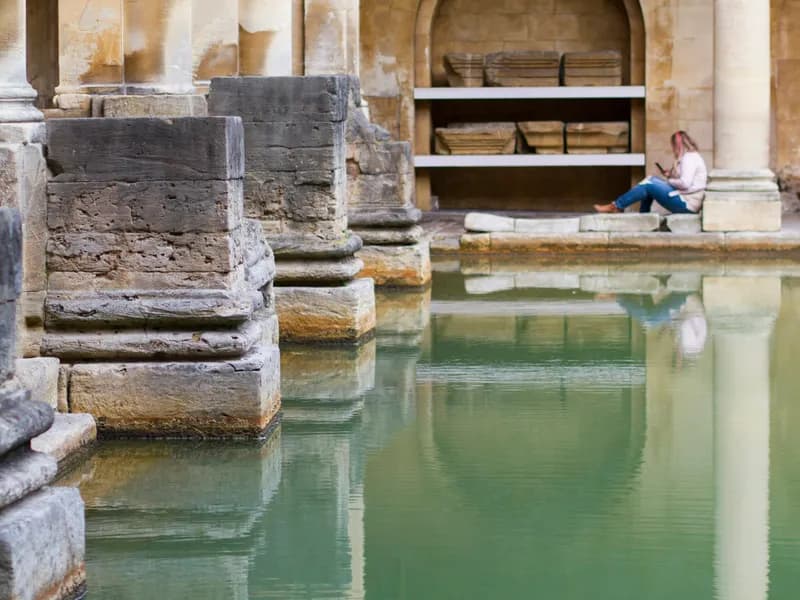
Roman Baths
One of the best-preserved Roman bathing complexes in the world, fed by Britain's only natural hot spring (46°C). Entry: 18-26 GBP (varies by season), includes audioguide narrated by Bill Bryson. Open daily 9AM-6PM (later in summer). You can't swim here, but you can taste the mineral water. Allow 2 hours.

Royal Crescent
A sweeping arc of 30 Georgian townhouses built between 1767-1774 — one of the finest examples of Georgian architecture in Britain. Free to walk along and admire. No. 1 Royal Crescent is a museum (12 GBP) showing how a wealthy Georgian family lived. The lawn in front is perfect for a picnic.
Thermae Bath Spa
The only place in Britain where you can bathe in naturally heated thermal water. The rooftop pool offers panoramic views of Bath's skyline while soaking in 33.5°C mineral-rich water. Entry from 40 GBP for a 2-hour session. Open daily 9AM-9:30PM. Book online — weekends sell out. The Twilight Package (after 5PM) is popular.
Jane Austen Centre
A museum dedicated to Bath's most famous literary resident, who lived here 1801-1806. Entry: 14 GBP. Open daily 10AM-5PM. Includes a Regency-costumed guide, wax figure photo ops, and the upstairs tea room serving cream teas. The annual Jane Austen Festival (September) features Regency dress parades through town.

Pulteney Bridge & Weir
One of only four bridges in the world lined with shops on both sides (modeled on Florence's Ponte Vecchio). Free to cross. The stepped weir below is best viewed from Parade Gardens (small entry fee) or the free Grand Parade viewpoint. Particularly photogenic at sunset or when illuminated at night.

Bath Abbey
A stunning Gothic church founded in 1499 with a famous west front depicting angels climbing ladders to heaven. Free to enter (5 GBP donation suggested). Tower tours (8 GBP) involve 212 steps and roof-level views. Open Mon-Sat 10AM-5PM, Sun 1PM-2:30PM & 4:30PM-5:30PM. Check for evensong times.
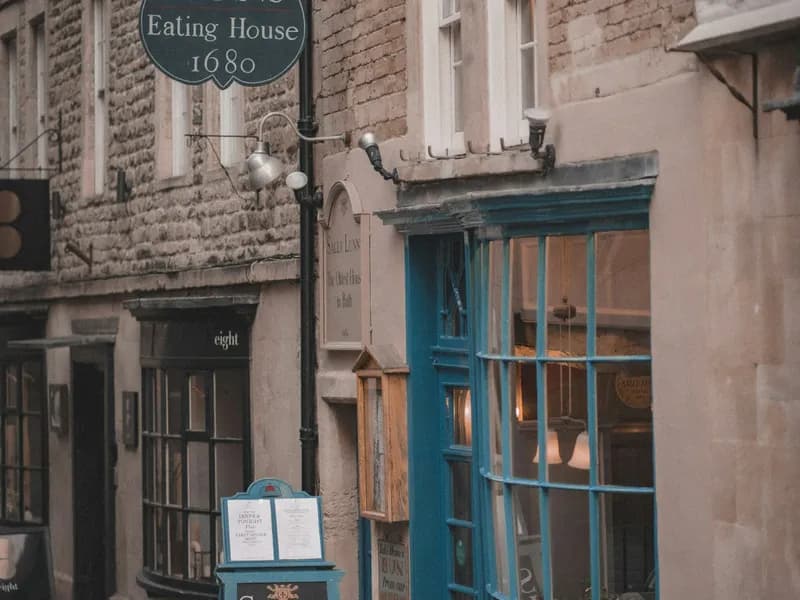
Sally Lunn's Bun
Bath's oldest house (c. 1482) serves the famous Bath bun — a large, brioche-like bread served with sweet or savory toppings. A bun with cinnamon butter costs ~7 GBP. Open daily 10AM-9PM. Expect a queue at peak times. The kitchen museum in the basement is free to visit. Located just behind Bath Abbey.
Planned Itinerary
7-Day Bath Itinerary
Arrival & Georgian Bath Introduction
Arrive by train from London Paddington (1 hour 20 min, from 15-50 GBP with advance booking on GWR). Bath Spa station is a 5-minute walk from the center. The city is entirely walkable — you don't need a car.
Train arrival and walk to accommodation(30 minutes)
Bath Spa station drops you right at the edge of the city center. Walk past Southgate shopping area toward the Abbey. Stay near the center — The Queensberry Hotel for boutique, or YHA Bath for budget (in a stunning Italianate mansion)
Bath Abbey(1 hour)
Stunning Gothic church founded in 1499. Free to enter (5 GBP donation suggested). The west front depicts angels climbing ladders to heaven. Tower tours (8 GBP) involve 212 steps and roof-level views. Check for evensong times — the acoustics are extraordinary
Pulteney Bridge and weir walk(45 minutes)
One of only four bridges in the world lined with shops on both sides. The stepped weir below is best viewed from the free Grand Parade viewpoint. Particularly photogenic at sunset. Cross the bridge and walk along Great Pulteney Street — one of Bath's grandest Georgian streets
Dinner at The Circus Restaurant(1.5 hours)
Modern British cuisine in a Georgian townhouse near The Circus. Seasonal menu — Bath chaps (pig cheek, ~18 GBP), local lamb, and Somerset cheese boards. The wine list features English wines. Reservation recommended
Roman Baths & Royal Crescent
Bath's two unmissable attractions — the ancient Roman bathing complex and the finest Georgian architecture in Britain. These define the city.
Roman Baths(2 hours)
One of the best-preserved Roman bathing complexes in the world, fed by Britain's only natural hot spring (46°C). Entry: 18-26 GBP (varies by season), includes Bill Bryson-narrated audioguide. Open daily 9AM-6PM. Arrive at 9AM to avoid crowds. You can taste the mineral water (an acquired taste) but can't swim here
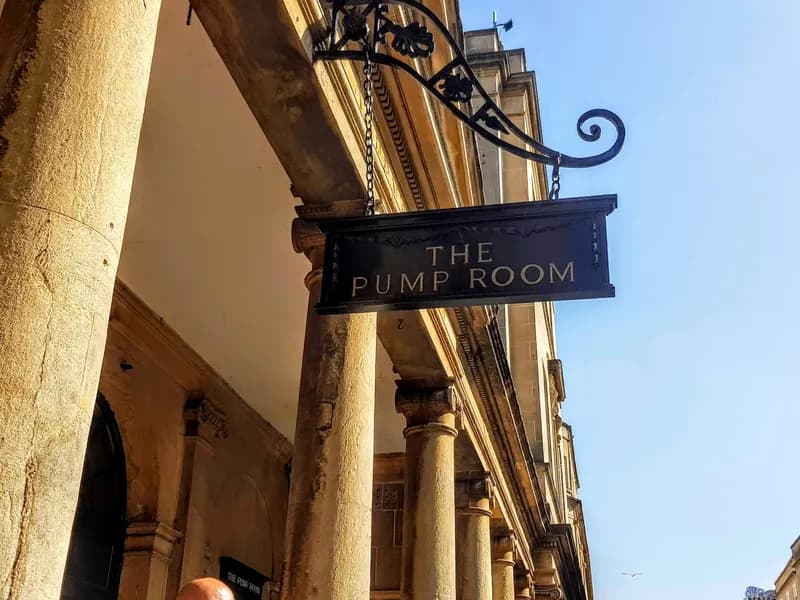
Pump Room lunch(1.5 hours)
Adjacent to the Roman Baths — a grand Georgian room where Bath visitors have taken the waters since the 1790s. Afternoon tea from 30 GBP with live piano or trio music. Or lunch: Bath bun and a pot of tea for ~12 GBP. The elegant setting captures Georgian Bath perfectly
The Circus(30 minutes)
A circle of 33 grand townhouses designed by John Wood the Elder (1754). Free to walk and admire. Each of the three curved segments has a different classical order of columns. Look for the acorn finials — a nod to the Druids. Gainsborough, Clive of India, and David Livingstone all lived here
Royal Crescent(1 hour)
A sweeping arc of 30 Georgian townhouses (1767-1774). Free to walk along. No. 1 Royal Crescent museum (12 GBP) shows how a wealthy Georgian family lived — period furniture, servants' quarters, and a stunning kitchen. The lawn in front is perfect for a picnic on sunny days
Evening at Thermae Bath Spa(2 hours)
The only place in Britain where you can bathe in naturally heated thermal water. The rooftop pool (33.5°C) offers panoramic views of Bath's skyline as you soak. Entry from 40 GBP for 2 hours. Book online — weekends sell out. The Twilight Package (after 5PM) is popular and slightly cheaper
Jane Austen's Bath & Literary Heritage
Follow in the footsteps of Bath's most famous literary resident. Austen lived here 1801-1806 and set two novels (Northanger Abbey and Persuasion) in the city.
Jane Austen Centre(1.5 hours)
A museum on Gay Street dedicated to Austen's Bath years. Entry: 14 GBP. Regency-costumed guides, period rooms, and a wax figure photo op. Open daily 10AM-5PM. The upstairs tea room serves cream teas with Austen-themed china. The annual Jane Austen Festival (September) features Regency dress parades
Jane Austen walking route(1.5 hours)
Walk the city as Austen knew it. Start at 4 Sydney Place (her first Bath home), along Great Pulteney Street, through Sydney Gardens (mentioned in her letters), past the Assembly Rooms (where she attended dances), to the Gravel Walk near the Royal Crescent. Self-guided — pick up a map at the Jane Austen Centre
Assembly Rooms and Fashion Museum(1 hour)
The elegant Georgian ballrooms where Bath's social season played out. Free to peek inside when not hosting events. The Fashion Museum (closed for relocation — check current status) covers 400 years of dress, from Georgian to modern
Lunch at Sally Lunn's(1 hour)
Bath's oldest house (c. 1482). The famous Bath bun — large, brioche-like — served with cinnamon butter (~7 GBP) or savory toppings. Queue at peak times. The kitchen museum in the basement is free. Located just behind Bath Abbey
Prior Park Landscape Garden(1.5 hours)
National Trust garden (10 GBP) with a Palladian bridge — one of only four in the world. Free panoramic views of Bath from the upper terrace. A 20-minute walk uphill from the center (no car access). The bridge reflected in the lake is a classic shot. Open daily 10AM-5PM
Stonehenge & Lacock Day Trip
A day trip combining the world's most famous stone circle with a perfectly preserved medieval village used in multiple films and TV shows.
Drive or bus to Stonehenge(1 hour)
Rent a car or take the Stonehenge Tour bus from Bath (from 42 GBP return including entry). Driving: 1 hour via A36 and A303. Book Stonehenge timed tickets online in advance (21.50 GBP) — they sell out in summer. Arrive early for smaller crowds
Stonehenge(2 hours)
The 5,000-year-old stone circle needs no introduction. The visitor center (included in entry) has excellent exhibits on Neolithic life. The 1.5-mile walk from the center to the stones passes through the wider landscape of burial mounds. Audio guide included. Sunrise and sunset tours are available (book months ahead)
Drive to Lacock(45 minutes)
Head north to Lacock — a National Trust village frozen in time. Used as a filming location for Harry Potter, Downton Abbey, and Pride and Prejudice. Free to walk the streets; Lacock Abbey 14 GBP
Lacock Abbey and Fox Talbot Museum(1.5 hours)
A 13th-century abbey converted to a country house. Fox Talbot invented photography here in 1835 — the museum covers the birth of the photograph. The cloisters were used as Hogwarts corridors in Harry Potter. The medieval village around it has not changed in 500 years
Return and dinner at Marlborough Tavern(1.5 hours)
A gastropub in Bath's upper town near the Royal Crescent. Seasonal British food — Somerset pork belly (17 GBP), wild mushroom risotto (14 GBP). Local ciders and craft beers. A warm, relaxed atmosphere
Rest Day — Parks, Shops & Spa
A slower day exploring Bath's hidden corners — independent shops on Walcot Street, free parks with panoramic views, and perhaps a return to the thermal waters.
Walcot Street browsing(1.5 hours)
Bath's 'artisan quarter' — independent shops, vintage stores, antiques, and the Saturday Walcot Street Market (if visiting Saturday). Yellow Shop vintage, The Fine Cheese Co. (cheese tastings), and several excellent independent bookshops
Alexandra Park viewpoint(1 hour)
A free panoramic view of the entire city from the hillside south of the center. A 15-minute walk uphill from the train station via Bear Flat. The view encompasses the Abbey, the Crescent, and the green hills beyond. Bring a coffee from a Walcot Street cafe
Lunch at Yak Yeti Yak(1 hour)
Nepalese and Tibetan restaurant in a Georgian basement. Momos (dumplings, 7 GBP), dal bhat set meal (12 GBP), and Gurka beer. A surprising standout in a city dominated by British and European cuisine. Atmospheric cellar setting
Free afternoon — your choice(2 hours)
Options: return to Thermae Bath Spa for another soak, visit the Holburne Museum (free, beautiful painting collection in a Georgian villa at the end of Great Pulteney Street), or take a canal walk along the Kennet and Avon Canal toward Bathampton (flat, 3 km, peaceful)
Bristol Day Trip or Cotswolds Villages
Choose between vibrant Bristol (15 min by train) with its street art and harborside, or the honey-colored Cotswolds villages (best by car).
Option A: Train to Bristol(15 minutes)
Trains every 15 minutes from Bath Spa to Bristol Temple Meads (5-8 GBP). Bristol is bigger, edgier, and more urban than Bath. The Harbourside, Banksy's hometown street art, and Clifton Suspension Bridge are highlights
Option B: Drive to Cotswolds(45 minutes)
Rent a car for the day and drive north to Castle Combe (often called England's prettiest village, 30 min from Bath), then Lacock if not visited on Day 4, and Bradford-on-Avon (a mini-Bath with a Saxon church). The rolling hills and honey-colored stone villages are quintessential England
Lunch at The Olive Shed (Bristol) or Castle Inn (Castle Combe)(1 hour)
Bristol: The Olive Shed on the Harbourside — Mediterranean tapas with harbor views (dishes 6-12 GBP). Cotswolds: The Castle Inn in Castle Combe — pub in a village that hasn't changed since the 14th century (mains 14-18 GBP)
Return and farewell dinner at Menu Gordon Jones(2.5 hours)
Bath's most unique dining experience — a surprise tasting menu. You don't know what you'll eat until it arrives. 6-course lunch (55 GBP), 6-course dinner (65 GBP). Chef Gordon Jones uses whatever is freshest from the market. Dietary restrictions accommodated but tell them when booking
Departure Day — Final Bath Morning
A last morning in this gorgeous Georgian city. One more crescent walk, one more Sally Lunn's bun, then the train back to London.
Early morning walk — Royal Victoria Park(1 hour)
The park below the Royal Crescent is beautiful in morning light. Walk through the Botanical Garden (free, small but well-curated). In spring, the avenue of cherry blossoms is spectacular. The morning light on the honey-colored stone of the Crescent is peak Bath
Last shopping and coffee(1 hour)
Pick up Bath souvenirs — Thermae Bath Spa products, local honey from the Bath Farmers' Market (Saturday mornings), or books from Mr B's Emporium (independent bookshop that serves wine while you browse). Last coffee at Colonna & Smalls — Bath's best specialty coffee (flat white 3.50 GBP)
Train departure to London or airport(1 hour 20 minutes)
Direct GWR trains to London Paddington every 30 minutes (1h 20min). For Bristol Airport: take a bus from Bath Spa station (30 min, from 7 GBP). For Heathrow: train to London Paddington then Heathrow Express. Allow 3 hours total for airport connections
14-Day Bath Itinerary
Arrival & Georgian Bath Introduction
Train from London Paddington (1h 20min). Bath is entirely walkable.
Bath Abbey(1 hour)
Gothic church. Free (5 GBP donation). Tower tours 8 GBP, 212 steps
Pulteney Bridge and weir(45 minutes)
Shops on both sides. Free Grand Parade viewpoint
Dinner at The Circus Restaurant(1.5 hours)
Georgian townhouse. Seasonal British. 16-22 GBP mains
Roman Baths & Royal Crescent
Ancient Roman bathing and Georgian architectural masterpiece.
Roman Baths(2 hours)
18-26 GBP. Bill Bryson audioguide. 9AM arrival beats crowds
Pump Room lunch(1.5 hours)
Georgian room with live music. Afternoon tea from 30 GBP
The Circus(30 minutes)
33 townhouses in a circle. Three classical orders
Royal Crescent(1 hour)
30 Georgian houses. No. 1 museum 12 GBP
Thermae Bath Spa(2 hours)
Rooftop thermal pool. From 40 GBP/2h. Book online
Jane Austen's Bath
Literary heritage walk following Austen's footsteps.
Jane Austen Centre(1.5 hours)
14 GBP. Regency guides, tea room
Austen walking route(1.5 hours)
Sydney Place, Great Pulteney Street, Assembly Rooms
Assembly Rooms(1 hour)
Georgian ballrooms. Free peek inside
Lunch at Sally Lunn's(1 hour)
Oldest house. Bath bun ~7 GBP. Kitchen museum free
Prior Park(1.5 hours)
NT. 10 GBP. Palladian bridge, city panorama
Stonehenge & Lacock
5,000-year-old stone circle and Harry Potter filming village.
Drive or bus to Stonehenge(1 hour)
Tour bus from Bath ~42 GBP return + entry
Stonehenge(2 hours)
21.50 GBP. Book timed tickets online
Lacock Abbey and Fox Talbot Museum(1.5 hours)
13th-century abbey. 14 GBP. Hogwarts corridors filmed here. Photography birthplace
Dinner at Marlborough Tavern(1.5 hours)
Gastropub. Pork belly 17 GBP
Rest Day — Parks & Walcot Street
Hidden corners, artisan shops, free viewpoints.
Walcot Street browsing(1.5 hours)
Artisan quarter. Vintage, Fine Cheese Co, bookshops
Alexandra Park viewpoint(1 hour)
Free panoramic city views. 15-min walk via Bear Flat
Lunch at Yak Yeti Yak(1 hour)
Nepalese in Georgian basement. Momos 7 GBP, dal bhat 12 GBP
Kennet and Avon Canal walk(1.5 hours)
Flat 3 km walk toward Bathampton. Narrowboats, locks, peaceful
Bristol Day Trip
Street art, Clifton Suspension Bridge, and harborside culture.
Train to Bristol(15 minutes)
5-8 GBP
Clifton Suspension Bridge(1 hour)
Brunel's iconic bridge. Free to walk across. Visitor center 7 GBP
Banksy street art walk(1.5 hours)
Self-guided tour of Banksy originals around Stokes Croft and the Harbourside. Free
Lunch at The Olive Shed(1 hour)
Mediterranean tapas on the harbor. 6-12 GBP per dish
SS Great Britain(1.5 hours)
Brunel's revolutionary iron ship. 18.50 GBP. The dry dock restoration is impressive
Cotswolds Villages
Honey-colored stone villages in rolling English countryside.
Drive to Castle Combe(30 minutes)
Often called England's prettiest village. Medieval stone cottages
Castle Combe walk(1 hour)
The market cross, the bridge, the manor house. Time hasn't touched this place
Drive to Tetbury and Westonbirt Arboretum(30 minutes)
Tetbury: Prince Charles's local town. Westonbirt: 13 GBP. 15,000 trees from around the world
Lunch at The Castle Inn, Castle Combe(1 hour)
Pub in a village frozen in the 14th century. 14-18 GBP mains
Return via Bradford-on-Avon(30 minutes)
Mini-Bath with a Saxon church. Beautiful bridge over the Avon. Free
Wells & Glastonbury Day Trip
England's smallest city and the mystical Glastonbury legends.
Drive to Wells(40 minutes)
England's smallest city. Population 12,000. Medieval atmosphere
Wells Cathedral(1.5 hours)
Stunning Gothic cathedral. Free (donation). The scissor arches are unique. The clock (1390) is one of the oldest in England
Bishop's Palace(1 hour)
12 GBP. Medieval palace with moat and gardens. The swans ring a bell for food
Glastonbury Tor(1.5 hours)
A conical hill with a ruined church tower. Free. 30-minute walk up. Views across the Somerset Levels. Associated with King Arthur and the Holy Grail
Lunch at The Good Earth in Glastonbury(1 hour)
Vegetarian cafe reflecting Glastonbury's New Age culture. 8-14 GBP
Rest Day — Spa & Slow Bath
Complete relaxation day.
Morning at Thermae Bath Spa(3 hours)
Extended session. Try the minerva bath and steam rooms as well as the rooftop pool
Lunch at The Scallop Shell(1 hour)
Bath's best fish and chips. ~14 GBP. Sustainable seafood focus
Victoria Park afternoon(2 hours)
Botanical Garden, playground. Picnic on the Crescent lawn. Relax
Avebury & Silbury Hill
The larger (and free) stone circle, plus England's mysterious artificial mound.
Avebury Stone Circle(2 hours)
Larger than Stonehenge and free to walk among. The village sits inside the circle. The Red Lion pub is inside the circle too — lunch there. National Trust museum 7 GBP
Silbury Hill viewpoint(30 minutes)
Europe's largest artificial prehistoric mound. Free viewpoint from the road. You can't climb it, but the mystery of why it was built is fascinating
West Kennet Long Barrow(45 minutes)
A 5,500-year-old burial chamber you can walk inside. Free. A 15-minute walk from the car park. Genuinely atmospheric
Lunch at The Red Lion (inside the stone circle)(1 hour)
Pub inside a stone circle. 12-16 GBP. Claims to be the most haunted pub in England
Cheddar Gorge & Somerset
Britain's largest gorge, caves, and the home of Cheddar cheese.
Drive to Cheddar Gorge(40 minutes)
30 km south. Dramatic limestone gorge with 450-foot cliffs
Cheddar Gorge and caves(2.5 hours)
22 GBP combo. Two show caves (Gough's Cave, Cox's Cave), gorge-top cliff walk, and museum. The stalactites and stalagmites are spectacular
Cheddar cheese tasting(45 minutes)
The Cheddar Gorge Cheese Company. Free tastings. Watch cheese being made. Buy proper cave-aged Cheddar from ~5 GBP
Lunch at The Bath Arms in Cheddar(1 hour)
Village pub. Ploughman's lunch (cheese, bread, pickles) 10 GBP. Cider from Somerset farms
Longleat Safari & Stourhead
A safari park in the English countryside and England's finest landscape garden.
Longleat Safari Park(3 hours)
Drive-through safari with lions, tigers, wolves, and monkeys. From 38 GBP. The monkeys will climb on your car — it's their thing
Stourhead Garden(1.5 hours)
NT. 17 GBP. Possibly England's most beautiful landscape garden. The Temple of Apollo reflected in the lake is the classic English landscape painting made real
Lunch at the Stourhead cafe(1 hour)
NT cafe with good scones and cream tea. 8-12 GBP
Final Bath Immersion
Fill any gaps, revisit favorites, stock up on Bath products.
Morning Beckford's Tower(1.5 hours)
A neo-classical tower on Lansdown Hill. 6 GBP. 120-step climb for panoramic views. William Beckford's eccentric folly. Open weekends + holidays
Fashion Museum (if reopened) or Holburne Museum(1.5 hours)
Holburne: free. Georgian villa with paintings by Gainsborough, Stubbs. Beautiful garden cafe
Lunch at Acorn(1.5 hours)
Fine-dining vegetarian. Tasting menu from 45 GBP. One of the UK's best plant-based restaurants
Farewell dinner at Menu Gordon Jones(2.5 hours)
Surprise tasting menu. 6 courses 65 GBP. You won't know what you're eating until it arrives
Departure Day — Final Bath Morning
Last Georgian morning.
Early morning Royal Victoria Park(1 hour)
Botanical Garden, cherry blossoms (spring), morning light on the Crescent
Last shopping and coffee(1 hour)
Colonna & Smalls (best coffee). Mr B's Emporium (bookshop with wine)
Train to London or airport(1 hour 20 minutes)
GWR to Paddington every 30 min. Bristol Airport bus 30 min
21-Day Bath Itinerary
Arrival & Georgian Introduction
Train from London Paddington (1h 20min). Walkable city.
Roman Baths & Royal Crescent
Ancient bathing and Georgian masterpiece.
Roman Baths(2 hours)
18-26 GBP
Thermae Bath Spa(2 hours)
From 40 GBP
Jane Austen's Bath
Literary heritage walk.
Jane Austen Centre(1.5 hours)
14 GBP
Prior Park(1.5 hours)
10 GBP
Stonehenge & Lacock
Stone circle and filming village.
Stonehenge(2 hours)
21.50 GBP
Lacock Abbey(1.5 hours)
14 GBP
Rest Day — Parks & Shops
Walcot Street, Alexandra Park.
Bristol Day Trip
Street art, Brunel, harborside.
SS Great Britain(1.5 hours)
18.50 GBP
Cotswolds Villages
Honey-colored stone perfection.
Wells & Glastonbury
Smallest city and mystic hill.
Bishop's Palace(1 hour)
12 GBP
Rest Day — Spa & Slow
Extended Thermae session.
Avebury & Silbury Hill
Free stone circle, ancient mound.
Cheddar Gorge & Somerset
Caves, cheese, cider.
Cheddar Gorge and caves(2.5 hours)
22 GBP
Longleat & Stourhead
Safari and landscape garden.
Longleat Safari(3 hours)
38 GBP
Stourhead Garden(1.5 hours)
17 GBP
Final Bath Immersion
Beckford's Tower, Holburne, fine dining.
Holburne Museum(1.5 hours)
Free
Oxford — Multi-Day Excursion
3-night trip to the city of dreaming spires.
Train to Oxford via Bristol(2.5 hours)
Change at Didcot Parkway. Or drive 2 hours via M4/A34
Bodleian Library tour(1.5 hours)
From 9 GBP. One of the world's oldest libraries. The Divinity School's vaulted ceiling was used in Harry Potter as the Hogwarts infirmary
Christ Church College(1.5 hours)
16 GBP. The Great Hall inspired the Hogwarts dining hall. The chapel doubles as Oxford's cathedral. Lewis Carroll taught here
Dinner at The Eagle and Child(1.5 hours)
C.S. Lewis and Tolkien's local pub — 'The Bird and Baby.' Traditional pub food. 12-18 GBP. The back room is where the Inklings met
Oxford — Museums & Punting
World-class museums and punting on the river.
Ashmolean Museum(2 hours)
Free. The world's first public museum. Egyptian mummies, Renaissance paintings, Guy Fawkes's lantern. Extraordinary breadth
Punting on the Cherwell(1.5 hours)
From 22 GBP per boat. Punt from Magdalen Bridge past the Botanic Garden. It's harder than it looks — you will get wet. Hire a chauffeur punt if dignity matters
Radcliffe Camera exterior(30 minutes)
The circular library is Oxford's most photographed building. Part of the Bodleian. Not open to casual visitors, but stunning from the square
Lunch at Covered Market(1 hour)
An 18th-century covered market. Alpha Bar for organic soups and sandwiches. Ben's Cookies (famous, ~2.50 GBP)
Pitt Rivers Museum(1.5 hours)
Free. A museum of anthropology and world archaeology — shrunken heads, totem poles, and the eccentric Victorian collector's spirit. One of the most unusual museums in Britain
Oxford — Blenheim Palace & Return
Churchill's birthplace and England's grandest house, then back to Bath.
Bus to Blenheim Palace(30 minutes)
8 miles north in Woodstock. Bus S3 from Oxford city center
Blenheim Palace(3 hours)
30 GBP. John Vanbrugh's baroque masterpiece, gift of the nation to the Duke of Marlborough. Winston Churchill was born here. The state rooms, gardens (designed by Capability Brown), and the Column of Victory are magnificent
Lunch at The Woodstock Arms(1 hour)
Village pub opposite Blenheim gates. Traditional British. 12-16 GBP
Rest Day — Recovery
Back in Bath. Full rest.
Dinner at Acorn(1.5 hours)
Fine-dining vegetarian. Tasting menu from 45 GBP
Salisbury & Old Sarum
Medieval cathedral with Britain's tallest spire.
Train to Salisbury(1 hour)
~15 GBP. Direct from Bath Spa
Salisbury Cathedral(1.5 hours)
Suggested donation 8 GBP. Britain's tallest spire (123m). Houses one of four surviving copies of the Magna Carta (1215). The Chapter House display is free
Cathedral Close walk(1 hour)
The largest cathedral close in Britain. Medieval and Georgian houses surround the cathedral. Free
Old Sarum(1 hour)
7.50 GBP. The original Salisbury — Iron Age hill fort, Roman settlement, Norman castle. The cathedral was moved from here to its current location in 1220. The views across Salisbury Plain are sweeping
Lunch at Charter 1227(1 hour)
Named for Salisbury's charter year. Modern British. 14-20 GBP
Somerset Levels & Taunton
England's wetland landscape — peat moors, willow country, cider farms.
Shapwick Heath Nature Reserve(2 hours)
Free. Wetland boardwalks through reed beds. Starling murmurations in winter (November-February) attract 3 million birds. Otters, bitterns, marsh harriers
Willow and Wetlands Centre(1 hour)
6 GBP. See traditional willow basket-weaving — a Somerset specialty for centuries
Perry's Cider Farm(1 hour)
Free. A traditional Somerset cider farm. Tastings of proper farm cider and perry (pear cider). The cider barn atmosphere is authentic
Lunch at a village pub(1 hour)
The Halfway House in Pitney — proper Somerset cider pub. No food pretension. Cheese ploughman's and real cider. 8-12 GBP
Final Bath Day
Last explorations and farewell.
Morning Beckington Canal walk(1.5 hours)
Walk along the Kennet and Avon Canal toward Claverton. Lock keepers' cottages, narrowboats, peaceful towpath
American Museum (Claverton Manor)(1.5 hours)
14 GBP. American decorative arts and history in a Georgian manor above Bath. Folk art, quilts, and a replica of George Washington's garden. Unexpected and excellent
Final dinner at Sotto Sotto(2 hours)
Italian in vaulted Georgian cellars. Pasta and risotto from 14 GBP. Atmospheric, romantic, and a Bath favorite. Book ahead
Departure Day
Final Georgian morning.
Travel Tips
Visa & Entry
UK Visa Requirements
The UK is NOT in the Schengen Area. US, Canadian, and Australian citizens get 6 months visa-free. Indian citizens need a UK Standard Visitor visa — apply online and at a visa application center. A Schengen visa does NOT cover the UK.
transport
Getting to Bath
Direct trains from London Paddington take 1 hour 20 minutes (from 15-50 GBP with advance booking on GWR). From Bristol Temple Meads: 15 minutes (5-8 GBP). Bath Spa station is a 5-minute walk from the center. The city is entirely walkable — you don't need a car. National Express coaches from London are cheaper but slower (2.5-3 hours).
Budget
Save with a Saver Ticket
The Bath Saver Pass (no longer sold at time of writing — check visitbath.co.uk) previously bundled attractions. Individually: Roman Baths + Thermae Spa + Jane Austen Centre would cost ~72 GBP. Book Roman Baths online in advance for a slight discount. Evenings after 5PM at the spa are cheaper than daytime.
Common Mistake: Only Visiting the Roman Baths
Many day-trippers visit the Roman Baths and leave. Bath's real charm is in walking the crescents (Royal Crescent, The Circus), exploring the independent shops on Walcot Street, and climbing to Alexandra Park or Prior Park for free panoramic views. The free 2-hour walking tours from the Abbey Churchyard are excellent.
Local Customs
Afternoon Tea Is a Must
Bath has excellent afternoon tea venues. The Pump Room (in the Roman Baths complex) offers traditional afternoon tea with live music (from 30 GBP). Sally Lunn's is more casual. Book ahead for The Pump Room, especially weekends. Dress code: smart casual.
Safety
Very Safe City
Bath is one of the safest cities in the UK. Standard urban precautions apply. The only real annoyance is that the hilly streets with cobblestones can be slippery when wet — wear appropriate shoes, especially if visiting Lansdown or the upper crescents.
Related Articles
Travel GuidesHow to Visit Bath: A Complete Planning Guide for 2026
When to come, where to sleep, what it costs, and which neighborhood to base yourself in — everything you need to plan a Bath trip that's worth more than a quick afternoon stop.
Travel GuidesBath FAQ: 12 Questions First-Timers Always Ask
Can you actually swim in the Roman Baths? Is the spa worth 40 quid? How do you get there without a car? Every Bath question, answered straight.
StoriesWalking Through Two Thousand Years: A Day in Bath
I drank water from a 2,000-year-old Roman spring at 10AM, ate a bun in a 540-year-old house at noon, and soaked in thermal water on a rooftop at sunset. All within a 20-minute walk.
Travel Guides8 Reasons Bath Is England's Most Rewarding Day Trip (But You Should Stay the Night)
Roman ruins, Georgian crescents, Jane Austen's ghost, thermal springs you can actually bathe in, and a bun that's been famous since 1482. Bath crams a lot into a very small city.