
Grand Canyon

Photo: Jason Thompson / Unsplash
Key Facts
Best Time to Visit
March-May and September-November for mild temperatures; the South Rim is open year-round, the North Rim mid-May to mid-October
Language
English
Currency
US Dollar (USD)
Time Zone
MST (UTC-7) — Arizona does not observe daylight saving time
Airport
Flagstaff Pulliam (FLG, ~1.5 hrs); main gateways are Phoenix Sky Harbor (PHX, ~3.5 hrs) and Las Vegas Harry Reid (LAS, ~4.5 hrs)
Population
Grand Canyon Village approx. 2,000 residents; the park draws roughly 4.7 million visitors a year
Climate
South Rim sits at ~7,000 ft (2,100 m): cold snowy winters, mild summers; the inner canyon is 15-20°F hotter and can exceed 100°F
Safety Rating
Very Safe (Level 1) — main risks are heat, dehydration, altitude, and unfenced cliff edges
Park Entry Fee
$35 per private vehicle, valid 7 days; covered by the $80 America the Beautiful annual pass
UNESCO Status
Grand Canyon National Park, UNESCO World Heritage Site since 1979
Top Highlights

Mather Point
The classic first view of the canyon, steps from the South Rim Visitor Center and the most popular sunrise/sunset spot. Free with park entry; open 24/7. Arrive 30 minutes before sunrise for a railing spot, then walk the paved Rim Trail to escape the crowds within minutes.
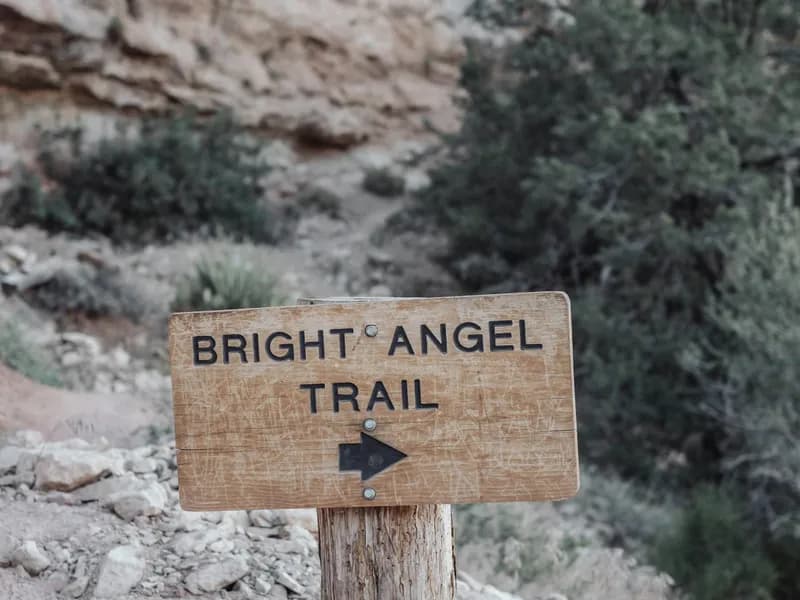
Bright Angel Trail
The most famous rim-to-river trail, with switchbacks, shade, and seasonal water stations. Day-hikers should turn around at the 1.5-Mile or 3-Mile Resthouse — never attempt the river and back in one day. Free; allow twice as long to climb out as to descend, and carry 3-4 litres of water.

Desert View Watchtower
A 1932 Mary Colter–designed stone tower at the canyon's eastern edge, with Hopi murals and the widest views toward the Colorado River and Painted Desert. Free to enter; about 25 miles (45 min) east of the village along Desert View Drive — a quieter, scenic route to/from the park.
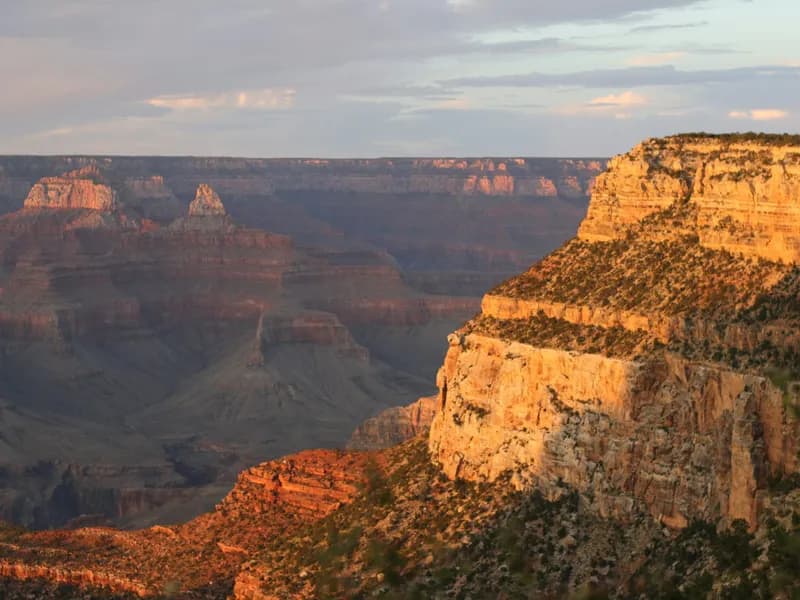
Hermit Road & Scenic Drive
A 7-mile rim road of nine overlooks (Hopi Point and Pima Point are sunset favourites), closed to private cars March-November when a free park shuttle runs. Hop on and off at each stop; allow 2-3 hours. Hopi Point's wide-open western exposure makes it the prime sunset viewpoint.

South Kaibab Trail to Ooh Aah Point
A steep, exposed trail with the best ridgeline panoramas of any South Rim hike. Day-hike to Ooh Aah Point (1.8 miles round trip) or Cedar Ridge (3 miles); there is no water and little shade, so go early. Reachable only by the free Kaibab/Rim shuttle — no private parking at the trailhead.
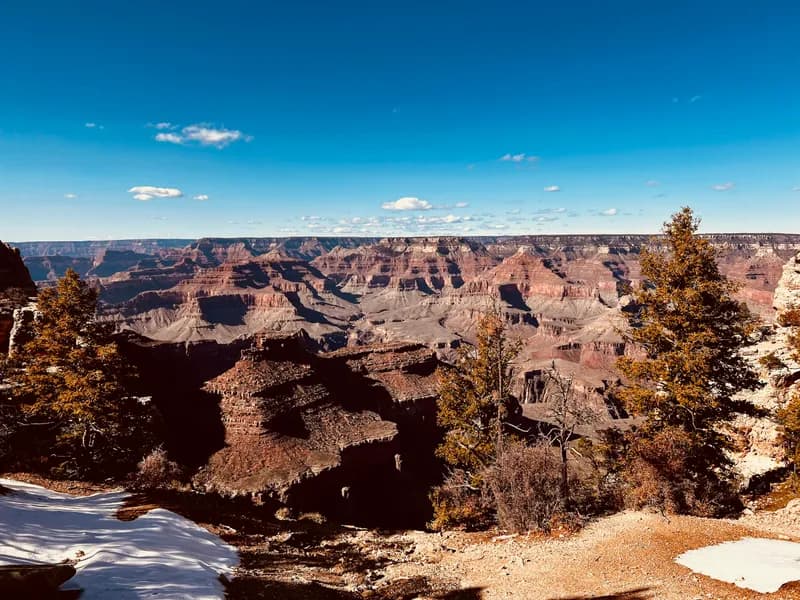
Yavapai Geology Museum & Trail of Time
A rim-edge museum with floor-to-ceiling windows explaining how the canyon formed, linked to an outdoor 'Trail of Time' where each metre walked equals a million years of geology. Free; open daily. Allow an hour and walk the trail toward the village for context before your first hike.
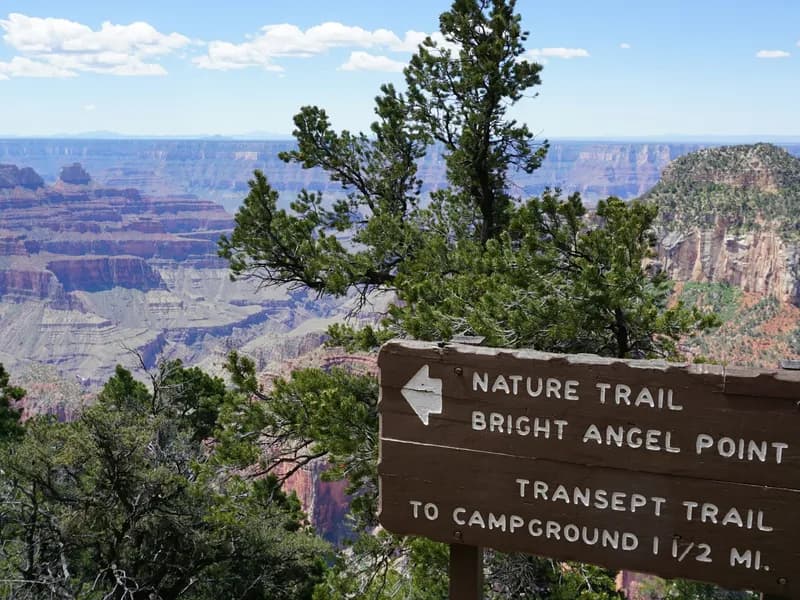
North Rim
A cooler, forested, far less crowded side of the canyon (only ~10% of visitors), reached via a 4-5 hour drive around the gorge and open mid-May to mid-October only. Bright Angel Point and Cape Royal are highlights. A hidden gem for those with time — book the lodge months ahead.
Planned Itinerary
7-Day Grand Canyon Itinerary
Arrival at the South Rim & First Sunset at Mather Point
Drive in from Flagstaff or Williams, pay the $35/vehicle entrance fee (valid 7 days), settle into your lodge or Tusayan hotel, and ease into canyon time with a first look at the rim before sunset.
Drive from Flagstaff to the South Rim via US-180(1.5 hours)
Roughly 80 miles; the route climbs through ponderosa forest. From Williams it is ~1 hour via SR-64. Stop at the South Entrance to pay the $35 fee or show your $80 America the Beautiful pass.
Check in and orient at the Grand Canyon Visitor Center(45 min)
Grab the free park map and shuttle timetable, watch the orientation film, and confirm tomorrow's sunrise time. Park here once and ride the shuttles all week.
Sunset at Mather Point(1 hour)
A 5-minute paved walk from the Visitor Center to the most popular overlook. Arrive 30 minutes early for a railing spot, then drift east along the Rim Trail to thin the crowds.
Dinner at the Arizona Room, Bright Angel Lodge(1.5 hours)
Canyon-view ribs and prickly-pear margaritas, mains roughly $20-35. No reservations — arrive before 6 PM or expect a wait. Maswik Food Court is a cheaper backup ($10-15).
Sunrise Hike: South Kaibab to Ooh Aah Point & Cedar Ridge
Tackle the rim's best ridgeline trail while it is cool, then spend the afternoon learning the canyon's two-billion-year story before the light goes golden again.
Catch the Kaibab/Rim shuttle to South Kaibab Trailhead(20 min)
There is no private parking at the trailhead — board the orange-route shuttle from the Visitor Center before dawn. First buses run ~30 min before sunrise in summer.
Hike South Kaibab to Ooh Aah Point and Cedar Ridge(2-3 hours)
Ooh Aah Point is 1.8 mi round trip; push on to Cedar Ridge for 3 mi RT (~1,140 ft descent). No water or shade — carry 2L, turn back before 10 AM in summer, and allow twice as long to climb out.
Rest and lunch at Yavapai Tavern or Maswik Food Court(1 hour)
Refuel and rehydrate after the climb out. Casual mains $12-18.
Yavapai Geology Museum & Trail of Time(1.5 hours)
Floor-to-ceiling windows frame the canyon while exhibits explain how it formed. Walk the outdoor Trail of Time toward the village — each metre equals a million years of rock. Free.
Sunset at Yavapai Point(1 hour)
A quieter sunset spot than Mather, with a sweeping eastern panorama. Steps from the museum.
Hermit Road: Nine Overlooks by Free Shuttle
A slower, hop-on-hop-off day along the western rim road, closed to private cars March-November, ending at the classic Hopi Point sunset.
Ride the Hermits Rest (red) shuttle from Village Route Transfer(15 min)
The 7-mile Hermit Road is car-free March-November; the free shuttle stops at nine overlooks. Westbound buses skip some stops, so plan to ride out and hop off heading back.
Stop at Powell Point and Hopi Point(1.5 hours)
Powell Point has the Powell Memorial; Hopi Point's wide western exposure is the rim's prime sunset spot. Walk the paved Rim Trail between stops to feel the scale.
Continue to Mohave Point, Pima Point, and Hermits Rest(2 hours)
Pima Point overlooks the Colorado's rapids (you can sometimes hear them). Hermits Rest, the end of the line, is a 1914 Mary Colter stone building with a snack bar and gift shop.
Snack break at Hermits Rest(30 min)
Coffee, sandwiches, and shade in Colter's rustic cabin. $6-12.
Sunset at Hopi Point(1 hour)
Ride back to Hopi Point and stake out a spot 30 min early — the most coveted sunset on the South Rim, with light fanning across the inner buttes.
Rest Day in Grand Canyon Village & Historic District
A deliberate low-mileage day to recover from canyon hiking — explore the historic village, browse Colter's landmarks, and stroll the flat Rim Trail at your own pace.
Walk the Grand Canyon Village historic district(2 hours)
El Tovar (1905), Bright Angel Lodge, Hopi House (Colter's 1905 pueblo-style shop), Kolb Studio, and the Lookout Studio cluster along the rim. Free; mostly flat and shaded.
Visit Kolb Studio and the Geology Trail of Time(1 hour)
The Kolb brothers' clifftop photo studio now hosts art exhibits. Step onto the Trail of Time for a relaxed geology walk.
Long lunch at El Tovar Dining Room(1.5 hours)
The park's grandest dining room — reserve ahead (call 928-638-2631), even for lunch. Mains $18-30 with canyon views through the windows.
Easy stroll on the paved Rim Trail toward Trailview Overlook(1 hour)
A gentle, near-level walk west of the village for fresh angles on the Bright Angel Trail switchbacks below. Turn back whenever you like.
Evening ranger program at McKee Amphitheater(1 hour)
Free ranger talks on geology, condors, or night skies run most evenings near Bright Angel Lodge — check the daily schedule at the Visitor Center.
Desert View Drive & the Watchtower
Head east along the quieter 25-mile Desert View Drive, stopping at overlooks toward the Painted Desert and the Colorado's Big Bend, with the day anchored by Mary Colter's Watchtower.
Drive Desert View Drive (SR-64 east) with viewpoint stops(2.5 hours)
Take your own car east 25 miles, pausing at Grandview Point (a steep historic trailhead), Moran Point, and Lipan Point — Lipan has the widest river view and the best look at the canyon's rock layers.
Tusayan Ruin and Museum(45 min)
An 800-year-old Ancestral Puebloan site with a small free museum, about 3 miles before Desert View. A quick, easy loop walk.
Climb the Desert View Watchtower(1 hour)
Colter's 1932 stone tower with Hopi murals by Fred Kabotie; climb the interior stairs for the widest eastern views toward the river and Painted Desert. Free to enter.
Lunch at the Desert View snack bar / Trading Post(45 min)
Light fare and snacks ($6-12); stock up on water before the drive back.
Sunset back at Lipan or Navajo Point(1 hour)
Linger east for sunset — these eastern points face the long open gorge and draw a fraction of the village crowd.
Bright Angel Trail Day-Hike & Stargazing
Descend the canyon's most famous trail to a sensible turnaround, then make the most of the park's certified Dark Sky skies after dark.
Start the Bright Angel Trail at sunrise(30 min)
Trailhead is just west of Bright Angel Lodge. Begin at first light to beat the heat; switchbacks offer shade and seasonal water stations (confirm which are running at the trailhead board).
Hike to the 1.5-Mile or 3-Mile Resthouse and back(3-4 hours)
1.5-Mile Resthouse is 3 mi RT; 3-Mile Resthouse is 6 mi RT with ~2,000 ft of climbing out. Never aim for the river and back in a day — turn around with energy to spare and budget twice as long to ascend.
Afternoon rest and refuel at Bright Angel Lodge(2 hours)
Recover, rehydrate, and eat a salty meal. The Fountain at Bright Angel does quick bites and ice cream.
Stargazing at Mather Point or Yavapai Point(1.5 hours)
Grand Canyon is a certified International Dark Sky Park. After dark the Milky Way is vivid — bring a red headlamp, keep back from the unfenced rim, and dress warm (rim nights are cold even in summer).
Final Sunrise & Departure
A last dawn over the canyon, a relaxed checkout, and the drive back to your gateway airport or onward road-trip stop.
Sunrise at Mather Point or Hopi Point(1 hour)
Return to your favourite overlook for one more dawn — Mather faces east for the first light striking the buttes. Arrive 30 minutes early.
Breakfast and checkout(1 hour)
Coffee at Bright Angel Lodge or a quick Maswik breakfast, then check out by the standard 11 AM lodge deadline.
Last stop at the Visitor Center bookstore(30 min)
Pick up a souvenir geology guide or trail map, and refill water bottles for the road.
Drive out to Flagstaff, Williams, or Las Vegas(1.5-4.5 hours)
Flagstaff (FLG) is ~1.5 hrs, Phoenix (PHX) ~3.5 hrs, Las Vegas (LAS) ~4.5 hrs. Fuel up in Tusayan or Williams — gas is limited inside the park.
14-Day Grand Canyon Itinerary
Arrival at the South Rim & First Sunset at Mather Point
Drive in from Flagstaff or Williams, pay the $35/vehicle entrance fee (valid 7 days), settle into your lodge or Tusayan hotel, and ease into canyon time with a first look at the rim before sunset.
Drive from Flagstaff to the South Rim via US-180(1.5 hours)
Roughly 80 miles through ponderosa forest; ~1 hour from Williams via SR-64. Pay the $35 fee at the South Entrance or show your $80 America the Beautiful pass — worth it on a multi-park trip.
Orient at the Grand Canyon Visitor Center(45 min)
Collect the free map and shuttle timetable, watch the orientation film, and confirm sunrise times. Park once and ride the shuttles.
Sunset at Mather Point(1 hour)
A 5-minute paved walk from the Visitor Center to the classic first view. Arrive 30 min early for a railing spot, then walk east on the Rim Trail to escape crowds.
Dinner at the Arizona Room, Bright Angel Lodge(1.5 hours)
Canyon-view ribs, mains $20-35, no reservations. Maswik Food Court is a $10-15 backup.
Sunrise Hike: South Kaibab to Ooh Aah Point & Cedar Ridge
Tackle the rim's best ridgeline trail while it is cool, then learn the canyon's geology before another golden-hour viewpoint.
Kaibab/Rim shuttle to South Kaibab Trailhead(20 min)
No private parking at the trailhead — take the orange-route shuttle from the Visitor Center before dawn.
Hike South Kaibab to Ooh Aah Point and Cedar Ridge(2-3 hours)
Ooh Aah Point 1.8 mi RT; Cedar Ridge 3 mi RT (~1,140 ft down). No water or shade — carry 2L, turn back before 10 AM in summer.
Yavapai Geology Museum & Trail of Time(1.5 hours)
Windows frame the canyon; the outdoor Trail of Time turns each metre into a million years. Free.
Lunch at Yavapai Tavern(1 hour)
Casual mains $12-18, near the Market Plaza.
Sunset at Yavapai Point(1 hour)
A quieter sunset than Mather, with a sweeping eastern panorama.
Hermit Road: Nine Overlooks by Free Shuttle
A hop-on-hop-off day along the western rim road, car-free March-November, ending at the famous Hopi Point sunset.
Ride the Hermits Rest (red) shuttle(15 min)
The 7-mile road is car-free March-November; the free shuttle serves nine overlooks. Ride out, hop off heading back.
Powell Point and Hopi Point(1.5 hours)
Hopi Point's wide western exposure is the rim's prime sunset spot; walk the Rim Trail between stops.
Mohave Point, Pima Point, and Hermits Rest(2 hours)
Pima Point overlooks the Colorado's rapids; Hermits Rest is Colter's 1914 stone cabin with a snack bar.
Snack at Hermits Rest(30 min)
Coffee and sandwiches, $6-12.
Sunset at Hopi Point(1 hour)
Stake out a spot 30 min early for the South Rim's most coveted sunset.
Rest Day in Grand Canyon Village & Historic District
A low-mileage recovery day exploring the historic village, Colter's landmarks, and the flat Rim Trail.
Walk the Grand Canyon Village historic district(2 hours)
El Tovar (1905), Bright Angel Lodge, Hopi House, Kolb Studio, and Lookout Studio line the rim. Free and mostly flat.
Kolb Studio art exhibits(1 hour)
The Kolb brothers' clifftop photo studio now hosts rotating exhibits.
Long lunch at El Tovar Dining Room(1.5 hours)
Reserve ahead (928-638-2631). Mains $18-30 with canyon views.
Easy Rim Trail stroll toward Trailview Overlook(1 hour)
Gentle, near-level walk for fresh angles on the Bright Angel switchbacks.
Evening ranger program at McKee Amphitheater(1 hour)
Free talks on geology, condors, or night skies most evenings — check the daily schedule.
Desert View Drive & the Watchtower
Head east along the quieter 25-mile Desert View Drive toward the Painted Desert, anchored by Colter's Watchtower.
Drive Desert View Drive with viewpoint stops(2.5 hours)
Pause at Grandview Point, Moran Point, and Lipan Point — Lipan has the widest river view and clearest rock layers.
Tusayan Ruin and Museum(45 min)
An 800-year-old Ancestral Puebloan site with a free museum and easy loop walk.
Climb the Desert View Watchtower(1 hour)
Colter's 1932 tower with Hopi murals; climb for the widest eastern views. Free to enter.
Lunch at the Desert View snack bar(45 min)
Light fare $6-12; stock up on water.
Sunset at Lipan or Navajo Point(1 hour)
Eastern points face the open gorge and draw a fraction of the village crowd.
Bright Angel Trail Day-Hike & Dark Sky Stargazing
Descend the canyon's most famous trail to a sensible turnaround, then enjoy certified Dark Sky stars after dusk.
Start the Bright Angel Trail at sunrise(30 min)
Trailhead just west of Bright Angel Lodge; begin at first light. Check seasonal water stations at the board.
Hike to the 1.5-Mile or 3-Mile Resthouse and back(3-4 hours)
3 mi or 6 mi RT (~2,000 ft climb out). Never aim for the river and back in a day — budget twice as long to ascend.
Afternoon rest at Bright Angel Lodge(2 hours)
Rehydrate and eat a salty meal; the Fountain does quick bites and ice cream.
Stargazing at Mather or Yavapai Point(1.5 hours)
A certified Dark Sky Park — vivid Milky Way after dark. Bring a red headlamp, stay back from the rim, dress warm.
Grand Canyon Railway & Rim Rest
A slower day enjoying the South Rim a different way, with the option of the historic railway and a recovery afternoon before the side trips begin.
Optional Grand Canyon Railway round trip from Williams(Full day option)
The 1901 railway runs ~2.25 hrs each way from Williams to the village depot with Wild West entertainment; round trip from ~$67/adult. If staying in-park, do this as a relaxed half-day from the depot instead.
Visit the Grand Canyon Railway Depot and Train Wreck overlook(45 min)
The 1909-10 log depot beside El Tovar is one of few remaining log train stations in the US.
Lunch at Maswik Food Court(1 hour)
Quick, varied, $10-15 — refuel before tomorrow's drive.
Restful Rim Trail walk and shop browsing(2 hours)
An easy paved stroll plus Hopi House and Verkamp's Visitor Center; pack for the Page leg tonight.
Sunset at your favourite overlook(1 hour)
Mather, Yavapai, or Hopi — say goodbye to the South Rim before heading east tomorrow.
Drive to Page via Cameron & the Little Colorado
Leave the park east through the Navajo Nation toward Page, stopping at trading posts and the Little Colorado River Gorge along the way.
Drive Desert View Drive to Cameron Trading Post(1.5 hours)
Exit the East Entrance onto US-89 north; the historic 1916 Cameron Trading Post sells Navajo crafts and serves famous Navajo tacos ($12-16).
Little Colorado River Gorge overlooks(45 min)
Navajo-run roadside overlooks on SR-64 plunge over a turquoise tributary canyon; small fee, crafts stalls. Note the unfenced edges.
Continue to Page and check in(1.5 hours)
Page sits beside Lake Powell, ~2.5 hrs total from the South Rim. Base here two nights for Antelope Canyon and Horseshoe Bend.
Sunset at Wahweap Overlook, Lake Powell(1 hour)
Glen Canyon Dam and the red-rock lake glow at dusk; a relaxed end to the drive.
Antelope Canyon & Horseshoe Bend
Page's headline slot canyons and the Colorado's famous meander — both require planning for tours and timing.
Guided tour of Upper or Lower Antelope Canyon(1.5 hours)
Slot canyons are on Navajo land and require a booked guided tour ($60-110); reserve weeks ahead. Midday gives the famous Upper Canyon light beams (summer).
Lunch in Page(1 hour)
Big John's Texas BBQ or State 48 Tavern, $12-20.
Walk to Horseshoe Bend overlook(1.5 hours)
A 1.5-mi round-trip sandy trail from a $10/vehicle parking lot to the iconic 270-degree Colorado River bend. Go late afternoon for softer light; the rim is partly unfenced.
Optional Lake Powell kayak or boat time(2 hours)
Rent a kayak at Antelope Point or take a Glen Canyon float trip; book ahead in summer.
The Long Drive to the North Rim
A scenic transfer around the canyon to its cooler, forested, far quieter north side — a different world entirely, open only mid-May to mid-October.
Drive from Page to the North Rim via US-89A and SR-67(2.5 hours)
Cross the Navajo Bridge over Marble Canyon, climb past the Vermilion Cliffs, then through the Kaibab Plateau's aspen and spruce forest. The North Rim is ~210 miles by road from the South Rim — never a day trip.
Stop at Navajo Bridge Interpretive Center(45 min)
Walk the historic 1929 bridge 467 ft above the Colorado and scan for California condors. Free.
Check in at Grand Canyon Lodge (North Rim)(30 min)
The 1937 lodge perches on the rim at Bright Angel Point; book months ahead. Two nights here.
Sunset at Bright Angel Point(1 hour)
A short paved-but-narrow trail from the lodge to a dramatic promontory — one of the canyon's finest sunsets, with a fraction of the South Rim crowds.
North Rim: Cape Royal & Point Imperial
Explore the North Rim's signature scenic drive and viewpoints, where the air is cooler and the forest deeper at 8,000+ ft.
Drive the Cape Royal Road to Point Imperial(1 hour)
Point Imperial (8,803 ft) is the highest viewpoint on either rim, gazing over the Painted Desert and Marble Canyon.
Walk to Cape Royal and Angels Window(1.5 hours)
An easy paved 0.6-mi RT trail to Angels Window, a natural rock arch framing the Colorado far below.
Picnic lunch on the Cape Royal Road(45 min)
Pack provisions from the lodge deli — services are sparse on the North Rim.
Hike the Cape Final or Roosevelt Point loop(2 hours)
Cape Final is a quiet 4-mi RT forest walk to a panoramic point; Roosevelt Point is a short, easy alternative.
Dinner at Grand Canyon Lodge dining room(1.5 hours)
Reserve ahead; the rim-edge dining room has huge picture windows. Mains $20-32.
North Rim Rest Day & Transit Toward the South Rim
A gentle morning on the North Rim's easy trails, then begin the long return drive, overnighting near the park's south side.
Morning walk on the Transept or Bridle Trail(1.5 hours)
Easy forest-and-rim trails from the lodge through Kaibab spruce — watch for mule deer and Kaibab squirrels. Low effort, big views.
Coffee and last views at the lodge sun room(45 min)
Soak in the canyon through the lodge's iconic windows before the drive.
Drive back toward Tusayan / Grand Canyon Village(4.5 hours)
Retrace SR-67 and US-89A around the gorge (~215 miles). Fuel up at Jacob Lake and again at Cameron; services are scarce.
Check in near the South Rim and rest(1 hour)
A short, restful evening in Tusayan or the village after a long day on the road.
Day Trip to Sedona's Red Rocks
Swap the canyon's mile-deep gorge for Sedona's red-rock buttes — a scenic contrast about 2 hours south, with easy trails and a relaxed town.
Drive to Sedona via Flagstaff and Oak Creek Canyon(2.5 hours)
The descent through Oak Creek Canyon's switchbacks on SR-89A is one of Arizona's most scenic drives.
Hike to Cathedral Rock or Bell Rock(2 hours)
Cathedral Rock is a steep 1.2-mi RT scramble to a saddle ($5-10 Red Rock Pass to park); Bell Rock offers easier loops with the same iconic backdrop.
Lunch in Uptown Sedona(1 hour)
Patio dining with red-rock views; $15-25. Browse the galleries and the Tlaquepaque arts village.
Stop at Chapel of the Holy Cross(45 min)
A modernist 1956 chapel built into the rock with sweeping views; free.
Drive back to the South Rim(2.5 hours)
Return north through Flagstaff in the late afternoon.
Final Sunrise & Departure
A last dawn over the canyon, relaxed checkout, and the drive to your gateway airport or onward stop.
Sunrise at Mather Point or Hopi Point(1 hour)
One more dawn at your favourite overlook; Mather faces east for first light on the buttes. Arrive 30 min early.
Breakfast and checkout(1 hour)
Coffee at Bright Angel Lodge or a quick Maswik breakfast; check out by 11 AM.
Last stop at the Visitor Center bookstore(30 min)
Grab a geology guide and refill water bottles for the road.
Drive out to Flagstaff, Phoenix, or Las Vegas(1.5-4.5 hours)
FLG ~1.5 hrs, PHX ~3.5 hrs, LAS ~4.5 hrs. Fuel up in Tusayan or Williams.
21-Day Grand Canyon Itinerary
Arrival at the South Rim & First Sunset at Mather Point
Drive in from Flagstaff or Williams, pay the $35/vehicle entrance fee (valid 7 days), settle in, and ease into canyon time with a first look at the rim before sunset.
Drive from Flagstaff to the South Rim via US-180(1.5 hours)
~80 miles through ponderosa forest; ~1 hour from Williams. Pay the $35 fee or show the $80 America the Beautiful pass — well worth it on this multi-park trip.
Orient at the Grand Canyon Visitor Center(45 min)
Collect the free map and shuttle timetable and watch the orientation film. Park once and ride the shuttles.
Sunset at Mather Point(1 hour)
5-minute paved walk from the Visitor Center; arrive 30 min early for a railing spot, then walk east on the Rim Trail.
Dinner at the Arizona Room, Bright Angel Lodge(1.5 hours)
Canyon-view ribs, mains $20-35, no reservations. Maswik Food Court is a $10-15 backup.
Sunrise Hike: South Kaibab to Ooh Aah Point & Cedar Ridge
Tackle the rim's best ridgeline trail while it is cool, then learn the canyon's geology before another golden-hour viewpoint.
Kaibab/Rim shuttle to South Kaibab Trailhead(20 min)
No private parking at the trailhead — take the orange-route shuttle before dawn.
Hike South Kaibab to Ooh Aah Point and Cedar Ridge(2-3 hours)
Ooh Aah Point 1.8 mi RT; Cedar Ridge 3 mi RT (~1,140 ft down). No water or shade — carry 2L, turn back before 10 AM in summer.
Yavapai Geology Museum & Trail of Time(1.5 hours)
Windows frame the canyon; the outdoor Trail of Time turns each metre into a million years. Free.
Lunch at Yavapai Tavern(1 hour)
Casual mains $12-18 near the Market Plaza.
Sunset at Yavapai Point(1 hour)
Quieter than Mather, with a sweeping eastern panorama.
Hermit Road: Nine Overlooks by Free Shuttle
A hop-on-hop-off day along the western rim road, car-free March-November, ending at the famous Hopi Point sunset.
Ride the Hermits Rest (red) shuttle(15 min)
The 7-mile road is car-free March-November; the free shuttle serves nine overlooks. Ride out, hop off heading back.
Powell Point and Hopi Point(1.5 hours)
Hopi Point's wide western exposure is the rim's prime sunset spot; walk the Rim Trail between stops.
Mohave Point, Pima Point, and Hermits Rest(2 hours)
Pima Point overlooks the Colorado's rapids; Hermits Rest is Colter's 1914 stone cabin with a snack bar.
Snack at Hermits Rest(30 min)
Coffee and sandwiches, $6-12.
Sunset at Hopi Point(1 hour)
Stake out a spot 30 min early for the South Rim's most coveted sunset.
Rest Day in Grand Canyon Village & Historic District
A low-mileage recovery day exploring the historic village, Colter's landmarks, and the flat Rim Trail.
Walk the Grand Canyon Village historic district(2 hours)
El Tovar (1905), Bright Angel Lodge, Hopi House, Kolb Studio, and Lookout Studio line the rim. Free and mostly flat.
Kolb Studio art exhibits(1 hour)
The Kolb brothers' clifftop photo studio now hosts rotating exhibits.
Long lunch at El Tovar Dining Room(1.5 hours)
Reserve ahead (928-638-2631). Mains $18-30 with canyon views.
Easy Rim Trail stroll toward Trailview Overlook(1 hour)
Gentle, near-level walk for fresh angles on the Bright Angel switchbacks.
Evening ranger program at McKee Amphitheater(1 hour)
Free talks on geology, condors, or night skies most evenings — check the daily schedule.
Desert View Drive & the Watchtower
Head east along the quieter 25-mile Desert View Drive toward the Painted Desert, anchored by Colter's Watchtower.
Drive Desert View Drive with viewpoint stops(2.5 hours)
Pause at Grandview Point, Moran Point, and Lipan Point — Lipan has the widest river view and clearest rock layers.
Tusayan Ruin and Museum(45 min)
An 800-year-old Ancestral Puebloan site with a free museum and easy loop walk.
Climb the Desert View Watchtower(1 hour)
Colter's 1932 tower with Hopi murals; climb for the widest eastern views. Free to enter.
Lunch at the Desert View snack bar(45 min)
Light fare $6-12; stock up on water.
Sunset at Lipan or Navajo Point(1 hour)
Eastern points face the open gorge and draw a fraction of the village crowd.
Bright Angel Trail Day-Hike & Dark Sky Stargazing
Descend the canyon's most famous trail to a sensible turnaround, then enjoy certified Dark Sky stars after dusk.
Start the Bright Angel Trail at sunrise(30 min)
Trailhead just west of Bright Angel Lodge; begin at first light. Check seasonal water stations at the board.
Hike to the 1.5-Mile or 3-Mile Resthouse and back(3-4 hours)
3 mi or 6 mi RT (~2,000 ft climb out). Never aim for the river and back in a day — budget twice as long to ascend.
Afternoon rest at Bright Angel Lodge(2 hours)
Rehydrate and eat a salty meal; the Fountain does quick bites and ice cream.
Stargazing at Mather or Yavapai Point(1.5 hours)
A certified Dark Sky Park — vivid Milky Way after dark. Bring a red headlamp, stay back from the rim, dress warm.
Grand Canyon Railway & Rim Rest Day
A slower day enjoying the South Rim differently, with the historic railway option and a recovery afternoon.
Optional Grand Canyon Railway round trip from Williams(Full day option)
The 1901 railway runs ~2.25 hrs each way from Williams with Wild West entertainment; round trip from ~$67/adult. If staying in-park, visit the depot instead.
Visit the Grand Canyon Railway Depot(45 min)
The 1909-10 log depot beside El Tovar is one of few remaining log train stations in the US.
Lunch at Maswik Food Court(1 hour)
Quick, varied, $10-15.
Restful Rim Trail walk and shop browsing(2 hours)
Easy paved stroll plus Hopi House and Verkamp's Visitor Center.
Sunset at your favourite overlook(1 hour)
Mather, Yavapai, or Hopi before the side trips begin.
Photography Walk & Mule Ride / Inner-Canyon Prep
A focused South Rim day for photographers and those eyeing a mule ride or overnight at Phantom Ranch, with a relaxed pace overall.
Sunrise photography walk along the eastern Rim Trail(2 hours)
Shoot first light from Mather to Yavapai; the side-lit buttes glow crimson and gold. A tripod and the Rim Trail's many angles reward a slow morning.
Optional Abyss / Canyon Vistas mule ride(Half day option)
Rim mule rides along the Abyss Overlook run ~3-4 hours (book months ahead via the lodges, ~$170). The overnight Phantom Ranch ride/lottery must be booked ~15 months out.
Lunch at El Tovar or a packed picnic(1 hour)
Reserve El Tovar, or grab deli provisions from the village market.
Afternoon rest and Bright Angel Trail water stop walk(1.5 hours)
A short, optional descent to the 1.5-Mile Resthouse (3 mi RT) for those with energy, or simply rest the legs.
Sunset photography at Hopi Point(1 hour)
The widest western sky on the rim — ideal for sunset frames before tomorrow's drive east.
Drive to Page via Cameron & the Little Colorado
Leave the park east through the Navajo Nation toward Page on Lake Powell, stopping at trading posts and the Little Colorado River Gorge.
Drive Desert View Drive to Cameron Trading Post(1.5 hours)
Exit the East Entrance onto US-89 north; the 1916 Cameron Trading Post serves famous Navajo tacos ($12-16).
Little Colorado River Gorge overlooks(45 min)
Navajo-run roadside overlooks plunge over a turquoise tributary canyon; small fee. Note unfenced edges.
Continue to Page and check in(1.5 hours)
~2.5 hrs total from the South Rim. Base here three nights for the Page/Lake Powell area.
Sunset at Wahweap Overlook, Lake Powell(1 hour)
Glen Canyon Dam and the red-rock lake glow at dusk.
Antelope Canyon & Horseshoe Bend
Page's headline slot canyons and the Colorado's famous meander, both requiring booked tours and good timing.
Guided tour of Upper or Lower Antelope Canyon(1.5 hours)
On Navajo land, by booked guided tour only ($60-110); reserve weeks ahead. Midday gives the famous Upper Canyon light beams in summer.
Lunch in Page(1 hour)
Big John's Texas BBQ or State 48 Tavern, $12-20.
Walk to Horseshoe Bend overlook(1.5 hours)
1.5-mi RT sandy trail from a $10/vehicle lot to the iconic 270-degree river bend. Late afternoon light; partly unfenced.
Sunset photography at Horseshoe Bend or Lake Powell(1 hour)
The bend turns deep amber at golden hour — stay back from the cliff edge.
Lake Powell Rest Day
A deliberate slow day on the water — swim, paddle, or take a boat tour at one of the Southwest's most striking reservoirs before the desert leg.
Kayak or paddleboard to Antelope Point(2-3 hours)
Rent at Antelope Point Marina and paddle the calm side canyons; book ahead in summer ($30-60).
Optional Glen Canyon / Antelope Canyon boat tour(2 hours)
Float trips below the dam or to the water-level slot canyons run from Wahweap and Antelope Point ($90-130).
Relaxed lunch at Lake Powell Resort(1 hour)
Lakeside dining at Wahweap; mains $15-28.
Evening at Glen Canyon Dam Overlook(1 hour)
Easy, low-effort viewpoint of the dam and bridge; a restful close to the day.
Day Trip to Monument Valley
Drive east into the Navajo Nation for the cinematic mesas and buttes of Monument Valley — a long but unforgettable detour.
Drive from Page to Monument Valley via US-160 and US-163(2.5 hours)
~125 miles east through the Navajo Nation; cross into the Mountain time zone of Utah near the park (Navajo Nation observes DST).
Drive the 17-mile Valley Drive loop(2.5 hours)
A rough dirt road past John Ford's Point, the Mittens, and Totem Pole ($8/person tribal park fee). A guided Navajo jeep tour reaches restricted backcountry ($75-95).
Lunch at The View Hotel restaurant(1 hour)
Navajo and Southwestern dishes facing the buttes; $15-25.
Drive back to Page(2.5 hours)
Return west in the late afternoon — the long, empty highways are part of the experience.
Zion National Park
Begin the Zion/Bryce loop with a drive to Zion's soaring sandstone canyon, riding the mandatory shuttle up the Virgin River canyon floor.
Drive from Page to Zion via US-89 and the Mt Carmel Tunnel(2.5 hours)
~115 miles through the spectacular Zion-Mount Carmel Highway and its 1930 tunnel. Base two nights in Springdale at the park gate.
Ride the Zion Canyon shuttle to the Temple of Sinawava(1 hour)
Private cars are barred from the scenic drive most of the year — the free shuttle stops at every trailhead and viewpoint.
Walk the Riverside Walk toward the Narrows(1.5 hours)
An easy paved 2.2-mi RT trail along the Virgin River to the mouth of the Narrows; wade in if conditions allow.
Sunset at the Canyon Junction Bridge(1 hour)
The Watchman glows orange over the river — a classic Zion frame, an easy stroll from the visitor center.
Zion Hiking Day: Emerald Pools & Watchman
A fuller Zion day on moderate trails — choosing your effort level among the park's famous routes while respecting the heat.
Hike the Emerald Pools Trail(2-3 hours)
Lower Pools 1.2 mi RT (easy, paved) up to Upper Pools 3 mi RT (moderate) past waterfalls and hanging gardens.
Optional Angels Landing or Watchman Trail(Half day)
Angels Landing needs an advance permit lottery and a head for heights (chains, 5.4 mi RT); the Watchman Trail (3.3 mi RT) is a no-permit alternative with valley views.
Lunch in Springdale(1 hour)
Walk the gateway town's cafes; $12-22.
Afternoon shuttle to Weeping Rock or the Court of the Patriarchs(1.5 hours)
Short, easy stops to round out the canyon at an unhurried pace.
Evening rest in Springdale(1 hour)
An early night before the drive to Bryce — the day has earned a rest.
Bryce Canyon's Hoodoos
Climb to Bryce's 8,000-9,000 ft rim for its otherworldly amphitheaters of orange hoodoos — a complete contrast to the Grand Canyon's depth.
Drive from Zion to Bryce Canyon(1.5 hours)
~85 miles northeast up onto the Paunsaugunt Plateau. Note the altitude — Bryce is far higher and cooler than Zion.
Walk the rim from Sunrise to Sunset Point(1 hour)
An easy, near-level 1-mi paved rim stretch overlooking the main amphitheater of hoodoos.
Hike the Queen's Garden / Navajo Loop combo(2-3 hours)
A 2.9-mi loop that drops among the hoodoos via Wall Street's switchbacks — the park's best short hike. Descend at Sunset, climb out at Sunrise.
Lunch at Bryce Canyon Lodge(1 hour)
The 1925 lodge dining room; mains $16-28.
Sunset at Inspiration or Bryce Point(1 hour)
The full amphitheater blazes at golden hour. Overnight near the park.
The Long Drive to the North Rim
Loop back south to the Grand Canyon's cooler, forested, far quieter North Rim — open only mid-May to mid-October.
Drive from Bryce to the North Rim via US-89 and SR-67(3.5 hours)
South through Kanab, then up the Kaibab Plateau's aspen and spruce forest on SR-67. Fuel at Jacob Lake — services are scarce.
Stop at Jacob Lake Inn(45 min)
A classic plateau waystation famous for its cookies; last reliable fuel and food before the rim.
Check in at Grand Canyon Lodge (North Rim)(30 min)
The 1937 lodge perches on the rim at Bright Angel Point; book months ahead. Two nights here.
Sunset at Bright Angel Point(1 hour)
A short paved-but-narrow promontory trail to one of the canyon's finest sunsets, with few crowds.
North Rim: Cape Royal, Point Imperial & Angels Window
Explore the North Rim's signature scenic drive and viewpoints at 8,000+ ft, where the air is cool and the forest deep.
Drive the Cape Royal Road to Point Imperial(1 hour)
Point Imperial (8,803 ft) is the highest viewpoint on either rim, over the Painted Desert and Marble Canyon.
Walk to Cape Royal and Angels Window(1.5 hours)
Easy paved 0.6-mi RT to Angels Window, a natural arch framing the Colorado far below.
Picnic lunch on the Cape Royal Road(45 min)
Pack provisions from the lodge deli — services are sparse here.
Hike Cape Final or the Roosevelt Point loop(2 hours)
Cape Final is a quiet 4-mi RT forest walk to a panorama; Roosevelt Point is a short, easy alternative.
Dinner at Grand Canyon Lodge dining room(1.5 hours)
Reserve ahead; rim-edge picture windows. Mains $20-32.
North Rim Rest Day & Quiet Trails
A gentle, low-mileage day on the North Rim's easy forest trails — savour the solitude that only 10% of canyon visitors ever see.
Morning walk on the Transept Trail(1.5 hours)
An easy 3-mi RT rim-and-forest walk from the lodge to the campground; mule deer and Kaibab squirrels are common.
Coffee in the lodge sun room(45 min)
Soak in the canyon through the iconic windows; a restful, low-effort morning.
Optional short hike on the Widforss Trail(2 hours)
A flat, shaded forest trail; turn back at any point — no need to do the full 10 mi RT.
Sunset at Bright Angel Point(1 hour)
One last North Rim dusk before the return drive tomorrow.
Return Drive to the South Rim via Navajo Bridge
Make the long, scenic transfer around the gorge back to the South Rim, with a stop to spot condors over the Colorado.
Drive from the North Rim toward the South Rim(4.5 hours)
Down SR-67 and along US-89A/US-89 around the gorge (~215 miles). Fuel at Jacob Lake and Cameron.
Navajo Bridge Interpretive Center(45 min)
Walk the historic 1929 bridge 467 ft above the Colorado at Marble Canyon and scan for California condors. Free.
Lunch at Cameron Trading Post(1 hour)
Navajo tacos and crafts at the 1916 post; $12-16.
Check in near the South Rim and rest(1 hour)
A short, restful evening in Tusayan or the village after the long drive.
Day Trip to Sedona's Red Rocks
Swap the canyon's depth for Sedona's red-rock buttes about 2 hours south, via the scenic Oak Creek Canyon switchbacks.
Drive to Sedona via Flagstaff and Oak Creek Canyon(2.5 hours)
The SR-89A descent through Oak Creek Canyon is one of Arizona's most scenic drives.
Hike to Cathedral Rock or Bell Rock(2 hours)
Cathedral Rock is a steep 1.2-mi RT scramble ($5-10 Red Rock Pass to park); Bell Rock offers easier loops.
Lunch in Uptown Sedona(1 hour)
Patio dining with red-rock views, $15-25; browse the Tlaquepaque arts village.
Stop at Chapel of the Holy Cross(45 min)
A modernist 1956 chapel built into the rock with sweeping views; free.
Drive back to the South Rim(2.5 hours)
Return north through Flagstaff in the late afternoon.
Final Sunrise & Departure
A last dawn over the canyon, relaxed checkout, and the drive to your gateway airport or onward stop after three weeks in the Southwest.
Sunrise at Mather Point or Hopi Point(1 hour)
One final dawn at your favourite overlook; Mather faces east for first light on the buttes. Arrive 30 min early.
Breakfast and checkout(1 hour)
Coffee at Bright Angel Lodge or a quick Maswik breakfast; check out by 11 AM.
Last stop at the Visitor Center bookstore(30 min)
Grab a geology guide and refill water bottles for the road.
Drive out to Flagstaff, Phoenix, or Las Vegas(1.5-4.5 hours)
FLG ~1.5 hrs, PHX ~3.5 hrs, LAS ~4.5 hrs. Fuel up in Tusayan or Williams before leaving.
Travel Tips
Visa & Entry
ESTA or Visa for the USA
Visa Waiver Program travellers (UK, EU, Australia, Japan, and others) need an approved ESTA (US$21, valid 2 years) before flying; most other nationalities need a B-2 visitor visa. There are no internal border checks to enter the park itself — just the standard US entry at your arrival airport.
Budget
Buy the America the Beautiful Pass
Park entry is $35 per vehicle for 7 days, but if you'll visit two or more national parks in a year (easy on a Southwest road trip with Zion, Bryce, and Monument Valley nearby), the $80 'America the Beautiful' annual pass pays for itself fast and covers everyone in your car.
Safety
Heat and Hydration Kill More Than Falls
Every year, over-ambitious hikers need rescue after descending too far. The classic mistake is hiking down in the cool morning and underestimating the brutal, hotter climb out. Never try to reach the river and return in a single day, carry and drink plenty of water with electrolytes and salty snacks, and turn back with energy to spare.
Mind the Unfenced Edges
Large stretches of the rim and trails have no railings, and the rock can be loose or slippery. Stay on marked paths, keep well back from the edge for photos (selfie accidents are a real danger), and watch children closely. Afternoon summer thunderstorms bring lightning to exposed viewpoints — head to shelter when storms approach.
transport
Park the Car, Ride the Shuttle
In peak season the South Rim's free shuttle buses (Village, Kaibab/Rim, and Hermit routes) are the easiest way around, and Hermit Road is closed to private cars March-November. Park once at the Visitor Center and use the shuttles; the Tusayan route even lets you leave the car outside the gate to skip entrance queues.
Local Customs
Book Lodging Far in Advance
In-park lodges (El Tovar, Bright Angel, Phantom Ranch at the bottom) and the rim campgrounds book up 6-13 months ahead, and Phantom Ranch is allocated by lottery. If they're full, stay in the gateway town of Tusayan (1 mile away) or Williams/Flagstaff, and reserve well before your trip.
Ready to explore Grand Canyon?
Get AI-powered recommendations for your trip
Plan a Trip to Grand CanyonRelated Articles
Travel Guides12 Best Things to Do at the Grand Canyon's Rim (and the Right Time for Each)
Two billion years of rock, one mile deep — and most visitors leave in under two hours. Here are the 12 Grand Canyon rim experiences worth building your day around, in the order the light wants you to do them.
TipsGrand Canyon Tips: 18 Things to Know Before You Go
Reservations, the shuttle system, heat and elevation safety, where to stay, and how to dodge the crowds — the practical Grand Canyon tips that save your trip, all in one place.
StoriesA Perfect 3 Days at the Grand Canyon's South Rim: Your Day-by-Day Plan
Three days, zero wasted hours. Here's exactly what to do each day on the South Rim — sunrise hikes, the best free shuttle stops, where to eat, and the canyon's darkest skies.
Travel GuidesHiking the Grand Canyon: 10 Adventures Below the Rim and Above It
From Bright Angel switchbacks to a sunrise at Mather Point, here's how to turn the South Rim into a proper adventure base — with the trails, permits, and timing that actually matter.