
Hiroshima

Key Facts
Best Time to Visit
March to May (cherry blossoms) and October to November (autumn colors, mild weather)
Language
Japanese; English signage at major sites and transportation
Currency
Japanese Yen (JPY)
Time Zone
JST (UTC+9)
Airport
Hiroshima Airport (HIJ) — 45 minutes by bus; or arrive via Shinkansen to Hiroshima Station
Population
~1.2 million (city proper)
Climate
Humid subtropical, avg 6-28°C; mild winters, hot humid summers; comfortable spring and autumn
Safety Rating
Very Safe (Level 1)
UNESCO Status
Two UNESCO World Heritage Sites: Atomic Bomb Dome and Itsukushima Shrine on Miyajima
Top Highlights

Hiroshima Peace Memorial Park & Museum
A 12-hectare park at the bomb's hypocenter with the iconic A-Bomb Dome (Genbaku Dome), cenotaph, Children's Peace Monument, and the renovated museum. Museum entry: 200 JPY adults. Open 8:30AM-6PM (7PM in summer). Allow 2-3 hours for the museum alone. The Peace Flame burns until all nuclear weapons are abolished.

Atomic Bomb Dome (Genbaku Dome)
The skeletal remains of the Hiroshima Prefectural Industrial Promotion Hall, directly below the bomb's detonation point. A UNESCO World Heritage Site since 1996. Exterior viewing only (no entry). Most powerful at night when illuminated. Free. Located at the northern end of Peace Memorial Park along the Motoyasu River.
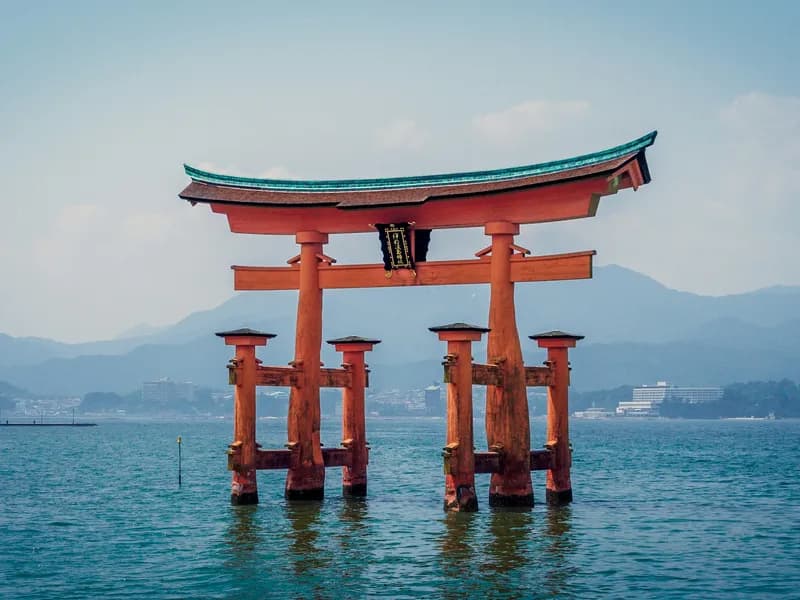
Miyajima Island (Itsukushima)
Sacred island 45 minutes from Hiroshima by ferry (JR ferry covered by Japan Rail Pass, otherwise 180 JPY one-way). The floating vermilion torii gate of Itsukushima Shrine (500 JPY entry) is one of Japan's three most scenic views. Friendly deer roam freely. Cable car to Mt. Misen summit (1,840 JPY round trip). Allow a full day.

Itsukushima Shrine
A UNESCO World Heritage Shinto shrine built over water, dating to the 6th century. The current structure is from 1168. Entry: 500 JPY. Open 6:30AM-6PM (varies seasonally). At high tide, the shrine and torii appear to float; at low tide, you can walk to the base of the torii. Check tide times at miyajima.or.jp for planning.

Hiroshima-style Okonomiyaki
Unlike Osaka-style, Hiroshima's okonomiyaki is layered (not mixed) with noodles, cabbage, pork, and egg. The Okonomimura building near Peace Park has 24 tiny restaurants across 4 floors — each with its own recipe. A filling okonomiyaki costs 800-1,200 JPY. Watch the chef build it on the griddle right in front of you.
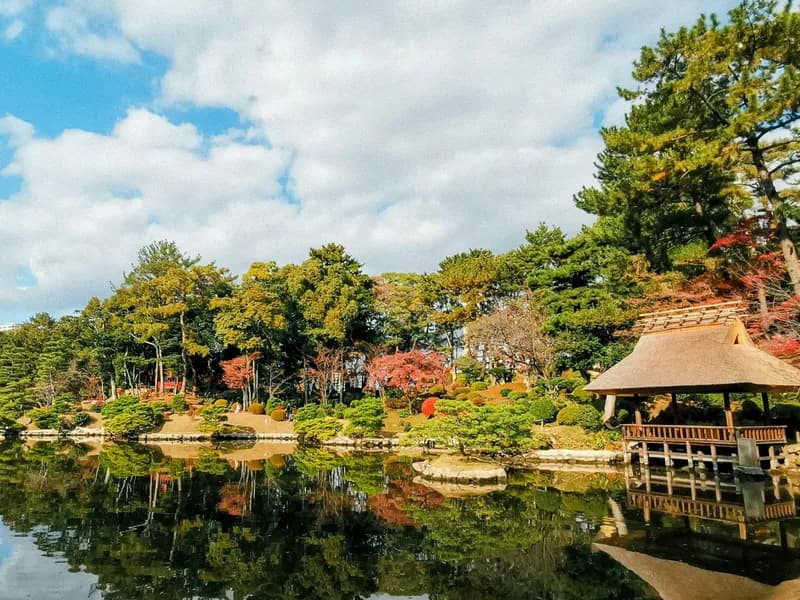
Shukkeien Garden
A 400-year-old Japanese stroll garden (1620) just 10 minutes walk from Hiroshima Station. Miniature landscapes represent valleys, mountains, and forests around a central pond. Entry: 260 JPY. Open 9AM-6PM (5PM in winter). Survived the bombing and was restored. Beautiful during cherry blossom (late March) and autumn foliage. Allow 1 hour.
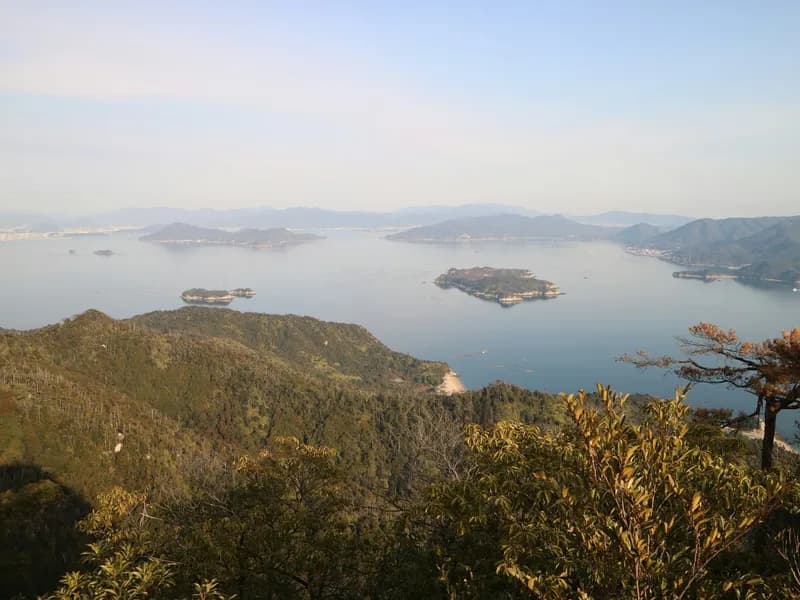
Momijidani Park & Mt. Misen
On Miyajima Island, this maple valley explodes with red leaves in November. From here, take the ropeway (cable car, 1,840 JPY round trip) or hike 1.5-2 hours to the 535m summit of Mt. Misen, a sacred mountain with an eternal flame said to have burned for 1,200 years. Panoramic views of the Inland Sea from the observatory.
Planned Itinerary
7-Day Hiroshima Itinerary
Arrival & Peace Memorial Park
Arrive in Hiroshima by Shinkansen or flight. Begin at the Peace Memorial — the city's emotional core.
Arrive at Hiroshima Station(15 minutes)
Shinkansen from Osaka 1.5 hours (~10,000 JPY), from Tokyo 4 hours (~19,000 JPY). Japan Rail Pass covers all. Airport bus from HIJ takes 45 minutes
Check in near Peace Park or Station(30 minutes)
Business hotels from 5,000-8,000 JPY. Hiroden streetcar connects both areas (220 JPY/ride)
Hiroshima Peace Memorial Museum(2.5 hours)
200 JPY. Renovated museum at the bomb's hypocenter. Personal artifacts, melted objects, survivor testimonies. Deeply moving. Allow time to process
Peace Memorial Park walk(1 hour)
A-Bomb Dome (exterior, free), cenotaph, Children's Peace Monument (fold and leave a paper crane), and the Peace Flame that burns until all nuclear weapons are abolished
Dinner at Okonomimura(1 hour)
4-floor building with 24 tiny okonomiyaki restaurants near Peace Park. Hiroshima-style is layered (not mixed) with noodles. 800-1,200 JPY. Watch the chef build it in front of you
Miyajima Island — Full Day
Sacred island with the floating torii gate, friendly deer, and Mt. Misen summit.
Hiroden streetcar to Miyajimaguchi(1 hour)
220 JPY or free with Hiroden day pass (700 JPY which covers all rides). Tram #2 direct from Hiroshima Station
JR ferry to Miyajima(10 minutes)
180 JPY one-way (free with Japan Rail Pass). Ferries every 15 minutes
Itsukushima Shrine(1 hour)
500 JPY. UNESCO shrine built over water. At high tide it floats; at low tide walk to the torii base. Check tide times at miyajima.or.jp
Momijidani Park walk(30 minutes)
Free. Maple valley — spectacular red leaves in November
Ropeway to Mt. Misen summit(2 hours)
1,840 JPY round trip. 535m summit with eternal flame said to have burned 1,200 years. Panoramic views of the Inland Sea. Or hike up (1.5-2 hours)
Lunch: grilled oysters on the approach street(45 minutes)
Miyajima is famous for giant grilled oysters — 200-400 JPY each. Also try momiji manju (maple leaf cakes, 120 JPY)
Shukkeien Garden & City Exploration
Stroll through a 400-year-old garden, explore Hiroshima's rebuilt city, and try more local food.
Shukkeien Garden(1.5 hours)
260 JPY. 1620 Japanese stroll garden — miniature landscapes around a central pond. Cherry blossoms in March, azaleas in May, autumn colors in November
Hiroshima Castle(1 hour)
370 JPY. Reconstructed castle (original destroyed in 1945). Small museum inside with samurai artifacts. Views from the top floor
Lunch at Hassho(1 hour)
Famous for Hiroshima tsukemen (dipping noodles in spicy sauce) — 900 JPY. Near Hiroshima Station
Hondori Shopping Arcade(1.5 hours)
Covered pedestrian shopping street with department stores, boutiques, and food. Connects to Peace Park area
A-Bomb Dome night illumination(30 minutes)
Free. The dome is hauntingly beautiful when illuminated at night, reflected in the Motoyasu River
Day Trip to Onomichi
Charming hillside port town 1.5 hours east — temple walk, cat trail, and the start of the Shimanami Kaido cycling route.
Train to Onomichi(1.5 hours)
~2,500 JPY or covered by Japan Rail Pass. Scenic coastal route
Temple Walk (Tera-meguri)(3 hours)
Free. Walk between 25 temples scattered up the hillside. Stone steps, cat-populated alleys, and views over the Inland Sea. The most atmospheric walk in western Japan
Cat Alley (Neko no Hosomichi)(30 minutes)
Lane of cat-themed art, stones, and actual cats. At the top of the hill
Onomichi ramen lunch(45 minutes)
Rich pork back-fat ramen unique to Onomichi — Tsutafuji is the most famous shop. 750 JPY
Senkoji Park ropeway(45 minutes)
320 JPY one-way. Hilltop park with panoramic Inland Sea views. Cherry blossoms and wisteria in spring
Rabbit Island (Okunoshima)
Day trip to the island of 1,000+ wild rabbits — and a dark WWII chemical weapons history.
Train to Tadanoumi Station(1.5 hours)
~2,000 JPY from Hiroshima
Ferry to Okunoshima(15 minutes)
310 JPY one-way. Ferries every 1-2 hours
Walk the island with rabbits(3 hours)
1,000+ wild rabbits approach visitors for food. Buy rabbit food at the ferry terminal (100 JPY/bag). The rabbits are descendants of lab animals from the WWII poison gas factory
Poison Gas Museum(30 minutes)
Free. Small museum documenting the island's secret role manufacturing chemical weapons. The ruins of the factory buildings are scattered across the island
Free Morning & Hiroshima Culture
Rest morning, then explore Hiroshima's art and food scene.
Hiroshima Museum of Art(1 hour)
1,300 JPY. Small but excellent collection of French Impressionists in a beautiful circular building in Shukkeien Garden area
Hiroshima Peace Memorial Ceremony site(30 minutes)
Walk the cenotaph area in quiet — fewer tourists in the afternoon. Fold a paper crane from the museum shop
Farewell okonomiyaki at Nagataya(1 hour)
Local favorite near Peace Park — Hiroshima-style with extra cheese option. 1,000-1,400 JPY
Evening at Nagarekawa entertainment district(1.5 hours)
Hiroshima's nightlife area — izakayas, bars, and karaoke. Try Hiroshima-style tsukemen at a late-night noodle shop
Departure Day
Final morning. Pick up souvenirs and depart by Shinkansen.
Morning walk at Peace Park(30 minutes)
One last quiet moment at the A-Bomb Dome. Morning light through the skeleton structure
Souvenir shopping at Hiroshima Station(45 minutes)
Momiji manju (maple cakes), Hiroshima-made Kumano brushes (cosmetic brushes used by top makeup artists worldwide), and sake from Saijo
Shinkansen departure(Variable)
To Osaka (1.5 hours), Kyoto (1h45), or Tokyo (4 hours). All covered by Japan Rail Pass
14-Day Hiroshima Itinerary
Arrival & Peace Memorial
Arrive by Shinkansen, visit the Peace Memorial.
Arrive Hiroshima Station(15 minutes)
Shinkansen from Osaka 1.5h, Tokyo 4h. JR Pass covers all
Check in(30 minutes)
Hotels 5,000-8,000 JPY
Peace Memorial Museum(2.5 hours)
200 JPY
Peace Park walk(1 hour)
A-Bomb Dome, cenotaph, paper cranes
Okonomimura dinner(1 hour)
Hiroshima okonomiyaki 800-1,200 JPY
Miyajima Island
Floating torii, shrine, deer, and Mt. Misen.
Streetcar to Miyajimaguchi(1 hour)
Hiroden day pass 700 JPY
Itsukushima Shrine(1 hour)
500 JPY
Mt. Misen ropeway(2 hours)
1,840 JPY
Garden, Castle & City
Shukkeien Garden, castle, and shopping arcade.
Shukkeien Garden(1.5 hours)
260 JPY
Hiroshima Castle(1 hour)
370 JPY
Onomichi Day Trip
Hillside temple walk and cat trail.
Rabbit Island
Okunoshima — 1,000+ wild rabbits and dark WWII history.
Free Morning & Art
Rest and cultural exploration.
Museum of Art(1 hour)
1,300 JPY. French Impressionists
Iwakuni Day Trip
Famous Kintai Bridge and samurai quarter 45 minutes southwest.
Train to Iwakuni(45 minutes)
~760 JPY or JR Pass
Kintai Bridge(1 hour)
310 JPY. Five-arched wooden bridge (1673) spanning the Nishiki River. One of Japan's three most famous bridges. Walk across and back
Iwakuni Castle ropeway(1 hour)
Combined ticket 970 JPY (bridge + ropeway + castle). Hilltop castle with views of the Inland Sea
Lunch at a soba shop near the bridge(45 minutes)
Iwakuni sushi (pressed sushi) is the local specialty — 800-1,200 JPY
Samurai quarter walk(45 minutes)
White-walled samurai residences near the bridge. Free to walk through
Miyajima Return — Low Tide & Hiking
Second visit timed for low tide — walk to the torii gate base.
Check tide times(10 minutes)
miyajima.or.jp — time your visit for low tide to walk to the torii
Walk to torii gate base(1 hour)
Only possible at low tide. Touch the 16m-tall gate and see the coins wedged in the barnacles
Hike Mt. Misen via Momijidani trail(3 hours)
Free. 1.5-2 hours up through forest past the eternal flame hall. Different perspective from the ropeway
Miyajima shopping street(1 hour)
Momiji manju shops, shamoji (rice paddle) souvenirs, and Miyajima beer
Saijo Sake Brewery District
Day trip to one of Japan's top sake-producing towns — 40 minutes east.
Train to Saijo(40 minutes)
~580 JPY or JR Pass
Sake Brewery Street walk(3 hours)
8 breweries in a row with white-walled kura (storehouses). Free tastings at most. Kamotsuru and Sanyotsuru are standouts
Sake and food pairing lunch(1.5 hours)
Several breweries have restaurants pairing their sake with local dishes. Set menus from 1,500 JPY
Buy sake to take home(30 minutes)
Brewery-exclusive bottles from 1,000 JPY. Many ship internationally
Rest Day
Free day. Revisit Peace Park or explore neighborhoods.
Breakfast at Andersen bakery(45 minutes)
Hiroshima's beloved bakery chain (Danish-inspired). The flagship on Hondori is in a restored bank building. Morning bread set ~600 JPY
Afternoon at Hijiyama Park(1.5 hours)
Hilltop park with city views and the Hiroshima City Museum of Contemporary Art (free for permanent collection)
Evening at a local izakaya(1.5 hours)
Try Hiroshima's oysters — the prefecture produces 60% of Japan's oysters. Grilled, fried, or raw from 500 JPY/piece at izakayas near Nagarekawa
Shimanami Kaido Cycling
Cycle a section of the famous island-hopping bridge route across the Inland Sea.
Rent cycling bike at Onomichi(20 minutes)
1,100 JPY/day for cross-bike. Helmet free. Electric assist available for 2,500 JPY
Cycle Onomichi to Setoda (Ikuchijima)(4 hours)
~30 km one-way. Cross the Innoshima Bridge and cycle through citrus orchards and fishing villages. Stunning Inland Sea views from every bridge
Lunch at Setoda (Kousangi Lemon Ramen)(45 minutes)
Famous lemon-infused ramen — this island grows Japan's best lemons. 850 JPY
Return bike at Setoda terminal and ferry back(1.5 hours)
Drop bike at the rental terminal (one-way is allowed). Bus or ferry back to Onomichi/Hiroshima
Hiroshima Cooking & Culture
Learn okonomiyaki making and explore hidden cultural sites.
Okonomiyaki cooking class(2 hours)
Wood Egg Okonomiyaki Museum in Nishi-ku — free museum, cooking classes from 1,500 JPY. Learn the layering technique
Mitaki-dera temple(1.5 hours)
Free. Hidden mountain temple 30 minutes from the city center. Three waterfalls in a forested ravine. A-bomb survivors sheltered here. Deeply peaceful
Mazda Museum(1.5 hours)
Free but reservation required (mazda.com). Mazda's HQ is in Hiroshima — see the assembly line and concept cars
Last Full Day — Favorites
Return to what moved you. Final shopping.
Morning at Peace Park(1 hour)
Quiet farewell at the cenotaph
Souvenirs at Hiroshima Station(1 hour)
Momiji manju, Kumano brushes, Saijo sake
Farewell dinner at Nagarekawa(1.5 hours)
Hiroshima oysters and local sake. A fitting end
Departure Day
Final morning and Shinkansen departure.
Shinkansen departure(Variable)
Osaka 1.5h, Kyoto 1h45, Tokyo 4h
21-Day Hiroshima Itinerary
Arrival & Peace Memorial
Arrive Hiroshima, visit Peace Memorial.
Peace Memorial Museum(2.5 hours)
200 JPY
Miyajima Island
Floating torii, shrine, Mt. Misen.
Garden, Castle & City
Shukkeien, castle, shopping.
Onomichi Day Trip
Temple walk, cat trail, ramen.
Rabbit Island
Okunoshima.
Rest Day
Free day, art museum.
Iwakuni Day Trip
Kintai Bridge and samurai quarter.
Kintai Bridge(1 hour)
310 JPY
Miyajima Low Tide & Hiking
Walk to the torii base, hike Mt. Misen.
Saijo Sake District
8 breweries in a row.
Shimanami Kaido Cycling
Cycle across Inland Sea bridges.
Rent bike(20 minutes)
1,100 JPY/day
Cycle to Setoda(4 hours)
~30 km
Rest Day
Second rest day.
Cooking & Hidden Temples
Okonomiyaki class and mountain temple.
Mitaki-dera temple(1.5 hours)
Three waterfalls in forest. A-bomb survivors sheltered here
Mazda Museum(1.5 hours)
Free, reservation required
Train to Kurashiki
Day trip to the canal town — white-walled warehouses and exceptional art museum.
Shinkansen to Okayama + local to Kurashiki(1.5 hours)
~5,000 JPY or JR Pass
Bikan Historical Quarter canal walk(1.5 hours)
Free. White-walled warehouses reflected in willow-lined canals. One of Japan's most photogenic streetscapes
Ohara Museum of Art(1.5 hours)
1,500 JPY. Japan's first Western art museum (1930). El Grecos, Monets, and Matisse in a Greek-columned building beside the canal
Lunch at a cafe in the historical quarter(1 hour)
Kurashiki denim products and jeans — the Kojima area nearby is Japan's denim capital
Tomonoura Day Trip
Miyazaki's inspiration for Ponyo — a fishing port frozen in time.
Train to Fukuyama + bus to Tomonoura(1.5 hours)
~4,000 JPY or JR Pass + 530 JPY bus
Tomonoura harbor walk(2 hours)
Edo-period port that inspired Hayao Miyazaki's 'Ponyo.' Stone lanterns, traditional inns, and a harbor unchanged since the 1800s. Free to explore
Taicho-ro tea house(45 minutes)
200 JPY. Edo-era reception hall overlooking the harbor. The veranda view is the classic Tomonoura photo
Seaside lunch(1 hour)
Fresh sea bream (tai) is the local catch — tai-meshi (bream rice) from 1,000 JPY
Takehara — Little Kyoto of Aki
Preserved Edo-era merchant town.
Historic district walk(2 hours)
Free. Well-preserved merchant houses and sake breweries from the Edo period. Called 'Little Kyoto of Aki' — much quieter than actual Kyoto
Rest Day
Third rest day.
Hiroshima prefectural art museum(1 hour)
510 JPY. In Shukkeien Garden grounds
Afternoon at a coffee shop(1.5 hours)
Hiroshima has a strong kissaten (traditional coffee house) culture — try 43 Coffee Roastery
Sandankyo Gorge
One of Japan's top three gorges — hiking through autumn colors.
Bus to Sandankyo(1.5 hours)
From Hiroshima Bus Center. ~1,500 JPY one-way. Service reduced in winter
Sandankyo Gorge hike(4 hours)
Free. 16-km gorge with suspension bridges, waterfalls, and jade-green pools. The full trail takes 5-6 hours; the first 2-3 km are the most scenic. Peak autumn colors late October-November
Lunch at gorge entrance restaurants(1 hour)
Mountain trout (iwana) grilled over charcoal — 1,000-1,500 JPY
Miyajima Third Visit — Night Stay
Overnight on Miyajima to experience it without day-trippers.
Check in ryokan(30 minutes)
Traditional inn from 12,000 JPY/night with dinner and breakfast. Iwaso Ryokan (since 1854) or Jukeiso for budget
Evening shrine illumination(1 hour)
Itsukushima Shrine illuminated at night — with day-trippers gone, it's magical
Ryokan dinner(1.5 hours)
Multi-course kaiseki dinner with local oysters, Inland Sea fish, and Miyajima specialties
Miyajima Morning & Return
Dawn on the sacred island before tourists arrive.
Sunrise walk to torii gate(1 hour)
Near-empty island at dawn. Deer congregate at the beach. Magical light on the torii
Ryokan breakfast(45 minutes)
Traditional Japanese breakfast — rice, miso, grilled fish, pickles
Daishoin Temple(1 hour)
Free. At Mt. Misen's base — 500 spinning Buddhist mantra wheels, stone statues in knitted hats, and a cave of 88 Buddhas
Last Full Day — Favorites & Farewell
Revisit favorites and farewell dinner.
Morning at Peace Park(1 hour)
Final cenotaph visit. Fold one more paper crane
Souvenirs at Hiroshima Station(1 hour)
Momiji manju, Kumano brushes, Saijo sake
Farewell dinner: oyster kaiseki(2 hours)
Multi-course Hiroshima oyster dinner at Kakifune Kanawa — floating oyster restaurant on the river. Oyster course from 4,000 JPY
Departure Day
Final morning.
Travel Tips
Visa & Entry
Standard Japan Visa Rules
Most Western passport holders get 90 days visa-free. Hiroshima is easily reached as a day trip or overnight from Osaka/Kyoto (1.5-2 hours by Shinkansen, covered by Japan Rail Pass). Visit Japan Web registration required before arrival in Japan.
transport
Shinkansen is the Best Way to Arrive
Hiroshima Station is on the San'yo Shinkansen line. From Tokyo: 4 hours (Nozomi, ~19,000 JPY), from Osaka: 1.5 hours (~10,000 JPY), from Kyoto: 1 hour 45 minutes. A 7-day Japan Rail Pass (50,000 JPY) pays for itself on a Tokyo-Hiroshima round trip. Within the city, the Hiroden streetcar (tram) covers all major sites for 220 JPY per ride.
Hiroshima Tram Day Pass is Great Value
The Hiroden streetcar 1-day pass (700 JPY) covers unlimited rides including the route to Miyajimaguchi ferry terminal. The Visit Hiroshima Tourist Pass (1,000 JPY) also includes the JR ferry to Miyajima. Buy at Hiroshima Station tourist information center. Trams run every 5-10 minutes on main routes.
Local Customs
Respectful Behavior at the Peace Memorial
The Peace Memorial is a place of mourning — maintain a quiet, respectful demeanor. Fold and leave a paper crane at the Children's Peace Monument (origami paper available at the museum shop). The Peace Memorial Ceremony on August 6 at 8:15AM (the detonation time) is open to all. Hiroshima's message is peace, not anti-American sentiment.
Budget
Hiroshima is Cheaper Than Tokyo or Kyoto
Business hotels near the station from 5,000-8,000 JPY/night. Okonomiyaki meals from 800 JPY. Major sights are very affordable (museum 200 JPY, garden 260 JPY). A full day including Miyajima can cost under 5,000 JPY in entrance fees and transport (with rail pass). Budget hostels from 2,500 JPY in dorm rooms.
Safety
Miyajima Deer Are Cute But Tricky
The sika deer on Miyajima are wild — they will eat maps, tickets, and anything paper. Keep food sealed and bags closed. Do not feed them (it's prohibited and causes digestive issues). They can be pushy during feeding time. Unlike Nara's deer, Miyajima's have fewer designated feeding areas, making them more likely to approach tourists.
Related Articles
StoriesSleep on Miyajima: The Overnight Trick Most Hiroshima Trips Miss
Most travelers day-trip Miyajima and miss its best hours. Stay the night instead, and a slow two-day plan hands you the lit floating torii after dark, the tidal flats at dawn, Mt. Misen before the crowds, and Hiroshima's Peace Park with time to spare.
Travel GuidesHiroshima Food and Beyond: 9 Things to Do That Aren't the Peace Memorial
Okonomiyaki competitions, oyster grilling, sake districts, and a rabbit island — Hiroshima has a surprising depth beyond its most important site.
Travel GuidesHiroshima and Miyajima: A 3-Day Itinerary That Does Justice to Both
Peace Memorial in the morning, okonomiyaki for lunch, floating torii at sunset — how to experience Hiroshima's dual UNESCO identity properly.
StoriesThe Day I Stood at Ground Zero: A Story of Hiroshima
At 8:15AM on August 6, 1945, everything changed. At 8:15AM on a March morning 81 years later, I stood at the same spot and tried to understand.