
Jeju Island

Key Facts
Best Time to Visit
April to June (spring flowers, canola fields) and September to November (autumn foliage, clear skies)
Language
Korean; Jeju dialect (partially unintelligible to mainland Koreans); limited English
Currency
South Korean Won (KRW)
Time Zone
KST (UTC+9)
Airport
Jeju International Airport (CJU) — one of the world's busiest domestic routes (Seoul-Jeju)
Population
~680,000 (Jeju Province)
Climate
Subtropical oceanic, avg 6-27°C; mild winters, humid summers; frequent wind and sudden rain
Safety Rating
Very Safe (Level 1)
UNESCO Status
Triple UNESCO designation: World Heritage Site, Global Geopark, and Biosphere Reserve
Top Highlights

Hallasan National Park
South Korea's highest peak (1,950m) is a shield volcano with a stunning crater lake (Baengnokdam). The Seongpanak trail (9.6 km one-way, 4-5 hours up) is most popular. Free entry but summit trail closes at 12:30PM. Register at trailhead by 5AM in peak season. Crampons needed November-March.
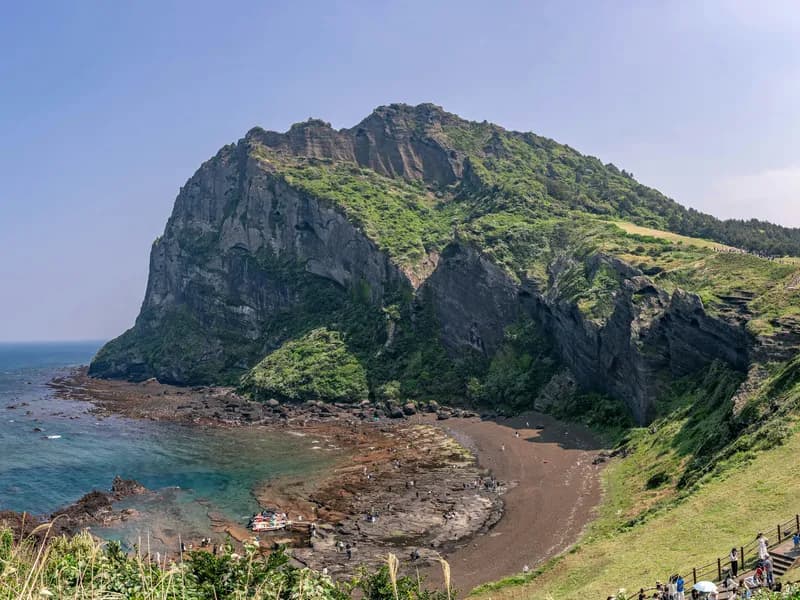
Seongsan Ilchulbong (Sunrise Peak)
A dramatic volcanic tuff cone rising from the ocean, formed 5,000 years ago. The 20-minute hike to the rim offers views into the bowl-shaped crater. Entry: 5,000 KRW. Opens at sunrise (varies by season). Haenyeo divers perform demonstrations at the base at 1:30PM and 3PM daily.
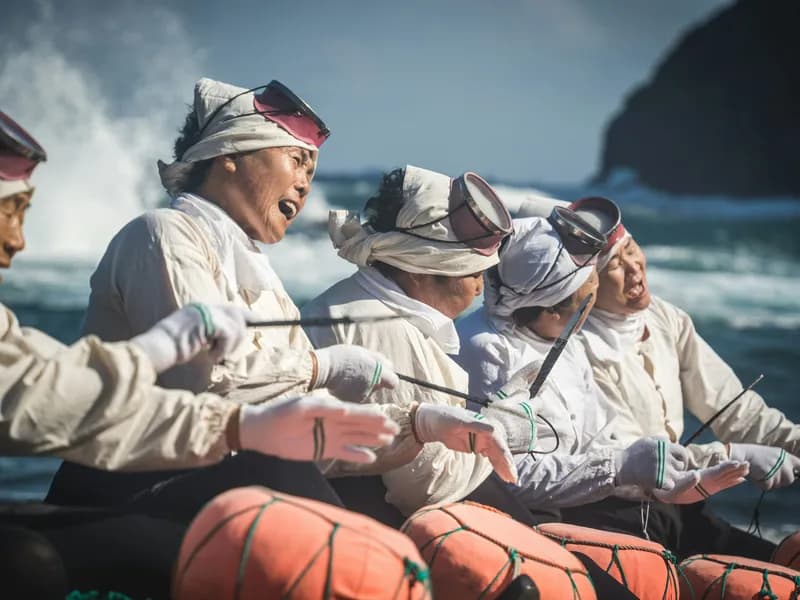
Haenyeo Women Divers
UNESCO Intangible Cultural Heritage — women free-dive to 10m+ without oxygen to harvest abalone, sea urchin, and octopus. Average age is now 70+. Watch demonstrations at Seongsan or the Haenyeo Museum in Hado-ri (3,000 KRW entry). Buy fresh catches at seaside haenyeo markets from 10,000 KRW.
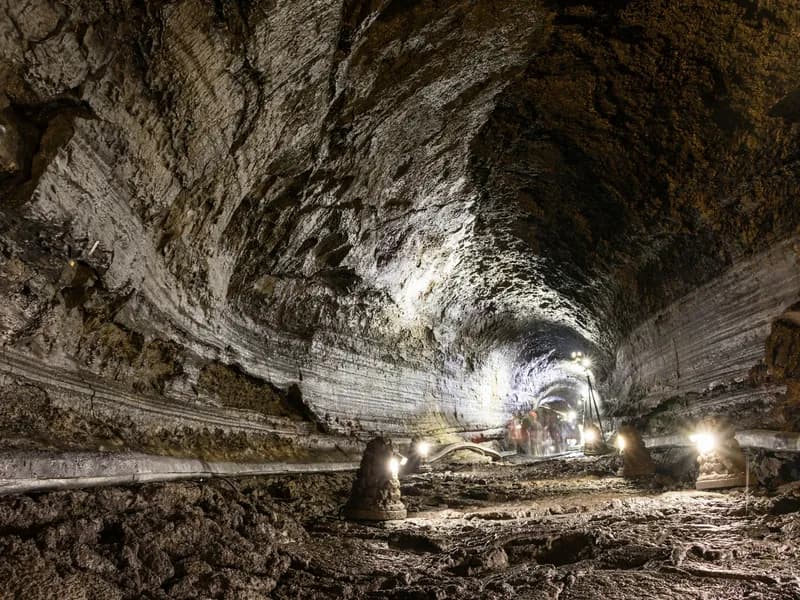
Manjanggul Lava Tube
One of the world's longest lava tubes (7.4 km, 1 km open to visitors). A UNESCO World Heritage Site with dramatic lava columns and a 7.6m lava stalagmite — the world's largest. Entry: 4,000 KRW. Open 9AM-6PM (closed first Wednesday monthly). Temperature inside is a constant 11-21 degrees C. Allow 1 hour.
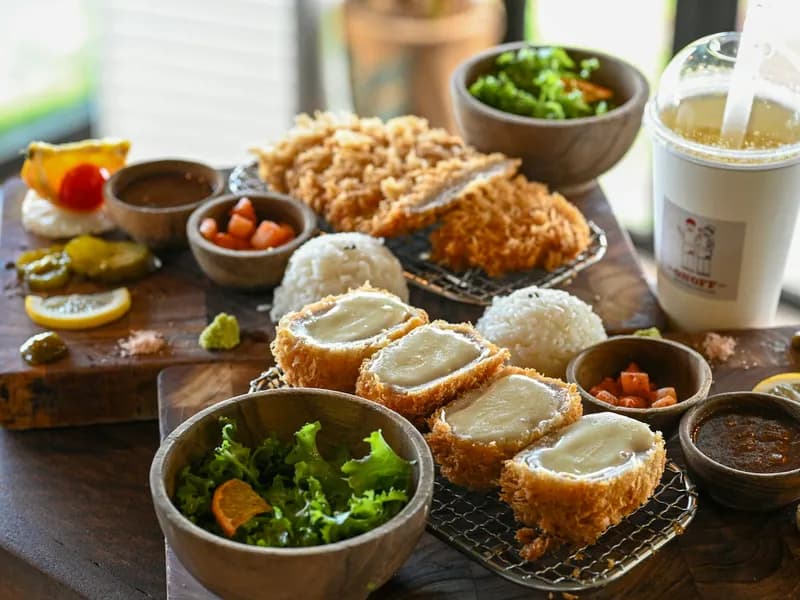
Jeju Black Pork Street (Heukdwaeji)
Jeju's signature dish: grilled black pork from native Jeju pigs. Black Pork Street in Jeju City's Tapdong area has 20+ restaurants. A set for two runs 35,000-50,000 KRW with sides. The meat is noticeably sweeter and more tender than mainland pork. Grill it yourself Korean BBQ style with garlic and ssamjang.
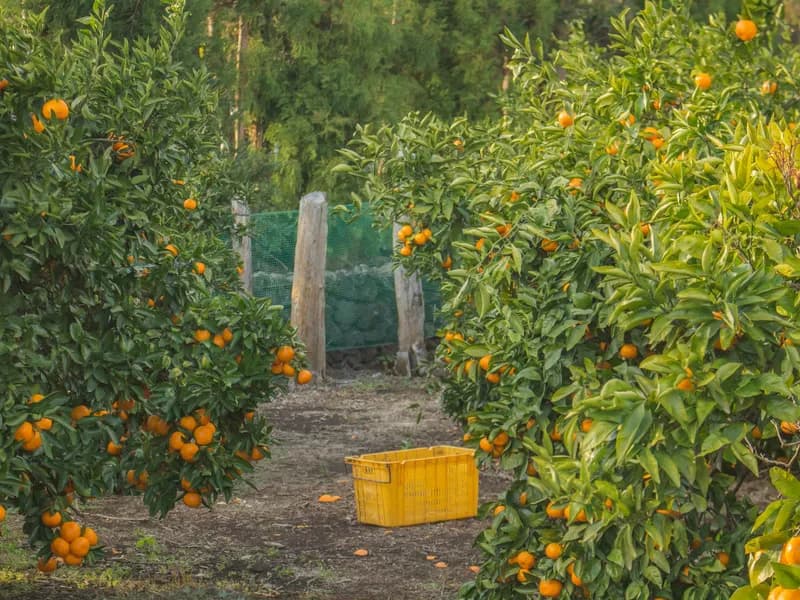
Tangerine Orchards
Jeju produces 99% of Korea's tangerines (hallabong variety). Visit orchards for picking experiences from October-January (~10,000 KRW for a basket you fill). Tangerine chocolate, juice, and cosmetics are the island's most popular souvenirs. Seogwipo's Tangerine Garden Museum offers free tastings.
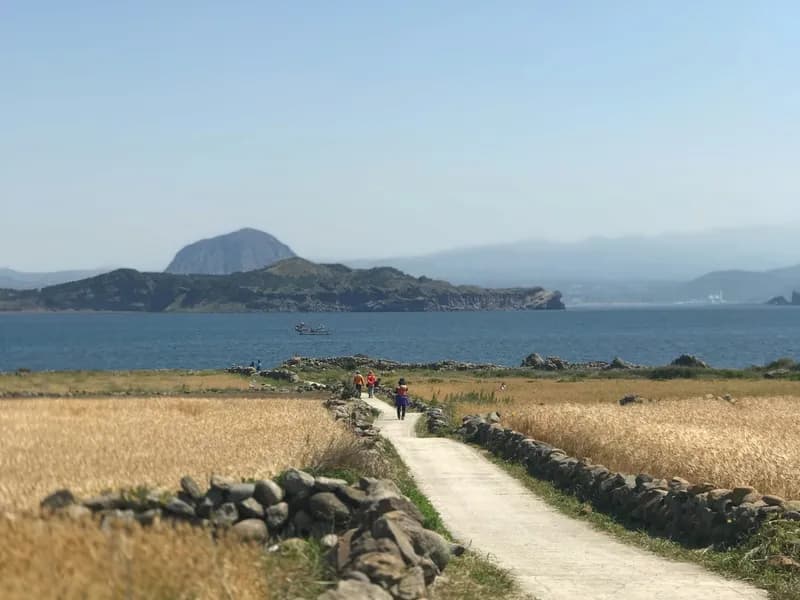
Olle Walking Trails
26 interconnected coastal trails totaling 437 km circling the island. Each route is 11-23 km and takes 5-8 hours. Route 7 (Seogwipo coast) and Route 10 (Hallasan foothills) are the most scenic. Free; well-marked with orange arrows and blue ribbons. Download the Jeju Olle app for GPS navigation.
Planned Itinerary
7-Day Jeju Island Itinerary
Arrival & Jeju City
Fly into Jeju International Airport (CJU) — one of the world's busiest domestic routes. Settle in and explore the city.
Arrive and rent a car(45 minutes)
Airport rental from 30,000-50,000 KRW/day. International Driving Permit required. Jeju is 73 km across — a car is essential
Dongmun Market lunch(1 hour)
Jeju City's biggest traditional market — grilled black pork skewers 3,000 KRW, hallabong (tangerine) juice 2,000 KRW, fresh seafood from haenyeo stalls
Black Pork Street dinner(1.5 hours)
Tapdong area. Grilled Jeju heukdwaeji (black pork) for two: 35,000-50,000 KRW with sides. Sweeter and more tender than mainland pork. Grill it yourself with garlic and ssamjang
Seongsan Ilchulbong & East Coast
Sunrise Peak, haenyeo divers, and Jeju's dramatic eastern coastline.
Seongsan Ilchulbong (Sunrise Peak)(1.5 hours)
5,000 KRW. 20-minute hike to the rim of a 5,000-year-old volcanic tuff cone. Opens at sunrise. Views into the bowl-shaped crater and across the sea
Haenyeo diving demonstration(30 minutes)
Watch the legendary women divers at the base of Seongsan at 1:30PM or 3PM. They harvest abalone and sea urchin without oxygen
Lunch at haenyeo market(1 hour)
Fresh catches sold right at the diving demonstration area — raw abalone from 10,000 KRW, sea urchin soup
Manjanggul Lava Tube(1 hour)
4,000 KRW. UNESCO World Heritage. 1 km open to visitors. 7.6m lava stalagmite — world's largest. Constant 11-21°C inside
Seopjikoji coastal walk(1 hour)
Free. Dramatic headland east of Seongsan with lighthouse, canola fields (spring), and susuk grass (autumn). Movie filming location
Hallasan National Park
Summit South Korea's highest peak (1,950m) — a UNESCO-listed shield volcano with a stunning crater lake.
Hallasan hike via Seongpanak trail(9 hours)
9.6 km one-way, 4-5 hours up. Free entry but summit trail closes at 12:30PM — register at trailhead by 6AM in peak season. Bring 2L water, lunch, rain gear. Crampons November-March
Baengnokdam crater lake(30 minutes)
The reward — South Korea's highest point with a pristine crater lake. Often shrouded in cloud, making clear views feel earned
Descent and celebratory meal(5 hours)
Return same trail. Knees will protest. Treat yourself to Jeju-style jeonbokjuk (abalone porridge) — 10,000 KRW at restaurants near the trailhead
South Coast & Jeongbang Falls
Explore Seogwipo — Jeju's southern city with waterfalls and Olle trails.
Jeongbang Waterfall(45 minutes)
2,000 KRW. Asia's only waterfall that drops directly into the ocean — 23m cascade into churning sea. 10-minute walk from Seogwipo center
Cheonjiyeon Waterfall(1 hour)
2,000 KRW. Walk through lush forest to a 22m falls into a deep pool. Lit up at night for a different perspective
Olle Trail Route 7 coastal walk(3 hours)
The most scenic Olle route — 16 km along the Seogwipo coast. Do a section (the first 5 km from Oedolgae Rock to Seogwipo are the best). Free, well-marked
Oedolgae Rock(30 minutes)
Dramatic 20m sea stack standing alone offshore. Free. Legends say a grandmother turned to stone waiting for her fisherman husband
Seogwipo seafood dinner(1.5 hours)
Fresh haemul pajeon (seafood pancake) and grilled mackerel at the Maeil Olle Market — 15,000-25,000 KRW
West Coast & Tangerine Orchards
Explore Jeju's western attractions — tangerines, green tea, and volcanic landscapes.
O'sulloc Tea Museum(1.5 hours)
Free. Green tea fields and museum. Their matcha roll cake (5,000 KRW) and Innisfree cosmetics shop are must-stops. The tea fields are especially photogenic in spring
Tangerine orchard visit(1 hour)
October-January picking season — ~10,000 KRW for a basket you fill. Hallabong (dekopon) tangerines are Jeju's pride. Tangerine chocolate and juice make great souvenirs
Lunch at a west coast restaurant(1 hour)
Jeju-style galchi (hairtail fish) jorim — braised in gochujang. A signature Jeju dish. ~12,000 KRW
Hyeopjae Beach(1.5 hours)
Free. White coral sand beach with emerald water and Biyangdo Island views. Excellent swimming in summer. Cafe strip behind the beach
Free Morning & Culture Day
Rest morning, then explore Jeju's unique cultural symbols.
Late brunch at a Jeju cafe(1 hour)
Jeju has a booming cafe culture — try Cafe Delmoondo or Anthracite for specialty coffee and ocean views. 5,000-8,000 KRW
Jeju Haenyeo Museum(1.5 hours)
3,000 KRW in Hado-ri. UNESCO Intangible Heritage — the history and culture of the women divers. Fascinating and unique
Dol hareubang stone grandfather statues(30 minutes)
Jeju's iconic guardians — found everywhere. Touch the nose for fertility, supposedly. The original statues are at Jeju National Museum (free)
Jeju Folk Village Museum(1.5 hours)
11,000 KRW. 100+ traditional thatched-roof Jeju houses preserved in their original setting. The most authentic open-air museum in Korea
Farewell dinner at a local restaurant(1.5 hours)
Jeju-style galbi (ribs) or abalone bibimbap — 15,000-25,000 KRW
Departure Day
Return rental car and fly out of CJU.
Morning at Iho Tewoo Beach(1 hour)
Beach near Jeju City with pony-shaped lighthouses. Quieter than the famous southern beaches. Good morning walk
Return rental car(30 minutes)
Airport agencies have free shuttle. Return 1 hour before check-in
Last souvenir shopping at airport(30 minutes)
Jeju tangerine chocolate, hallabong drinks, black pork jerky. CJU has good shops landside
Departure flight(Variable)
Seoul flights every 10-15 minutes. Budget carriers from 30,000 KRW if booked early
14-Day Jeju Island Itinerary
Arrival & Jeju City
Fly into CJU, rent a car, and explore the city.
Rent car at airport(45 minutes)
30,000-50,000 KRW/day. IDP required
Dongmun Market lunch(1 hour)
Black pork skewers 3,000 KRW, hallabong juice
Black Pork Street dinner(1.5 hours)
Heukdwaeji for two 35,000-50,000 KRW
Seongsan & East Coast
Sunrise Peak, haenyeo divers, and lava tubes.
Seongsan Ilchulbong(1.5 hours)
5,000 KRW. Opens at sunrise
Haenyeo demonstration(30 minutes)
1:30PM or 3PM
Manjanggul Lava Tube(1 hour)
4,000 KRW. UNESCO
Hallasan Summit
South Korea's highest peak via Seongpanak trail.
Hallasan hike(9 hours)
Free. Register by 6AM. 9.6 km one-way. Crampons Nov-Mar
Celebratory abalone porridge(1 hour)
Jeonbokjuk 10,000 KRW near trailhead
South Coast & Waterfalls
Seogwipo waterfalls and coastal Olle trail.
Jeongbang Waterfall(45 minutes)
2,000 KRW. Falls into ocean
Cheonjiyeon Waterfall(1 hour)
2,000 KRW
West Coast & Tea Fields
Green tea, tangerines, and coral beaches.
O'sulloc Tea Museum(1.5 hours)
Free. Matcha roll cake 5,000 KRW
Tangerine orchard(1 hour)
~10,000 KRW basket
Culture & Haenyeo Museum
Deep dive into Jeju's unique cultural identity.
Haenyeo Museum(1.5 hours)
3,000 KRW. UNESCO heritage
Jeju National Museum(1 hour)
Free. Original dol hareubang statues
Jeju Folk Village(1.5 hours)
11,000 KRW. 100+ thatched houses
Rest Day
Free day. Cafe hopping and beach relaxation.
Brunch at Cafe Delmoondo(1 hour)
Ocean-view cafe. 5,000-8,000 KRW
Beach day at Hamdeok Beach(3 hours)
Free. Emerald water with volcanic rock backdrop. Shallow and safe swimming
Evening at Jeju craft brewery(1.5 hours)
Magpie Brewing Jeju — local craft ales from 6,000 KRW
Udo Island Day Trip
Ferry to Udo — a tiny island off Seongsan with coral beaches and peanut ice cream.
Ferry to Udo(15 minutes)
From Seongsan Port. 8,500 KRW return. Bring ID/passport
Rent electric scooter on Udo(15 minutes)
15,000 KRW for 2 hours. Circle the island
Seobin Baeksa (Coral Beach)(1 hour)
Beach made entirely of white coral fragments. Swimming and snorkeling
Udo peanut ice cream(20 minutes)
Udo's signature — roasted peanut soft-serve. 3,000 KRW. Multiple shops compete for 'best'
Udo Peak viewpoint(45 minutes)
Short hike to the island's summit. 360-degree ocean views
Olle Walking Trail Deep Dive
Spend a full day on one of Jeju's famous coastal walking trails.
Olle Trail Route 10(6 hours)
17.5 km through Hallasan foothills — volcanic oreum (parasitic cones), forest trails, and mountain views. Free. Well-marked with orange arrows
Packed lunch from convenience store(20 minutes)
CU or GS25 kimbap and onigiri from 1,500 KRW
Evening onsen at Jeju spa(1.5 hours)
Jjimjilbang (Korean spa) — full facilities from 12,000 KRW. The heated rooms and scrub service are deeply relaxing
Volcanic Cones (Oreum) Hiking
Explore Jeju's unique parasitic volcanic cones — 368 dotting the landscape.
Darangshi Oreum(1.5 hours)
One of the most beautiful oreum — gentle 30-min climb to a crater at the top with wild susuk grass. Free. Near Seongsan
Yongmeori Coast walking trail(1 hour)
2,000 KRW. Walk along 2,000-year-old sandstone cliffs sculpted by waves. Closes in bad weather
Sanbangsan Temple(1 hour)
3,000 KRW. Buddhist temple in a natural cave on a volcanic cliff. Panoramic coastal views
Jungmun Beach(1.5 hours)
Resort area beach with powerful waves — good for surfing. Rental boards from 20,000 KRW
Rest Day & Spa
Recovery day with Korean spa culture.
Cafe hopping in Aewol(2 hours)
Aewol-eup on the northwest coast has Jeju's most photogenic cafes — Cafe Monsant (owned by a K-pop star), Bomnal, Anthracite
Jjimjilbang evening(3 hours)
Full Korean spa experience — hot pools, cold plunge, heated rooms, body scrub (20,000 KRW extra). Total relaxation
Art & Museums Day
Jeju's growing art scene and unique museums.
Jeju Museum of Art(1.5 hours)
1,000 KRW. Contemporary art in a building designed to blend with the landscape
Bonte Museum(1 hour)
Tadao Ando-designed space. Minimalist architecture and nature. 14,000 KRW
Spirited Garden(1 hour)
12,000 KRW. Spectacular bonsai garden — some trees over 300 years old. Meditative space
Last Full Day — Favorites & Farewell
Revisit favorites and stock up on Jeju souvenirs.
Souvenir shopping at Dongmun Market(1.5 hours)
Hallabong chocolate, black pork jerky, tangerine cosmetics, dol hareubang figurines
Farewell abalone bibimbap(1 hour)
Jeju's freshest abalone over rice with sesame oil — 15,000-20,000 KRW
Departure Day
Return car and fly out.
Morning at Iho Tewoo Beach(1 hour)
Pony-shaped lighthouses. Quiet morning walk
21-Day Jeju Island Itinerary
Arrival & Jeju City
Arrive, rent a car, explore the city and its famous black pork.
Rent car(45 minutes)
30,000-50,000 KRW/day
Black Pork Street dinner(1.5 hours)
35,000-50,000 KRW for two
East Coast — Seongsan & Lava Tube
Sunrise Peak, haenyeo divers, and UNESCO lava tube.
Seongsan Ilchulbong(1.5 hours)
5,000 KRW
Manjanggul Lava Tube(1 hour)
4,000 KRW
Hallasan Summit
Hike South Korea's highest peak.
Hallasan via Seongpanak(9 hours)
Free. Register by 6AM
South Coast Waterfalls
Seogwipo's waterfalls and coastal trail.
West Coast & Green Tea
Tea museum, tangerines, and coral beaches.
Hallim Park(1 hour)
12,000 KRW. Botanical garden with lava caves and bonsai
Culture & Haenyeo Heritage
Jeju's unique cultural identity.
Haenyeo Museum(1.5 hours)
3,000 KRW
Jeju Folk Village(1.5 hours)
11,000 KRW
Rest Day
Beach and cafe culture.
Udo Island
Ferry to tiny Udo with coral beaches and peanut ice cream.
Ferry to Udo(15 minutes)
8,500 KRW return
Electric scooter around island(2 hours)
15,000 KRW
Peanut ice cream(20 minutes)
3,000 KRW
Olle Walking Trail
Full day on Jeju's famous coastal walking route.
Olle Route 10(6 hours)
17.5 km through oreum and forests
Jjimjilbang spa evening(2 hours)
From 12,000 KRW
Oreum Hiking & Surfing
Volcanic cones and beach breaks.
Yongmeori Coast(1 hour)
2,000 KRW
Sanbangsan Temple(1 hour)
3,000 KRW
Rest & Spa Day
Cafe hopping and Korean spa culture.
Art & Gardens
Jeju's museums and bonsai gardens.
Jeju Museum of Art(1.5 hours)
1,000 KRW
Bonte Museum(1 hour)
14,000 KRW. Tadao Ando
Spirited Garden(1 hour)
12,000 KRW. 300-year-old bonsai
Cooking Class & Markets
Learn Korean cooking and explore local markets.
Korean cooking class(3 hours)
Make jeonbokjuk (abalone porridge), haemul pajeon, and kimchi. ~40,000 KRW
Seogwipo Maeil Olle Market(1.5 hours)
Fresh seafood, street food, local produce
Hallasan Low Trail
A gentler Hallasan experience — the Yeongsil trail to the shelter without summiting.
Hallasan Yeongsil trail(4 hours)
6.8 km to Witseoreum shelter. Dramatic rock formations and alpine scenery without the full summit commitment
Afternoon at Saekdal Beach(2 hours)
Black volcanic sand beach. Quieter than tourist beaches
Gapa-do Island Day Trip
Tiny island south of Jeju — canola fields, slow pace, and fresh seafood.
Ferry from Jungmun to Gapa-do(30 minutes)
9,000 KRW return
Cycling around Gapa-do(2 hours)
5,000 KRW bike rental. 5.5 km circumference — smallest inhabited island in Korea
Gapa-do jeonbok (abalone) lunch(1 hour)
The freshest abalone in Korea — straight from the surrounding waters. 15,000-20,000 KRW
Rest Day
Fourth rest day. Beach, books, gentle exploration.
Woljeongri Beach(3 hours)
Free. Turquoise water with cafe street behind. The most photogenic beach cafe scene on Jeju
Scuba Diving & Underwater Jeju
Dive Jeju's volcanic underwater terrain — unique soft coral forests.
Two-dive morning(4 hours)
~80,000-100,000 KRW for 2 dives. Jeju's unique soft coral forests (rare in Korea). Seogwipo area dive sites
Afternoon at Cheonjeyeon Waterfall(1.5 hours)
Different from Cheonjiyeon — three-tiered falls with a legend of fairies bathing
Yeomiji Botanical Garden(1.5 hours)
12,000 KRW. Asia's largest indoor botanical garden in Jungmun resort area
Jeju Love Land & Quirky Museums
Jeju's famous (and infamous) museums and quirky attractions.
Jeju Love Land(1 hour)
12,000 KRW. Adults-only erotic sculpture park — 140 pieces. Quirky and uniquely Jeju
Mysterious Road (Dokkaebi Road)(20 minutes)
Free. An optical illusion — cars appear to roll uphill. Fun for photos
Jeju Stone Park(1.5 hours)
5,000 KRW. The cultural significance of stone in Jeju — from dol hareubang to stone walls
Olle Trail Route 6
Another stunning coastal Olle route on the east coast.
Olle Route 6 (Swiri Forest)(5 hours)
14.4 km. Through Bijarim forest (2,800 nutmeg trees, some 800 years old) and Swiri coastal views. Free
Bijarim Forest walk(1 hour)
3,000 KRW separate entry. The oldest and largest nutmeg forest in the world
Last Full Day — Favorites & Farewell
Revisit what you loved and say goodbye to Jeju.
Departure Day
Return car and fly out of CJU.
Travel Tips
Visa & Entry
Visa-Free Entry Even Without a Korea Visa
Jeju has a special visa-free policy: citizens of most countries can enter Jeju for up to 30 days without a Korean visa, even if they need one for mainland Korea. You must fly directly to Jeju (CJU), not transit through Seoul. Bring proof of accommodation and return flight. This makes Jeju uniquely accessible.
transport
Rent a Car or Use the Bus System
Jeju is 73 km across — a car is ideal. Rental from 30,000-50,000 KRW/day at the airport. International Driving Permit required. Alternatively, the 'Jeju City Tour Bus' (12,000 KRW all-day pass) covers eastern or western routes with English audio. Regular buses exist but are slow and infrequent to remote sites.
Flights from Seoul are Cheap if Booked Early
Seoul-Jeju is one of the world's busiest air routes with flights every 10-15 minutes. Budget carriers (Jeju Air, T'way, Jin Air) offer fares from 30,000-80,000 KRW one-way if booked 2-4 weeks ahead. Flight time is just 1 hour 10 minutes from Gimpo Airport. No ferries are practical for tourists (13+ hours).
Budget
Jeju is Pricier Than Mainland Korea
Being an island tourist destination, accommodation and dining cost 20-40% more than Seoul. Budget guesthouses from 40,000-60,000 KRW/night; mid-range hotels 80,000-150,000 KRW. Restaurants average 10,000-15,000 KRW per meal. Save by shopping at E-Mart or visiting local markets for seafood (Dongmun Market in Jeju City).
Local Customs
Jeju Has Unique Cultural Symbols
The dol hareubang (stone grandfather statues) are Jeju's iconic guardians — found at every tourist site. Touching the nose is said to bring fertility. The island's matriarchal haenyeo tradition shaped a culture where women historically led economically. Respect when photographing haenyeo — always ask first.
Safety
Hallasan Weather Changes Rapidly
The summit can go from sunshine to zero-visibility fog in minutes. Check weather at Hallasan National Park website before departing. Trails close for wind speeds over 14m/s. Bring layers, rain gear, and sufficient water (no shops on trails). In winter, ice crampons are mandatory — available for rent at trailheads (~5,000 KRW).
Related Articles
StoriesFollowing the Blue Arrows: A Coastal Walk to Jeju's Women of the Sea
The wind hits before you've found the bus stop, the Olle Trail ribbons vanish in the fog — and then the sea women surface, whistling. A day on foot around Jeju's coast, from friction to payoff.
StoriesA Week on Jeju Island: Volcanoes, Black Pork, and Women of the Sea
Seven days circling South Korea's volcanic island — crater hikes, lava tubes, tangerine orchards, and the best grilled pork I've ever tasted.
SeasonalJeju Island in Spring: Canola Fields, Cherry Blossoms, and Perfect Hiking Weather
April on Jeju is carpets of yellow canola beneath a volcanic peak — the most photogenic season on South Korea's most photogenic island.
Travel Guides10 Best Things to Do on Jeju Island That Aren't Just Beach Resorts
South Korea's volcanic UNESCO island has way more than pool bars — from crater hikes to women divers to the world's largest lava tube.