
Kanazawa

Photo: Sunao Noguchi / Unsplash
Key Facts
Best Time to Visit
March-April (cherry blossoms in Kenroku-en) or November (autumn foliage), winter for snow-covered gardens
Language
Japanese (limited English outside hotels)
Currency
Japanese Yen (JPY)
Time Zone
JST (UTC+9)
Airport
Komatsu Airport (KMQ) — 40 min bus ride from Kanazawa Station
Population
~462,000 (city proper)
Climate
Humid subtropical, hot summers (28-33°C), snowy winters (0-7°C), rainy Jun-Jul
Safety Rating
Very Safe (Level 1)
Gold Leaf Production
Kanazawa produces 99% of Japan's gold leaf
Top Highlights
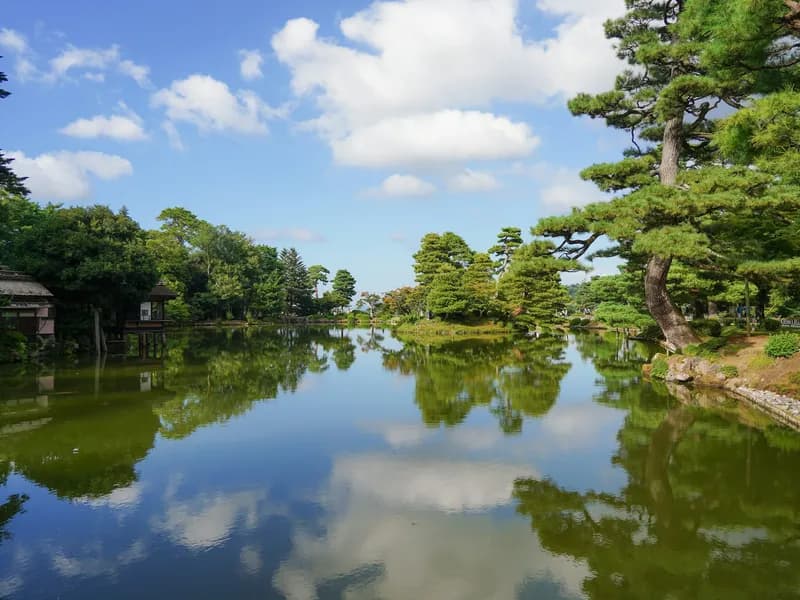
Kenroku-en Garden
One of Japan's three most beautiful landscape gardens, originally the outer garden of Kanazawa Castle. 11.4 hectares of ponds, streams, waterfalls, and tea houses. JPY 320 (~$2) adults. Open daily 7AM-6PM (Mar-Oct), 8AM-5PM (Nov-Feb). Allow 1.5-2 hours. Free entry during cherry blossom illumination events.
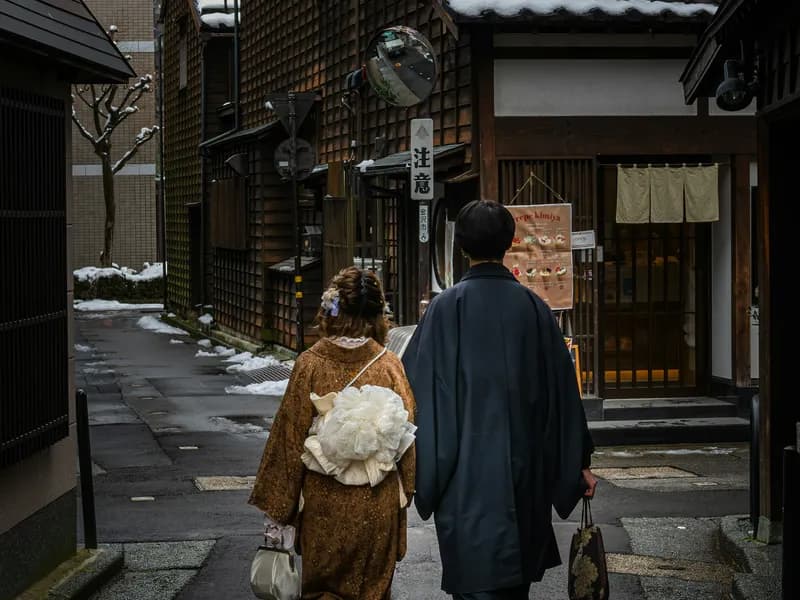
Higashi Chaya (East Geisha District)
A beautifully preserved geisha district from the 1820s with wooden lattice teahouses lining a stone-paved street. Visit Kaikaro teahouse (JPY 750 entry) to see the lavish interior, or Shima teahouse (JPY 500) for a more intimate experience. Free to walk the district. 15 min walk from Kanazawa Station.
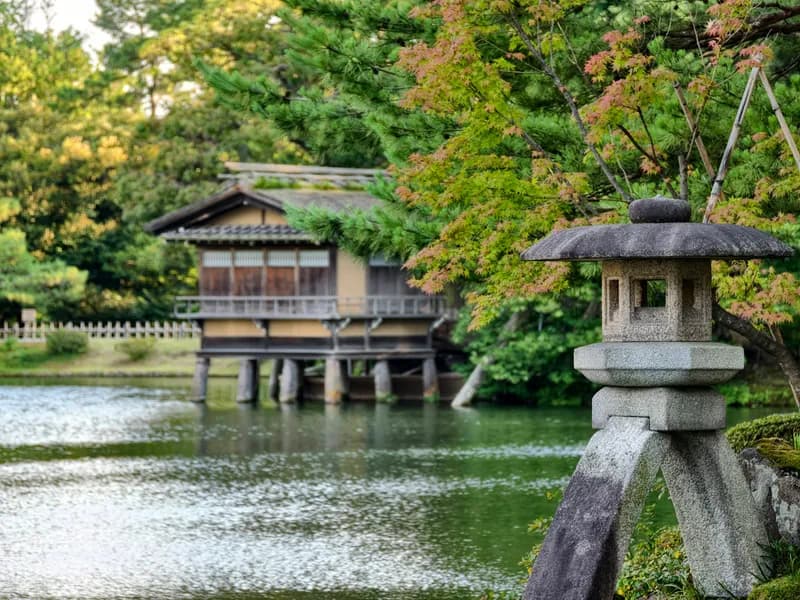
Myoryu-ji (Ninja Temple)
A deceptively complex temple built in 1643 with hidden staircases, trap doors, secret rooms, and escape routes — designed to protect the ruling Maeda clan. Guided tours only (in Japanese, English pamphlet available), JPY 1,000. Reservation required by phone. Allow 1 hour including wait time. No children under 6.
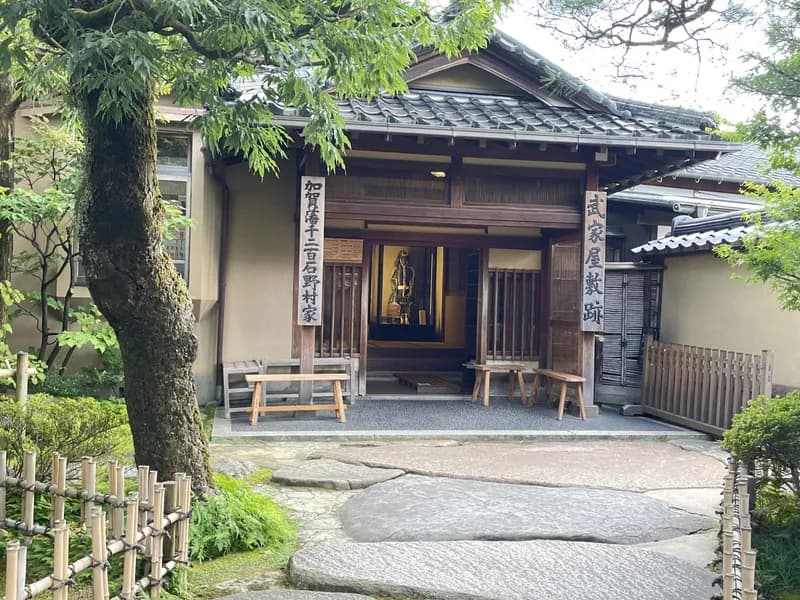
Nagamachi Samurai District
A quiet neighbourhood of earthen walls and narrow canals where samurai families once lived. The Nomura-ke samurai house (JPY 550) has an exquisite garden ranked in the top 3 Japanese gardens by Journal of Japanese Gardening. Free to walk the district. 10 min walk from Kenroku-en.
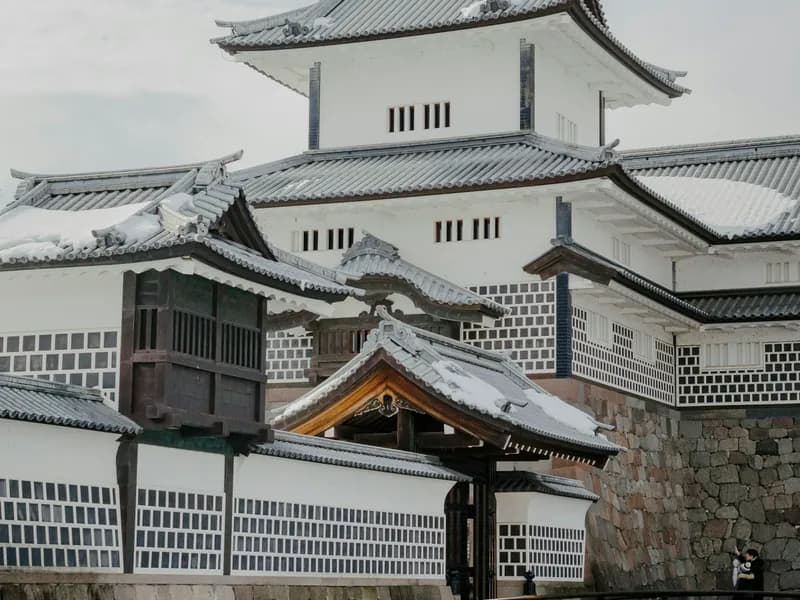
Gold Leaf Workshop Experience
Kanazawa produces 99% of Japan's gold leaf (kinpaku). Try applying gold leaf to chopsticks, plates, or boxes at Sakuda Gold & Silver Leaf (from JPY 700, 30-60 min). Don't miss gold leaf ice cream (JPY 891 at Hakuichi) — an entire sheet of gold on soft serve. Shops concentrated in Higashi Chaya area.
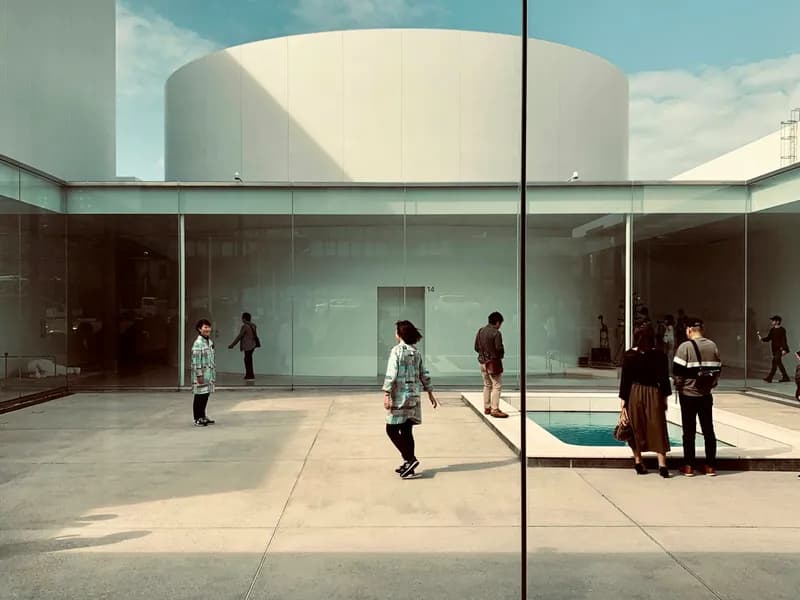
21st Century Museum of Contemporary Art
A striking circular glass building by SANAA architects housing Leandro Erlich's famous Swimming Pool installation (you view people seemingly walking underwater). Free public zones; exhibition areas JPY 450-1,200 depending on exhibition. Open 10AM-6PM, closed Mondays. Central location near Kenroku-en.
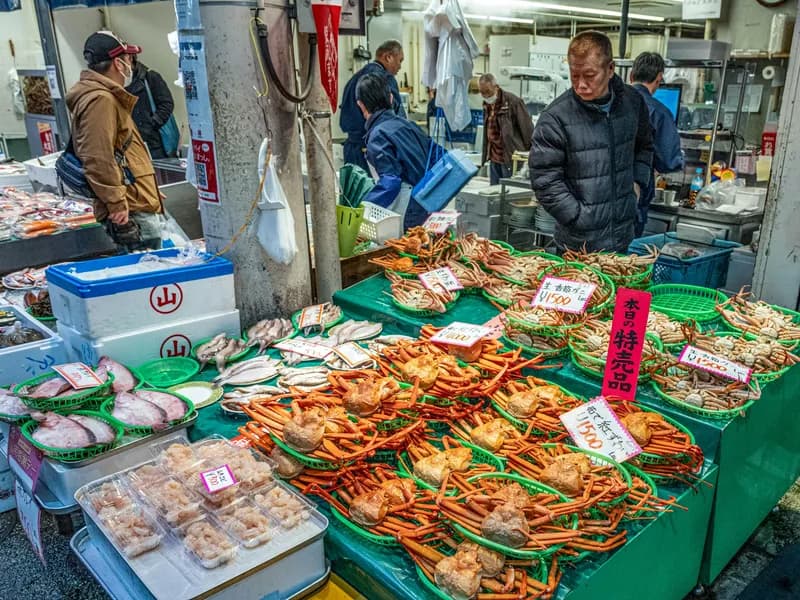
Omi-cho Market
Kanazawa's kitchen since 1721 — a bustling covered market with 200+ stalls selling Sea of Japan seafood, fresh crab, uni, and local produce. Eat sashimi bowls (kaisendon) from JPY 1,500 at market restaurants. Open 9AM-5PM, some stalls closed Wednesday. 5 min walk from Kanazawa Station.
Planned Itinerary
7-Day Kanazawa Itinerary
Arrival & Higashi Chaya District
Arrive at Kanazawa Station via the Hokuriku Shinkansen from Tokyo (2.5 hours, JPY 14,380). The station's iconic Tsuzumi Gate welcomes you to one of Japan's best-preserved Edo-era cities.
Arrive at Kanazawa Station(30 minutes)
If using JR Pass, the Hokuriku Shinkansen from Tokyo is covered. Alternatively, fly to Komatsu Airport (KMQ) and take the 40-min bus to the station (JPY 1,130)
Check-in at hotel near Kanazawa Station(45 minutes)
Hotel Nikko Kanazawa or Kanazawa Tokyu Hotel for mid-range. For a ryokan experience, try Sumiyoshiya (JPY 20,000-30,000 pp with meals)
Buy Kanazawa Loop Bus day pass(10 minutes)
JPY 600 at the tourist information centre inside the station. Covers all major sights. Buses run every 15 min
Higashi Chaya (East Geisha District)(1.5 hours)
Beautifully preserved 1820s geisha district. Wooden lattice teahouses on stone-paved streets. Visit Kaikaro teahouse (JPY 750) for the lavish interior, or Shima (JPY 500) for a more intimate view. Free to walk the district
Gold leaf ice cream at Hakuichi(20 minutes)
An entire sheet of gold leaf on soft-serve ice cream (JPY 891). Kanazawa produces 99% of Japan's gold leaf. The Instagram moment is undeniable
Dinner at a Kanazawa izakaya(1.5 hours)
Try Itaru Honten near Korinbo for Sea of Japan sashimi and grilled nodoguro (blackthroat seaperch), Kanazawa's signature fish. Set meal from JPY 3,000
Kenroku-en Garden & Kanazawa Castle
Spend the morning in one of Japan's three most beautiful landscape gardens, then explore the adjacent castle grounds and the contemporary art museum.
Kenroku-en Garden morning visit(2 hours)
Arrive at opening (7AM Mar-Oct, 8AM Nov-Feb) for the most peaceful experience. 11.4 hectares of ponds, streams, waterfalls, and tea houses. JPY 320. The Kotojitoro lantern is the iconic photo spot
Tea at Shigure-tei teahouse(30 minutes)
Inside Kenroku-en. Matcha and wagashi sweet (JPY 730) with a garden view. The thatch-roofed teahouse itself is charming
Kanazawa Castle Park(1 hour)
Adjacent to Kenroku-en. The reconstructed Hishi Yagura turret and Hashizume-mon Gate are impressive. Park grounds are free; interior exhibits JPY 320
Lunch at Omicho Market(1 hour)
Kanazawa's kitchen since 1721. 200+ stalls with Sea of Japan seafood. Kaisendon (sashimi rice bowl) from JPY 1,500 at market restaurants. Morimori Sushi for conveyor belt sushi with local fish (JPY 1,500-2,500)
21st Century Museum of Contemporary Art(1.5 hours)
SANAA's circular glass building. Leandro Erlich's Swimming Pool — view people walking underwater. Free public zones; exhibition JPY 450-1,200. Closed Mondays
Nagamachi Samurai District & Ninja Temple
Walk the earthen-walled lanes where samurai families once lived, visit a perfectly preserved samurai house, then explore the trap-filled Ninja Temple.
Nagamachi Samurai District(1 hour)
Quiet neighbourhood of earthen walls and narrow canals. Free to walk. 10-min walk from Kenroku-en
Nomura-ke Samurai Residence(45 minutes)
Exquisite garden ranked in the top 3 Japanese gardens by Journal of Japanese Gardening. JPY 550. The koi pond and tea room are sublime
Myoryu-ji (Ninja Temple)(1 hour)
Hidden staircases, trap doors, secret rooms, escape routes. Guided tours in Japanese only (English pamphlet). JPY 1,000. Reservation REQUIRED by phone (076-241-0888). No walk-ins. No children under 6
Lunch at Tamazushi(1 hour)
Near Katamachi. Premium sushi featuring seasonal Sea of Japan fish. Lunch set from JPY 2,500. The nodoguro (blackthroat perch) sashimi melts on your tongue
Nishi Chaya (West Geisha District)(45 minutes)
Smaller and quieter than Higashi Chaya. A few teahouses remain active. The Gold Leaf Museum (free) is on this side. Nice for a late afternoon stroll
Rest Day — Gold Leaf Workshop & Hot Springs
A gentler day. Hands-on gold leaf craft experience in the morning, then a relaxing afternoon at an onsen (hot spring bath).
Gold leaf workshop at Sakuda(1 hour)
Apply gold leaf to chopsticks, plates, or small boxes. From JPY 700 for a 30-60 min session. In Higashi Chaya area. No reservation needed for small groups
Browse Higashi Chaya shops(1 hour)
Gold leaf cosmetics, crafts, and sweets. Kaikarodo sells gold-leaf face masks (JPY 1,200). Kinpaku coffee at cafe Tamazawa (JPY 600)
Lunch at a Kanazawa curry house(45 minutes)
Kanazawa curry is a local specialty — darker, thicker than standard Japanese curry, served with a pork cutlet on a steel plate. Champion Curry near the station (JPY 800)
Onsen at Yuwaku Onsen village(2 hours)
A small hot spring village 30 min by bus from Kanazawa Station. Sumasaki public bath (JPY 400) or the ryokan day-use baths (JPY 1,000-2,000). Surrounded by forest
D.T. Suzuki Museum & Kazuemachi District
Explore the meditative museum dedicated to Zen Buddhism's most famous interpreter, then walk along the serene Asano River to the lesser-visited Kazuemachi district.
D.T. Suzuki Museum(1 hour)
Architect Yoshio Taniguchi's minimalist masterpiece — three wings with a meditation pool. JPY 310. The Water Mirror Garden is one of the most peaceful spaces in Japan. Allow time to simply sit
Walk along the Saigawa River(45 minutes)
From the museum, walk north along the river. Cherry trees line the banks (spectacular in spring). Pass under stone bridges
Kazuemachi district(30 minutes)
A tiny, lesser-known geisha district along the Asano River. Just two streets of wooden teahouses reflected in the water. Far fewer tourists than Higashi Chaya
Lunch at Omicho Market (second visit)(1 hour)
Try something different — grilled Noto oysters (JPY 500 each in season), fresh uni (sea urchin, JPY 800), or Kaga vegetables tempura
Kutani pottery shopping(1 hour)
Kanazawa is famous for colorful Kutani-yaki ceramics. Browse at Kutani Kosen Gama near Kenroku-en or the shops along Hirosaka street. Small cups from JPY 2,000
Day Trip to Shirakawa-go
Visit the UNESCO World Heritage village of steep thatched-roof farmhouses (gassho-zukuri) in a mountain valley — one of Japan's most iconic scenes.
Nohi Bus to Shirakawa-go(50 minutes)
8 daily services from Kanazawa (JPY 2,600 one-way). Reserve online at nouhibus.co.jp in peak season — buses sell out. Depart early (8AM bus ideal)
Shiroyama viewpoint(30 minutes)
10-min walk uphill from the village for the classic panoramic photo of the thatched roofs in the valley. Free. The best angle for photography
Wada House interior visit(45 minutes)
One of the largest gassho-zukuri houses open to visitors. JPY 300. See the steep interior beams, silk-worm rearing attic, and traditional irori hearth
Lunch at Irori restaurant(1 hour)
Traditional dishes cooked over charcoal. Hida beef set (JPY 2,500), mountain vegetable tempura, local sake. Eat sitting around the irori (sunken hearth)
Walk the village lanes(1.5 hours)
Explore at your own pace. Rice paddies, streams with carp, smaller houses. The back lanes away from the main road are quietest
Return bus to Kanazawa(50 minutes)
Take the 4PM or 5PM bus back. Check return schedule when you arrive
Departure — Final Morning at Omicho Market
One last market breakfast, final souvenir shopping, and departure from Kanazawa.
Breakfast at Omicho Market(1 hour)
Start with kaisendon (sashimi bowl) for breakfast — locals eat it at 9AM. Or try the grilled eel (unagi) skewers from the standing stalls (JPY 500)
Last souvenir shopping(1 hour)
Gold leaf items, Kutani pottery, Kanazawa's famous kaga-temari (decorative balls), and wagashi sweets. The station's Hyakubangai shopping mall has curated local products
Depart Kanazawa Station(30 minutes)
Hokuriku Shinkansen to Tokyo (2.5 hrs) or JR Thunderbird to Kyoto (2.5 hrs). Both covered by JR Pass. Allow 30 min for the station
14-Day Kanazawa Itinerary
Arrival & Higashi Chaya District
Arrive at Kanazawa Station via Hokuriku Shinkansen from Tokyo (2.5 hours). Explore the preserved geisha district.
Arrive at Kanazawa Station(30 minutes)
JR Pass covers the shinkansen. Or fly to Komatsu (KMQ), 40-min bus (JPY 1,130)
Check-in and get Loop Bus pass(45 minutes)
JPY 600 day pass at tourist info. Hotels near station or chaya districts
Higashi Chaya district(1.5 hours)
1820s geisha district. Kaikaro teahouse (JPY 750) or Shima (JPY 500). Free to walk
Gold leaf ice cream at Hakuichi(20 minutes)
Entire gold leaf sheet on soft serve (JPY 891)
Dinner at Itaru Honten(1.5 hours)
Sea of Japan sashimi and nodoguro fish. Set meal from JPY 3,000
Kenroku-en Garden & Castle
One of Japan's three great gardens, the adjacent castle, and Kanazawa's contemporary art museum.
Kenroku-en Garden(2 hours)
Arrive at opening for peace. JPY 320. Kotojitoro lantern is the photo spot
Matcha at Shigure-tei teahouse(30 minutes)
JPY 730 matcha and wagashi with garden view
Kanazawa Castle Park(1 hour)
Free grounds; interior exhibits JPY 320
Lunch at Omicho Market(1 hour)
Kaisendon from JPY 1,500 or Morimori Sushi (JPY 1,500-2,500)
21st Century Museum(1.5 hours)
Swimming Pool installation. Free zones; exhibitions JPY 450-1,200. Closed Mon
Samurai District & Ninja Temple
Earthen-walled samurai lanes, a top-ranked Japanese garden, and the trap-filled Ninja Temple.
Nagamachi Samurai District(1 hour)
Earthen walls, narrow canals. Free. 10 min from Kenroku-en
Nomura-ke Samurai Residence(45 minutes)
Top-3 ranked garden. JPY 550
Myoryu-ji (Ninja Temple)(1 hour)
JPY 1,000. Phone reservation required (076-241-0888). No walk-ins
Lunch at Tamazushi(1 hour)
Premium sushi. Lunch set from JPY 2,500
Nishi Chaya district(45 minutes)
Quieter geisha district. Gold Leaf Museum (free)
Day Trip to Shirakawa-go
UNESCO thatched-roof village in the mountains — one of Japan's most iconic landscapes.
Nohi Bus to Shirakawa-go(50 minutes)
JPY 2,600 one-way. Reserve online. 8AM bus ideal
Shiroyama viewpoint(30 minutes)
Classic panorama. 10-min walk uphill. Free
Wada House visit(45 minutes)
Large gassho-zukuri interior. JPY 300
Lunch at Irori(1 hour)
Hida beef set (JPY 2,500), mountain vegetables, sake over irori hearth
Village walk(1.5 hours)
Rice paddies, streams, smaller houses. Back lanes are quietest
Rest Day — Gold Leaf & Onsen
Hands-on gold leaf workshop, then a relaxing afternoon at a hot spring village.
Gold leaf workshop at Sakuda(1 hour)
Apply gold leaf to chopsticks or plates. From JPY 700
Higashi Chaya shopping(1 hour)
Gold leaf cosmetics, face masks (JPY 1,200), kinpaku coffee (JPY 600)
Lunch at Champion Curry(45 minutes)
Kanazawa curry specialty — dark, thick, pork cutlet on steel plate. JPY 800
Yuwaku Onsen(2 hours)
Hot spring village 30 min by bus. Public bath JPY 400 or ryokan day-use JPY 1,000-2,000
D.T. Suzuki Museum & Kazuemachi
Zen meditation museum, Asano River walk, and the hidden Kazuemachi geisha district.
D.T. Suzuki Museum(1 hour)
Minimalist architecture with meditation pool. JPY 310. Sit and absorb the peace
Saigawa River walk(45 minutes)
Cherry-lined banks, stone bridges
Kazuemachi district(30 minutes)
Tiny geisha district. Wooden teahouses reflected in Asano River. Few tourists
Lunch at Omicho Market(1 hour)
Grilled Noto oysters (JPY 500 each), fresh uni (JPY 800)
Kutani pottery shopping(1 hour)
Colorful Kutani-yaki ceramics. Small cups from JPY 2,000
Noto Peninsula Day Trip — Coastal Drive
Drive the scenic Noto Peninsula coast north of Kanazawa — rugged cliffs, fishing villages, terraced rice paddies, and some of Japan's best seafood.
Rent a car at Kanazawa Station(30 minutes)
Toyota Rent a Car or Nippon Rent-A-Car. From JPY 5,000/day. International driving permit required. Or join a guided tour (JPY 10,000-15,000)
Chirihama Nagisa Driveway(30 minutes)
An 8-km beach you can drive on — the sand is packed hard enough for cars. Free. One of only a few such beaches in the world
Senmaida rice terraces (Shiroyone)(45 minutes)
Over 1,000 tiny rice paddies stepping down to the Sea of Japan. Free viewpoint. Illuminated in winter (Oct-Mar). One of the most photographed spots on the peninsula
Lunch at Asaichi morning market, Wajima(1 hour)
Wajima's daily morning market (8AM-12PM) has been running for 1,000+ years. Grilled squid (JPY 500), local pickles, and Wajima lacquerware. Arrive before noon
Wajima Lacquerware Museum(45 minutes)
Wajima is Japan's lacquerware capital. Museum shows the 120+ step process. JPY 300. Small lacquerware pieces from JPY 3,000 in the shops
Kaga Onsen Day Trip
South of Kanazawa, the Kaga Onsen hot spring district has four historic spa towns. Soak in outdoor baths, walk through onsen towns, and visit a kabuki theatre.
Train to Kaga Onsen Station(30 minutes)
JR Hokuriku line (JPY 760 or covered by JR Pass). Local bus connects to the four onsen towns
Yamashiro Onsen public bath(1 hour)
The Soyu (JPY 440) is a beautiful public bath in a restored Meiji-era building. The Kosoyu (JPY 440) has a more intimate setting
Yamanaka Onsen gorge walk(1.5 hours)
Kakusenkei Gorge — a 1.3 km riverside trail with moss-covered rocks and an S-shaped bridge. Free. The forest and stream are stunning in autumn
Lunch at a Yamanaka soba restaurant(1 hour)
Handmade soba noodles with mountain vegetables. JPY 1,000-1,500. Simple and perfect after a walk
Natadera Temple(1 hour)
Built into a cliff face in 717 CE. Rock temple hall, cave passage, panoramic views. JPY 600. Stunning in autumn foliage. 10 min by taxi from Kaga Onsen
Rest Day — Ryokan Experience
Check into a traditional ryokan for the night. Kaiseki dinner, onsen bathing, tatami sleeping. The quintessential Japanese cultural immersion.
Free morning in Kanazawa(2 hours)
Sleep in, revisit Omicho Market, or browse bookshops
Check-in at ryokan(1 hour)
Sumiyoshiya or Kanazawa Chaya near the chaya districts. JPY 15,000-30,000 pp including kaiseki dinner and breakfast. Greeted with matcha and wagashi
Onsen bathing at the ryokan(1 hour)
Private or shared baths. Evening bathing is traditional. Your yukata robe and geta sandals are provided
Kaiseki dinner in your room(2 hours)
Multi-course seasonal meal served course by course in your tatami room. Expect 8-12 courses featuring local crab (winter), nodoguro, Kaga vegetables, and Noto salt
Kanazawa Craft Deep Dive
Kanazawa is one of Japan's great craft cities. Today: Kaga yuzen silk dyeing, Ohi pottery, and traditional Japanese sweets.
Ryokan breakfast and checkout(1.5 hours)
Traditional Japanese breakfast in your room — grilled fish, rice, miso, pickles, egg
Kaga Yuzen Kimono Center(1.5 hours)
Watch artisans hand-paint silk using the distinctive Kaga 5-color palette. Try a mini workshop (from JPY 2,000). Or dress up in a full kimono rental (JPY 4,000-8,000) and walk the chaya districts
Lunch near Kenroku-en(1 hour)
Try Kanazawa's jibuni — duck and wheat gluten simmered in dashi broth. Miyoshian restaurant (JPY 1,500) near the garden's east entrance
Ohi Museum & pottery workshop(1.5 hours)
The Ohi family has made distinctive amber-glazed tea ceremony pottery for 10 generations. Museum JPY 700. Pottery workshop from JPY 3,000 (book ahead)
Wagashi making at Morihachi(1 hour)
Kanazawa's oldest wagashi (traditional sweet) shop (founded 1625). Wagashi-making experience from JPY 1,500. You make and eat seasonal sweets with matcha
Fukui Day Trip — Dinosaurs & Zen
Day trip south to Fukui Prefecture — home to Japan's premier dinosaur museum and the serene Eiheiji Zen temple.
Train to Fukui(50 minutes)
JR Hokuriku line or shinkansen (JPY 3,290 or JR Pass). Fukui Station
Fukui Prefectural Dinosaur Museum(2 hours)
One of the world's top three dinosaur museums, built into a hill with a silver dome. 44 mounted skeletons, a robotic T-Rex, and active fossil lab. JPY 730. Bus from Fukui Station (90 min) or rent a car. Spectacular for all ages
Eiheiji Temple(1.5 hours)
Founded 1244 by Dogen, the founder of Soto Zen. 70+ buildings connected by covered walkways through ancient cedars. JPY 500. Monks still train here — maintain silence in meditation areas. One of Japan's most atmospheric temples
Lunch at Eiheiji-cho soba shop(45 minutes)
Oroshi soba (buckwheat noodles with grated radish) — Fukui's signature dish. JPY 800-1,200 at the shops near the temple entrance
Rest Day — Kenroku-en Revisit & Free Time
Return to Kenroku-en in different light, browse what you missed, pack, and enjoy your final full days.
Kenroku-en afternoon revisit(1.5 hours)
Different light, different mood. Afternoon sun through the trees creates a completely different garden. Focus on the areas you rushed past on Day 2
Lunch at Kanazawa Station Rinto(1 hour)
The station's Rinto mall has excellent food. Go Tempura for light seasonal tempura set (JPY 1,500) or Kanazawa Maimon Sushi (belt sushi, JPY 2,000)
Final shopping at Hyakubangai(1.5 hours)
Station shopping mall. Curated local products: gold leaf items, wagashi, sake, Kutani pottery, Wajima lacquerware
Sake Brewery Tour & Farewell Dinner
Explore Kanazawa's sake heritage — brewery tastings in the old town, paired with a farewell kaiseki dinner.
Sake brewery crawl(2 hours)
Seven breweries in the old town — look for cedar ball (sugidama) signs. Funasaka and Harada offer free tastings of 5-10 varieties. Winter (Nov-Mar) is brewing season. The Junmai Daiginjo grades use Kanazawa's pristine Hakusan Mountain water
Higashi Chaya final stroll(45 minutes)
One last walk through the geisha district. Morning is quieter than afternoon
Light lunch at Omicho Market(45 minutes)
Final market visit. Pick up anything you missed — crab season (Nov-Mar) means fresh Kano-gani legs (JPY 2,000-5,000)
Farewell kaiseki dinner at Zeniya(2.5 hours)
One of Kanazawa's finest kaiseki restaurants. Multi-course dinner from JPY 15,000. Impeccable seasonal presentation. Book well ahead. Near Katamachi
Departure Day
Final morning in Kanazawa, last gold leaf souvenir, and departure.
Breakfast at Omicho Market(45 minutes)
One last kaisendon or grilled eel skewer for the road
Final souvenir pickup at station(30 minutes)
Hyakubangai has everything. Wagashi boxes make perfect gifts
Depart Kanazawa Station(30 minutes)
Shinkansen to Tokyo (2.5 hrs) or Thunderbird to Kyoto (2.5 hrs)
21-Day Kanazawa Itinerary
Arrival & Higashi Chaya District
Arrive at Kanazawa Station via Hokuriku Shinkansen from Tokyo (2.5 hours). Explore the preserved geisha district and try gold leaf ice cream.
Arrive at Kanazawa Station(30 minutes)
JR Pass covers shinkansen. Or fly to Komatsu (KMQ), 40-min bus (JPY 1,130)
Check-in and get Loop Bus pass(45 minutes)
JPY 600 day pass at tourist info
Higashi Chaya district(1.5 hours)
1820s geisha district. Kaikaro (JPY 750) or Shima (JPY 500). Free to walk
Gold leaf ice cream at Hakuichi(20 minutes)
Gold leaf on soft serve (JPY 891)
Dinner at Itaru Honten(1.5 hours)
Sea of Japan sashimi, nodoguro fish. Set meal from JPY 3,000
Kenroku-en Garden & Castle
One of Japan's three great gardens, the castle, and the contemporary art museum.
Kenroku-en Garden(2 hours)
Arrive at opening. JPY 320. Kotojitoro lantern photo spot
Matcha at Shigure-tei(30 minutes)
JPY 730 matcha and wagashi with garden view
Kanazawa Castle Park(1 hour)
Free grounds; interior JPY 320
Lunch at Omicho Market(1 hour)
Kaisendon from JPY 1,500. Morimori Sushi JPY 1,500-2,500
21st Century Museum(1.5 hours)
Swimming Pool installation. Free zones; exhibitions JPY 450-1,200
Samurai District & Ninja Temple
Samurai residences, trap-filled Ninja Temple, and the quieter west geisha district.
Nagamachi Samurai District(1 hour)
Earthen walls, narrow canals. Free
Nomura-ke Samurai Residence(45 minutes)
Top-ranked garden. JPY 550
Myoryu-ji (Ninja Temple)(1 hour)
JPY 1,000. Phone reservation required (076-241-0888)
Lunch at Tamazushi(1 hour)
Premium sushi. Lunch set from JPY 2,500
Nishi Chaya district(45 minutes)
Quieter geisha area. Gold Leaf Museum free
Day Trip to Shirakawa-go
UNESCO thatched-roof village in the mountains.
Nohi Bus to Shirakawa-go(50 minutes)
JPY 2,600. Reserve online. 8AM bus
Shiroyama viewpoint(30 minutes)
Classic panorama. Free
Wada House(45 minutes)
Gassho-zukuri interior. JPY 300
Lunch at Irori(1 hour)
Hida beef set (JPY 2,500) over irori hearth
Rest Day — Gold Leaf & Onsen
Gold leaf workshop and hot springs.
Gold leaf workshop at Sakuda(1 hour)
From JPY 700
Lunch at Champion Curry(45 minutes)
Kanazawa curry. JPY 800
Yuwaku Onsen(2 hours)
Hot spring village 30 min by bus. Bath JPY 400
D.T. Suzuki Museum & Kazuemachi
Zen meditation museum, river walk, and the hidden Kazuemachi geisha district.
D.T. Suzuki Museum(1 hour)
Minimalist architecture. Water Mirror Garden. JPY 310
Kazuemachi district(30 minutes)
Tiny geisha district on Asano River
Lunch at Omicho Market(1 hour)
Noto oysters JPY 500, uni JPY 800
Kutani pottery shopping(1 hour)
Cups from JPY 2,000
Noto Peninsula — Coastal Drive
Scenic coast north of Kanazawa — drive-on beach, terraced rice paddies, and ancient markets.
Rent car or join guided tour(30 minutes)
From JPY 5,000/day. IDP required. Or guided tour JPY 10,000-15,000
Chirihama Nagisa Driveway(30 minutes)
8 km beach you drive on. Free
Senmaida rice terraces(45 minutes)
1,000+ tiny paddies stepping to the sea. Free viewpoint
Wajima morning market(1 hour)
1,000-year-old market. Grilled squid JPY 500. Open 8AM-12PM
Wajima Lacquerware Museum(45 minutes)
120+ step process. JPY 300
Kaga Onsen Day Trip
Four historic hot spring towns south of Kanazawa with outdoor baths and a cliff temple.
Train to Kaga Onsen(30 minutes)
JR Hokuriku line JPY 760
Yamashiro Onsen Soyu bath(1 hour)
Restored Meiji-era public bath. JPY 440
Yamanaka Kakusenkei Gorge walk(1.5 hours)
1.3 km riverside trail with S-bridge. Free
Lunch — handmade soba(1 hour)
Mountain vegetable soba. JPY 1,000-1,500
Natadera Temple(1 hour)
Cliff-face temple from 717 CE. JPY 600
Rest Day — Ryokan Experience
Check into a traditional ryokan. Kaiseki dinner, onsen, tatami sleeping.
Ryokan check-in(1 hour)
Sumiyoshiya or Kanazawa Chaya. JPY 15,000-30,000 pp with meals
Onsen bathing(1 hour)
Yukata and geta provided. Evening bathing is traditional
Kaiseki dinner in room(2 hours)
8-12 seasonal courses. Local crab, nodoguro, Kaga vegetables
Kanazawa Craft Deep Dive
Kaga yuzen silk dyeing, Ohi pottery, and traditional wagashi making.
Kaga Yuzen Kimono Center(1.5 hours)
Watch silk painting. Mini workshop from JPY 2,000. Or full kimono rental JPY 4,000-8,000
Lunch near Kenroku-en — jibuni(1 hour)
Duck and wheat gluten in dashi. Miyoshian JPY 1,500
Ohi Museum & pottery(1.5 hours)
10-generation pottery family. Museum JPY 700. Workshop from JPY 3,000
Wagashi making at Morihachi(1 hour)
Founded 1625. Experience from JPY 1,500
Fukui — Dinosaurs & Zen Temple
World-class dinosaur museum and the serene Eiheiji Zen temple.
Dinosaur Museum(2 hours)
Top-3 world. 44 skeletons, robotic T-Rex. JPY 730
Eiheiji Temple(1.5 hours)
1244 Soto Zen. 70+ buildings in ancient cedars. JPY 500. Monks still train here
Lunch — oroshi soba(45 minutes)
Fukui specialty. JPY 800-1,200
Toyama Bay Day Trip
Cross to the Sea of Japan coast for Toyama's glass art museum, fresh sushi, and the dramatic Kurobe Gorge.
Shinkansen to Toyama(25 minutes)
JR Pass covers it
Toyama Glass Art Museum(1 hour)
Kengo Kuma-designed building with Dale Chihuly glass installations. JPY 200-700 depending on exhibition
Lunch at Toyama sushi(1 hour)
Toyama Bay is Japan's sushi treasury. Shiro-ebi (white shrimp) only exists here. Sushitama near the station from JPY 2,000
Toyama Castle Park(45 minutes)
Reconstructed castle with history museum. JPY 210. Cherry trees and moat
Rest Day — Free Exploration
Revisit favorites, catch what you missed, or simply slow down in this beautiful city.
Return to your favorite spot(3 hours)
Kenroku-en in different weather, a market stall you loved, or a quiet temple
Teruterumomiji Kanazawa(1 hour)
Traditional Japanese umbrella and paper craft shop. Watch artisans make wagasa umbrellas. Small pieces from JPY 3,000
Gokayama — The Other Thatched Village
While Shirakawa-go gets the crowds, the twin UNESCO villages of Gokayama are more intimate and authentic.
Bus to Gokayama via Kanazawa(1.5 hours)
Nohi Bus or Hokutetsu Bus. JPY 2,000-3,000 one way. Fewer services than Shirakawa-go
Ainokura village(2 hours)
20 thatched houses still lived in. Far fewer tourists than Shirakawa-go. The Ainokura Folk Museum (JPY 300) shows traditional mountain life. Village walkable in 30 min
Suganuma village(1 hour)
Even smaller — just 9 gassho-zukuri houses. Two are museums showing gunpowder production (a secret Kaga domain industry). JPY 300. Feels frozen in time
Lunch at a village guesthouse(1 hour)
Simple mountain food — sansai (wild vegetables), tofu, river fish. Around JPY 1,500
Rest Day — Onsen & Reading
Another rest day. Return to an onsen, read at a cafe, let Kanazawa soak in.
Morning at a Kanazawa cafe(1.5 hours)
Curio Espresso and Vintage Design near Musashi bus stop. Excellent single-origin coffee in a retro setting
Afternoon onsen at Yuwaku(2 hours)
Return to the hot springs. Try a different bath this time
Noto Peninsula Deep — Suzu & Noto Tip
Venture to the remote northern tip of the Noto Peninsula — rugged coastline, traditional salt-making, and an earth art festival.
Mitsukejima (Gunkan-jima)(30 minutes)
A small island that looks exactly like a battleship. Viewpoint from the shore. Free. 2 hours north of Kanazawa
Suzu sea salt making(1 hour)
The Agehama salt-making method (500+ years old) is practiced on the Suzu coast. Watch salt farmers tend their salt fields. Buy fresh sea salt from JPY 300
Lunch at a Suzu fishing port(1 hour)
Ultra-fresh grilled fish at the port. Simple, local, under JPY 1,500
Noroshi Cape lighthouse(30 minutes)
The very tip of the Noto Peninsula. Free. Dramatic cliffs and wild sea. Feel the remoteness of Japan's other coast
Indigo Dyeing & Kanazawa Crafts II
More hands-on craft experiences — Kaga-zome indigo dyeing and a deep dive into Kanazawa's textile traditions.
Kaga-zome indigo dyeing workshop(2 hours)
At the Kanazawa Yasue Gold Leaf Museum or private studios. Create your own indigo-dyed handkerchief or tote bag. From JPY 2,000. Book through tourist info
Kanazawa Yasue Gold Leaf Museum(1 hour)
Comprehensive exhibition on gold leaf production — thinner than a soap bubble. JPY 310. Hands-on gold leaf application
Lunch in Katamachi(1 hour)
Kanazawa's entertainment district. Try a teishoku (set meal) at a local tonkatsu shop. JPY 1,000-1,500
Sake Brewery Deep Dive
Dedicate a day to Kanazawa's sake culture — brewery tours, premium tastings, and pairing with local cuisine.
Sake brewery tour — Fukumitsuya(1.5 hours)
Kanazawa's oldest brewery (1625). Free guided tour with tasting. The junmai daiginjo is exceptional. Near Higashi Chaya
Funasaka & Harada brewery tastings(1.5 hours)
Walk between breweries in the old town. Free tastings of 5-10 varieties each. Winter is brewing season — the freshest sake
Sake and sushi pairing lunch(1.5 hours)
Omicho Market — pair different sakes with different fish at a standing sushi counter. The breweries will advise what goes with what
Dinner at Zeniya(2.5 hours)
Top kaiseki. From JPY 15,000. Seasonal perfection. Book well ahead
Rest Day — Gardens & Gratitude
Revisit Kenroku-en one final time, return to favorite spots, and savor the last days.
Kenroku-en final visit(1.5 hours)
Different weather, different light, different feeling. Walk the paths you haven't explored
Farewell Kanazawa — Last Discoveries
Final day for anything you missed, last shopping, and a farewell dinner.
Morning at Omicho Market(1 hour)
Final kaisendon or crab legs
Final souvenir shopping at Hyakubangai(1.5 hours)
Station mall. Gold leaf, wagashi, sake, pottery
Farewell dinner at a local izakaya(2 hours)
Skip the fancy restaurants tonight. A neighborhood izakaya with grilled fish, edamame, and cold beer. Ask your hotel for their recommendation — these are the meals you'll remember
Departure Day
Final morning, last gold leaf treat, and departure from Kanazawa.
Early market breakfast(45 minutes)
One last Omicho kaisendon
Final walk through the station(30 minutes)
The Tsuzumi Gate is as impressive on departure as arrival
Depart Kanazawa(30 minutes)
Shinkansen to Tokyo (2.5 hrs) or Thunderbird to Kyoto (2.5 hrs)
Travel Tips
Visa & Entry
Visa-Free for Many Nationalities
US, UK, EU, Australian, and Canadian citizens can enter Japan visa-free for up to 90 days. Since 2024, Japan requires Visit Japan Web registration for customs/immigration — fill it out online before arrival to speed up airport processing.
transport
Hokuriku Shinkansen from Tokyo
The Hokuriku Shinkansen connects Tokyo to Kanazawa in 2.5 hours (JPY 14,380 or covered by Japan Rail Pass). Kanazawa is also 2.5 hours from Kyoto by JR limited express Thunderbird. The JR Pass pays for itself if doing a Tokyo-Kanazawa-Kyoto triangle.
Kanazawa Loop Bus Is Your Best Friend
The Kanazawa Loop Bus (right and left loops) connects all major sights for JPY 200 per ride or JPY 600 for a day pass. Runs every 15 minutes. Buy the pass at Kanazawa Station's tourist information centre. Alternatively, the city is very walkable — most sights are within 2km of the station.
Budget
Cash Is Still King
Many traditional shops, smaller restaurants, and market stalls in Kanazawa are cash only. Withdraw JPY from 7-Eleven or post office ATMs (international cards accepted). Budget JPY 3,000-5,000/day for meals and entry fees at a comfortable pace.
Try a Ryokan for One Night
A traditional Japanese inn (ryokan) in Kanazawa costs JPY 15,000-30,000 per person including kaiseki dinner and breakfast — a cultural immersion worth the price. Sumiyoshiya and Kanazawa Chaya are well-regarded mid-range options near the chaya districts.
Local Customs
Ninja Temple Requires Advance Reservation
This is the mistake most tourists make — showing up at Myoryu-ji without a booking. Call ahead (076-241-0888) as walk-ins are rarely accommodated. Tours run in Japanese only but an English pamphlet is provided. No photography inside.
Safety
Winter Brings Heavy Snow
Kanazawa receives significant snowfall from December to February due to Sea of Japan moisture. The snow-covered Kenroku-en is magical but pack warm waterproof boots. Yukitsuri (rope supports protecting trees from snow) are a unique winter sight installed every November.
Related Articles
Travel GuidesThe Kanazawa Hit List: 12 Things Worth the Detour Off the Tokyo–Kyoto Line
Skip the Tokyo-to-Kyoto sprint and stop in Kanazawa — one of Japan's three great gardens, working geisha lanes, a booby-trapped ninja temple, and gold-leaf ice cream. Here are 12 things worth your time, with real prices and timing.
Travel GuidesKanazawa for the Art Obsessed: Gold Leaf, Geisha Houses, and a Swimming Pool You Walk Under
Japan's most artistic city pairs Edo-era craft traditions with a circular glass museum where people appear to walk underwater.
Travel GuidesYour Kanazawa Questions Answered: 15 Things First-Timers Ask
Is the Ninja Temple worth the phone call? Can you eat gold? How cold does winter actually get? Everything you wondered.
StoriesFive Days in Kanazawa: A Travel Journal from Japan's Craft Capital
Day 1: I ate gold for the first time. Day 3: I watched a woman beat metal into sheets thinner than breath. Day 5: I didn't want to leave.