
Kilimanjaro

Photo: Sergey Pesterev / Unsplash
Key Facts
Best Time to Visit
January-March (quieter, colder) and June-October (dry season, busiest). Avoid April-May heavy rains. Full moon summits are spectacular
Language
Swahili (Kiswahili), English
Currency
Tanzanian Shilling (TZS). USD preferred for park fees and tour operators
Time Zone
EAT (UTC+3)
Airport
Kilimanjaro International Airport (JRO), 40km from Moshi town. Also Arusha Airport (ARK) for domestic flights
Population
Moshi town: 200,000 (gateway city at the base of Kilimanjaro)
Climate
Varies by altitude: 25-30°C at base, -15 to -25°C at summit. Five distinct climate zones from base to peak
Safety Rating
Generally Safe (Level 1). Altitude sickness is the primary risk — summit success rate ~65%
Summit Height
5,895m (19,341ft) — Uhuru Peak. Highest free-standing mountain in the world
Top Highlights

Machame Route (Whiskey Route)
The most popular scenic route — 6-7 days, 62km. Known for diverse landscapes: rainforest, heather, moorland, alpine desert, and glaciers. Success rate ~85% on 7-day itinerary. Starts at Machame Gate (1,800m). Steeper than Marangu but more beautiful. Camping only (no huts). Cost: $2,000-3,500 USD all-inclusive through licensed operators. Gate fee alone: $70 USD/day for park entry.

Uhuru Peak Sunrise Summit
The final push starts at midnight from high camp (4,600-4,700m) — 6-8 hours of steep switchbacks in darkness and freezing temperatures. Reaching Uhuru Peak (5,895m) at sunrise, with glaciers glowing orange and clouds below, is a life-changing moment. The sign at the top marks 'The Roof of Africa.' You'll spend 15-30 minutes before descending. Bring hand warmers and a headlamp.

Kilimanjaro Glaciers
The iconic ice cap and glaciers near the summit are rapidly retreating — scientists estimate they could disappear by 2040-2050. The Northern Icefield, Southern Icefield, and the dramatic Furtwangler Glacier are visible from the crater rim. These are among the last equatorial glaciers on Earth. The Lemosho and Northern Circuit routes offer the closest views.
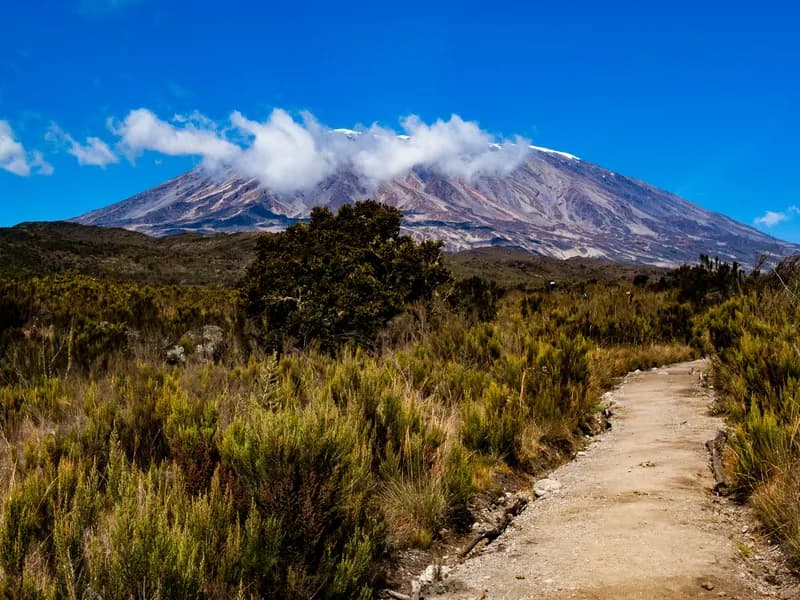
Lemosho Route
Considered the most scenic route with the highest success rate (~90% on 8 days). Starts from the remote western side, passes through pristine rainforest, crosses the Shira Plateau (3,600m), and joins the Machame route at Lava Tower. 7-8 days, fewer crowds than Machame. Cost: $2,500-4,000 USD. Ideal for photographers and those wanting a more wilderness experience.
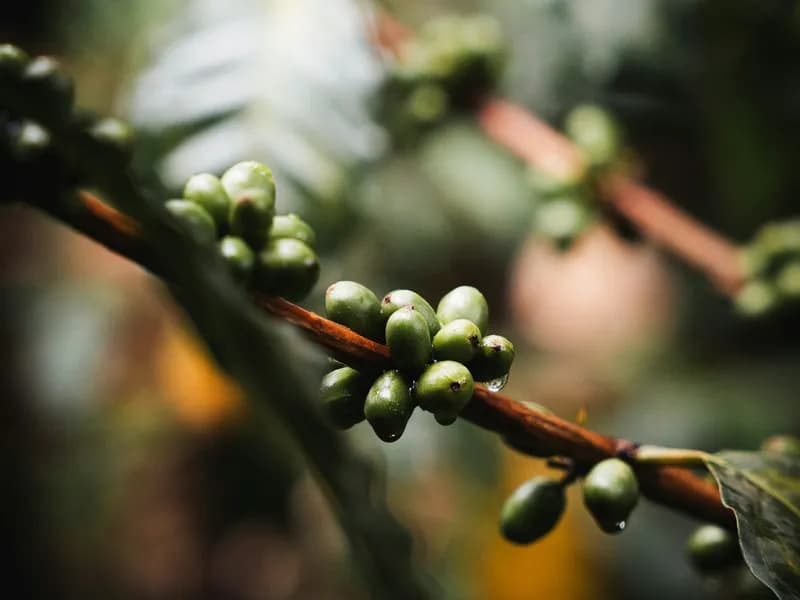
Moshi Town & Coffee Tours
The charming gateway town at Kilimanjaro's base (900m). Chagga people grow some of Tanzania's best arabica coffee on the mountain's lower slopes. Half-day coffee tours ($30-50 USD) take you from plantation to cup — picking, pulping, roasting, grinding by hand, and brewing. Also visit Materuni Waterfall (a 2-hour hike, 20,000 TZS entry). Moshi has good restaurants and craft beer at Kilimanjaro Breweries.
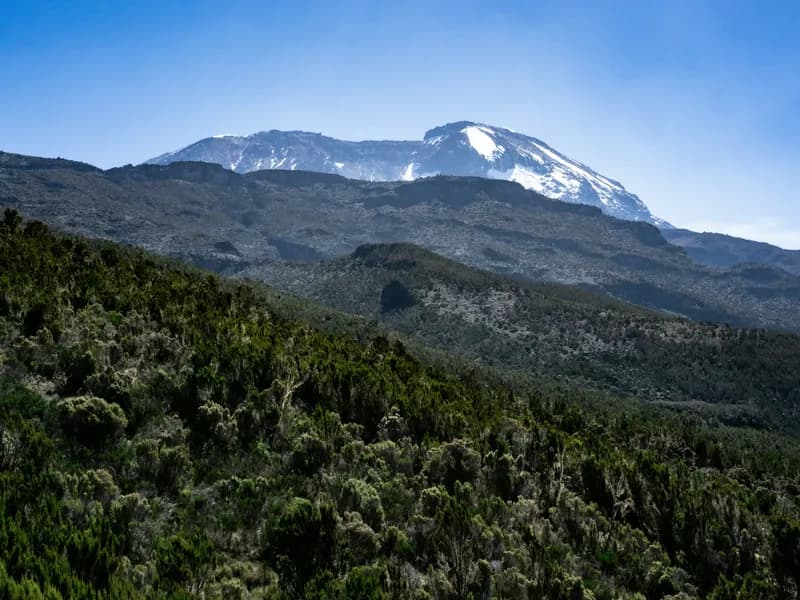
Five Climate Zones
Kilimanjaro is unique — you traverse five distinct ecosystems in days: cultivated farmland (800-1,800m), tropical rainforest (1,800-2,800m), heather and moorland (2,800-4,000m), alpine desert (4,000-5,000m), and arctic summit (5,000-5,895m). Each zone has distinct flora and fauna. The giant groundsels and lobelias in the moorland zone (resembling alien plants) are found nowhere else on Earth.
Planned Itinerary
7-Day Kilimanjaro Itinerary
Arrival in Moshi
Arrive at Kilimanjaro International Airport (JRO). Transfer to Moshi town at the base of the mountain. Settle in, meet your trekking operator, and do a gear check.
Airport transfer to Moshi(45 minutes)
Most operators include transfer ($30-50 if separate). Moshi is the gateway town at 900m
Hotel check-in(30 minutes)
Springlands Hotel, Honey Badger Lodge, or budget Key's Hotel. $30-100/night
Pre-trek briefing with operator(1 hour)
Meet your lead guide, review the route, altitude strategy, and gear list. Pack your daypack and duffle. Operator provides gear list — rent sleeping bags (-15°C rated, $5/day) and down jackets ($3/day) in Moshi if needed
Dinner at IndoItaliano(1.5 hours)
Popular pre-climb restaurant. Carb-loading pasta or curry. 15,000-25,000 TZS. On the main road
Machame Gate to Machame Camp
Trek begins. Drive to Machame Gate (1,800m) and hike through tropical rainforest to Machame Camp (3,000m). 5-7 hours of walking.
Drive to Machame Gate and register(1 hour)
Park entry $70/day. Registration takes 30-60 minutes. Gate is 1,800m
Trek through rainforest to Machame Camp(6 hours)
11km, 1,200m ascent. Dense tropical rainforest with monkeys, birds, and moss-covered trees. Muddy trail. The porters will overtake you carrying incredible loads. 'Pole pole' (slowly, slowly) is the mantra. Arrive at camp by late afternoon
Dinner at Machame Camp (3,000m)(1 hour)
Your cook prepares hot meals in the mess tent. Soup, carbs, vegetables. Drink 3-4 liters of water today. The first night at altitude — you may feel mild headache
Machame Camp to Shira Camp
Leave the forest behind and enter the heather and moorland zone. The landscape opens dramatically.
Trek to Shira Camp (3,840m)(5 hours)
5km, 840m ascent. Out of the forest into heather and moorland. Giant heather trees and otherworldly vegetation. Views of Kibo peak start to appear. The air is noticeably thinner
Acclimatization walk after arriving(1 hour)
Walk higher then sleep lower — a short walk to 4,000m after arriving helps acclimatization. Key for avoiding AMS
Evening at Shira Camp(2 hours)
Stunning sunset over the Shira Plateau. Card games in the mess tent. Hot water bottles for your sleeping bag
Shira Camp to Barranco Camp via Lava Tower
The critical acclimatization day — climb to 4,630m at Lava Tower then descend to 3,950m at Barranco. 'Climb high, sleep low.'
Trek to Lava Tower (4,630m)(4 hours)
10km total day. Altitude sickness symptoms may appear here — headache, nausea, loss of appetite. If severe, your guide will assess. Keep drinking water. The volcanic Lava Tower is a dramatic landmark
Descend to Barranco Camp (3,950m)(2 hours)
The descent to Barranco provides dramatic relief. The camp sits in a valley with the Barranco Wall looming above — tomorrow's challenge
Evening at Barranco Camp(2 hours)
Below the Great Barranco Wall. The giant groundsels (senecio) in this zone look like alien plants — found nowhere else on Earth
Barranco Wall to Karanga Camp
Scale the famous Barranco Wall — hands-on scrambling up a near-vertical rock face. Then traverse to Karanga Valley.
Barranco Wall scramble(2 hours)
The most exhilarating section of the Machame Route — near-vertical rock scramble with hands required. Not technical climbing, but exposed in places. Wait for porters to pass with loads balanced on their heads — incredible
Trek to Karanga Camp (3,995m)(3 hours)
4km through the alpine desert zone. Sparse vegetation. Views of the Southern Icefield and glaciers above. Last water point — fill all bottles
Early dinner and rest(2 hours)
Tomorrow is summit day. Sleep early (6PM). Guides wake you at midnight. Eat even if not hungry. Prepare summit gear — thermal layers, headlamp, hand warmers, snacks
Summit Day — Uhuru Peak
The midnight push to the Roof of Africa. 5,895m. The hardest and most rewarding day of the trek.
Midnight start to Uhuru Peak (5,895m)(7 hours)
Depart midnight from high camp. 1,200m vertical in darkness. Steep switchbacks on scree. Freezing temperatures (-15 to -25°C). One foot in front of the other. Stella Point (5,756m) on the crater rim is the first milestone — many stop here if exhausted
Sunrise at Uhuru Peak(30 minutes)
Reaching the summit sign at dawn — glaciers glowing orange, clouds below. 'The Roof of Africa.' Photos, tears, celebration. 15-30 minutes at the top before descending
Descent to Mweka Camp (3,100m)(6 hours)
Long descent through scree, then moorland and forest. Knees will protest. Use trekking poles. The relief of thicker air is palpable. Celebratory dinner and tipping ceremony at camp
Descent to Mweka Gate & Departure
Final descent through rainforest to Mweka Gate, certificate collection, and transfer back to Moshi for celebrations.
Descent to Mweka Gate (1,640m)(3 hours)
9km through forest. Muddy. The sound of birds and monkeys returns after days of silence above the tree line. Sign the register, collect your summit certificate (Uhuru Peak or Stella Point)
Tipping ceremony(30 minutes)
Present tips to your crew — lead guide $20-25/day, assistant $15-18/day, cook $10-15/day, porters $8-10/day each. $250-400 total for 7 days. USD cash in small bills. A heartfelt moment
Celebratory lunch and beer at Kilimanjaro Breweries(2 hours)
You did it. Cold Kilimanjaro Lager and a hot shower have never felt this good. The brewery taproom is in Moshi town
Airport transfer or hotel overnight(45 minutes)
JRO is 40km from Moshi. Many climbers stay an extra night to rest before flying
14-Day Kilimanjaro Itinerary
Arrival in Moshi
Arrive JRO. Transfer to Moshi. Pre-trek briefing and gear check.
Dinner at IndoItaliano(1.5 hours)
15,000-25,000 TZS
Coffee Tour & Materuni Waterfall
Acclimatization day — explore the lower slopes with a coffee farm tour and waterfall hike.
Chagga coffee tour(3 hours)
$30-50. Plantation to cup — pick, pulp, roast, grind, brew. Chagga people grow arabica on Kilimanjaro's lower slopes
Materuni Waterfall hike(2 hours)
Entry 20,000 TZS. Beautiful 80m waterfall through banana and coffee plantations. Good warm-up hike
Lunch at a local Chagga homestead(1 hour)
Often included with the coffee tour. Banana stew, ugali, and coffee
Lemosho Route — Day 1: Londorossi to Big Tree Camp
Begin the 8-day Lemosho Route — the most scenic with highest success rate (~90%). Drive to the western trailhead.
Drive to Londorossi Gate(2.5 hours)
Remote western gate. Park entry $70/day. Registration. The Lemosho start is quieter than Machame
Trek through pristine rainforest to Big Tree Camp (2,780m)(4 hours)
7km. Dense primary rainforest — black and white colobus monkeys, turacos. The trees are massive. Gentle gradient. Camp in a forest clearing
Lemosho — Day 2: Big Tree to Shira 1
Exit the forest into the heather zone and cross the Shira Plateau.
Trek to Shira 1 Camp (3,610m)(6 hours)
8km. Transition from forest to moorland. Giant heather trees. The Shira Plateau opens up — vast and otherworldly. First views of Kibo peak. The air thins noticeably
Acclimatization walk(45 minutes)
Short walk above camp. Climb high, sleep low
Lemosho — Day 3: Shira 1 to Shira 2
Cross the Shira Plateau — a high-altitude moorland with dramatic views in every direction.
Trek across Shira Plateau to Shira 2 Camp (3,840m)(5 hours)
7km. Open moorland crossing with views of Kibo and the Shira Cathedral rock formation. Altitude may start affecting you — drink 3-4 liters of water
Evening at Shira 2(2 hours)
One of the most scenic campsites on the mountain. Sunset over the plateau is extraordinary
Lemosho — Day 4: Lava Tower Acclimatization
Critical acclimatization day — climb to 4,630m at Lava Tower, then descend to Barranco.
Trek to Lava Tower (4,630m) and down to Barranco (3,950m)(7 hours)
10km. The altitude hit at Lava Tower is real — headache, nausea possible. The descent to Barranco provides relief. Giant groundsels appear — alien-looking plants found only on East African mountains
Lemosho — Day 5: Barranco Wall to Karanga
Scale the famous Barranco Wall — hands-on scrambling up near-vertical rock.
Barranco Wall scramble(2 hours)
Near-vertical rock. Hands required. Not technical but exposed. Watch porters with loads on their heads — incredible
Trek to Karanga Camp (3,995m)(3 hours)
Last water point. Alpine desert zone. Views of Southern Icefield
Lemosho — Day 6: Karanga to Barafu (High Camp)
Short day to high camp. Rest and prepare for the midnight summit push.
Trek to Barafu Camp (4,673m)(3 hours)
4km. Barren, windswept. Sleep is difficult at this altitude. Eat even if not hungry. Prepare summit gear
Rest and prepare(4 hours)
Thermal base layers, down jacket, headlamp, hand warmers, snacks, water. Sleep 6PM-midnight
Summit Day — Uhuru Peak
Midnight push to 5,895m. The Roof of Africa.
Summit push — Barafu to Uhuru Peak(7 hours)
Depart midnight. 1,200m vertical in darkness. -15 to -25°C. Stella Point (5,756m) on crater rim is first milestone
Uhuru Peak sunrise(30 minutes)
Glaciers glowing orange. Sign photos. 15-30 minutes at the top
Descent to Millennium Camp (3,820m)(5 hours)
Long scree descent. Use poles. The 8-day route descends to a lower camp than the 7-day, giving more rest
Descent to Mweka Gate
Final descent through forest. Certificate collection, tipping ceremony.
Descent to Mweka Gate (1,640m)(3 hours)
9km through forest. Sign register, collect certificate
Tipping ceremony(30 minutes)
$250-400 total. Lead guide $20-25/day, porters $8-10/day
Rest Day in Moshi
You deserve this. Sleep, hot shower, proper food. Recovery.
Spa or massage in Moshi(2 hours)
Several massage parlors offer post-climb recovery. $20-40 for a full body massage
Easy dinner at Kilimanjaro Coffee Lounge(1.5 hours)
Coffee shop and restaurant. Good Western food for sore muscles. 15,000-25,000 TZS
Arusha Day Trip
Drive 1.5 hours to Arusha — Tanzania's safari capital. Cultural Heritage Centre and local markets.
Cultural Heritage Centre(2 hours)
Art gallery, Tanzanite museum, craft market. The largest curated collection of African art in East Africa. Free entry, purchases separate
Lunch at Arusha Coffee Lodge(1.5 hours)
On a working coffee plantation. Set in colonial-era buildings. Mains $15-25
Maasai Market visit(1 hour)
If a market day (check schedule — usually Wednesday). Beadwork, carvings, spices. Bargain from 40%
Hot Springs & Local Exploration
Visit the Chemka Hot Springs — natural turquoise pools fed by underground Kilimanjaro water.
Drive to Chemka (Kikuletwa) Hot Springs(1.5 hours)
Southeast of Moshi. Entry 20,000 TZS. Crystal-clear turquoise water heated by geothermal activity. Swim, rope swing, float under the trees. Bring water shoes. Pack lunch
Farewell dinner at Milan's(1.5 hours)
Rooftop restaurant with Kilimanjaro views (weather permitting). Italian-Tanzanian. 15,000-30,000 TZS
Departure
Final morning. Transfer to JRO.
Last breakfast with Kilimanjaro view(1 hour)
The mountain is often clearest at dawn. A final look at what you climbed
Airport transfer(45 minutes)
JRO is 40km. Most operators include return transfer
21-Day Kilimanjaro Itinerary
Arrival in Moshi
Arrive JRO. Transfer to Moshi, gear check.
Coffee Tour & Waterfall
Acclimatization and lower-slope exploration.
Chagga coffee tour(3 hours)
$30-50
Materuni Waterfall(2 hours)
20,000 TZS
Rest & Preparation
Final rest day before the trek. Gear rental, Moshi exploration.
Gear rental and final packing(2 hours)
Sleeping bags $5/day, jackets $3/day. Inspect before accepting
Moshi town exploration(2 hours)
Local market, craft shops, Kilimanjaro views from town
Early dinner and rest(2 hours)
Carb load. Early night
Lemosho Day 1: Forest to Big Tree Camp
Trek begins. Pristine rainforest.
Drive to Londorossi Gate(2.5 hours)
$70/day park entry
Trek to Big Tree Camp (2,780m)(4 hours)
7km. Colobus monkeys, massive trees
Lemosho Day 2: Shira 1
Forest to moorland transition.
Trek to Shira 1 (3,610m)(6 hours)
8km. Giant heather. First Kibo views
Lemosho Day 3: Shira Plateau
Cross the high-altitude plateau.
Trek to Shira 2 (3,840m)(5 hours)
7km. Open moorland. Shira Cathedral
Lemosho Day 4: Lava Tower
Critical acclimatization — up to 4,630m then down.
Lava Tower (4,630m) and descent to Barranco (3,950m)(7 hours)
10km. Climb high, sleep low. Giant groundsels
Lemosho Day 5: Barranco Wall
Scale the famous wall. Scrambling, exposed, exhilarating.
Barranco Wall to Karanga (3,995m)(5 hours)
Last water. Alpine desert
Lemosho Day 6: High Camp
Short day to Barafu. Prepare for midnight summit.
Rest and prepare(4 hours)
Sleep 6PM-midnight. Thermal layers, headlamp, hand warmers
Summit Day — Uhuru Peak
Midnight to 5,895m. The Roof of Africa at sunrise.
Summit push(7 hours)
-15 to -25°C. Stella Point then Uhuru
Descent to Mweka Gate
Final descent. Certificates. Tipping ceremony.
Tipping ceremony(30 minutes)
$250-400 total
Recovery Day
Sleep, shower, food. Muscles screaming.
Massage(2 hours)
$20-40
Rest Day
Second recovery day. Gentle walk, coffee shop, journaling.
Chemka Hot Springs
Natural turquoise pools fed by Kilimanjaro's underground water.
Swim and relax(3 hours)
20,000 TZS. Turquoise, geothermal. Rope swing
4-Day Safari — Day 1: Tarangire NP
Start a 4-day safari circuit — Tarangire National Park has massive baobab trees and the densest elephant population outside Chobe.
Drive to Tarangire National Park(3 hours)
120km from Moshi. 4-day safari packages: $800-1,500 per person (camping) or $1,500-3,000 (lodges). Includes guide, vehicle, park fees, meals, accommodation
Full-day game drive in Tarangire(6 hours)
Entry $53.10/day. Huge herds of elephants, ancient baobab trees, tree-climbing pythons. The Tarangire River draws wildlife. Less crowded than the Serengeti
Safari Day 2: Ngorongoro Crater
Drive to the Ngorongoro Conservation Area and descend into the 600m-deep volcanic crater — one of the best wildlife-viewing spots on Earth.
Descend into Ngorongoro Crater(5 hours)
Entry $82.60. The world's largest intact volcanic caldera — 260 sq km. Lions, black rhinos, flamingos at Lake Magadi, hyenas, zebras. The chances of seeing the Big Five in one day are highest here. 600m descent on a dirt road
Overnight on the crater rim(1 hour)
Ngorongoro Sopa or Serena Lodge. Or budget camping on the rim
Safari Day 3: Lake Manyara NP
Lake Manyara National Park — tree-climbing lions, flamingo-lined shores, and tropical forest.
Game drive at Lake Manyara(5 hours)
Entry $53.10. Famous for tree-climbing lions (one of only two places globally), flamingos on the alkaline lake, and dense groundwater forest with baboons and elephants
Safari Day 4 & Return to Moshi
Morning game drive, then return to Moshi.
Early morning game drive(2 hours)
Dawn is best for predators
Dinner at Milan's(1.5 hours)
Rooftop with Kilimanjaro view
Rest Day
Recovery after safari. Beach of no plans.
Arusha & Farewell
Day trip to Arusha — Cultural Heritage Centre, Maasai market, farewell dinner.
Departure
Final Kilimanjaro dawn view, then JRO.
Dawn Kilimanjaro view from Moshi(30 minutes)
Clearest at dawn. Last look at what you conquered
Travel Tips
Visa & Entry
Tanzania Visa Required
Apply online at visa.immigration.go.tz. Single-entry $50 USD, multiple-entry $100 USD. Process takes 3-10 days. Visa on arrival available but e-visa is faster. Yellow fever vaccination certificate required if arriving from an endemic country. Passport must be valid 6+ months.
Safety
Altitude Sickness Is the Biggest Risk
About 50% of trekkers experience some altitude sickness symptoms. Acute Mountain Sickness (AMS) can be fatal if ignored. Key rules: ascend slowly ('pole pole' in Swahili), drink 3-4 liters of water daily, never ascend with a headache, descend immediately if symptoms worsen. Diamox (Acetazolamide, 250mg twice daily) helps — get a prescription before travel. Choose 7+ day routes for better acclimatization.
Packing Mistakes That Ruin Climbs
The most common mistakes: bringing cotton (it doesn't dry — use merino wool and synthetics), skimping on the sleeping bag (you need a -15°C rated bag), forgetting a headlamp for summit night, and not breaking in boots beforehand. Rent gear in Moshi if needed (sleeping bags $5/day, down jackets $3/day) — quality varies, so inspect before accepting. A good rain jacket is non-negotiable.
Budget
All-In Costs: $2,000-4,500 USD
You cannot climb Kilimanjaro without a licensed guide and registered operator — solo trekking is illegal. Budget operators: $1,800-2,500. Mid-range: $2,500-3,500. Premium: $3,500-5,000+. Price includes: park fees ($70/day), guides, porters, food, camping equipment, and transport. Cheaper operators often underpay porters. Ask about porter wages before booking — ethical operators pay 10,000+ TZS/day.
Local Customs
Tipping Your Crew Is Expected
Kilimanjaro guides, assistant guides, cooks, and porters rely on tips as a significant part of their income. Standard tipping guidelines: lead guide $20-25/day, assistant guide $15-18/day, cook $10-15/day, porters $8-10/day each. For a 7-day trek with a typical crew, budget $250-400 total in tips. Bring USD cash in small denominations. Present tips in a ceremony at the end.
transport
Getting to Moshi/Kilimanjaro
Fly into Kilimanjaro International Airport (JRO) — direct flights from Nairobi (45 min), Dar es Salaam (1.5 hrs), Doha, Istanbul, Amsterdam. Airport transfer to Moshi: $30-50 USD (45 min). Alternatively, fly to Nairobi (more options) and take a shuttle bus to Moshi (5-6 hours, $25-35). Most operators include airport transfer in their package.
Related Articles
Travel Guides10 Things to Do on Kilimanjaro (Beyond Just Standing on the Summit)
The summit sign is the photo everyone wants — but Kilimanjaro is a week-long expedition through five worlds. Here are ten experiences, from the Barranco Wall to Moshi's coffee farms, worth building your climb around.
StoriesSeven Days on Kilimanjaro: From Rainforest to Roof of Africa
Day 1 was birdsong in the jungle. Day 6 was a midnight march through frozen volcanic scree. Here's what happened in between.
StoriesWhat Your Kilimanjaro Guide Won't Tell You (But Should): An Interview with Joseph, 15-Year Lead Guide
He's summited 237 times. He's also turned back 50+ clients who refused to listen about altitude. Here's everything Joseph wishes trekkers knew.
Tips17 Kilimanjaro Tips from Someone Who Almost Didn't Make It to the Top
I packed cotton, skipped the Diamox, and chose a 5-day route. Here's what I'd do differently — and the tips that saved my summit.