
Kyoto

Key Facts
Best Time to Visit
March to May (cherry blossoms) and October to November (autumn colors)
Language
Japanese
Currency
Japanese Yen (JPY)
Time Zone
JST (UTC+9)
Airport
Kansai International Airport (KIX), 75 minutes by Haruka Express
Population
1.46 million (city proper)
Climate
Humid subtropical, hot summers (35°C+), cold winters (1-7°C)
Safety Rating
Very Safe (Level 1)
UNESCO Sites
17 UNESCO World Heritage sites within the city
Top Highlights

Fushimi Inari Taisha
Iconic Shinto shrine with 10,000+ vermillion torii gates winding 4km up Mount Inari. Free entry. Open 24 hours. The full hike takes 2-3 hours; the lower loop takes 45 minutes. Visit before 8AM or after 4PM to avoid crowds.
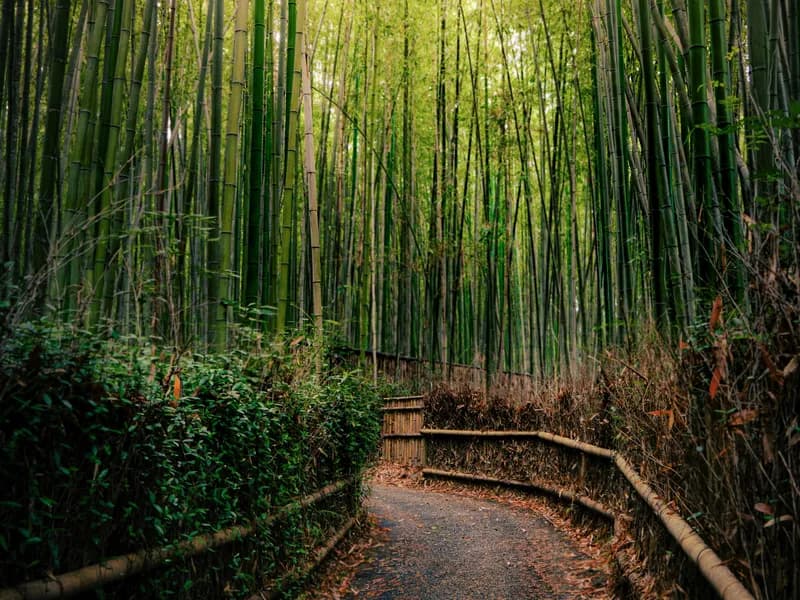
Arashiyama Bamboo Grove
Towering bamboo stalks create an otherworldly corridor in western Kyoto. Free entry. Open 24 hours. Best experienced at dawn (before 7AM) when the light filters through and crowds are absent. 15 minutes from Saga-Arashiyama Station.

Kinkaku-ji (Golden Pavilion)
Gold-leaf-covered Zen temple reflecting in a mirror pond. Entry: 500 JPY (~$3.30). Open 9AM-5PM daily. Allow 1 hour. The reflection on a still morning is the classic photo. 20 minutes by bus from Kyoto Station.

Gion District
Kyoto's famous geisha (geiko) district with traditional wooden machiya houses, tea houses, and ochaya. Free to walk. Best time to spot geiko and maiko is around 5-6PM on Hanamikoji Street. Allow 1.5-2 hours to explore. Please don't chase or photograph geiko without permission.

Nishiki Market
A 400-year-old covered market stretching 5 blocks with 130+ shops selling Kyoto specialties. Free entry. Open ~9AM-5PM (varies by shop, closed some Wednesdays). Try yuba (tofu skin), matcha treats, and pickled vegetables. Allow 1-1.5 hours.

Kiyomizu-dera Temple
Hillside temple with a massive wooden stage offering panoramic city views. Entry: 400 JPY (~$2.60). Open 6AM-6PM (extended hours in autumn). The wooden stage juts 13 meters out over the hillside with no nails used in construction. Allow 1.5 hours.
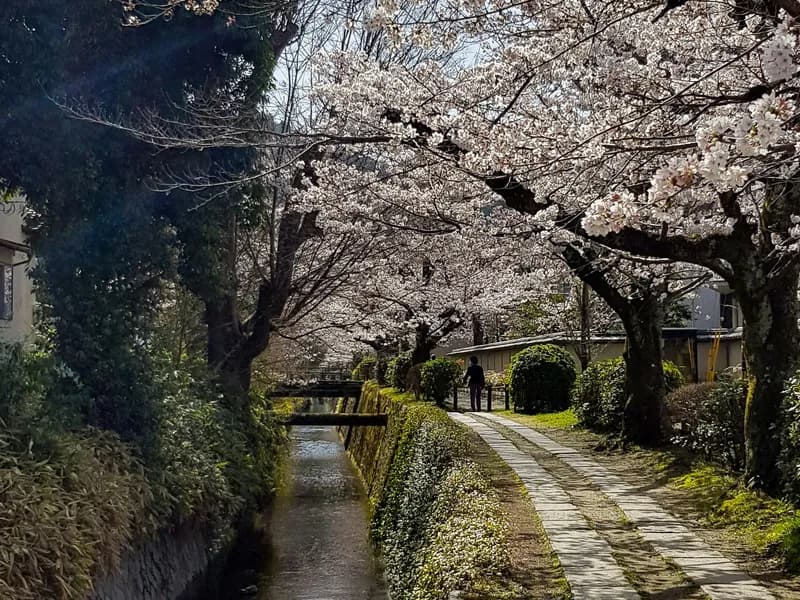
Philosopher's Path
A peaceful 2km stone path along a canal lined with cherry trees, connecting Ginkaku-ji and Nanzen-ji temples. Free to walk. Best in early April (cherry blossoms) or November (autumn leaves). Allow 1-2 hours including temple visits at either end.
Planned Itinerary
7-Day Kyoto Itinerary
Arrival & Gion Evening Walk
Arrive at Kansai International Airport and take the Haruka Express to Kyoto Station (75 minutes, 3,640 JPY). Check into your hotel near Kyoto Station or in the Gion area for an atmospheric first evening.
Haruka Express to Kyoto Station(75 minutes)
Reserved seat from KIX. Buy a Suica/ICOCA card at the airport for buses and trains within Kyoto
Evening walk through Gion District(2 hours)
Walk Hanamikoji Street between 5-6PM to spot geiko and maiko heading to evening appointments. Continue to Shirakawa canal area — the willow-lined stone paths lit by lanterns are pure magic. Please don't chase or photograph geiko without permission
Dinner at Gion Kappa restaurant(1.5 hours)
Traditional obanzai-style Kyoto home cooking — a tray of 8-10 small seasonal dishes for around 2,500 JPY. Tucked in a Gion back alley, feels like eating at a local grandmother's house
Fushimi Inari & Eastern Kyoto Temples
Start at the 10,000 torii gates, then work your way through the Higashiyama temple district — all on the eastern side of the city.
Fushimi Inari Taisha(2.5 hours)
Arrive before 7AM for empty torii gate corridors. The full hike to the summit takes 2-3 hours; the photogenic lower loop takes 45 minutes. Free entry. Take the JR Nara Line to Inari Station (5 minutes from Kyoto Station)
Kiyomizu-dera Temple(1.5 hours)
Bus 100 or 206 from Kyoto Station area. The massive wooden stage juts 13 meters out over the hillside — no nails in the entire construction. Entry: 400 JPY. Open from 6AM. Walk down through the preserved lanes of Ninenzaka and Sannenzaka
Lunch on Ninenzaka lane(1 hour)
Stop at Kasagi-ya for warabi mochi (bracken starch dessert, 600 JPY) — they've been making it since the Taisho era. For a full meal, try yuba (tofu skin) noodles at any of the shops on the lane
Walk the Philosopher's Path to Ginkaku-ji(2 hours)
2km stone canal-side path lined with cherry trees. At the northern end, visit Ginkaku-ji Silver Pavilion (500 JPY) — despite the name, it's not silver, but the sand garden and moss garden are sublime
Golden Pavilion, Zen Gardens & Nishiki Market
Hit the iconic northwest temples in the morning, then dive into Kyoto's culinary heart at the 400-year-old Nishiki Market.
Kinkaku-ji (Golden Pavilion)(1 hour)
Bus 101 or 205 from Kyoto Station. The gold-leaf temple reflecting in the mirror pond on a still morning is the classic Kyoto photo. Entry: 500 JPY. Open 9AM-5PM
Ryoan-ji Zen Rock Garden(45 minutes)
15 minutes walk from Kinkaku-ji. The famous dry landscape garden with 15 stones — you can never see all 15 from any single angle. Entry: 500 JPY. Sit on the viewing platform and let the minimalism sink in
Nishiki Market for lunch and exploration(2 hours)
5-block covered market with 130+ shops. Try yuba (tofu skin), matcha dango, Kyoto pickles (tsukemono), and grilled mochi. Most items 200-500 JPY. Open ~9AM-5PM. Known as 'Kyoto's Kitchen'
Tea ceremony at Camellia Garden(1 hour)
Book in advance (3,000-5,000 JPY). Learn to whisk matcha, rotate the bowl twice before drinking, finish in 3 sips. Wear socks — no bare feet on tatami. An authentic cultural immersion
Arashiyama Bamboo Grove & Monkey Mountain
A full day in western Kyoto's most scenic area — bamboo groves, riverside temples, and wild monkeys with mountain views.
Arashiyama Bamboo Grove at dawn(1 hour)
Take the JR Sagano Line to Saga-Arashiyama (15 minutes). Arrive before 7AM when light filters through the towering bamboo and you'll have the path nearly to yourself
Tenryu-ji Temple and gardens(1 hour)
UNESCO World Heritage Zen temple at the bamboo grove entrance. Garden entry: 500 JPY. The borrowed scenery garden designed in 1339 frames Arashiyama mountains perfectly
Lunch at Arashiyama Yoshimura(1 hour)
Handmade soba noodles with a view of the Togetsukyo Bridge and river. The cold soba with tempura set (1,800 JPY) is perfect. Window seats are first-come
Iwatayama Monkey Park(1.5 hours)
20-minute hike up the mountain to find 120 wild macaques. Entry: 550 JPY. You can feed them from inside a sheltered hut (peanuts/apples 100 JPY). The panoramic view over Kyoto from the top is a bonus
Rest Morning & Ryokan Experience
Take it easy after four days of temple-hopping. Slow morning, neighborhood exploring, and check into a traditional ryokan for the night.
Sleep in and leisurely breakfast(2 hours)
Temple fatigue is real with 2,000+ shrines in town. Rest up for the remaining days
Nijo Castle(1.5 hours)
The shogun's Kyoto residence with famous 'nightingale floors' that squeak when walked on — an ancient intruder alarm. Entry: 800 JPY. The painted screens in Ninomaru Palace are breathtaking
Kimono rental and photowalk(3 hours)
Rent a kimono from Yumeyakata (from 3,300 JPY for a full day). Walk through Higashiyama in traditional dress — locals love it and other tourists will ask for photos. Return before 6:30PM
Check into a ryokan for kaiseki dinner(3 hours)
Budget ryokan from 15,000 JPY/night with dinner. The multi-course kaiseki meal (8-12 courses of seasonal micro-dishes) is a culinary art form. Sleep on futons laid on tatami. For a splurge, Tawaraya (from 80,000 JPY) is Japan's oldest inn
Day Trip to Nara — Great Buddha & Friendly Deer
An easy 45-minute train ride to Nara, Japan's first permanent capital, where 1,200 sacred deer roam freely among 8th-century temples.
Train to Nara(45 minutes)
JR Nara Line from Kyoto Station (720 JPY) or Kintetsu Railway (640 JPY, faster). Nara is compact — everything is walkable from the station
Nara Park and deer(1 hour)
1,200 deer roam freely and bow for shika-senbei crackers (200 JPY per pack from park vendors). They're sacred messengers of the gods — polite but persistent
Todai-ji Temple and Great Buddha(1.5 hours)
The world's largest wooden building houses a 15-meter bronze Buddha. Entry: 600 JPY. The pillar with a hole the same size as the Buddha's nostril — if you squeeze through, you'll be granted enlightenment
Lunch at Kakinoha-zushi Tanaka in Nara(45 minutes)
Try kakinoha-zushi — sushi wrapped in persimmon leaves, a Nara specialty since the Edo period. Set from 1,200 JPY
Kasuga-taisha Shrine and lantern path(1 hour)
Ancient Shinto shrine with 3,000 stone and bronze lanterns lining the approach through a primeval forest. Entry: free (inner sanctuary 500 JPY). Deer wander through the grounds
Departure Day — Morning Market & Final Moments
Last morning in Kyoto for final souvenir shopping and one more matcha moment before heading to the airport.
Toji Temple flea market or Nishiki final browse(1.5 hours)
If it's the 21st of the month, the Toji flea market (Kobo-san) has 1,200+ stalls with antiques, crafts, and street food. Otherwise, a final Nishiki Market run for food souvenirs — matcha powder, yatsuhashi sweets, and Kyoto pickles
Matcha and wagashi at Nakamura Tokichi(45 minutes)
Near Kyoto Station. This Uji tea house (since 1854) serves the finest matcha parfait (1,300 JPY) and has a shop for premium tea souvenirs
Haruka Express to Kansai International Airport(75 minutes)
3,640 JPY reserved seat. Allow 3 hours before your international flight. Ekiben (train bento boxes) from Kyoto Station make a great final meal — the Kyoto-style makunouchi bento is a classic
14-Day Kyoto Itinerary
Arrival & Gion Evening Walk
Arrive at Kansai International Airport and take the Haruka Express to Kyoto Station (75 minutes, 3,640 JPY). Settle in and experience the magic of Gion at dusk.
Haruka Express to Kyoto Station(75 minutes)
Buy an ICOCA IC card at KIX for Kyoto buses and trains
Evening walk through Gion District(2 hours)
Hanamikoji Street between 5-6PM for geiko spotting. Shirakawa canal area with willow trees and lanterns
Dinner at Gion Kappa(1.5 hours)
Obanzai home cooking — 8-10 small seasonal dishes for ~2,500 JPY
Fushimi Inari & Higashiyama Temples
The iconic torii gates at dawn, then through the preserved temple district of eastern Kyoto.
Fushimi Inari Taisha before 7AM(2.5 hours)
JR Nara Line to Inari Station. Free entry, open 24 hours. Full summit hike: 2-3 hours; lower loop: 45 minutes
Kiyomizu-dera Temple(1.5 hours)
Wooden stage jutting 13 meters out. Entry: 400 JPY. Walk down through Ninenzaka and Sannenzaka preserved lanes
Lunch at Kasagi-ya on Ninenzaka(45 minutes)
Warabi mochi (600 JPY) from the Taisho era. Or try yuba noodles from nearby shops
Philosopher's Path to Ginkaku-ji(2 hours)
2km canal-side walk. Ginkaku-ji Silver Pavilion (500 JPY) at the end — sand garden and moss garden are sublime
Golden Pavilion, Zen Gardens & Nishiki Market
The iconic northwest temples, then Kyoto's 400-year-old culinary market.
Kinkaku-ji (Golden Pavilion)(1 hour)
Bus 101 from Kyoto Station. Gold-leaf temple reflecting in mirror pond. 500 JPY. Open 9AM-5PM
Ryoan-ji Zen Rock Garden(45 minutes)
15-minute walk from Kinkaku-ji. 15 stones in raked gravel — never all visible at once. 500 JPY
Nishiki Market lunch crawl(2 hours)
130+ shops across 5 blocks. Yuba, matcha dango, tsukemono pickles, grilled mochi. Items 200-500 JPY each
Tea ceremony at Camellia Garden(1 hour)
3,000-5,000 JPY. Rotate bowl twice, finish in 3 sips. Wear socks on tatami
Arashiyama Bamboo & Monkey Mountain
Full day in western Kyoto — bamboo groves, riverside temples, and wild monkeys with panoramic views.
Arashiyama Bamboo Grove at dawn(1 hour)
JR Sagano Line to Saga-Arashiyama (15 min). Before 7AM for empty paths and magical light
Tenryu-ji Temple and gardens(1 hour)
UNESCO site. Garden: 500 JPY. Borrowed scenery garden from 1339 frames the mountains
Lunch at Arashiyama Yoshimura(1 hour)
Handmade soba with Togetsukyo Bridge view. Cold soba with tempura set, 1,800 JPY
Iwatayama Monkey Park(1.5 hours)
20-minute hike, 120 macaques, 550 JPY. Feed from sheltered hut. Great city panorama
Sagano Scenic Railway(30 minutes)
Open-air train along the Hozu River gorge (880 JPY). Stunning in autumn foliage season
Rest Morning, Nijo Castle & Kimono Walk
Slow start to beat temple fatigue, then the shogun's castle and a kimono afternoon in the historic lanes.
Nijo Castle(1.5 hours)
Shogun's residence with nightingale floors. Entry: 800 JPY. Painted screens in Ninomaru Palace are breathtaking
Kimono rental and photowalk(3 hours)
Yumeyakata from 3,300 JPY/day. Walk Higashiyama lanes in traditional dress. Return before 6:30PM
Dinner at Pontocho alley(1.5 hours)
Narrow lantern-lit alley along the Kamogawa River with dozens of restaurants. In summer, eat on the riverside yuka (wooden platforms). A small kaiseki set from 4,000 JPY at Fujino
Day Trip to Nara — Great Buddha & Sacred Deer
45 minutes to Japan's first permanent capital, where 1,200 deer roam freely among 8th-century temples.
Train to Nara(45 minutes)
Kintetsu Railway from Kyoto (640 JPY). Everything walkable from station
Nara Park and deer feeding(1 hour)
Shika-senbei crackers 200 JPY. Deer bow for food — they're sacred messengers
Todai-ji Temple and Great Buddha(1.5 hours)
World's largest wooden building, 15-meter bronze Buddha. 600 JPY. Try the nostril pillar challenge
Lunch at Kakinoha-zushi Tanaka(45 minutes)
Sushi wrapped in persimmon leaves, Nara specialty since Edo period. Set from 1,200 JPY
Kasuga-taisha Shrine(1 hour)
3,000 lanterns lining the approach through primeval forest. Free (inner sanctuary 500 JPY)
Ryokan & Onsen Experience
Check into a traditional ryokan and surrender to Japanese hospitality — tatami rooms, yukata robes, kaiseki dinner, and communal baths.
Morning free time for personal exploration(2 hours)
Revisit a favorite spot or explore your hotel's neighborhood. Pick up omiyage (gift souvenirs) at Kyoto Station
Check into ryokan(1 hour)
Budget ryokan from 15,000 JPY/night. Splurge: Tawaraya (from 80,000 JPY). Change into yukata robe provided
Onsen bath before dinner(1 hour)
Wash thoroughly at the shower stations before entering. Most ryokan separate men and women. Tattoo policies vary — ask ahead
Kaiseki dinner at ryokan(2 hours)
8-12 courses of seasonal micro-dishes. Each course is a small artwork. Don't rush — this is edible meditation
Day Trip to Osaka — Street Food Capital
Just 15 minutes by shinkansen or 30 minutes by JR Special Rapid, Osaka is Japan's kitchen and the polar opposite of reserved Kyoto.
Train to Osaka(30 minutes)
JR Special Rapid from Kyoto Station to Osaka Station (570 JPY)
Dotonbori street food crawl(3 hours)
The neon-soaked canal strip. Must-eats: takoyaki (octopus balls) at Kukuru (600 JPY for 8), okonomiyaki at Mizuno (try the yamaimo-yaki, 1,200 JPY), and kushikatsu (fried skewers) at Daruma (150-300 JPY per stick). Never double-dip the communal sauce
Osaka Castle(1.5 hours)
The reconstructed castle and its museum. Entry: 600 JPY. The surrounding park is free and beautiful. 8th floor observation deck has city views
Shinsekai district and Tsutenkaku Tower(2 hours)
A retro-futuristic neighborhood frozen in the 1960s. Eat kushikatsu at Yaekatsu (a local favorite, skewers from 120 JPY). Tower entry: 900 JPY for views
Southern Kyoto — Tofuku-ji & Fushimi Sake District
Explore the less-visited southern temples and the sake brewery district, a completely different atmosphere from tourist-heavy central Kyoto.
Tofuku-ji Temple(1.5 hours)
One of Kyoto's Five Great Zen Temples with the most spectacular autumn bridge viewpoint. Entry: 500 JPY. Far fewer tourists than Kinkaku-ji despite being equally beautiful. JR Nara Line to Tofuku-ji Station
Fushimi Sake District walking tour(3 hours)
Kyoto's sake brewing quarter along willow-lined canals. Visit Gekkeikan Okura Sake Museum (400 JPY, includes tastings), then Kizakura sake brewery for more tastings (free). The canal area with old kura (warehouses) is beautiful for photos
Sake-paired lunch at Torisei(1.5 hours)
Yakitori restaurant run by a sake brewery. Try 3-sake tasting flights (600 JPY) paired with perfectly grilled chicken skewers (150-300 JPY each)
Evening at Kamogawa River(1.5 hours)
Sit on the riverbank between Shijo and Sanjo bridges — Kyoto's living room. In summer, restaurants build yuka platforms over the water. Grab takeaway snacks and join the locals watching the herons fish
Cooking Class & Crafts Workshop
Hands-on cultural immersion — learn to cook Kyoto cuisine and try a traditional Japanese craft.
Kyoto cooking class(3 hours)
Haru Cooking Class or WAK Japan (from 6,500 JPY). Learn to make dashi (the foundation of Japanese cuisine), seasonal dishes, and Japanese sweets. Market visit often included
Kintsugi or pottery workshop(2 hours)
Try kintsugi (repairing broken pottery with gold, from 5,000 JPY) at Kintsugi Kyoto or a pottery wheel session at Zuikoudo (from 3,800 JPY). Ship finished pieces home
Explore Teramachi and Shinkyogoku shopping arcades(1.5 hours)
Covered arcades near the city center with a mix of traditional shops (incense, calligraphy brushes, washi paper) and modern stores. The Nishiki Tenmangu shrine is tucked right inside the arcade
Day Trip to Uji — Matcha Hometown
30 minutes south to the birthplace of Japanese matcha. If you love green tea, this is paradise.
Train to Uji(30 minutes)
JR Nara Line from Kyoto (240 JPY) or Keihan Line
Byodo-in Temple (Phoenix Hall)(1.5 hours)
The temple on the 10-yen coin. Its reflection in the lotus pond is iconic. Entry: 700 JPY including museum. The Phoenix Hall interior tour (300 JPY extra) is worth the additional wait
Matcha tasting along Uji Bridge-dori(1.5 hours)
The street is lined with tea houses. Nakamura Tokichi (since 1854) serves the finest matcha parfait (1,300 JPY). Tsuen Tea has been open since 1160 — the world's oldest tea shop. Try matcha soba noodles
Ujigami Shrine(30 minutes)
Japan's oldest surviving shrine building (late Heian period). UNESCO World Heritage. Tiny and easily missed but historically significant. Free
Return to Kyoto with tea souvenirs(30 minutes)
Stock up on premium Uji matcha powder, hojicha, and sencha from Marukyu Koyamaen or Fukujuen
Northern Kyoto — Daitoku-ji & Kamo Shrines
Off the beaten path in northern Kyoto — quiet Zen sub-temples and the ancient Shinto shrines along the Kamo River.
Daitoku-ji Temple complex(2.5 hours)
A walled compound of 24 sub-temples, only a few open at a time. Daisen-in (400 JPY) has exquisite dry gardens, Zuiho-in (400 JPY) has a Christian rock garden hidden in Zen aesthetics. Far fewer tourists than major temples. Bus 205 from Kyoto Station
Lunch at Izusen inside Daitoku-ji(1 hour)
Shojin ryori (Buddhist vegetarian cuisine) served on red lacquer trays in a temple garden setting. Set menus from 3,300 JPY. Advance reservation recommended
Shimogamo Shrine(1 hour)
One of Kyoto's oldest Shinto shrines (6th century) set in the Tadasu no Mori — a primeval forest surviving since pre-historic times inside the city. Free. The approach through the forest is meditative
Kamigamo Shrine(1 hour)
Another ancient shrine (678 AD) with a distinctive pair of sand cones representing mountains. UNESCO World Heritage. Free. Less visited but equally atmospheric
Free Day — Revisit or Explore Hidden Kyoto
A flexible day to revisit favorites or discover hidden spots. Some suggestions for going deeper.
Leisurely morning at your pace(2 hours)
Visit a kissaten (retro-style coffee shop) like Inoda Coffee on Sanjo for their signature Arabica blend and thick-cut toast set (900 JPY)
Toji Temple flea market (if 21st) or Kitano Tenmangu (if 25th)(2 hours)
Toji market has 1,200+ stalls with antiques, crafts, and street food. Kitano Tenmangu market is similar. If neither date matches, explore Kyoto International Manga Museum (900 JPY) — 300,000 manga volumes you can read on the lawn
Afternoon at Kurama Onsen(3 hours)
Take the Eizan Railway to Kurama (30 min from Demachiyanagi). The rotenburo (outdoor bath, 1,000 JPY) is set in a mountain forest. The hike from Kurama to Kibune (1.5 hours) through ancient cedar forest is one of Kyoto's best walks
Farewell dinner at Hafuu Honten(2 hours)
A Kyoto institution for yoshoku (Japanese-style Western food). Their tonkatsu and hayashi rice are legendary. Set meals around 2,000-3,000 JPY. Reservations recommended
Departure Day — Final Matcha Moments
Last morning in Kyoto for souvenirs and one final temple moment before heading to the airport.
Early morning temple visit — your choice(1 hour)
Revisit your favorite or try one you missed. Most temples open at 6AM with nobody around
Souvenir shopping at Kyoto Station(1.5 hours)
The Cube and Porta underground malls have all the classic Kyoto omiyage: yatsuhashi (cinnamon rice crackers), matcha KitKats, Kyoto pickles, and quality ceramics. Isetan department store food hall is excellent
Haruka Express to Kansai International Airport(75 minutes)
3,640 JPY reserved seat. Pick up an ekiben (train bento) from the station — the Kyoto-style mackerel sushi bento is a classic farewell meal
21-Day Kyoto Itinerary
Arrival & Gion Evening Walk
Arrive at Kansai International Airport and take the Haruka Express to Kyoto Station (75 minutes, 3,640 JPY). Settle in and experience the magic of Gion at dusk.
Haruka Express to Kyoto Station(75 minutes)
Buy an ICOCA IC card at KIX for Kyoto buses and trains
Evening walk through Gion District(2 hours)
Hanamikoji Street between 5-6PM for geiko spotting. Shirakawa canal area with willow trees and lanterns
Dinner at Gion Kappa(1.5 hours)
Obanzai home cooking — 8-10 small seasonal dishes for ~2,500 JPY
Fushimi Inari & Higashiyama Temples
The iconic torii gates at dawn, then through the preserved temple district of eastern Kyoto.
Fushimi Inari Taisha before 7AM(2.5 hours)
JR Nara Line to Inari Station. Free entry, open 24 hours. Full summit hike: 2-3 hours
Kiyomizu-dera Temple(1.5 hours)
Wooden stage jutting 13 meters out. Entry: 400 JPY. Walk down through Ninenzaka and Sannenzaka preserved lanes
Lunch at Kasagi-ya on Ninenzaka(45 minutes)
Warabi mochi (600 JPY) from the Taisho era
Philosopher's Path to Ginkaku-ji(2 hours)
2km canal-side walk. Ginkaku-ji Silver Pavilion (500 JPY) at the end — sand garden and moss garden are sublime
Golden Pavilion, Zen Gardens & Nishiki Market
The iconic northwest temples, then Kyoto's 400-year-old culinary market.
Kinkaku-ji (Golden Pavilion)(1 hour)
Bus 101 from Kyoto Station. Gold-leaf temple reflecting in mirror pond. 500 JPY
Ryoan-ji Zen Rock Garden(45 minutes)
15-minute walk from Kinkaku-ji. 15 stones in raked gravel — never all visible at once. 500 JPY
Nishiki Market lunch crawl(2 hours)
130+ shops across 5 blocks. Yuba, matcha dango, tsukemono pickles, grilled mochi. Items 200-500 JPY each
Tea ceremony at Camellia Garden(1 hour)
3,000-5,000 JPY. Rotate bowl twice, finish in 3 sips. Wear socks on tatami
Arashiyama Bamboo & Monkey Mountain
Full day in western Kyoto — bamboo groves, riverside temples, and wild monkeys with panoramic views.
Arashiyama Bamboo Grove at dawn(1 hour)
JR Sagano Line to Saga-Arashiyama. Before 7AM for empty paths and magical light
Tenryu-ji Temple and gardens(1 hour)
UNESCO site. Garden: 500 JPY. Borrowed scenery garden from 1339
Lunch at Arashiyama Yoshimura(1 hour)
Handmade soba with Togetsukyo Bridge view. Cold soba with tempura set 1,800 JPY
Iwatayama Monkey Park(1.5 hours)
20-minute hike, 120 macaques, 550 JPY. Great city panorama
Sagano Scenic Railway(30 minutes)
Open-air train along the Hozu River gorge (880 JPY)
Rest Morning, Nijo Castle & Kimono Walk
Slow start to beat temple fatigue, then the shogun's castle and a kimono afternoon.
Nijo Castle(1.5 hours)
Shogun's residence with nightingale floors. Entry: 800 JPY. Painted screens in Ninomaru Palace
Kimono rental and photowalk(3 hours)
Yumeyakata from 3,300 JPY/day. Walk Higashiyama lanes in traditional dress
Dinner at Pontocho alley(1.5 hours)
Narrow lantern-lit alley. In summer, eat on riverside yuka platforms. Kaiseki set from 4,000 JPY at Fujino
Day Trip to Nara — Great Buddha & Sacred Deer
45 minutes to Japan's first permanent capital, where 1,200 deer roam freely among 8th-century temples.
Train to Nara(45 minutes)
Kintetsu Railway from Kyoto (640 JPY)
Nara Park and deer feeding(1 hour)
Shika-senbei crackers 200 JPY. Deer bow for food
Todai-ji Temple and Great Buddha(1.5 hours)
World's largest wooden building, 15-meter bronze Buddha. 600 JPY
Lunch at Kakinoha-zushi Tanaka(45 minutes)
Sushi wrapped in persimmon leaves. Set from 1,200 JPY
Kasuga-taisha Shrine(1 hour)
3,000 lanterns. Free (inner sanctuary 500 JPY)
Ryokan & Onsen Experience
Check into a traditional ryokan for Japanese hospitality — tatami rooms, yukata robes, kaiseki dinner, and communal baths.
Morning free time(2 hours)
Revisit a favorite spot or pick up omiyage at Kyoto Station
Check into ryokan(1 hour)
Budget from 15,000 JPY/night. Splurge: Tawaraya (from 80,000 JPY). Change into yukata
Onsen bath before dinner(1 hour)
Wash at shower stations before entering. Most ryokan separate men and women
Kaiseki dinner at ryokan(2 hours)
8-12 courses of seasonal micro-dishes. Each course is a small artwork
Day Trip to Osaka — Street Food Capital
15 minutes by shinkansen or 30 minutes by JR, Osaka is Japan's kitchen.
Train to Osaka(30 minutes)
JR Special Rapid from Kyoto (570 JPY)
Dotonbori street food crawl(3 hours)
Takoyaki at Kukuru (600 JPY for 8), okonomiyaki at Mizuno (1,200 JPY), kushikatsu at Daruma (150-300 JPY per stick)
Osaka Castle(1.5 hours)
600 JPY. 8th floor observation deck has city views
Shinsekai district and Tsutenkaku Tower(2 hours)
Retro neighborhood frozen in the 1960s. Kushikatsu at Yaekatsu. Tower 900 JPY
Southern Kyoto — Tofuku-ji & Fushimi Sake District
Less-visited southern temples and the sake brewery district.
Tofuku-ji Temple(1.5 hours)
One of Kyoto's Five Great Zen Temples. 500 JPY. Far fewer tourists
Fushimi Sake District walking tour(3 hours)
Gekkeikan Okura Sake Museum (400 JPY with tastings), Kizakura brewery (free tastings)
Sake-paired lunch at Torisei(1.5 hours)
3-sake tasting flights (600 JPY) with grilled chicken skewers (150-300 JPY)
Evening at Kamogawa River(1.5 hours)
Sit on the riverbank between Shijo and Sanjo bridges — Kyoto's living room
Cooking Class & Crafts Workshop
Hands-on cultural immersion — learn to cook Kyoto cuisine and try a traditional Japanese craft.
Kyoto cooking class(3 hours)
Haru Cooking Class or WAK Japan (from 6,500 JPY). Make dashi, seasonal dishes, and Japanese sweets
Kintsugi or pottery workshop(2 hours)
Kintsugi (from 5,000 JPY) at Kintsugi Kyoto or pottery at Zuikoudo (from 3,800 JPY)
Teramachi and Shinkyogoku shopping arcades(1.5 hours)
Incense, calligraphy brushes, washi paper, and the Nishiki Tenmangu shrine tucked inside
Day Trip to Uji — Matcha Hometown
30 minutes south to the birthplace of Japanese matcha.
Train to Uji(30 minutes)
JR Nara Line from Kyoto (240 JPY)
Byodo-in Temple (Phoenix Hall)(1.5 hours)
The temple on the 10-yen coin. 700 JPY. Phoenix Hall interior tour (300 JPY extra)
Matcha tasting along Uji Bridge-dori(1.5 hours)
Nakamura Tokichi (since 1854) matcha parfait 1,300 JPY. Tsuen Tea since 1160 — world's oldest tea shop
Ujigami Shrine(30 minutes)
Japan's oldest surviving shrine building. UNESCO. Free
Return with tea souvenirs(30 minutes)
Premium Uji matcha from Marukyu Koyamaen or Fukujuen
Northern Kyoto — Daitoku-ji & Kamo Shrines
Off the beaten path in northern Kyoto — quiet Zen sub-temples and ancient Shinto shrines.
Daitoku-ji Temple complex(2.5 hours)
24 sub-temples. Daisen-in (400 JPY) and Zuiho-in (400 JPY) with exquisite dry gardens. Bus 205
Lunch at Izusen inside Daitoku-ji(1 hour)
Shojin ryori (Buddhist vegetarian) on red lacquer trays. Sets from 3,300 JPY
Shimogamo Shrine(1 hour)
6th-century shrine in Tadasu no Mori — a primeval forest inside the city. Free
Kamigamo Shrine(1 hour)
678 AD shrine with distinctive sand cones. UNESCO. Free
2-Night Trip to Hiroshima & Miyajima — Day 1
Take the shinkansen west to Hiroshima (1.5 hours, 11,420 JPY). A profound historical experience and one of Japan's most beautiful island shrines.
Shinkansen from Kyoto to Hiroshima(1.5 hours)
Nozomi from Kyoto Station. 11,420 JPY. Check into a hotel near Peace Memorial Park
Hiroshima Peace Memorial Park(2.5 hours)
Free. The A-Bomb Dome (UNESCO) is haunting. The Peace Memorial Museum (200 JPY) documents the bombing with personal stories and artifacts. The Children's Peace Monument with thousands of paper cranes is deeply moving
Lunch at Okonomi-mura(1 hour)
A 4-floor building with 24 okonomiyaki shops. Hiroshima-style okonomiyaki (layered with noodles) from 800 JPY. Each vendor has a slightly different recipe
Shukkeien Garden evening stroll(1 hour)
260 JPY. A miniature landscape garden from 1620 with valleys, mountains, and a central pond. Peaceful after the emotional weight of Peace Park
Miyajima Island & Return to Kyoto
The floating torii gate and sacred island, then return to Kyoto by evening.
Train and ferry to Miyajima(1 hour)
JR to Miyajimaguchi (25 min), then JR Ferry (10 min, free with JR Pass)
Itsukushima Shrine and floating torii gate(1.5 hours)
300 JPY. The vermilion torii gate appears to float at high tide. At low tide you can walk out to its base. Check tide times ahead — both views are special
Momijidani Park and ropeway to Mt. Misen(2 hours)
Ropeway 1,840 JPY return. The summit (535m) has panoramic Inland Sea views. Free-roaming deer on the way up
Lunch on Miyajima shopping street(45 minutes)
Try momiji manju (maple leaf cakes, 100 JPY) and grilled oysters (200-400 JPY for 2). Miyajima is famous for both
Shinkansen back to Kyoto(1.5 hours)
Return from Hiroshima to Kyoto by evening. Rest up for the remaining days
Rest Day — Kurama Onsen & Mountain Hike
A restorative day in the mountains north of Kyoto after days of intensive travel.
Late start and leisurely morning(2 hours)
You've covered Hiroshima and Miyajima — take it slow today
Eizan Railway to Kurama(30 minutes)
From Demachiyanagi Station. The scenic mountain railway winds through cedar forest
Kurama to Kibune forest hike(2 hours)
A stunning trail through ancient cedar forest connecting two mountain villages. Moderate difficulty, well-marked path. The Kurama-dera temple at the summit is peaceful and rarely crowded
Lunch at Kibune riverside restaurant(1.5 hours)
In summer, eat on kawadoko (wooden platforms over the river). Nagashi somen (noodles caught from flowing bamboo pipes) is the specialty. Sets from 2,000 JPY
Kurama Onsen outdoor bath(1.5 hours)
Rotenburo (outdoor bath) 1,000 JPY. Set in a mountain forest with views. The perfect recovery from two weeks of sightseeing
Kyoto Photography Walk & Textile Traditions
Slow travel day focused on capturing Kyoto's beauty and exploring its renowned textile heritage.
Sunrise at Kiyomizu-dera(1.5 hours)
Most temples open at 6AM with nobody around. The wooden platform at dawn with the city below is serene photography
Nishijin Textile Center(1.5 hours)
Free. Watch kimono fabric being woven on traditional looms. Kimono fashion shows daily. This district has produced Kyoto's finest textiles for centuries
Lunch at a machiya townhouse restaurant(1 hour)
Saryo Suisen near Nishijin for tofu kaiseki (from 3,000 JPY) in a renovated traditional wooden townhouse
Yuzen fabric dyeing workshop(2.5 hours)
Learn Kyo-Yuzen hand-painted silk dyeing at Marumasudo (from 2,000 JPY). Paint your own handkerchief or fan with traditional floral motifs. A uniquely Kyoto craft experience
Day Trip to Himeji — Japan's Finest Castle
1 hour by shinkansen to Japan's most magnificent castle — the White Heron, untouched since the 1600s.
Shinkansen to Himeji(1 hour)
Hikari from Kyoto (5,250 JPY). The castle is visible from the station — 15-minute walk straight down the boulevard
Himeji Castle(2.5 hours)
1,000 JPY. Japan's largest original castle (1609), never destroyed. 83 rooms across 6 floors. The defensive features — hidden gates, stone-dropping holes, narrow staircases — are fascinating. UNESCO World Heritage
Kokoen Garden(1 hour)
310 JPY (or 1,050 JPY combo with castle). Nine distinct garden styles built on former samurai residences. The tea ceremony room serves matcha with garden views (500 JPY)
Lunch at Kassui-ken in Kokoen(1 hour)
Kaiseki lunch inside the garden. Anago (conger eel) is Himeji's specialty — try the anago-don (1,500 JPY). The garden view from the dining room is impeccable
Volunteering & Local Community
Give back to Kyoto's community and engage with local life beyond the tourist experience.
Temple garden volunteering at Kenninji(3 hours)
Several Zen temples welcome volunteers for garden maintenance — raking, weeding, and sweeping. Contact Kenninji or Myoshinji ahead. No cost, and the monks sometimes serve tea afterward. An authentic insight into daily temple life
Lunch at a local kissaten(1 hour)
Smart Coffee on Teramachi for their signature cream soda (600 JPY) and hot sandwiches (700 JPY). A retro 1932 coffee house where professors and artists linger
Conversation exchange at a language cafe(1.5 hours)
Cafe International near Kyoto Station hosts English-Japanese language exchanges. Free or donation-based. Meet locals and practice Japanese over coffee
Evening Philosopher's Path at twilight(1 hour)
Walk the 2km canal path without the daytime crowds. In spring, cherry petals carpet the water. In any season, the quiet is restorative
Lake Biwa & Otsu — Japan's Largest Lake
20 minutes by train to Shiga Prefecture and the shores of Japan's largest freshwater lake.
Train to Otsu(20 minutes)
JR from Kyoto to Otsu (200 JPY). Lake Biwa is an under-visited treasure just over the eastern mountains
Miidera Temple(1.5 hours)
600 JPY. A massive hilltop temple complex with stunning views over Lake Biwa. Far fewer tourists than Kyoto temples despite equal beauty
Lake Biwa lakefront walk(1 hour)
Stroll along the southern shore. The torii gate of Shirahige Shrine standing in the lake (40 min north by train) is one of Japan's most atmospheric sights
Lunch at a lakeside restaurant(1 hour)
Try funazushi — Lake Biwa's fermented crucian carp sushi, one of Japan's oldest foods and the ancestor of modern sushi. From 1,500 JPY at Uodea near Otsu Port
Free Day — Revisit or Explore Hidden Kyoto
Your last full day. Return to favorites or discover final hidden gems.
Morning at Toji Temple flea market (if 21st) or Kitano Tenmangu (if 25th)(2 hours)
Toji market has 1,200+ stalls with antiques, crafts, and street food. If neither date, explore Kyoto International Manga Museum (900 JPY) — 300,000 volumes on the lawn
Inoda Coffee on Sanjo(1 hour)
Visit this kissaten for their signature Arabica blend and thick-cut toast set (900 JPY). A Kyoto morning ritual since 1947
Afternoon at Moss Temple (Saihoji)(2 hours)
3,000 JPY, by reservation only (postcard application 2 weeks ahead). 120 varieties of moss covering the ground — the most ethereal garden in all of Japan. If not reserved, visit Gioji in Arashiyama for a smaller moss garden (300 JPY)
Farewell dinner at Hafuu Honten(2 hours)
Kyoto institution for yoshoku (Japanese-style Western food). Tonkatsu and hayashi rice. Sets 2,000-3,000 JPY
Departure Day — Final Matcha Moments
Last morning in Kyoto for souvenirs and one final temple moment before heading to the airport.
Early morning temple visit — your choice(1 hour)
Revisit your favorite or try one you missed. Most temples open at 6AM with nobody around
Souvenir shopping at Kyoto Station(1.5 hours)
The Cube and Porta underground malls have yatsuhashi, matcha KitKats, Kyoto pickles, and quality ceramics. Isetan food hall is excellent
Haruka Express to Kansai International Airport(75 minutes)
3,640 JPY reserved seat. Pick up an ekiben from the station — the mackerel sushi bento is a classic farewell meal. Sayonara, Kyoto
Travel Tips
Visa & Entry
Same Visa as Tokyo
Kyoto uses the same Japan visa rules — 90-day visa-free for US/UK/EU/AU citizens. Indian citizens need a pre-arranged tourist visa from the Japanese embassy.
transport
Buses Beat Trains Within Kyoto
Unlike Tokyo, Kyoto's main attractions aren't all near train stations. Buy a Kyoto City Bus 1-Day Pass (700 JPY / ~$4.60) for unlimited rides. Bus 100 and 101 hit most major temples. Google Maps has accurate Kyoto bus schedules.
Budget
Temple Fatigue Is Real
With 2,000+ temples, trying to see them all is a mistake. Pick 3-4 per day maximum. Most charge 300-600 JPY (~$2-4) entry. A full day of temple-hopping costs roughly 2,000-3,000 JPY in entry fees alone.
Stay in a Ryokan at Least One Night
Traditional Japanese inns with tatami rooms, futon beds, and kaiseki dinner start from ~15,000 JPY/night (~$100) for budget options. Splurge picks: Tawaraya (~80,000 JPY/night) is Japan's oldest inn. Book 2-3 months ahead for peak seasons.
Local Customs
Tea Ceremony Etiquette
Book a tea ceremony experience at Camellia Garden or En (~3,000-5,000 JPY / ~$20-33). Rotate the bowl twice before drinking, finish in 3 sips, and wipe the rim. Wear socks (no bare feet on tatami). Sessions last 45-60 minutes.
Geiko Photography Etiquette
Do not block, chase, or grab geiko and maiko for photos in Gion. The city has enacted bylaws with fines up to 10,000 JPY for harassment. Observe respectfully from a distance. If you want a photo with a maiko, book through a studio experience instead.
Safety
Summer Heat Is Intense
July-August temperatures regularly exceed 35°C with extreme humidity. Carry a portable fan and towel (sold at every convenience store). Many temples offer shaded rest areas. Start sightseeing early (before 9AM) and rest indoors during 12-3PM.
Related Articles
Travel Guides12 Unmissable Things to Do in Kyoto (and Exactly When to Go)
Twelve of Kyoto's best temples, markets, and neighborhoods — with the exact timing tricks that let you see the famous spots before the crowds show up.
Travel GuidesKyoto for Tea Lovers: The Ultimate Matcha Pilgrimage
From 850-year-old tea houses in Uji to backstreet ceremonial sessions in Gion, Kyoto is where tea becomes spiritual practice.
Stories7 Days in Kyoto: A Solo Traveler's Honest Journal
Temple fatigue, the best tofu I've ever tasted, and that moment at Fushimi Inari when I had 10,000 gates entirely to myself.
StoriesAsk a Kyoto Local: What Tourists Always Get Wrong About This City
Yuki has lived in Kyoto for 35 years. She has opinions about temple etiquette, where to actually eat, and why you should skip the most famous spots.