
Lalibela

Photo: Erik Hathaway / Unsplash
Key Facts
Best Time to Visit
October to March (dry season); January for Timkat (Epiphany); September for Meskel (Finding of the True Cross)
Language
Amharic (official), some English among guides and hotels
Currency
Ethiopian Birr (ETB)
Time Zone
EAT (UTC+3)
Airport
Lalibela Airport (LLI) — served by Ethiopian Airlines from Addis Ababa
Population
~40,000 (town)
Climate
Highland tropical; mild year-round avg 10-25°C due to 2,500 m altitude; rainy season Jun-Sep
Safety Rating
Exercise Increased Caution (Level 2) — Lalibela itself is peaceful; check advisories for Amhara region
Altitude
2,500 m (8,200 ft) — take it easy on day one to acclimatize
Top Highlights
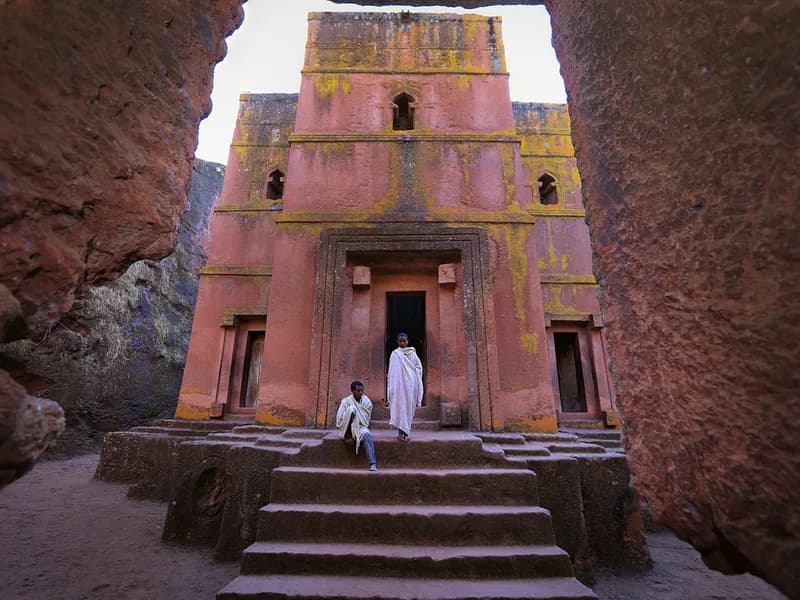
Bete Giyorgis (Church of St. George)
The most iconic of Lalibela's rock-hewn churches — a perfect cruciform shape carved 15 meters down into solid rock. Dating to the 12th-13th century, it's still an active Ethiopian Orthodox church. Part of the combined UNESCO ticket: $50 for all 11 churches, valid for 5 days. Remove shoes before entering. Allow 30-45 minutes here alone.
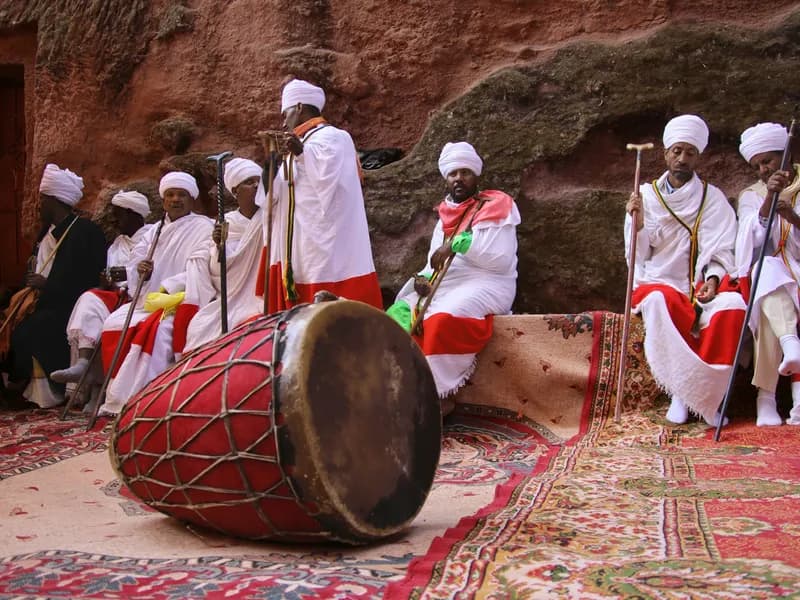
Northern Group of Churches
A cluster of six interconnected churches including Bete Medhane Alem (the largest monolithic rock-hewn church in the world), Bete Maryam (decorated with beautiful frescoes), and Bete Golgotha (said to contain King Lalibela's tomb — women not permitted inside). A guide (~1,000-2,000 ETB/day) is highly recommended to understand the symbolism.
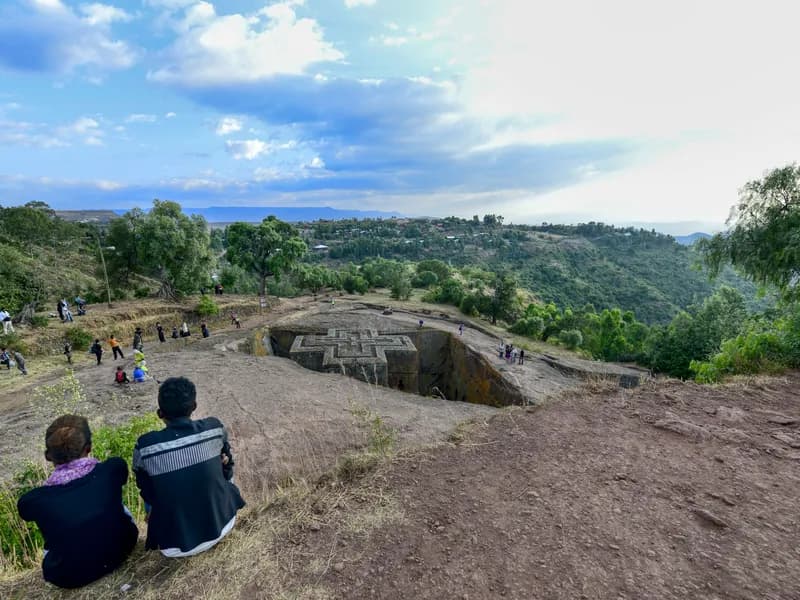
Southern Group of Churches
Five churches connected by tunnels and trenches, including Bete Emanuel (considered the finest example of Aksumite architecture) and Bete Abba Libanos (attached to rock at the ceiling only). Less crowded than the northern group. The narrow connecting passages are atmospheric but claustrophobic — bring a flashlight.
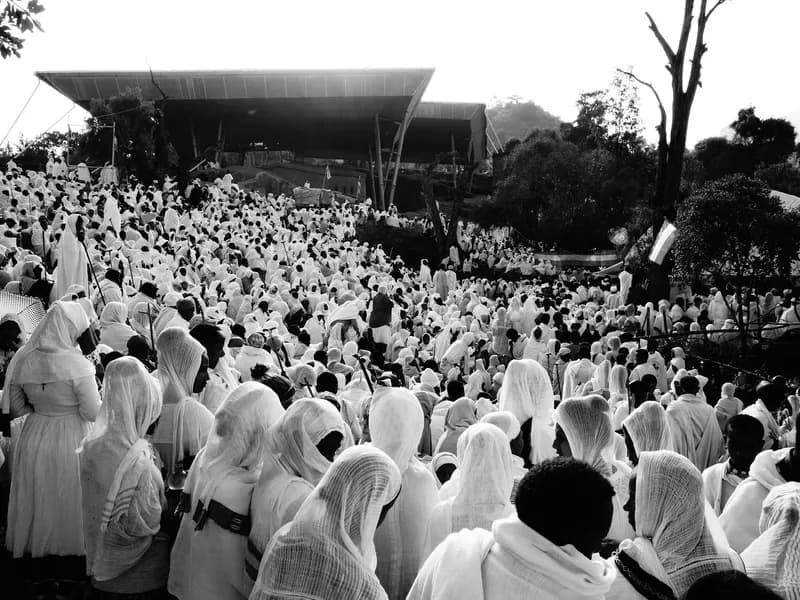
Timkat Festival
Ethiopian Orthodox Epiphany (January 19-20) is Lalibela's most spectacular event — processions of priests carrying tabots (replicas of the Ark of the Covenant) in vibrant robes, chanting, and ceremonial baptism. The churches fill with white-robed pilgrims. Book accommodation months ahead and bring warm layers for the cold highland nights.
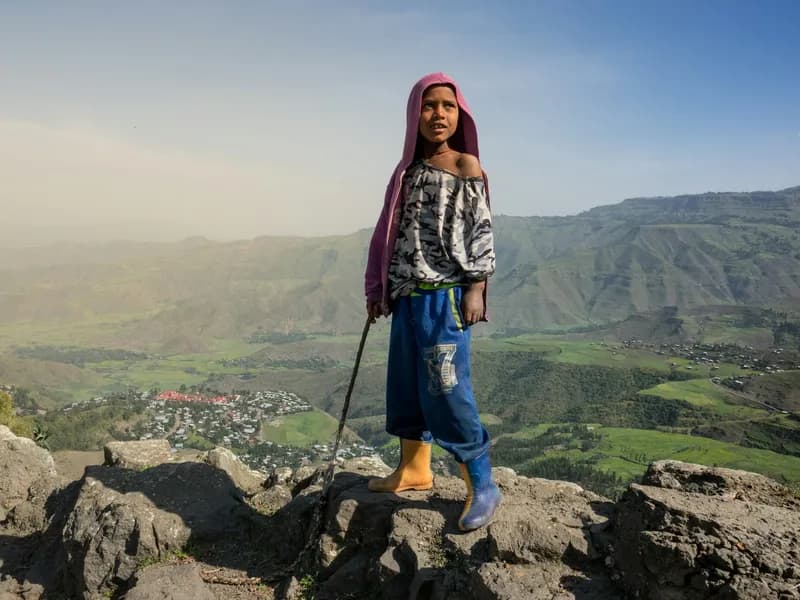
Asheten Maryam Monastery
A cliffside monastery at 3,150 m altitude, reached by a steep 1.5-hour mule ride or hike from Lalibela. Offers breathtaking views of the surrounding highland plateau. Entry: ~200-300 ETB. The monks will show you ancient illuminated manuscripts and crosses. Go early morning for the clearest views. Mule hire: ~500-800 ETB.
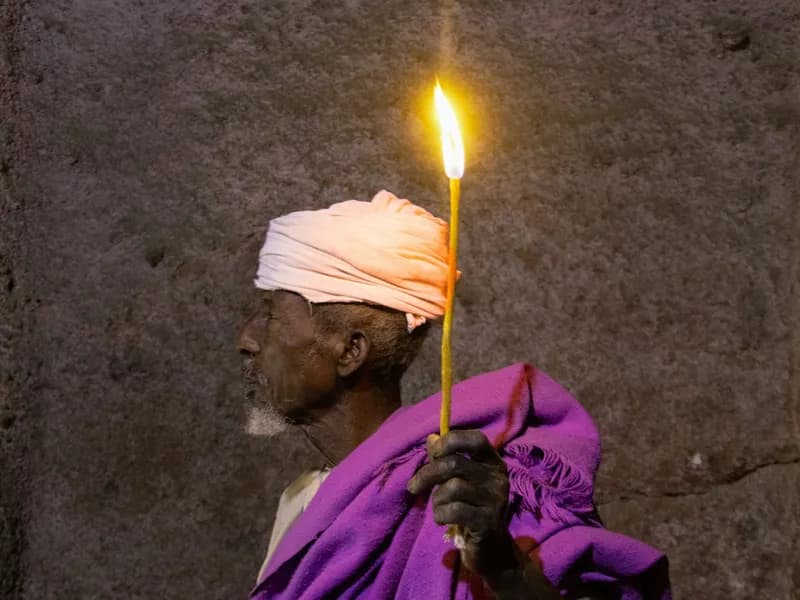
Yemrehanna Kristos Church
A stunning 11th-century church built inside a cave, 42 km from Lalibela. Predates the rock-hewn churches and features Aksumite-style layered wood-and-stone construction. Entry: ~350 ETB. Behind the church, bones of ancient pilgrims who came to die near the holy site are visible in the cave. A half-day trip with a hired vehicle.
Planned Itinerary
7-Day Lalibela Itinerary
Arrival in Lalibela
Fly Ethiopian Airlines from Addis Ababa (ADD) to Lalibela (LLI), 1 hour. The town sits at 2,500 m — take it easy to acclimatize. The first sight of the surrounding highland plateau is breathtaking.
Flight from Addis Ababa to Lalibela(1 hour)
Ethiopian Airlines daily flights, $150-300 round trip for foreigners. Book the 'Historical Route' multi-city ticket for savings. e-Visa required ($82 for 30 days at evisa.immigration.gov.et)
Transfer to hotel and acclimatize(1.5 hours)
Hotels send shuttles. Maribela Hotel (~$50-80/night) or Top Twelve (~$30-50). The altitude (2,500 m) may cause mild breathlessness — drink water, rest, avoid alcohol on day one
Light walk around Lalibela town(1 hour)
Simple highland town with stone houses and eucalyptus trees. Friendly but you'll be approached by children asking for money and self-appointed guides — a polite 'no thank you' works. Hire an official guide tomorrow
Dinner at Ben Abeba restaurant(1.5 hours)
Extraordinary futuristic building perched on a hilltop with panoramic views. Ethiopian and international menu. Injera with doro wot (chicken stew) 200-400 ETB. The setting alone is worth the visit
Northern Group of Rock-Hewn Churches
Full day exploring the northern cluster of six interconnected churches — including the world's largest monolithic rock-hewn church.
Buy the combined church ticket(30 minutes)
$50 for all 11 churches, valid for 5 days. Hire a certified guide at the ticket office — 1,500-3,000 ETB/day. Essential for understanding the symbolism and finding hidden passages
Bete Medhane Alem(45 minutes)
The world's largest monolithic rock-hewn church — carved from a single block of rock. The exterior columns replicate a Greek temple. Remove shoes before entering
Bete Maryam(30 minutes)
The most beautifully decorated church, with ancient frescoes, carved windows, and the Pillar of Light (wrapped in cloth — said to reveal the past and future)
Bete Golgotha and Selassie Chapel(30 minutes)
Said to contain King Lalibela's tomb. Women are not permitted inside Golgotha. The Selassie Chapel has remarkable carved reliefs
Lunch at Seven Olives Hotel(1 hour)
Near the churches. Ethiopian food — shiro (chickpea stew), tibs (sauteed meat), injera platters. 150-300 ETB
Remaining northern churches(1.5 hours)
Bete Denagel, Bete Mikael, and their connecting tunnels and trenches. The narrow passages between churches are atmospheric — bring a flashlight
Southern Group & Bete Giyorgis
Morning in the southern church cluster, then the iconic Bete Giyorgis — the cross-shaped church carved 15 meters into solid rock.
Southern Group of Churches(2 hours)
Five churches connected by tunnels. Bete Emanuel (finest Aksumite architecture), Bete Abba Libanos (attached to rock at ceiling only), and Bete Gabriel-Rufael (possible former royal palace). Less crowded than the northern group
Bete Giyorgis (Church of St. George)(1 hour)
The most famous rock-hewn church in the world — a perfect cruciform shape visible only from above, carved 15 m down into the rock. Still an active Ethiopian Orthodox church. The monks chanting inside are deeply moving. Allow time to photograph from multiple angles
Lunch at Torpid Juice(1 hour)
Popular backpacker spot with fruit juices (40-80 ETB), sandwiches, and Ethiopian dishes
Ethiopian coffee ceremony(1.5 hours)
Coffee was born in Ethiopia. A traditional ceremony involves roasting green beans, grinding by hand, and brewing in a jebena (clay pot). Many hotels and restaurants offer this. ~100-200 ETB. Three rounds are customary
Yemrehanna Kristos Cave Church
Half-day trip to an 11th-century church built inside a cave, 42 km from Lalibela. Predates the rock-hewn churches.
Drive to Yemrehanna Kristos(1.5 hours)
42 km on a rough road — hire a vehicle through your hotel (~2,000-3,000 ETB for the trip). The church is the last 30 minutes on foot uphill
Yemrehanna Kristos church visit(1.5 hours)
Entry ~350 ETB. Built inside a natural cave with alternating layers of wood and stone in the Aksumite style. Behind the church, bones of ancient pilgrims who came to die near the holy site are visible. Deeply powerful
Afternoon rest and acclimatization(2 hours)
The altitude and walking take their toll. Rest at the hotel
Dinner at Unique Restaurant(1.5 hours)
Beyaynetu (fasting-day vegetarian platter on injera) is a highlight — 150-250 ETB. Ethiopian cuisine has arguably the best vegetarian food in Africa
Rest Day — Local Life & Markets
A slower day exploring Lalibela beyond the churches. Saturday market is the highlight if timing aligns.
Saturday market (if applicable)(2 hours)
Lalibela's weekly market draws farmers from surrounding highlands. Spices, grain, livestock, handwoven textiles, and honey. An authentic highland market — no tourist souvenirs, just daily life
Walk through the village(1.5 hours)
Explore the residential areas. Traditional tukul (round stone houses with thatched roofs). Children are friendly but avoid giving money or candy — it encourages begging
Lunch at a local injera house(1 hour)
Eat where locals eat. Point at what others are having. Injera with various wots for 100-200 ETB. The experience is the point
Evening church service (if comfortable)(1.5 hours)
The rock-hewn churches hold daily services. Saturday evening and Sunday morning are most vibrant. White-robed worshippers, chanting priests, the smell of incense. Be unobtrusive — these are sacred spaces, not performances
Asheten Maryam Mountain Monastery
Hike or ride a mule to a cliffside monastery at 3,150 m with breathtaking plateau views and ancient manuscripts.
Mule ride or hike to Asheten Maryam(3 hours)
Steep 1.5-hour climb from Lalibela. Mule hire ~500-800 ETB. The views of the highland plateau widen with every switchback. The air thins noticeably
Asheten Maryam monastery visit(1 hour)
Entry ~200-300 ETB. The monks will show you ancient illuminated manuscripts and ornate processional crosses. The cliffside position is dramatic — eagles soar at eye level
Descent and lunch(2 hours)
Walk down (easier than up) and return to town for a late lunch. Tibbs (sauteed lamb) with injera at Seven Olives, 200-350 ETB
Farewell dinner at Ben Abeba(1.5 hours)
Return to the hilltop restaurant for a sunset dinner. The view over Lalibela and the Lasta Mountains in golden light is a fitting farewell
Departure from Lalibela
Final morning. Last visit to a church if desired, then flight back to Addis Ababa.
Early morning visit to Bete Giyorgis(45 minutes)
Return at dawn when the church is quiet and the monks are chanting morning prayers. The cruciform shape filled with early light is transcendent. Your ticket is still valid
Last Ethiopian coffee(30 minutes)
One more ceremony. Three rounds. Ethiopia gave the world coffee — pay your respects
Transfer to airport and flight to Addis(2 hours)
Ethiopian Airlines to ADD. If continuing to the Historical Route, fly to Gondar or Axum instead. The flight over the Ethiopian highlands is spectacular — sit window
14-Day Lalibela Itinerary
Arrival in Lalibela
Fly Ethiopian Airlines ADD to LLI. Acclimatize at 2,500 m altitude.
Flight to Lalibela(1 hour)
Ethiopian Airlines, $150-300. e-Visa $82 at evisa.immigration.gov.et
Hotel check-in and acclimatize(1.5 hours)
Maribela Hotel (~$50-80). Drink water, rest. Avoid alcohol day one
Light town walk(1 hour)
Highland town. Firm 'no thank you' to touts
Dinner at Ben Abeba(1.5 hours)
Futuristic hilltop building. Injera with doro wot 200-400 ETB. Panoramic views
Northern Group of Churches
Six interconnected churches including the world's largest monolithic rock-hewn church.
Buy combined ticket(30 minutes)
$50 for all 11 churches, 5 days. Guide 1,500-3,000 ETB/day
Bete Medhane Alem(45 minutes)
World's largest monolithic church. Remove shoes
Bete Maryam(30 minutes)
Beautiful frescoes, Pillar of Light
Bete Golgotha(30 minutes)
King Lalibela's tomb. Women not permitted inside
Lunch at Seven Olives(1 hour)
Shiro, tibs, injera. 150-300 ETB
Remaining northern churches(1.5 hours)
Connecting tunnels and trenches. Bring flashlight
Southern Group & Bete Giyorgis
The iconic cross-shaped church carved 15 meters into rock.
Southern Group(2 hours)
Five churches with tunnels. Bete Emanuel (Aksumite), Bete Abba Libanos
Bete Giyorgis(1 hour)
Perfect cruciform. 15 m down into rock. Active church. Monks chanting
Lunch at Torpid Juice(1 hour)
Fruit juices 40-80 ETB
Coffee ceremony(1.5 hours)
Roast, grind, brew in jebena. ~100-200 ETB. Three rounds
Yemrehanna Kristos Cave Church
11th-century church inside a cave, 42 km from Lalibela.
Drive to Yemrehanna Kristos(1.5 hours)
Rough road. Hire vehicle 2,000-3,000 ETB
Church visit(1.5 hours)
Entry ~350 ETB. Aksumite wood-and-stone in a cave. Pilgrim bones behind
Dinner — beyaynetu(1.5 hours)
Vegetarian platter at Unique Restaurant. 150-250 ETB
Rest Day — Markets & Local Life
Explore beyond the churches. Saturday market if timing aligns.
Saturday market (if applicable)(2 hours)
Farmers from highlands. Spices, grain, livestock, textiles, honey
Village walk(1.5 hours)
Tukul houses. Friendly children. Don't give money
Local injera house lunch(1 hour)
Eat where locals eat. 100-200 ETB
Evening church service(1.5 hours)
White-robed worshippers, chanting, incense. Be unobtrusive
Asheten Maryam Monastery
Mountain monastery at 3,150 m with ancient manuscripts.
Mule ride or hike up(3 hours)
Mule hire ~500-800 ETB. Steep 1.5 hours. Views widen. Air thins
Monastery visit(1 hour)
Entry ~200-300 ETB. Illuminated manuscripts, processional crosses. Eagles at eye level
Descent and lunch(2 hours)
Tibbs with injera at Seven Olives 200-350 ETB
Fly to Gondar — Castles of Africa
Fly to Gondar for the Fasil Ghebbi royal enclosure — Africa's Camelot.
Flight Lalibela to Gondar(30 minutes)
Ethiopian Airlines. Short hop over the Simien Mountains
Check into hotel(30 minutes)
Goha Hotel (~$50-70) or Lodge du Chateau (~$30)
Fasil Ghebbi royal enclosure(2 hours)
UNESCO site. 17th-century castles of Emperor Fasilides. Entry $10-20. Guide essential. The medieval architecture is unlike anywhere else in Africa
Debre Berhan Selassie church(1 hour)
Famous for its ceiling painted with 80 angel faces. Entry included with Fasil Ghebbi ticket. One of Ethiopia's most beautiful churches
Dinner at Four Sisters(1.5 hours)
Gondar's best restaurant. Traditional Ethiopian food with cultural dance show. 200-400 ETB
Simien Mountains Day Trip
Day trip into the Simien Mountains National Park — UNESCO site with gelada baboons and dramatic escarpments.
Drive to Simien Mountains(2 hours)
Hire vehicle and mandatory scout from Debark town. Park entry ~$12, scout ~500 ETB, vehicle ~3,000 ETB
Hike at Sankaber viewpoint(3 hours)
Walk along the escarpment edge — 1,000 m drops into the valley. The views are among the most dramatic in Africa. Gelada baboons graze on the cliff edges — you can get within meters
Gelada baboon observation(1 hour)
The 'bleeding heart' baboons are endemic to Ethiopia. Herds of 100+ graze on the meadows. The males' red chest patches and lion-like manes are extraordinary
Dinner and traditional music(1.5 hours)
Try a cultural restaurant with azmari (Ethiopian minstrel) performances. Lively and interactive
Fly to Axum — Obelisks & Ark
Fly to Axum, the ancient Aksumite empire's capital. Towering stelae and the claimed resting place of the Ark of the Covenant.
Flight Gondar to Axum(45 minutes)
Ethiopian Airlines. Book the Historical Route multi-city ticket for savings
Check in and Northern Stelae Field(2 hours)
The massive carved obelisks (stelae) date to the 3rd-4th century AD. The largest fallen one is 33 meters and 520 tonnes. Entry ~$10. The craftsmanship is mind-boggling
Church of Our Lady Mary of Zion(1 hour)
The most sacred church in Ethiopia — claimed to house the Ark of the Covenant in a small chapel. The Ark is guarded by a single monk and never shown. Adjacent museum has Aksumite crowns and crosses
Lunch at a local restaurant(1 hour)
Kitfo (Ethiopian steak tartare) is the Axum specialty. 150-300 ETB. Only eat at busy places for freshness
Queen of Sheba's palace ruins(1 hour)
Excavated foundations of what's claimed to be the queen's palace. The guide tells the legend of Solomon and Sheba
Axum Exploration & Rest
Continue exploring Axum and rest before returning south.
Tombs of Kings Kaleb and Gebre Meskel(1 hour)
Underground royal tombs carved from granite. The engineering is impressive. Entry with combined ticket
Ezana Stone and Gudit Stelae Field(1 hour)
The Ezana Stone is Ethiopia's Rosetta Stone — inscribed in Ge'ez, Sabean, and Greek. Gudit Stelae Field has hundreds of smaller stelae
Lunch at Yeha Hotel(1 hour)
Best in Axum. Injera with assorted wots 200-350 ETB
Afternoon rest(2 hours)
After 10 days of intensive sightseeing, rest is essential
Sunset walk(1 hour)
Axum at golden hour. The stelae field catches the last light
Fly Back to Lalibela — Return Visit
Fly back to Lalibela for a second, deeper experience of the churches.
Flight Axum to Lalibela(1 hour)
Via Gondar or direct
Revisit Bete Giyorgis alone(1.5 hours)
Your ticket is still valid. Return without the group. Sit in the church during a service. The second visit reveals what the first missed
Lalibela Countryside Hike
Full-day hike through the highlands around Lalibela — farming villages, mountain views, and rural Ethiopian life.
Guided countryside hike(6 hours)
Hire a guide through your hotel (~2,000-3,000 ETB). Walk through highland farming communities. Terraced fields of teff, barley, and coffee. The views of the Lasta Mountains are vast
Visit a highland village(1.5 hours)
Community visit arranged by the guide. See traditional tukul houses, coffee preparation, and injera baking. Bring a small gift — sugar, soap, or school supplies
Lunch with a farming family(1 hour)
Arranged by guide. Home-cooked injera with shiro. 200-400 ETB contribution
Rest Day & Coffee Culture
Final full day. Deep dive into Ethiopian coffee culture and farewell to the churches.
Multiple coffee ceremonies(3 hours)
Visit 2-3 different coffee spots. Each family has their own style. Ethiopia is where coffee began — pay your respects properly
Last church visit(1.5 hours)
Revisit your favorite. Or find the church that moves you most and sit in silence
Farewell dinner at Ben Abeba(1.5 hours)
Sunset over Lalibela. The hilltop view as the light fades. A perfect ending
Departure from Lalibela
Final morning. Dawn at Bete Giyorgis, then fly to Addis.
Dawn at Bete Giyorgis(45 minutes)
Monks chanting morning prayers in the cruciform church. Transcendent
Last coffee(30 minutes)
Three rounds. Ethiopia's gift to the world
Flight to Addis Ababa(1 hour)
Window seat for highland views
21-Day Lalibela Itinerary
Arrival in Addis Ababa
Arrive at Bole International Airport (ADD). e-Visa $82. Explore Ethiopia's capital before heading to the Historical Route.
Airport arrival(1 hour)
e-Visa at evisa.immigration.gov.et or visa on arrival $82. Change money at airport
Check into hotel in Bole area(30 minutes)
Capital Hotel (~$50-80) or Jupiter International (~$60-100)
National Museum — Lucy(1.5 hours)
Entry ~200 ETB. See Lucy — the 3.2 million year old hominid skeleton. The most famous fossil in the world
Dinner at Yod Abyssinia(2 hours)
Traditional Ethiopian dinner with cultural dance show. Injera platters, tej (honey wine). 300-500 ETB. Book ahead
Addis Ababa Exploration
Full day in the capital — Merkato, Holy Trinity Cathedral, and Entoto Hills.
Merkato market(2 hours)
Africa's largest open-air market. Spices, coffee, textiles, everything. Go with a guide (~1,000 ETB) and leave valuables at hotel
Holy Trinity Cathedral(1 hour)
Ethiopia's most important cathedral. Emperor Haile Selassie's tomb. Entry ~100 ETB
Lunch at Kategna(1 hour)
Popular locals' restaurant. Excellent kitfo (raw beef tartare). 150-300 ETB
Entoto Hills viewpoint(2 hours)
Drive up to 3,000 m for panoramic views. Old Entoto Maryam Church and eucalyptus forests planted by Emperor Menelik II
Coffee ceremony(1.5 hours)
Find a neighborhood coffee ceremony. Ethiopia is where coffee began
Fly to Lalibela
Morning flight to Lalibela. Acclimatize at 2,500 m.
Flight ADD to LLI(1 hour)
Ethiopian Airlines $150-300. Book Historical Route multi-city ticket
Hotel and acclimatize(1.5 hours)
Maribela Hotel (~$50-80). Drink water, rest at altitude
Dinner at Ben Abeba(1.5 hours)
Hilltop panoramic restaurant. 200-400 ETB
Northern Group of Churches
Six interconnected churches including the world's largest monolithic rock-hewn church.
Buy combined ticket(30 minutes)
$50 for all 11, 5 days. Guide 1,500-3,000 ETB/day
Southern Group & Bete Giyorgis
The iconic cross-shaped church.
Bete Giyorgis(1 hour)
Perfect cruciform carved 15 m down. Monks chanting
Yemrehanna Kristos
11th-century cave church. Aksumite style.
Church visit(1.5 hours)
~350 ETB. Wood-and-stone in cave. Pilgrim bones
Rest Day — Markets & Life
Beyond the churches.
Asheten Maryam Monastery
Mountain monastery at 3,150 m.
Mule ride up(3 hours)
~500-800 ETB
Monastery — manuscripts, crosses(1 hour)
~200-300 ETB
Countryside Hike
Highland farming communities.
Guided hike(6 hours)
2,000-3,000 ETB. Teff fields, mountain views
Fly to Gondar
Africa's Camelot — medieval castles.
Fasil Ghebbi royal enclosure(2 hours)
UNESCO. 17th-century castles. $10-20 entry
Debre Berhan Selassie(1 hour)
80 angel faces on the ceiling
Four Sisters dinner(1.5 hours)
Cultural dance show. 200-400 ETB
Simien Mountains
UNESCO site. Gelada baboons. Dramatic escarpments.
Drive to Simiens(2 hours)
Park entry ~$12, scout ~500 ETB
Sankaber escarpment hike(3 hours)
1,000 m drops. Gelada baboons within meters
Simien Mountains Day 2 — Deeper
Return for a deeper trek into the Simiens.
Drive to Chennek viewpoint(3 hours)
Higher altitude, more dramatic. Look for Walia ibex — endemic to Ethiopia, fewer than 500 remain
Escarpment walk(3 hours)
The views deepen further in. Some of the most dramatic mountain scenery in Africa
Rest Day in Gondar
Recovery. Explore Gondar at leisure.
Gondar town walk(2 hours)
Bath of King Fasilides (used for Timkat ceremony). Local market
Fly to Axum
Ancient Aksumite capital. Obelisks and the Ark.
Northern Stelae Field(2 hours)
Giant carved obelisks. 3rd-4th century. Entry ~$10
Church of Our Lady Mary of Zion(1 hour)
Claimed Ark of the Covenant location
Axum Day 2
Tombs, Ezana Stone, and deeper exploration.
Tombs of Kaleb and Gebre Meskel(1 hour)
Underground granite royal tombs
Ezana Stone(30 minutes)
Ethiopia's Rosetta Stone
Day Trip to Yeha Temple
The oldest standing structure in Sub-Saharan Africa — a 2,700-year-old temple near Axum.
Drive to Yeha(1.5 hours)
55 km from Axum. The temple dates to 700 BC — pre-Aksumite civilization
Yeha Temple visit(1 hour)
Entry ~200 ETB. Massive stone walls still standing after nearly 3,000 years. The adjacent church has ancient manuscripts
Surrounding countryside(1.5 hours)
Walk through the highland farming village. A timeless landscape
Fly Back to Lalibela
Return for a second, deeper Lalibela experience.
Revisit Bete Giyorgis during service(1.5 hours)
Second visit reveals what the first missed. Sit in the church
Rest Day in Lalibela
Slow day. Coffee, reading, market.
Multiple coffee ceremonies(3 hours)
2-3 different spots. Each family's unique style
Lalibela to Addis Ababa
Return flight to the capital for final exploration.
Afternoon in Addis(3 hours)
Revisit Merkato, explore Piazza area, or visit the Red Terror Museum (free, sobering history of the Derg regime)
Farewell Ethiopian dinner(2 hours)
Yod Abyssinia or Lucy Lounge. Full Ethiopian spread with music
Free Day in Addis
Last full day. Shopping, coffee, and soaking up the capital.
Churchill Avenue walk(2 hours)
The main avenue from Piazza to Mexico Square. Shops, cafes, and the African Union headquarters
Shiro Meda textile market(1.5 hours)
Traditional Ethiopian clothing — hand-woven scarves, dresses, and gabis (cotton blankets). 500-5,000 ETB depending on quality
Tomoca Coffee(1 hour)
Addis's oldest coffee shop (since 1953). Stand-up espresso for 30 ETB. The most authentic coffee experience in the capital
Departure from Ethiopia
Final morning. Last coffee ceremony, then Bole Airport.
Final coffee ceremony(1 hour)
Three rounds. Ethiopia's greatest gift to the world
Last souvenir shopping(1 hour)
Coffee beans, spices, hand-woven textiles, silver crosses
Airport transfer(30 minutes)
Bole Airport. Allow 3 hours before international flights
Travel Tips
Visa & Entry
e-Visa Required — Easy Online Process
All visitors need a visa. Apply at evisa.immigration.gov.et — tourist e-Visa costs $82 for 30 days or $102 for 90 days. Processing takes 1-3 business days. Visa on arrival is available at Addis Ababa Bole Airport ($82) but queues can be very long — the e-Visa is strongly recommended.
transport
Fly via Addis Ababa on Ethiopian Airlines
Ethiopian Airlines flies Addis Ababa (ADD) to Lalibela (LLI) daily, ~1 hour, $150-300 round trip for foreigners. Book the 'Historical Route' multi-city ticket if visiting Gondar, Axum, and Lalibela — significant savings. Overland from Addis takes 10-12 hours on rough roads; flying is far preferable.
Budget
One of Africa's Most Affordable Destinations
Basic hotels in Lalibela: 800-2,000 ETB/night (~$6-15). Local meals of injera with wot stew: 100-300 ETB (~$1-3). The church ticket ($50 for all 11 churches over 5 days) is the main expense. A certified guide costs 1,500-3,000 ETB/day. Budget travelers can manage on $30-40/day all-in.
Try Injera and Teff — Ethiopia's National Dish
Injera (spongy sourdough flatbread made from teff grain) with various wot (stews) is eaten at every meal. Eat with your right hand — tear off injera and use it to scoop the stews. Friday and Wednesday are fasting days for Orthodox Christians, so restaurants serve excellent vegetarian options (beyaynetu). Ethiopian coffee ceremony is a must — coffee was born here.
Local Customs
Ethiopia Uses Its Own Calendar and Clock
Ethiopia follows the Ge'ez calendar — it's 7-8 years behind the Gregorian calendar and has 13 months. Ethiopian time starts at dawn (6 AM = '12 o'clock'), so when locals say '2 o'clock' they mean 8 AM. Always confirm 'European time or Ethiopian time?' when making appointments. This is the single biggest source of tourist confusion.
Dress Code for Churches
You must remove shoes before entering any rock-hewn church. Women should cover their heads (bring a scarf) and both genders should cover shoulders and knees. During active services (early mornings, especially Saturdays and Sundays), be unobtrusive — these are working churches with devout congregations, not museums.
Safety
Persistent Touts and Children Asking for Money
You will be approached constantly by self-appointed guides, souvenir sellers, and children asking for money, pens, or candy. A polite but firm 'no thank you' is sufficient. Giving money or gifts to children encourages begging and school truancy. If you want to help, donate to established local organizations or schools instead.
Related Articles
Travel Guides11 Best Things to Do in Lalibela: A Complete Guide to Ethiopia's Rock-Hewn Churches
Eleven churches carved into solid rock are just the beginning. From dawn light over Bete Giyorgis to a cave church in the mountains and a Saturday market that runs on centuries-old rhythm — here's exactly how to spend your days in Ethiopia's holy city.
StoriesThe Day I Walked Into a Church Carved from Solid Rock: My Lalibela Story
I've seen the Pyramids, the Colosseum, and Angkor Wat. Lalibela's rock-hewn churches are the most extraordinary feat of human devotion I've encountered anywhere on Earth.
SeasonalLalibela During Timkat: The Holiest Week in Ethiopia's Holiest City
January 19-20. White-robed pilgrims fill the rock churches. Priests carry replicas of the Ark of the Covenant. And Lalibela becomes the spiritual center of an ancient Christian tradition.
Travel GuidesLalibela vs. Petra: Two Ancient Stone Wonders, One Clear Winner
Both are UNESCO World Heritage Sites carved from rock. One charges $50, the other charges $90. One has eleven active churches, the other has one iconic facade. The comparison isn't even close.