
Maasai Mara

Photo: sutirta budiman / Unsplash
Key Facts
Best Time to Visit
July to October (Great Migration river crossings peak Aug-Sep)
Language
English, Swahili (official); Maa in Maasai communities
Currency
Kenyan Shilling (KES)
Time Zone
EAT (UTC+3)
Airport
Ol Kiombo Airstrip (OLX) in the reserve; domestic flights from Nairobi Wilson (WIL) or JKIA (NBO)
Population
Reserve: uninhabited (1,510 km²); surrounding conservancies home to ~100,000 Maasai
Climate
Mild tropical highland, avg 15-28°C year-round; short rains Nov, long rains Mar-May
Safety Rating
Generally Safe (Level 1) — wildlife poses primary risk, follow guide instructions
Park Fees
$80/adult/day for non-residents (2025); children under 12 half-price
Top Highlights
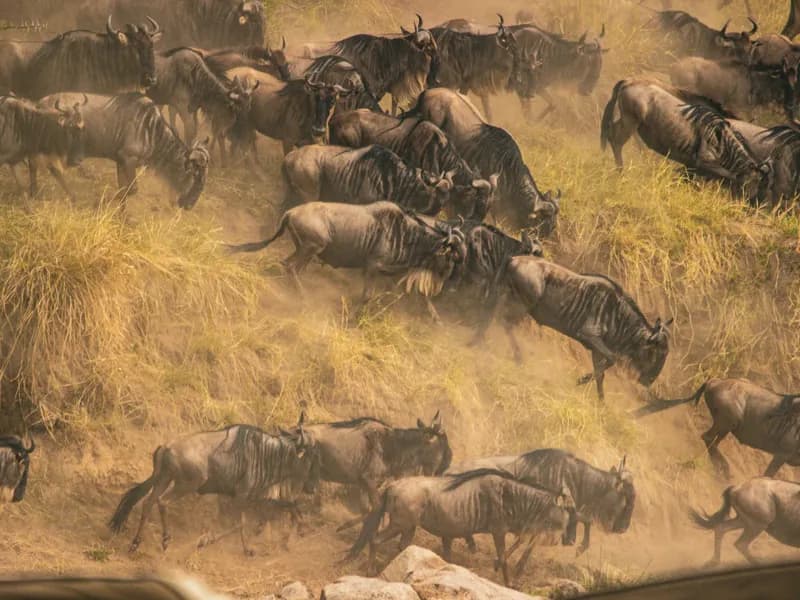
Great Migration River Crossing
Between July and October, hundreds of thousands of wildebeest and zebra plunge into the crocodile-filled Mara River. The best viewing points are along the northern Mara near the Serena and Kichwa Tembo areas. Arrive early (6 AM) and be patient — crossings are unpredictable.
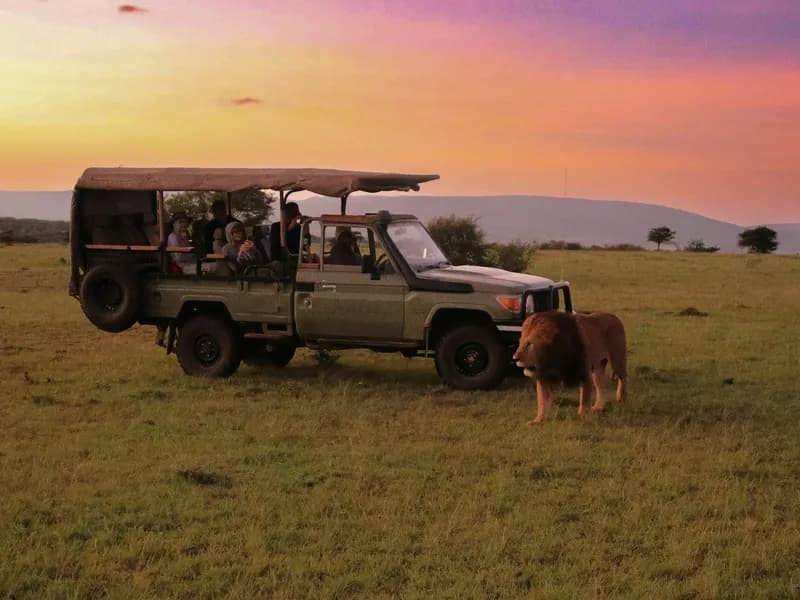
Big Five Game Drives
The Mara hosts all Big Five: lion, leopard, elephant, buffalo, and black rhino. Morning drives depart at 6 AM, afternoon at 4 PM. Full-day drives ($150-250 per vehicle) cover more ground. The Mara Triangle has lower vehicle density than the main reserve.
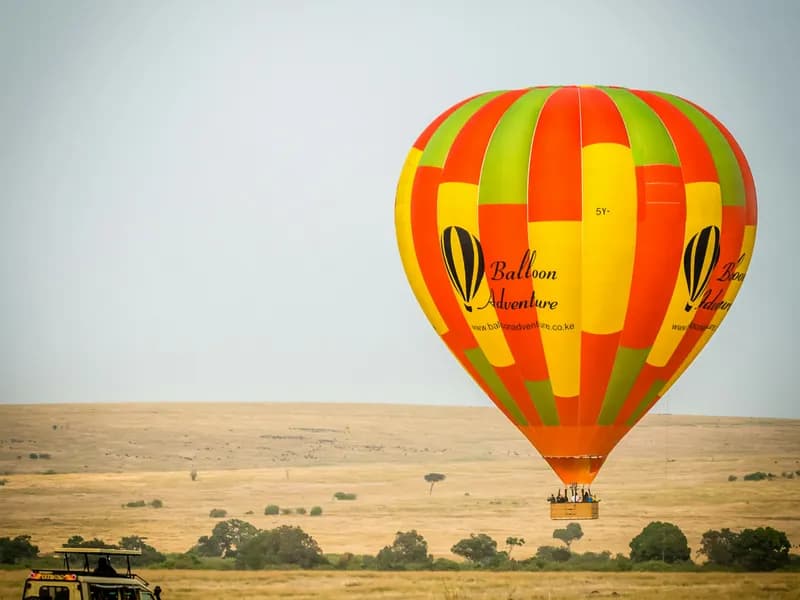
Hot Air Balloon Safari
Governors' Balloon Safaris launches at dawn over the savanna. The 1-hour flight drifts over herds and hippo pools, landing for a champagne bush breakfast. Cost: ~$450 per person. Book 2-3 months ahead for migration season. Minimum age 7.
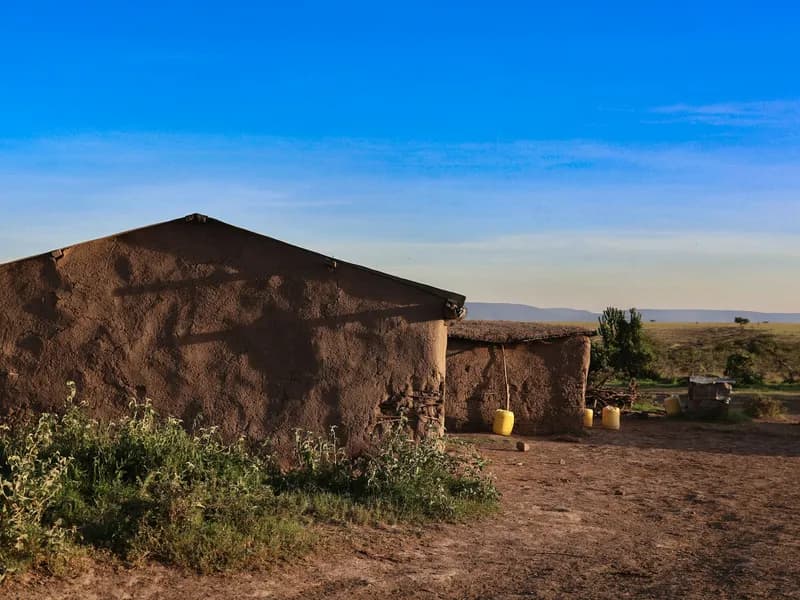
Maasai Village Visit
Guided visits to a Maasai boma (homestead) include traditional jumping dances, fire-making demonstrations, and craft shopping. Arranged through lodges for $25-40 per person. Revenue supports local schools and clinics. Photography usually welcomed; ask first.
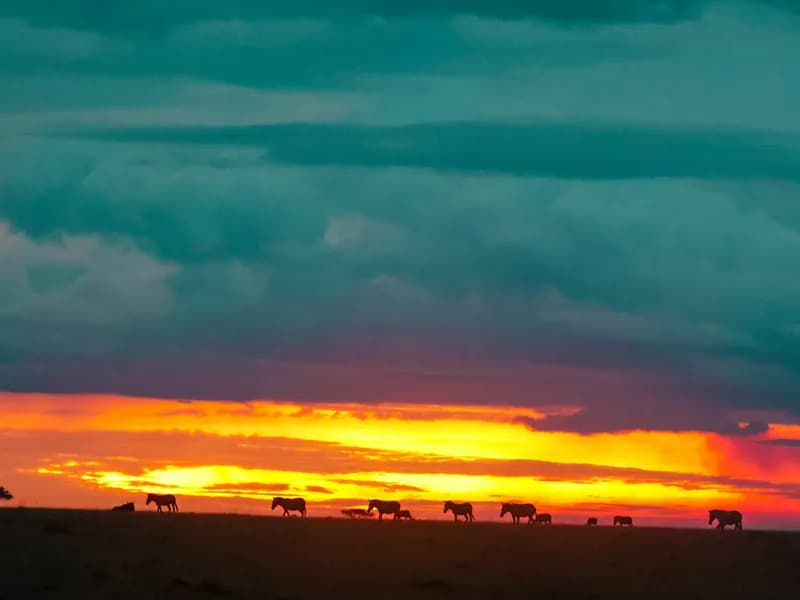
Olare Motorogi Conservancy
This private conservancy bordering the reserve limits vehicle numbers, offering exclusive sightings. Night drives and walking safaris (not allowed in the national reserve) are permitted here. Stay at camps like Kicheche or Porini for $400-800/night all-inclusive.
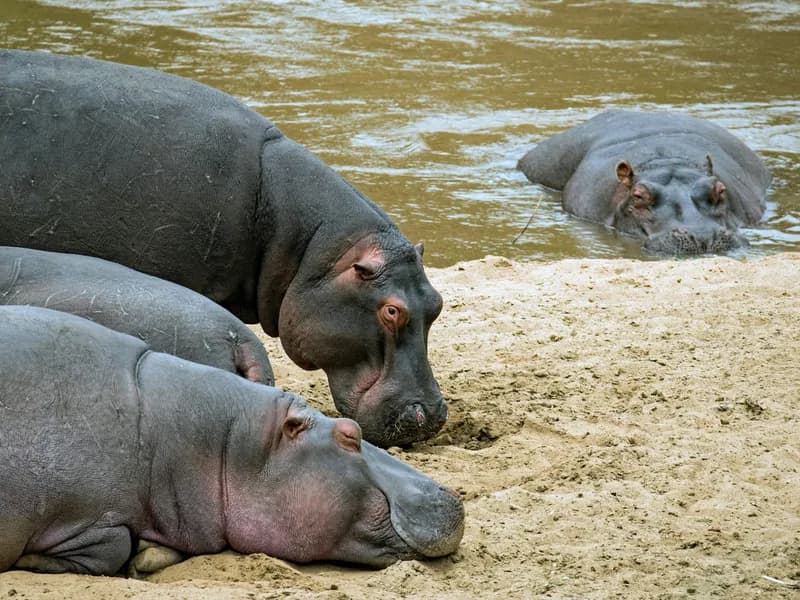
Mara River Hippo Pools
Large pods of 30-50 hippos congregate in the deeper pools of the Mara River year-round. The hippo pool viewpoint near Mara Serena Lodge is easily accessible. Dawn and late afternoon are best when hippos surface and vocalize. Free with park entry.
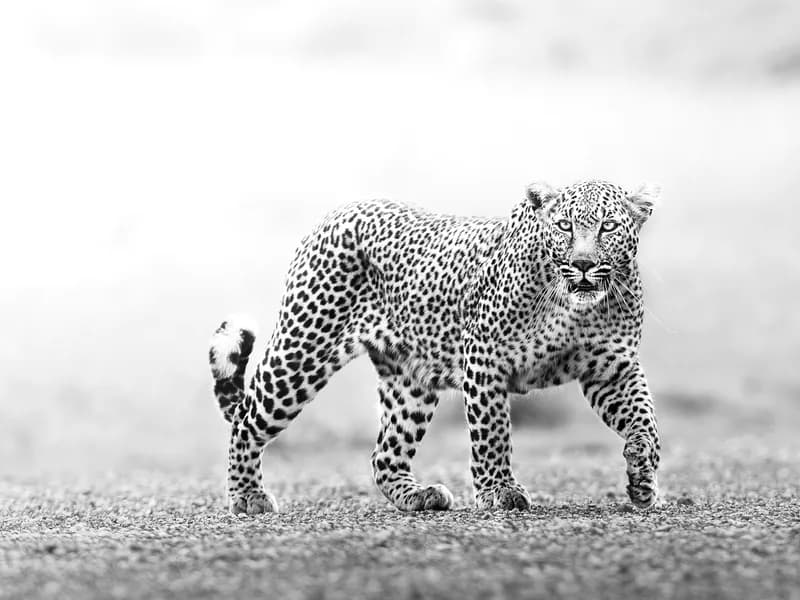
Predator Tracking at Musiari Marsh
The Musiari Marsh area near the Mara Intrepids camp is a renowned lion and cheetah hunting ground. The open grasslands offer unobstructed views of predator-prey interactions. Best during the dry season (Jul-Oct) when prey concentrates near water.
Planned Itinerary
7-Day Maasai Mara Itinerary
Arrival at the Mara — Bush Flight & First Game Drive
Fly from Nairobi Wilson Airport (WIL) to Ol Kiombo Airstrip (OLX) in the Maasai Mara. The 45-minute flight over the Rift Valley escarpment is your first taste of the landscape.
Bush flight from Nairobi Wilson to Mara(45 minutes)
Safarilink or AirKenya. ~$200-350 one way. The flight saves a full day vs. the 5-6 hour drive. Your camp's vehicle meets you at the airstrip
Check-in and lunch at camp(1.5 hours)
Most Mara camps are all-inclusive. Budget from $200/night, mid-range $400-600, luxury $800+. Lunch is typically a buffet or set menu served on the terrace overlooking the plains
Afternoon game drive(3 hours)
Your first drive departs at 4 PM when the heat eases and animals become active. Your guide will scan for Big Five — lion, leopard, elephant, buffalo, and the elusive black rhino. Stay in the vehicle at all times inside the reserve
Sundowner drinks on the savanna(30 minutes)
Many camps stop at a scenic spot for gin-and-tonics as the sun sets over the Mara. The sky turns burnt orange behind acacia silhouettes
Full-Day Game Drive — Big Five Hunt
A dawn-to-dusk game drive covering the reserve's prime wildlife areas. Pack lunch in the vehicle.
Sunrise game drive departure(5 hours)
Depart at 6 AM when predators are most active. Your guide knows the local lion prides, cheetah territories, and leopard trees. The morning light on the savanna is magical for photography. Full-day vehicle hire $150-250
Bush picnic lunch at the hippo pools(1 hour)
Your camp packs a boxed lunch. Eat at designated picnic sites near the Mara River where pods of 30-50 hippos wallow and vocalize
Afternoon drive to Musiari Marsh(3 hours)
The marsh area near Mara Intrepids is a renowned lion and cheetah hunting ground. The open grasslands offer unobstructed views of predator-prey interactions
Return to camp for dinner(1.5 hours)
Multi-course dinner under the stars. Most camps serve pan-African cuisine with Kenyan staples like nyama choma (grilled meat)
Hot Air Balloon Safari & Maasai Village
Dawn balloon flight over the savanna, champagne bush breakfast, then a cultural visit to a Maasai boma.
Hot air balloon safari(3 hours)
Governors' Balloon Safaris launches at dawn. 1-hour flight drifting over herds, hippo pools, and river crossings. ~$450/person. Champagne bush breakfast on landing. Book 2-3 months ahead for migration season. Minimum age 7
Return to camp for rest(1.5 hours)
After a 4:30 AM pickup, a mid-morning nap is earned
Maasai village visit(1.5 hours)
Guided visit to a Maasai boma (homestead). Traditional jumping dances, fire-making demonstrations, hut tours, beaded jewelry shopping. $25-40/person arranged through your lodge. Revenue supports local schools
Afternoon game drive(2.5 hours)
Evening drive focusing on the river crossings (Jul-Oct migration season) or general Big Five tracking
Mara River Crossings & Predator Tracking
Position at river crossing points for the Great Migration spectacle, then track predators at dusk.
Early morning river crossing stakeout(4 hours)
Drive to the northern Mara near Serena or Kichwa Tembo areas where wildebeest gather at the Mara River. Crossings are unpredictable — arrive by 6 AM and wait. When it happens, hundreds of thousands of wildebeest plunge into crocodile-filled water. Bring patience and a telephoto lens
Afternoon predator tracking drive(3 hours)
Guides radio each other about sightings. Late afternoon is prime hunting time — watch for cheetahs stalking Thomson's gazelles on the open plains, or a lion pride organizing an ambush
Bush dinner around a campfire(2 hours)
Some camps arrange bush dinners under the stars with lanterns, a roaring fire, and game meats. The sounds of the African night — hyenas calling, hippos grunting — are the soundtrack
Rest Morning & Olare Motorogi Conservancy
A late start, then head to the private conservancy for walking safaris and exclusive sightings.
Sleep in and leisurely breakfast(2 hours)
After 4 days of 6 AM starts, enjoy a late breakfast watching animals from the camp terrace
Transfer to Olare Motorogi Conservancy(1 hour)
This private conservancy limits vehicle numbers for exclusive sightings. Night drives and walking safaris (not allowed in the national reserve) are permitted here
Walking safari with armed ranger(2 hours)
Walk through the savanna on foot — a completely different experience from the vehicle. Your guide points out tracks, dung, and the smaller creatures you miss from a car. ~$50/person. The proximity to the land is humbling
Night game drive(2 hours)
Spotlight drive through the conservancy. Aardvarks, bush babies, genets, and hunting leopards come alive after dark. Not available in the national reserve — a conservancy exclusive
Full-Day Mara Triangle Drive
Cross into the Mara Triangle — the western section of the reserve with lower vehicle density and stunning escarpment views.
Early drive to the Mara Triangle(4 hours)
Cross the Mara River via the Purungat Bridge into the Triangle, managed by the Mara Conservancy. Fewer vehicles than the main reserve. The Oloololo Escarpment provides a dramatic backdrop to wildlife sightings
Picnic lunch with escarpment views(1 hour)
Packed lunch at a viewpoint overlooking the plains from the escarpment edge. Eagles soar at eye level
Black rhino tracking in the Triangle(2 hours)
The Triangle has a higher density of black rhinos. Guides know favored grazing areas near the Lerai Forest. Sightings occur on ~60% of drives
Return to camp and farewell dinner(2 hours)
Your last evening in the bush. Tips for guides ($15-20/person/day) and camp staff ($10-15/person/day) are expected. Carry small USD bills
Departure — Last Sunrise & Flight to Nairobi
One final sunrise game drive before flying back to Nairobi.
Sunrise game drive(2 hours)
A short final drive en route to the airstrip. Golden morning light, last chance for sightings. Your guide will try for anything you haven't seen yet
Transfer to airstrip and flight to Nairobi(1.5 hours)
Bush flight back to Wilson Airport (WIL) or JKIA (NBO). The Rift Valley view on the return is stunning. Allow 3 hours for international connections from NBO
14-Day Maasai Mara Itinerary
Arrival in Nairobi
Arrive at Jomo Kenyatta International Airport (NBO). Rest in Nairobi before heading to the Mara tomorrow.
Airport transfer to Nairobi hotel(1 hour)
Pre-book a hotel transfer ($20-30) or use Uber (available in Nairobi). Traffic can be brutal — Karen or Langata neighborhoods are closest to Wilson Airport for tomorrow's flight
Check-in at Hemingways Nairobi or similar(1 hour)
Karen area hotels range from $80-400/night. Hemingways is colonial-era charm. Budget options: Wildebeest Eco Camp ($30/night)
Lunch at Talisman Restaurant in Karen(1.5 hours)
Garden restaurant with excellent pan-African cuisine. Grilled tilapia with ugali (KES 1,800), cold Tusker beer (KES 400). The setting among tropical gardens is gorgeous
David Sheldrick Elephant Orphanage (if arriving before 11 AM)(1 hour)
Open daily 11 AM-12 PM only. KES 1,500 ($12). Watch orphaned baby elephants being bottle-fed and mud-bathing. In Karen, 15 minutes from most hotels. Book at sheldrickwildlifetrust.org
Bush Flight to the Mara & First Game Drive
Fly from Nairobi Wilson to the Maasai Mara and immediately head out on your first game drive.
Bush flight to Mara (Ol Kiombo airstrip)(45 minutes)
Safarilink or AirKenya, ~$200-350 one way. The Rift Valley escarpment views are spectacular
Camp check-in and lunch(1.5 hours)
All-inclusive camps from $200/night (budget) to $800+ (luxury). Lunch on the terrace overlooking the plains
Afternoon game drive(3 hours)
First drive at 4 PM. Guides scan for Big Five. Lion prides often rest in shade near kopjes (rocky outcrops). Stay in vehicle at all times
Sundowner on the savanna(30 minutes)
G&T or cold Tusker as the sun sets behind acacia trees
Full-Day Big Five Drive
Dawn-to-dusk covering prime wildlife areas with a bush picnic lunch.
Sunrise game drive(5 hours)
Depart 6 AM. Morning is best for predator activity. Full-day vehicle $150-250
Bush picnic at hippo pools(1 hour)
Mara River hippo pods of 30-50 animals. Packed lunch from camp
Afternoon Musiari Marsh drive(3 hours)
Lion and cheetah hunting ground. Open grasslands for unobstructed views
Hot Air Balloon Safari
Dawn balloon over the savanna, champagne breakfast on landing, then afternoon cultural visit.
Hot air balloon safari(3 hours)
Governors' Balloon Safaris. ~$450/person. 1-hour flight, champagne bush breakfast. Book 2-3 months ahead
Maasai village visit(1.5 hours)
Boma visit with jumping dances, fire-making, and craft shopping. $25-40/person. Revenue supports schools
Mara River Crossings
Station at crossing points for the Great Migration spectacle (July-October).
River crossing stakeout(4 hours)
Northern Mara near Serena/Kichwa Tembo. Arrive by 6 AM and wait. When crossings happen — hundreds of thousands of wildebeest into crocodile-filled water — it's the greatest wildlife spectacle on Earth
Afternoon predator tracking(3 hours)
Late afternoon hunting time. Cheetahs on Thomson's gazelles, lion prides organizing ambushes
Rest Morning & Conservancy Walk
Late start, then walking safari in a private conservancy.
Transfer to Olare Motorogi Conservancy(1 hour)
Private conservancy with limited vehicles, walking safaris, and night drives
Walking safari with armed ranger(2 hours)
~$50/person. Track prints, study dung, encounter the smaller creatures. Humbling proximity to the land
Night game drive(2 hours)
Spotlight drive for aardvarks, bush babies, genets, hunting leopards. Conservancy exclusive
Mara Triangle Full Day
Cross into the western reserve section — fewer vehicles, dramatic escarpment views.
Drive to the Mara Triangle(4 hours)
Via Purungat Bridge. Fewer vehicles, Oloololo Escarpment backdrop
Escarpment viewpoint picnic(1 hour)
Eagles soaring at eye level
Black rhino tracking(2 hours)
Higher rhino density in the Triangle. ~60% sighting rate
Photography Drive & Bird Watching
Dedicated photography-focused drive and birding session at the oxbow lakes.
Photography-focused sunrise drive(4 hours)
Tell your guide you want photography positions — they'll position the vehicle for best light angles on wildlife. The golden hour lasts longer on the elevated plains. Side-lit animals against the savanna are the money shots
Birding at the oxbow lakes(2 hours)
The Mara has 450+ bird species. Lilac-breasted rollers, martial eagles, secretary birds, crowned cranes, and African fish eagles. Binoculars essential — ask your camp to provide
Afternoon at camp pool(2 hours)
Many mid-range and luxury camps have pools overlooking the plains. Hippos in the river below while you float
Lake Nakuru Day Trip
Drive northeast to Lake Nakuru National Park — flamingos, white rhinos, and a different landscape.
Drive to Lake Nakuru(4 hours)
220 km northeast through Narok. The road is rough but passable. Lake Nakuru NP entry $60/person for non-residents
Game drive around the lake(3 hours)
White rhinos are more reliably seen here than in the Mara. The lake shores are pink with flamingos when alkalinity is right. Leopards and Rothschild's giraffes are other highlights
Picnic lunch at Baboon Cliff viewpoint(45 minutes)
Panoramic views over the lake and surrounding acacia woodland
Drive back toward the Mara(4 hours)
Stay overnight en route at Narok or return to your Mara camp
Rest Day at Camp
Full rest day. Read, swim, watch wildlife from the terrace.
Late breakfast and lounging(3 hours)
Watch elephants and giraffes from the dining terrace. Most camps have libraries with African wildlife and history books
In-camp spa treatment(1.5 hours)
Many camps offer bush spa services — massage with views. From $50-80 per treatment
Second Conservancy — Naboisho
Visit a different conservancy for fresh territory and exclusive walking experiences.
Drive to Naboisho Conservancy(1.5 hours)
Adjacent to the Mara reserve. Even lower vehicle density than Olare Motorogi. High leopard concentration
Leopard tracking drive(3 hours)
Naboisho has some of the highest leopard density in East Africa. Guides know individual animals by name. Morning is best when leopards descend from sleeping trees
Bush lunch under an acacia(1 hour)
Your guide sets up a picnic in the shade. Watch for hyraxes in the rocks — they're the elephant's closest living relative
Sunset walking safari(2 hours)
A walking safari as the sun drops. Different from morning walks — the light and animal behavior change completely
Migration Deep Dive
If in season (Jul-Oct), dedicate a full day to following the migration herds.
Full-day migration tracking(8 hours)
Follow the wildebeest herds across the plains. Your guide reads the terrain and animal behavior to predict where crossings or stampedes might occur. Pack lunch and plenty of water. The scale — two million animals on the move — is incomprehensible until you see it
Crocodile observation at river pools(1 hour)
Nile crocodiles up to 5 m long wait at crossing points. In between crossings, they bask on the banks. Fascinating and terrifying
Last Game Drive & Farewell
Final morning in the Mara, then fly back to Nairobi.
Sunrise farewell game drive(2.5 hours)
One last golden morning. Your guide will hunt for anything you missed. The Mara at dawn is when you'll feel it most
Return to camp, pack, tip staff(1 hour)
Tips: guide $15-20/person/day, camp staff $10-15/person/day. Small USD bills ($1, $5, $10)
Bush flight to Nairobi(45 minutes)
Back to Wilson Airport (WIL). Last view of the savanna from above
Nairobi evening — Karen Blixen Museum(2 hours)
The Out of Africa farmhouse, 10 minutes from Wilson. KES 1,200 ($10). Beautiful colonial house and gardens. A fitting end to a Kenya safari
Departure from Nairobi
Final morning in Nairobi before heading to JKIA for your international flight.
Morning at Giraffe Centre (if time allows)(1.5 hours)
In Langata, 15 minutes from Karen. Feed endangered Rothschild's giraffes at eye level from an elevated platform. KES 1,500 ($12). Opens 9 AM
Transfer to JKIA airport(1 hour)
Allow extra time for Nairobi traffic. Uber or pre-booked transfer $20-30. International departures from JKIA (NBO). Allow 3 hours before flight
21-Day Maasai Mara Itinerary
Arrival in Nairobi
Arrive at JKIA (NBO). Settle into Nairobi and prepare for three weeks of East African adventure.
Airport transfer to Karen area(1 hour)
Uber or pre-booked transfer $20-30. Karen/Langata neighborhoods are closest to Wilson Airport
Check-in and lunch at Talisman Restaurant(1.5 hours)
Garden restaurant in Karen. Grilled tilapia with ugali (KES 1,800), Tusker beer (KES 400)
David Sheldrick Elephant Orphanage(1 hour)
Open 11 AM-12 PM only. KES 1,500. Baby elephants bottle-fed and mud-bathing. Book at sheldrickwildlifetrust.org
Nairobi Exploration
Full day in Nairobi before heading to the bush tomorrow.
Giraffe Centre in Langata(1.5 hours)
Feed Rothschild's giraffes at eye level. KES 1,500. Opens 9 AM
Karen Blixen Museum(1.5 hours)
The Out of Africa farmhouse. KES 1,200. Colonial history and beautiful gardens
Lunch at Carnivore Restaurant(1.5 hours)
Famous all-you-can-eat grilled game meats (crocodile, ostrich, plus conventional). KES 4,500 ($35). The nyama choma sword service is theatrical
Nairobi National Museum(1.5 hours)
Natural history, prehistoric exhibits, and Kenyan art. KES 1,200. The paleontology section with early human fossils is world-class
Bush Flight to the Mara & First Drive
Fly to the Maasai Mara and get your first taste of the savanna.
Bush flight to Ol Kiombo(45 minutes)
Safarilink or AirKenya, ~$200-350. Rift Valley views
Afternoon game drive(3 hours)
First Big Five scanning at 4 PM. Lion prides near kopjes, elephants at water holes
Full-Day Big Five Drive
Dawn-to-dusk game drive across the reserve's prime areas.
Sunrise game drive(5 hours)
Depart 6 AM. Predators most active. Vehicle $150-250/day
Bush picnic at hippo pools(1 hour)
Mara River pods of 30-50 hippos
Hot Air Balloon Safari
Dawn balloon flight and champagne bush breakfast.
Hot air balloon safari(3 hours)
~$450/person. 1-hour flight, champagne breakfast. Book months ahead
Maasai village visit(1.5 hours)
$25-40/person. Jumping dances, fire-making, craft shopping
Mara River Crossings
Stake out crossing points for the Great Migration (Jul-Oct).
River crossing stakeout(4 hours)
Northern Mara. Arrive 6 AM. The greatest wildlife spectacle on Earth when it happens
Rest Day at Camp
Full rest after 4 days of intense game driving.
Bush spa treatment(1.5 hours)
In-camp massage with views. $50-80
Olare Motorogi Conservancy
Walking safari and night drive in a private conservancy.
Walking safari with armed ranger(2 hours)
~$50/person. Track prints, study dung, feel the land
Afternoon game drive in conservancy(2 hours)
Limited vehicles mean exclusive sightings
Night game drive(2 hours)
Aardvarks, bush babies, genets, hunting leopards. Conservancy exclusive
Mara Triangle Full Day
Western reserve section — fewer vehicles, dramatic escarpment.
Mara Triangle drive(4 hours)
Via Purungat Bridge. Oloololo Escarpment backdrop
Black rhino tracking(2 hours)
Higher density, ~60% sighting rate
Photography & Birding Day
Dedicated photography drive and 450+ bird species at the oxbow lakes.
Photography sunrise drive(4 hours)
Position for best light. Side-lit wildlife against the savanna
Birding at oxbow lakes(2 hours)
Lilac-breasted rollers, martial eagles, crowned cranes, African fish eagles
Lake Nakuru Side Trip
Drive northeast to Lake Nakuru — flamingos, white rhinos, and Rothschild's giraffes.
Drive to Lake Nakuru(4 hours)
220 km. Entry $60/person
Lake circuit game drive(3 hours)
White rhinos, flamingos, leopards, Rothschild's giraffes
Overnight at Lake Nakuru Lodge(1 hour)
Sarova Lion Hill ($150-250/night). Views over the lake
Lake Naivasha & Hell's Gate
Continue to Lake Naivasha for hippos and a cycling safari through Hell's Gate gorge.
Drive to Lake Naivasha(1.5 hours)
80 km east. Freshwater lake with hippos, fish eagles, and papyrus beds
Boat ride on Lake Naivasha(1.5 hours)
~$25/person. Hippos surface nearby, fish eagles swoop. Crescent Island has walking among zebras and giraffes (no predators)
Cycling through Hell's Gate National Park(3 hours)
One of few Kenyan parks where cycling and walking are allowed. Dramatic volcanic gorge, hot springs, and buffalo. Bike rental $10, park entry $26. The gorge narrows to a dramatic slot canyon
Rest Day — Slow Safari
Recovery day after 2 days of traveling.
Leisurely game drive(2 hours)
No agenda. Just drive and see what appears
Naboisho Conservancy — Leopard Country
Visit a second conservancy known for the highest leopard density in East Africa.
Leopard tracking drive(3 hours)
Guides know individuals by name. Morning best when leopards descend sleeping trees
Migration Deep Dive
Full day following the migration herds (Jul-Oct).
Full-day migration tracking(8 hours)
Follow wildebeest herds. Predict crossings and stampedes. Two million animals on the move
Crocodile observation(1 hour)
Nile crocs up to 5 m at crossing points
Rest & Community Visit
Visit a Maasai community school and understand conservation challenges.
Maasai community school visit(2 hours)
Arranged through your camp. Meet teachers and students. Many conservancy fees fund these schools. Bring school supplies as gifts if you can
Fly to Amboseli — Kilimanjaro Views
Bush flight to Amboseli National Park for a different ecosystem — big-tusked elephants with Kilimanjaro as the backdrop.
Bush flight Mara to Amboseli(1 hour)
Charter or scheduled AirKenya flight. ~$250-400. The approach over the dusty Amboseli plains with Kilimanjaro rising behind is unforgettable
Check-in at Amboseli camp(1 hour)
Tortilis Camp or Amboseli Serena ($200-500/night). The views of Kilimanjaro from your tent are postcard-perfect on clear mornings
Afternoon game drive(3 hours)
Amboseli is famous for big-tusked elephants — some of the largest remaining in Africa. The swamp areas attract herds of 50+. Kilimanjaro frames every photo
Sunset with Kilimanjaro(1 hour)
Clear days (best Jun-Feb) offer pink-lit Kilimanjaro at sunset. The mountain disappears behind clouds by 10 AM most days
Amboseli Full Day
Full day in Amboseli — elephants, swamps, and the mountain.
Sunrise game drive(4 hours)
6 AM departure for Kilimanjaro-backdrop photography. The morning light on the mountain with elephants in the foreground is the quintessential Kenya image
Observation Hill hike(1 hour)
The only hill in the flat park. Panoramic views of the swamps, lake, and Kilimanjaro. Short but steep climb. Free with park entry
Afternoon swamp drive(2 hours)
Elephant herds feed in the Enkongo Narok swamp. Hippos, buffalo, and waterbirds share the wetland
Fly Back to Nairobi — Last Safari Day
Morning game drive, then fly back to Nairobi for the final night.
Final sunrise game drive in Amboseli(2 hours)
Last chance for the Kilimanjaro-elephant shot. Dawn is your best bet for a clear mountain
Lunch at Java House in Karen(1 hour)
Popular Kenyan chain. Good coffee (KES 350), burgers (KES 1,200). Decompress from bush mode
Shopping at Kazuri Beads Factory(1.5 hours)
In Karen. Hand-made ceramic beads and pottery made by single mothers. Free factory tour. Beautiful, meaningful souvenirs from KES 500
Nairobi Last Day — National Park & Farewell
Visit Nairobi National Park — the only national park inside a capital city — then a farewell dinner.
Nairobi National Park morning game drive(3 hours)
Lions, rhinos, and giraffes with the Nairobi skyline as the backdrop. Entry $43/person. Dawn departures from KWS gate. Hire a park guide ($20) for better sightings
Lunch at Brew Bistro in Westlands(1.5 hours)
Craft beer brewery and restaurant. Nairobi has a growing food scene. Gourmet burgers (KES 1,400), house-brewed pale ales (KES 500)
Last souvenir shopping at Maasai Market(1.5 hours)
Rotating market — check the day (Saturday is biggest, at the High Court parking). Maasai blankets, beadwork, soapstone carvings. Bargain hard — start at 30% of asking
Farewell dinner at Nyama Mama(1.5 hours)
Modern Kenyan cuisine. Ugali with braised oxtail (KES 1,600), mukimo (KES 900). The new generation of Kenyan chefs reinterpreting traditional food
Departure from Nairobi
Head to JKIA for your international flight home.
Transfer to JKIA(1 hour)
Allow extra time for traffic. Uber or hotel transfer $20-30. International flights from NBO. Allow 3 hours before departure
Travel Tips
Visa & Entry
Kenya eTA Required
All visitors need an Electronic Travel Authorization (eTA) before arrival. Apply at etakenya.go.ke at least 72 hours before travel. Cost: $30 for single entry. Processing typically takes 3-5 business days. Also valid for connecting through Nairobi.
transport
Fly-In vs. Drive-In
Bush flights from Nairobi Wilson airport (WIL) to Mara airstrips take 45 minutes (~$200-350 one way on Safarilink or AirKenya). Driving from Nairobi takes 5-6 hours via Narok on rough roads. Flying saves a full day and avoids vehicle fatigue. Most lodges include airstrip transfers.
Budget
All-Inclusive Is the Norm
Most Mara lodges and tented camps are all-inclusive: accommodation, meals, game drives, and park fees bundled. Budget options start at $200/person/night, mid-range $400-600, luxury $800+. Solo travelers pay supplements of 30-50%. Booking directly with camps is often cheaper than aggregators.
Tipping Guide
Safari guides expect $15-20 per person per day, camp staff $10-15 per person per day. Tips are typically pooled. Carry small USD bills ($1, $5, $10) — avoid bills older than 2006 as they may be rejected. Some camps add a service charge; check before double-tipping.
Safety
Never Leave the Vehicle
Strictly no exiting vehicles inside the national reserve — lions, buffalo, and hippos are genuinely dangerous. Walking safaris are only allowed in private conservancies with armed rangers. Keep arms inside the vehicle and maintain a 25 m distance from big cats.
Malaria Precautions Required
The Mara is a high-risk malaria zone. Take prophylaxis (atovaquone-proguanil or doxycycline), apply DEET after 4 PM, and wear long sleeves at sunset. Most tented camps have netted windows and provide bed nets. The nearest hospital is in Narok (3 hours).
Local Customs
Gotcha: Park Fees Are Per Day
Non-resident park fees of $80/adult/day apply every 24 hours, not per visit. A 3-day safari means $240 in park fees alone per adult. Conservancy fees ($80-120/day) are usually included in camp rates but verify when booking. Children under 12 pay roughly half.
Related Articles
Travel Guides10 Things to Do in the Maasai Mara That Aren't Just the River Crossing
The great migration gets all the headlines, but the Mara rewards travelers who look past it. Here are 10 experiences — balloons, night drives, conservancies and more — that make a Kenya safari unforgettable.
Travel GuidesThe Complete Maasai Mara Safari Guide for 2026
Park fees, flight logistics, when to see the migration, what to pack, and the budget breakdown nobody tells you about. Everything for your first Mara safari.
Stories5 Days in the Maasai Mara: A Safari Journal From the Front Seat
Day one: a lion yawned three meters from our Land Cruiser. By day five, I understood why people come back to the Mara every year.
Travel GuidesMaasai Mara vs Serengeti: Which Safari Should You Choose?
Same ecosystem, different countries, dramatically different logistics. Here's an honest breakdown from someone who's done both twice.