
Madagascar

Photo: Graphic Node / Unsplash
Key Facts
Best Time to Visit
April to November (dry season); whale watching July-September
Language
Malagasy, French
Currency
Malagasy Ariary (MGA)
Time Zone
EAT (UTC+3)
Airport
Ivato International Airport (TNR) in Antananarivo
Population
~30 million (country); ~1.6 million Antananarivo metro
Climate
Tropical; hot and rainy Nov-Mar, cool and dry Apr-Oct; varies by coast and altitude
Safety Rating
Exercise Increased Caution (Level 2) — petty crime common in cities
Biodiversity
90% of wildlife is endemic — over 100 lemur species, 2/3 of world's chameleons
Top Highlights
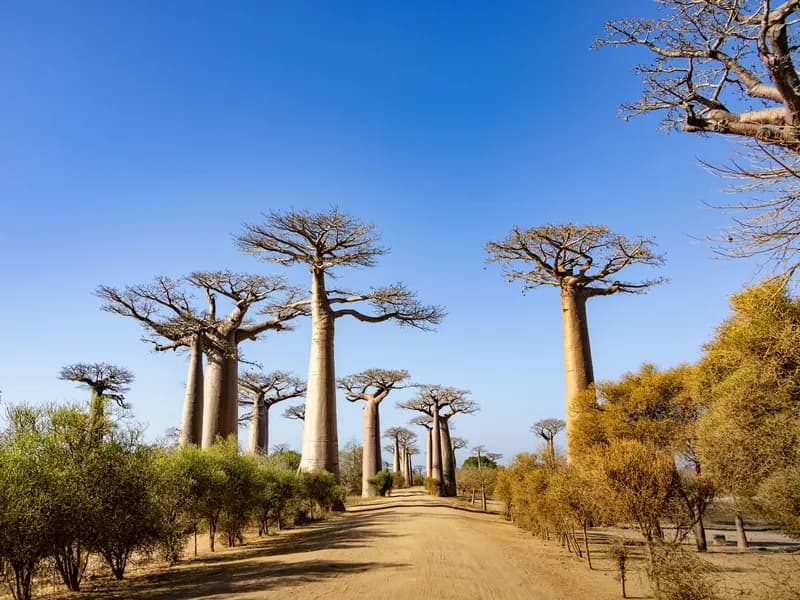
Avenue of the Baobabs
A dirt road lined with towering 800-year-old Grandidier's baobabs, most photogenic at sunrise and sunset. Located between Morondava and Belon'i Tsiribihina. Free access, though locals may ask for a small donation (~2,000 MGA). Best visited as part of a Morondava trip.
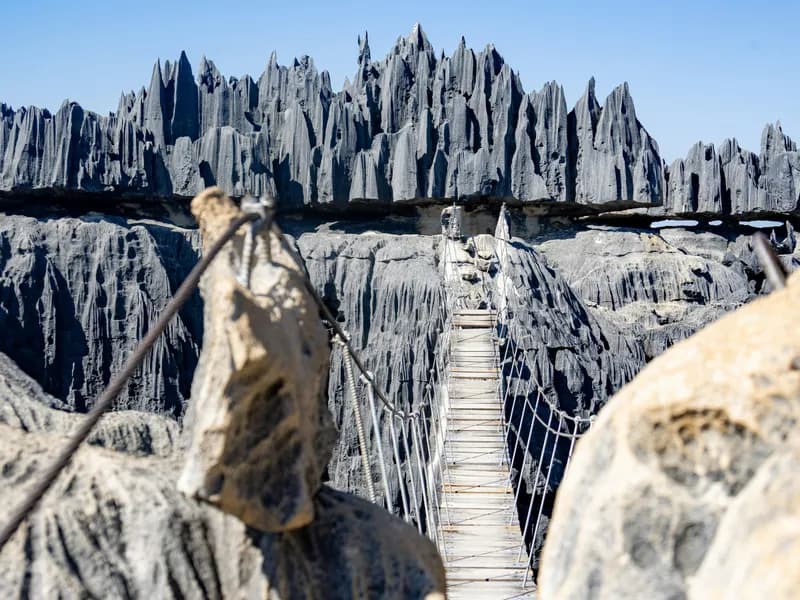
Tsingy de Bemaraha National Park
UNESCO World Heritage site of razor-sharp limestone pinnacles with suspension bridges and via ferrata routes. Entry: 65,000 MGA (~$14) plus mandatory guide (~50,000 MGA). Full-day visit required. Accessible only May-November; road is impassable in rainy season.
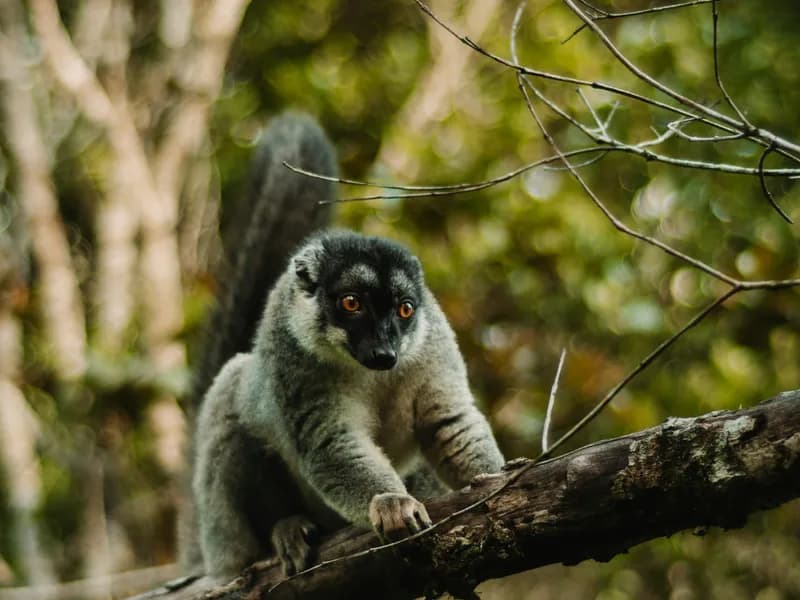
Andasibe-Mantadia National Park
The easiest place to spot Madagascar's largest lemur, the indri, known for its haunting morning calls. Only 3 hours east of Antananarivo. Entry: 65,000 MGA; night walks available for nocturnal species. Allow 2 days for both Analamazaotra and Mantadia sections.
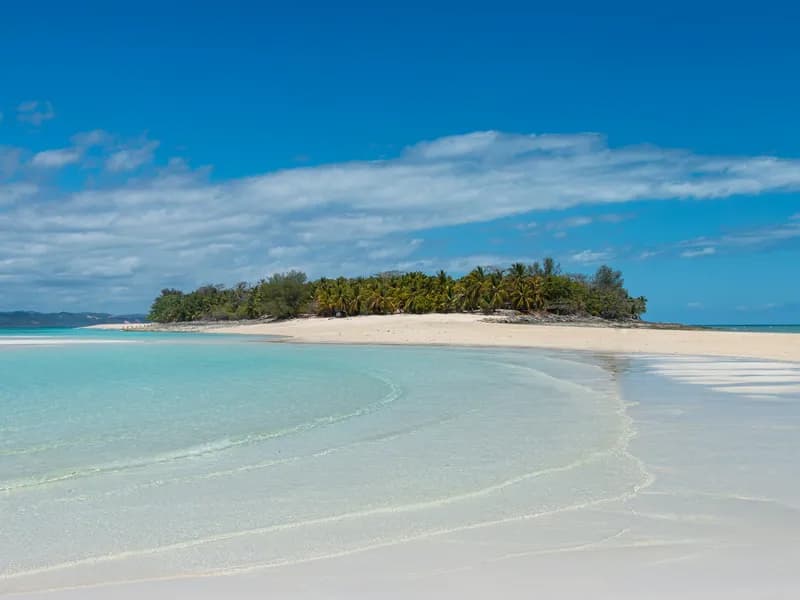
Nosy Be Island
Madagascar's top beach destination with turquoise waters, snorkeling, and whale shark encounters. Reached by Air Madagascar flights from TNR (~$150-250 round trip) or ferry from Ankify. Stay in Ambatoloaka for budget options or Andilana Beach for luxury.
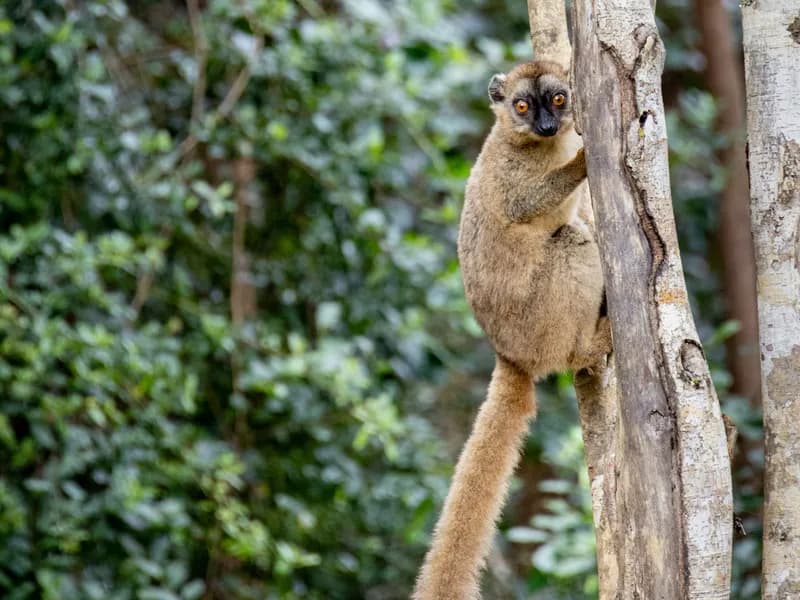
Ranomafana National Park
Lush montane rainforest home to 12 lemur species including the golden bamboo lemur, discovered only in 1986. Entry: 65,000 MGA plus guide. Night walks (~30,000 MGA) reveal mouse lemurs and chameleons. The nearby thermal baths give the park its name ('hot water').
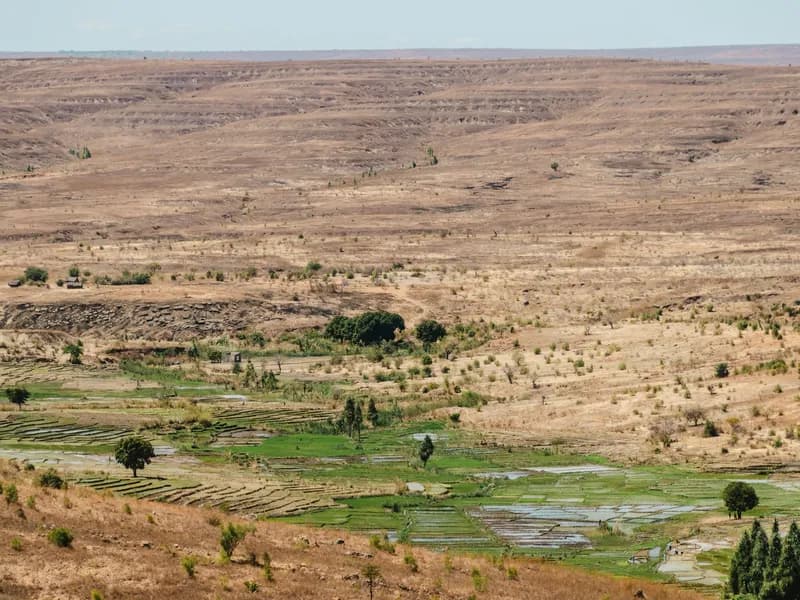
Isalo National Park
Madagascar's 'Grand Canyon' — sandstone massifs, natural swimming pools, and sacred burial caves. Entry: 65,000 MGA. The Natural Pool hike (3-4 hours) is the highlight; bring swimwear. Based from Ranohira town, which has basic hotels.
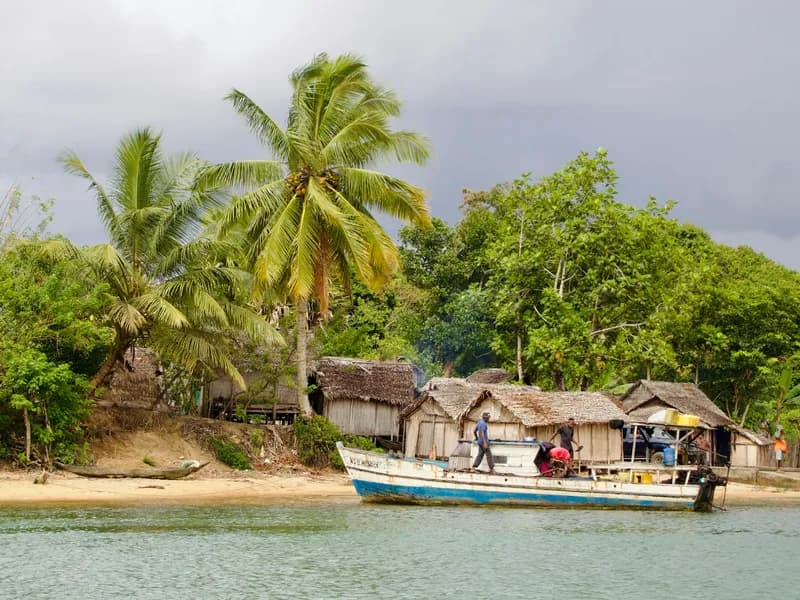
Ile Sainte-Marie (Nosy Boraha)
Laid-back island off the east coast famous for humpback whale watching (July-September). Old pirate cemetery near Ambodifotatra dates to the 1700s. Small guesthouses from ~80,000 MGA/night. Reached by daily flights from TNR or a rough overland + ferry combo.
Planned Itinerary
7-Day Madagascar Itinerary
Arrival in Antananarivo
Arrive at Ivato International Airport (TNR). Get your visa on arrival (free for under 30 days). Transfer to your hotel in the upper town (Haute Ville) area — the drive from the airport takes 45-60 minutes depending on Tana's legendary traffic.
Visa on arrival and airport transfer(1.5 hours)
Fill out the visa form on arrival — free for stays under 30 days. Change money at the airport BICM bureau (better rates than hotels). Pre-arrange hotel transfer — taxi from airport to city center costs 60,000-80,000 MGA
Check into hotel in Haute Ville(1 hour)
Stay in the Haute Ville (upper town) near Analakely for the best access. Hotel Sakamanga is a popular mid-range choice from 100,000 MGA/night with character and good food
Evening walk around Lac Anosy(1 hour)
The lake in central Tana is ringed by jacaranda trees (spectacular when blooming Oct-Nov). Walk carefully — sidewalks are uneven and pickpocketing occurs. Don't carry valuables visibly
Dinner at Hotel Sakamanga restaurant(1.5 hours)
Excellent Malagasy cuisine. Try ravitoto (pork with crushed cassava leaves) or romazava (beef and greens broth). Mains 15,000-30,000 MGA. Live music some evenings
Drive to Andasibe — Indri Lemurs
Early morning drive east to Andasibe-Mantadia National Park (3 hours, 140 km). This is the easiest place to see Madagascar's largest lemur, the indri, famous for its haunting morning calls.
Drive from Tana to Andasibe(3 hours)
Hire a 4x4 with driver (~€50-60/day). The RN2 road is paved and scenic, passing rice paddies and red-earth highlands. Stop at Marozevo for a reptile farm if interested
Check into Vakona Lodge or Feon'ny Ala(30 minutes)
Vakona Lodge (~€80-120/night) is set in the forest. Feon'ny Ala is the budget option (40,000-60,000 MGA) right at the park entrance
Afternoon guided walk in Analamazaotra Reserve(3 hours)
Entry 65,000 MGA plus mandatory guide (~40,000 MGA). The indri's eerie wailing calls carry for 3 km through the forest. You'll also see diademed sifakas, bamboo lemurs, and chameleons. The guides have incredible eyes for spotting wildlife
Night walk for nocturnal species(1.5 hours)
Separate guided night walk (~30,000 MGA) to spot mouse lemurs, leaf-tailed geckos, and tiny brookesia chameleons. Bring a headlamp and good shoes — the forest floor is muddy
Mantadia Rainforest & Return to Tana
Morning in the wilder Mantadia section of the park, then drive back to Antananarivo for the flight south tomorrow.
Early morning Mantadia hike(3 hours)
The Mantadia section is less visited and more pristine than Analamazaotra. Steeper trails through primary rainforest. Look for black-and-white ruffed lemurs and the sacred waterfall. Entry included in your park ticket if visited the same day
Lunch at park entrance restaurants(1 hour)
Simple Malagasy meals — rice with zebu stew or chicken for 8,000-15,000 MGA. The food is basic but filling
Drive back to Antananarivo(3 hours)
Return via RN2. Stop at a roadside vanilla seller if you see one — vanilla pods from 5,000-10,000 MGA each, far cheaper than in Tana
Dinner at La Varangue(1.5 hours)
Tana's finest restaurant in a colonial-era building. Franco-Malagasy cuisine. Duck breast with vanilla sauce, zebu steak. Mains 30,000-60,000 MGA. Book ahead
Fly to Morondava — Avenue of the Baobabs
Morning flight to Morondava on the west coast (1 hour on Tsaradia/Air Madagascar, ~$150-250 round trip). The famous Avenue of the Baobabs is the highlight.
Flight from TNR to Morondava(1 hour)
Tsaradia (Air Madagascar domestic) flies this route. Book well in advance — flights are small and fill up. Check-in at Ivato domestic terminal
Check into hotel in Morondava(30 minutes)
Palissandre Cote Ouest is the best option (~€60-100/night) with a pool and beach. Chez Maggie is a popular budget choice (40,000-60,000 MGA)
Afternoon at Morondava Beach(2 hours)
Relax on the wide sandy beach facing the Mozambique Channel. Warm water year-round. Local fishermen bring in the day's catch — you can buy fresh prawns grilled on the spot
Sunset at the Avenue of the Baobabs(2 hours)
Drive 20 km north on the dirt road to the iconic avenue of 800-year-old Grandidier's baobabs. Arrive 1 hour before sunset for the best light. Free access (locals may request a donation of ~2,000 MGA). One of the most photographed sites in Africa
Sunrise Baobabs & Kirindy Forest
Return to the baobabs at sunrise for different light, then visit Kirindy Forest for the best chance to see a fossa — Madagascar's top predator.
Sunrise at the Avenue of the Baobabs(1.5 hours)
The sunrise light turns the baobabs golden against a pink sky. Fewer people than sunset. Bring a tripod if you have one
Drive to Kirindy Forest(1.5 hours)
60 km north of Morondava on a rough dirt road. The forest is the best place in Madagascar to spot the elusive fossa (a cat-like predator)
Guided walk in Kirindy(3 hours)
Entry plus guide ~50,000-70,000 MGA. Look for giant jumping rats, red-fronted brown lemurs, and Verreaux's sifakas. The dry deciduous forest is very different from the eastern rainforests
Return to Morondava for sunset dinner(2 hours)
Seafood dinner at Chez Maggie or the hotel. Grilled crayfish and zebu brochettes with the sunset over the channel. Mains 15,000-30,000 MGA
Fly to Tana & Explore the Capital
Morning flight back to Antananarivo. Explore the capital's markets, palaces, and cuisine before your final night.
Flight from Morondava to TNR(1 hour)
Return flight on Tsaradia. Afternoon arrival gives you time to explore Tana
Rova of Antananarivo (Queen's Palace)(1.5 hours)
The hilltop royal palace complex is being restored after a 1995 fire. The views over the city are stunning even if the interiors are limited. Entry ~10,000 MGA
Analakely Market(1 hour)
Tana's bustling central market. Spices, vanilla, handicrafts, and raw energy. Keep belongings secure — this is a pickpocket hotspot. Great for photos and souvenir shopping
Farewell dinner at Cafe de la Gare(1.5 hours)
In the old train station. Good Franco-Malagasy menu, live music on weekends. Zebu fillet 25,000-40,000 MGA. Three Horses Beer (THB) is the local brew — 5,000 MGA
Departure from Antananarivo
Final morning in Madagascar. Last-minute shopping and airport transfer.
Morning souvenir shopping(1.5 hours)
La Route des Epices near the airport has packaged vanilla, spices, and handicrafts at fair prices. Remember: up to 2 kg of vanilla is allowed for personal export. Never buy wildlife products
Last Malagasy meal(1 hour)
One final plate of rice with laoka (accompaniment). Or a romazava if you've fallen in love with it. Madagascar's food is underrated
Airport transfer and departure(1 hour)
Allow 3 hours before international flights at Ivato. The airport is 20 km from the city center — 45-60 minutes depending on traffic. Pay departure tax if not included in ticket
14-Day Madagascar Itinerary
Arrival in Antananarivo
Arrive at Ivato International Airport (TNR). Visa on arrival (free for under 30 days). Transfer to Haute Ville hotel — 45-60 minutes depending on Tana traffic.
Visa on arrival and airport transfer(1.5 hours)
Free visa for stays under 30 days. Change money at airport BICM bureau. Pre-arrange hotel transfer — taxi 60,000-80,000 MGA to city center
Check into Hotel Sakamanga(1 hour)
Popular mid-range choice in Haute Ville from 100,000 MGA/night. Good restaurant and helpful staff for arranging onward travel
Evening walk around Lac Anosy(1 hour)
Lake ringed by jacaranda trees. Walk carefully — keep valuables hidden
Dinner at Hotel Sakamanga(1.5 hours)
Ravitoto (pork with crushed cassava leaves) or romazava. Mains 15,000-30,000 MGA. Live music some evenings
Drive to Andasibe — Indri Lemurs
3-hour drive east on the RN2 to Andasibe-Mantadia National Park. Home of the haunting indri calls.
Drive from Tana to Andasibe(3 hours)
Hire 4x4 with driver (~€50-60/day). RN2 is paved. Stop at Marozevo reptile farm if interested
Check into Vakona Lodge(30 minutes)
Set in the forest, ~€80-120/night. Feon'ny Ala is the budget option at the park entrance
Guided walk in Analamazaotra Reserve(3 hours)
Entry 65,000 MGA plus guide ~40,000 MGA. Spot indri, diademed sifakas, bamboo lemurs, and chameleons
Night walk(1.5 hours)
Separate guided walk (~30,000 MGA). Mouse lemurs, leaf-tailed geckos, tiny brookesia chameleons
Mantadia Rainforest
Full day exploring the wilder Mantadia section. Steeper trails, primary rainforest, rarer species.
Early morning Mantadia hike(4 hours)
Less visited, more pristine. Look for black-and-white ruffed lemurs and the sacred waterfall. Steep trails through primary rainforest
Lunch at park entrance(1 hour)
Simple Malagasy meals — rice with zebu stew 8,000-15,000 MGA
Vakona Private Reserve lemur island(1.5 hours)
The lodge runs boat trips to their lemur island where habituated lemurs will jump on your shoulders. ~30,000 MGA. Touristy but fun
Second night walk(1.5 hours)
Different trail tonight for different species. The forest transforms completely at night
Drive South to Ranomafana
Long drive south on the RN7 (7-8 hours) through the highlands. The landscape of rice terraces and red-earth villages is stunning.
Drive Andasibe to Ranomafana(8 hours)
Via Tana and south on RN7. The road is paved but slow. Stop in Ambositra for lunch — it's the woodcarving capital of Madagascar
Lunch in Ambositra(1 hour)
Browse the Zafimaniry woodcarving workshops (UNESCO intangible heritage). Buy intricate carved boxes or statues from 10,000-50,000 MGA
Arrive at Ranomafana and check in(30 minutes)
Centre ValBio or Hotel Thermal are good options near the park entrance. Budget lodges from 40,000 MGA/night
Evening at the thermal baths(1 hour)
The town is named 'hot water' for its thermal springs. Natural hot pools — a perfect soak after the long drive. Entry ~5,000 MGA
Ranomafana National Park
Full day in this lush montane rainforest — home to 12 lemur species including the golden bamboo lemur discovered only in 1986.
Morning guided rainforest walk(4 hours)
Entry 65,000 MGA plus guide. Look for the rare golden bamboo lemur, Milne-Edwards' sifaka, and greater bamboo lemur. The forest is damp and hilly — wear waterproof boots
Lunch at park restaurant(1 hour)
Basic but decent meals. Rice with chicken or fish 10,000-15,000 MGA
Afternoon walk to secondary viewpoints(2 hours)
The park has multiple trail circuits. Take the Varibolo trail for a different perspective and a chance to see brown mouse lemurs
Night walk in Ranomafana(1.5 hours)
The park's night walks (~30,000 MGA) reveal mouse lemurs, chameleons, and frogs. Ranomafana has exceptional nocturnal biodiversity
Drive to Isalo — Madagascar's Grand Canyon
Drive south on the RN7 through the highlands to Ranohira and Isalo National Park (5-6 hours). The landscape shifts from rainforest to dry grassland.
Drive Ranomafana to Ranohira/Isalo(5.5 hours)
Continue south on RN7. The landscape transforms dramatically — lush forest gives way to savanna and sandstone formations. Stop at Anja Community Reserve near Ambalavao to see ring-tailed lemurs (entry 30,000 MGA)
Ring-tailed lemurs at Anja Reserve(1 hour)
Community-run reserve with habituated ring-tailed lemurs climbing on boulders. Much easier to photograph than in the wild. Guides included in entry
Check into Ranohira hotel(30 minutes)
Le Relais de la Reine is the top choice (~€100/night) with pool and Isalo views. Budget options in Ranohira town from 50,000 MGA
Sunset at Isalo's Window(1.5 hours)
Drive to the famous 'Window of Isalo' viewpoint for sunset — the sandstone arch frames the setting sun. Free access. Arrive 30 minutes before sunset
Isalo National Park Full Day
Full-day hike through Madagascar's Grand Canyon — sandstone massifs, natural swimming pools, and sacred burial caves.
Natural Pool (Piscine Naturelle) hike(4 hours)
Entry 65,000 MGA plus guide. The signature hike follows a canyon to a crystal-clear natural swimming pool fed by a waterfall. Bring swimwear — the water is cool and refreshing after the hot hike
Packed lunch by the pools(1 hour)
Your hotel can prepare a packed lunch. Eat by the natural pool surrounded by pandanus palms and sandstone cliffs
Blue Pool and Namaza Trail(2.5 hours)
Continue to the Blue Pool — deeper and more dramatic than the Natural Pool. The Namaza trail passes through canyon narrows and sacred Bara burial caves
Sundowner back at the hotel(1 hour)
Watch the Isalo massif turn orange and pink in the last light. Three Horses Beer (THB) at the pool
Drive to Morondava via Sakaraha
Long cross-country drive west to Morondava (8-9 hours via RN35). The road is rough but the destination — the Avenue of the Baobabs — is worth it.
Drive Ranohira to Morondava(8 hours)
Via Sakaraha and RN35. This road is partially unpaved and rough in places — a 4x4 is essential. Carry extra fuel and water. The reward is reaching baobab country
Lunch stop in Sakaraha(1 hour)
Small town with basic restaurants. Rice and zebu for 8,000-12,000 MGA. Stock up on water and snacks
Arrive in Morondava and check in(30 minutes)
Palissandre Cote Ouest (~€60-100/night) or Chez Maggie (40,000-60,000 MGA)
Sunset at the Avenue of the Baobabs(1.5 hours)
20 km north on a dirt road. 800-year-old Grandidier's baobabs in golden sunset light. Free access (small donation to locals). Madagascar's most iconic image
Sunrise Baobabs & Kirindy Forest
Dawn at the baobabs for different light, then Kirindy Forest to spot the fossa — Madagascar's top predator.
Sunrise at the Avenue of the Baobabs(1.5 hours)
Golden morning light on the baobabs against pink sky. Fewer people than sunset
Drive to Kirindy Forest(1.5 hours)
60 km north on rough dirt road. Best place in Madagascar for the elusive fossa
Guided walk in Kirindy(3 hours)
Entry plus guide ~50,000-70,000 MGA. Giant jumping rats, red-fronted brown lemurs, Verreaux's sifakas
Return for beach sunset(2 hours)
Seafood dinner on Morondava beach. Grilled crayfish and zebu brochettes 15,000-30,000 MGA
Rest Day in Morondava
A recovery day on the west coast. Beach relaxation, local market, and fresh seafood.
Sleep in and lazy breakfast(2 hours)
After days of early mornings and long drives, sleep until you wake naturally
Morondava town and market walk(1.5 hours)
The local market is colorful and authentic — fruit, spices, dried fish. Buy vanilla pods directly (5,000-10,000 MGA each)
Beach afternoon(3 hours)
Relax on the wide sandy beach. Watch the fishing pirogues come and go. Warm Mozambique Channel water
Sunset drinks and dinner(2 hours)
Fresh grilled prawns from the beach fishermen. Negotiate the price before cooking — 20,000-40,000 MGA for a generous plate
Fly to Tana, Connect to Nosy Be
Fly back to Antananarivo, then connect to Nosy Be — Madagascar's premier beach and island destination.
Flight Morondava to TNR(1 hour)
Morning Tsaradia flight. Check luggage through if connecting same day
Connect to Nosy Be flight(1 hour)
Tsaradia or Air Madagascar to Fascene Airport (NOS) on Nosy Be. Flights ~$150-250. The island is off the northwest coast
Transfer to beach hotel(30 minutes)
Stay in Ambatoloaka for budget (~50,000-80,000 MGA/night) or Andilana Beach for luxury (~€150-300). Tuk-tuks and taxis available from the airport
Beach evening and dinner(2 hours)
Settle into island mode. Fresh seafood dinner at a beachfront restaurant. Grilled lobster from 40,000 MGA — a fraction of international prices
Nosy Be Island Exploration
Explore Nosy Be by scooter or taxi — from the Hell-Ville market to the sacred lakes and ylang-ylang distilleries.
Hell-Ville market(1.5 hours)
Nosy Be's main town has a lively market with spices, vanilla, tropical fruit, and local crafts. The name comes from French Governor de Hell, not infernal associations
Lemuria Land (Lokobe approach)(2 hours)
Visit a private reserve near Lokobe to see black lemurs, chameleons, and boas. Entry ~30,000-50,000 MGA with guide. The black lemurs here are habituated and curious
Sacred Crater Lakes(1.5 hours)
Lac Sacre (Sacred Lake) has local fady — don't point at it or swim. Beautiful emerald water in a volcanic crater. A spiritual place for the Sakalava people
Sunset dinner at Chez Loulou(1.5 hours)
Beachfront in Ambatoloaka. The catch of the day grilled with garlic and lime, 25,000-40,000 MGA. Rum arrange (fruit-infused rum) is the island drink
Nosy Komba & Snorkeling Day Trip
Boat trip to neighboring Nosy Komba island for lemurs and Nosy Tanikely marine reserve for snorkeling.
Boat to Nosy Komba(30 minutes)
Organize through your hotel (~80,000-120,000 MGA per person for full day trip including both islands). Traditional outrigger or motorboat
Nosy Komba village and lemurs(2 hours)
Small island with a village of artisans and habituated black lemurs that sit on your head. Buy hand-embroidered tablecloths — the island's specialty
Snorkeling at Nosy Tanikely(2 hours)
Marine reserve entry 25,000 MGA. Excellent coral, sea turtles, and tropical fish. Snorkel gear usually provided. The water clarity is exceptional
Seafood lunch on the beach(1 hour)
The boat crew grills fresh fish and seafood on the beach. Included in most tour prices. Cold THB beer from the cooler
Departure from Nosy Be
Final morning on the island. Last swim, last seafood, then fly back to Tana for your international departure.
Morning beach swim(1.5 hours)
One last dip in the warm Indian Ocean. The bathtub-temperature water of Andilana Beach is hard to leave
Last souvenir shopping(1 hour)
Vanilla pods, ylang-ylang essential oil, hand-embroidered textiles, and carved wooden lemurs. Remember the 2 kg vanilla export limit
Flight Nosy Be to TNR and international connection(3 hours)
Allow plenty of buffer time for connections at Ivato. Domestic and international terminals are separate but close. Madagascar's airline schedules can shift — confirm the day before
21-Day Madagascar Itinerary
Arrival in Antananarivo
Arrive at Ivato International Airport (TNR). Visa on arrival (free for under 30 days, 35 EUR for 30-60 days). Transfer to your hotel in Haute Ville.
Visa on arrival and airport transfer(1.5 hours)
Free visa for under 30 days. Change money at BICM bureau. Taxi to city center 60,000-80,000 MGA
Check into Hotel Sakamanga(1 hour)
Haute Ville, from 100,000 MGA/night. Central location
Evening walk around Lac Anosy(1 hour)
Jacaranda-ringed lake. Keep valuables hidden
Dinner at Sakamanga restaurant(1.5 hours)
Ravitoto or romazava. Mains 15,000-30,000 MGA
Antananarivo Exploration
Full day exploring the capital before heading into the countryside. Tana rewards those who give it time.
Rova of Antananarivo (Queen's Palace)(1.5 hours)
Hilltop royal palace complex. Views over the city. Entry ~10,000 MGA
Analakely Market(1.5 hours)
Tana's bustling central market — spices, vanilla, handicrafts. Keep belongings secure
Lunch at La Varangue(1.5 hours)
Tana's finest restaurant. Duck with vanilla sauce, zebu steak. Mains 30,000-60,000 MGA
Ambohimanga Royal Hill (UNESCO)(3 hours)
Sacred royal site 21 km north. Entry 10,000 MGA plus guide. The blue palace of King Andrianampoinimerina and sacred fig tree. A profound window into pre-colonial Madagascar
Drive to Andasibe — Indri Lemurs
3-hour drive east to Andasibe-Mantadia National Park. The haunting indri calls await.
Drive Tana to Andasibe(3 hours)
4x4 with driver ~€50-60/day. Paved RN2 through rice paddies and highlands
Check into Vakona Lodge(30 minutes)
Forest setting, ~€80-120/night
Guided walk in Analamazaotra(3 hours)
Entry 65,000 MGA plus guide. Indri, diademed sifakas, bamboo lemurs, chameleons
Night walk(1.5 hours)
~30,000 MGA. Mouse lemurs, leaf-tailed geckos, brookesia chameleons
Mantadia Rainforest Full Day
Full day in the wilder Mantadia section plus Vakona's lemur island.
Mantadia deep forest hike(4 hours)
Primary rainforest, steeper trails. Black-and-white ruffed lemurs, sacred waterfall
Lunch at park entrance(1 hour)
Rice with zebu stew 8,000-15,000 MGA
Vakona lemur island(1.5 hours)
Boat trip to habituated lemur island. ~30,000 MGA. They jump on your shoulders
Night walk on different trail(1.5 hours)
Different species appear on different trails
Drive South to Ranomafana
Long drive south on the RN7 through the highlands (7-8 hours). Stop in Ambositra, the woodcarving capital.
Drive Andasibe to Ranomafana(8 hours)
Via Tana and south on RN7. Paved but slow
Lunch in Ambositra(1 hour)
Zafimaniry woodcarving workshops (UNESCO). Carved boxes 10,000-50,000 MGA
Arrive at Ranomafana(30 minutes)
Centre ValBio or Hotel Thermal near park entrance. Budget lodges from 40,000 MGA
Thermal baths(1 hour)
Natural hot springs. Entry ~5,000 MGA. Perfect soak after long drive
Ranomafana National Park
Full day in lush montane rainforest. 12 lemur species including the golden bamboo lemur.
Morning rainforest walk(4 hours)
Entry 65,000 MGA plus guide. Golden bamboo lemur, Milne-Edwards' sifaka. Wear waterproof boots
Lunch at park restaurant(1 hour)
Rice with chicken 10,000-15,000 MGA
Varibolo trail(2 hours)
Different perspective, brown mouse lemurs
Night walk(1.5 hours)
~30,000 MGA. Exceptional nocturnal biodiversity — mouse lemurs, chameleons, frogs
Rest Day in Ranomafana
A recovery day after two days of intense hiking. Explore the town and surrounding tea plantations.
Sleep in and late breakfast(2 hours)
Rest those legs. The hotel terrace overlooking the forest is a perfect reading spot
Ranomafana village walk(1.5 hours)
The small town has a lively market and friendly locals. Buy fresh fruit and vanilla
Tea plantation visit(2 hours)
The Sahambavy tea estate near Fianarantsoa is one of Madagascar's few tea producers. Tours available. Buy fresh tea directly
Thermal baths and evening rest(1.5 hours)
Second soak in the hot springs. You've earned it
Fianarantsoa & Train to Manakara
Drive to Fianarantsoa (2 hours) and take the legendary FCE railway to the east coast — one of Africa's great train journeys.
Drive to Fianarantsoa(2 hours)
Short drive on RN7. Fianarantsoa ('place of good learning') has a charming old town
Fianarantsoa old town walk(1.5 hours)
The hilltop vieille ville has French colonial buildings, churches, and a seminary. Quiet, atmospheric, and overlooked by tourists
Board the FCE train(1 hour)
The forest railway runs to Manakara on the coast (12+ hours). Departs around 7 AM on scheduled days (check locally — timetable is flexible). First class ~30,000 MGA. The journey crosses 67 bridges and passes through dense forest
Overnight on the train or in Manakara(Evening)
The train arrives late evening or next morning depending on conditions. An authentic and unforgettable Madagascar experience — bring food and water
Manakara & East Coast
Explore the sleepy east coast town of Manakara. Canal des Pangalanes boat trips and Indian Ocean beaches.
Manakara beach morning(2 hours)
The Indian Ocean beach is wide and wild — strong currents make swimming risky. Walk and watch the fishermen launch their pirogues
Canal des Pangalanes boat trip(3 hours)
A series of natural and man-made canals running 600 km along the coast. Take a pirogue ride through villages, coconut groves, and mangroves. ~30,000-50,000 MGA
Lunch at a Manakara restaurant(1 hour)
Fresh seafood — grilled shrimp and rice 10,000-20,000 MGA. The east coast cuisine uses more coconut and vanilla than the highlands
Return by road to Ranomafana area(4 hours)
Or stay overnight in Manakara if you prefer. The return drive via RN12 is scenic but rough
Drive to Isalo National Park
Continue south on the RN7 to Ranohira and Isalo — Madagascar's sandstone canyon country.
Drive to Isalo via Ambalavao(5 hours)
Stop at Anja Community Reserve for ring-tailed lemurs (30,000 MGA entry). Continue through grasslands to Ranohira
Anja Reserve ring-tailed lemurs(1 hour)
Community-run reserve, habituated lemurs on boulders. Easy to photograph
Check into Le Relais de la Reine(30 minutes)
Best hotel near Isalo, ~€100/night with pool and canyon views
Sunset at Isalo's Window(1.5 hours)
The sandstone arch frames the setting sun. Free access. Arrive 30 minutes early
Isalo Full Day Hike
Full day in Madagascar's Grand Canyon — natural swimming pools, sandstone massifs, and sacred burial caves.
Natural Pool hike(4 hours)
Entry 65,000 MGA plus guide. Canyon trail to crystal-clear swimming pool fed by waterfall. Bring swimwear
Packed lunch by the pools(1 hour)
Hotel packs lunch. Eat surrounded by pandanus palms and sandstone cliffs
Blue Pool and Namaza Trail(2.5 hours)
Deeper canyon, sacred Bara burial caves. More dramatic than Natural Pool
Sundowner at hotel(1 hour)
Watch the Isalo massif turn orange and pink. THB beer by the pool
Drive to Morondava — Baobab Country
Cross-country drive west to Morondava and the Avenue of the Baobabs.
Drive Ranohira to Morondava(8 hours)
Via Sakaraha and RN35. Partially unpaved, 4x4 essential. Carry extra fuel and water
Lunch stop in Sakaraha(1 hour)
Basic restaurants. Rice and zebu 8,000-12,000 MGA
Arrive Morondava(30 minutes)
Palissandre Cote Ouest (~€60-100/night) or Chez Maggie budget option
Sunset at Avenue of the Baobabs(1.5 hours)
20 km north. 800-year-old Grandidier's baobabs in golden light. Madagascar's most iconic image
Kirindy Forest & Baobab Sunrise
Dawn at the baobabs, then Kirindy Forest for the fossa and dry-forest wildlife.
Sunrise at Avenue of the Baobabs(1.5 hours)
Golden morning light, fewer people than sunset
Drive to Kirindy Forest(1.5 hours)
60 km north on rough dirt. Best place for the elusive fossa
Guided walk in Kirindy(3 hours)
Entry plus guide ~50,000-70,000 MGA. Giant jumping rats, Verreaux's sifakas, red-fronted lemurs
Beach sunset dinner(2 hours)
Grilled crayfish on Morondava beach. 15,000-30,000 MGA
Rest Day in Morondava
Beach relaxation and local market exploration on the west coast.
Sleep in(2 hours)
After days of early mornings, sleep naturally
Morondava market walk(1.5 hours)
Fruit, spices, dried fish. Vanilla pods 5,000-10,000 MGA each
Beach afternoon(3 hours)
Wide sandy beach, warm Mozambique Channel water, fishing pirogues
Fresh grilled prawns(1.5 hours)
From the beach fishermen. 20,000-40,000 MGA for a generous plate
Fly to Nosy Be
Fly via Tana to Nosy Be, Madagascar's premier tropical island destination off the northwest coast.
Flight Morondava to TNR(1 hour)
Morning Tsaradia flight
Connect to Nosy Be(1 hour)
Tsaradia to Fascene Airport (NOS). ~$150-250. Off the northwest coast
Transfer to beach hotel(30 minutes)
Ambatoloaka budget (~50,000-80,000 MGA/night) or Andilana luxury (~€150-300)
Beach dinner(2 hours)
Grilled lobster from 40,000 MGA at a beachfront restaurant
Nosy Be Island Day
Explore Nosy Be — Hell-Ville market, black lemurs, sacred lakes, and ylang-ylang.
Hell-Ville market(1.5 hours)
Spices, vanilla, tropical fruit, crafts. Named after Governor de Hell, not the inferno
Lemuria Land(2 hours)
Private reserve near Lokobe. Black lemurs, chameleons, boas. Entry ~30,000-50,000 MGA
Sacred Crater Lakes(1.5 hours)
Don't point at Lac Sacre or swim. Emerald volcanic crater. Sacred to the Sakalava people
Sunset dinner at Chez Loulou(1.5 hours)
Beachfront Ambatoloaka. Catch of the day with garlic and lime 25,000-40,000 MGA
Nosy Komba & Snorkeling
Boat trip to Nosy Komba for lemurs and Nosy Tanikely marine reserve for snorkeling.
Boat to Nosy Komba(30 minutes)
~80,000-120,000 MGA per person for full day trip including both islands
Nosy Komba village and lemurs(2 hours)
Artisan village, habituated black lemurs. Hand-embroidered tablecloths are the local specialty
Snorkeling at Nosy Tanikely(2 hours)
Marine reserve entry 25,000 MGA. Coral, sea turtles, tropical fish. Exceptional clarity
Beach seafood lunch(1 hour)
Boat crew grills fresh fish on the beach. Usually included in tour price
Rest Day on Nosy Be
Full rest day on the island. Beach, spa, and tropical relaxation.
Beach morning(3 hours)
Andilana Beach has powder white sand and warm Indian Ocean water. Bring a book and forget the world
Massage on the beach(1.5 hours)
Beach massages available from 30,000-50,000 MGA. The sound of waves is the soundtrack
Afternoon free(2 hours)
Snorkel, swim, or nap in a hammock
Rum arrange tasting and dinner(2 hours)
Fruit-infused rum is the island's signature drink. Try litchi, vanilla, and baobab flavors at any beach bar
Lokobe National Park
Full-day excursion to Lokobe, Nosy Be's last remaining primary forest. The most pristine nature on the island.
Boat to Lokobe(30 minutes)
Motorboat from Ambatoloaka to the park entrance on Nosy Be's southeast coast
Guided Lokobe forest walk(3 hours)
Entry 65,000 MGA plus guide. Primary forest with black lemurs, panther chameleons, leaf-tailed geckos, and Nosy Be's endemic species. Muddy trails — wear appropriate shoes
Beach lunch at fishing village(1.5 hours)
The villages near Lokobe serve fresh seafood grilled on the spot. Sit under mango trees
Return and sunset(1.5 hours)
Boat back. Watch the Nosy Be sunset from your hotel beach with a sundowner
Nosy Iranja Day Trip
Boat excursion to Nosy Iranja, two islands connected by a sandbar visible only at low tide. Often called the most beautiful beach in Madagascar.
Boat to Nosy Iranja(1.5 hours)
~150,000-200,000 MGA per person for full day trip. 1.5-hour boat ride south from Nosy Be. Dolphin sightings possible en route
Explore the sandbar and beaches(3 hours)
At low tide, a 2 km sandbar connects the two islands. Walk across with turquoise water on both sides. The smaller island has a turtle nesting beach (seasonal)
Snorkeling and swimming(2 hours)
Crystal-clear water, coral gardens, and tropical fish. Some of the best snorkeling near Nosy Be
Beach seafood lunch(1 hour)
Grilled lobster, fish, and rice on the beach. Usually included in the excursion
Departure from Nosy Be
Final morning in Madagascar. Last swim, last seafood, then fly home.
Morning beach swim(1.5 hours)
One last dip in the warm Indian Ocean. Hard to leave
Last souvenir shopping(1 hour)
Vanilla pods, ylang-ylang oil, embroidered textiles, carved lemurs. Remember the 2 kg vanilla export limit
Flight Nosy Be to TNR and international connection(3 hours)
Allow plenty of buffer for connections at Ivato. Confirm schedules the day before — Malagasy airlines can shift
Travel Tips
Visa & Entry
Visa on Arrival Available
Most nationalities can get a visa on arrival at Ivato Airport for stays up to 30 days (free for under 30 days, 35 EUR for 30-60 days). Fill out the form on arrival. Ensure your passport has 6 months validity and at least 2 blank pages.
transport
Roads Are Rough — Plan for Slow Travel
Many national routes (RN) are unpaved and deteriorate badly in rainy season. A 400 km journey can take 12+ hours. Hire a 4x4 with driver (~€50-80/day) rather than self-driving. Domestic flights on Tsaradia (Air Madagascar's domestic arm) save days of travel for key routes like TNR to Morondava.
Taxi-Brousses Are an Experience
Shared bush taxis (taxi-brousses) are the main public transport between cities. They leave when full — not on schedule. Expect crowding, breakdowns, and long waits. Book a seat at the gare routière the day before for popular routes. Fascinating but exhausting.
Budget
Very Affordable Once You Arrive
Local meals cost 5,000-15,000 MGA (~$1-3), basic hotels 40,000-100,000 MGA (~$9-22). The main expense is internal transport and park entry fees. Budget travelers can manage on $30-50/day. Always carry cash — ATMs are scarce outside Antananarivo.
Local Customs
Respect Fady (Taboos)
Madagascar has a complex system of fady — local taboos that vary by region. Common ones: don't point at tombs, don't swim in certain rivers, don't whistle at night. Your guide will brief you. Ignoring fady is deeply disrespectful and can cause genuine upset.
Safety
Guard Against Petty Theft in Cities
Antananarivo has high rates of pickpocketing and bag-snatching, especially around Analakely market and after dark. Don't carry valuables visibly. Use hotel safes. Outside the capital, Madagascar is generally peaceful and welcoming.
Vanilla and Wildlife Export Restrictions
Madagascar produces 80% of the world's vanilla, but there are strict limits on how much you can export (up to 2 kg for personal use). Never buy or transport any wildlife products — penalties are severe and it fuels the illegal pet trade.
Related Articles
Travel GuidesThe Complete Madagascar Travel Guide: Lemurs, Baobabs, and How to Actually Get Around
Madagascar demands patience, flexibility, and a high tolerance for unpaved roads. But what you get in return is a country that looks and feels like nowhere else on Earth.
Travel GuidesMadagascar vs. Borneo: Which Biodiversity Hotspot Should You Visit?
Both islands are evolutionary time capsules packed with species found nowhere else. But they offer radically different travel experiences. Here's the honest breakdown.
StoriesMy 7 Days in Madagascar: Chameleons, Broken Roads, and the Best Sunset of My Life
Day 3: Our 4x4 got stuck in a river crossing. Day 5: I cried at a sunset. Day 7: I didn't want to leave. Here's my honest week in Madagascar.