
Mallorca

Key Facts
Best Time to Visit
May, June, and September for warm seas and fewer crowds; July-August is peak and busiest
Language
Spanish (Castilian) and Catalan (Mallorquí dialect), both official; English widely spoken
Currency
Euro (EUR)
Time Zone
CET (UTC+1), CEST (UTC+2) in summer
Airport
Palma de Mallorca Airport (PMI), 8 km east of Palma — one of Europe's busiest in summer
Population
approx. 920,000 island-wide; Palma approx. 420,000 (city proper)
Climate
Mediterranean — hot dry summers (26-31°C), mild winters (10-16°C)
Safety Rating
Generally Safe (Level 1) — watch for pickpockets in Palma and busy resort strips
UNESCO Status
Serra de Tramuntana cultural landscape, UNESCO World Heritage Site since 2011
Top Highlights

Palma Cathedral (La Seu)
A soaring Gothic cathedral on the seafront, with the world's largest rose window and a side chapel reworked by Antoni Gaudí and Miquel Barceló. Entry €10 (includes the museum and terraces by timed ticket). Open Mon-Sat, hours vary by season — go mid-morning when light floods the nave.

Sóller Vintage Train & Tram
Ride a 1912 wooden train from Palma through the Tramuntana mountains and orange groves to Sóller (about 1 hour), then a heritage tram down to the Port (~30 min). Combined return ticket around €32. Sit on the left leaving Palma for the best valley views; book ahead in summer.
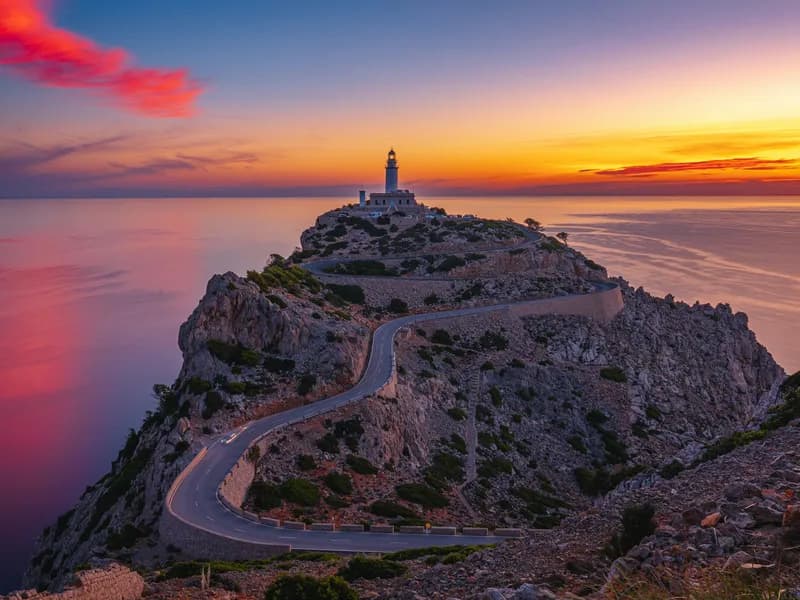
Cap de Formentor
A dramatic clifftop drive to the island's northernmost lighthouse, with viewpoints over the Mirador es Colomer pinnacle. About 20 km of hairpins from Port de Pollença. In summer the road is car-restricted during the day — take the seasonal shuttle bus or drive early/late.

Valldemossa & the Royal Charterhouse
A honey-stone mountain village where Chopin and George Sand wintered in 1838-39. Tour the Royal Carthusian Monastery (~€10) and its piano-filled cells. Free to wander the flower-draped lanes; try a 'coca de patata' pastry. About 25 minutes from Palma — arrive before the tour buses.
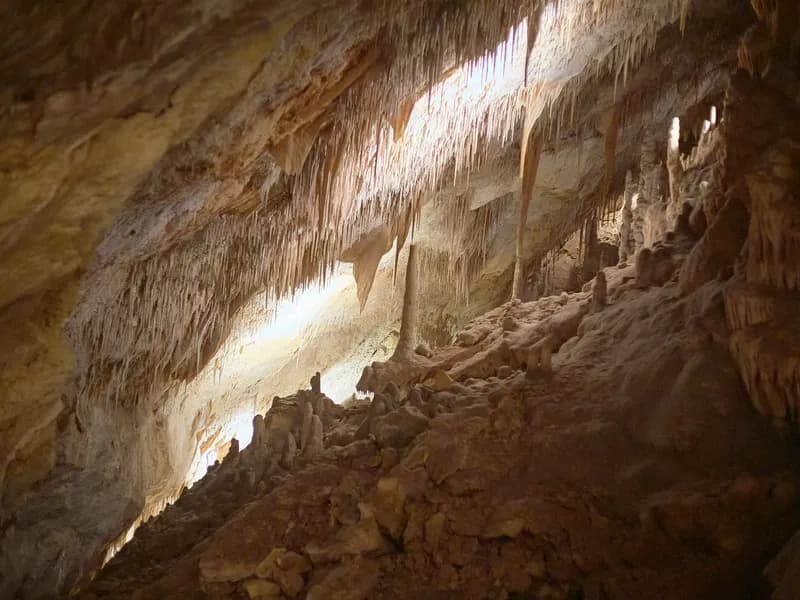
Caves of Drach (Coves del Drac)
A vast cave system near Porto Cristo containing Lake Martel, one of the world's largest underground lakes, where a live classical-music boat concert is performed. Entry ~€16, by timed session; allow 1.5 hours. Book online in advance — sessions sell out, and it's a popular rainy-day option.
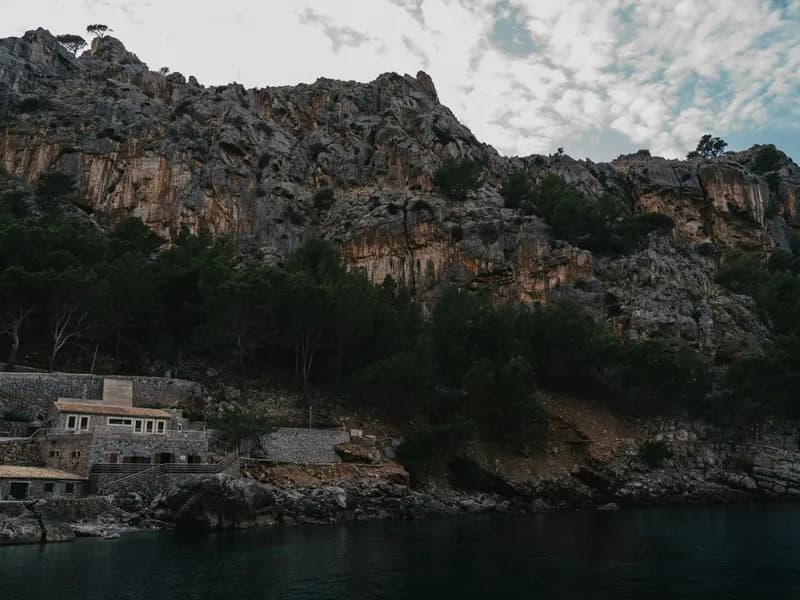
Cala Deià & the Tramuntana Coves
A pebbly cove beneath the artists' village of Deià, with cliff-edge seafood restaurants like Ca's Patró March. Free; parking is scarce, so arrive early or walk down from the village (20 min). Many of the island's finest swimming coves (Cala Tuent, Sa Calobra) line this northwest coast.

Bellver Castle
A rare circular Gothic castle on a wooded hill above Palma, built in the 14th century, with panoramic views over the bay. Entry ~€4 (free on Sundays); open Tue-Sun. A 30-40 minute uphill walk or short taxi from the centre — combine with sunset over the city.
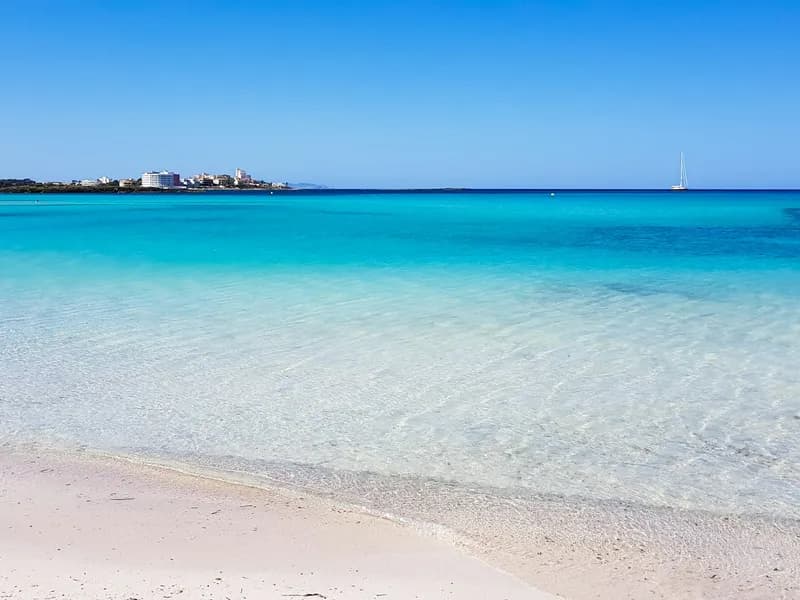
Es Trenc Beach
A 3 km stretch of fine white sand and shallow turquoise water in a protected natural area on the south coast — Mallorca's most 'Caribbean' beach. Free, but the car parks charge ~€8. Bring shade; there are only a few chiringuito beach bars and little natural cover.
Planned Itinerary
7-Day Mallorca Itinerary
Arrival in Palma & Old Town Wander
Land at Palma de Mallorca Airport (PMI), 8 km east of the city, and settle into Palma's Old Town. An easy first day on foot to shake off the flight, with the cathedral lit up at dusk.
Airport transfer to Palma(20 minutes)
Take the A1 Aerotib bus from PMI to central Palma (~€5, every 15-20 min). A taxi is ~€20-25 if you have heavy bags.
Check in around the Old Town / La Llotja(45 minutes)
Base yourself near La Llotja or Plaça Major for walkable access to everything. Tourist tax (~€1-4/night) is added at checkout.
Stroll Passeig del Born & Carrer de Sant Miquel(1.5 hours)
Wander the marble Born boulevard and the tangle of patio-filled lanes; pop into Forn des Teatre for an ensaïmada pastry.
Sunset aperitivo near La Seu(1 hour)
Grab a vermouth at a café on Plaça de la Reina with the cathedral floodlit overhead — ease into island time.
Dinner at La Llotja tapas bars(1.5 hours)
Try Bar España or Ombu for classic tapas; the menú-style plates run €4-9 each.
Palma Cathedral, Bellver Castle & the Bay
A full Palma day pairing the headline Gothic cathedral with the hilltop circular castle, keeping the heavy walking to the cooler hours.
Palma Cathedral (La Seu)(1.5 hours)
Go mid-morning when light floods the nave and the rose window. Entry €10 includes museum and terraces by timed ticket; Mon-Sat only.
Royal Palace of La Almudaina(1 hour)
The royal residence right beside the cathedral (~€7); skip if cathedral fatigue sets in.
Menú del día lunch in the back streets(1.5 hours)
Find a weekday three-course menú (€13-18) off the tourist strip — try the lanes around Mercat de l'Olivar.
Bellver Castle(2 hours)
Short taxi (~€10) or a 30-40 min uphill walk to this 14th-century circular Gothic castle. Entry ~€4 (free Sundays), Tue-Sun, with sweeping bay views.
Dinner in Santa Catalina(2 hours)
Taxi to the buzzy Santa Catalina barrio for dinner around its old market — try Patrón Lunares or a windmill-side spot.
Sóller Vintage Train, Tram & Port
The classic Tramuntana day trip by heritage rail — no car needed, and the whole route is car-free romance through orange groves to the sea.
Sóller vintage train from Plaça d'Espanya(1 hour)
Board the 1912 wooden train (combined return ~€32). Sit on the left leaving Palma for the best valley views; book ahead in summer.
Explore Sóller town & Plaça Constitució(1.5 hours)
Coffee under the plane trees by the Gaudí-influenced Sant Bartomeu church; sample fresh local orange juice.
Heritage tram to Port de Sóller(30 minutes)
Rattle down through gardens to the marina on the open-sided tram (~30 min).
Seafood lunch & swim at the Port(2 hours)
Grilled fish at a marina restaurant, then a dip in the sheltered horseshoe bay.
Return train to Palma(1 hour)
Take the late-afternoon train back; relaxed evening in Palma.
Valldemossa, Deià & the West Coast
A Tramuntana drive linking honey-stone villages to a cliff-edge swimming cove. A rental car or organized tour makes this loop flow without backtracking.
Valldemossa & the Royal Charterhouse(2 hours)
About 25 min from Palma. Tour the Carthusian Monastery (~€10) with its Chopin piano cells; arrive before the tour buses and try a coca de patata.
Drive the coast road to Deià(30 minutes)
A scenic 20-25 min cliff drive north; park up top in the artists' village of Deià.
Cala Deià swim & seafood(2.5 hours)
Walk 20 min down to the pebbly cove; lunch at the cliff-edge Ca's Patró March (book ahead) then swim in clear water. Parking is scarce — arrive early.
Sunset at Mirador de Sa Foradada(1 hour)
Stop at the viewpoint overlooking the pierced-rock headland on the drive back — golden-hour light is superb.
Dinner back in Palma(1.5 hours)
Casual late dinner once you've returned the ~40 min drive to the city.
Cap de Formentor & Pollença
Head to the island's wild northern tip for clifftop drama, balanced with the laid-back charm of Pollença's old town. Long day — start early.
Drive to Port de Pollença(1 hour)
About 1 hour north from Palma; in peak months the Formentor road is car-restricted by day, so go early or use the seasonal shuttle bus from Port de Pollença.
Mirador es Colomer & Cap de Formentor lighthouse(2 hours)
Stop at the dizzying Colomer viewpoint, then continue the 20 km of hairpins to the northernmost lighthouse.
Beach break at Cala Formentor(1.5 hours)
A pine-backed white-sand beach near the cape for a midday swim before crowds peak.
Pollença old town & the Calvari steps(1.5 hours)
Climb the 365 cypress-lined Calvari steps and explore the honey-stone square; coffee on Plaça Major.
Es Trenc Beach & a Slow South Day
A deliberate rest day on Mallorca's most 'Caribbean' beach — fine white sand, shallow turquoise water, and nowhere to be.
Drive to Es Trenc(45 minutes)
Roughly 45 min south of Palma; car parks charge ~€8. This is a protected natural area, so facilities are minimal.
Beach day at Es Trenc(4 hours)
A 3 km stretch of soft sand and shallow water. Bring shade, sunscreen, water and a hat — there's little natural cover and only a few chiringuito beach bars.
Lunch at a chiringuito or in Ses Salines(1.5 hours)
Fresh fish at a beach bar, or drive 10 min inland to the village of Ses Salines for a quieter table.
Optional Colònia de Sant Jordi harbour stroll(1 hour)
Wind down with a gelato along the nearby fishing-port promenade before heading back.
Caves of Drach & Departure
A final morning at the island's most famous caves on the east coast, timed so you can still make an afternoon or evening flight from PMI.
Caves of Drach (Coves del Drac)(1.5 hours)
Near Porto Cristo, ~1 hr from Palma. Book the timed session online in advance (~€16) — the live classical-music boat concert on Lake Martel is the highlight.
Last lunch in Porto Cristo or Palma(1 hour)
Quick harbour-side lunch in Porto Cristo, or eat back in Palma if your flight is later.
Final souvenir shopping(45 minutes)
Pick up Mallorcan pearls, local olive oil or ensaïmadas (sold in airport-friendly boxes).
Hotel checkout & transfer to PMI(30 minutes)
Allow buffer for summer airport queues; the A1 bus or a taxi both reach PMI quickly.
14-Day Mallorca Itinerary
Arrival in Palma & Old Town Wander
Land at Palma de Mallorca Airport (PMI), 8 km east of the city, and ease into the Old Town on foot — a gentle first day to recover from the flight.
Airport transfer to Palma(20 minutes)
The A1 Aerotib bus reaches central Palma in ~15-20 min (~€5); a taxi runs ~€20-25.
Check in near La Llotja / Old Town(45 minutes)
A central base keeps the whole historic core walkable. Tourist tax (~€1-4/night) is added at checkout.
Passeig del Born & patio lanes(1.5 hours)
Stroll the marble boulevard and Palma's hidden courtyards; grab an ensaïmada at Forn des Teatre.
Sunset vermouth near La Seu(1 hour)
Aperitivo on Plaça de la Reina with the floodlit cathedral overhead.
Tapas dinner in La Llotja(1.5 hours)
Bar España or Ombu for classic plates (€4-9 each).
Palma Cathedral, Almudaina & Bellver Castle
Palma's headline sights paced around the cooler hours, ending on the hilltop castle for sunset over the bay.
Palma Cathedral (La Seu)(1.5 hours)
Mid-morning for the best nave light and the famous rose window. Entry €10 includes museum and terraces; Mon-Sat.
Royal Palace of La Almudaina(1 hour)
Royal residence beside the cathedral (~€7).
Menú del día lunch off the strip(1.5 hours)
Three-course weekday menú (€13-18) in the lanes near Mercat de l'Olivar.
Bellver Castle(2 hours)
Taxi (~€10) or uphill walk to the 14th-century circular Gothic castle. Entry ~€4 (free Sundays), Tue-Sun; panoramic bay views.
Dinner in Santa Catalina(2 hours)
The trendy barrio around its old market — Patrón Lunares or a windmill-side restaurant.
Sóller Vintage Train, Tram & Port
The classic car-free Tramuntana rail trip through orange groves down to the sea — a relaxed, scenic day.
Sóller vintage train from Plaça d'Espanya(1 hour)
The 1912 wooden train (combined return ~€32). Sit left leaving Palma for the valley views; book ahead in summer.
Sóller town & Plaça Constitució(1.5 hours)
Coffee under the plane trees by Sant Bartomeu church; fresh local orange juice.
Heritage tram to Port de Sóller(30 minutes)
Open-sided tram down to the marina.
Seafood lunch & swim at the Port(2 hours)
Grilled fish at a marina table, then a dip in the sheltered bay.
Return train to Palma(1 hour)
Late-afternoon train back; easy evening.
Valldemossa, Deià & Cala Deià
A Tramuntana village-and-cove loop. Hire a car or join a tour so the route flows without backtracking.
Valldemossa & the Royal Charterhouse(2 hours)
~25 min from Palma. The Carthusian Monastery (~€10) with Chopin's piano cells; arrive early, try a coca de patata.
Coast drive to Deià(30 minutes)
Scenic cliff drive into the artists' village of Deià.
Cala Deià swim & seafood(2.5 hours)
20-min walk down to the pebbly cove; cliff-edge Ca's Patró March (book ahead). Parking scarce — go early.
Mirador de Sa Foradada at sunset(1 hour)
Viewpoint over the pierced headland for golden hour.
Cap de Formentor & Pollença
The island's wild northern tip and the laid-back town of Pollença. Start early to beat the heat and peak-season road limits.
Drive to Port de Pollença(1 hour)
~1 hr north. In peak months the Formentor road is car-restricted by day — go early or take the seasonal shuttle.
Mirador es Colomer & Formentor lighthouse(2 hours)
The Colomer viewpoint, then the hairpins to the northernmost lighthouse.
Swim at Cala Formentor(1.5 hours)
Pine-backed white-sand beach for a midday dip.
Pollença old town & Calvari steps(1.5 hours)
Climb the 365 cypress-lined steps; coffee on Plaça Major.
Caves of Drach & East Coast Calas
The famous east-coast caves paired with a couple of the quieter calas nearby — a full but rewarding day.
Caves of Drach (Coves del Drac)(1.5 hours)
Near Porto Cristo, ~1 hr from Palma. Book the timed session online (~€16) for the live classical boat concert on Lake Martel.
Lunch in Porto Cristo(1.5 hours)
Harbour-side seafood in the fishing port.
Cala Varques or Cala Mondragó swim(2.5 hours)
Wild Cala Varques (15-min walk in) or the protected coves of Mondragó Natural Park for turquoise water.
Evening back in Palma(1 hour)
Drive back (~1 hr); low-key dinner.
Es Trenc Beach — Rest Day
A deliberate rest day on Mallorca's most 'Caribbean' beach. Nothing to do but swim, read and nap in the shade.
Drive to Es Trenc(45 minutes)
~45 min south; car parks ~€8. Protected natural area, minimal facilities.
Beach day at Es Trenc(4 hours)
3 km of soft white sand and shallow turquoise water. Bring shade, water, sunscreen and a hat.
Lunch in Ses Salines(1.5 hours)
Drive 10 min inland to the village for a quiet, local table (e.g. Cas Padri).
Sunset at Colònia de Sant Jordi(1 hour)
Gelato along the harbour promenade.
Alcúdia Old Town, Roman Ruins & Beach
Day trip to the walled medieval town of Alcúdia in the northeast, mixing history with a long shallow bay perfect for an afternoon swim.
Drive to Alcúdia(55 minutes)
~50-55 min northeast of Palma.
Walk the medieval walls & old town(1.5 hours)
Wander inside the 14th-century ramparts; catch the Tuesday or Sunday market if timed right.
Pollentia Roman ruins & theatre(1 hour)
The island's main Roman site (~€4) just outside the walls — small museum included.
Lunch in the old town(1.5 hours)
A menú del día in the shaded plaza.
Playa de Muro / Alcúdia bay swim(2.5 hours)
Long stretch of fine sand and shallow water — easy, family-friendly afternoon.
Tramuntana Hike: Sa Calobra & Torrent de Pareis
A bucket-list slow day on the rugged northwest coast — the dramatic Sa Calobra cove and the gorge that opens to the sea. Take the boat to skip the 12-hairpin road in peak season.
Boat from Port de Sóller to Sa Calobra(1 hour)
In summer take the scenic boat (~€25 return) instead of driving the famous coiled road, which restricts cars.
Walk to the Torrent de Pareis mouth(1 hour)
A short path and a couple of tunnels lead to the spectacular gorge where two ravines meet the sea.
Swim at Sa Calobra cove(1.5 hours)
Deep clear water under towering cliffs.
Lunch at the cove restaurant(1 hour)
Simple seafood before the return boat.
Mallorcan Cooking Class & Palma Markets
A deeper cultural day in Palma — shop a real produce market, then learn to cook island classics. A welcome change of pace after beach days.
Mercat de l'Olivar morning shop(1.5 hours)
Palma's main market — sobrassada, local cheeses, fresh fish; great for picnic supplies too.
Mallorcan cooking class(3 hours)
Book a hands-on class (around €70-90) to make tumbet, paella or arròs brut, then eat your work with local wine.
Afternoon rest / pool time(2 hours)
Digest and relax at your accommodation.
Es Baluard contemporary art museum(1.5 hours)
Bayfront modern-art museum set in the old bastion walls (~€6); cool, quiet and panoramic.
Wine Country: Binissalem & the Interior
Inland to Mallorca's wine region and almond-grove heartland for tastings and a slower look at the 'real island' away from the coast.
Drive to Binissalem(30 minutes)
~30 min into the central plain (Es Pla), heart of the DO Binissalem wine region.
Bodega tour & tasting(2 hours)
Visit a winery like José L. Ferrer or Bodega Ramanyà to taste local Manto Negro reds (book ahead; ~€15-25).
Long lunch in Santa Maria del Camí(1.5 hours)
A traditional cellar-restaurant (celler) serving hearty Mallorcan cooking.
Inca leather-market browse(1.5 hours)
If it's Thursday, hit the big Inca market for leather goods; otherwise stroll the town's tanneries-turned-shops.
Free Day — Beach or City, Your Pace
An unscheduled rest day. Lean into a favourite cove, a spa, or another slow Palma morning. A couple of optional ideas only.
Slow breakfast & no agenda(2 hours)
Linger over coffee and pastries; this is a built-in recovery day.
Optional: Cala Mondragó or Cala Llombards(3 hours)
Return to a favourite east-coast cove for a final long swim.
Optional: spa or hammam in Palma(2 hours)
Book a hammam session in the Old Town to recharge.
Artà, the Northeast Calas & Capdepera
A quieter corner: the inland town of Artà with its hilltop sanctuary, the medieval castle of Capdepera, and the dune-backed beaches near Cala Mesquida.
Drive to Artà(1 hour)
~1 hr northeast across the interior.
Sant Salvador sanctuary climb(1 hour)
Walk up through the fortified steps to the hilltop sanctuary for views across the east.
Capdepera Castle(1 hour)
A walled medieval castle (~€5) overlooking the coast.
Lunch in Capdepera or Cala Ratjada(1.5 hours)
Seafood in the fishing harbour.
Cala Mesquida or Cala Agulla swim(2 hours)
Wild dune-backed beaches in a protected area — a fitting last beach afternoon.
Final Palma Morning & Departure
A relaxed last morning in Palma for any sights you missed and souvenir shopping, then transfer to PMI for your flight.
Last Old Town stroll & coffee(1.5 hours)
Revisit a favourite plaza or the Arab Baths (Banys Àrabs, ~€3) if not yet seen.
Souvenir shopping(1 hour)
Mallorcan pearls, olive oil, sobrassada and boxed ensaïmadas for the trip home.
Final lunch(1 hour)
A last menú del día near La Llotja.
Checkout & transfer to PMI(30 minutes)
A1 bus or taxi; allow extra buffer for busy summer airport queues.
21-Day Mallorca Itinerary
Arrival in Palma & Old Town Wander
Land at Palma de Mallorca Airport (PMI), 8 km east of the city, and ease into the Old Town on foot. A gentle, jet-lag-friendly first day.
Airport transfer to Palma(20 minutes)
A1 Aerotib bus to central Palma in ~15-20 min (~€5); taxi ~€20-25.
Check in near La Llotja / Old Town(45 minutes)
Central base keeps the historic core walkable. Tourist tax (~€1-4/night) added at checkout.
Passeig del Born & patio lanes(1.5 hours)
Marble boulevard and hidden courtyards; ensaïmada at Forn des Teatre.
Sunset vermouth near La Seu(1 hour)
Aperitivo on Plaça de la Reina under the floodlit cathedral.
Tapas dinner in La Llotja(1.5 hours)
Bar España or Ombu, plates €4-9 each.
Palma Cathedral, Almudaina & Bellver Castle
Palma's headline sights paced around the cooler hours, finishing on the hilltop castle for sunset over the bay.
Palma Cathedral (La Seu)(1.5 hours)
Mid-morning for the best nave light and rose window. Entry €10 with museum and terraces; Mon-Sat.
Royal Palace of La Almudaina(1 hour)
Royal residence beside the cathedral (~€7).
Menú del día lunch off the strip(1.5 hours)
Three-course weekday menú (€13-18) near Mercat de l'Olivar.
Bellver Castle(2 hours)
Taxi (~€10) or uphill walk to the 14th-century circular Gothic castle. Entry ~€4 (free Sundays), Tue-Sun.
Dinner in Santa Catalina(2 hours)
Trendy barrio around the old market — Patrón Lunares or a windmill-side spot.
Sóller Vintage Train, Tram & Port
The classic car-free Tramuntana rail trip through orange groves down to the sea.
Sóller vintage train from Plaça d'Espanya(1 hour)
The 1912 wooden train (combined return ~€32). Sit left leaving Palma; book ahead in summer.
Sóller town & Plaça Constitució(1.5 hours)
Coffee by Sant Bartomeu church; fresh orange juice.
Heritage tram to Port de Sóller(30 minutes)
Open-sided tram down to the marina.
Seafood lunch & swim at the Port(2 hours)
Grilled fish and a dip in the sheltered bay.
Valldemossa, Deià & Cala Deià
A Tramuntana village-and-cove loop by rental car or tour, routed to avoid backtracking.
Valldemossa & the Royal Charterhouse(2 hours)
~25 min from Palma. Carthusian Monastery (~€10) with Chopin's piano cells; arrive early, try a coca de patata.
Coast drive to Deià(30 minutes)
Scenic cliff drive into the artists' village.
Cala Deià swim & seafood(2.5 hours)
20-min walk down; cliff-edge Ca's Patró March (book ahead). Parking scarce — go early.
Mirador de Sa Foradada at sunset(1 hour)
Viewpoint over the pierced headland for golden hour.
Free Day in Palma
First built-in rest day. Slow Palma morning, optional museum or beach club, no fixed schedule.
Slow breakfast & no agenda(2 hours)
Recover from the early days; coffee and pastries in the Old Town.
Optional: Es Baluard contemporary art museum(1.5 hours)
Bayfront modern-art museum in the old bastion (~€6).
Optional: Cala Major or Portixol swim(2 hours)
City-edge beach time, or a seafront stroll to the Portixol fishermen's quarter.
Cap de Formentor & Pollença
The island's wild northern tip and the laid-back town of Pollença. Start early for the heat and peak-season road limits.
Drive to Port de Pollença(1 hour)
In peak months the Formentor road is car-restricted by day — go early or take the seasonal shuttle.
Mirador es Colomer & Formentor lighthouse(2 hours)
The Colomer viewpoint, then hairpins to the northernmost lighthouse.
Swim at Cala Formentor(1.5 hours)
Pine-backed white-sand beach.
Pollença old town & Calvari steps(1.5 hours)
Climb the 365 cypress-lined steps; coffee on Plaça Major.
Caves of Drach & East Coast Calas
The famous east-coast caves paired with quieter calas nearby.
Caves of Drach (Coves del Drac)(1.5 hours)
Near Porto Cristo, ~1 hr from Palma. Book the timed session online (~€16) for the live classical boat concert on Lake Martel.
Lunch in Porto Cristo(1.5 hours)
Harbour-side seafood.
Cala Varques or Cala Mondragó swim(2.5 hours)
Wild Cala Varques (15-min walk) or the protected coves of Mondragó Natural Park.
Es Trenc Beach — Rest Day
A deliberate rest day on Mallorca's most 'Caribbean' beach — swim, read, nap in the shade.
Drive to Es Trenc(45 minutes)
~45 min south; car parks ~€8. Protected area, minimal facilities.
Beach day at Es Trenc(4 hours)
3 km of soft white sand and shallow turquoise water. Bring shade, water, sunscreen, a hat.
Lunch in Ses Salines(1.5 hours)
Drive 10 min inland for a quiet local table (e.g. Cas Padri).
Sunset at Colònia de Sant Jordi(1 hour)
Gelato on the harbour promenade.
Alcúdia Old Town, Roman Ruins & Beach
Walled medieval Alcúdia in the northeast, mixing history with a long shallow bay for an afternoon swim.
Drive to Alcúdia(55 minutes)
~50-55 min northeast of Palma.
Walk the medieval walls & old town(1.5 hours)
Inside the 14th-century ramparts; Tuesday/Sunday market if timed right.
Pollentia Roman ruins & theatre(1 hour)
The island's main Roman site (~€4) with small museum.
Playa de Muro / Alcúdia bay swim(2.5 hours)
Long fine-sand, shallow-water beach.
Tramuntana: Sa Calobra & Torrent de Pareis
Bucket-list slow day on the rugged northwest coast. Take the boat to skip the famous coiled road in peak season.
Boat from Port de Sóller to Sa Calobra(1 hour)
Scenic summer boat (~€25 return) instead of driving the car-restricted coiled road.
Walk to the Torrent de Pareis mouth(1 hour)
Short path and tunnels to the spectacular gorge meeting the sea.
Swim at Sa Calobra cove(1.5 hours)
Deep clear water under towering cliffs.
Mallorcan Cooking Class & Palma Markets
A deeper cultural day — shop a real produce market, then learn to cook island classics.
Mercat de l'Olivar morning shop(1.5 hours)
Sobrassada, local cheeses, fresh fish; picnic supplies too.
Mallorcan cooking class(3 hours)
Hands-on class (~€70-90) to make tumbet, paella or arròs brut, eaten with local wine.
Arab Baths (Banys Àrabs) & Old Town stroll(1.5 hours)
The 10th-century garden bathhouse (~€3) tucked behind the cathedral quarter.
Side Trip to Menorca — Day 1 (Ciutadella)
Start a 2-night ferry side trip to neighbouring Menorca. Cross from Alcúdia and base in the elegant former capital, Ciutadella.
Fast ferry Alcúdia to Ciutadella(1.5 hours)
Drive to Alcúdia and take the fast ferry (~€50-70 return, foot passenger; book ahead). Crossing ~1-1.5 hr.
Check in & explore Ciutadella old town(2 hours)
Wander the sandstone palaces, the cathedral and the lively port-side lanes.
Sunset at the harbour(1 hour)
Drinks overlooking the narrow port — Ciutadella's evening ritual.
Dinner of caldereta de langosta(2 hours)
Menorca's famous lobster stew if budget allows, or fresh local fish.
Side Trip to Menorca — Day 2 (Calas & Prehistory)
A full Menorca day for its untouched south-coast calas and ancient stone monuments before the evening ferry back.
Cala Macarella & Macarelleta(3 hours)
Park at Cala Galdana and walk the coastal path (~30 min) to these iconic turquoise coves; swim and relax.
Naveta des Tudons(45 minutes)
One of Europe's oldest roofed buildings — a Bronze Age burial navetta near Ciutadella (~€2).
Evening ferry back to Mallorca(1.5 hours)
Return crossing to Alcúdia; drive back to your Palma base.
Free Day — Recovery & Your Pace
A buffer rest day after the Menorca trip. Sleep in, do laundry, and pick one easy thing.
Slow morning & no agenda(2.5 hours)
Built-in recovery; coffee and a long breakfast.
Optional: spa or hammam in Palma(2 hours)
Book an Old Town hammam session to recharge.
Optional: Portixol seafront walk(1.5 hours)
Stroll the converted fishermen's quarter and swim off the rocks.
Wine Country: Binissalem & the Interior
Inland to Mallorca's wine region and almond-grove heartland for tastings and the 'real island' away from the coast.
Drive to Binissalem(30 minutes)
~30 min into the central plain, heart of the DO Binissalem wine region.
Bodega tour & tasting(2 hours)
A winery like José L. Ferrer or Bodega Ramanyà to taste Manto Negro reds (book ahead; ~€15-25).
Long lunch in Santa Maria del Camí(1.5 hours)
A traditional celler restaurant with hearty Mallorcan cooking.
Inca market or town browse(1.5 hours)
Thursday leather market, or stroll the tanneries-turned-shops.
Tramuntana Base — Day 1: Fornalutx & Hiking
Begin a 2-night mountain stay, basing in or near Sóller to slow-travel the Serra de Tramuntana on foot. Move bags up and settle in.
Drive/train to Sóller & check in(1 hour)
Relocate to a small hotel or finca near Sóller for two nights.
Walk to Fornalutx(2 hours)
Stroll the stone-stepped path from Sóller to Fornalutx, often called Spain's prettiest village, through citrus terraces.
Lunch in Fornalutx square(1.5 hours)
A quiet plaza table under the church.
Afternoon rest at the finca(2 hours)
Pool or terrace time with mountain views.
Tramuntana Base — Day 2: Biniaraix Ravine & Photography
A slow mountain hiking and photography day along the famous dry-stone steps, ending with a swim back at the port.
Barranc de Biniaraix hike(3 hours)
Climb the UNESCO-listed dry-stone staircase from Biniaraix up the ravine — turn back at L'Ofre for a half-day loop.
Photography walk through the terraces(1 hour)
Late-morning light on the olive terraces and stone walls; carry water — it's exposed.
Tram down for a swim at Port de Sóller(2 hours)
Cool off in the bay; relaxed evening at the port.
Return to Palma & Free Afternoon
Move back to Palma at an easy pace, with an open afternoon to revisit a favourite spot. A light transition day.
Check out & drive/train to Palma(1 hour)
Return to your Palma base.
Optional: shopping on Carrer Jaume II(1.5 hours)
Mallorcan pearls, espadrilles and artisan shops in the Old Town.
Free afternoon — your choice(2.5 hours)
Beach club, pool, or a café-hopping wander; this is intentionally unstructured.
Artà, Capdepera & the Northeast Calas
A quieter corner — inland Artà with its hilltop sanctuary, the medieval castle of Capdepera, and dune-backed beaches near Cala Mesquida.
Drive to Artà(1 hour)
~1 hr northeast across the interior.
Sant Salvador sanctuary climb(1 hour)
Walk the fortified steps to the hilltop sanctuary for east-coast views.
Capdepera Castle(1 hour)
Walled medieval castle (~€5) over the coast.
Lunch in Cala Ratjada(1.5 hours)
Seafood in the fishing harbour.
Cala Mesquida or Cala Agulla swim(2 hours)
Wild dune-backed beaches in a protected area.
Free Day — Final Beach or Spa
The last full rest day. Lean into whatever you've loved most — a final cove, a long lunch, or a lazy pool afternoon.
Unhurried breakfast(2 hours)
No alarm; ease into the last day.
Optional: favourite cove return(3 hours)
A final long swim at Cala Mondragó, Cala Deià or Es Trenc.
Optional: Palma rooftop & gelato(2 hours)
A rooftop drink over the cathedral, then gelato along the Born.
Farewell dinner(2 hours)
A standout table in Santa Catalina or La Llotja to mark the trip.
Final Palma Morning & Departure
A relaxed last morning for anything missed and souvenir shopping, then transfer to PMI for your flight.
Last Old Town stroll & coffee(1.5 hours)
Revisit a favourite plaza or catch a sight you skipped.
Souvenir shopping(1 hour)
Mallorcan pearls, olive oil, sobrassada and boxed ensaïmadas for home.
Final lunch(1 hour)
A last menú del día near La Llotja.
Checkout & transfer to PMI(30 minutes)
A1 bus or taxi; allow extra buffer for busy summer airport queues.
Travel Tips
Visa & Entry
Schengen Zone Entry
Mallorca is part of Spain and the Schengen area. US, UK, Canadian, and Australian citizens can stay 90 days within any 180-day period visa-free. The ETIAS authorization (~€7, valid 3 years) will be required for visa-exempt travelers once it goes live.
transport
Rent a Car to Beat the Coves
Palma has good buses and a metro, but the best calas and Tramuntana villages need wheels. Rent ahead for summer (agencies sell out and prices surge). Note that several headline spots — Cap de Formentor and Sa Calobra — restrict cars in peak months, so check seasonal access and use the shuttle buses where required.
Tourist Tax and Getting Into Palma
The Balearics charge a sustainable-tourism tax of roughly €1-4 per person per night depending on accommodation category and season, usually added at checkout. From the airport, the A1 Aerotib bus reaches central Palma in about 15-20 minutes for ~€5 — far cheaper than a taxi.
Budget
Eat the Menú del Día
Skip tourist-strip menus and look for the weekday 'menú del día' inland or in Palma's back streets — a three-course lunch with bread and a drink runs €13-18. Markets like the Mercat de l'Olivar are great for cheap tapas and picnic supplies for the beach.
Local Customs
Resort Strips vs the Real Island
Mallorca is far more than Magaluf and El Arenal. A common mistake is judging the island by its party resorts; rent a car or take the train to the mountain villages, Palma's old town, and the quieter east-coast calas to see why locals love it. Dress modestly when visiting churches and monasteries.
Safety
Pickpockets and Sun, Not Crime
Violent crime is rare, but pickpocketing happens in Palma's Old Town, on the airport bus, and around crowded beaches — keep valuables zipped and out of back pockets. The bigger risk is the summer sun: midday temperatures and exposed coves mean strong sunscreen, water, and a hat are essential.
Related Articles
Travel GuidesMallorca Travel Questions, Answered: Getting Around, Beaches, Budget and More
Do you need a car? Which beach is best? How much will a week cost? The most-asked Mallorca questions, answered straight — with real prices, hours, and a quick-reference table at the end.
SeasonalWhy May and June Are the Best Time to Visit Mallorca
Warm seas, empty coves, and roads you can actually drive — late spring is Mallorca at its absolute best. Here's why May and June beat the August crush, plus what to pack, eat, and do.
Travel Guides12 Things You Can't Miss in Mallorca (From Mountain Trains to Hidden Coves)
Forget Magaluf. The real Mallorca is mountain villages, a 1912 wooden train, and coves so blue they look photoshopped. Here are the 12 stops worth building your trip around.