
Miyajima

Photo: Nicki Eliza Schinow / Unsplash
Key Facts
Best Time to Visit
March to May (cherry blossoms) and mid-November (peak autumn color in Momijidani Park)
Language
Japanese; English signage at ferry terminal, shrine, and ropeway
Currency
Japanese Yen (JPY)
Time Zone
JST (UTC+9)
Airport
Nearest: Hiroshima Airport (HIJ) — 1.5 hours by bus + ferry; or arrive via Shinkansen to Hiroshima then ferry
Population
~1,600 residents (island)
Climate
Humid subtropical, avg 6-28°C; mild winters, warm humid summers; protected by Inland Sea from harsh weather
Safety Rating
Very Safe (Level 1)
UNESCO Status
Itsukushima Shrine is a UNESCO World Heritage Site since 1996; the island itself is considered a sacred Shinto site
Top Highlights
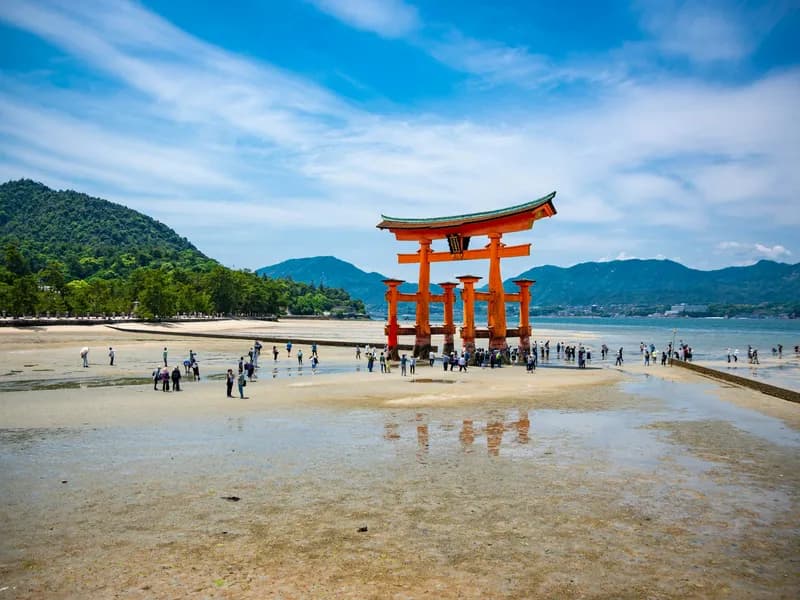
Floating Torii Gate (O-Torii)
The iconic 16.6m vermilion gate appears to float on water at high tide and can be walked to at low tide. Completely renovated in 2022 after 3 years of restoration. Check tide times at miyajima.or.jp. High tide is more photogenic; low tide lets you touch the gate's base. The gate is illuminated until 11PM. Free to view from shore.
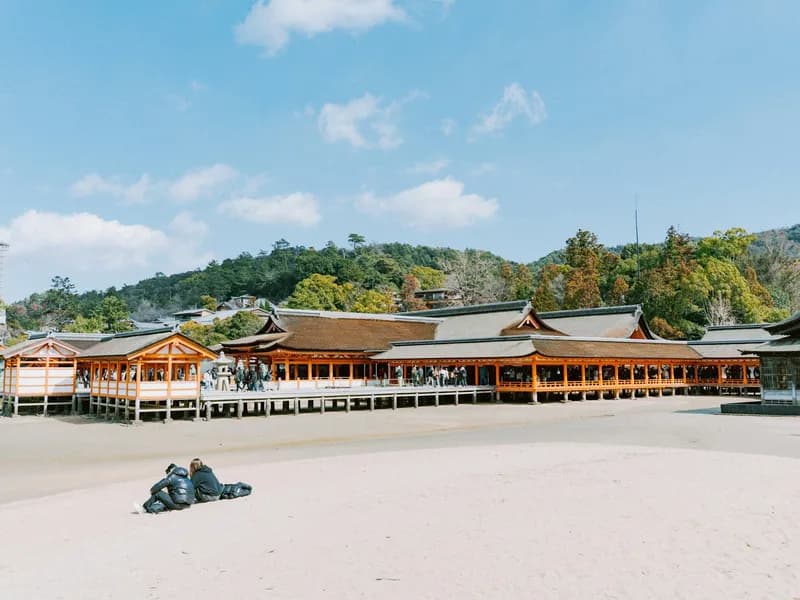
Itsukushima Shrine
A UNESCO World Heritage Shinto shrine built over water, dating to the 6th century with the current structure from 1168. Entry: 300 JPY. Open 6:30AM-6PM (varies seasonally). The shrine's corridors extend over the water and connect several buildings and a Noh theater stage — the oldest surviving Noh stage in Japan. Allow 45 minutes.
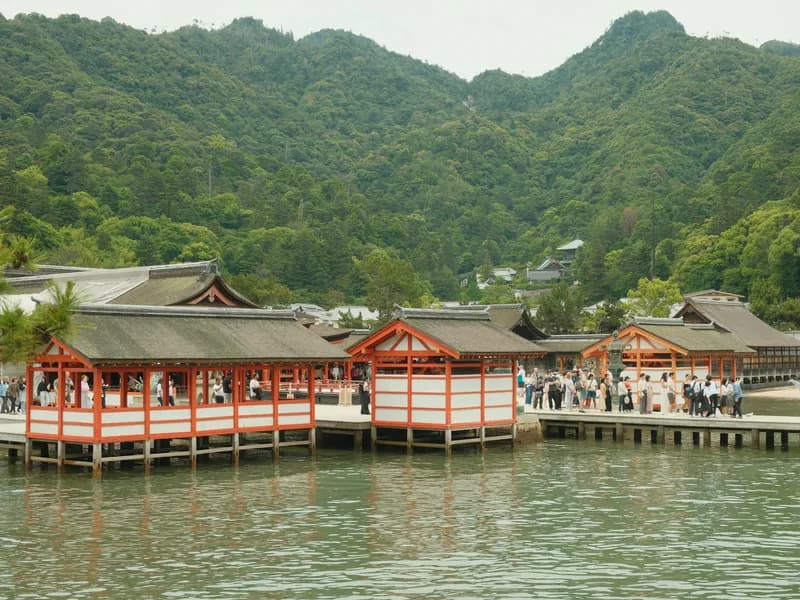
Mount Misen
The 535m sacred peak offers panoramic views of the Seto Inland Sea. Take the Miyajima Ropeway (2,000 JPY round trip) from Momijidani Park, then hike 30 minutes to the summit. Or hike the full trail (1.5-2 hours up). The Reikado Hall houses an eternal flame said to have burned for 1,200 years. Bring water; no shops at the top.
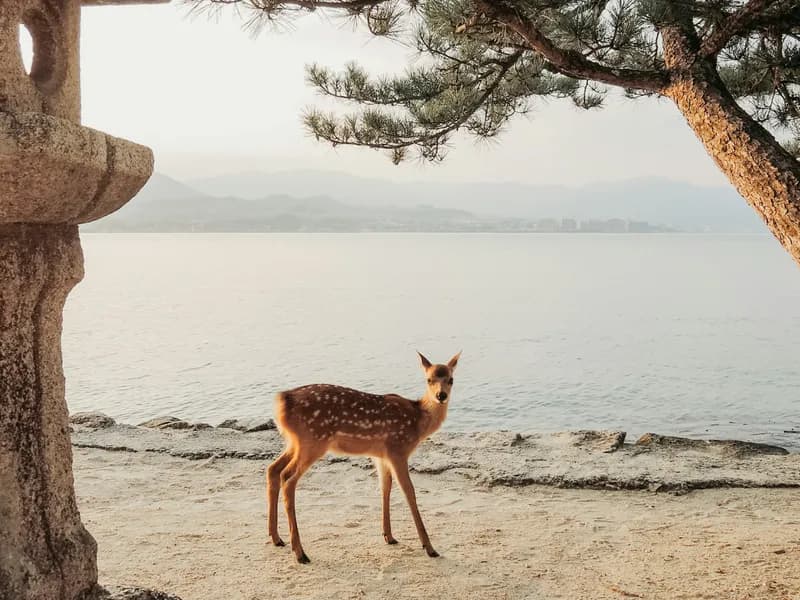
Wild Deer of Miyajima
Roughly 500 sika deer roam the island freely, clustering around the ferry terminal and shrine area. They are wild (not fed like Nara's deer) — do not feed them as it causes digestive problems. They will eat paper maps, tickets, and anything within reach. Best photographed in the early morning when the island is quiet. Keep food sealed in bags.
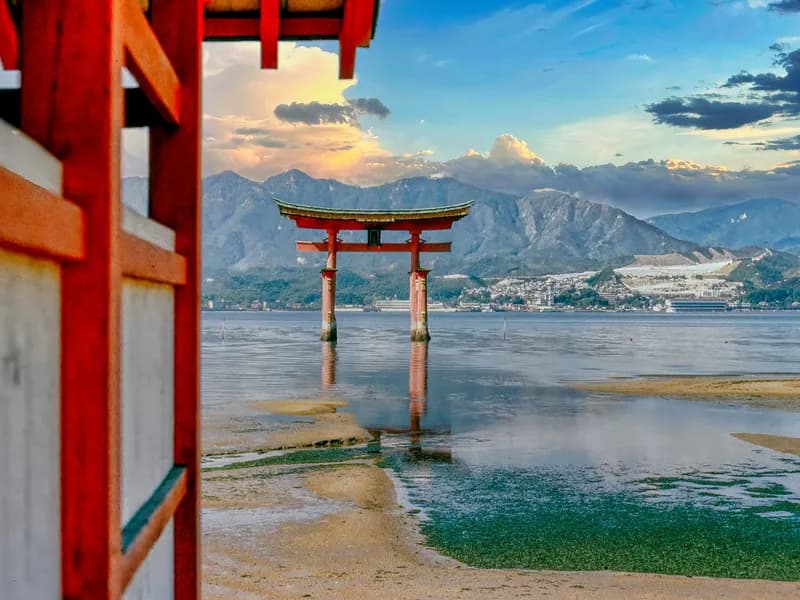
Momiji Manju (Maple Leaf Cakes)
Miyajima's signature sweet — small cakes shaped like maple leaves and filled with red bean paste, custard, chocolate, or cheese. Freshly made at shops along Omotesando Street for 100-200 JPY each. Try them fried (age-momiji) at select stalls for extra crunch. Iwamura Momijiya is the oldest maker (since 1912). Perfect edible souvenir.
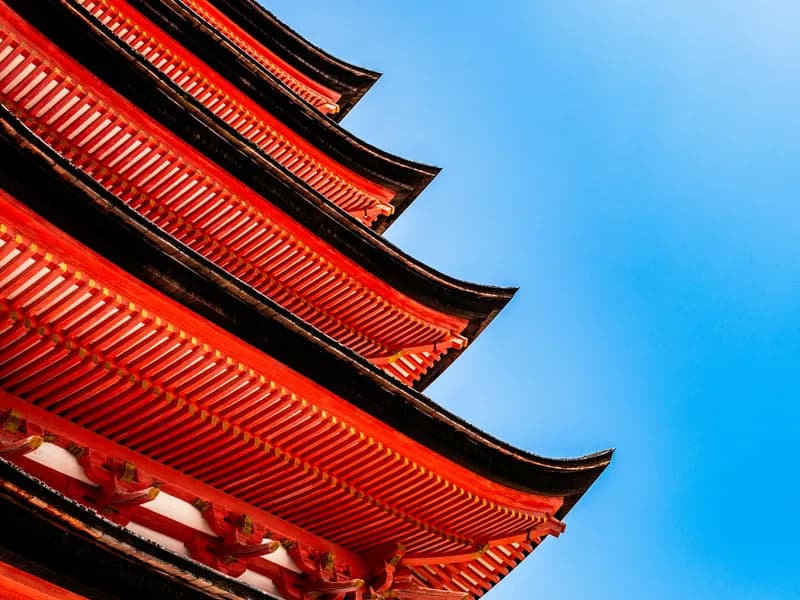
Momijidani Park
A free riverside park at the base of Mount Misen with 700 maple trees that explode with red, orange, and gold in mid-to-late November. The park is beautiful year-round with a gentle stream and arched bridges. Also the starting point for the ropeway and hiking trails. Allow 30-45 minutes for the park alone. Best visited early morning.
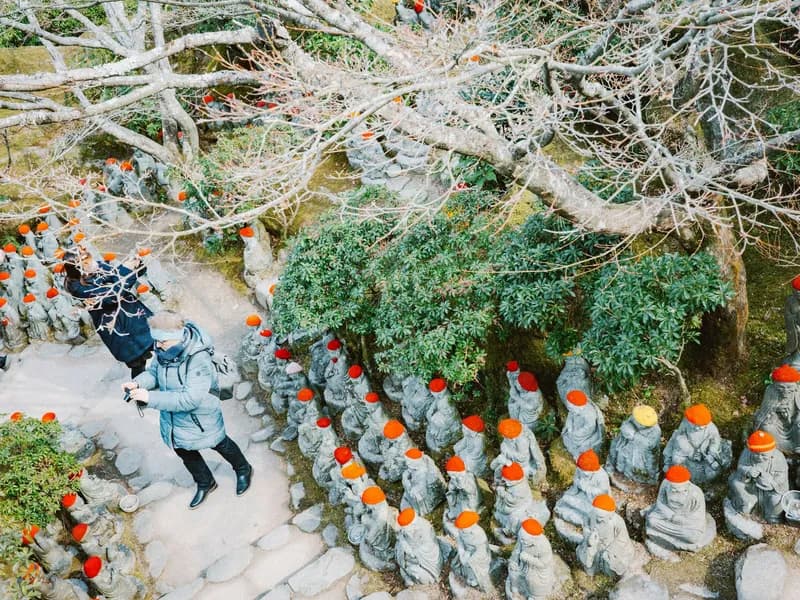
Daisho-in Temple
A stunning Shingon Buddhist temple at the base of Mount Misen, often overlooked by tourists focused on the shrine. Free entry. Hundreds of small stone Buddha statues line the approach, each wearing hand-knitted caps. Spin the prayer wheels along the stairway. The main hall contains sand from 88 Shikoku pilgrimage temples. Allow 45 minutes.
Planned Itinerary
7-Day Miyajima Itinerary
Arrival & First Torii Gate Encounter
Arrive on Miyajima island via ferry and check tide times — the floating torii gate experience depends on the tides.
JR to Miyajimaguchi then ferry(40 minutes)
JR San'yo Line from Hiroshima (27 min, 420 JPY) then JR Ferry (180 JPY, 10 min). Both covered by Japan Rail Pass. Or direct fast ferry from Peace Park Pier (2,200 JPY, 45 min)
Check-in at ryokan or hotel(45 minutes)
Ryokan from 15,000 JPY/person with dinner. Budget guesthouses from 5,000 JPY. Stay overnight — most tourists leave by 5PM
Omotesando Street and momiji manju(1 hour)
Sample freshly made maple leaf cakes (100-200 JPY). Try fried age-momiji at select stalls. Iwamura Momijiya since 1912
Floating Torii Gate at high tide(30 minutes)
Check tide times at miyajima.or.jp. The 16.6m vermilion gate appears to float on water at high tide. Illuminated until 11PM. Free to view from shore
Itsukushima Shrine & Mount Misen
The island's two main attractions — the UNESCO shrine and the sacred peak.
Itsukushima Shrine morning visit(45 minutes)
300 JPY. Built over water since the 6th century. Corridors extend over the sea. Contains Japan's oldest surviving Noh stage. Open 6:30AM
Miyajima Ropeway to Mount Misen(3 hours)
2,000 JPY round trip from Momijidani Park. 30-min hike from ropeway station to the 535m summit. Panoramic Inland Sea views. Visit Reikado Hall with the eternal flame (1,200 years burning). Bring water
Lunch at Kakiya oyster restaurant(1 hour)
Miyajima is famous for oysters. Kakiya near the shrine serves grilled, fried, and raw oysters from 400 JPY per piece. Oyster curry rice 1,200 JPY
Torii Gate at low tide(30 minutes)
Walk across the seabed to touch the gate's base. A completely different experience from high tide
Daisho-in Temple & Momijidani Park
The often-overlooked Buddhist temple and the beautiful riverside maple park.
Daisho-in Temple(45 minutes)
Stunning Shingon temple at the base of Mount Misen. Free. Hundreds of small stone Buddhas with hand-knitted caps. Spin prayer wheels along the stairway
Momijidani Park morning walk(45 minutes)
Free. 700 maple trees along a gentle stream. Best in mid-to-late November for autumn color. Beautiful year-round with arched bridges
Grilled oysters and anago lunch(1 hour)
Try anago-meshi (conger eel rice box) — Miyajima's other signature dish alongside oysters. From 1,500 JPY at Fujitaya or Ueno
Free afternoon: beach walk or deer watching(flexible)
The quiet beaches on the island's west side are uncrowded. Watch deer from a distance. Don't feed them — it's prohibited
Day Trip to Hiroshima Peace Memorial
Take the ferry back to the mainland for a profound day at Hiroshima's Peace Park.
Ferry to mainland and train to Hiroshima(40 minutes)
Or direct fast ferry to Peace Park pier (2,200 JPY, 45 min)
Hiroshima Peace Memorial Museum(2 hours)
200 JPY. Renovated in 2019. Artifacts and testimonies from the atomic bombing. Deeply moving. Allow extra time for reflection
A-Bomb Dome and Peace Park(1 hour)
The skeleton of the only structure left standing near the hypocenter. UNESCO World Heritage Site. Free to walk the park
Okonomiyaki lunch in Hiroshima(1 hour)
Hiroshima-style layered okonomiyaki at Okonomi-mura building (4th floor food court) or Nagataya from 900 JPY. Noodles and cabbage layered, not mixed
Rest Day — Island Slow Pace
Relaxed day enjoying the island after most tourists leave.
Sunrise walk to the torii gate(45 minutes)
Early morning on Miyajima is magical — the gate, the deer, the mist. No crowds before 8AM
Free morning at leisure(flexible)
Read on the beach, revisit the shrine, or explore the island's quieter southern paths
Afternoon deer watching from a safe distance(1 hour)
About 500 wild sika deer roam the island. Best photographed in early morning or late afternoon
Hiking & Hidden Spots
Explore beyond the tourist core — hiking trails and the island's quieter reaches.
Mount Misen full hike (alternative route)(3 hours)
Hike the Omoto route (2 hours up) — steeper than the ropeway route but quieter with ancient cedar trees. Free
Tsutsumigaura Nature Park(1 hour)
Free campground and beach on the island's north side. Swimming in summer. Almost no tourists
Torii gate sunset view(1 hour)
The sunset behind the torii gate is one of Japan's most photographed scenes. Timing depends on season
Departure Day
Final morning on Miyajima.
Last momiji manju shopping(30 minutes)
Buy boxes as souvenirs — they keep for about a week. Freshly made are best eaten same day
Final torii gate visit(15 minutes)
One last look at whatever tide state you haven't seen yet
Ferry to Miyajimaguchi and onward(varies)
JR ferry (180 JPY, 10 min) then train to Hiroshima Station for Shinkansen connections
14-Day Miyajima Itinerary
Arrival & First Torii Gate
Arrive on Miyajima and experience the floating torii gate.
Ferry to Miyajima(40 minutes)
JR San'yo Line + JR Ferry. Covered by Rail Pass
Check-in at ryokan(45 minutes)
From 15,000 JPY with dinner. Budget from 5,000 JPY
Omotesando Street and momiji manju(1 hour)
Maple cakes 100-200 JPY. Fried age-momiji
Torii gate at high tide(30 minutes)
Illuminated until 11PM. Free
Itsukushima Shrine & Mount Misen
UNESCO shrine and sacred peak.
Itsukushima Shrine(45 minutes)
300 JPY. Over-water corridors. Oldest Noh stage
Ropeway and Mount Misen(3 hours)
2,000 JPY. 535m summit. Reikado eternal flame. Bring water
Oyster lunch at Kakiya(1 hour)
Grilled oysters from 400 JPY. Oyster curry 1,200 JPY
Torii gate at low tide(30 minutes)
Walk to the base
Daisho-in & Momijidani
Buddhist temple and maple park.
Daisho-in Temple(45 minutes)
Free. Stone Buddhas with knitted caps. Prayer wheels
Momijidani Park(45 minutes)
Free. 700 maple trees. Arched bridges
Anago-meshi lunch(1 hour)
Conger eel rice from 1,500 JPY at Fujitaya
Hiroshima Peace Memorial
Day trip to Peace Park and Museum.
Peace Memorial Museum(2 hours)
200 JPY. Atomic bombing artifacts
A-Bomb Dome and park(1 hour)
UNESCO site. Free
Hiroshima okonomiyaki lunch(1 hour)
Okonomi-mura or Nagataya from 900 JPY
Rest Day — Island Morning
Slow day after tourists leave.
Sunrise torii gate walk(45 minutes)
No crowds before 8AM
Mount Misen Full Hike
Alternative hiking routes and hidden spots.
Omoto route hike(3 hours)
Steeper but quieter. Ancient cedars. Free
Tsutsumigaura Nature Park(1 hour)
Free. Beach and campground on north side
Day Trip to Iwakuni — Kintai Bridge
Visit the famous five-arched wooden bridge across the Nishiki River.
JR to Iwakuni(50 minutes)
From Miyajimaguchi (770 JPY). Or bus from Hiroshima
Kintai Bridge crossing(30 minutes)
310 JPY. Iconic five-arched wooden bridge rebuilt in traditional style. The engineering is remarkable
Iwakuni Castle ropeway(1 hour)
560 JPY combined ticket. Hilltop castle with river valley views
Iwakuni sushi lunch(45 minutes)
Iwakuni-zushi is a pressed sushi local specialty. From 800 JPY
Onomichi Day Trip — Temple Walk
Visit the charming hillside temple town along the Seto Inland Sea.
JR to Onomichi(1.5 hours)
From Miyajimaguchi via Hiroshima. 2,310 JPY
Onomichi Temple Walk(2.5 hours)
25 temples connected by a hillside path. Free. Panoramic Inland Sea views. Cats everywhere
Onomichi ramen lunch(45 minutes)
Pork back-fat ramen from 650 JPY. Shukaen or Ichibankan
Senko-ji Temple and ropeway(1 hour)
320 JPY ropeway. Temple with the best view of the Inland Sea and Shimanami Kaido bridge
Rest Day — Onsen & Relaxation
Hot spring day near Miyajima.
Miyahama Onsen (mainland near ferry)(2 hours)
Several onsen hotels offer day-use from 1,000 JPY. Ocean views from the baths
Shopping in Miyajimaguchi area(1 hour)
Mainland shops with island souvenirs
Ryokan dinner(1.5 hours)
Multi-course kaiseki with local seafood if staying at a ryokan
Hiroshima Deep Dive
Return to Hiroshima for sites beyond the Peace Park.
Hiroshima Castle (Carp Castle)(1 hour)
370 JPY. Reconstructed castle with city history museum
Shukkeien Garden(45 minutes)
260 JPY. Historic miniature landscape garden from 1620
Lunch: tsukemen dipping noodles(45 minutes)
Hiroshima's other food specialty besides okonomiyaki. Bakudanya from 800 JPY
Hondori Shopping Arcade(1 hour)
Covered shopping street. Good for gifts and street food
Kayaking & Water Activities
Experience Miyajima from the water.
Sea kayaking around the torii gate(2.5 hours)
Guided tours from 5,000 JPY. Paddle around the floating gate at high tide — a unique perspective few tourists get. Book ahead
Beach time at Tsutsumigaura(1.5 hours)
Free. Swim in summer, walk year-round. Pack snacks from Omotesando
Rest Day — Cultural Workshop
Hands-on craft experience on the island.
Momiji manju making workshop(1.5 hours)
Some shops offer hands-on classes making maple leaf cakes. From 1,500 JPY. Eat your creation
Miyajima History and Folklore Museum(45 minutes)
300 JPY. In a beautiful Edo-era merchant house. Local history and culture
Night torii gate viewing(30 minutes)
Final illuminated view
Farewell Day
Last full day on the island.
Souvenir shopping(45 minutes)
Momiji manju boxes, shakushi (rice paddle) crafts — Miyajima produces most of Japan's rice paddles
Departure Day
Final morning on Miyajima.
Train to Hiroshima Station for connections(30 minutes)
Shinkansen to Osaka (1.5 hrs), Kyoto (2 hrs), or Tokyo (4 hrs)
21-Day Miyajima Itinerary
Arrival & First Torii Gate
Arrive on Miyajima island.
Ferry to Miyajima(40 minutes)
JR train + ferry. Covered by Rail Pass
Torii gate at high tide(30 minutes)
Illuminated until 11PM
Itsukushima Shrine & Mount Misen
UNESCO shrine and sacred peak.
Itsukushima Shrine(45 minutes)
300 JPY
Ropeway to Mount Misen(3 hours)
2,000 JPY. 535m. Eternal flame
Daisho-in & Momijidani
Temple and maple park.
Daisho-in Temple(45 minutes)
Free. Stone Buddhas
Momijidani Park(45 minutes)
Free. 700 maples
Anago-meshi lunch(1 hour)
From 1,500 JPY
Hiroshima Peace Memorial
Day trip to Peace Park.
Peace Memorial Museum(2 hours)
200 JPY
Okonomiyaki lunch(1 hour)
From 900 JPY
Rest Day — Island Morning
Slow pace after tourists depart.
Mount Misen Full Hike
Alternative route through ancient cedars.
Omoto route hike(3 hours)
Free. Ancient cedars
Tsutsumigaura beach(1 hour)
Free
Iwakuni Kintai Bridge
Famous five-arched wooden bridge.
JR to Iwakuni(50 minutes)
770 JPY
Kintai Bridge(30 minutes)
310 JPY
Iwakuni Castle ropeway(1 hour)
560 JPY
Onomichi Temple Walk
Hillside temple town on the Inland Sea.
JR to Onomichi(1.5 hours)
2,310 JPY
Temple Walk (25 temples)(2.5 hours)
Free. Sea views, cats
Onomichi ramen lunch(45 minutes)
From 650 JPY
Senko-ji ropeway(1 hour)
320 JPY
Rest Day — Onsen
Hot springs near Miyajima.
Miyahama Onsen day-use(2 hours)
From 1,000 JPY. Ocean views
Hiroshima Deep Dive
Beyond Peace Park.
Hiroshima Castle(1 hour)
370 JPY
Shukkeien Garden(45 minutes)
260 JPY
Sea Kayaking
Paddle around the torii gate.
Kayak tour around torii(2.5 hours)
From 5,000 JPY. Unique perspective at high tide
Rest Day — Crafts
Cultural workshops.
Momiji manju making(1.5 hours)
From 1,500 JPY
History Museum(45 minutes)
300 JPY. Edo merchant house
Rabbit Island (Okunoshima)
Day trip to the island overrun with friendly wild rabbits.
Train to Tadanoumi then ferry(2 hours)
JR via Hiroshima (1.5 hr), then Okunoshima ferry (310 JPY, 15 min)
Rabbit Island exploration(3 hours)
Hundreds of wild rabbits approach visitors. Bring pellets from the ferry terminal vending machines. Walking trails around the island
Poison Gas Museum(30 minutes)
Free. The island was a secret WWII chemical weapons factory. Sobering history
Shimanami Kaido Cycling
Ride across the island-hopping bridge route connecting Honshu and Shikoku.
Rent a bicycle at Onomichi(15 minutes)
From 1,100 JPY/day. Electric bikes available
Cycle the first 2-3 islands(4 hours)
Cross bridges between islands with stunning Inland Sea views. Innoshima and Ikuchijima have beautiful coastal roads. Don't need to do the full 70km — turn back or take a bus
Lunch on one of the islands(45 minutes)
Hassaku citrus gelato and seafood at island cafes
Rest Day — Slow Island
Simply exist on the island.
Morning meditation at Daisho-in(1 hour)
The temple is peaceful before tourists arrive
Free day(flexible)
Beach, reading, walking
Day Trip to Kure — Maritime History
Visit the naval port city famous for the battleship Yamato.
JR to Kure(1 hour)
Via Hiroshima. 820 JPY
Yamato Museum(1.5 hours)
500 JPY. 1/10 scale model of the legendary battleship. Naval history from Meiji era
JMSDF Kure Museum (Iron Whale)(1 hour)
Free. Walk inside a real decommissioned submarine. Fascinating
Kure naval curry lunch(45 minutes)
Each ship in the fleet had its own curry recipe. Restaurants serve recreation recipes from 800 JPY
Sandankyo Gorge Hiking
Day trip to the spectacular three-tiered gorge north of Hiroshima.
Bus from Hiroshima to Sandankyo(1.5 hours)
Direct bus from Hiroshima Bus Center (1,350 JPY). The gorge is in the mountains north of the city
Gorge trail hiking(3 hours)
13km one-way trail along emerald pools, waterfalls, and cliff faces. Do the first section (5km) for the best scenery. Well-maintained paths. Free entry
Rest Day — Photography
Camera-focused island day.
Sunrise at torii gate(1 hour)
Golden morning light on the gate and shrine
Saijo Sake District
Day trip to Hiroshima Prefecture's sake brewing town.
JR to Saijo(45 minutes)
From Hiroshima (510 JPY)
Sake brewery walking tour(3 hours)
7 breweries clustered near the station, all offering free tastings. Kamotsuru, Kirei, and Hakubotan are highlights
Sake-paired lunch(1 hour)
Restaurants near the breweries pair local sake with seasonal cuisine
Farewell Day
Last full day on Miyajima.
Souvenir shopping — shakushi rice paddles(45 minutes)
Miyajima produces most of Japan's rice paddles. Giant shakushi near the shrine is a photo op
Departure Day
Final morning on Miyajima.
Train to Hiroshima for connections(30 minutes)
Shinkansen to Osaka, Kyoto, Tokyo
Travel Tips
Visa & Entry
Japan Visa-Free Entry
Most Western passport holders receive 90-day visa-free entry. Complete Visit Japan Web registration before arrival. Miyajima is typically visited as a day trip from Hiroshima (45 min ferry) or overnight stay.
transport
Ferry Access from Hiroshima
Take the JR San'yo Line to Miyajimaguchi Station (27 min, 420 JPY), then JR Ferry (180 JPY, 10 min) — both covered by Japan Rail Pass. Alternative: direct fast ferry from Hiroshima Peace Park Pier (2,200 JPY, 45 min). The Hiroden tram 1-day pass (700 JPY) also reaches Miyajimaguchi but takes 70 minutes from central Hiroshima.
Check Tide Times Before Visiting
The torii gate experience changes dramatically with tides. At high tide it appears to float; at low tide you walk across the seabed to its base. Both are worth seeing. Check tide predictions at miyajima.or.jp or ask at the ferry terminal. An ideal visit spans a tidal change. Mid-tide with the gate partially in water is least photogenic.
Local Customs
Stay Overnight for the Best Experience
Most tourists leave by 5PM, leaving the island magical and quiet at dusk. The illuminated torii gate (until 11PM) without crowds is unforgettable. Several ryokan (traditional inns, from 15,000 JPY/person with dinner) offer ocean-view rooms. Note: shops and restaurants close early (5-6PM), so eat at your ryokan or bring supplies.
Budget
Miyajima on a Budget
The shrine (300 JPY) and ropeway (2,000 JPY) are the main costs. Momiji manju from 100 JPY, grilled oysters (local specialty) from 400 JPY per piece. A day trip including ferry and attractions costs about 3,500-5,000 JPY. Pack lunch from Hiroshima convenience stores to save on the island's limited and pricier dining options.
Safety
Deer Will Eat Your Belongings
Miyajima's deer are bold and will eat maps, train tickets, shopping bags, and even clothing edges. Keep all paper items and food in zipped bags. Do not feed the deer — feeding is prohibited and harmful. They can be pushy, especially around the ferry terminal. Avoid deer with antlers during rutting season (October-November).
Related Articles
Travel GuidesMiyajima FAQ: Tides, Food, Transport, and Everything Else
When's high tide? Can I stay overnight? Where's the best momiji manju? A travel expert answers the 12 questions every Miyajima visitor asks.
Travel GuidesSacred Miyajima: Art, Spirituality, and the Island the Gods Chose
For 1,400 years, no one was allowed to be born or die on this island. That level of reverence shaped everything — the shrine, the forests, the way light falls on water.
StoriesA Day on Miyajima: Torii Gate, Deer, and the Best Maple Cake in Japan
I timed the tides wrong, a deer ate my ferry ticket, and the fried momiji manju from a 1912 shop became my favorite food memory from Japan.