
Mostar

Photo: Yu Siang Teo / Unsplash
Key Facts
Best Time to Visit
May to September (20-35°C, bridge diving season, long days); June and September are ideal to avoid peak heat
Language
Bosnian, Croatian, Serbian (all mutually intelligible); English spoken in tourist areas
Currency
Convertible Mark (BAM), pegged to EUR at 1.96 BAM = 1 EUR
Time Zone
CET (UTC+1), CEST (UTC+2) in summer
Airport
Mostar Airport (OMO) with limited seasonal flights; Sarajevo (SJJ) 2h or Dubrovnik (DBV) 2.5h by car
Population
~105,000 (city proper)
Climate
Mediterranean-influenced, hot summers 30-38°C, mild winters 2-10°C, 1,300mm annual rainfall
Safety Rating
Generally Safe (Level 1) — avoid unmarked areas outside town (landmine risk from 1990s war)
UNESCO Status
Old Bridge Area of the Old City of Mostar, UNESCO World Heritage Site since 2005
Top Highlights
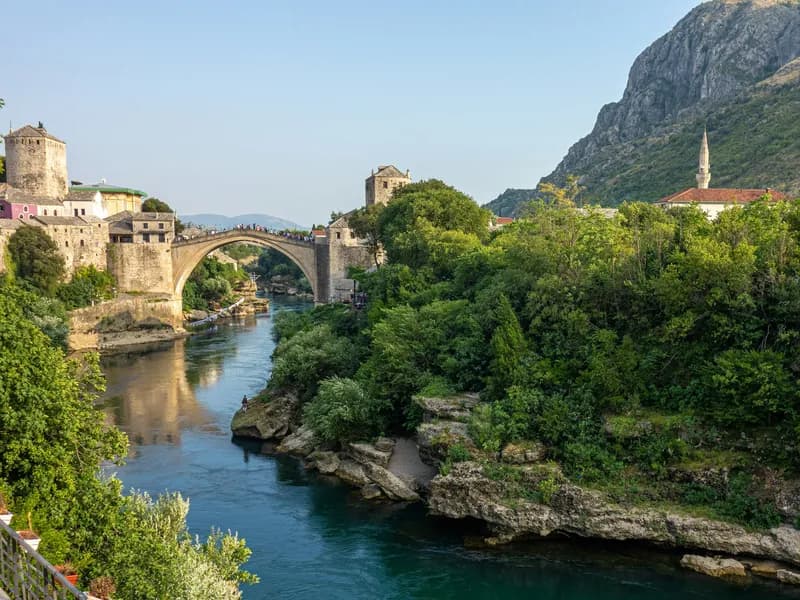
Stari Most (Old Bridge)
The 16th-century Ottoman bridge rebuilt in 2004 after its 1993 destruction, arcing 24 meters above the turquoise Neretva River. Free to walk across. Local divers from the Mostari club jump from the bridge for crowds (traditional since 1664) — watch from the riverbank cafes or pay 25 EUR to jump yourself after a brief training. Best photographed from the east bank at sunset.
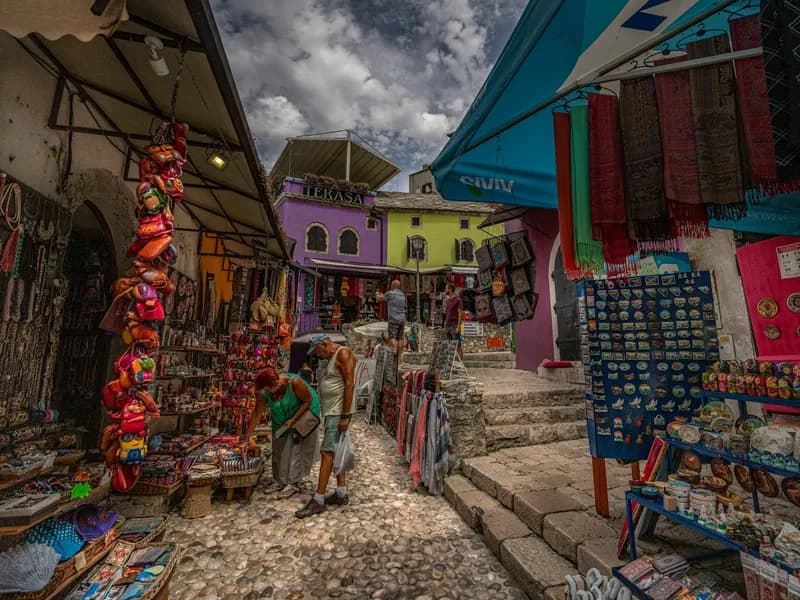
Old Bazaar (Kujundziluk)
A cobblestoned Ottoman bazaar flanking both sides of the bridge, filled with coppersmith shops, Turkish lamp vendors, and carpet sellers. Prices are negotiable — start at 40-50% of asking price. Try Bosnian coffee (2-3 BAM) served in a dzezva with rahat lokum (Turkish delight). The bazaar is touristy but atmospheric. Allow 1-2 hours of wandering.
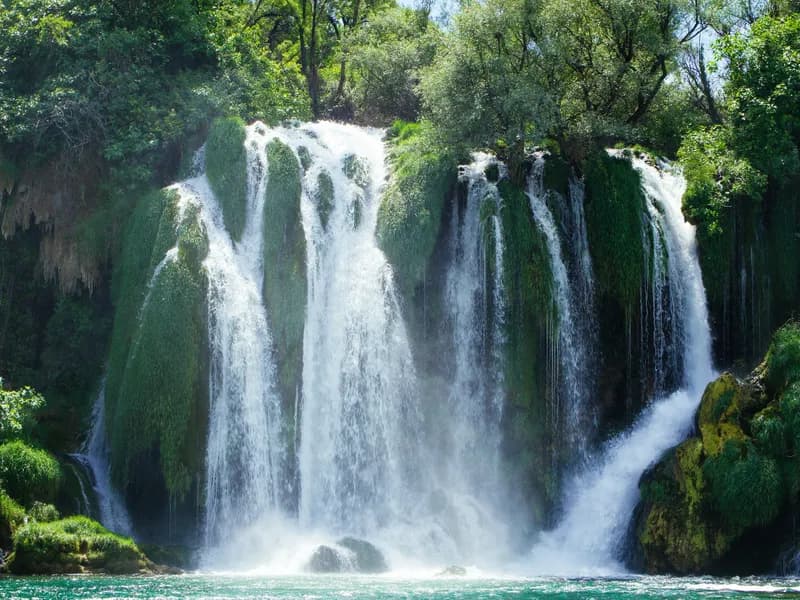
Kravica Waterfalls
A stunning 25-meter semicircular waterfall on the Trebizat River, 40km south of Mostar. Entry: 10 BAM (~5 EUR) in summer, less off-season. Swimming allowed in the natural pool below — the water is refreshing at ~18°C. Open daily 8AM-8PM in summer. Bring swimwear and water shoes. Best visited by car (40 min) or organized tour (from 25 EUR).
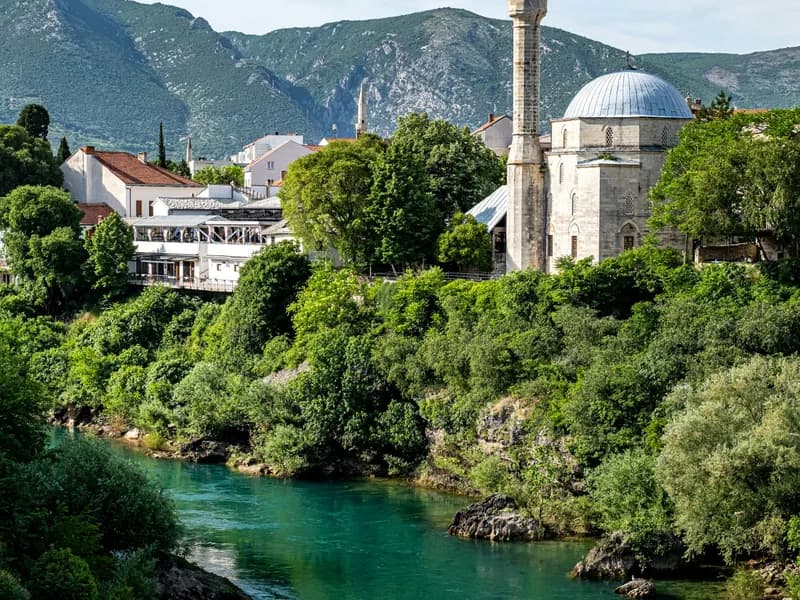
Koski Mehmed Pasha Mosque
A 1617 Ottoman mosque with a minaret offering the best aerial view of Stari Most and the old town. Mosque entry: 6 BAM (~3 EUR), minaret climb: 12 BAM (~6 EUR). Open 9AM-6PM. The 89-step spiral staircase is narrow and steep but the view is the classic Mostar postcard shot. Remove shoes to enter the mosque. Allow 30-45 minutes.
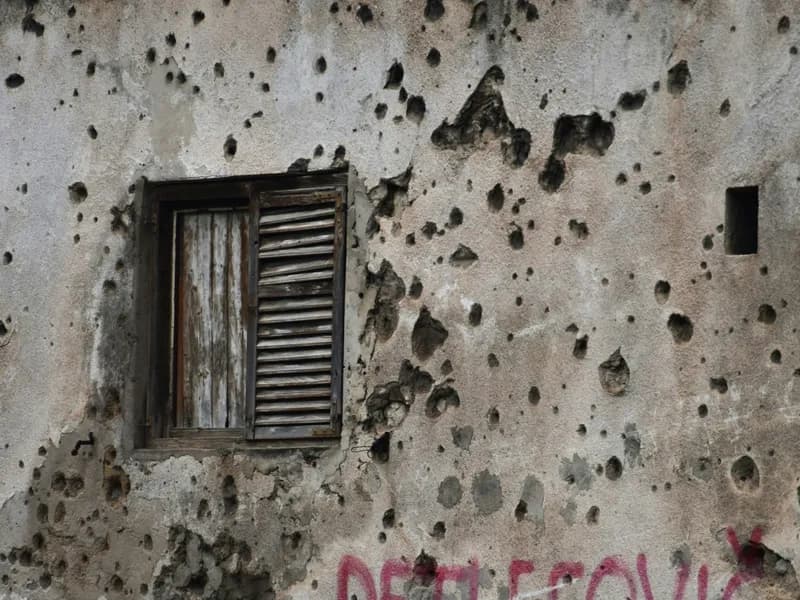
War Photo Exhibition
A hidden gem museum documenting the 1992-1995 siege of Mostar through powerful photographs and artifacts, housed in a bullet-scarred building. Entry: 10 BAM (~5 EUR). Open 9AM-5PM. The exhibit provides essential context for understanding the city's modern history and the bridge's reconstruction. Emotionally intense but respectful. Allow 45 minutes.
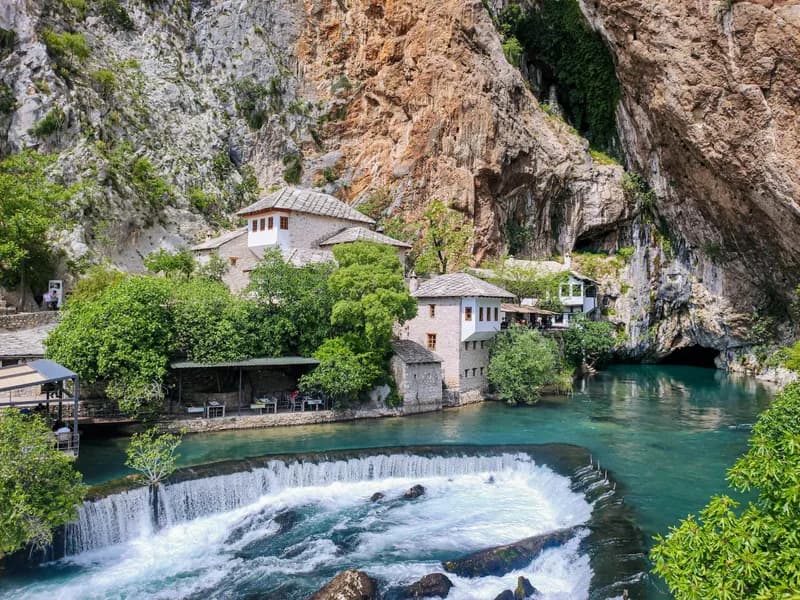
Blagaj Tekke
A 16th-century Dervish monastery built into a cliff face where the Buna River emerges from a cave — one of Europe's most beautiful springs. Entry: 5 BAM (~2.50 EUR). 12km from Mostar center (15 min by car, bus from Mostar station 3 BAM). The riverside restaurants serve fresh trout (15-20 BAM). Open daily 8AM-8PM in summer. Allow 1.5 hours.
Planned Itinerary
7-Day Mostar Itinerary
Arrival in Mostar
Arrive via Sarajevo (SJJ, 2.5h bus) or Dubrovnik (DBV, 2.5h bus). Settle into the Ottoman old town.
Bus from Sarajevo or Dubrovnik to Mostar(2.5 hours)
From Sarajevo: 11 EUR, stunning river gorge route. From Dubrovnik: 18 EUR via Globtour. Both run multiple daily
Check in to Pansion Cardak in the old town(30 minutes)
Family-run guesthouse steps from the bridge. Doubles from 50 BAM (~25 EUR). Terrace with river views
First walk to Stari Most (Old Bridge)(1 hour)
The 16th-century Ottoman bridge arcing 24m above the emerald Neretva. Free to cross. Watch from the riverside cafes as the light changes. Best photographed from the east bank
Dinner at Tima Irma(1.5 hours)
Near the bridge. Cevapi (grilled meat sausages with somun bread and onions) 8-12 BAM. Bosnia's national dish. Fresh and hot
Stari Most, Old Bazaar & Mosque Minaret
Full exploration of Mostar's UNESCO old town — the bridge, the bazaar, and the aerial view from the mosque.
Koski Mehmed Pasha Mosque and minaret climb(45 minutes)
Mosque 6 BAM, minaret 12 BAM. 89 steep spiral steps to the best aerial view of Stari Most. The classic Mostar postcard shot. Remove shoes in the mosque
Old Bazaar (Kujundziluk) shopping(1.5 hours)
Ottoman cobblestone bazaar. Copperwork, Turkish lamps, carpets. Prices negotiable — start at 40-50%. Try Bosnian coffee (2-3 BAM) served in a dzezva with rahat lokum
Stari Most bridge diving show(30 minutes)
Local Mostari divers jump 24m into the Neretva — a tradition since 1664. Watch from riverbank cafes. Divers collect money from the crowd before jumping. To jump yourself: 25 EUR after brief training
Lunch at Sadrvan(1 hour)
Courtyard restaurant in the old town. Bosanski lonac (Bosnian pot stew) 12 BAM, japrak (stuffed vine leaves) 10 BAM
War Photo Exhibition(45 minutes)
10 BAM. Documents the 1992-1995 siege through photographs. Essential context for understanding modern Mostar. In a bullet-scarred building. Emotionally intense
Sunset from the east bank(1 hour)
Watch the bridge glow golden from the east bank restaurants. Order a Turkish tea and watch the light change
Blagaj Tekke & Kravica Waterfalls
Day trip to the cliff-face monastery and the stunning semicircular waterfall.
Drive or taxi to Blagaj Tekke(15 minutes)
12km from Mostar. Bus 3 BAM or taxi 15 BAM. Or rent a car for the day
Blagaj Tekke dervish monastery(1 hour)
5 BAM entry. 16th-century monastery built into a cliff where the Buna River emerges from a cave. One of Europe's most beautiful springs. The building reflected in the turquoise water is unforgettable
Lunch at riverside restaurant at Blagaj(1 hour)
Fresh trout from the Buna spring, 15-20 BAM. Sit on the terrace directly above the turquoise water
Drive to Kravica Waterfalls(40 minutes from Blagaj)
40km south. 10 BAM entry in summer. Semicircular 25m waterfall. Swimming in the natural pool below — water ~18°C. Bring swimwear and water shoes
Swim and relax at Kravica(2 hours)
The pool at the base is large enough for everyone. The mist is refreshing on hot days. Small beach bar sells drinks
Rest Day — Bosnian Coffee & Culture
A gentle day immersed in Mostar's cafe culture and the Bosnian coffee ritual.
Bosnian coffee ritual at a bridge-view cafe(1 hour)
Bosanska kafa served in a dzezva with sugar cubes and rahat lokum. The ritual: pour slowly, dip sugar cube, sip over 30+ minutes. 2-3 BAM. Rushing is poor form
Free morning exploration(2 hours)
Rest day component. Walk neighborhoods beyond the old town. The Spanish Square and western bank have different character
Lunch at Hindin Han(1 hour)
Historic han (inn) with Neretva views. Lamb under sac (bell) 18 BAM, Herzegovinian wine 5 BAM/glass
Hammam Museum(30 minutes)
5 BAM. 16th-century Turkish bath converted to a museum. Small but atmospheric
Afternoon rest(2 hours)
Rest day component
Dinner at Restoran Babylon(1.5 hours)
Upscale Bosnian. Grilled lamb chops 20 BAM, Vranac wine from Herzegovina
Pocitelj & Herzegovina Wine Country
Visit the medieval fortress village of Pocitelj and taste Herzegovina's excellent wines.
Drive to Pocitelj(30 minutes south)
A medieval stone village climbing a hillside above the Neretva. Free to wander. Climb the Sahat Kula (clock tower) for panoramic views. Partially ruined but atmospheric
Pocitelj art colony and pomegranate juice(1 hour)
The village hosts art colonies. Buy fresh pomegranate juice (2 BAM) from the vendors at the entrance — Herzegovina grows excellent pomegranates
Wine tasting at a Herzegovina winery(1.5 hours)
Wines of Herzegovina (Citluk area) are surprisingly excellent. Zilavka (white) and Blatina (red) are indigenous varieties. Tasting from 10-20 BAM at wineries like Brkic or Wines of Illyria
Lunch at the winery or Pocitelj restaurant(1 hour)
Pair wines with local cheese and cured meats. 15-25 BAM
Return to Mostar(30 minutes)
Evening on the bridge. The illuminated Stari Most at night is magical
Sarajevo Day Trip
Train or bus to the Bosnian capital through one of Europe's most scenic gorges.
Train from Mostar to Sarajevo(2.5 hours)
5.50 EUR. One of Europe's most scenic rail journeys — the Neretva gorge is extraordinary. Morning departure recommended
Sarajevo Bascarsija (Old Bazaar) walk(2 hours)
Ottoman quarter with the Sebilj fountain, Gazi Husrev-beg Mosque (free), copper workshops. The line where Ottoman and Austro-Hungarian architecture meets is visible on one street
Lunch at Zeljo cevapi in Bascarsija(45 minutes)
Sarajevo's most famous cevapi. Full plate 8 BAM. Join the queue — it moves fast
War Tunnel Museum(1 hour)
10 BAM. The tunnel under the airport that kept Sarajevo alive during the 1992-1996 siege. A powerful and essential visit
Return train to Mostar(2.5 hours)
Evening train back through the gorge in different light
Departure from Mostar
Final morning in the bridge city.
Sunrise walk to Stari Most(45 minutes)
The bridge at dawn — almost no one else. The emerald Neretva in morning light. One last crossing
Farewell Bosnian coffee(30 minutes)
Final dzezva at your regular cafe. 2-3 BAM for the best coffee ritual in Europe
Bus to Sarajevo or Dubrovnik airport(2.5 hours)
Multiple daily departures. Allow 2 hours before international flights at either airport
14-Day Mostar Itinerary
Arrival in Mostar
Arrive via Sarajevo or Dubrovnik.
Bus from Sarajevo or Dubrovnik(2.5 hours)
11 EUR from Sarajevo, 18 EUR from Dubrovnik
Check in to old town guesthouse(30 minutes)
From 50 BAM
Dinner at Tima Irma(1.5 hours)
Cevapi 8-12 BAM
Old Town, Bridge & Bazaar
Full UNESCO old town exploration.
Koski Mosque minaret(45 minutes)
12 BAM. Best aerial view
Old Bazaar(1.5 hours)
Copper, lamps, carpets. Bosnian coffee 2-3 BAM
War Photo Exhibition(45 minutes)
10 BAM
Blagaj Tekke & Kravica
Cliff monastery and waterfall swimming.
Blagaj Tekke(1 hour)
5 BAM
Lunch at Blagaj riverside(1 hour)
Trout 15-20 BAM
Kravica Waterfalls(3 hours)
10 BAM. Swimming in natural pool
Rest Day — Coffee Ritual
Gentle cafe culture day.
West bank exploration(2 hours)
Rest day component
Hammam Museum(30 minutes)
5 BAM
Pocitelj & Herzegovina Wines
Medieval village and wine tasting.
Pocitelj fortress village(1 hour)
Free. Climb the clock tower
Pomegranate juice(15 minutes)
2 BAM
Herzegovina wine tasting(1.5 hours)
From 10-20 BAM. Zilavka and Blatina
Sarajevo Day Trip
Scenic rail journey to the capital.
Train to Sarajevo(2.5 hours)
5.50 EUR. Neretva gorge scenery
Lunch at Zeljo(45 minutes)
Cevapi 8 BAM
War Tunnel Museum(1 hour)
10 BAM
Medjugorje & Stolac
The pilgrimage town and a hidden gem medieval town.
Drive to Medjugorje(30 minutes)
Catholic pilgrimage site. The church and Apparition Hill are free to visit. Whether or not you're religious, the atmosphere is unique
Drive to Stolac(30 minutes)
A hidden gem medieval town with Ottoman bridges, a hillside fortress, and the Bogomil necropolis
Radimlja Bogomil necropolis(45 minutes)
3 BAM. Medieval tombstones (stecci) with carved figures — UNESCO listed. An ancient and mysterious burial tradition
Lunch at Stolac(1 hour)
Small town restaurants. Grilled meats and salad 10-15 BAM
Rest Day
Second rest day.
Neretva River walk(1.5 hours)
Walk upstream from the bridge along the river path. Rest day component
Evening at bridge-view cafe(2 hours)
Watch the illuminated bridge. Bosnian coffee and conversation
Dubrovnik Day Trip
Bus to the Pearl of the Adriatic.
Bus to Dubrovnik(2.5 hours)
18 EUR
Dubrovnik Old Town walk(2 hours)
Stradun, Onofrio's Fountain, city walls glimpse
Lunch at Nishta(1 hour)
Creative vegetarian 10-14 EUR
Buza Bar sunset drinks(1 hour)
Hidden cliff bar
Neretva River Rafting
White water rafting on the emerald Neretva.
Neretva River rafting trip(4 hours)
From 60 BAM per person with operators like Rafting Neretva. Class II-III rapids through the canyon. Equipment provided. No experience needed
Lunch at rafting base camp(1 hour)
Usually included in the rafting price — BBQ lamb and salads
Free afternoon for rest(2 hours)
Rest day component. Recover from the river
Dinner at new restaurant(1.5 hours)
Try Konoba Dalmacija. Fish from the Neretva 18 BAM
Jablanica WWII History & Lake
Drive north to the Battle of Neretva museum and the scenic lake.
Battle of Neretva Museum and destroyed bridge(1.5 hours)
5 BAM. WWII partisan battle site. The original destroyed bridge is preserved. A key WWII moment in Yugoslav history
Jablanica Lake viewpoints(1 hour)
Scenic lake formed by a dam. Turquoise water against mountain backdrop. Free
Lunch at Jablanica lamb restaurant(1 hour)
Jablanica is famous across Bosnia for its spit-roasted lamb. Full plate 15-20 BAM. The best lamb in the country
Cooking Class & Local Life
Learn to cook Bosnian food and explore residential neighborhoods.
Bosnian cooking class(3 hours)
Learn to make burek, cevapi, and baklava with a local family. From 30-50 BAM. Includes the meal you cook
Walk residential Mostar(1.5 hours)
Cross to the west bank. See the rebuilt areas and the contrast with the old town. A thoughtful walk
Rest afternoon(2 hours)
Rest day component
Farewell dinner at Sadrvan(1.5 hours)
Return to the courtyard restaurant. Full Bosnian feast
Last Full Day — Favorites
Final day revisiting what made Mostar special.
Final bazaar walk and shopping(1 hour)
Copper items, Turkish lamps, Bosnian coffee sets
Departure from Mostar
Morning departure.
Bus to Sarajevo or Dubrovnik(2.5 hours)
Allow 2 hours before flights
21-Day Mostar Itinerary
Arrival in Mostar
Arrive via Sarajevo or Dubrovnik.
Check in(30 minutes)
From 50 BAM
Old Town Full Exploration
Bridge, bazaar, mosque, war exhibit.
Koski Mosque minaret(45 minutes)
12 BAM
War Photo Exhibition(45 minutes)
10 BAM
Blagaj & Kravica
Cliff monastery and waterfall.
Blagaj Tekke(1 hour)
5 BAM
Kravica Waterfalls(3 hours)
10 BAM
Rest Day
Coffee ritual and relaxation.
West bank walk(2 hours)
Rest day component
Pocitelj & Wine Country
Medieval village and Herzegovina wines.
Wine tasting(1.5 hours)
10-20 BAM
Sarajevo Day Trip
Scenic train journey.
Train to Sarajevo(2.5 hours)
5.50 EUR
War Tunnel(1 hour)
10 BAM
Medjugorje & Stolac
Pilgrimage and medieval towns.
Stolac fortress and Bogomil necropolis(2 hours)
3 BAM
Rest Day
Second rest day.
Rest(2 hours)
Rest day component
Neretva Rafting
White water adventure.
Rafting(4 hours)
From 60 BAM
Rest afternoon(2 hours)
Rest day component
Jablanica & Lake
WWII history and lamb.
Battle of Neretva Museum(1.5 hours)
5 BAM
Jablanica lamb lunch(1 hour)
15-20 BAM. Best lamb in Bosnia
Dubrovnik Day Trip
Pearl of the Adriatic.
Cooking Class
Learn Bosnian cuisine.
Cooking class with local family(3 hours)
30-50 BAM. Burek, cevapi, baklava
Rest(2 hours)
Rest day component
Konjic & Tito's Bunker
Cold War bunker and traditional crafts.
Tito's nuclear bunker (D-0)(2 hours)
20 BAM. Cold War underground bunker for Yugoslav leadership. Now an art space. Fascinating
Konjic woodcarving workshops(1 hour)
Traditional UNESCO-recognized craft. Visit artisans and buy hand-carved items
Rest Day
Third rest day.
Favorite cafe(1.5 hours)
Your regular Bosnian coffee spot
Rest(2 hours)
Rest day component
Trebinje Day Trip
Drive to the southern Bosnian city near the Montenegro border.
Trebinje Old Town and Arslanagic Bridge(1.5 hours)
Charming Herzegovinian town. Stunning Ottoman bridge. Saturday market with local produce
Tvrdos Monastery and wine tasting(1.5 hours)
15th-century Orthodox monastery producing excellent Vranac wine. Tasting from 10 BAM
Lunch at a Trebinje restaurant(1 hour)
Seafood influence from nearby Dubrovnik. Grilled fish 15 BAM
Sarajevo Overnight
Return to the capital for a deeper experience with an overnight stay.
Check in to Sarajevo Old Town(30 minutes)
From 60 BAM
Latin Bridge — Franz Ferdinand assassination site(30 minutes)
The bridge where WWI started. Museum 4 BAM
Tunnel of Hope Museum(1 hour)
10 BAM. Siege tunnel
Dinner at Klopa in Bascarsija(1.5 hours)
Modern Bosnian. Mains 15-25 BAM
Sarajevo Day 2 & Return
More of the capital then back to Mostar.
Markale Market(1 hour)
Site of the market massacre. Fresh produce, local life
Gallery 11/07/95 — Srebrenica Memorial(1 hour)
10 BAM. Moving photographic memorial. Essential for understanding Bosnia's recent history
Vrelo Bosne park(1 hour)
Source of the Bosna River. Horse carriage rides (5 BAM) through tree-lined avenues
Rest Day
Fourth rest day.
Rest(2 hours)
Rest day component
Photography & Creative Day
Capture Mostar through different eyes.
Dawn at the bridge(1.5 hours)
Empty bridge in first light
Bazaar details(1.5 hours)
Close-up copper work, lamp patterns, coffee sets
Farewell Day
Last full day.
Departure
Morning departure.
Travel Tips
Visa & Entry
Visa-Free for Most Nationalities
US, EU, UK, Canadian, and Australian citizens enter Bosnia visa-free for up to 90 days. Indian citizens need a visa — apply at the nearest Bosnian embassy (processing 5-10 days, ~31 EUR). Note: Bosnia is NOT in the EU or Schengen — a Schengen visa does not cover Bosnia. Your passport must be valid for 3+ months beyond your stay.
transport
Bus from Dubrovnik or Sarajevo
No direct flights for most travelers. Buses from Dubrovnik (3h, ~18 EUR via Globtour) and Sarajevo (2.5h, ~11 EUR) run multiple times daily. The Sarajevo-Mostar train (2.5h, ~5.50 EUR) follows a spectacular river gorge — one of Europe's most scenic rail journeys. Within Mostar, the old town is compact and walkable. Taxis start at 2 BAM.
Budget
Incredibly Affordable by European Standards
Mostar is one of Europe's best-value destinations. Restaurant meals: 10-20 BAM (5-10 EUR) for a full cevapi or grilled meat plate. Beer: 3-5 BAM. Hotel rooms: 50-80 BAM (25-40 EUR) for a double in the old town. A full day's expenses can be under 60 EUR including food, sights, and accommodation.
Safety
Landmine Awareness Outside Town
The biggest mistake tourists make: hiking off marked trails in the hills around Mostar. Bosnia still has landmines from the 1990s war in rural and mountainous areas. Stick to paved roads, marked trails, and cleared areas. Red-and-white skull signs indicate mined zones. The old town and main tourist routes are completely safe.
Local Customs
Bosnian Coffee Is a Ritual
Do not ask for 'Turkish coffee' — it is Bosnian coffee (bosanska kafa), served in a small brass dzezva pot with sugar cubes and rahat lokum. The ritual: pour a small amount into the fildzan cup, dip a sugar cube, sip slowly. It is meant to be enjoyed over 30+ minutes of conversation. Rushing it is considered poor form. Available everywhere for 2-3 BAM.
Respect the Multi-Ethnic Sensitivity
Mostar was divided along ethnic lines during the war and some sensitivities remain. Avoid asking locals 'which side' they are from or making casual war references. The east bank is predominantly Bosniak (Muslim), the west bank predominantly Croat (Catholic). Both sides are safe and welcoming to tourists. Dress modestly when visiting mosques.
Related Articles
Tips18 Mostar Tips From Someone Who's Been Four Times
Don't call it Turkish coffee. Don't rush the bridge. And definitely visit Blagaj Tekke before the tour buses arrive.
StoriesWhat Amir Wants Tourists to Understand About Mostar
He watched the bridge fall. He watched it rise again. Now he makes Bosnian coffee for visitors and tells them the real story.
Travel Guides9 Reasons Mostar Should Be on Every Balkans Itinerary
A 16th-century bridge, 5-euro dinners, and the best Bosnian coffee ritual you'll ever experience. Here's why Mostar isn't just a Dubrovnik day trip.