
Naoshima

Key Facts
Best Time to Visit
March to May and September to November; Setouchi Triennale art festival runs every 3 years (next: 2028)
Language
Japanese; English guides and pamphlets available at all Benesse art sites
Currency
Japanese Yen (JPY)
Time Zone
JST (UTC+9)
Airport
Nearest: Takamatsu Airport (TAK) on Shikoku, then ferry to Naoshima; or Okayama (OKJ) then train + ferry
Population
~3,000 residents (island)
Climate
Mediterranean-like microclimate, avg 5-28°C; mild winters, warm summers; Inland Sea moderates extremes
Safety Rating
Very Safe (Level 1)
Art Scene
Home to 3 Benesse Art Site museums, the Art House Project, and outdoor installations — part of the Setouchi Islands art ecosystem
Top Highlights
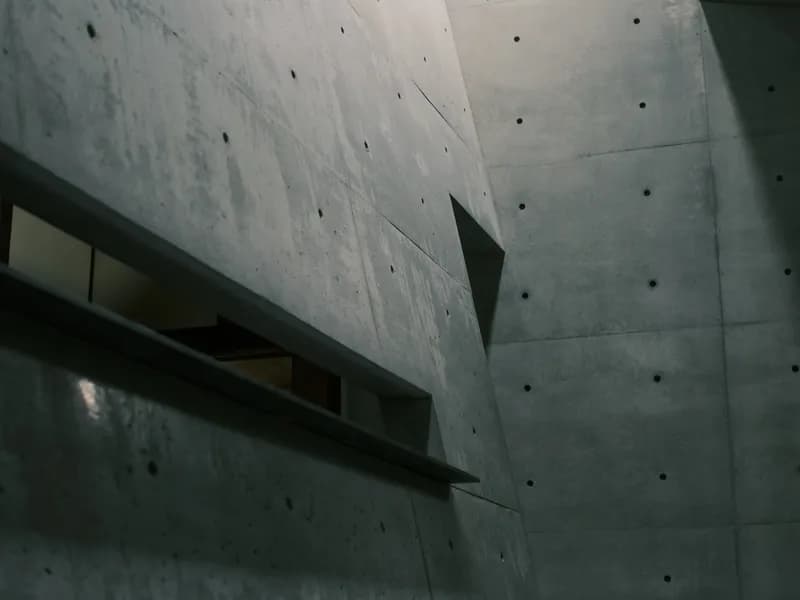
Chichu Art Museum
Tadao Ando's masterpiece — a museum built entirely underground to preserve the landscape, using only natural light to illuminate works by Monet, James Turrell, and Walter De Maria. Entry: 2,100 JPY. Open 10AM-6PM (closed Mon). Timed-entry tickets must be reserved online in advance. The Monet room alone is worth the trip. Allow 1.5-2 hours.
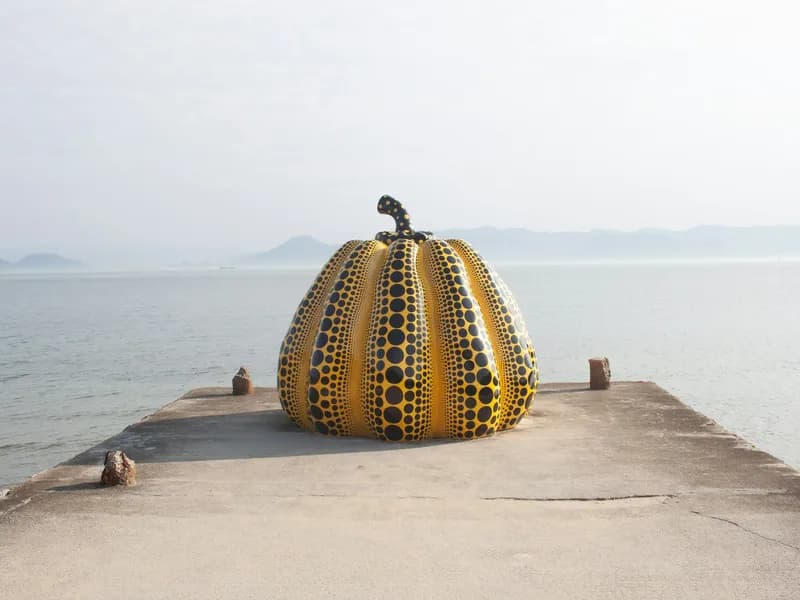
Yellow Pumpkin (Yayoi Kusama)
Kusama's iconic polka-dotted yellow pumpkin sculpture sits on a pier at the southern tip of the island — one of the world's most photographed artworks. Free to view and photograph. A typhoon swept it away in 2021, but it was restored and reinstated in 2022. Best at sunset. The red pumpkin at Miyanoura Port is also by Kusama. Allow 15-30 minutes.
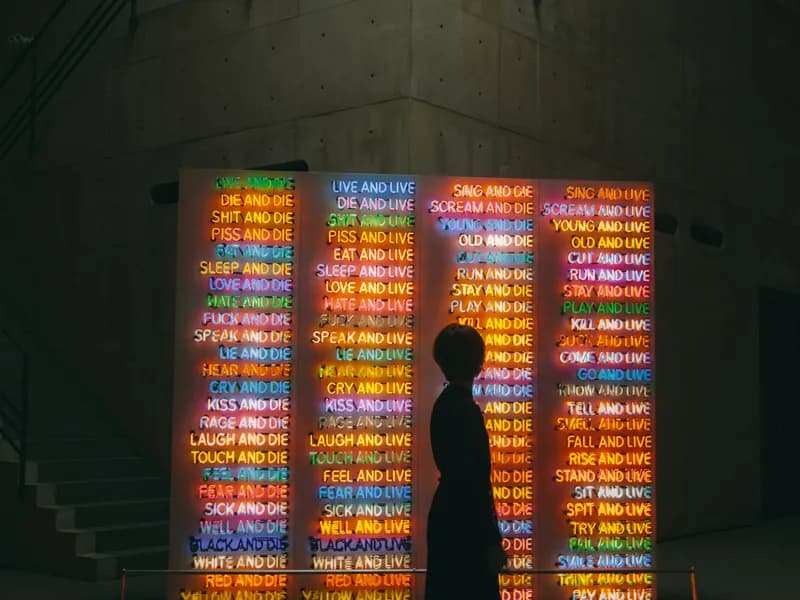
Benesse House Museum
A combined museum and hotel designed by Tadao Ando where guests sleep among the art. Museum entry: 1,050 JPY (free for hotel guests). Open 8AM-9PM. Works by Warhol, Hockney, Pollock, and Japanese contemporary artists. The outdoor sculpture garden along the beach is free. Hotel rooms from 30,000 JPY/night — book months ahead.
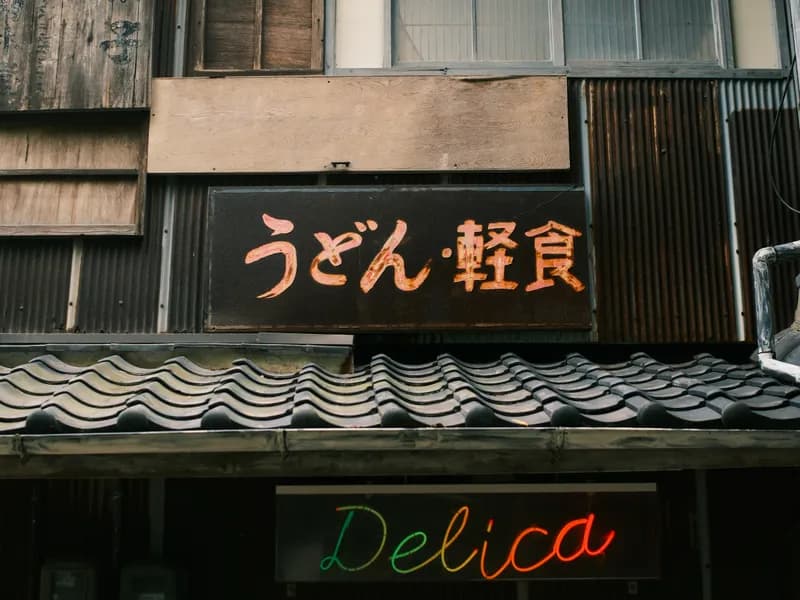
Art House Project (Honmura Village)
Seven abandoned houses, a shrine, and a temple in the old village of Honmura transformed into art installations by artists including James Turrell and Hiroshi Sugimoto. Each venue 520 JPY or combo ticket for 6 sites 1,050 JPY. Kinza requires a separate reservation (520 JPY, 15-min solo viewing). Open 10AM-4:30PM. Allow 2-3 hours for all sites.
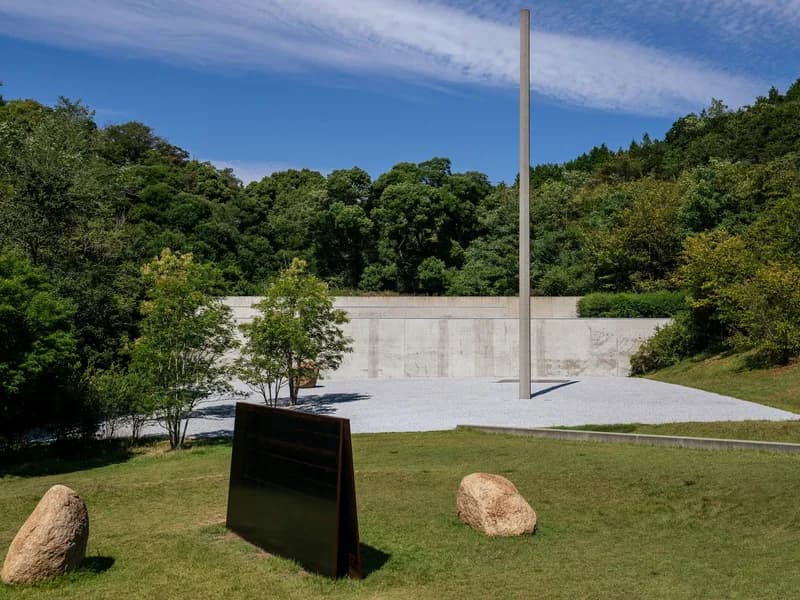
Lee Ufan Museum
A semi-underground museum designed by Tadao Ando dedicated to Korean minimalist artist Lee Ufan. Entry: 1,050 JPY. Open 10AM-6PM (closed Mon). The interplay of Ando's concrete spaces with Lee's stone-and-steel sculptures creates a meditative experience. An outdoor sculpture is free to view. 10-minute walk from Benesse House. Allow 45 minutes.
Naoshima Bath 'I Love Yu'
A functioning public bathhouse designed by artist Shinro Ohtake — the exterior and interior are a wild collage of found objects, tiles, and neon. Entry: 660 JPY (bring your own towel or rent one). Open 2PM-9PM (closed Mon). Located near Miyanoura Port. A quirky and quintessentially Naoshima way to end a day of art-hopping.
Planned Itinerary
7-Day Naoshima Itinerary
Arrival & Red Pumpkin Welcome
Arrive on Naoshima — the art island — via ferry and begin exploring outdoor installations.
Ferry to Miyanoura Port(varies)
From Takamatsu: ferry 1,000 JPY (50 min) or high-speed boat 1,220 JPY (25 min). From Okayama: JR to Uno (50 min, 590 JPY) then ferry 300 JPY (20 min)
Rent electric bicycle at port(15 minutes)
300-500 JPY/day regular, 1,000 JPY electric. The island is hilly — electric strongly recommended
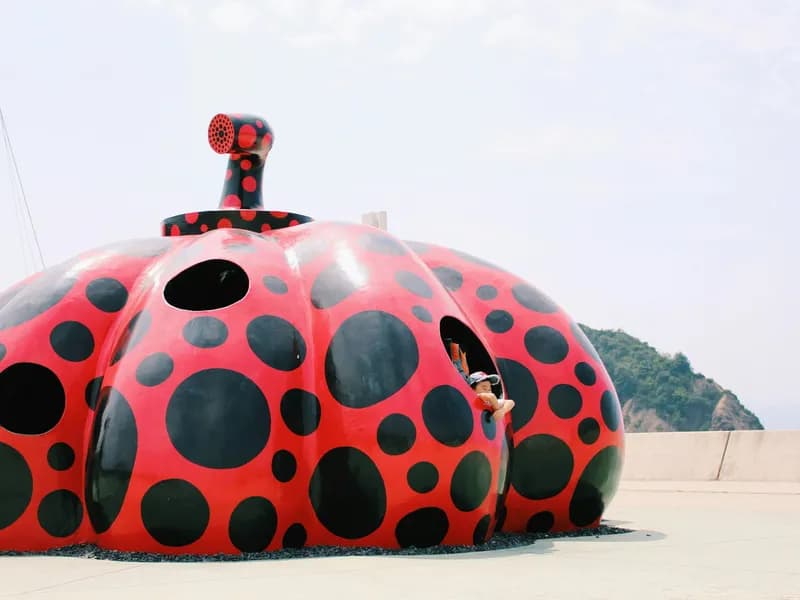
Red Pumpkin (Yayoi Kusama) at Miyanoura Port(15 minutes)
Kusama's polka-dotted red pumpkin greets arrivals. Free to photograph
Check-in at guesthouse or Benesse House(30 minutes)
Guesthouses from 5,000 JPY. Benesse House from 30,000 JPY (sleep among the art). Book months ahead for Benesse
Naoshima Bath 'I Love Yu'(1 hour)
Functioning public bathhouse as art — wild collage exterior and interior by Shinro Ohtake. 660 JPY. Open 2PM-9PM (closed Mon). Bring own towel or rent one
Chichu Art Museum & Benesse Area
The island's crown jewel museums — Tadao Ando's underground masterpiece and the Benesse complex.
Chichu Art Museum(2 hours)
2,100 JPY. Tadao Ando's underground museum using only natural light. Monet water lilies room alone is worth the trip. James Turrell and Walter De Maria installations. Timed-entry — book online at ticket.chichu.jp 2-3 days ahead. No photography inside
Lee Ufan Museum(45 minutes)
1,050 JPY. Semi-underground Ando museum for Korean minimalist artist. Stone-and-steel sculptures in concrete spaces. Meditative. 10-min walk from Benesse House
Benesse House Museum(1.5 hours)
1,050 JPY. Warhol, Hockney, Pollock. Free outdoor sculpture garden along the beach
Yellow Pumpkin at sunset(30 minutes)
Kusama's iconic yellow polka-dotted pumpkin on a pier at the island's southern tip. Best at sunset. Free
Art House Project — Honmura Village
Abandoned houses transformed into art installations in the old village.
Art House Project walking tour(3 hours)
Seven sites plus shrine and temple. Combo ticket 1,050 JPY for 6 sites. Kinza requires separate reservation (520 JPY, 15-min solo viewing). James Turrell, Hiroshi Sugimoto works. Open 10AM-4:30PM
Lunch at a Honmura cafe(45 minutes)
Small cafes in the village serve set lunches. Options are limited — check opening hours. The island has one convenience store near Miyanoura
Free afternoon to cycle the island(2 hours)
Explore coastal roads, hidden beaches, and viewpoints. The full island loop takes 2-3 hours by bicycle
Evening at leisure(flexible)
The island is very quiet at night. Stargazing is excellent away from the port area
Day Trip to Teshima Art Museum
Ferry to nearby Teshima island for one of the world's most breathtaking art spaces.
Ferry to Teshima (Ieura Port)(25 minutes)
From Naoshima (620 JPY). Check schedules — ferries run roughly hourly
Teshima Art Museum(1.5 hours)
1,570 JPY. A single concrete shell by Ryue Nishizawa with water droplets forming and flowing across the floor. One of the most extraordinary spaces ever built. No photography. Remove shoes
Les Archives du Coeur (Heartbeat Archive)(30 minutes)
Christian Boltanski's installation — listen to recorded heartbeats from around the world in a beachside building. 520 JPY. Record your own heartbeat
Teshima cycling(1.5 hours)
Rent a bike (500 JPY) and explore terraced rice paddies, olive groves, and Karato Beach. The island is beautiful agricultural landscape
Rest Day — Beach & Slow Art
A quieter day revisiting favorite installations and enjoying the island's beaches.
Morning beach walk(1 hour)
The beach near Benesse House has outdoor sculptures to discover. Free. Quiet in the morning
Revisit Chichu or Benesse(1.5 hours)
Natural light changes the Monet room throughout the day. Morning and afternoon visits feel different
Lunch at Benesse House cafe(1 hour)
The museum restaurant has Inland Sea views and surprisingly good food
Free afternoon(flexible)
Rest, read, cycle to a quiet beach, or photograph the island
Day Trip to Inujima
The smallest and most raw of the art islands — former copper refinery turned art site.
Ferry to Inujima(varies)
Via Teshima or direct from Naoshima (check seasonal schedules). About 1,500-2,000 JPY
Inujima Seirensho Art Museum(1 hour)
2,100 JPY. Yukinori Yanagi's installation inside a copper refinery ruin using solar and geothermal energy. The ruined chimneys and industrial landscape are hauntingly beautiful
Inujima Art House Project(1 hour)
Free. Several houses in the tiny village transformed into installations. The whole island takes 1-2 hours to walk
Lunch on Inujima(45 minutes)
Very limited options — one or two small cafes. Bring snacks just in case
Departure Day
Final morning on the art island.
Last cycle to Yellow Pumpkin(30 minutes)
Morning light on the pumpkin is different from sunset
Ferry from Miyanoura Port(varies)
To Takamatsu (50 min, 1,000 JPY) or Uno (20 min, 300 JPY) for JR connections to Okayama and beyond
14-Day Naoshima Itinerary
Arrival & Red Pumpkin
Arrive on Naoshima art island.
Ferry to Miyanoura(varies)
Takamatsu ferry 1,000 JPY or Uno ferry 300 JPY
Rent electric bicycle(15 minutes)
1,000 JPY/day
I Love Yu bathhouse(1 hour)
660 JPY. Art bathhouse by Ohtake
Chichu & Benesse Museums
Underground museum and Benesse complex.
Chichu Art Museum(2 hours)
2,100 JPY. Monet, Turrell, De Maria. Book online
Lee Ufan Museum(45 minutes)
1,050 JPY
Benesse House Museum(1.5 hours)
1,050 JPY. Warhol, Hockney
Art House Project
Honmura village installations.
Art House Project tour(3 hours)
Combo 1,050 JPY for 6 sites. Kinza 520 JPY separate
Teshima Island
Breathtaking Teshima Art Museum.
Ferry to Teshima(25 minutes)
620 JPY
Teshima Art Museum(1.5 hours)
1,570 JPY. Concrete shell with water droplets
Les Archives du Coeur(30 minutes)
520 JPY. Heartbeat archive
Teshima cycling(1.5 hours)
500 JPY bike rental
Rest Day — Beach & Revisits
Quieter day on the island.
Revisit Chichu(1.5 hours)
Different light = different experience
Inujima Island
Copper refinery ruins as art.
Ferry to Inujima(varies)
1,500-2,000 JPY
Seirensho Art Museum(1 hour)
2,100 JPY. Solar-powered refinery art
Inujima Art House Project(1 hour)
Free
Day Trip to Takamatsu
Cross to Shikoku for gardens and udon noodles.
Ferry to Takamatsu(50 minutes)
1,000 JPY
Ritsurin Garden(1.5 hours)
410 JPY. One of Japan's finest landscape gardens. 75 hectares of ponds, hills, and teahouses
Sanuki udon lunch crawl(1.5 hours)
Takamatsu is the udon capital. Visit 2-3 shops. Bowls from 200-500 JPY. Try Udon Baka Ichidai (butter udon) or Ueharaya
Takamatsu shopping arcade (Marugame-machi)(1 hour)
Japan's longest covered shopping arcade at 2.7km
Megijima & Ogijima Islands
Explore two more art islands in the Seto Inland Sea.
Ferry from Takamatsu to Megijima(20 minutes)
370 JPY. Known as 'Demon Island' from Japanese folklore
Megijima caves and art(1.5 hours)
Onigashima (Demon's Cave) 500 JPY plus scattered art installations. The cave is part of the Momotaro legend
Ferry to Ogijima(20 minutes)
370 JPY from Megijima
Ogijima soul — art port village(1.5 hours)
Tiny fishing village with permanent art installations. The library and lighthouse are highlights. Cats everywhere
Rest Day — Photography
Camera-focused exploration.
Outdoor sculpture photography(2 hours)
Benesse outdoor sculptures and beach installations
Day Trip to Okayama
Cross to the mainland for Japan's top 3 garden and castle.
Ferry to Uno then JR to Okayama(1 hour)
300 JPY ferry + 590 JPY train
Korakuen Garden(1.5 hours)
410 JPY. One of Japan's top 3 landscape gardens. Seasonal beauty year-round
Okayama Castle (Crow Castle)(45 minutes)
400 JPY. Black exterior — dramatic contrast to Himeji's white
Lunch: Okayama barazushi(45 minutes)
Colorful scattered sushi in a bowl — Okayama's signature. From 1,200 JPY
Teshima Deep Dive
Return for sites you missed on the first visit.
Yokoo House (Ieura)(30 minutes)
520 JPY. Tadanori Yokoo's dreamlike installation in a traditional house
Storm House(20 minutes)
520 JPY. Experience a simulated storm inside a traditional house
Karato Beach and olive groves(1.5 hours)
Walk through terraced landscapes to the island's south side
Rest Day — Island Life
Simply live on the island for a day.
Farewell Day — Final Art
Last full day on the art islands.
Souvenir shopping at museum shops(45 minutes)
Art books, Kusama merchandise, local ceramics at Benesse and Chichu shops
Departure Day
Final morning on Naoshima.
Ferry from Miyanoura(varies)
Takamatsu or Uno for onward connections
21-Day Naoshima Itinerary
Arrival & Red Pumpkin
Arrive on art island.
Rent electric bicycle(15 minutes)
1,000 JPY/day
I Love Yu bathhouse(1 hour)
660 JPY
Chichu Art Museum
Tadao Ando's underground masterpiece.
Chichu Art Museum(2 hours)
2,100 JPY. Monet, Turrell, De Maria
Lee Ufan Museum(45 minutes)
1,050 JPY
Benesse House Museum(1.5 hours)
1,050 JPY
Art House Project
Honmura village installations.
Art House Project(3 hours)
Combo 1,050 JPY
Teshima Art Museum
Breathtaking concrete shell.
Teshima Art Museum(1.5 hours)
1,570 JPY
Les Archives du Coeur(30 minutes)
520 JPY
Rest Day
Beach and revisits.
Inujima Island
Copper refinery art.
Seirensho Art Museum(1 hour)
2,100 JPY
Takamatsu Day Trip
Gardens and udon on Shikoku.
Ritsurin Garden(1.5 hours)
410 JPY
Sanuki udon crawl(1.5 hours)
From 200 JPY per bowl
Megijima & Ogijima
Demon island and cat island.
Demon cave and art(1.5 hours)
500 JPY
Rest Day — Photography
Camera-focused island day.
Okayama Day Trip
Top 3 garden and black castle.
Korakuen Garden(1.5 hours)
410 JPY
Okayama Castle(45 minutes)
400 JPY
Teshima Deep Dive
Return to Teshima for more art.
Yokoo House(30 minutes)
520 JPY
Storm House(20 minutes)
520 JPY
Rest Day — Island Life
Simply exist on the island.
Kurashiki Day Trip
Visit the beautifully preserved canal district on the mainland.
Ferry to Uno then JR to Kurashiki(1.5 hours)
300 JPY + 510 JPY
Kurashiki Bikan Historical Quarter(2 hours)
White-walled warehouses along a willow-lined canal. Free to walk. The most photogenic small town in western Japan
Ohara Museum of Art(1.5 hours)
1,500 JPY. Japan's first Western art museum. El Greco, Monet, Renoir in a stunning Greco-Roman building
Lunch in the canal district(1 hour)
Try Kurashiki denim jeans (the area produces Japan's best denim) and denim-themed cafes
Shodoshima Island
Day trip to the olive island.
Ferry to Shodoshima(1 hour)
Via Takamatsu or direct from Uno
Olive Park(1 hour)
Free. Mediterranean-looking olive groves. Borrow a broomstick for Kiki's Delivery Service flying photo
Kankakei Gorge ropeway(1 hour)
1,890 JPY round trip. Stunning cliff gorge with autumn color November
Shodoshima soy sauce village(1 hour)
The island produces artisan soy sauce in century-old wooden warehouses. Free tastings and tours
Rest Day — Wellness
Relaxation and self-care.
Onsen at Benesse House(1.5 hours)
If staying at Benesse. Otherwise, bathe at I Love Yu
Kotohira Day Trip
Visit the famous shrine with 1,368 steps on Shikoku.
Ferry to Takamatsu then JR to Kotohira(2 hours)
JR from Takamatsu ~900 JPY
Konpira-san (Kotohiragu Shrine)(3 hours)
1,368 stone steps to the inner shrine. The main shrine at step 785 is enough for most. Free entry. Spectacular mountain views from the top. Walking stick rentals available
Sanuki udon lunch in Kotohira(45 minutes)
More excellent udon. From 300 JPY
Art Workshop Day
Hands-on creative experience on the island.
Pottery or art workshop(2.5 hours)
Some guesthouses and local artists offer workshops. Inquire at tourist info. From 3,000 JPY
Rest Day — Slow Pace
Final rest day.
Marugame Day Trip
Mainland town with a hilltop castle and art museum.
Marugame Castle(1 hour)
200 JPY. One of only 12 original surviving castles in Japan. Small but authentic hilltop castle
Marugame Genichiro-Inokuma Museum of Contemporary Art (MIMOCA)(1 hour)
950 JPY. Excellent collection in a Tange Kenzo-designed building
Udon lunch in Marugame(45 minutes)
Marugame is an udon epicenter. Nakamura Udon or Tsurumaru
Farewell Day
Last full day.
Souvenir shopping(45 minutes)
Museum shop art books and Kusama merchandise
Departure Day
Final morning on Naoshima.
Ferry departure(varies)
Takamatsu or Uno for onward connections
Travel Tips
Visa & Entry
Japan Visa-Free Entry
Most Western passport holders receive 90-day visa-free entry. Complete Visit Japan Web registration before arrival. Naoshima requires ferry access from Takamatsu (Shikoku) or Uno Port (Okayama, Honshu).
transport
Getting to Naoshima
From Takamatsu: ferry (1,000 JPY, 50 min) or high-speed boat (1,220 JPY, 25 min). From Okayama: JR train to Uno Station (50 min, 590 JPY) then ferry (300 JPY, 20 min). Ferries run roughly hourly. Rent a bicycle at Miyanoura Port (300-500 JPY/day for regular, 1,000 JPY for electric) — the island is hilly so electric is recommended.
Island Bus and Bicycle Strategy
The Naoshima Town Bus connects Miyanoura Port to Honmura Village and the museum area (100 JPY/ride). Buses run every 30-60 minutes and can be crowded. Cycling covers the whole island in 2-3 hours. Plan museums in geographic order: Art House Project in Honmura, then Benesse area (Chichu, Lee Ufan, Benesse House) to avoid backtracking.
Local Customs
Book Chichu Art Museum Tickets Online
Chichu Art Museum requires timed-entry reservations purchased online — walk-ins are often turned away, especially on weekends and during the Setouchi Triennale. Book at ticket.chichu.jp at least 2-3 days ahead. Monday closures affect Chichu, Lee Ufan, and the bathhouse, so avoid Monday visits.
Budget
Art Island Costs Add Up
Museum entries total 4,000-5,000 JPY if visiting all sites. Budget 6,000-8,000 JPY for a full day including ferry, bike rental, museums, and lunch. Dining options are limited — the island has a few cafes and one convenience store near Miyanoura. Bring snacks. Accommodation is expensive (Benesse House from 30,000 JPY), but guesthouses start from 5,000 JPY.
Safety
No Photography Inside Most Museums
Photography is strictly prohibited inside Chichu Art Museum, Lee Ufan Museum, and most Art House Project sites. Guards will ask you to delete photos. The yellow pumpkin, red pumpkin, and outdoor sculptures are all freely photographable. Respect the quiet, contemplative atmosphere inside galleries — no phone calls or loud conversations.
Related Articles
Travel Guides9 Reasons Naoshima Is Japan's Most Extraordinary Island
Underground museums lit only by sunlight, a pumpkin that survived a typhoon, abandoned houses turned into art, and a bathhouse that doubles as a gallery.
StoriesLife on an Art Island: A Naoshima Resident Shares the Reality
Kenji grew up on Naoshima before the art arrived. He watched his fishing village transform into a global art destination and has opinions about what that means.
StoriesThe Island Where a Yellow Pumpkin Changed My Understanding of Art
I don't understand contemporary art. Or I didn't, until I stood on a pier on Naoshima watching the sun set behind a polka-dotted pumpkin and something clicked.