
Paro

Photo: Raimond Klavins / Unsplash
Key Facts
Best Time to Visit
March to May (spring, rhododendrons bloom) and September to November (clear skies, festival season)
Language
Dzongkha (national), English widely spoken in tourism
Currency
Bhutanese Ngultrum (BTN); Indian Rupee (INR) accepted at par
Time Zone
BTT (UTC+6)
Airport
Paro International Airport (PBH) — one of the world's most challenging landings
Population
~11,000 (Paro town); ~45,000 (Paro district)
Climate
Temperate, 15-25°C spring/autumn; winters drop to -5°C; elevation 2,280m
Safety Rating
Very Safe (Level 1); one of the world's lowest crime rates
Sustainable Development Fee
$100/day per tourist (introduced 2022, funds free healthcare/education)
Top Highlights

Tiger's Nest Monastery (Taktsang Palphug)
Bhutan's most iconic sight — a monastery clinging to a cliff 900m above the valley floor. The hike takes 2-3 hours up (steep, at altitude). Entry: 1,000 BTN for foreigners. Open 8AM-5PM. No cameras inside the monastery. Start early to beat afternoon clouds. A cafeteria at the halfway point offers tea and rest.
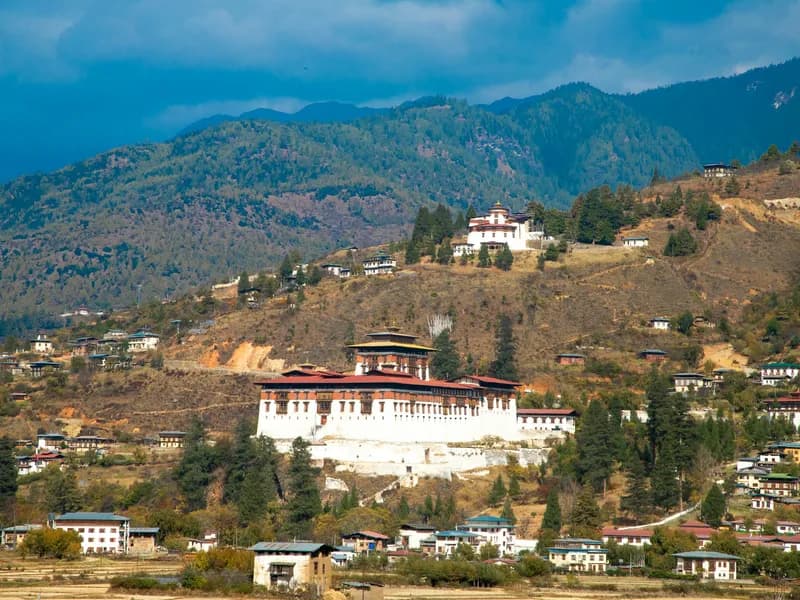
Rinpung Dzong
Massive fortress-monastery built in 1646, now Paro's administrative center and monastic school. The Paro Tshechu (spring festival) is held in its courtyard with masked dances. Free entry. Open 9AM-5PM. Cross the traditional covered cantilever bridge (Nyamai Zam) for the best photo angle. Allow 1-2 hours.
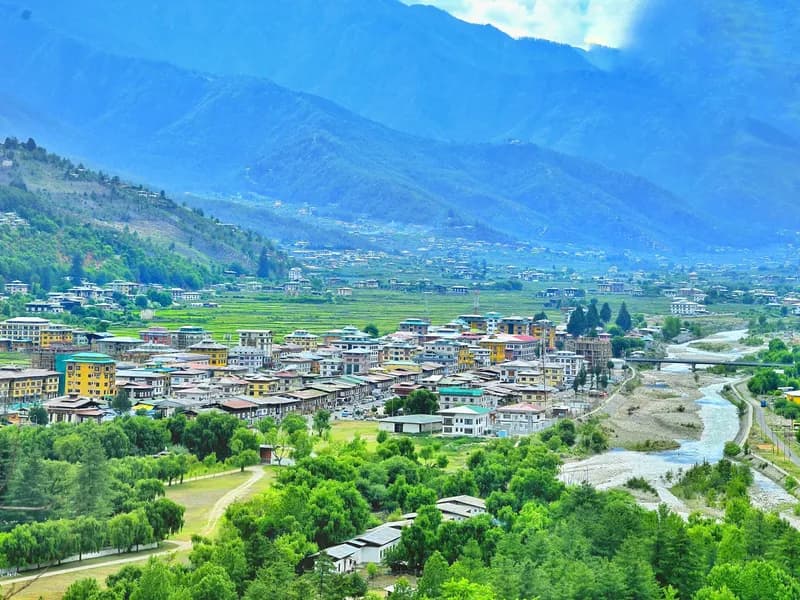
Paro Valley
One of Bhutan's broadest valleys with rice paddies, traditional farmhouses, and the Paro Chhu river. Rent a bicycle (~300 BTN/day) for a gentle ride along the valley floor past ancient temples and prayer wheel walls. The valley is especially stunning during spring when apple and pear trees bloom.
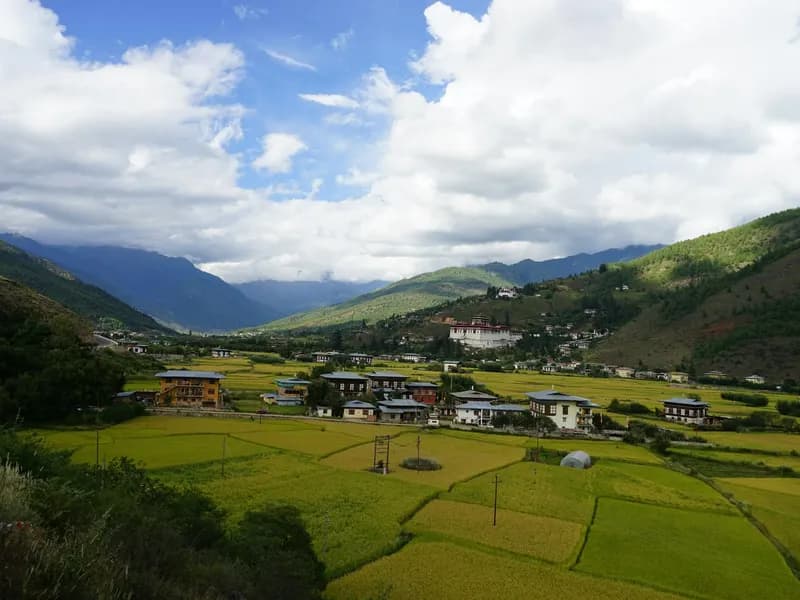
National Museum of Bhutan (Ta Dzong)
Housed in a watchtower above Rinpung Dzong, this museum covers Bhutanese art, natural history, and culture across 6 floors. Entry: 300 BTN. Open 9AM-4PM (closed Mondays). The thangka paintings and textile collections are outstanding. Allow 1.5 hours. Combined visit with Rinpung Dzong below.
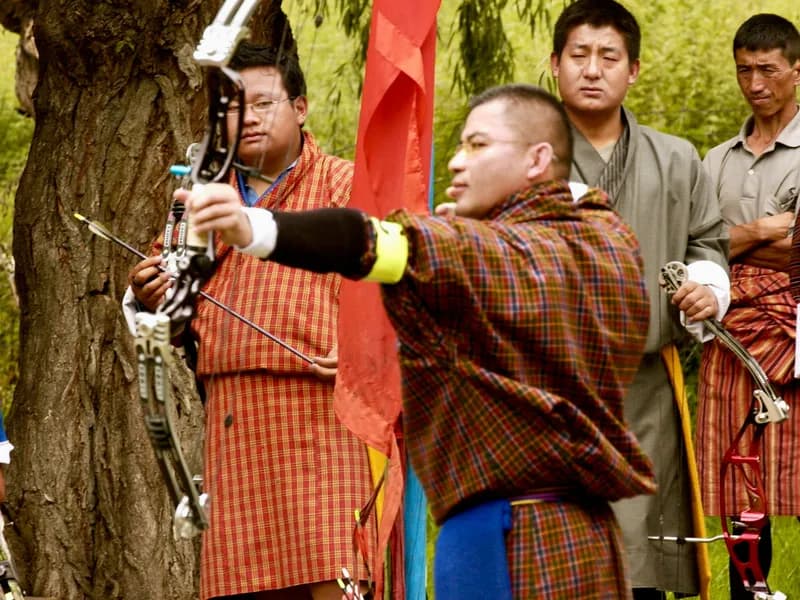
Traditional Archery
Bhutan's national sport played with bamboo bows at a target 145m away. Watch locals practice at the archery ground near Paro town any weekend, or arrange a lesson through your guide (~500-800 BTN for an hour). The celebratory dances after hitting the target are a cultural highlight.
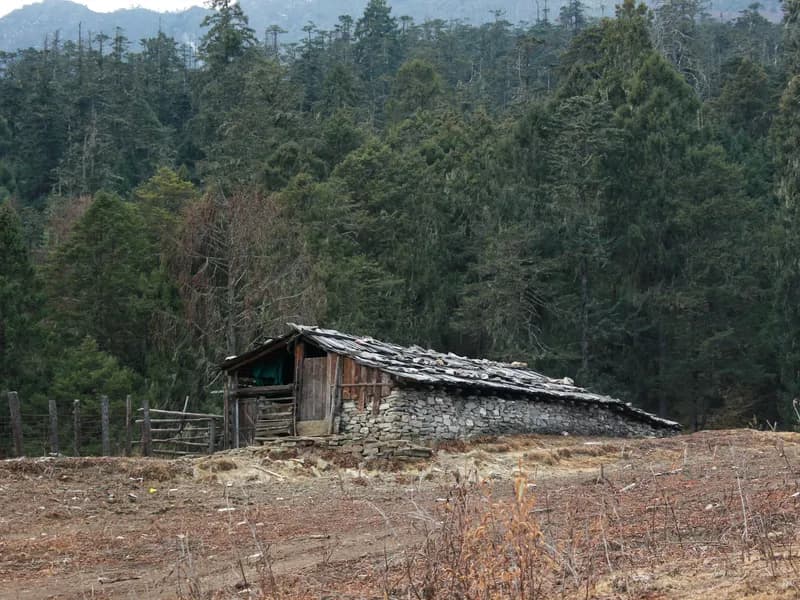
Chelela Pass
At 3,988m, the highest motorable pass in Bhutan, 40 km from Paro. On clear days, views of Mount Jomolhari (7,326m) and Jichu Drake. Prayer flags flutter in the wind. The drive through blue pine forest takes 1.5 hours. Yak herders camp nearby in summer. A hidden gem few tourists reach.
Planned Itinerary
7-Day Paro Itinerary
Arrival in Paro Valley
One of the world's most dramatic landings — threading through Himalayan peaks into Paro Valley. Take it easy at 2,280m altitude.
Land at Paro International Airport (PBH)(30 minutes)
Only Drukair and Bhutan Airlines operate. Only 8 pilots in the world certified for this visual-only approach. Build buffer days — weather cancellations are common
Transfer to hotel in Paro town(15 minutes)
Your licensed tour operator arranges all transport. Hotels from $80-200/night for mid-range (separate from the $100/day SDF)
Light lunch at Sonam Trophel Restaurant(1 hour)
Traditional Bhutanese — ema datshi (chili cheese), red rice, and momos (dumplings). Meals 200-500 BTN ($2.50-6). Request 'tsheymey' for less chili
Gentle Paro town walk(1.5 hours)
Acclimatize with a gentle stroll through town. Prayer wheels, traditional archery ground, and handicraft shops. Altitude: 2,280m — stay hydrated, avoid alcohol today
Tiger's Nest Monastery (Taktsang)
Bhutan's most iconic sight — a monastery clinging to a cliff face 900m above the valley. The hike of a lifetime.
Hike to Tiger's Nest Monastery(5 hours)
Start by 8AM. 2-3 hours up, 1.5-2 hours down. Steep trail through blue pine forest. 900m elevation gain to 3,120m. Entry 1,000 BTN. No cameras inside the monastery
Tea break at the cafeteria(30 minutes)
Halfway point with views of the monastery across the gorge. Butter tea and biscuits — the view alone is worth the climb
Explore the monastery(1 hour)
Multiple prayer halls with ancient murals and butter lamp sanctuaries. Built around the cave where Guru Rinpoche meditated for 3 years in the 8th century
Celebratory dinner at your hotel(1.5 hours)
You conquered Tiger's Nest. A hot stone bath (traditional Bhutanese herbal bath, ~500-1,000 BTN) is the perfect recovery if your hotel offers one
Rinpung Dzong & National Museum
Explore Paro's fortress-monastery and the national museum — the heart of Bhutanese administrative and spiritual life.
Rinpung Dzong(1.5 hours)
1646 fortress-monastery. Free entry. Cross the traditional cantilever bridge (Nyamai Zam) for the best photo angle. Active monastic school inside
National Museum of Bhutan (Ta Dzong)(1.5 hours)
Watchtower above Rinpung Dzong. 300 BTN. Thangka paintings, textiles, and natural history across 6 floors. Closed Mondays
Lunch at Bukhari Restaurant(1 hour)
Upscale Bhutanese-Indian cuisine at Uma Paro hotel. Set lunch ~1,500 BTN. Reserve if you want window views of the valley
Traditional archery session(1.5 hours)
Bhutan's national sport — bamboo bows, targets 145m away. Arrange through your guide (~500-800 BTN). The celebratory dances after a hit are a cultural highlight
Chelela Pass & Haa Valley Day Trip
Cross Bhutan's highest motorable pass (3,988m) for mountain panoramas and the rarely-visited Haa Valley.
Drive to Chelela Pass(1.5 hours)
40 km from Paro through blue pine forest. At 3,988m, prayer flags flutter in the wind. On clear days: views of Mount Jomolhari (7,326m) and Jichu Drake
Short hike near Chelela(1 hour)
Walk along the ridge through rhododendron forests. In spring (March-May), the blooms are spectacular. Yak herders camp nearby in summer
Drive down to Haa Valley(1 hour)
Less touristed valley with traditional farmhouses and the Lhakhang Karpo (White Chapel) and Lhakhang Nagpo (Black Chapel) temples
Lunch in Haa town(1 hour)
Simple Bhutanese restaurant — try hoentay (buckwheat dumplings unique to Haa), a local specialty you won't find in Paro
Paro Valley Cycling & Temples
A gentler day exploring the valley floor by bicycle — rice paddies, ancient temples, and farmhouse culture.
Bicycle ride along the valley(3 hours)
Rent from your hotel (~300 BTN/day). Flat valley roads past prayer wheel walls, rice paddies, and traditional farmhouses. Spring brings apple and pear blossoms
Kyichu Lhakhang temple(1 hour)
One of Bhutan's oldest temples (7th century). Built by Tibetan king Songtsen Gampo. 300 BTN entry. Two beautiful temples — the older one has a sacred Jowo statue
Farmhouse lunch(1.5 hours)
Many tour operators arrange lunch at traditional farmhouses — ema datshi, red rice, and ara (local rice wine). ~500-1,000 BTN. A genuine cultural experience
Free afternoon and hot stone bath(2 hours)
Traditional dotsho (hot stone bath) — river stones heated and dropped into wooden tubs of water infused with herbs. Deeply therapeutic. ~500-1,500 BTN at hotels
Day Trip to Thimphu
Drive to Bhutan's capital (1.5 hours) for the giant Buddha, markets, and a different pace.
Drive to Thimphu(1.5 hours)
Scenic road following the Paro Chhu and Wang Chhu rivers
Buddha Dordenma statue(1 hour)
52-meter gilded bronze Buddha overlooking Thimphu Valley. Free. 125,000 smaller Buddhas inside. The hilltop setting is spectacular
Thimphu weekend market(1 hour)
If it's Friday-Sunday — the Centenary Farmers Market sells vegetables, cheese, chilies, and incense. The most colorful market in Bhutan
Lunch at Cloud 9 Restaurant(1 hour)
Rooftop restaurant in downtown Thimphu — Bhutanese and continental. 400-800 BTN per main
Tashichho Dzong (evening)(1 hour)
Thimphu's fortress-monastery — seat of the government. Open to tourists in evening (5-6PM). Impressive architecture and peaceful monks
Departure Day
Final morning in Paro. Last prayer wheels and flight home — if the weather cooperates.
Early morning at Paro town(1 hour)
Walk past the prayer wheel wall and archery ground one final time. Buy last souvenirs — hand-woven textiles, incense, and traditional masks
Souvenir shopping at Chencho Handicrafts(45 minutes)
Hand-painted thangkas, traditional wood carvings, and Bhutanese textiles. Prices 500-50,000 BTN depending on item. Quality is excellent
Transfer to Paro Airport(15 minutes)
Build 1-2 buffer days into your overall trip plan — flights cancel frequently in bad weather. If delayed, it's one more day in paradise
14-Day Paro Itinerary
Arrival in Paro Valley
Land at one of the world's most challenging airports. Acclimatize gently at 2,280m.
Land at Paro Airport (PBH)(30 minutes)
Drukair or Bhutan Airlines. Only 8 pilots certified. Build buffer days for weather
Hotel check-in(15 minutes)
Tour operator handles all logistics. Mid-range hotels $80-200/night plus $100/day SDF
Lunch at Sonam Trophel(1 hour)
Ema datshi, red rice, momos. 200-500 BTN. Say 'tsheymey' for less chili
Gentle town walk(1.5 hours)
Prayer wheels, archery ground, handicraft shops. Stay hydrated at altitude
Tiger's Nest Monastery
The iconic cliff-face monastery hike — Bhutan's spiritual heart.
Hike to Tiger's Nest(5 hours)
Start 8AM. 2-3 hours up, 1.5-2 down. 900m gain to 3,120m. Entry 1,000 BTN
Halfway cafeteria tea break(30 minutes)
Butter tea with monastery views across the gorge
Monastery exploration(1 hour)
Prayer halls, ancient murals, Guru Rinpoche's meditation cave
Hot stone bath recovery(1.5 hours)
Traditional dotsho — heated river stones in herbal water. 500-1,500 BTN
Rinpung Dzong & National Museum
Paro's fortress-monastery and the national museum in its watchtower.
Rinpung Dzong(1.5 hours)
1646 fortress. Free. Cross Nyamai Zam bridge for best photos
National Museum (Ta Dzong)(1.5 hours)
300 BTN. 6 floors of thangkas, textiles, natural history. Closed Mondays
Lunch at Bukhari(1 hour)
Uma Paro hotel. Set lunch ~1,500 BTN
Traditional archery(1.5 hours)
National sport. ~500-800 BTN for a lesson. Targets at 145m
Chelela Pass & Haa Valley
Cross Bhutan's highest pass (3,988m) to the rarely-visited Haa Valley.
Drive to Chelela Pass(1.5 hours)
3,988m. Jomolhari views on clear days. Prayer flags
Ridge walk near Chelela(1 hour)
Rhododendron forests. Spring blooms spectacular
Haa Valley exploration(2 hours)
White and Black Chapel temples. Traditional farmhouses
Hoentay lunch in Haa(1 hour)
Buckwheat dumplings unique to Haa
Valley Cycling & Ancient Temples
Explore Paro Valley's floor by bicycle — paddies, farmhouses, and the oldest temple.
Bicycle ride through valley(3 hours)
~300 BTN/day. Flat roads past prayer walls and rice paddies
Kyichu Lhakhang temple(1 hour)
7th century. 300 BTN. Sacred Jowo statue
Farmhouse lunch(1.5 hours)
Traditional home cooking. Ema datshi, red rice, ara wine. 500-1,000 BTN
Free afternoon(2 hours)
Rest, hotel pool, or reading with mountain views
Drive to Thimphu
Move to Bhutan's capital for two nights. A different energy from Paro's valley calm.
Drive to Thimphu(1.5 hours)
Scenic river road
Buddha Dordenma(1 hour)
52m gilded Buddha. Free. 125,000 smaller Buddhas inside
Lunch at Cloud 9(1 hour)
Rooftop restaurant. 400-800 BTN
Simply Bhutan museum(1 hour)
Living museum showcasing traditional Bhutanese life. Entry 500 BTN. Interactive — try wearing a gho or kira
Tashichho Dzong evening(1 hour)
Government fortress-monastery. Tourist access 5-6PM
Thimphu Exploration
Full day in the capital — from folk heritage to nightlife in the world's only capital without traffic lights.
Folk Heritage Museum(1.5 hours)
Restored 19th-century farmhouse. 150 BTN. Daily life artifacts and butter tea demonstrations
Centenary Farmers Market(1 hour)
Friday-Sunday. Vegetables, cheese, chilies, incense. Bhutan's most colorful market
National Textile Museum(1 hour)
200 BTN. Bhutan's stunning hand-woven textiles — months of work in each piece
Lunch at Ambient Cafe(1 hour)
Modern Bhutanese cafe on the main street. Pizza and coffee 200-500 BTN
Motithang Takin Preserve(45 minutes)
Bhutan's national animal — the bizarre takin, a creature that looks like a goat-antelope. Free. 15 min from town center
Evening at Mojo Park(1.5 hours)
Thimphu's most popular bar — live music weekends, craft cocktails 300-500 BTN. Yes, Bhutan has nightlife
Drive to Punakha via Dochula Pass
Cross the 3,100m Dochula Pass with its 108 chortens, then descend to the warm Punakha Valley.
Drive to Dochula Pass(1 hour)
3,100m. 108 memorial chortens. On clear days, views of the Himalayan range including Gangkar Puensum (7,570m, the world's highest unclimbed mountain)
Druk Wangyel Lhakhang(30 minutes)
Modern temple at the pass with vibrant murals. Free entry
Descend to Punakha(1.5 hours)
From 3,100m to 1,200m — warm subtropical valley. Punakha was Bhutan's capital until 1955
Punakha Dzong(1.5 hours)
Bhutan's most beautiful dzong at the confluence of two rivers. Winter seat of the monastic body. 300 BTN. The spring festival (Punakha Tshechu) is Bhutan's grandest
Suspension bridge walk(30 minutes)
Longest suspension bridge in Bhutan (180m) across the Mo Chhu. Prayer flags and river views
Punakha Valley Hike & Chimi Lhakhang
Hike through rice terraces to the 'Temple of the Divine Madman' — Bhutan's most eccentric saint.
Hike to Chimi Lhakhang(2 hours)
Walk through rice terraces and villages to the fertility temple of Drukpa Kunley, the 'Divine Madman.' Couples visit for blessings. The phallus symbols painted on houses are his legacy
Khamsum Yulley Namgyal Chorten(1.5 hours)
30-minute uphill walk to this ornate golden temple overlooking the valley. 100 BTN. Stunning views and detailed interior paintings
Lunch at a Punakha farmhouse(1.5 hours)
Local home cooking in the valley. Red rice, cheese dishes, seasonal vegetables
River rafting on Mo Chhu(2 hours)
Grade II-III rapids through the valley. ~$30-50 through tour operators. A fun change of pace
Return to Paro via Thimphu
Drive back west, with time for any Thimphu sites you missed.
Morning at Punakha(1 hour)
Last walk near the dzong. The morning light on the fortress is magical
Drive to Thimphu(2.5 hours)
Via Dochula Pass — hopefully clearer mountain views this time
Norzin Lam shopping street(1.5 hours)
Thimphu's main shopping street — bookshops, textiles, traditional crafts
Rest Day in Paro
A free day. Revisit Tiger's Nest approach, explore local temples, or simply rest.
Drugyel Dzong ruins(1 hour)
Ruined fortress 14 km up the valley. Being restored but the ruins against the mountain backdrop are photogenic. Free
Hot stone bath and spa(2 hours)
Traditional dotsho. 500-1,500 BTN. Deeply relaxing
Local archery competition viewing(1.5 hours)
Weekend afternoons at the Paro archery ground — teams compete with singing, dancing, and colorful celebrations after each hit
Paro Valley Deeper Exploration
Visit the lesser-known temples and valleys that even Tiger's Nest pilgrims miss.
Dumtse Lhakhang(1 hour)
Unusual chorten-shaped temple near Paro town. Built in 1433. Three floors represent hell, earth, and heaven — vivid murals
Paro riverside walk(1.5 hours)
Follow the Paro Chhu upstream past farmhouses, willow trees, and prayer flag bridges
Lunch at Zhiwa Ling Heritage Hotel(1.5 hours)
Traditional Bhutanese fine dining in a stunning heritage property. Set lunch from 1,200 BTN
Textile workshop visit(1.5 hours)
Arrange through your guide to visit a local weaver. Bhutanese textiles take months — watch the intricate process
Tiger's Nest Approach & Farewell
Last full day. Return to the Tiger's Nest trailhead for morning views, then farewell dinner.
Morning walk on Tiger's Nest trail(2 hours)
Walk to the cafeteria viewpoint (halfway). The morning light on the monastery is different from your first visit. No need to go all the way up
Souvenir shopping in Paro(1.5 hours)
Chencho Handicrafts — thangkas, wood carvings, hand-woven textiles. 500-50,000 BTN
Farewell lunch with guide(1.5 hours)
It's customary to have a farewell meal with your guide — they've been your companion throughout
Butter lamp offering at local temple(30 minutes)
Light butter lamps for safe travels. A meaningful Bhutanese farewell ritual
Departure Day
Final morning. Transfer to Paro Airport — weather permitting.
Breakfast at hotel(45 minutes)
Last ema datshi and butter tea
Transfer to Paro Airport(15 minutes)
Remember: flights are weather-dependent. If cancelled, your operator handles rebooking
Departure flight(Variable)
Watch for Mt. Everest from the left side of the plane on the flight to Kathmandu or Delhi
21-Day Paro Itinerary
Arrival in Paro Valley
Land at Paro's dramatic mountain airport. Acclimatize gently at 2,280m.
Land at Paro Airport (PBH)(30 minutes)
Only 8 pilots certified. Build buffer days for weather
Hotel check-in(15 minutes)
Mid-range $80-200/night plus $100/day SDF
Lunch at Sonam Trophel(1 hour)
Ema datshi, red rice, momos. 200-500 BTN
Gentle town walk(1.5 hours)
Prayer wheels, archery ground. Stay hydrated
Rinpung Dzong & National Museum
Explore Paro's administrative fortress and museum before Tiger's Nest tomorrow.
Rinpung Dzong(1.5 hours)
1646 fortress. Free. Nyamai Zam bridge for photos
National Museum (Ta Dzong)(1.5 hours)
300 BTN. 6 floors. Closed Mondays
Lunch at Bukhari(1 hour)
Uma Paro. Set lunch ~1,500 BTN
Traditional archery(1.5 hours)
~500-800 BTN for a lesson
Tiger's Nest Monastery
The iconic cliff-face monastery hike — Bhutan's spiritual crown jewel.
Hike to Tiger's Nest(5 hours)
Start 8AM. 900m gain to 3,120m. Entry 1,000 BTN. No cameras inside
Cafeteria tea break(30 minutes)
Halfway — butter tea with gorge views
Monastery exploration(1 hour)
Prayer halls, murals, Guru Rinpoche's cave
Hot stone bath(1.5 hours)
Traditional dotsho. 500-1,500 BTN
Chelela Pass & Haa Valley
Cross Bhutan's highest pass to the remote Haa Valley.
Chelela Pass (3,988m)(1.5 hours)
Jomolhari views. Prayer flags
Ridge walk(1 hour)
Rhododendron forests
Haa Valley temples(2 hours)
White and Black Chapels. Farmhouses
Hoentay lunch in Haa(1 hour)
Buckwheat dumplings — Haa specialty
Valley Cycling & Ancient Temples
Explore Paro's valley floor by bicycle.
Bicycle through valley(3 hours)
~300 BTN/day. Rice paddies, prayer walls
Kyichu Lhakhang(1 hour)
7th century. 300 BTN. Sacred Jowo statue
Farmhouse lunch(1.5 hours)
Home cooking. 500-1,000 BTN
Drive to Thimphu
Move to the capital for three nights.
Buddha Dordenma(1 hour)
52m gilded Buddha. Free
Lunch at Cloud 9(1 hour)
Rooftop. 400-800 BTN
Simply Bhutan(1 hour)
Living museum. 500 BTN
Tashichho Dzong(1 hour)
Tourist access 5-6PM
Thimphu Full Day
Museums, markets, and the world's only capital without traffic lights.
Folk Heritage Museum(1.5 hours)
150 BTN. Farmhouse artifacts, butter tea demos
Centenary Farmers Market(1 hour)
Friday-Sunday. Vegetables, cheese, chilies
National Textile Museum(1 hour)
200 BTN. Hand-woven treasures
Motithang Takin Preserve(45 minutes)
National animal. Free
Evening at Mojo Park(1.5 hours)
Live music, cocktails 300-500 BTN
Thimphu Deeper Exploration
Lesser-known Thimphu sites and a cooking class.
Changangkha Lhakhang(1 hour)
12th-century temple where parents bring newborns for blessings. Free. Hilltop views
National Institute for Zorig Chusum(1.5 hours)
School for Bhutan's 13 traditional arts and crafts. Watch students painting, weaving, sculpting. Free
Bhutanese cooking class(3 hours)
Learn ema datshi, jasha maru (chicken curry), and momos. ~1,500-2,500 BTN through operators
Drive to Punakha
Cross Dochula Pass (3,100m) with 108 chortens to the warm Punakha Valley.
Dochula Pass(1 hour)
108 chortens. Himalayan views including Gangkar Puensum (world's highest unclimbed peak)
Druk Wangyel Lhakhang(30 minutes)
Modern temple with vibrant murals. Free
Descend to Punakha(1.5 hours)
From 3,100m to 1,200m subtropical
Punakha Dzong(1.5 hours)
300 BTN. Bhutan's most beautiful dzong at river confluence
Suspension bridge(30 minutes)
180m across Mo Chhu. Prayer flags
Punakha Hike & Fertility Temple
Rice terrace hike to the Divine Madman's temple and river rafting.
Hike to Chimi Lhakhang(2 hours)
Through rice terraces to the fertility temple. Phallus paintings everywhere
Khamsum Yulley Namgyal Chorten(1.5 hours)
Golden temple hilltop. 100 BTN. Valley views
Mo Chhu river rafting(2 hours)
Grade II-III rapids. ~$30-50
Punakha to Gangtey Valley
Drive to the remote Gangtey Valley — home of the black-necked crane and wide open meadows.
Drive to Gangtey(3 hours)
Mountain road through bamboo forests. Gangtey is a glacial valley at 2,900m
Gangtey Goenpa monastery(1 hour)
17th-century monastery overlooking the valley. Free. Active monastic school
Gangtey Nature Trail(2 hours)
Gentle 4-km trail through the valley floor — black-necked cranes winter here November-February. Birding is excellent year-round
Farmhouse stay(Evening)
Stay in a traditional farmhouse for an authentic overnight. ~2,000-3,000 BTN including meals
Gangtey Valley Full Day
A slow day in one of Bhutan's most beautiful valleys.
Morning meditation at the monastery(1 hour)
Join morning prayers if invited. A profound spiritual experience
Black-necked crane center(1 hour)
Information center about these endangered birds. Free. If visiting November-February, crane watching at dawn is unforgettable
Village walk(2 hours)
Walk between farmhouses, interact with families, watch potato harvests or rice planting depending on season
Afternoon rest(2 hours)
The silence here is profound — no traffic, no crowds
Gangtey to Trongsa
Drive east to Trongsa — the ancestral home of Bhutan's royal family.
Drive to Trongsa(3 hours)
Mountain road. Trongsa sits dramatically on a ridge overlooking a gorge
Trongsa Dzong(1.5 hours)
Largest dzong in Bhutan, perched above a gorge. 100 BTN. The ancestral seat of the Wangchuck dynasty
Ta Dzong (Tower of Trongsa museum)(1 hour)
100 BTN. Royal history and crown jewels
Lunch in Trongsa town(1 hour)
Simple restaurants — Bhutanese and Indian from 200 BTN
Evening walk along the ridge(1 hour)
The dzong is illuminated at night — spectacular from the road above
Trongsa to Bumthang
Continue east to the cultural heartland of Bhutan — the Bumthang Valley.
Drive to Bumthang via Yotong La Pass(2.5 hours)
3,425m pass through dense forest. Bumthang is Bhutan's spiritual heartland
Jambay Lhakhang(1 hour)
7th-century temple — one of 108 built simultaneously to pin down a demoness. Free. The October fire festival here is legendary
Kurjey Lhakhang(1 hour)
Temple complex where Guru Rinpoche left his body print in rock. Three temples spanning centuries
Swiss cheese and honey tasting(1 hour)
A Swiss development project established cheese-making and honey production here in the 1980s. Red Panda Brewery also makes Bhutan's first craft beer
Bumthang Valley Exploration
Full day in Bumthang — hiking between ancient temples in Bhutan's spiritual core.
Bumthang Cultural Trek(4 hours)
Walk between temples and villages across the valley floor. Your guide explains the legends at each stop
Tamshing Lhakhang(1 hour)
Founded 1501. Original murals survive — among the oldest in Bhutan. Entry 100 BTN
Red Panda Brewery visit(1 hour)
Bhutan's first microbrewery. Tasting flight ~300 BTN. The Bumthang Weiss is their best
Yathra weaving workshop(1.5 hours)
Bumthang is famous for yathra — colorful woolen textiles. Watch weavers and buy directly. Scarves from 500 BTN
Rest Day in Bumthang
Free day in the valley. Gentle walks, reading, and a hot stone bath.
Gentle valley walk(2 hours)
Follow the Bumthang Chhu river past farmhouses and prayer wheels
Hot stone bath(1.5 hours)
Dotsho with local herbs. 500-1,000 BTN
Evening stargazing(1 hour)
Minimal light pollution — spectacular night sky at 2,600m
Return Journey — Bumthang to Punakha
Begin heading west. Long but scenic drive back through the mountains.
Stop at Trongsa viewpoint(30 minutes)
Last look at the dramatic dzong
Continue to Gangtey or Punakha(3-4 hours)
Depending on pace. Overnight in Punakha
Punakha to Thimphu
Return to Thimphu with time for anything you missed.
Morning Punakha Dzong revisit(1 hour)
Morning light at the river confluence is worth a second look
Shopping on Norzin Lam(1.5 hours)
Thimphu's main street — books, textiles, crafts
Dinner at Bhutan Kitchen(1.5 hours)
Popular restaurant — full Bhutanese set meal 500-800 BTN
Return to Paro
Final transfer back to Paro. Afternoon free for last explorations.
Drugyel Dzong ruins(1 hour)
Ruined fortress 14 km up valley. Being restored. Mountain backdrop
Dumtse Lhakhang(1 hour)
Chorten-shaped temple (1433). Three floors — hell, earth, heaven murals
Last Full Day — Tiger's Nest Sunrise & Farewell
Optional early return to Tiger's Nest trailhead for sunrise light, then farewell activities.
Sunrise walk on Tiger's Nest trail(2 hours)
Walk to cafeteria viewpoint. Morning light on the monastery is magical
Souvenir shopping(1.5 hours)
Thangkas, wood carvings, textiles at Chencho Handicrafts
Farewell lunch with guide(1.5 hours)
Customary farewell meal with your guide
Butter lamp offering(30 minutes)
Light butter lamps at local temple for safe travels. Meaningful Bhutanese farewell
Departure Day
Final morning. Transfer to Paro Airport — weather permitting.
Breakfast(45 minutes)
Last ema datshi and butter tea
Departure flight(Variable)
Look for Mt. Everest from the left side on Kathmandu or Delhi routes
Travel Tips
Visa & Entry
Visa and Sustainable Development Fee Required
All tourists (except Indian, Bangladeshi, Maldivian nationals) must obtain a visa through a licensed Bhutanese tour operator or online at bhutan.travel. Processing takes 72 hours. The $100/day Sustainable Development Fee (SDF) is paid online before arrival. Indian nationals need only a valid passport or voter ID — no SDF required.
Budget
The $100/Day SDF is Separate from Tour Costs
The SDF does not cover accommodation, meals, guide, or transport — those are additional. Budget a minimum of $200-350/day total for mid-range travel (SDF + 3-star hotel + guide + meals + transport). The SDF funds free healthcare, education, and carbon-negative policies. Discounts: children under 12 free, 50% off for ages 6-12.
Try Red Rice and Local Cuisine
Bhutanese cuisine centers on ema datshi (chili cheese), red rice, and momos. Meals at local restaurants cost 200-500 BTN ($2.50-6). Red rice is nutritious and unique to Bhutan's high-altitude paddies. Warning: Bhutanese food is genuinely spicy — ask for 'less chili' (tsheymey) if you have low spice tolerance.
transport
Paro Airport Landing is Extreme
Only 8 certified pilots in the world can land at Paro — the approach threads through mountains with visual-only navigation. Flights operate only in daylight with good weather. Delays and cancellations are common, especially in monsoon. Build 1-2 buffer days into your itinerary. Drukair and Bhutan Airlines are the only operators.
Local Customs
Dress Code and Cultural Respect
Bhutanese wear national dress (gho for men, kira for women) in dzongs and government buildings. Tourists should dress modestly — long pants, covered shoulders. Remove hats in temples. Always walk clockwise around religious monuments. Photography is usually allowed outside temples but never inside prayer halls.
Safety
Altitude Acclimatization
Paro sits at 2,280m and Tiger's Nest hike reaches 3,120m. Chelela Pass hits 3,988m. Take the first day easy, stay hydrated, and avoid alcohol. If you feel headache, nausea, or dizziness, descend. Carry Diamox if you're altitude-sensitive. The air is dry — bring moisturizer and lip balm.
Related Articles
StoriesParo Through a Local's Eyes: A Bhutanese Guide Shares Her Favorite Places
A Bhutanese guide who has hiked to Tiger's Nest 200+ times on the spots she still loves, the customs tourists get wrong, and why $100/day is worth every ngultrum.
SeasonalVisiting Bhutan in Spring vs Autumn: When to Plan Your Paro Trip
Rhododendron blooms or festival masks — Bhutan's two golden windows offer completely different experiences, and both are worth the $100/day.
StoriesHiking to Tiger's Nest: What the 1,000-Meter Climb Is Actually Like
900 meters above the valley floor, a monastery clings to a cliff face that shouldn't hold anything. Getting there nearly broke me. I'd do it again tomorrow.