
Sapa

Photo: Krisztian Tabori / Unsplash
Key Facts
Best Time to Visit
September to November (harvest season, golden terraces) and March to May (spring, green terraces). December-February is cold and foggy. July-August has monsoon rains
Language
Vietnamese, H'mong, Dao, Tay
Currency
Vietnamese Dong (VND)
Time Zone
ICT (UTC+7)
Airport
Noi Bai International Airport, Hanoi (HAN), 5-6 hours by road or overnight train to Lao Cai + 1 hour to Sapa
Population
~65,000 (Sapa town, Lao Cai province)
Climate
Subtropical highland, 10-25°C. Can drop to 0°C in winter with occasional frost/snow. Fog is common year-round
Safety Rating
Generally Safe (Level 1) — petty theft in town, watch footing on slippery terraces
Top Highlights
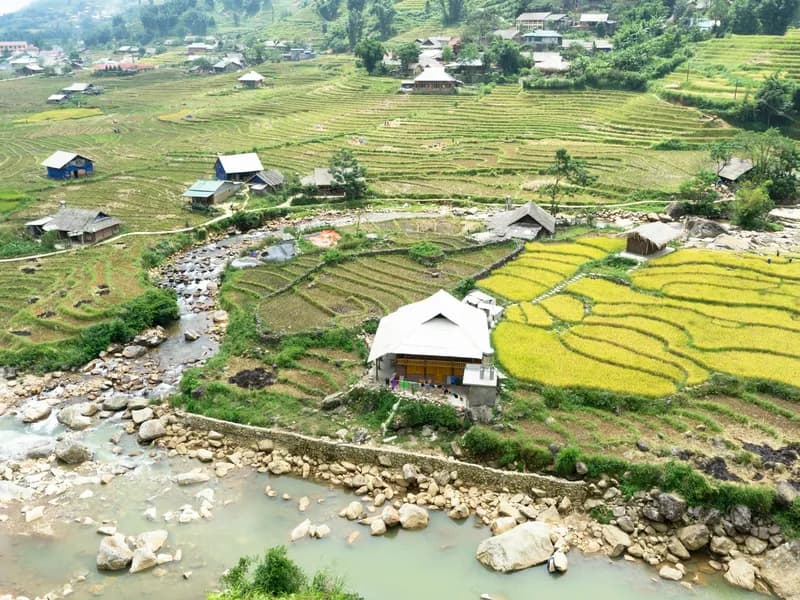
Muong Hoa Valley Rice Terraces
Sapa's most dramatic terraced landscape, stretching between Lao Chai and Ta Van villages. The terraces turn emerald green in planting season (May-June) and golden before harvest (September-October). A guided trek through the valley (12-15 km, 5-6 hours, moderate) with a local H'mong guide costs VND 500,000-800,000 (~$20-32). Homestays in Ta Van from VND 200,000 (~$8).

Fansipan Peak
At 3,143m, the highest point in Indochina (Vietnam, Laos, Cambodia). Two options: the Sun World cable car (VND 700,000 / ~$28, 15-minute ride, stunning views) or a 2-day guided trek (from $80-120 per person including guide, porter, meals, and mountain hut). The trek is strenuous with 2,000m elevation gain. Clear summit views are most likely October-November.
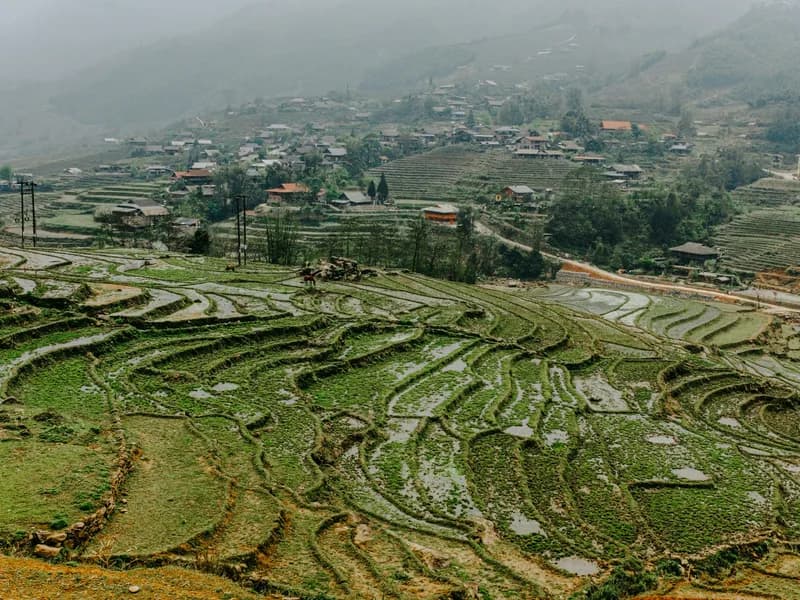
Cat Cat Village
The closest H'mong village to Sapa town — a 30-minute walk downhill. Entry: VND 70,000 (~$3). Traditional indigo-dyed clothing, bamboo handicrafts, and a small waterfall. Best visited early morning before tour groups arrive. The walk back uphill is steep — motorbike taxis wait at the bottom (VND 30,000). Allow 2-3 hours.
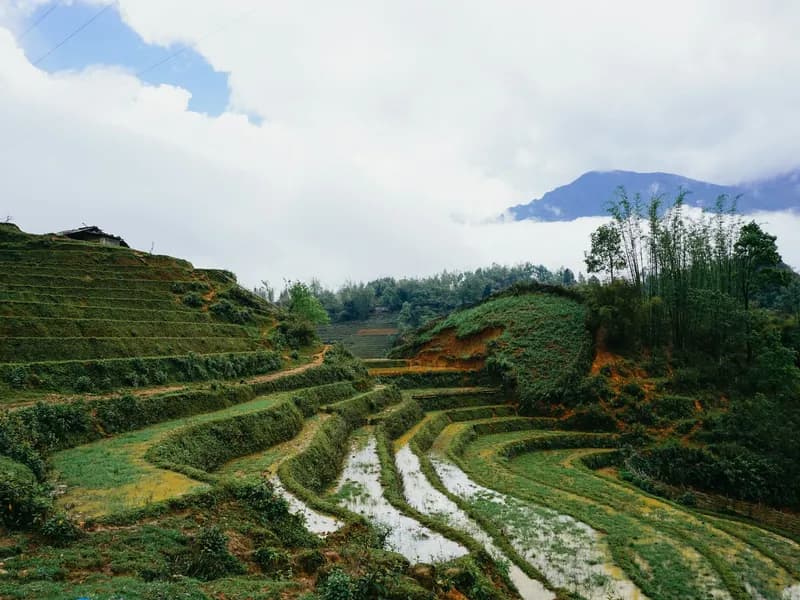
Homestay Trekking in Ta Phin
A Red Dao village 12 km from Sapa offering authentic homestay experiences. The 2-day trek from Sapa via Lao Chai and Ta Van to Ta Phin passes through bamboo forests and terraced fields. Homestays ($10-15/night including dinner and breakfast) let you experience herbal medicine baths, embroidery, and communal cooking. Book through local guides, not agencies, to maximize village income.
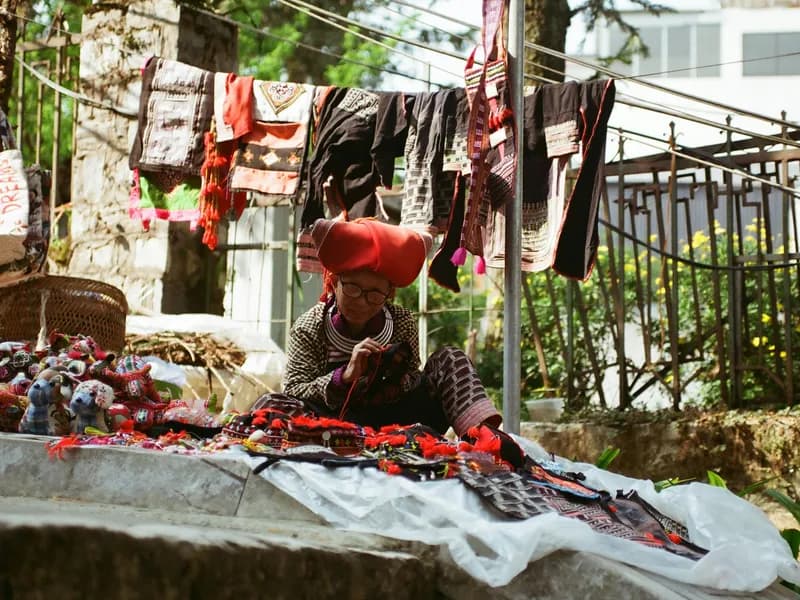
Sapa Market (Saturday)
The Saturday market brings H'mong, Dao, Tay, and Giay ethnic groups into town in traditional dress. Brocade textiles, handmade silver jewelry, medicinal herbs, and local produce fill the stalls. The love market tradition (where young people from different villages meet) is now mostly commercialized but the atmosphere remains vibrant. Arrive by 7AM for the best experience.
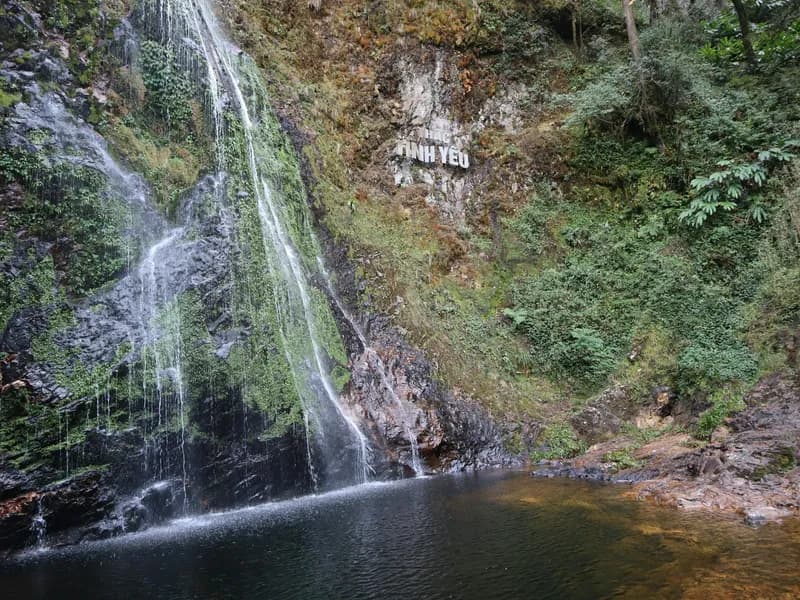
Silver Waterfall & Love Waterfall
Two waterfalls on the road toward Fansipan. Silver Waterfall (Thac Bac, entry VND 20,000 / ~$0.80) drops 200m and is visible from the road. Love Waterfall (Thac Tinh Yeu) requires a 1-km forest walk and is less crowded. Both are most impressive in the rainy season (June-September). Allow 1-2 hours for both. 12 km west of Sapa town.
Planned Itinerary
7-Day Sapa Itinerary
Arrival in Sapa
Travel from Hanoi to Sapa — either by overnight train to Lao Cai then 1-hour van, or 5-6 hour direct bus. Arrive and soak in the mountain atmosphere.
Arrive in Sapa town(1 hour)
If by overnight train: arrive Lao Cai station at 6AM, shared van to Sapa (VND 100,000 / ~$4, 1 hour). If by bus: direct sleeper buses from Hanoi take 5-6 hours. Stay near the town center or in a Ta Van homestay for the full experience
Check-in and orientation walk around Sapa town(1.5 hours)
Walk the stone church square, peek at the views from the rooftop bars. If it's Saturday, the market will be buzzing with ethnic minority groups in traditional dress
Lunch at Hill Station Signature Restaurant(1 hour)
Colonial-era building with panoramic valley views. Try the Sapa rainbow trout (VND 180,000 / ~$7) or the set lunch menu
Evening at Sapa town night market(1.5 hours)
BBQ stalls, grilled corn, and steaming pho. The H'mong women sell brocade at stalls along the main street. Prices are negotiable
Muong Hoa Valley Trek — Lao Chai to Ta Van
The classic Sapa trek through the most dramatic rice terraces in Vietnam. A local H'mong guide makes all the difference.
Morning departure with H'mong guide(1 hour)
Book a local H'mong guide (VND 500,000-800,000 / ~$20-32 for the day). They'll find you at your hotel or meet at the church square. Their knowledge of paths, plants, and village life is invaluable
Trek from Sapa through Lao Chai village(3 hours)
Descend through terraced fields into the Muong Hoa Valley. The terraces are emerald green in May-June, golden in September-October. Lao Chai is a Black H'mong village — indigo-dyed clothing, bamboo homes on stilts
Lunch at a family home in Lao Chai(1 hour)
Your guide will arrange lunch at a local home — simple but authentic. Rice, stir-fried vegetables, and spring rolls. VND 80,000-100,000 (~$3-4)
Continue trek to Ta Van village(2 hours)
Cross the Muong Hoa River on a suspension bridge. Ta Van is a Giay ethnic village — different architecture and traditions from the H'mong. The walk between villages follows the river through the heart of the terraces
Overnight at Ta Van homestay(2 hours)
VND 200,000 (~$8) including dinner and breakfast. Sleep in a traditional wooden house. The evening meal is communal — rice wine flows freely. The valley at night is pitch dark and silent
Fansipan Peak — Indochina's Rooftop
Conquer the highest point in Indochina (3,143m) — by cable car for the views or by trek for the adventure.
Return from Ta Van to Sapa(1.5 hours)
Morning walk back or motorbike taxi (VND 50,000)
Fansipan cable car(2 hours)
Sun World Fansipan Legend. VND 700,000 (~$28) for cable car + funicular. 15-minute ride over clouds and jungle. At the top: a temple complex and observation deck. Clear views most likely October-November. Or take the 2-day trek option ($80-120 with guide and overnight)
Summit exploration(1 hour)
The summit marker at 3,143m. Buddhist temple and pagodas. On clear days you can see across the entire Hoang Lien Son range. It's cold up here — bring a jacket even in summer
Afternoon at Silver Waterfall(1 hour)
Thac Bac, 12 km west of Sapa. Entry VND 20,000 (~$0.80). 200m drop visible from the road. Most impressive during rainy season
Cat Cat Village & Love Waterfall
A shorter day visiting the closest H'mong village and a forest waterfall.
Walk to Cat Cat Village(2 hours)
30-minute walk downhill from Sapa. Entry VND 70,000 (~$3). Traditional indigo-dyed clothing, bamboo crafts, and a small waterfall. Go early before tour groups arrive
Lunch at Little Sapa restaurant(1 hour)
Small Vietnamese restaurant near the market. Pho bo (beef pho) VND 50,000 (~$2). Good bun cha too
Love Waterfall (Thac Tinh Yeu)(2 hours)
1-km forest walk to a beautiful cascade less crowded than Silver Waterfall. VND 70,000 entry. The forest canopy is atmospheric — mossy trees and fern-covered boulders
Evening free — Sapa town exploration(2 hours)
Walk the main drag, try egg coffee at a cafe (Sapa version of Hanoi's famous drink), browse the textile shops
Rest Day — Market & Spa
A slower day. If it's Saturday, the market is the highlight. If not, indulge in a Red Dao herbal bath.
Sapa Market (best on Saturday)(2 hours)
H'mong, Dao, Tay, and Giay groups in traditional dress. Brocade textiles, silver jewelry, medicinal herbs. Arrive by 7AM for the best atmosphere
Brunch at a local pho stand(45 minutes)
The stalls near the market serve the best pho in town. VND 35,000-50,000 (~$1.50-2)
Red Dao herbal bath(1.5 hours)
Traditional herbal bath using 10+ local plants. VND 100,000-200,000 (~$4-8) at most hotels or dedicated bath houses in Ta Phin. The herbs are said to cure everything from muscle aches to heartbreak
Free afternoon(3 hours)
Rest, read, or walk to a viewpoint above town
Ta Phin Village Trek
Trek to the Red Dao village of Ta Phin for embroidery, herbal medicine, and authentic homestay culture.
Morning trek to Ta Phin(3 hours)
12 km from Sapa through bamboo forests and terraced fields. The Red Dao are recognizable by their elaborate red-embroidered headscarves
Lunch at Ta Phin homestay(1 hour)
Simple meal at a Dao family home. The herbal bath here is the original — the Red Dao invented it. VND 50,000 (~$2) for the bath
Embroidery workshop(1.5 hours)
Watch and learn Red Dao cross-stitch embroidery. Their geometric patterns take months per piece. Small embroidered items from VND 100,000 (~$4)
Departure Day
Morning in Sapa before heading back to Hanoi.
Early morning photo walk(1 hour)
The mist over the valley at dawn is magical. Head to the Ham Rong Mountain viewpoint (VND 70,000 entry) for panoramic shots
Souvenir shopping(45 minutes)
Brocade bags, H'mong jewelry, local honey, and Sapa rice wine
Transfer to Hanoi(6 hours)
Direct bus from Sapa (VND 250,000-350,000 / ~$10-14). Or van to Lao Cai (1 hour) for the afternoon train. Overnight train option lets you sleep on the way
14-Day Sapa Itinerary
Arrival in Sapa
Travel from Hanoi to Sapa by overnight train or direct bus. Settle into the mountain town.
Arrive in Sapa(1 hour)
Overnight train to Lao Cai + van (VND 100,000/~$4, 1 hr) or direct sleeper bus (5-6 hrs, VND 250,000-350,000)
Lunch at Hill Station Signature(1 hour)
Rainbow trout VND 180,000 (~$7). Valley views
Night market(1.5 hours)
BBQ stalls, pho, brocade textiles
Muong Hoa Valley — Lao Chai to Ta Van
Classic trek through Vietnam's most dramatic rice terraces with a H'mong guide.
Depart with H'mong guide(1 hour)
VND 500,000-800,000 (~$20-32) for the day
Trek through Lao Chai(3 hours)
Descend through terraced fields. Black H'mong village with indigo clothing and bamboo homes
Lunch at a family home(1 hour)
Rice, vegetables, spring rolls. VND 80,000-100,000 (~$3-4)
Continue to Ta Van(2 hours)
Cross suspension bridge. Giay ethnic village
Homestay overnight(2 hours)
VND 200,000 (~$8) including dinner and breakfast. Communal meal, rice wine, valley silence
Fansipan Peak
Conquer Indochina's highest point at 3,143m.
Fansipan cable car(2 hours)
VND 700,000 (~$28). 15-minute ride over clouds. Summit temple and observation deck
Summit exploration(1 hour)
3,143m marker. Buddhist temple. Bring a jacket
Silver Waterfall(1 hour)
Thac Bac. VND 20,000. 200m drop. 12 km west of Sapa
Cat Cat Village & Love Waterfall
Closest H'mong village and a forest waterfall.
Cat Cat Village(2 hours)
30-min walk downhill. VND 70,000 entry. Go early before tour groups
Lunch at Little Sapa(1 hour)
Pho bo VND 50,000 (~$2)
Love Waterfall(2 hours)
VND 70,000. 1-km forest walk. Less crowded than Silver Waterfall
Rest Day — Market & Herbal Bath
Saturday market (if timing works), Red Dao herbal bath, and easy exploration.
Sapa Market(2 hours)
Best on Saturday. Ethnic groups in traditional dress. Textiles, herbs, produce. Arrive 7AM
Brunch at a pho stand(45 minutes)
VND 35,000-50,000 (~$1.50-2)
Red Dao herbal bath(1.5 hours)
VND 100,000-200,000 (~$4-8). 10+ local plants. Deeply relaxing
Ta Phin Village & Red Dao Culture
Trek to the Red Dao village for embroidery, herbal medicine, and deeper cultural immersion.
Trek to Ta Phin(3 hours)
12 km through bamboo and terraced fields. Red Dao identified by red embroidered headscarves
Embroidery workshop(1.5 hours)
Learn Red Dao cross-stitch. Small pieces from VND 100,000 (~$4)
Bac Ha Sunday Market Day Trip
The most colorful market in northern Vietnam — Flower H'mong in full dress, livestock trading, and corn wine.
Early transfer to Bac Ha(2.5 hours)
Leave Sapa at 5:30AM. Minivan or motorbike. Bac Ha is 100 km east, near the Chinese border
Bac Ha Sunday Market(3 hours)
Sunday only. Flower H'mong women in the most elaborate traditional dress in Vietnam — pleated skirts, embroidered jackets, silver jewelry. Livestock section has water buffalo, horses, pigs. Corn wine tasting from ceramic jars. This is the real deal, not a tourist production
Lunch at a Bac Ha restaurant(1 hour)
Thang co (horse meat soup, a local specialty) or safer options like pho and com (rice plates). VND 40,000-60,000
Fansipan Trek — Day 1 (Optional)
For those who want the full experience: 2-day guided trek to Fansipan summit instead of the cable car.
Meet guide and porters at trailhead(1 hour)
2-day trek from $80-120/person including guide, porter, meals, mountain hut. Book through Sapa Trekking or local agencies
Trek through cloud forest(5-6 hours)
Dense jungle, bamboo, rhododendron forest. 2,000m elevation gain over 2 days. Steep and muddy in places. The forest transitions through multiple vegetation zones
Overnight at mountain hut (2,800m)(2 hours)
Basic shelter with sleeping bags. Hot noodle soup for dinner. Clear nights reveal stunning stars above the cloud line
Fansipan Summit & Descent
Summit push at dawn, then descend. For non-trekkers: a free day in Sapa.
Summit push (trekkers)(2 hours)
Depart 5AM. The final 343m is steep alpine terrain — giant lobelia and dwarf bamboo. Summit by 7AM for the best chance of clear views
Alternative: free day in Sapa(6 hours)
If not trekking, spend the day exploring Sapa's cafes, the Ham Rong Mountain garden (VND 70,000, good views), or rent a motorbike to ride the Ma Tra road
Celebration dinner at Sapa Rooms(1.5 hours)
Boutique restaurant with valley views. Vietnamese tasting menu VND 450,000 (~$18)
Rest Day
Recovery after the trek. Easy morning, cafe hopping, and people-watching.
Brunch at Nature View Cafe(1 hour)
Valley-view cafe with good egg coffee (Sapa's version of Hanoi's famous drink). VND 35,000 (~$1.40)
Free afternoon(5 hours)
Hot bath, reading, strolling. You've earned it
Y Linh Ho Village & Cooking Class
Visit a lesser-known H'mong village and learn to cook Vietnamese mountain food.
Trek to Y Linh Ho(2 hours)
A quieter H'mong village between Sapa and Lao Chai. Less tourist-developed, more authentic daily life
Cooking class(3 hours)
Learn to make pho from scratch, spring rolls, and banh cuon (steamed rice rolls). Several Sapa operators offer classes from VND 300,000-500,000 (~$12-20)
Evening at a rooftop bar(1.5 hours)
Several bars near the church square have valley views. Bia Hoi (fresh beer) VND 10,000 (~$0.40) per glass
Muong Hum Market & Northern Valleys
Deeper into Lao Cai province — a Tuesday market and villages rarely visited by tourists.
Drive to Muong Hum(2 hours)
Remote market town near the Chinese border. Tuesday market brings ethnic groups from surrounding valleys. Far less touristy than Bac Ha or Sapa
Muong Hum market (Tuesdays)(2 hours)
If not Tuesday, explore the village and surrounding rice paddies. The road itself is scenic — winding through narrow valleys with terraced hillsides
Lunch at a roadside restaurant(1 hour)
Banh mi (Vietnamese sandwich) and sweet corn from a roadside stall
Free Day — Your Choice
By now you know Sapa well. Return to a favorite spot or discover something new.
Free morning(4 hours)
Second visit to Muong Hoa Valley, motorbike to a viewpoint, or simply cafe and book
Free afternoon(4 hours)
Final herbal bath, souvenir shopping, or one more trek
Departure Day
Morning in Sapa before heading back to Hanoi.
Dawn photo walk(1 hour)
Mist over the valley at dawn. Ham Rong Mountain viewpoint
Souvenir shopping(45 minutes)
Brocade bags, H'mong jewelry, Sapa rice wine, local honey
Transfer to Hanoi(6 hours)
Direct bus VND 250,000-350,000 or van to Lao Cai + overnight train
21-Day Sapa Itinerary
Arrival in Sapa
Travel from Hanoi to Sapa. Settle into the mountain town.
Arrive in Sapa(1 hour)
Overnight train to Lao Cai + van, or direct sleeper bus (5-6 hrs)
Lunch at Hill Station(1 hour)
Rainbow trout VND 180,000. Valley views
Muong Hoa Valley — Lao Chai to Ta Van
Classic rice terrace trek with H'mong guide. Overnight homestay.
Depart with H'mong guide(1 hour)
VND 500,000-800,000 for the day
Lunch at family home(1 hour)
VND 80,000-100,000
Homestay overnight(2 hours)
VND 200,000 including meals
Ta Van to Giang Ta Chai & Return
Continue the valley trek to a Red Dao village with a dramatic waterfall.
Morning trek to Giang Ta Chai(2.5 hours)
Red Dao village with a hanging bridge and waterfall. Less visited than Lao Chai and Ta Van
Return to Sapa via road(1.5 hours)
Motorbike taxi VND 50,000 or arrange pickup with your guide
Fansipan Cable Car
Ride to the top of Indochina at 3,143m.
Fansipan cable car(2 hours)
VND 700,000 (~$28). 15-min ride over clouds
Summit exploration(1 hour)
Temple, marker, panoramic views
Silver & Love Waterfalls(2 hours)
Both on the road to Fansipan. VND 20,000 and VND 70,000 entry
Cat Cat Village & Rest
Morning village walk, afternoon relaxation.
Cat Cat Village(2 hours)
VND 70,000. Go early before tour groups
Red Dao herbal bath(1.5 hours)
VND 100,000-200,000. Deeply relaxing
Ta Phin Village & Embroidery
Red Dao cultural immersion — embroidery workshop and herbal traditions.
Rest Day — Market & Cafes
Saturday market if timing works. Otherwise, cafes and mountain views.
Sapa Market (Saturday)(2 hours)
Ethnic groups in traditional dress. Arrive 7AM
Bac Ha Sunday Market
The most colorful market in northern Vietnam — Flower H'mong in full dress.
Early transfer to Bac Ha(2.5 hours)
Leave 5:30AM. 100 km east near Chinese border
Bac Ha Sunday Market(3 hours)
Sunday only. Flower H'mong, livestock, corn wine tasting
Fansipan Trek — Day 1
Begin the 2-day trek to Fansipan summit through cloud forest.
Meet guide and porters(1 hour)
2-day trek $80-120/person. Guide, porter, meals, mountain hut included
Trek through cloud forest(5-6 hours)
Dense jungle, bamboo, rhododendron. Multiple vegetation zones
Overnight at mountain hut (2,800m)(2 hours)
Basic shelter. Hot noodle soup for dinner
Fansipan Summit & Descent
Summit push at dawn, then descend triumphantly.
Summit push(2 hours)
Depart 5AM. Final 343m through alpine terrain. Summit by 7AM
Celebration dinner at Sapa Rooms(1.5 hours)
Tasting menu VND 450,000 (~$18)
Rest & Recovery Day
Full rest after the trek.
Brunch at Nature View Cafe(1 hour)
Egg coffee VND 35,000
Y Linh Ho Village & Cooking Class
Lesser-known H'mong village and Vietnamese mountain cooking.
Trek to Y Linh Ho(2 hours)
Less touristy H'mong village between Sapa and Lao Chai
Cooking class(3 hours)
Pho from scratch, spring rolls, banh cuon. VND 300,000-500,000
Muong Hum Market & Northern Valleys
Remote Tuesday market near the Chinese border.
Market exploration (Tuesdays)(2 hours)
Far less touristy than Bac Ha. Winding valley roads with terraced hillsides
Ban Ho Valley Multi-Day Trek — Day 1
3-day trek into the remote Ban Ho Valley — the deepest Sapa trek experience.
Depart Sapa with guide(1 hour)
3-day trek $120-180/person. Guide, porters, homestays, all meals
Trek from Sapa via Su Pan to Ban Ho(6 hours)
Through remote terraces and Tay ethnic villages. The landscape becomes wilder as you descend into the valley. Fewer tourists reach Ban Ho — it's a genuine cultural experience
Homestay in Ban Ho(2 hours)
Tay ethnic homestay on stilts above the river. Communal dinner with the family. VND 150,000 (~$6)
Ban Ho Valley — Day 2
Explore the valley — hot springs, river swimming, and village life.
Morning walk through Ban Ho village(2 hours)
Rice paddies, water buffalo, children playing. The Tay are more lowland-influenced than the H'mong — different architecture and culture
Natural hot springs(1.5 hours)
Walk to natural hot springs along the river. Basic but beautiful setting
Afternoon at leisure in the valley(3 hours)
Help with farming, learn local crafts, or simply exist in the valley's peaceful rhythm
Ban Ho Valley — Day 3 & Return
Final valley morning and trek back to Sapa.
Trek back to Sapa(5 hours)
Different route back via Nam Toong village. Uphill return is more challenging
Rest Day
Full recovery day after the 3-day trek.
Motorbike Day to O Quy Ho Pass
Ride one of Vietnam's most spectacular mountain passes.
Rent motorbike or hire a driver(30 minutes)
Motorbike VND 150,000/day. Or hire a xe om driver VND 300,000 for the day
Ride to O Quy Ho Pass (Tram Ton)(2 hours)
Vietnam's highest pass at 1,900m. The road winds through dramatic mountain scenery with waterfalls and cloud forests. 15 km west of Sapa on the road to Lai Chau
Lunch at a roadside stall on the pass(1 hour)
Com ga (chicken rice) and hot tea. Simple and satisfying at altitude
Sin Chai Village & Photography Walk
Visit a lesser-known H'mong village and dedicate the day to capturing Sapa's landscapes.
Morning trek to Sin Chai(2 hours)
Southwest of Sapa. Rarely visited by tourists. Traditional H'mong life largely unchanged
Photography walk through terraces(2 hours)
The light on the terraces is best early morning and late afternoon. Your guide can take you to the best viewpoints
Final Free Day
Your last full day. Return to favorites or find one more hidden corner.
Free morning(4 hours)
Last walk through the terraces, one more herbal bath, or just cafe and valley views
Souvenir shopping(1.5 hours)
Brocade bags, H'mong silver, local honey, rice wine, Sapa coffee
Departure Day
Morning in Sapa before heading back to Hanoi.
Dawn photo walk(1 hour)
Last mist over the valley
Transfer to Hanoi(6 hours)
Direct bus or van to Lao Cai + train
Travel Tips
Visa & Entry
E-Visa for Most Nationalities
Vietnam offers a 90-day e-visa ($25) for citizens of 80+ countries via evisa.xuatnhapcanh.gov.vn. Processing takes 3 business days. Alternatively, many nationalities qualify for 45-day visa exemption. Check your specific nationality's rules. Sapa is an internal destination — no special border permits needed.
transport
Overnight Train + Bus or Direct Sleeper Bus
The classic route: overnight train from Hanoi to Lao Cai (8 hours, VND 400,000-900,000 / $16-36 for a 4-berth sleeper on SP1/SP3 trains), then minibus to Sapa (1 hour, VND 50,000). Book through violettrainvietnam.com or baolau.com. Direct sleeper buses from Hanoi (6-7 hours, VND 250,000-350,000 / $10-14) are cheaper but less comfortable. The Hanoi-Lao Cai expressway has cut drive time to 5 hours.
Budget
One of Southeast Asia's Best Value Treks
A 2-day/1-night homestay trek with local guide, meals, and accommodation costs $40-60 per person — exceptional value. Budget hotels in Sapa town: VND 200,000-400,000 (~$8-16). Street food: VND 30,000-50,000 ($1.20-2) per meal. Splurge: Hotel de la Coupole by MGallery ($80-150/night) for French-colonial luxury. Total budget: $20-40/day is very comfortable.
Local Customs
Ask Before Photographing Ethnic Minority People
H'mong and Dao women are frequently photographed without consent. Always ask permission first — most will happily pose if asked respectfully. Do not photograph children without a parent present. Buying a small handicraft item is a meaningful way to reciprocate. Avoid 'voluntourism' photo ops at schools.
Safety
Slippery Terraces Are the Biggest Risk
Rice terrace paths are narrow, muddy, and extremely slippery after rain. Wear proper hiking boots with grip (not sandals or sneakers). Trekking poles help enormously. Leeches are common in wet season — tuck pants into socks and carry salt or DEET. The altitude (1,500-3,000m) causes mild breathlessness for those arriving from sea-level Hanoi.
Book Local Guides Directly
Sapa's H'mong and Dao women are excellent guides — booking directly with them (rather than through Hanoi tour agencies) ensures more money stays in their communities. Look for Sapa Sisters, Sapa O'Chau (a social enterprise), or ask your homestay host. Rates: VND 500,000-1,000,000 (~$20-40) per day for a private guide.
Related Articles
StoriesWalking Through Clouds: A Trek Through Sapa's Rice Terraces
Two days on muddy trails through rice terraces so steep they defy gravity, sleeping in a H'mong homestay, and the best pho I've eaten anywhere — including Hanoi.
StoriesA Week in Sapa: Day-by-Day Trek Journal
Rice terraces at dawn, a homestay family's rice wine, Fansipan in the clouds, and the best VND 40,000 pho of my life. Seven days in Vietnam's highlands.
Tips21 Tips for Trekking Sapa Without Getting Scammed or Stuck
The mud situation, the homestay booking trick, the overnight train hack, and why your hiking boots matter more than anything else you pack.