
Serengeti

Photo: Catherine Merlin / Unsplash
Key Facts
Best Time to Visit
June to October (dry season, best wildlife viewing); January-February for calving season in southern Serengeti
Language
Swahili (Kiswahili), English
Currency
Tanzanian Shilling (TZS), USD widely accepted for tours and park fees
Time Zone
EAT (UTC+3)
Airport
Kilimanjaro International (JRO) or Seronera Airstrip (SEU) for bush flights
Population
N/A — national park; nearest city Arusha has ~600,000
Climate
Tropical savanna, dry season 15-28°C, wet season 20-30°C with afternoon showers
Safety Rating
Generally Safe (Level 1 within parks, with registered operators)
Park Size
14,763 km² — UNESCO World Heritage Site since 1981
Top Highlights
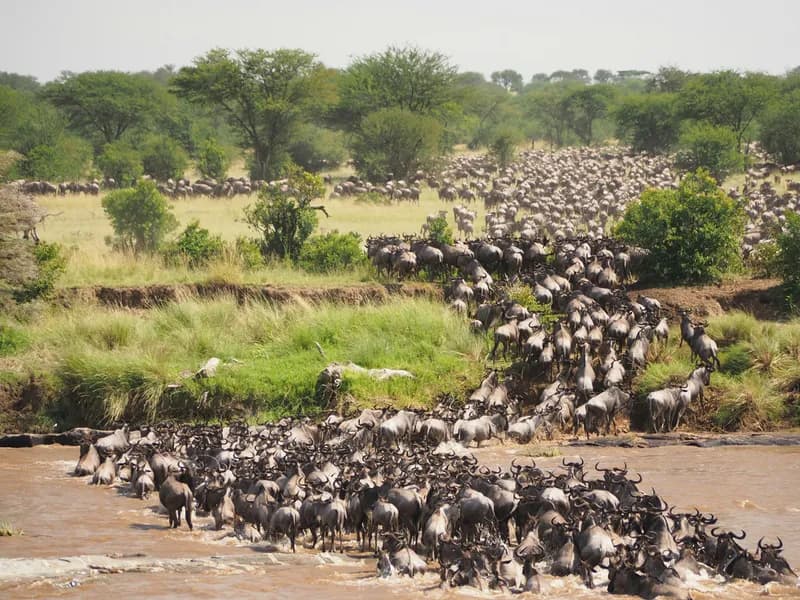
The Great Migration
Over 2 million wildebeest, zebra, and gazelle follow a circular route through the Serengeti-Mara ecosystem. The Mara River crossings (July-October) are the most dramatic — crocodiles, chaos, and survival. Position in northern Serengeti for crossings. Multi-day camping safaris from $250-500/day.

Ngorongoro Crater
The world's largest unbroken volcanic caldera (19 km diameter), home to roughly 25,000 large animals including rare black rhino. Park fee: $70.80/person/day. A half-day game drive descends 600m into the crater floor. Usually combined with Serengeti in a 5-7 day safari circuit.

Hot Air Balloon Safari
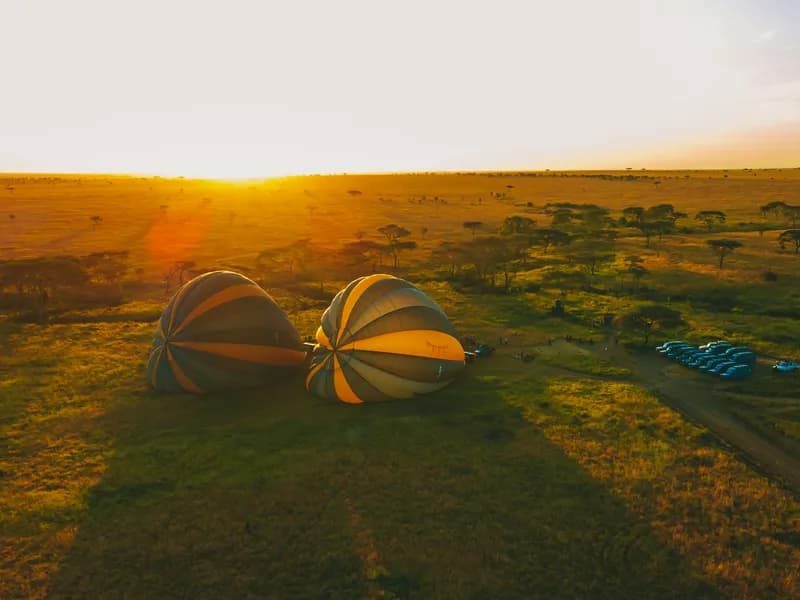
Float over the Serengeti plains at dawn with Serengeti Balloon Safaris. The 1-hour flight includes a champagne bush breakfast after landing. Cost: $500-600/person. Book at least 1 month ahead. Departures from Seronera and Kogatende areas.
Seronera Valley (Central Serengeti)
The park's wildlife hub year-round, where the Seronera River attracts resident lions, leopards, hippos, and crocodiles. The kopjes (rocky outcrops) are prime leopard territory. Most lodges and camps are based here. Best for first-time visitors.

Big Five Game Drives
Serengeti has one of Africa's highest concentrations of all Big Five. Morning drives depart at 6AM (best for predator activity). Full-day drives with packed lunch cover more ground. Private vehicle safaris offer flexibility; group vehicles are cheaper at $150-200/day.
Olduvai Gorge
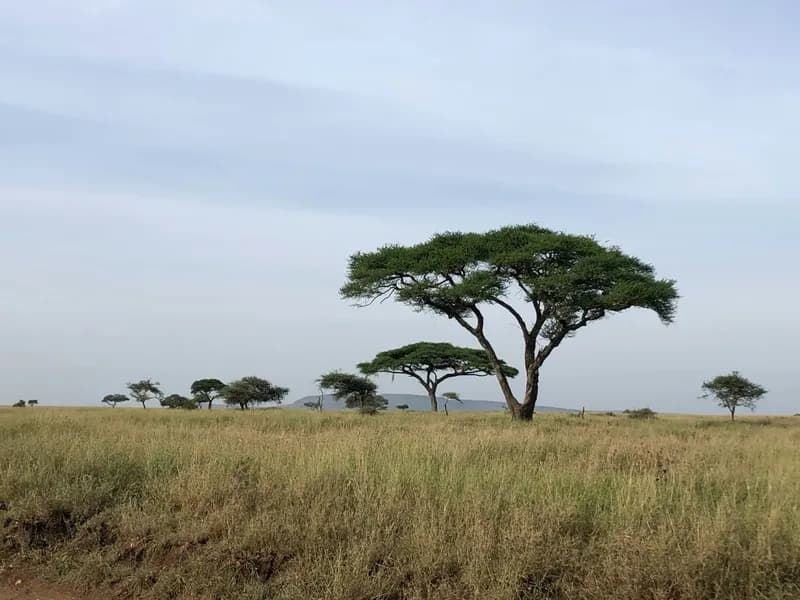
A paleoanthropological site between Ngorongoro and Serengeti where the Leakey family discovered 1.8-million-year-old hominid fossils. Small museum on-site with fossil casts. Entry: $5. Allow 1 hour. Usually a stop on the drive between the crater and Serengeti.
Luxury Tented Camps
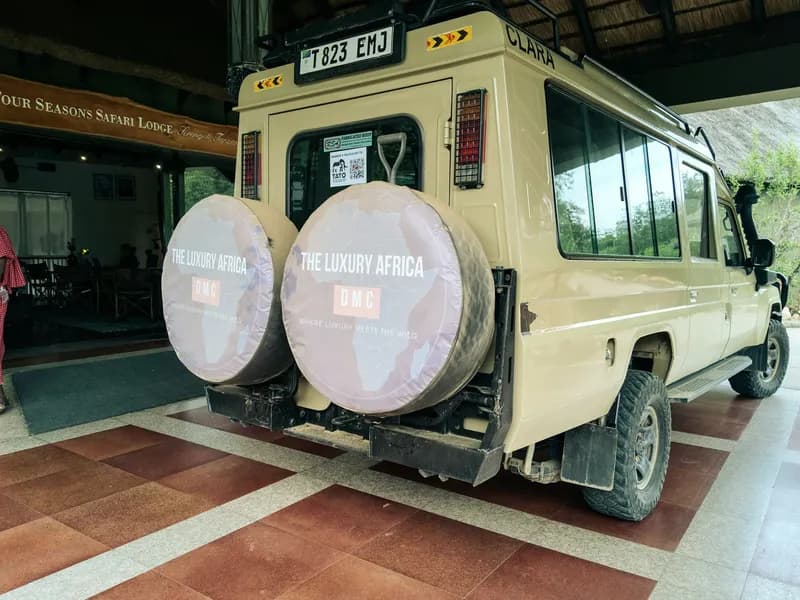
Mobile tented camps like Serengeti Under Canvas and Alex Walker's Serian move with the migration. Expect king beds, hot showers, gourmet meals, and lions outside your tent at night. All-inclusive rates from $600-1,500/person/night.
Planned Itinerary
7-Day Serengeti Itinerary
Arrival in Arusha
Fly into Kilimanjaro International (JRO). Transfer to Arusha — the gateway city for Serengeti safaris. Meet your tour operator and prepare for tomorrow's early departure.
Arrive at JRO airport(1 hour)
E-visa required ($50/$100 for US). Apply online 2 weeks ahead at visa.immigration.go.tz
Transfer to Arusha hotel(1 hour)
Airport shuttle or arranged transfer $30-50. Arusha is the safari capital of Tanzania
Safari briefing with tour operator(1 hour)
Meet your guide, review the itinerary, and confirm gear. Bring USD cash (post-2013 bills only) for tips and park fees
Dinner at Arusha Coffee Lodge(1.5 hours)
Set in a coffee plantation with excellent Tanzanian cuisine. Try the Zanzibar-spiced seafood. $20-40 per person
Drive to Ngorongoro Crater
7-8 hour drive from Arusha to Ngorongoro Conservation Area, stopping at Olduvai Gorge. The landscape shifts from farmland to savanna to the crater rim.
Early morning departure from Arusha(30 minutes)
Leave by 6AM. Your safari vehicle (Land Cruiser with pop-top roof) is your home for the week
Drive through Ngorongoro highlands(5 hours)
Climb to the crater rim at 2,286m. The road passes through lush highland forest with colobus monkeys
Olduvai Gorge museum stop(1 hour)
Where the Leakey family discovered 1.8-million-year-old hominid fossils. Small museum with fossil casts. $5 entry
Check into Ngorongoro lodge or campsite(30 minutes)
Rim lodges from $200-800/night. Campsites at Simba Camp $30-50. The crater views at sunset are staggering
Sunset at the crater rim(1 hour)
Watch the sun set over the 19 km wide crater floor 600m below. Often misty and atmospheric
Ngorongoro Crater Descent
A half-day game drive descending into the world's largest unbroken volcanic caldera — home to 25,000 large animals including rare black rhino. Park fee $70.80/person/day.
Dawn descent into the crater(30 minutes)
The steep road down takes 20 min. The crater floor opens up into a miniature Africa — grasslands, forest, lake, and swamp
Morning game drive on crater floor(4 hours)
All Big Five are resident. Black rhino (about 20 remaining) are the star — scan the open grassland. Flamingos carpet Lake Magadi. Lions often rest near the road
Picnic lunch at Ngoitokitok Springs(1 hour)
Hippo pool surrounded by fever trees. Packed lunch in the vehicle — kites will steal food from your hands
Ascend the crater and drive to Serengeti(3 hours)
Cross the Ngorongoro-Serengeti plain. The transition from crater forest to endless savanna is dramatic. Enter Serengeti through Naabi Hill gate
Central Serengeti — Seronera Valley
Full day in the wildlife-rich Seronera Valley — the park's year-round hub with resident lions, leopards, hippos, and crocodiles along the Seronera River.
Sunrise game drive from camp(4 hours)
The rocky outcrops (kopjes) are prime leopard territory. Lions drape over the rocks at dawn. Seronera River crossings attract hippos and crocodiles
Lunch at Seronera Visitor Centre(1 hour)
The only public facility in central Serengeti. Basic meals and cold drinks. Or packed lunch in the vehicle
Afternoon game drive — Makoma Hill circuit(3 hours)
Quieter roads with excellent giraffe, topi, and Thomson's gazelle. Hyena dens are often spotted near the rocky outcrops
Sundowner in the bush(1 hour)
Your guide finds a scenic viewpoint for a sunset drink. Gin and tonic with the Serengeti stretching to the horizon. Unforgettable
Hot Air Balloon Safari & Full Day
An optional dawn balloon flight over the plains, followed by a full day of game driving. The balloon is expensive but universally regarded as a once-in-a-lifetime experience.
Hot air balloon safari(3 hours)
$500-600/person. Departs at dawn. 1-hour flight over the Serengeti watching herds from above. Includes champagne bush breakfast after landing. Book 1 month ahead through Serengeti Balloon Safaris
Continue game driving after balloon(3 hours)
Rejoin your guide for a post-breakfast drive. Different perspective after seeing the landscape from above
Afternoon drive targeting big cats(3 hours)
Ask your guide about recent lion pride sightings. The Serengeti has one of the highest lion densities in Africa — 3,000+ individuals
Return to camp for dinner(1 hour)
Camp dinner under the stars. Listen to hyenas whooping in the darkness outside the tent
Full Day Safari — Migration or Deep Bush
Depending on the season, drive toward the migration herds (northern Serengeti July-Oct, southern Dec-Mar) or explore remote corners of the park.
Full day game drive with packed lunch(8 hours)
Long drives to reach migration herds or quieter corners. Your guide tracks the herds based on recent reports. Group safaris $200-350/day; private $400-700+
River crossing watch (Jul-Oct)(2 hours)
If timing aligns — watch wildebeest cross the Mara River. Crocodiles wait below. The most dramatic wildlife spectacle on Earth. Patience required — crossings happen unpredictably
Bush lunch under an acacia tree(1 hour)
Packed lunch in the shade while vultures circle above and zebra graze nearby
Return drive to camp(2 hours)
The golden hour drive back to camp often produces the best sightings — predators become active
Departure — Serengeti to Arusha
Final sunrise game drive, then the long drive back to Arusha or a bush flight. The journey is a game drive in itself.
Sunrise farewell game drive(2 hours)
Last chance for the big cats. The early morning light on the Serengeti plains is the image you'll remember forever
Drive to Arusha or bush flight(7-8 hours driving / 1.5 hours flying)
Bush flights Seronera to Arusha cost $250-400 one way (Coastal Aviation, Auric Air). 15 kg luggage in soft bags. The drive is long but scenic through the Ngorongoro highlands
Dinner in Arusha(1.5 hours)
If driving: celebrate at Via Via restaurant (cultural center with live music, $15-25) or The Blue Heron ($20-35). Tip your guide $15-20/day in crisp post-2013 USD bills
Transfer to JRO for departure(1 hour)
JRO is 46 km from Arusha. Arrange through your operator. 2 hours before international flights
14-Day Serengeti Itinerary
Arrival in Arusha
Fly into JRO. Transfer to Arusha, meet your operator.
Arrive JRO(1 hour)
E-visa $50/$100. Apply online 2 weeks ahead
Transfer to Arusha(1 hour)
Shuttle $30-50
Safari briefing(1 hour)
Confirm gear, tips in post-2013 USD
Dinner at Arusha Coffee Lodge(1.5 hours)
Zanzibar-spiced seafood. $20-40
Drive to Ngorongoro via Olduvai
7-8 hours to the crater rim through highlands and savanna.
Depart Arusha 6AM(5 hours)
Through highland forest with colobus monkeys
Olduvai Gorge museum(1 hour)
1.8M-year-old hominid fossils. $5
Ngorongoro rim lodge check-in(30 minutes)
Lodges $200-800, camps $30-50. Crater views
Sunset at crater rim(1 hour)
600m down to the 19 km floor. Misty and atmospheric
Ngorongoro Crater Descent
Half-day in the world's largest caldera. Big Five including rare black rhino.
Dawn descent(30 minutes)
Steep road, crater opens below
Morning game drive(4 hours)
20 black rhino remain. Flamingos on Lake Magadi. Lions near the road
Picnic at Ngoitokitok Springs(1 hour)
Hippo pool with fever trees. Guard food from kites
Drive to Serengeti(3 hours)
Naabi Hill gate entry. Forest to endless savanna
Seronera Valley — Central Serengeti
Year-round wildlife hub. Lions, leopards, hippos.
Sunrise kopje drive(4 hours)
Rocky outcrops = leopard territory. Lions drape on rocks
Lunch at Seronera Visitor Centre(1 hour)
Basic meals or packed lunch
Makoma Hill circuit(3 hours)
Giraffe, topi, hyena dens
Sundowner in the bush(1 hour)
Gin and tonic with endless horizon
Balloon Safari & Full Day
Dawn balloon flight then game driving all day.
Hot air balloon safari(3 hours)
$500-600. Dawn flight. Champagne bush breakfast. Book 1 month ahead
Post-balloon drive(3 hours)
New perspective after aerial views
Afternoon big cat targeting(3 hours)
3,000+ lions in the Serengeti. Ask guide for pride locations
Camp dinner under stars(1.5 hours)
Hyenas whooping outside
Migration Chase / Deep Bush
Full day tracking migration herds or exploring remote corners.
Full day drive with packed lunch(8 hours)
Guide tracks herds. Group $200-350/day, private $400-700+
River crossing (Jul-Oct)(2 hours)
Wildebeest vs crocodiles. Most dramatic wildlife spectacle on Earth
Acacia tree lunch(1 hour)
Packed lunch with vultures and zebra
Golden hour return(2 hours)
Predators activate at dusk
Rest Day at Tented Camp
Mid-trip rest. Short drive and camp relaxation.
Optional sunrise drive(2 hours)
Short loop near camp
Camp relaxation(4 hours)
Read, nap, watch wildlife from the tent. Luxury camps from $600-1,500/night
Afternoon nature walk with guide(2 hours)
Walking safaris available at some camps. Learn tracking, plants, and smaller wildlife. $30-50
Western Corridor — Grumeti River
Drive to the western Serengeti for different habitat — riverine forest, hippo pools, and during May-June, migration river crossings at the Grumeti.
Drive to western corridor(4 hours)
Game drive en route. Landscape becomes more wooded
Grumeti River game drive(3 hours)
Massive crocodiles, hippo pods, and during migration season, dramatic crossings. Colobus monkeys in the riverine forest
Check into western camp(30 minutes)
Grumeti Hills or mobile camps. All-inclusive $300-800/night
Sundowner at the river(1 hour)
Watch hippos surface at sunset. Crocodiles bask on the banks
Northern Serengeti — Kogatende
Drive to the northern reaches for dramatic Mara River crossings (peak July-October) and different wildlife dynamics.
Drive north to Kogatende(5 hours)
Long drive but the northern Serengeti is the most dramatic section. Roads get rougher
Mara River scouting(2 hours)
Position at crossing points. Thousands of wildebeest gather on the banks before the chaotic plunge. Patience is everything
Camp near the river(30 minutes)
Sayari Camp or Lamai Serengeti from $500-1,200/night
Evening game drive(2 hours)
The northern section has lower tourist density. More intimate wildlife encounters
Full Day Northern Serengeti
All day in the remote north. River crossings, big cats, and the untamed Serengeti.
Sunrise river crossing watch(3 hours)
Position early. Crossings are unpredictable — could happen in minutes or hours. The thundering hooves and splashing water are unforgettable
Lunch at camp(1 hour)
Return for a proper lunch. Rest during peak heat
Afternoon drive — Lobo area(3 hours)
Rock kopjes with lions and leopards. Lobo area has dramatic scenery with rocky hills
Night sounds from camp(1 hour)
Lions roar, hyenas whoop, hippos grunt. The Serengeti night soundtrack is unforgettable
Return to Central Serengeti
Drive south through the park. Different game on different roads.
Morning drive south(5 hours)
Game drive the full north-south route. Pack cooler with lunch
Seronera area afternoon(3 hours)
Return to familiar territory with new eyes. Check kopjes for leopards
Farewell Serengeti sundowner(1 hour)
Your last sunset over the endless plains
Lake Manyara National Park
Exit Serengeti and drive to Lake Manyara — a compact park famous for tree-climbing lions and flamingo-lined shores.
Drive to Lake Manyara(4 hours)
Via Ngorongoro. The descent to the Rift Valley floor is dramatic
Afternoon game drive in Lake Manyara(3 hours)
Tree-climbing lions in the mahogany forest. Elephants in the groundwater forest. Flamingos on the lake shore. Park fee $53/person/day
Check into Manyara lodge(30 minutes)
Lake Manyara Serena Lodge perched on the Rift escarpment. $150-400/night. Pool overlooking the lake
Dinner with Rift Valley views(1.5 hours)
The lake stretches below the escarpment. Hippos and flamingos visible from the restaurant
Tarangire National Park
Drive to Tarangire — the elephant capital of Tanzania with 3,000+ elephants and ancient baobab trees.
Drive to Tarangire(2 hours)
From Lake Manyara. Tarangire entry $53/person/day
Full day elephant watching(6 hours)
Herds of 200+ elephants at the Tarangire River during dry season. Massive baobab trees provide scale. Lion prides hunt along the river
Lunch at Tarangire picnic spot(1 hour)
Shaded picnic with elephants walking past. Pack a cooler
Drive to Arusha(2 hours)
Evening departure to Arusha for the final night
Departure Day
Final morning in Arusha. Souvenir shopping and transfer to JRO.
Arusha Cultural Heritage Centre(1.5 hours)
Tanzania's best curio shop and gallery. Tanzanite jewelry, Maasai crafts, Tingatinga paintings. Fixed prices — no haggling needed
Lunch at Via Via(1 hour)
Cultural center with live music and Tanzanian food. $15-25. A great final meal
Transfer to JRO(1 hour)
Tip your guide $15-20/day in crisp post-2013 USD. Put in an envelope. JRO: 2 hours before international
21-Day Serengeti Itinerary
Arrival in Arusha
Fly into JRO. Transfer to Arusha.
Arrive JRO(1 hour)
E-visa $50/$100. Online 2 weeks ahead
Transfer to Arusha(1 hour)
$30-50 shuttle
Safari briefing(1 hour)
Post-2013 USD bills for tips/fees
Dinner at Arusha Coffee Lodge(1.5 hours)
$20-40
Arusha — Slow Day & Cultural Tours
A day in Arusha to acclimate before safari. Visit a Maasai cultural village and explore the town.
Arusha National Park morning walk(3 hours)
Small park 25 min from town with walking safaris — colobus monkeys, giraffes, and Mt Meru views. $53 entry. No big predators so walking is safe
Lunch at Africafé(1 hour)
Popular Arusha café with Tanzanian dishes and fresh coffee. $10-15
Maasai cultural village visit(2 hours)
Arranged through tour operators. Visit a boma, learn about Maasai traditions, see jumping dances. $20-40 donation
Evening at Shanga Workshop(1.5 hours)
Social enterprise employing people with disabilities to create glass, fabric, and metalwork art. Free entry, beautiful shop
Drive to Ngorongoro
Through highlands to the crater rim. Olduvai Gorge stop.
Depart 6AM(5 hours)
Highland forest, colobus monkeys
Olduvai Gorge(1 hour)
Hominid fossils. $5
Crater rim lodge(30 minutes)
Lodges $200-800, camps $30-50
Ngorongoro Crater Descent
Half-day in the caldera. Big Five including black rhino.
Crater game drive(4 hours)
20 black rhino. Flamingos. Lions
Ngoitokitok Springs picnic(1 hour)
Hippo pool. Guard food from kites
Drive to Serengeti(3 hours)
Naabi Hill gate
Seronera — Central Serengeti
Year-round wildlife hub.
Sunrise kopje drive(4 hours)
Leopards on rocky outcrops
Makoma Hill circuit(3 hours)
Giraffe, topi, hyena
Balloon Safari & Big Cats
Dawn balloon then game drives.
Balloon safari(3 hours)
$500-600. Bush breakfast. Book ahead
Big cat targeting(3 hours)
3,000+ lions
Rest Day at Camp
Mid-trip recovery. Short drive and camp relaxation.
Camp relaxation(4 hours)
Read, nap, watch wildlife from tent
Nature walk(2 hours)
Walking safari. Tracking, plants. $30-50
Western Corridor — Grumeti River
Riverine forest, hippos, crocodiles.
Drive west(4 hours)
More wooded landscape
Grumeti River drive(3 hours)
Massive crocs, hippo pods, colobus monkeys
Western camp(30 minutes)
$300-800/night
Northern Serengeti — Kogatende
Dramatic Mara River crossings (Jul-Oct).
Drive north(5 hours)
Rougher roads, most dramatic section
Mara River scouting(2 hours)
Position at crossing points. Patience
Northern camp(30 minutes)
Sayari Camp $500-1,200/night
Evening drive(2 hours)
Lower tourist density
Full Day Northern Serengeti
River crossings and remote bush.
Sunrise crossing watch(3 hours)
Thundering hooves and splashing
Lobo area drive(3 hours)
Rock kopjes with lions and leopards
Night sounds(1 hour)
Lions, hyenas, hippos
Return to Central Serengeti
Full north-south game drive.
Morning drive south(5 hours)
Pack cooler
Seronera afternoon(3 hours)
Familiar territory, new sightings
Lake Manyara National Park
Tree-climbing lions and flamingo shores.
Drive to Manyara(4 hours)
Rift Valley descent
Afternoon game drive(3 hours)
Tree-climbing lions, elephants, flamingos. $53/day
Escarpment lodge(30 minutes)
$150-400/night
Tarangire — Elephant Capital
3,000+ elephants and ancient baobabs.
Drive to Tarangire(2 hours)
$53/day entry
Elephant watching(6 hours)
Herds of 200+ at the river. Massive baobabs
Picnic lunch(1 hour)
Elephants walk past
Drive to Karatu(1.5 hours)
Charming highland farming town. Lodges $50-150
Rest Day in Karatu
Highland rest day between safari circuits.
Sleep in(3 hours)
Cool highlands. No alarm
Iraqw cultural walk(2 hours)
Visit the Iraqw tribe cultural site near Karatu. Underground houses and traditional ceremonies. $20-30
Coffee plantation tour(2 hours)
Karatu grows excellent coffee. Farm tours with tasting $15-25 at Gibb's Farm or similar
Early night(1 hour)
Rest for tomorrow's early start
Fly to Zanzibar (4-Night Beach Extension)
Bush flight from Manyara or drive to JRO for a Zanzibar flight. White sand beaches, spice tours, and Stone Town await.
Flight to Zanzibar(1.5 hours)
Coastal Aviation from Manyara $200-350 or via JRO. Arrive at Zanzibar's Abeid Amani Karume International (ZNZ)
Transfer to beach hotel(45 minutes)
Nungwi (north) or Paje (east) for the best beaches. Hotels from $50-300/night
First swim in the Indian Ocean(2 hours)
The water is bathwater warm, turquoise, and perfect. Tidal variations are dramatic — check the schedule
Seafood dinner on the beach(1.5 hours)
Grilled lobster, octopus, and fresh fish at a beachfront restaurant. $15-30. The Rock Restaurant in Paje is worth booking
Stone Town Walking Tour
Explore Zanzibar's UNESCO-listed Stone Town — a labyrinth of coral stone alleys, carved doors, and the history of the spice trade and slavery.
Transfer to Stone Town(45 minutes)
From beach hotels. Taxi $20-30 or dala dala minibus $1
Stone Town walking tour(3 hours)
Guided tour $20-30. Visit the Old Fort, House of Wonders, and Sultan's Palace. The carved wooden doors are incredible — over 500 historic ones remain
Slave market memorial and Anglican Cathedral(1 hour)
Built on the site of the last slave market in East Africa. The underground chambers are deeply moving. $5
Lunch at Lukmaan(1 hour)
Local Zanzibari restaurant with a buffet of curries, biryani, and fried fish. $3-5. Authentic and excellent
Forodhani Night Market(1.5 hours)
Waterfront food market with sizzling Zanzibar pizza, urojo soup, and sugarcane juice. Dinner from $3-8. The atmosphere is electric
Spice Tour & Beach Day
Morning spice plantation tour, afternoon beach relaxation.
Spice plantation tour(3 hours)
Zanzibar is the Spice Island — tour a working plantation to see cloves, cinnamon, vanilla, cardamom, and nutmeg growing. $20-30 including transport. Taste everything fresh
Afternoon beach and snorkeling(3 hours)
Snorkel the reef at Mnemba Atoll ($40-60 boat trip) or lounge on the sand
Sunset dhow cruise(2 hours)
Traditional wooden dhow sailboat cruise. $20-30 with drinks. Watch the sun set over the Indian Ocean
Zanzibar Rest Day
Full beach day. Nothing planned.
Beach lounging(4 hours)
Hammock, swimming, reading
Massage on the beach(1 hour)
Beach massages from $10-20. Or spa at your hotel
Final seafood dinner(1.5 hours)
Fresh catch of the day. $15-25
Fly Back to Arusha/JRO
Morning flight from Zanzibar back to the mainland.
Flight ZNZ to JRO(1 hour)
Multiple daily flights. $100-200. Precision Air, Coastal Aviation
Arusha afternoon(3 hours)
Visit the Arusha Cultural Heritage Centre for last-minute Tanzanite shopping and Tingatinga paintings
Farewell dinner at The Blue Heron(1.5 hours)
Upscale Arusha restaurant. $20-35. Final Tanzanian meal
Rest Day in Arusha
Penultimate day. Rest and reflection after 3 weeks of safari and beach.
Late breakfast(2 hours)
Slow start. Process the trip
Mount Meru viewpoint walk(2 hours)
If weather is clear, walk to a viewpoint for Africa's 5th highest peak (4,566m). Free
Souvenir shopping and packing(2 hours)
Maasai beadwork, Tingatinga paintings, Tanzanite jewelry, and coffee beans
Early night(1 hour)
Rest for the flight
Departure Day
Transfer to JRO. Tip your guide if you haven't yet.
Transfer to JRO(1 hour)
Arranged through operator. Tip guide $15-20/day in post-2013 USD
Departure(2 hours)
JRO: 2 hours before international. Pick up Kilimanjaro coffee at the duty free
Travel Tips
Visa & Entry
E-Visa Required Before Arrival
All visitors need a visa. Apply online at visa.immigration.go.tz at least 2 weeks before travel. Single-entry tourist visa costs $50 (US/EU) or $100 (US citizens). Processing takes 3-10 business days. Visa on arrival is being phased out — apply online to be safe.
Budget
Park Fees Add Up Fast
Serengeti park fees are $70.80/person/day (adults), plus $59/vehicle/day for foreign-registered vehicles. Ngorongoro is $70.80/person/day. A 5-day Serengeti + Ngorongoro circuit costs $350+ in fees alone per person. These are typically included in safari package prices.
Group Safaris Are Half the Price
Joining a group safari (4-6 people in a shared vehicle) through operators in Arusha costs $200-350/day all-inclusive, versus $400-700+ for private. Budget operators like Kibo Slopes, Gladys Adventure, and Pristine Trails are well-reviewed. Book via SafariBookings.com for verified reviews.
Safety
Yellow Fever Certificate Required
Tanzania requires proof of yellow fever vaccination if arriving from an endemic country (including Kenya, Ethiopia, and most of East/West Africa). Get vaccinated at least 10 days before travel. The certificate is valid for life.
Malaria Prevention Is Essential
The Serengeti is in a high-risk malaria zone. Take prophylaxis (Malarone recommended), use DEET repellent, and sleep under treated nets. Long sleeves and pants at dusk reduce bites. Symptoms can appear up to 4 weeks after travel — see a doctor immediately if you develop fever.
transport
Bush Flights Save Days of Driving
The drive from Arusha to Serengeti takes 7-8 hours on rough roads. Bush flights from Arusha (ARK) to Seronera (SEU) take 1.5 hours and cost $250-400 one way. Coastal Aviation and Auric Air are the main operators. Weight limit: 15 kg per person in soft bags only.
Local Customs
Tipping Culture on Safari
Tipping is expected and important: $15-20/day for your safari guide/driver, $5-10/day for camp staff. Put tips in an envelope at the end of each stay. Tip in USD — crisp bills printed after 2013 only (older notes are rejected in Tanzania).
Related Articles
Tips21 Serengeti Safari Tips That Will Save You Money, Time, and Missed Sightings
From the bush flight that saves two days of driving to the USD bill date that gets rejected — here's what the brochures don't tell you.
Travel GuidesThe Serengeti Through a Food Lover's Eyes: Bush Breakfasts, Camp Cuisine, and What Safari Chefs Pull Off in the Middle of Nowhere
A champagne breakfast on the savanna, coffee brewed over acacia wood coals, and a chef who makes risotto in a tent kitchen with no electricity. This is safari dining.
StoriesSeven Days Following the Great Migration: A Serengeti Safari Journal
Day 1 to Day 7 across the Serengeti plains — including the river crossing that made me cry and the balloon ride that changed my definition of 'morning.'