
Shillong

Photo: Rasheda Akter / Unsplash
Key Facts
Best Time to Visit
September to November (post-monsoon greenery, clear skies, 12-22°C) and March to May (spring flowers). June-August: heavy monsoon (Cherrapunji nearby is Earth's wettest place). December-February: cold but atmospheric (4-15°C)
Language
Khasi (primary), English widely spoken (Meghalaya is one of India's most English-fluent states), Hindi understood but not preferred
Currency
Indian Rupee (INR). ATMs available in the city center (SBI, HDFC, Axis). Cards accepted at hotels and some restaurants
Time Zone
IST (UTC+5:30)
Airport
Shillong Airport (SHL) at Umroi, 30km from city — very limited flights (primarily to Kolkata). Most visitors fly to Guwahati (GAU), 100km away (2.5 hours by road)
Population
370,000 (Shillong urban agglomeration)
Climate
Subtropical highland, altitude 1,496m. Summer 15-23°C, winter 4-15°C. Extremely heavy monsoon rainfall (Cherrapunji, 60km away, averages 1,143cm/year). Pleasant and cool most of the year
Safety Rating
Generally safe (Level 1). Shillong is friendly and welcoming. The Khasi people are matrilineal — women are prominent in society. Standard precautions after dark
Top Highlights
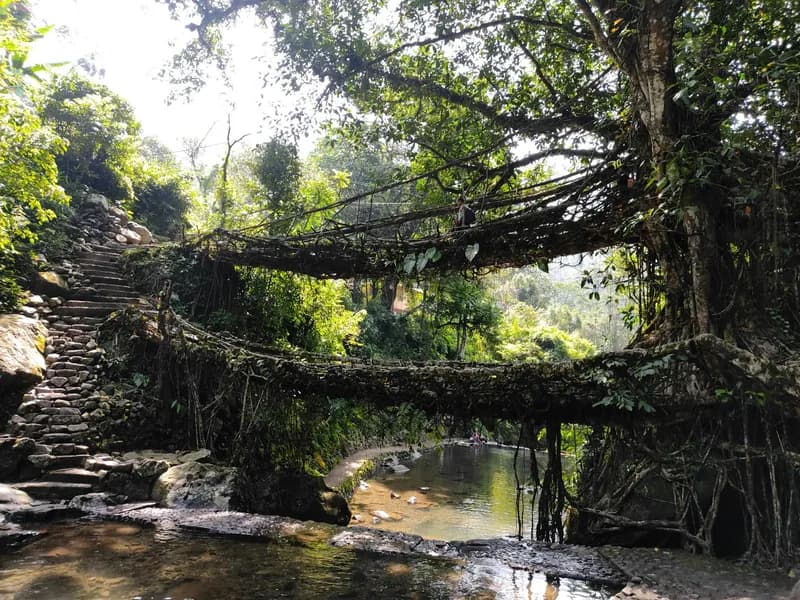
Living Root Bridges (Cherrapunji/Nongriat)
Meghalaya's most famous attraction — bridges grown from the living aerial roots of rubber fig trees by the Khasi people over 15-30 years. The double-decker root bridge at Nongriat (the only one in the world) requires a 3,500-step descent (and ascent back). Day trip from Shillong: 60km to Tyrna village, then 2-3 hours trekking down. Guide: 500-1,000 INR. Overnight stays in Nongriat village homestays (500-800 INR with meals) are recommended to avoid the brutal return climb in the same day. Best: October-April.
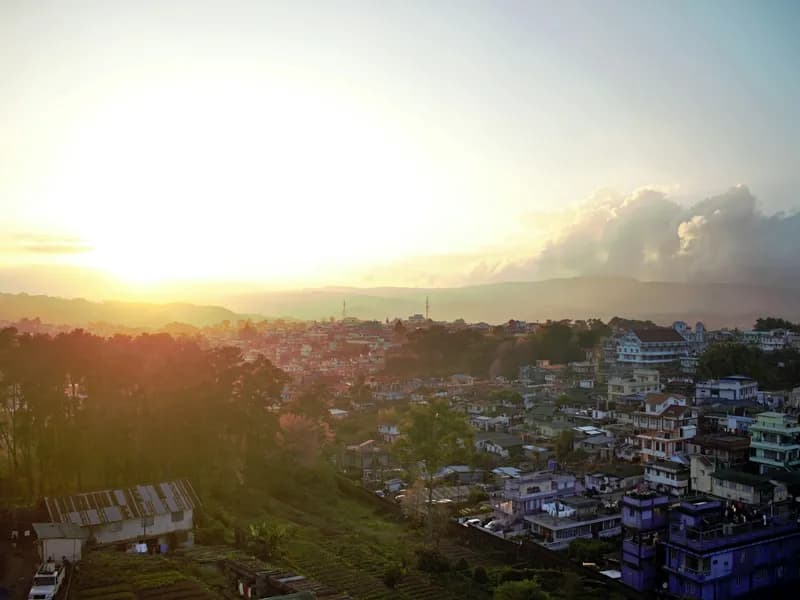
Don Bosco Museum of Indigenous Cultures
One of Asia's finest ethnographic museums — a 7-story building showcasing the cultures, costumes, artifacts, and traditions of all northeast India's tribal communities. Entry: 100 INR (Indians), 200 INR (foreigners). Open 9AM-5PM (closed Sundays). The skywalk gallery on the top floor offers panoramic Shillong views. Allow 2-3 hours for a thorough visit. The galleries on headhunting traditions, weaving, and musical instruments are extraordinary. Located centrally, 2km from Police Bazaar.

Police Bazaar & Rock Music Scene
Shillong's bustling commercial center — a maze of shops, food stalls, and music stores. The city is called the Rock Capital of India: blues, jazz, and rock bands play at venues like Cloud 9, Platinum, and Cafe Shillong (entry 200-500 INR, live shows from 8PM on weekends). Bob Dylan's music arrived here in the 1960s and never left. Annual festivals: Shillong Blues & Jazz Festival (October) and the NH7 Weekender attract national acts. Street food: try jadoh (rice with pork blood), tungrymbai (fermented soybean), and kwai (betel nut).
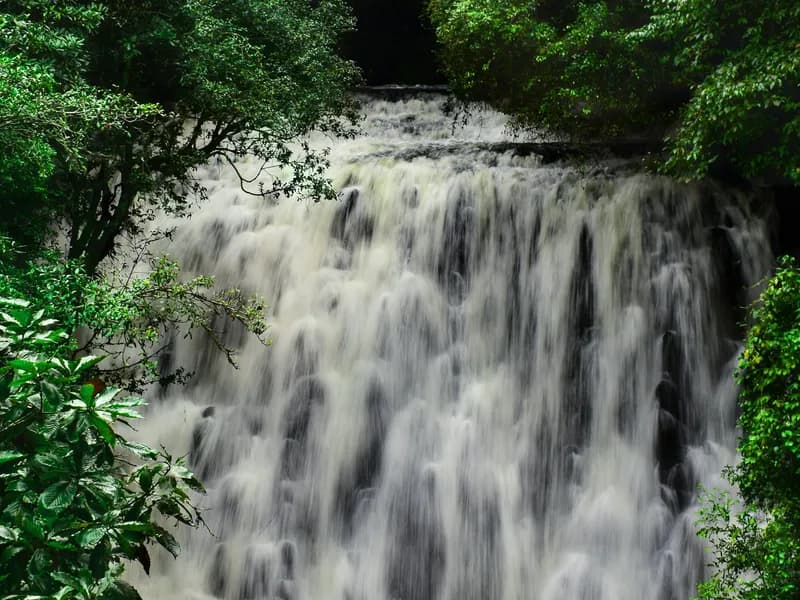
Elephant Falls
A three-tiered waterfall 12km from Shillong — named by the British after an elephant-shaped rock that was destroyed in the 1897 earthquake. Entry: 20 INR. Open 8:30AM-5PM. The path descends through dense fern-covered forest to each tier via well-maintained steps. The main fall drops about 30m into a misty pool. Best after monsoon (September-November) for maximum water flow. During monsoon, the falls are spectacular but the steps are slippery. Allow 1-1.5 hours. Easy to combine with Shillong Peak.
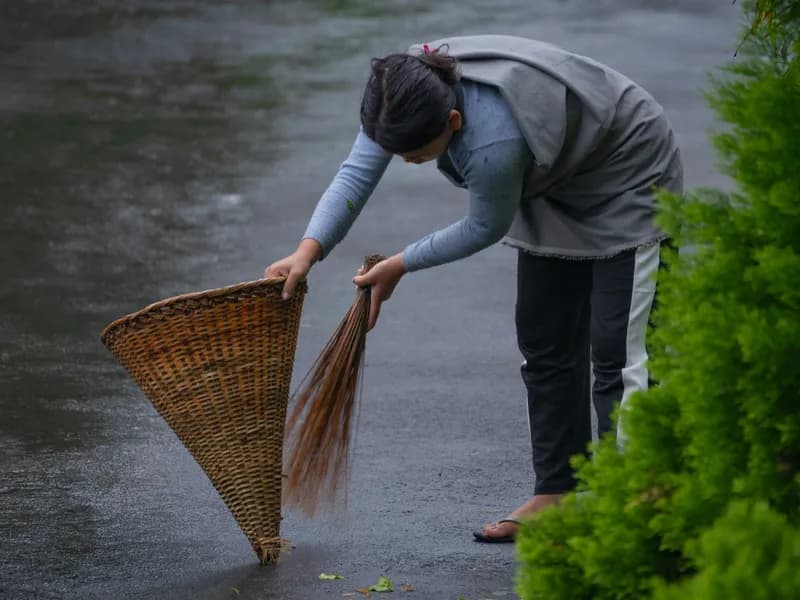
Mawlynnong — Asia's Cleanest Village
A Khasi village 90km from Shillong named Asia's cleanest village by Discover India magazine. Every path is swept daily, bamboo dustbins line the lanes, and the community maintains immaculate gardens. Entry free but community expects a 50-100 INR donation. A bamboo skywalk offers treetop views. A single-root bridge is nearby (shorter trek than Nongriat). Village homestays: 500-1,000 INR/night. The village demonstrates living sustainability. Combine with Dawki River (transparent-water border river) as a day trip.
Umiam Lake (Bara Pani)
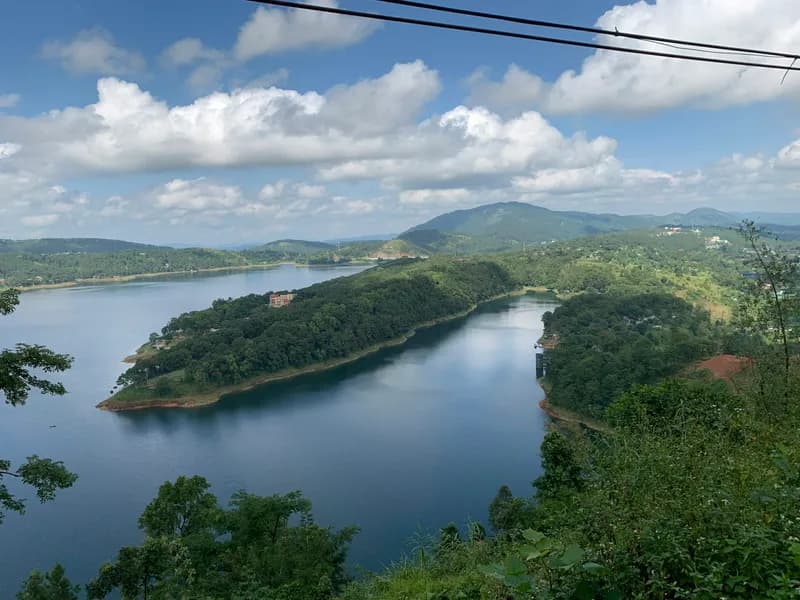
A massive man-made reservoir 15km north of Shillong surrounded by conifer-covered hills — the first sight that greets you driving from Guwahati. Boating: pedal boats 100 INR, kayaks 200-400 INR, speed boats 500 INR. The Orchid Lake Resort side has the best viewpoint. Water sports including kayaking and rowing available through the Meghalaya Adventure Association. The drive around the lake is scenic in itself. Best at sunset when the water turns golden. Allow 1-2 hours.
Planned Itinerary
7-Day Shillong Itinerary
Arrival & Police Bazaar
Arrive from Guwahati Airport (GAU), 100km away (2.5-3 hrs). Settle into Shillong and explore the bustling center.
Shared Sumo from Guwahati(3 hours)
400-500 INR per person. Private taxi 2,500-3,500 INR. Pass Umiam Lake on the way
Check into hotel near Police Bazaar(30 minutes)
Budget 600-1,500 INR. Mid-range 1,500-3,500 INR
Police Bazaar evening walk(1.5 hours)
Bustling commercial center — shops, food stalls, music stores. Try jadoh (rice with pork blood) and kwai (betel nut) if adventurous
Live music at a Shillong venue(2 hours)
Rock Capital of India — check Cloud 9, Platinum, or Cafe Shillong for live shows (200-500 INR cover, weekends). Blues, jazz, and rock
Don Bosco Museum & City Sights
One of Asia's finest ethnographic museums and Shillong's key viewpoints.
Don Bosco Museum of Indigenous Cultures(2.5 hours)
7-story building with all northeast India's tribal cultures. Entry 100 INR (Indians), 200 INR (foreigners). Skywalk gallery on top. Extraordinary headhunting, weaving, and music instrument galleries
Lunch at a Police Bazaar eatery(45 minutes)
Pork with rice, jadoh, tungrymbai (fermented soybean). 80-200 INR
Ward's Lake(45 minutes)
A small ornamental lake in the city center with gardens. Entry 20 INR. Pleasant for a stroll
Shillong Peak(1 hour)
The highest point in the city area at 1,965m. IAF maintains the viewpoint. Panoramic views of the city and surrounding hills. 20 INR
Living Root Bridges — Nongriat Trek
The world's only double-decker living root bridge — 3,500 steps down (and back up). The trek of a lifetime.
Drive to Tyrna village (Cherrapunji area)(2.5 hours)
60km from Shillong. Taxi or hire a car for the day (2,500-3,500 INR)
Trek down to Nongriat village(2.5 hours)
3,500 uneven stone steps through humid jungle. Moderate to difficult. Carry 2+ liters water, snacks, rain jacket. Wear proper shoes. Guide 500-1,000 INR
Double-Decker Root Bridge(1 hour)
Grown from aerial roots of rubber fig trees over 15-30 years by the Khasi people. The only double-decker root bridge in the world. Swim in the natural pool below. Free
Trek back up to Tyrna(3 hours)
The brutal return climb. Start back by 2PM to have daylight. Or stay overnight at a Nongriat homestay (500-800 INR with meals) — highly recommended
Elephant Falls & Umiam Lake
Waterfall hike and the grand reservoir that greets every visitor to Shillong.
Elephant Falls(1.5 hours)
Three-tiered waterfall 12km from Shillong. Entry 20 INR. Well-maintained steps through fern-covered forest. Best after monsoon. 30m main fall
Umiam Lake (Bara Pani)(2 hours)
Massive reservoir 15km north surrounded by conifer hills. Pedal boats 100 INR, kayaks 200-400 INR, speed boats 500 INR. Best at sunset when the water turns golden
Mawlynnong — Asia's Cleanest Village
A model of living sustainability 90km from Shillong, with a bamboo skywalk and nearby root bridge.
Drive to Mawlynnong(2.5 hours)
90km. Hire taxi for the day (2,500-3,500 INR)
Mawlynnong village walk(1.5 hours)
Every path swept daily. Bamboo dustbins, immaculate gardens. Bamboo skywalk offers treetop views. Community donation 50-100 INR
Single-root bridge nearby(45 minutes)
A shorter trek than Nongriat — a single living root bridge in walking distance
Lunch: Village homestay meal(1 hour)
Simple Khasi food — rice, pork, vegetables. 100-200 INR
Dawki River (en route back)(1 hour)
The crystal-clear India-Bangladesh border river where boats appear to float on air. Boating 500-800 INR for 30 min. Bring passport if near the border
Rest Day & Rock Music Scene
Relaxed day exploring Shillong's creative culture.
Sleep in, late brunch at a cafe(1.5 hours)
Try a Western-style brunch — Shillong has surprisingly good cafes
Explore music shops on Police Bazaar(1 hour)
Guitar shops, vinyl records, and band merchandise. Shillong's music obsession is visible everywhere
Evening: Live music and pork dinner(2 hours)
Find a live rock show and pair it with the best pork dish in town
Departure
Final morning in the Scotland of the East.
Pick up local products(30 minutes)
Khasi honey, local chutneys, handwoven textiles, and Meghalaya coffee
Taxi to Guwahati Airport(3 hours)
2,500-3,500 INR
14-Day Shillong Itinerary
Arrival & Police Bazaar
Arrive from Guwahati (100km, 2.5-3 hrs).
Shared Sumo from Guwahati(3 hours)
400-500 INR
Don Bosco Museum & City Sights
Asia's finest ethnographic museum and viewpoints.
Don Bosco Museum(2.5 hours)
100/200 INR
Living Root Bridges — Nongriat
Double-decker root bridge, 3,500 steps down and up.
Trek down(2.5 hours)
Guide 500-1,000 INR
Elephant Falls & Umiam Lake
Waterfall and grand reservoir.
Elephant Falls(1.5 hours)
20 INR
Umiam Lake(2 hours)
Boats 100-500 INR. Sunset views
Mawlynnong & Dawki
Asia's cleanest village and crystal-clear border river.
Dawki River(1 hour)
Boating 500-800 INR
Rest & Rock Music
Creative culture day.
Cherrapunji (Sohra) Full Day
One of the wettest places on Earth — waterfalls, living root bridges, and limestone caves.
Drive to Cherrapunji(2 hours)
60km south. Taxi 2,500-3,500 INR
Nohkalikai Falls viewpoint(1 hour)
India's tallest plunge waterfall (340m). Free viewpoint. Spectacular after monsoon
Mawsmai Cave(45 minutes)
Limestone cave you can walk through. Entry 30 INR. Tight squeezes and dramatic formations. Bring a torch
Seven Sisters Falls viewpoint(30 minutes)
View of multiple cascading falls from Bangladesh border viewpoint. Free
Eco Park(45 minutes)
Canyon rim walk with views of Bangladesh plains below. Entry 30 INR
Mawphlang Sacred Forest
An ancient protected forest maintained by Khasi law for centuries — one of Meghalaya's most mystical places.
Drive to Mawphlang(1 hour)
25km from Shillong
Sacred Forest guided walk(2.5 hours)
A forest protected by Khasi traditional law — nothing can be taken out, not even a fallen leaf. Guide mandatory (200-500 INR). Ancient monoliths, rare orchids, and medicinal plants. Deeply atmospheric
David Scott Trail hike (partial)(2 hours)
A 16km colonial-era horse trail. Walk the first section through rolling grasslands and forests. Moderate
Laitlum Canyon & Smit Village
One of Meghalaya's most dramatic viewpoints and a Khasi cultural capital.
Drive to Laitlum Canyon(45 minutes)
22km from Shillong
Laitlum Canyon hike(2.5 hours)
Deep canyon with village trails leading down to the valley floor. The views from the rim are jaw-dropping. Free. The descent and return takes 2-3 hours
Smit village(1 hour)
The seat of the Khasi king (Hima Khyrim). The traditional Khasi longhouse here is the site of the Nongkrem Dance festival (November). Cultural significance for the Khasi people
Day Trip to Jowai & Nartiang
2 hours east to Jaintia Hills — a different Meghalaya tribal culture with ancient monoliths.
Nartiang Monoliths(1 hour)
Largest collection of monoliths in the northeast — some over 1,000 years old. Sacred to the Jaintia people. Free
Nartiang Durga Temple(30 minutes)
Ancient Hindu temple coexisting with Jaintia tribal traditions. Unusual cultural blend
Krang Suri Waterfall(1.5 hours)
A stunning turquoise waterfall you can swim under. Entry 50 INR. The color of the water is unreal. 1-hour drive from Jowai
Nongriat Overnight (Optional) or Shillong Free Day
Either attempt an overnight at the root bridge village, or enjoy a free day in Shillong.
Option A: Return to Nongriat for overnight(6 hours)
Trek down (2.5 hrs), stay at a homestay (500-800 INR with meals). Experience the village at night — no electricity, stars, river sounds. Or:
Option B: Free day in Shillong(6 hours)
Visit the Khasi Heritage Village near Mawkdok, browse the Iewduh market (Meghalaya's largest traditional market), or simply cafe-hop
Khasi Weaving & Local Crafts
Hands-on engagement with Khasi traditional crafts.
Traditional weaving workshop or demonstration(2 hours)
Khasi shawls and textiles are distinctive. Some community organizations offer demonstrations. Ask at the tourist office
Iewduh (Bara Bazaar) exploration(2 hours)
Meghalaya's largest traditional market — raw meat, dried fish, betel nut, local vegetables, and textiles. The women run the stalls (matrilineal society)
Final Shillong Day
Last full day — favorites and farewells.
Souvenir shopping(1 hour)
Khasi textiles, honey, chutneys, Meghalaya coffee
Departure
Final morning.
21-Day Shillong Itinerary
Arrival & Police Bazaar
Arrive from Guwahati (100km).
Don Bosco Museum & City
Ethnographic museum and viewpoints.
Living Root Bridges
Double-decker root bridge trek.
Stay overnight at Nongriat homestay(2 hours)
500-800 INR with meals. Stars, river sounds, no electricity
Nongriat Morning & Return
Dawn in the root bridge village and the brutal climb back.
Dawn at the root bridge(1 hour)
Early morning mist on the bridge with no other tourists. Magical
Elephant Falls & Umiam Lake
Waterfall and reservoir.
Mawlynnong & Dawki
Cleanest village and crystal river.
Rest & Music Day
Slow day in the Rock Capital.
Cherrapunji Full Day
Waterfalls, caves, and viewpoints.
Mawphlang Sacred Forest
Ancient protected forest and colonial trail.
Sacred Forest walk(2.5 hours)
Guide 200-500 INR
Laitlum Canyon & Smit
Dramatic canyon and Khasi cultural capital.
Jowai & Krang Suri Waterfall
Jaintia Hills — monoliths and turquoise waterfall.
Krang Suri Waterfall(1.5 hours)
50 INR. Swim under turquoise falls
Khasi Weaving & Iewduh Market
Traditional crafts and Meghalaya's largest market.
Day Trip to Mawsynram
The wettest place on Earth — rain measurement stations and dramatic landscape.
Drive to Mawsynram(2 hours)
61km south of Shillong
Mawjymbuin Cave(1 hour)
A limestone cave with a Shivalinga-shaped stalagmite worshipped by locals. Entry 20 INR
Rain measurement station area(45 minutes)
See the instruments that recorded the world's highest rainfall
Rest Day
True rest.
Day Trip to Tura & Siju Cave (Long Day)
Deep into the Garo Hills for India's longest cave system and a different tribal culture.
Drive to Siju area(5 hours)
Or fly Guwahati-Tura if available. Consider a 2-night side trip
Siju Cave exploration(2 hours)
One of India's longest limestone cave systems. Guide required. Bring torches and proper shoes
Recovery & Local Life
Recovery from long trip.
Meghalaya Living Bridges Trail — Mawryngkhew
A lesser-known living root bridge, accessible with a shorter trek.
Trek to root bridge(2 hours)
Shorter than Nongriat but still involves steps through jungle. Less crowded
Day Trip to Mawlai & Ribhoi District
The outskirts of Shillong — pine forests, lakes, and rural Khasi life.
Mawlai area walk(2 hours)
Pine-covered hills on Shillong's edge. Local neighborhoods with traditional Khasi houses
Lunch: Home-cooked Khasi meal at a local home(1.5 hours)
Arrange through your hotel. 200-400 INR. The best food in Meghalaya is home-cooked
Nongkhnum Island (if accessible)(2 hours)
India's second-largest river island, on the Kynshi River near Nongstoin. Stunning double-island formation
Volunteering or Community Day
Give back — several organizations in Shillong welcome short-term volunteers.
Morning: Community engagement or volunteering(3 hours)
Several local NGOs work on education, environment, and tribal culture preservation. Ask at the tourist office or your hotel for connections
Final Shillong Day
Last full day — favorites and farewells.
Departure
Final morning.
Travel Tips
Visa & Entry
Standard Indian Visa — No Special Permits for Shillong
Standard Indian e-tourist visa applies. Unlike other northeast states, Meghalaya does NOT require an Inner Line Permit. However, if you plan to visit the India-Bangladesh border at Dawki, carry your passport. Foreign nationals may need additional documentation for some border areas — check with the Meghalaya tourism office in Shillong.
transport
Fly to Guwahati, Drive to Shillong
Guwahati Airport (GAU) has flights from all major Indian cities. From Guwahati, shared Sumos/taxis to Shillong: 400-500 INR per person (2.5-3 hours). Private taxi: 2,500-3,500 INR. Meghalaya Transport buses: 200-300 INR (3.5 hours). Within Shillong, shared taxis run fixed routes (20-30 INR). For Cherrapunji, Mawlynnong, and Dawki day trips, hire a full-day taxi (2,500-3,500 INR). Car rentals with driver: 2,000-3,000 INR/day.
Safety
Gotcha: The Root Bridge Trek Is Brutal
The trek to the double-decker root bridge at Nongriat involves descending (and then climbing back) 3,500 uneven stone steps through humid jungle. Many tourists underestimate this — the descent takes 1.5-2 hours, the ascent 2.5-3 hours. Start early morning. Carry 2+ liters of water, snacks, and a rain jacket. Wear proper trekking shoes (not sandals). If you are not fit enough for the return climb in one day, stay overnight at a Nongriat homestay. Leeches are common during monsoon — carry salt or tobacco.
Monsoon Is Serious — Plan Around It
Meghalaya is one of the wettest places on Earth. Cherrapunji and Mawsynram (both within day-trip distance) get over 1,100cm of annual rainfall. During June-August, roads flood, landslides close highways, and visibility is near zero. If you must visit in monsoon, build buffer days and accept that plans will change. Waterproof bags for electronics are essential. The upside: waterfalls are at their most spectacular and the landscape is impossibly green.
Budget
Very Affordable Northeast India
Budget hotels: 600-1,500 INR/night. Mid-range with views: 1,500-3,500 INR. Meals: 80-250 INR (pork is the staple — delicious and cheap). A plate of jadoh (rice with pork) costs 80-120 INR. Shillong is cheaper than most popular Indian hill stations. Budget 1,500-2,500 INR/day. The live music scene is mostly free or 200-500 INR cover. Homestays in Mawlynnong and Nongriat villages are the best value (500-1,000 INR with meals).
Local Customs
Khasi Culture Is Matrilineal — Unique in India
The Khasi people follow a matrilineal system — children take the mother's surname, property passes through daughters, and the youngest daughter inherits the family home. This is not matriarchal (men still hold political power) but women are visibly prominent in society and business. Kwai (betel nut) is the social lubricant — offered as a greeting (politely decline if you don't chew). Pork is the dominant meat; finding vegetarian food requires some effort outside tourist areas.
Related Articles
SeasonalWhen to Visit Shillong: The Season That Unlocks Meghalaya's Best
Shillong during monsoon is the wettest place on earth. Shillong in October is waterfalls, clear skies, and empty root bridges. Same state, different planet.
Travel GuidesShillong vs Gangtok: Two Mountain Capitals, Two Different Worlds
One has living root bridges and the wettest place on Earth. The other has the third-highest mountain and India's best momos. Choosing between Northeast India's two hill capitals is harder than you think.
StoriesA Week in Shillong: Rock Music, Root Bridges, and Rain
Seven days in India's rock capital — from a blues bar at midnight to a 3,500-step descent to a bridge grown from tree roots, and a village so clean it put my apartment to shame.