
Socotra

Key Facts
Best Time to Visit
October to April (dry season, calm seas); June-September monsoon makes the island inaccessible
Language
Socotri (unwritten Semitic language), Arabic; very limited English
Currency
Yemeni Rial (YER) — USD cash essential as there are no ATMs or card machines
Time Zone
AST (UTC+3)
Airport
Socotra Airport (SCT) in Hadibo — flights from Abu Dhabi (AUH) via Yemenia or charter operators
Population
~60,000 across the archipelago, mostly in Hadibo
Climate
Tropical semi-arid, avg 25-33°C year-round; strong monsoon winds Jun-Sep close the island
Safety Rating
Elevated (Level 3) — Socotra island itself is peaceful but Yemen mainland is conflict-affected; travel with an organized tour only
Endemic Species
37% of plant species, 90% of reptiles, and 95% of land snails are found nowhere else on Earth
Top Highlights
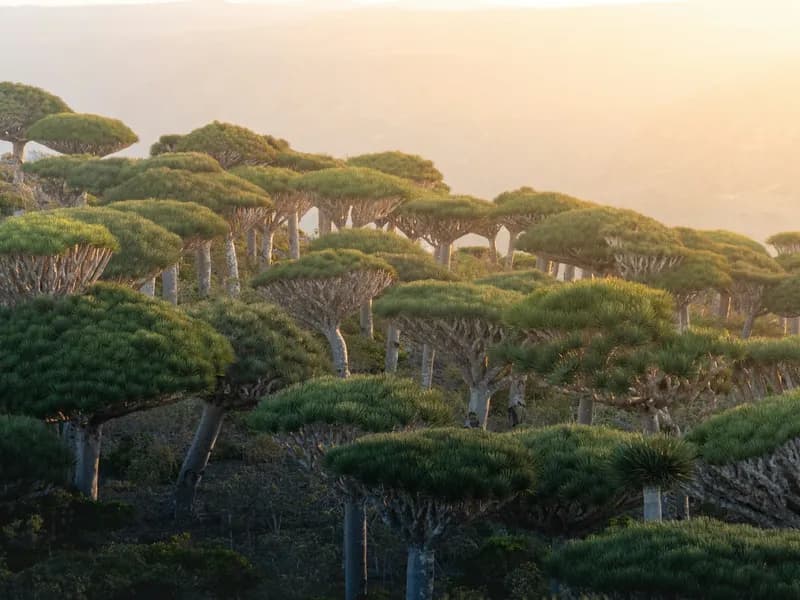
Dragon Blood Tree Forest (Dixam Plateau)
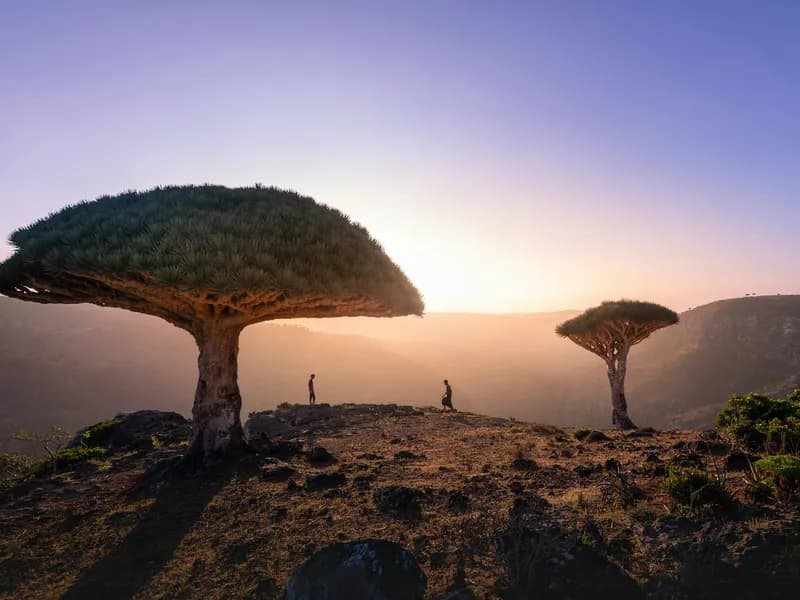
The iconic umbrella-shaped Dracaena cinnabari trees, found nowhere else on Earth, cluster on the Dixam Plateau at 500 m elevation. The plateau is 45 minutes from Hadibo by 4x4. No entry fee. The Firmhin Forest viewpoint offers the most photogenic grove. Best in morning light. Allow 3 hours.
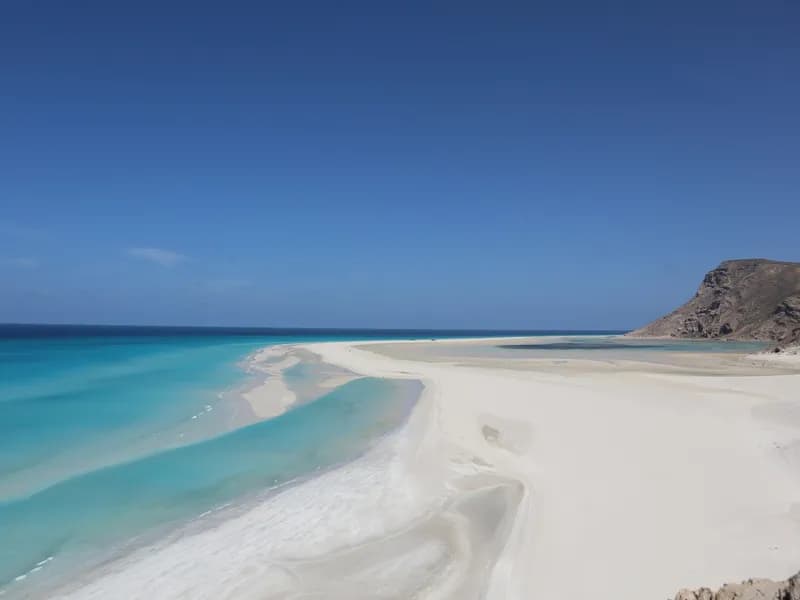
Detwah Lagoon
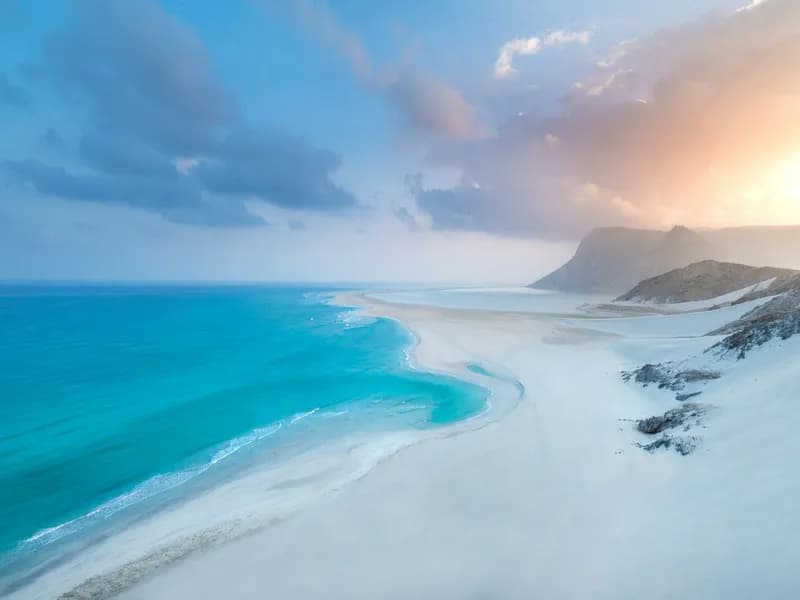
A turquoise lagoon enclosed by white sand dunes and dramatic rocky headlands on the western coast. Swimming and snorkeling are excellent. Camp overnight on the beach (guided tours arrange this). 2 hours from Hadibo by 4x4. No facilities — bring all supplies. One of Socotra's most beautiful spots.
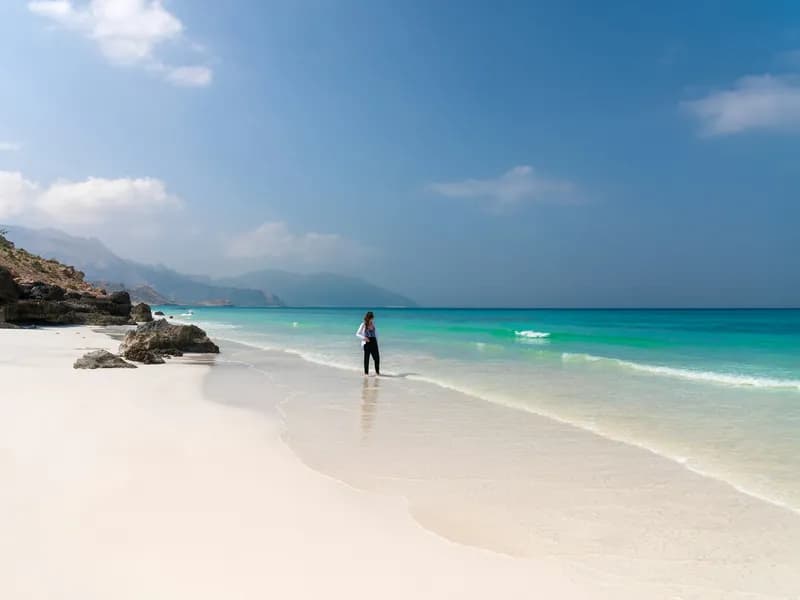
Qalansiyah Beach
A sweeping arc of pure white sand on the island's western tip, consistently rated among the world's most beautiful beaches. The dune-backed shore faces a shallow turquoise bay. Virtually deserted. Camp here overnight with your guide. The sand is fine enough to squeak. 2.5 hours from Hadibo.
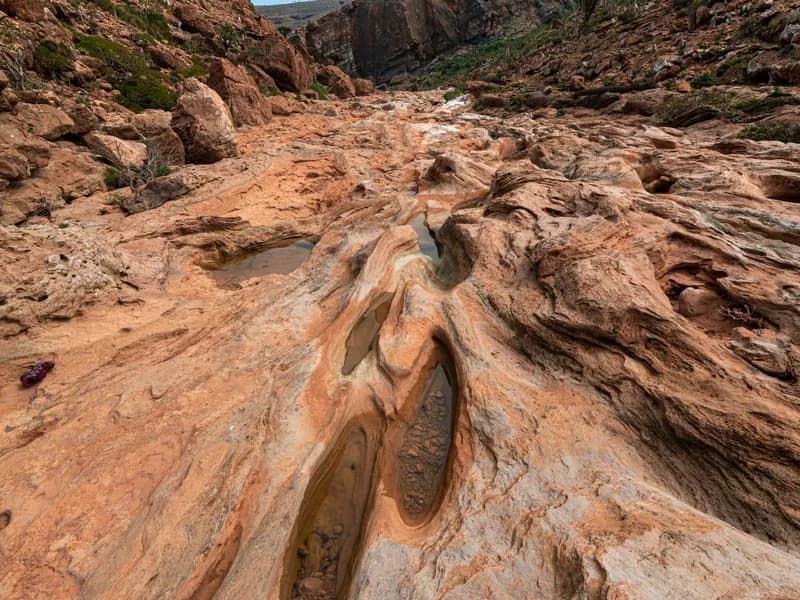
Hoq Cave
A massive limestone cave with active stalactites and stalagmites, reached via a 2-hour uphill hike from the coast. A local guide is mandatory (~$15). Bring flashlights and sturdy shoes — the cave floor is slippery. The cave mouth frames a stunning ocean panorama. On the northeast coast.
Bottle Trees of Homhil
The Homhil Protected Area features the alien-looking Desert Rose (Adenium obesum socotranum) — fat bottle-shaped trunks topped with pink flowers. A natural pool at the base of the plateau offers refreshing swimming. Entry via local guide ($10-15). Morning light is best. 1.5 hours from Hadibo.
Dihamri Marine Reserve
Socotra's best snorkeling site with vibrant coral reefs 50 m offshore. Sea turtles, moray eels, and clownfish are common. Masks and fins available from the small beach hut ($5 rental). Entry ~$5. The beach has basic shade shelters. 25 km east of Hadibo on a paved road.
Planned Itinerary
7-Day Socotra Itinerary
Arrival in Hadibo
Arrive at Socotra Airport (SCT) via Yemenia Airlines from Abu Dhabi (flights approximately twice weekly). Your tour operator's guide and driver meet you at the tiny airport.
Arrive at Socotra Airport(30 minutes)
Yemenia Airlines from Abu Dhabi. Flights unreliable — build buffer days. All arrangements through your tour operator (mandatory). Bring all USD cash — no ATMs on the island
Meet guide and driver, transfer to Hadibo(30 minutes)
Your operator provides 4x4, driver, guide, cook, and camping gear for the duration. $100-150/person/day all-inclusive
Explore Hadibo(2 hours)
Socotra's main town (~25,000 people). Small market selling fish, vegetables, and honey. Basic guesthouses. Stock up on any supplies. The town itself is modest but the warmth of Socotri people is immediate
Dihamri Marine Reserve snorkeling(2 hours)
Best snorkeling on the island, 25 km east. Coral reefs 50m offshore. Sea turtles, moray eels, clownfish. Masks from beach hut ($5 rental). Entry ~$5. Paved road from Hadibo
Dinner at guesthouse(1 hour)
Fresh grilled fish, rice, flatbread. Simple but delicious. Prepared by your tour cook
Dragon Blood Tree Forest — Dixam Plateau
Drive to the highland plateau to see the iconic Dragon Blood Trees found nowhere else on Earth.
Drive to Dixam Plateau(45 minutes)
4x4 climb to 500m elevation. The landscape shifts from arid coast to misty highland. Your driver navigates unpaved mountain tracks
Firmhin Forest — Dragon Blood Trees(3 hours)
Walk among the iconic umbrella-shaped Dracaena cinnabari. Found nowhere else on Earth. No entry fee. The Firmhin viewpoint has the most photogenic grove. Morning light is best. The red sap (dragon's blood) has been traded for millennia
Lunch on the plateau(1 hour)
Your cook prepares lunch overlooking the dragon tree forest. Rice, canned fish, fresh bread. The setting elevates any meal
Bottle Trees of Homhil(1.5 hours)
Desert Rose trees (Adenium socotranum) with fat bottle-shaped trunks. Natural pool for swimming at the base. Entry via local guide ($10-15). Morning light is best but afternoon works
Qalansiyah Beach & Detwah Lagoon
Drive to the island's western tip for two of Socotra's most beautiful spots — the world-class beach and turquoise lagoon.
Drive to Qalansiyah(2.5 hours)
4x4 across the island. Rough roads but stunning scenery. Your driver knows the route
Qalansiyah Beach(2 hours)
Sweeping arc of white sand on the western tip. Consistently rated among the world's most beautiful beaches. Virtually deserted. The sand squeaks underfoot. Swim in the shallow turquoise bay
Lunch on the beach(1 hour)
Cook prepares food on the beach. Grilled fish if the fishermen have catch
Detwah Lagoon(2 hours)
Turquoise lagoon enclosed by white dunes and rocky headlands. Swimming and snorkeling. Camp overnight on the beach. No facilities — bring everything. One of Socotra's most beautiful spots
Beach camping dinner and stars(2 hours)
Camp on Detwah beach. Dinner around a fire. The stars over the lagoon with zero light pollution are extraordinary
Rest Day — Detwah & Fishing Village
Slow morning at the lagoon, visit the nearby fishing village, then drive partway back.
Walk to Qalansiyah fishing village(1 hour)
Watch fishermen bring in their catch. Traditional boats. The village is small and friendly. Ask through your guide before photographing
Hoq Cave Expedition
Hike to one of the island's great caves — massive limestone formations reached via a challenging trail.
Drive to Hoq Cave trailhead(1.5 hours)
Northeast coast
Hike to Hoq Cave(2 hours)
Uphill hike from the coast. Local guide mandatory (~$15). Bring flashlights and sturdy shoes — the cave floor is slippery
Explore Hoq Cave(1.5 hours)
Massive limestone cave with active stalactites and stalagmites. The cave mouth frames an ocean panorama. Bring multiple light sources. Some of the formations are centuries old
Aomak Beach & Southern Coast
Drive to the wild southern coast — dramatic surf, remote beaches, and endemic plants.
Aomak Beach(2 hours)
Wild southern beach with big waves. Swimming can be rough — check with guide. The sand dunes behind the beach are sculpted by wind. Virtually nobody here
Endemic plant walk(1.5 hours)
The southern coast has concentrated endemic species — cucumber trees, bottle trees, and other alien-looking plants found nowhere else. Your guide identifies them
Farewell dinner with guide and driver(1.5 hours)
Final camp dinner. Tips: $5-10/day for guide and driver is appreciated
Departure Day
Final morning on Socotra and departure. Build in buffer days in case the flight is cancelled.
Morning at Dihamri or Hadibo(1.5 hours)
One last snorkel at Dihamri or wander Hadibo market
Depart SCT(30 minutes)
Yemenia back to Abu Dhabi. Build buffer days — flights cancel regularly. Have a backup plan (extra nights at Hadibo guesthouse)
14-Day Socotra Itinerary
Arrival in Hadibo
Arrive SCT. Meet operator, explore Hadibo.
Dragon Blood Trees
Dixam Plateau and Firmhin Forest.
Qalansiyah & Detwah
World-class beach and turquoise lagoon.
Rest — Detwah & Village
Slow lagoon day.
Hoq Cave
Massive cave with stalactites.
Aomak Beach & South Coast
Wild southern beach and endemic plants.
Rest Day — South Coast Camp
Full rest day camping on the wild coast.
Central Highland Trek
Trek into the central highlands for different landscapes and more endemic species.
Highland trek(4 hours)
Walk through succulent-studded hillsides, frankincense groves, and boulder-strewn plateaus. Different microclimate from the coast
Camp at elevation(2 hours)
Cooler at night — bring sleeping bag. Dragon Blood Trees may surround your camp
Highland to Coast
Descend from highlands to a new coastal area.
Rest Day — Beach Camp
Full rest at beach camp.
Shua'b Beach by Boat
Boat trip to the remote Shua'b Beach — accessible only by sea.
Boat to Shua'b(1 hour)
Arrange through operator. Remote white beach accessible only by boat. The approach from the sea is dramatic — sheer cliffs
Shua'b Beach(3 hours)
Pristine white sand between cliff walls. Excellent snorkeling. Dolphins often spotted en route
Return to Hadibo Area
Drive back toward Hadibo for the final days.
Hadibo market(1 hour)
Buy Socotra honey (famous and unique), dragon's blood resin, aloe vera products. Cash USD only
Farewell Socotra
Final island exploration and farewell.
Farewell dinner with guide and driver(1.5 hours)
Tips $5-10/day for each. They've been your lifeline
Departure Day
Departure (with buffer days planned).
Depart Socotra(30 minutes)
Yemenia to Abu Dhabi. Have buffer days — flights cancel regularly
21-Day Socotra Itinerary
Arrival in Hadibo
Arrive SCT from Abu Dhabi.
Dragon Blood Trees
Dixam Plateau.
Qalansiyah & Detwah
Beach and lagoon.
Rest — Detwah
Lagoon day.
Hoq Cave
Cave expedition.
Aomak & South Coast
Wild beach, endemic plants.
Rest — South Coast
Full rest.
Central Highlands Trek
Highland trek, dragon trees at elevation.
Highland to Coast
Descend to coast.
Rest — Beach Camp
Full rest.
Shua'b Beach by Boat
Remote beach by sea.
Di Noton & Frankincense
Visit frankincense harvesting areas and remote eastern beaches.
Frankincense tree area(1.5 hours)
Socotra has its own frankincense species. Watch the tapping process (seasonal). The trees grow in rocky, exposed areas
Rest Day
Full rest.
Wadi Dirhur Canyon
Trek into a deep canyon with dragon blood trees growing on the walls.
Canyon trek(4 hours)
Dramatic canyon with natural pools. Dragon Blood Trees grow impossibly from cliff faces. Swimming in clear pools. One of Socotra's most memorable experiences
Rest Day — Revisit Favorites
Return to your favorite beach or forest.
Northern Coast Exploration
Explore less-visited northern beaches and fishing communities.
Remote fishing village(1.5 hours)
Several tiny fishing communities on the north coast. Traditional boats, subsistence fishing. Very few visitors
Rest Day
Full rest.
Dragon Trees Revisit
Return to Dixam in different conditions — weather changes the atmosphere dramatically.
Different Dragon Tree trail(3 hours)
Walk a different route through the forest. Morning mist, afternoon sun, or clouds each transform the trees
Return to Hadibo Area
Final return to Hadibo for departure prep.
Hadibo market — souvenirs(1 hour)
Socotra honey, dragon's blood resin, aloe products. USD cash
Farewell Socotra
Final island time and farewell dinner.
Farewell lunch with guide and driver(1.5 hours)
Tips $5-10/day for each
Departure Day
Depart Socotra. Build buffer days.
Depart(30 minutes)
Yemenia to Abu Dhabi. Buffer days essential — flights cancel regularly
Travel Tips
Visa & Entry
Yemeni Visa Required — Plan Ahead
All visitors need a Yemeni visa. Most travelers obtain it through their tour operator, who arranges visa approval from Aden authorities (process takes 2-4 weeks). Independent travel is extremely difficult to arrange. Some nationalities can get a visa on arrival in Socotra if pre-approved. Always use a specialist tour operator.
transport
Getting to Socotra
Yemenia Airlines flies Abu Dhabi (AUH) to Socotra (SCT) approximately twice weekly during season (Oct-Apr). Flights are unreliable and subject to cancellation — build buffer days into your itinerary. Some charter operators fly from Cairo. There is no ferry service. Book flights through your tour operator for better reliability.
Local Customs
Tour Operator Is Mandatory
Independent travel on Socotra is effectively impossible and not recommended. Licensed local operators provide 4x4 vehicles, drivers, guides, camping equipment, and cooks for ~$100-150/person/day all-inclusive. Reputable operators include Socotra Eco Tours and Socotra Dream. Book 2-3 months ahead for peak season.
Leave No Trace — Fragile Ecosystem
Socotra is a UNESCO World Heritage Site with extremely fragile ecology. Never touch or damage Dragon Blood trees, collect plants/shells, or leave trash. Camp in designated areas. Use biodegradable soap. The island's endemic species are irreplaceable — conservation is everyone's responsibility.
Budget
Bring USD Cash — No ATMs
There are zero ATMs and zero card machines on Socotra. Bring all cash in USD bills (new, crisp, post-2006 series). Budget $100-150/day for a guided tour package. Extra expenses: tips ($5-10/day for guide and driver), handicrafts, and snorkel gear rental. Small denominations ($1, $5) are essential.
Safety
Gotcha: Limited Medical Facilities
Socotra has one small hospital in Hadibo with very basic capabilities. Serious injuries require evacuation to Abu Dhabi or Aden — flights are infrequent. Bring comprehensive travel insurance that covers medical evacuation. Pack a personal first aid kit, prescription medications, and reef-safe sunscreen.
Camping Is the Norm
Outside Hadibo (which has a few basic guesthouses), accommodation is beach or plateau camping. Tour operators provide tents, sleeping mats, and blankets. Bring a lightweight sleeping bag for plateau nights (can drop to 15°C). Showers are buckets of water. Embrace it — the beach camping under the stars is a highlight.
Related Articles
Travel Guides11 Reasons Socotra Is the Most Alien Landscape on Earth
Dragon Blood trees that look like inside-out umbrellas, bottle trees with swollen pink trunks, and beaches so white they hurt your eyes. Welcome to the Galapagos of the Indian Ocean.
Travel GuidesSocotra's Endemic World: A Nature Lover's Deep Dive
307 plant species found nowhere else on Earth, coral reefs that look like the ocean before we broke it, and why the Dragon Blood trees might not survive the century.
StoriesThe Last Frontier: Getting to Socotra and What You'll Find When You Arrive
The flight was delayed two days. The guide met me with a 4x4 and a grin. The first Dragon Blood tree I saw made me forget everything that came before.