
Spiti Valley

Key Facts
Best Time to Visit
June to September (only window when roads are open). Kunzum Pass and Rohtang Pass open mid-June, close by mid-October. Winter cuts off road access entirely
Language
Hindi, Spitian (Tibeto-Burman dialect), Bhoti. Very limited English outside Kaza
Currency
Indian Rupee (INR). ATMs exist only in Kaza — carry enough cash for the entire trip
Time Zone
IST (UTC+5:30)
Airport
Nearest: Kullu-Manali Airport (KUU), 200km away. Most visitors drive from Manali (10-12 hours) or Shimla (2 days via Kinnaur)
Population
12,000 (Spiti sub-division). Kaza town: ~3,000
Climate
Cold desert, altitude 3,800-4,600m. Summer days 15-20°C, nights 0-5°C. Winter drops to -30°C. Extremely dry with under 17cm annual rainfall
Safety Rating
Safe but remote (Level 2). Altitude sickness is the main risk. No hospitals — nearest proper medical facility in Manali
Top Highlights
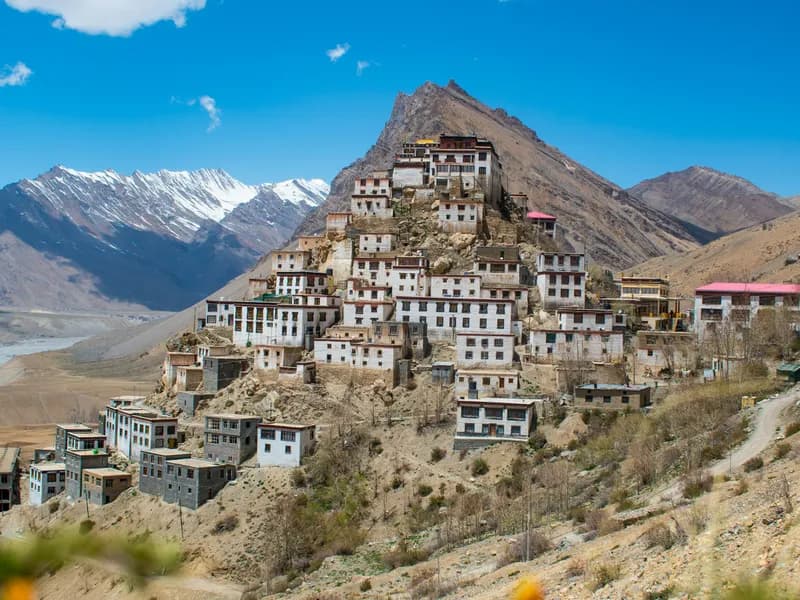
Key Monastery (Ki Gompa)
A stunning 1,000-year-old Tibetan Buddhist monastery perched on a hilltop at 4,166m above Kaza — the largest in Spiti Valley with 300 monks in residence. Free entry (donations appreciated). Open sunrise to sunset. The prayer hall has ancient murals and thangka paintings. Morning prayer at 6AM is open to visitors. Allow 2-3 hours including the steep 1km walk up from the road.
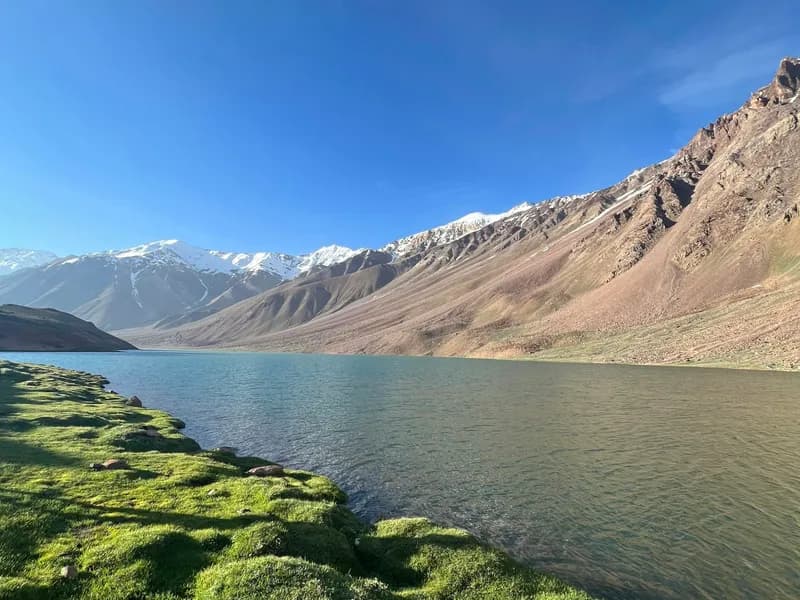
Chandratal Lake
The 'Moon Lake' — a crescent-shaped alpine lake at 4,300m with water that shifts between turquoise, emerald, and sapphire depending on the light. 65km from Kaza via unpaved road (3-4 hours). Camping permitted 2km from the lake (500-1,500 INR/tent with meals). The 1.5km walk to the lake is flat but at altitude. Best June-September. No permanent structures — pristine wilderness.
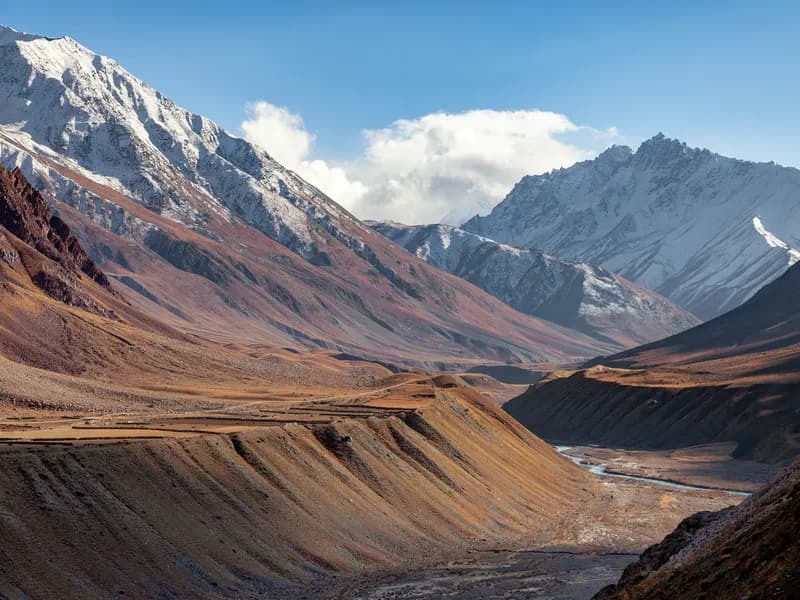
Pin Valley National Park
India's only cold desert national park — home to the endangered snow leopard, Siberian ibex, and Himalayan fox. Entry: 50 INR. The Pin River valley trek from Mudh village (3,850m) offers stark landscapes and rare wildlife. Multi-day treks with guides cost 2,000-3,000 INR/day including food and camping. The valley floor has fossils embedded in exposed rock. Best: July-September.
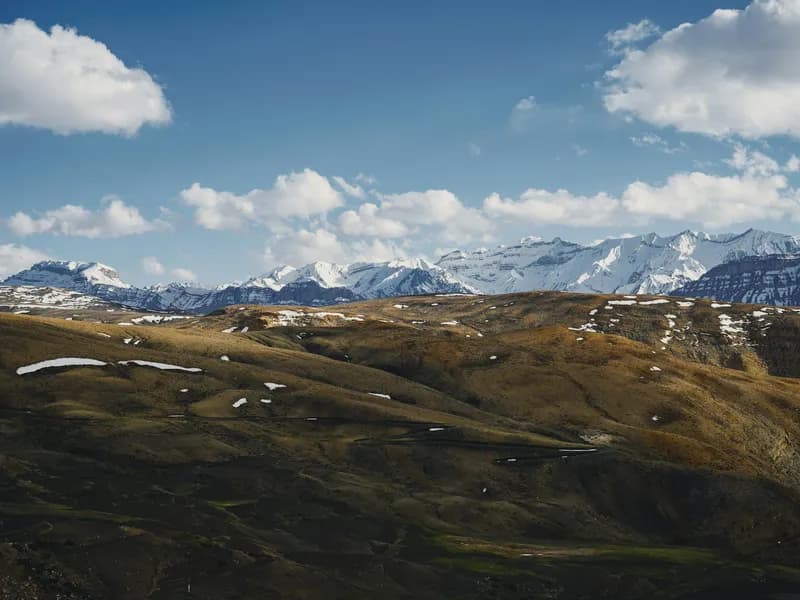
Hikkim — World's Highest Post Office
At 4,440m, this tiny village has the world's highest post office (verified by India Post). Send a postcard with a special cancellation stamp — postcards 5-15 INR, stamps 25 INR. Open 10AM-1PM and 2PM-4PM on working days. The village has about 20 houses, just 4km from Kaza. Combine with nearby fossil-rich Langza village. Allow 1-2 hours.
Langza Village & Fossil Hunting
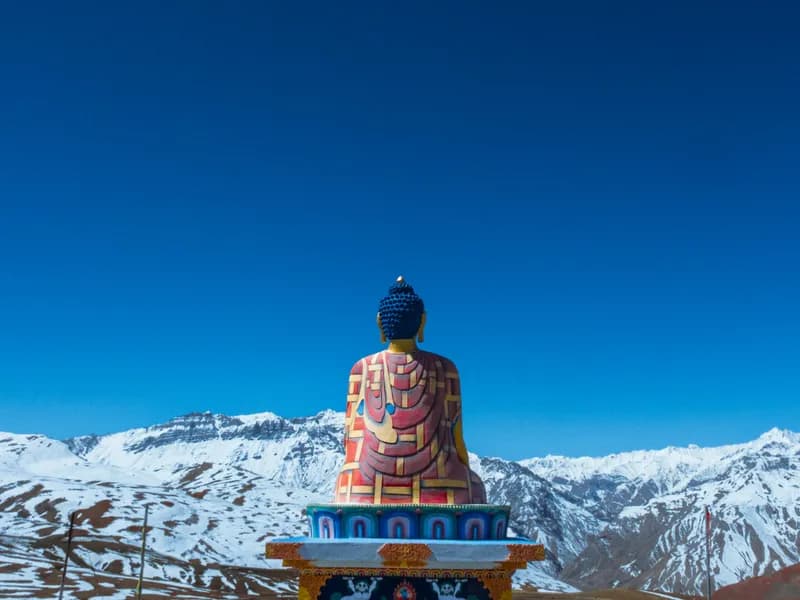
A remote village at 4,400m famous for marine fossils embedded in rocks — evidence this Himalayan desert was once an ocean floor. A massive Buddha statue overlooks the village with snow-capped peaks behind. Fossils of ammonites and trilobites found on hillside walks — locals guide for 200-500 INR. The monastery has a 1,000-year-old mummy. 14km from Kaza.
Dhankar Monastery & Lake
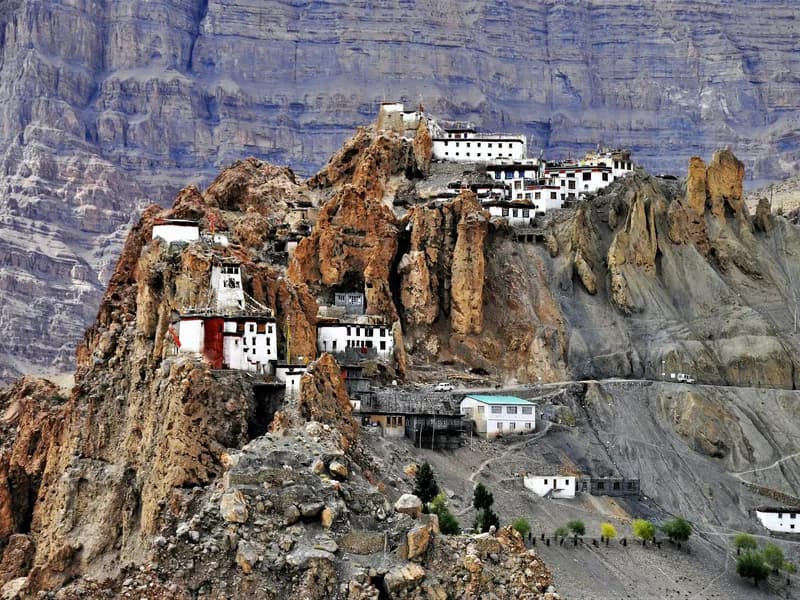
A crumbling 1,200-year-old monastery perched on a cliff 300m above the confluence of the Spiti and Pin Rivers — one of the most endangered heritage sites in the world. Free entry. A 2.5km trek leads to hidden Dhankar Lake at 4,140m — a serene glacial pool reflecting surrounding peaks. Allow 3-4 hours total. 32km from Kaza.
Tabo Monastery
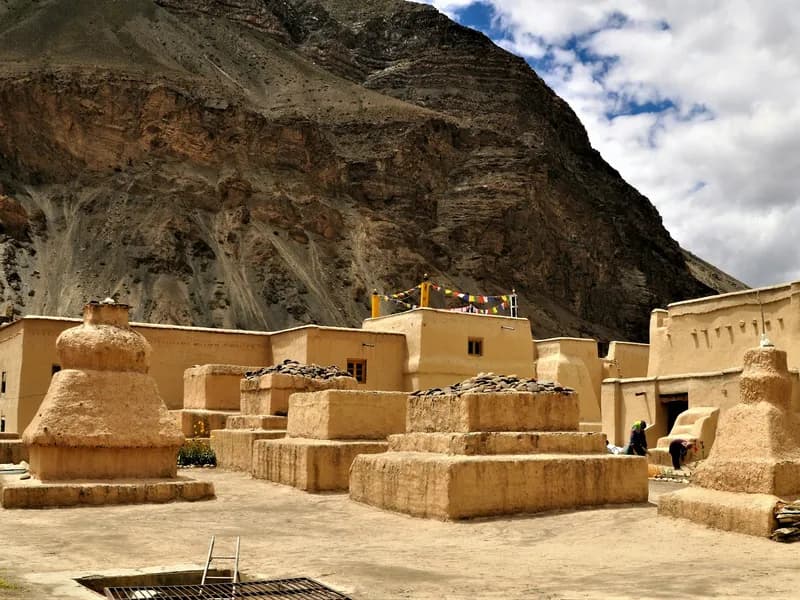
Called the 'Ajanta of the Himalayas' — a 1,000-year-old monastery (founded 996 AD) with the finest collection of Indo-Tibetan Buddhist art in the world. Entry: 50 INR. Nine temples contain original murals, stucco sculptures, and thangka paintings over a millennium old. Photography not allowed inside the main temple. Cave meditation cells carved into the cliffs above. 45km from Kaza. Allow 2 hours.
Planned Itinerary
7-Day Spiti Valley Itinerary
Arrival in Kaza & Acclimatization
Arrive in Kaza (3,800m) after the long drive from Shimla via Kinnaur or Manali via Rohtang Pass. The priority today is acclimatization — don't exert yourself. Drink plenty of water (3-4 liters) and take it easy.
Arrive in Kaza and check into guesthouse(1 hour)
Stay in the main bazaar area — Zostel Spiti (600-1,200 INR/night) or Spiti Valley Homestay are good options with mountain views. Hot water is solar-heated, so shower before dark
Light lunch at Sol Cafe(1 hour)
A popular traveler cafe in Kaza bazaar with decent pasta, thukpa, and Maggi (150-300 INR). The Tibetan bread with honey is a local favorite
Gentle walk through Kaza bazaar(45 minutes)
Explore the small market street — pick up sunscreen, snacks, and a warm cap if needed. The Spiti Valley Ecosphere office has maps and trek info
Early dinner and rest(1 hour)
Eat early at The Himalayan Cafe (thukpa and momos, 100-200 INR) and sleep by 8PM. Your body needs rest to adjust to the altitude. Take Diamox if prescribed
Key Monastery & Kibber Village
Visit Spiti's most iconic monastery and one of the highest inhabited villages in the world, both within 20km of Kaza. The road is paved and the altitude gain is gradual.
Drive to Key Monastery (Ki Gompa)(30 minutes)
12km from Kaza on the Kibber road. Hire a shared taxi from the Kaza stand (200 INR per person round trip) or a private vehicle (800-1,200 INR for the day)
Explore Key Monastery(2.5 hours)
The largest monastery in Spiti with 300 monks, perched on a conical hill at 4,166m. Walk up the steep 1km path from the road. The prayer hall has ancient murals and thangka paintings. Morning prayers at 6AM are open to visitors. Donations appreciated (no fixed entry fee)
Drive to Kibber village(20 minutes)
One of the highest motorable villages in the world at 4,270m. Homestays here offer an authentic Spitian experience (500-1,000 INR with meals)
Lunch at a Kibber homestay(1.5 hours)
Your host family will serve dal, rice, and chhurpi (dried cheese) — simple but warming food at altitude. Meals 100-200 INR. Ask about the snow leopard sightings in winter
Walk around Kibber and spot wildlife(1.5 hours)
The village overlooks the Pin Valley — scan the ridgelines for Himalayan ibex and blue sheep. The Kibber Wildlife Sanctuary surrounds the village. Stay on marked paths
Hikkim, Langza & Fossil Hunting
A day exploring Spiti's most characterful villages — send a postcard from the world's highest post office and hunt for marine fossils in a Himalayan desert that was once an ocean floor.
Drive to Hikkim village(30 minutes)
14km from Kaza on unpaved mountain roads. The village sits at 4,440m — go slow and stay hydrated
Send a postcard from the world's highest post office(30 minutes)
A tiny India Post office at 4,440m. Postcards 5-15 INR, stamps 25 INR, special cancellation stamp available. Open 10AM-1PM and 2PM-4PM on working days. Bring your own postcard or buy one
Drive to Langza village(20 minutes)
A remote village at 4,400m famous for marine fossils. The giant Buddha statue overlooking the valley with snow peaks behind is one of Spiti's most photographed spots
Fossil hunting walk with a local guide(2 hours)
Local villagers guide you to hillsides littered with ammonite and trilobite fossils — proof this Himalayan desert was once an ocean floor. Guides charge 200-500 INR. Don't remove fossils (technically prohibited, though enforcement is lax)
Visit the Langza monastery and 1,000-year-old mummy(45 minutes)
The small monastery houses an ancient mummified monk. Donations appreciated. Ask a village elder to unlock the door if it's closed
Return to Kaza for dinner at The German Bakery(1.5 hours)
Wood-fired pizza and fresh baked goods in Kaza bazaar (200-400 INR). One of the better meals in the valley
Dhankar Monastery & Lake Trek
Visit the crumbling 1,200-year-old monastery perched on a cliff above two rivers, then trek to a hidden glacial lake. This is one of Spiti's most dramatic days.
Drive to Dhankar village(1 hour)
32km from Kaza on the Tabo road. The old monastery is visible from a distance, clinging to the cliff face 300m above the confluence of the Spiti and Pin rivers
Explore the old Dhankar Monastery(1.5 hours)
One of the most endangered heritage sites in the world — parts of the 1,200-year-old structure are actively crumbling. The prayer hall has original murals. A new monastery nearby houses the active monks. Free entry, donations welcome
Trek to Dhankar Lake(3 hours)
A 2.5km uphill trek from the monastery to a hidden glacial lake at 4,140m reflecting the surrounding peaks. The trail is well-marked but at altitude — pace yourself. Carry water and snacks. The lake is serene and usually deserted
Packed lunch at the lake(30 minutes)
Bring parathas and chai from your Kaza guesthouse. The silence here at 4,140m is absolute
Return to Kaza and rest(2 hours)
The trek takes it out of you at this altitude. Hot chai and an early night at your guesthouse
Tabo — The Ajanta of the Himalayas
A day trip to the 1,000-year-old Tabo Monastery, home to the finest Indo-Tibetan Buddhist art in the world. The drive south along the Spiti River is stunning.
Drive from Kaza to Tabo(1.5 hours)
45km south along the Spiti River gorge. The landscape shifts from high desert to deeply eroded sandstone formations. Stop for photos at the dramatic gorge viewpoints
Explore Tabo Monastery(2.5 hours)
Founded in 996 AD — nine temples containing original murals, stucco sculptures, and thangka paintings over 1,000 years old. Called the 'Ajanta of the Himalayas' by scholars. Entry 50 INR. No photography inside the main temple (Tsuglakhang). Hire a guide at the entrance (300-500 INR) to decode the iconography
Climb to the cave meditation cells(1 hour)
Carved into the cliffs above the monastery — monks have meditated in these caves for centuries. The climb is moderate but rewarding for the views over the Spiti Valley
Lunch in Tabo village(1 hour)
Simple meals at the few eateries near the monastery — thukpa, dal-rice, and Tibetan bread (80-150 INR). Tabo Guest House serves decent food
Return drive to Kaza via sunset views(1.5 hours)
The late afternoon light on the sandstone formations between Tabo and Kaza is extraordinary — stop at the photogenic hairpin bends
Pin Valley & Rest Day
A morning visit to India's only cold desert national park, followed by a well-earned rest afternoon in Kaza. Pin Valley is where snow leopards roam — though spotting one requires extraordinary luck.
Drive to Pin Valley (Mudh village)(1.5 hours)
Take the turnoff from the Kaza-Dhankar road into the Pin Valley. The road follows the Pin River through increasingly dramatic gorge scenery. Entry to Pin Valley National Park: 50 INR
Short trek from Mudh village(2 hours)
Walk along the Pin River valley floor from Mudh (3,850m) toward the national park interior. The stark landscape has exposed rock with visible fossils. Scan the ridgelines for Himalayan ibex and blue sheep — snow leopard prey
Lunch at a Mudh village homestay(1 hour)
The last village in Pin Valley serves simple dal-rice and butter tea. A homestay lunch costs 100-200 INR. The villagers are Buddhist with strong Tibetan cultural ties
Free afternoon in Kaza(3 hours)
Rest, recharge, and explore Kaza at leisure. Visit the Ecosphere store for local handicrafts — yak wool products, sea buckthorn juice, and Spitian honey. The cafe attached serves excellent coffee
Farewell dinner at Taste of Spiti(1 hour)
Try the local specialties — momos, thentuk (hand-pulled noodle soup), and butter tea. Meals 150-300 INR
Departure from Spiti Valley
Begin the long journey out of Spiti. Whether heading to Manali via Kunzum Pass or back toward Shimla via Kinnaur, leave early — these are full-day drives on unpredictable mountain roads.
Early breakfast and checkout(45 minutes)
Pack the night before and eat early (6-7AM). Fill water bottles — there is no reliable water stop for hours
Drive toward Manali via Kunzum Pass (4,590m)(10 hours)
The Kaza-Manali route (200km) crosses Kunzum Pass at 4,590m — open June to October only. Stop at the Kunzum Pass temple and prayer flags for photos. The descent into the Chandra Valley is spectacular. Roads are unpaved and prone to landslides — carry snacks and patience
Lunch stop at Batal or Chatru(45 minutes)
Seasonal dhaba tents at Batal serve chai and Maggi (50-100 INR). Chatru further ahead has better food options. These are the only meal stops between Kaza and Manali
Arrive in Manali by evening(1 hour)
If all goes well, reach Manali by 5-6PM. Check into a hotel on Mall Road or Old Manali for the night. The contrast of Manali's green valleys after Spiti's moonscape is striking
14-Day Spiti Valley Itinerary
Arrival in Shimla & Rest
Fly into Chandigarh or take an overnight bus from Delhi, then drive to Shimla (4-5 hours). This slower Shimla-Kinnaur route provides gradual altitude acclimatization rather than the abrupt Manali route.
Drive from Chandigarh to Shimla(4 hours)
Pre-book a taxi (2,500-3,000 INR) or take a HRTC Volvo bus (600-800 INR). The highway climbs through pine forests
Check into hotel on Mall Road(30 minutes)
Hotel Combermere or Shimla Havens (1,500-3,000 INR/night) are centrally located. Shimla sits at 2,200m — a gentle starting altitude
Walk along The Ridge and Mall Road(1.5 hours)
Shimla's colonial-era promenade with views of the Himalayan foothills. Christ Church at the end is the second oldest church in North India. Street food vendors sell momos and corn
Dinner at Wake & Bake Cafe(1 hour)
Popular cafe near the main square with wood-fired pizza and continental fare (250-500 INR). Good coffee in a town that's mostly chai territory
Shimla to Sarahan via Rampur
Begin the journey into Kinnaur along the Sutlej River valley. An overnight stop at Sarahan (2,165m) breaks the drive and lets you visit the magnificent Bhimakali Temple.
Drive from Shimla to Sarahan via Rampur(7 hours)
195km along the NH-5 following the Sutlej River. The road passes through Narkanda (apple orchards) and Rampur (the old Bushahr capital). Stop at Rampur for a stretch and snack. Hire a car for this leg (3,000-4,000 INR)
Lunch stop at Rampur Bushahr(45 minutes)
Small dhabas serve rice, dal, and rajma (80-150 INR). Rampur's annual Lavi Fair (November) is one of India's oldest trade fairs
Check into Sarahan and visit Bhimakali Temple(2 hours)
A stunning tower-style Hindu temple with silver doors, dedicated to the goddess Bhimakali. Free entry (deposit cameras). The wood and stone Kinnauri architecture is unique. Sarahan HPTDC Hotel (800-1,500 INR) has valley views
Dinner at hotel and early rest(1 hour)
Simple meals at the HPTDC restaurant. The mountain silence at Sarahan is remarkable after Shimla's noise
Sarahan to Kalpa via Recong Peo
Continue deeper into Kinnaur to Kalpa (2,960m), a village with one of India's most spectacular mountain panoramas — the Kinner Kailash range filling your window.
Drive from Sarahan to Kalpa via Recong Peo(6 hours)
175km on mountain roads following the Sutlej deeper into Kinnaur. The landscape becomes increasingly dramatic — apple orchards give way to stark cliffs. Recong Peo (district HQ) is the last town with reliable ATMs before Spiti
Stock up at Recong Peo(30 minutes)
Withdraw cash (last reliable ATMs), buy snacks, sunscreen, and any medication needed. The SBI and PNB ATMs usually work. Mobile signal disappears after here for most networks
Check into Kalpa and enjoy the views(1.5 hours)
Kalpa sits across from the 6,050m Kinner Kailash peak. Hotel Kinner Villa or Apple Pie Homestay (800-2,000 INR) offer direct mountain views. The sunset on Kinner Kailash turns the peak golden-pink
Walk to the Kalpa monastery and old village(1.5 hours)
The Hu-Bu-Lan-Kar monastery is a mix of Hindu and Buddhist traditions unique to Kinnaur. The old village has carved wooden balconies and apple orchards. Locals sell fresh and dried apples
Dinner at a Kalpa guesthouse(1 hour)
Most guesthouses serve home-cooked meals — rajma-chawal (kidney beans with rice) is the Kinnauri staple. Meals 100-200 INR
Kalpa to Nako via the Spiti Gate
Cross from Kinnaur into Spiti — the landscape transforms from forested valleys to stark high desert. Nako village sits on a lake at 3,662m with 1,000-year-old murals.
Drive from Kalpa to Nako(6 hours)
155km of challenging mountain roads. Pass through the terrifying Malling Nallah and Khab Sangam (confluence of Spiti and Sutlej rivers). The road is narrow with sheer drops — not for the faint-hearted
Lunch stop at Pooh or Khab(45 minutes)
Small dhabas at Pooh serve basic meals (80-150 INR). Pooh is the last Kinnauri town before the landscape turns to Tibetan desert
Check into Nako village and visit Nako Lake(1.5 hours)
A small high-altitude lake reflecting surrounding peaks. Walk the kora (circumambulation path) around the lake in 30 minutes. Guesthouses: 500-1,000 INR/night
Visit the Nako monastery(1 hour)
Houses 1,000-year-old murals and wood carvings — some of the oldest Buddhist art in the Western Himalayas. The caretaker monk opens on request. Donations appreciated
Acclimatize at 3,662m(2 hours)
Rest and hydrate. Nako is your first night above 3,600m. Drink 3 liters of water minimum. Walk slowly and breathe deeply
Nako to Tabo — Ancient Art & Cave Meditation
Continue into Spiti to reach Tabo, home to the 'Ajanta of the Himalayas' — a UNESCO-nominated monastery with the finest Indo-Tibetan Buddhist art in the world.
Drive from Nako to Tabo(3 hours)
105km through the Hangrang Valley and past the dramatic Sumdo checkpoint. The desert landscape is increasingly lunar
Check into Tabo and visit the monastery(3 hours)
Founded in 996 AD — nine temples with original murals, stucco sculptures, and thangka paintings. Entry 50 INR. No photography inside the main temple. Hire a guide (300-500 INR) — the iconography is complex and rewarding to understand
Climb to the meditation caves(1 hour)
Carved into cliffs above the monastery. Monks have meditated here for centuries. The caves are dark and cool — bring a flashlight. The views from the clifftop are sweeping
Lunch at Tabo restaurant(45 minutes)
Simple dal-rice and Tibetan bread (80-150 INR) at the few eateries in Tabo village
Evening walk in the eroded rock formations(1 hour)
The area around Tabo has extraordinary naturally sculpted sandstone formations — like a miniature Bryce Canyon. Best photographed in late afternoon golden light
Tabo to Dhankar & on to Kaza
Visit the crumbling monastery on a cliff and trek to a hidden glacial lake before arriving at Kaza, Spiti's capital and your base for the next several days.
Drive from Tabo to Dhankar(1.5 hours)
47km north along the Spiti River. Dhankar's monastery is visible from kilometers away — perched impossibly on a crumbling cliff
Explore old Dhankar Monastery(1.5 hours)
A 1,200-year-old monastery 300m above the Spiti-Pin river confluence. One of the most endangered heritage sites in the world. The prayer hall has original murals. Free entry, donations welcome
Trek to Dhankar Lake(2.5 hours)
A 2.5km uphill trek to a glacial lake at 4,140m. The reflections of surrounding peaks in the still water are magical. Carry water and snacks
Drive to Kaza(1 hour)
30km from Dhankar to Kaza. Arrive in the afternoon and check into your base for the next 5 nights. Zostel Spiti or Hotel Deyzor (600-2,000 INR/night) are recommended
Dinner at Sol Cafe in Kaza(1 hour)
Celebrate reaching Spiti's capital with pasta, pizza, or thukpa at this traveler favorite (150-350 INR)
Key Monastery & Kibber Village
Visit Spiti's most iconic monastery and the high-altitude village of Kibber — both easily accessible from Kaza on a paved road.
Drive to Key Monastery(30 minutes)
12km from Kaza. Hire a shared taxi (200 INR per person) or private car (800-1,200 INR for the day)
Explore Key Monastery (Ki Gompa)(2.5 hours)
Spiti's largest monastery with 300 monks at 4,166m. Walk up the steep 1km path. The prayer hall has ancient murals. Morning prayers at 6AM are open to visitors. Donations appreciated
Drive to Kibber village(20 minutes)
One of the highest motorable villages at 4,270m. The views across the valley to snow-capped peaks are staggering
Lunch at a Kibber homestay(1.5 hours)
Home-cooked dal, rice, and local chhurpi cheese. Meals 100-200 INR. The warmth of Spitian hospitality is unforgettable
Wildlife walk around Kibber(2 hours)
The Kibber Wildlife Sanctuary has ibex, blue sheep, and the occasional snow leopard. Scan ridgelines from the village edges. A guided wildlife walk costs 500-1,000 INR
Hikkim, Komic & Langza — Village Circuit
A full day exploring Spiti's most remarkable high-altitude villages — the world's highest post office, the world's highest gompa, and a village where fossils lie scattered on hillsides.
Drive to Hikkim (world's highest post office)(30 minutes)
14km from Kaza at 4,440m. Bring a postcard to send — postcards 5-15 INR, stamps 25 INR, special cancellation stamp. Open 10AM-1PM and 2PM-4PM on working days
Drive to Komic village(15 minutes)
One of the highest inhabited villages connected by road at 4,587m. The Tangyud Monastery here is the world's highest gompa. Small but atmospheric with ancient texts and murals
Drive to Langza and explore the Buddha statue(30 minutes)
The giant Buddha statue at 4,400m overlooking snow peaks is Spiti's most photographed spot. The village has about 100 people
Fossil hunting walk with local guide(2 hours)
Langza's hillsides are littered with ammonite and trilobite fossils. Guides: 200-500 INR. Don't remove fossils. The realization that this desert was once an ocean floor is mind-bending
Visit Langza monastery and mummy(45 minutes)
Houses a 1,000-year-old mummified monk. Ask a villager to open it — donations appreciated
Return to Kaza for dinner(30 minutes)
Dinner at The German Bakery — wood-fired pizza and baked goods (200-400 INR)
Rest Day in Kaza
After several high-altitude days, take a well-earned rest. Kaza has enough cafes and shops to keep you pleasantly occupied without exertion.
Sleep in and late breakfast(2 hours)
Your guesthouse serves breakfast until 9-10AM. Enjoy the mountain silence and slow morning
Visit the Ecosphere store and community office(1.5 hours)
Spiti Valley Ecosphere is a local NGO supporting sustainable tourism. Their store sells yak wool products, sea buckthorn juice, apricot oil, and Spitian honey. The attached cafe has excellent coffee
Explore Kaza Old Town(1.5 hours)
The old part of Kaza has traditional mud-brick houses with flat roofs for drying yak dung (fuel) and apricots. The small Sakya Tangyud Monastery has afternoon prayers
Lazy lunch at Taste of Spiti(1.5 hours)
Momos, thentuk (hand-pulled noodles), and local butter tea. This place is run by a Spitian family and uses local ingredients (150-300 INR)
Sunset walk to the viewpoint above Kaza(1 hour)
A gentle 20-minute walk above the town offers panoramic views of the Spiti River valley turning golden at sunset
Pin Valley National Park
Venture into India's only cold desert national park — a stark, fossil-rich landscape that is home to the elusive snow leopard, Himalayan ibex, and Siberian ibex.
Drive to Mudh village in Pin Valley(1.5 hours)
The last village in Pin Valley at 3,850m. The road follows the Pin River gorge. Entry to Pin Valley National Park: 50 INR
Trek along the Pin River valley(3.5 hours)
Walk from Mudh into the national park interior. The landscape is stark and beautiful — exposed rock layers, rare wildflowers in season, and fossils embedded in cliffsides. Multi-day treks with guides cost 2,000-3,000 INR/day
Packed lunch by the Pin River(45 minutes)
Bring parathas and chai from Kaza. The river valley is silent except for the water and occasional marmot whistles
Visit the Pin Valley monastery at Kungri(1 hour)
A Nyingma-sect monastery en route back from Mudh. The masked cham dance festival here (June-July) is a highlight of Spiti's cultural calendar
Return to Kaza(1.5 hours)
Evening rest and dinner at your guesthouse
Chandratal Lake Excursion
The crown jewel of Spiti — a crescent-shaped alpine lake at 4,300m whose water shifts between turquoise, emerald, and sapphire. An unforgettable day trip or overnight camping experience.
Early morning drive from Kaza toward Kunzum Pass(3 hours)
65km on unpaved road to Chandratal. Leave by 6AM. The road is rough — a sturdy vehicle is essential. Hire a taxi (3,000-4,000 INR round trip) or join a shared vehicle
Walk to Chandratal Lake(1 hour)
Vehicles park 2km from the lake. The flat walk at 4,300m is easy terrain but high altitude. The first glimpse of the turquoise lake against the brown mountains stops everyone mid-step
Spend time at the lake(2 hours)
Walk the 1.5km circumference. The water changes color with the light — turquoise to sapphire to emerald. No swimming allowed. Carry all trash out. The silence is absolute
Packed lunch near the lake(30 minutes)
The campsites are 2km back from the lake (500-1,500 INR/tent with meals). For a day trip, bring your own lunch
Return drive to Kaza(3 hours)
Allow plenty of time for the rough road. The views of the Chandra valley and surrounding peaks are stunning on the return
Chicham Bridge & Losar Village
Visit Asia's highest bridge spanning a terrifying gorge, and explore the last village before the Kunzum Pass — areas most tourists skip.
Drive to Chicham via the suspension bridge(1 hour)
The Chicham Bridge spans a 500m-deep gorge at 4,000m — Asia's highest suspension bridge. The views straight down are vertigo-inducing. Cross on foot for the full experience
Explore Chicham village(1 hour)
A tiny village that was completely cut off before the bridge opened in 2017. Villagers previously crossed the gorge in a cable trolley. Homestays available (500-800 INR with meals)
Drive to Losar village(1.5 hours)
The last village in Spiti before Kunzum Pass. Losar sits at 4,079m and has a small monastery and traditional mud-brick houses. A handful of basic dhabas serve meals
Lunch at a Losar dhaba(1 hour)
Basic dal-rice and thukpa (80-150 INR). The village is the starting point for several treks, including to Chandratal via a different route
Return to Kaza for farewell evening(2 hours)
Last dinner in Kaza. Visit the Sakya Monastery for evening prayers if timing works. Pack for departure the next day
Kaza to Manali via Kunzum Pass
The spectacular drive out of Spiti crosses Kunzum Pass at 4,590m before descending through the Chandra Valley to Manali. One of India's greatest road journeys.
Early departure from Kaza(30 minutes)
Leave by 6AM. The 200km drive takes 10-12 hours on unpaved mountain roads. Carry water, snacks, and warm layers for the pass
Cross Kunzum Pass (4,590m)(30 minutes)
Stop at the Kunzum Devi temple adorned with prayer flags. Walk around the temple clockwise for good luck. The views of the Chandra-Bhaga range are immense. Photos essential
Lunch stop at Batal or Chatru(45 minutes)
Seasonal tent dhabas serve chai and Maggi (50-100 INR). Batal is famous for the chaiwallah who operates at 3,960m. Chatru has slightly better options
Drive through Rohtang Pass area to Manali(5 hours)
The descent into the Kullu Valley is dramatic — from barren desert to lush green pine forests. Traffic near Rohtang can cause delays. Arrive Manali by late afternoon
Check into Manali and celebrate(1 hour)
Old Manali has character (Drifter's Inn, Zostel Manali: 800-2,000 INR). The contrast with Spiti is jarring — suddenly there are trees, rivers, tourists, and Wi-Fi
Departure from Manali
Depart Manali for onward travel. If time allows, explore Old Manali or the Hadimba Temple before heading to the airport or bus station.
Morning in Old Manali(2 hours)
Walk across the bridge to Old Manali's backpacker street. Cafes serve Israeli and Italian food. The Manu Temple and old village have traditional wooden architecture
Visit Hadimba Temple(45 minutes)
A 1553 wooden temple surrounded by cedar forest. The four-story pagoda architecture is unique. Free entry. A 10-minute walk from Mall Road
Last-minute shopping on Mall Road(1 hour)
Kullu shawls (500-3,000 INR), dried fruits, and Himachali caps make good souvenirs. The Mall Road is Manali's main commercial strip
Depart Manali(Varies)
Options: fly from Kullu-Manali Airport (10km, limited flights to Delhi), Volvo bus to Delhi (12 hours overnight, 800-1,500 INR), or taxi to Chandigarh (8 hours, 5,000-7,000 INR) for more flight options
21-Day Spiti Valley Itinerary
Arrival in Shimla
Fly into Chandigarh or take the overnight Kalka-Shimla toy train. Shimla at 2,200m is the starting point for the scenic Kinnaur route that allows gradual acclimatization into Spiti.
Arrive in Shimla and check into hotel(1 hour)
Hotel Combermere or Shimla Havens on Mall Road (1,500-3,000 INR/night). If arriving by the toy train from Kalka, the journey itself is a UNESCO heritage experience (5-7 hours, 300-700 INR)
Walk along The Ridge and Mall Road(1.5 hours)
Shimla's colonial promenade with views of the Himalayan foothills. Christ Church, the Gaiety Theatre, and the old Viceregal Lodge set the British Raj atmosphere
Lunch at Indian Coffee House(45 minutes)
An institution on Mall Road — basic South Indian coffee and snacks in a heritage setting (50-150 INR). The waiters in white turbans have served here for decades
Explore Lakkar Bazaar(1 hour)
The wooden toy market below the Ridge. Carved walking sticks, wooden toys, and Himachali handicrafts. Bargain gently — these are handmade
Dinner at Cecil Oberoi or Cafe Simla Times(1.5 hours)
For a splurge, Cecil's (2,000+ INR) offers colonial grandeur. Budget: Cafe Simla Times has good pizza and views (300-500 INR)
Shimla to Narkanda — Apple Country
A short drive into the apple orchard belt of Himachal. Narkanda is a quiet hill station at 2,708m with skiing in winter and panoramic views year-round.
Drive from Shimla to Narkanda(2.5 hours)
65km on the NH-5. The road passes through Kufri (horse rides, 500 INR) and Theog before reaching apple country. Hire a car (2,000 INR for the day) or take a local bus (100 INR)
Hatu Peak trek(3 hours)
A moderate 7km round-trip trek to the highest peak in the Shimla district (3,400m). The Hatu Mata Temple at the summit is surrounded by cedar forest. On clear days, you can see the Himalayan snow line. Start from the road near Narkanda
Lunch at a Narkanda dhaba(45 minutes)
Simple Himachali food — siddu (steamed bread with walnut filling), dal, and rice. 80-150 INR
Walk through apple orchards(1.5 hours)
July-September is apple season — orchards stretch in every direction. Villagers sell fresh apples for almost nothing. The Cherry season is May-June
Overnight in Narkanda(1 hour)
HPTDC Hotel Hatu (800-1,500 INR) has excellent valley views. The evening temperatures drop sharply — carry warm layers
Narkanda to Sarahan — Bhimakali Temple
Continue the gradual descent into the Sutlej valley, then climb to Sarahan for the magnificent Bhimakali Temple — a masterpiece of Kinnauri tower architecture.
Drive from Narkanda to Sarahan via Rampur(5 hours)
130km of winding mountain roads. Stop at Rampur Bushahr — the old capital of the Bushahr kingdom. The road follows the Sutlej River gorge
Lunch at Rampur(45 minutes)
Dhabas near the bus stand serve rajma-chawal and rotis (80-150 INR). The old wooden-balconied market is worth a quick look
Bhimakali Temple visit(2 hours)
A stunning tower-style temple with silver doors, dedicated to goddess Bhimakali. Free entry (deposit cameras and leather items). Two towers connected by a courtyard — the inner sanctum has gold and silver idols. The woodwork is exquisite Kinnauri craftsmanship
Walk around Sarahan village(1 hour)
The village sits at 2,165m surrounded by mountains. A small pheasant breeding center next to the temple has the rare Western Tragopan — Himachal's state bird
Overnight at Sarahan HPTDC Hotel(1 hour)
Basic but clean rooms with mountain views (800-1,500 INR). Dinner at the hotel restaurant
Sarahan to Kalpa — Kinner Kailash Views
Drive deeper into Kinnaur to Kalpa, where the 6,050m Kinner Kailash range fills your window and the culture shifts from Hindu to Buddhist-Hindu.
Drive from Sarahan to Kalpa via Recong Peo(6 hours)
175km through the narrowing Sutlej valley. The road becomes more dramatic — cliff-hanging sections with sheer drops. Recong Peo is the district HQ and last reliable ATM stop
Stock up at Recong Peo(30 minutes)
Withdraw cash for the entire Spiti leg — ATMs after this are unreliable. Buy snacks and any supplies needed
Check into Kalpa with Kinner Kailash views(1 hour)
Apple Pie Homestay or Hotel Kinner Villa (800-2,000 INR) face the 6,050m peak directly. Sunset turns the mountain pink-gold
Walk to Kalpa monastery and old village(1.5 hours)
The Hu-Bu-Lan-Kar monastery blends Hindu and Buddhist traditions. The old village has carved wooden balconies and ancient temples
Evening with locals(1 hour)
Kinnauri apple brandy (local moonshine) is offered at homestays — sip carefully, it is strong. Dinner of rajma-chawal and local greens (100-200 INR)
Kalpa Rest Day — Suicide Point & Roghi Village
A slower day exploring Kalpa's surroundings before the more demanding Spiti stages ahead. The views here are worth savoring.
Sunrise over Kinner Kailash(1 hour)
Wake at dawn to see the peak glow pink, then orange, then white as the sun rises. Best viewed from your guesthouse rooftop or the village viewpoint
Walk to Suicide Point viewpoint(1.5 hours)
Despite the alarming name, this is a safe viewpoint with a dramatic drop-off overlooking the Sutlej valley. 2km from Kalpa village on a gentle path through apple orchards and cedar forest
Visit Roghi village(2 hours)
3km from Kalpa — a tiny village with an ancient temple, fairy tale wooden houses, and the most exquisite views of Kinner Kailash. The walk through the forest is peaceful
Lunch at a Kalpa cafe(1 hour)
A few small eateries near the main road serve momos, thukpa, and Maggi (80-200 INR). Try the local apple juice — fresh and tart
Afternoon rest and star-gazing prep(3 hours)
Read, journal, or nap. After dark, the Milky Way is visible from Kalpa with zero light pollution. Bring a tripod if you have one
Kalpa to Nako via the Spiti Border
Cross the cultural border from Kinnauri Hindu-Buddhist into Spitian Tibetan Buddhist territory. The landscape transforms from forested valleys to stark high desert.
Drive from Kalpa to Nako(6 hours)
155km on challenging roads. The terrifying Malling Nallah section has active rockfalls. Khab Sangam — where the blue Spiti meets the brown Sutlej — marks the cultural shift
Lunch at Pooh village(45 minutes)
The last Kinnauri town. Simple dhabas with rajma-chawal (80-150 INR). The dry fruit market sells local walnuts and apricots
Check into Nako and walk around the lake(1 hour)
Nako Lake at 3,662m is small but serene. Walk the kora path in 30 minutes. Guesthouses: 500-1,000 INR/night
Visit Nako monastery(1 hour)
Houses 1,000-year-old murals and wood carvings — some of the oldest surviving Buddhist art in the Western Himalayas. The caretaker opens on request. Donations appreciated
Rest and acclimatize(2 hours)
This is your first night above 3,600m. Drink 3+ liters of water. Walk slowly. Take Diamox if prescribed
Nako to Tabo — The Ajanta of the Himalayas
Continue into Spiti to reach the extraordinary 1,000-year-old Tabo Monastery. The drive reveals an increasingly lunar landscape.
Drive from Nako to Tabo(3 hours)
105km through the Hangrang Valley. The Sumdo checkpoint marks official entry into Spiti. Keep permits ready
Explore Tabo Monastery(3 hours)
Nine temples with original 1,000-year-old murals, stucco sculptures, and thangka paintings. Entry 50 INR. No photography inside main temple. A guide (300-500 INR) is essential for understanding the complex iconography
Climb to the meditation caves(1 hour)
Ancient cave cells carved into the cliffs above the monastery. Monks have retreated here for centuries. Bring a flashlight
Lunch in Tabo village(45 minutes)
Dal-rice and Tibetan bread at small eateries (80-150 INR)
Explore the eroded sandstone formations(1.5 hours)
The area around Tabo has naturally sculpted pillars and canyons of eroded rock — otherworldly in late afternoon light. Perfect for photography
Tabo to Kaza via Dhankar
The final leg to Kaza — with a stop at the precarious Dhankar Monastery and its hidden glacial lake above.
Drive from Tabo to Dhankar(1.5 hours)
47km north along the Spiti River. Dhankar village is visible from far — the monastery clings to a crumbling cliff 300m above two rivers
Explore Dhankar Monastery(1.5 hours)
1,200 years old, one of the most endangered heritage sites in the world. The old structure is actively deteriorating. A new monastery houses the monks. The prayer hall murals are faded but powerful
Trek to Dhankar Lake(2.5 hours)
A 2.5km uphill trek to a glacial lake at 4,140m. Still water reflecting peaks. Carry water and snacks. The silence is complete
Drive to Kaza(1 hour)
30km to Spiti's capital. Check into your base for the next 8+ nights. Zostel Spiti, Hotel Deyzor, or a homestay (600-2,500 INR)
Dinner at Sol Cafe(1 hour)
Pizza, pasta, and thukpa at the traveler favorite (150-350 INR). Meet fellow travelers after days of isolation
Key Monastery & Kibber Village
Visit Spiti's largest and most iconic monastery and the high-altitude village of Kibber — the gateway to snow leopard country.
Drive to Key Monastery(30 minutes)
12km from Kaza on paved road. Private taxi 800-1,200 INR for the day
Explore Key Monastery (Ki Gompa)(2.5 hours)
300 monks reside in this 1,000-year-old monastery at 4,166m. The hilltop location is dramatic. Morning prayers at 6AM open to visitors. Ancient murals and thangka paintings in the prayer hall
Drive to Kibber(20 minutes)
At 4,270m, one of the world's highest villages connected by road
Lunch at Kibber homestay(1.5 hours)
Home-cooked dal, rice, chhurpi cheese, and butter tea. 100-200 INR. The hospitality is genuine and warm
Wildlife walk and photography(2 hours)
Scan for Himalayan ibex and blue sheep on the ridgelines. The Kibber Wildlife Sanctuary surrounds the village. Birders can spot Himalayan snowcock and lammergeier
Hikkim, Komic & Langza — High Village Circuit
A full day visiting three extraordinary high-altitude villages — the highest post office, highest monastery, and a fossil paradise.
Drive to Hikkim(30 minutes)
14km from Kaza at 4,440m. The world's highest post office — send a postcard home with the special cancellation stamp. Postcards 5-15 INR, stamps 25 INR
Drive to Komic village(15 minutes)
At 4,587m, home to the Tangyud Monastery — the world's highest gompa. The monastery has ancient texts and a small but atmospheric prayer hall
Drive to Langza(30 minutes)
The giant Buddha statue overlooking snow peaks is one of Spiti's most iconic images. The village has about 100 residents
Fossil hunting with local guide(2 hours)
Hillsides littered with ammonite and trilobite fossils. Guides 200-500 INR. This Himalayan desert was once an ocean floor — the proof is in your hands
Langza monastery and ancient mummy(45 minutes)
A 1,000-year-old mummified monk. Ask a villager to open the monastery. Donations appreciated
Return to Kaza(30 minutes)
Dinner at The German Bakery (200-400 INR)
Pin Valley National Park Trek
A full day in India's only cold desert national park — trek through fossil-rich gorges in snow leopard territory and visit the remote Kungri monastery.
Drive to Mudh village(1.5 hours)
The last village in Pin Valley at 3,850m. Entry to Pin Valley National Park: 50 INR
Trek deep into Pin Valley(4 hours)
Walk 8-10km along the Pin River into the park interior. The landscape is stark — exposed sedimentary layers, rare wildflowers, and fossils in cliff faces. Scan for ibex, blue sheep, and Himalayan fox. A guide is recommended (2,000-3,000 INR/day)
Packed lunch by the river(45 minutes)
Bring food from Kaza. The silence in the valley is extraordinary — broken only by marmot whistles and the river
Visit Kungri monastery(1 hour)
A Nyingma-sect monastery on the way back from Mudh. The annual masked cham dance festival (June-July) is spectacular
Return to Kaza and rest(2 hours)
Evening dinner and recovery. The altitude makes trekking more exhausting than it should be
Rest Day in Kaza
A full rest day after the demanding Pin Valley trek. Explore Kaza's small-town charm, visit local shops, and recover strength for Chandratal ahead.
Sleep in and late breakfast(2.5 hours)
No alarm. Your guesthouse serves until 10AM. The best kind of morning in the mountains
Visit the Sakya Tangyud Monastery(1 hour)
Kaza's own monastery, sometimes overlooked. Afternoon prayers (2-3PM) have a calm intensity. The monks are welcoming
Ecosphere store and cafe(1.5 hours)
Browse yak wool products, sea buckthorn juice, apricot oil, and local honey. The attached cafe has the best coffee in Spiti
Photography walk in Kaza Old Town(1.5 hours)
Traditional mud-brick houses with flat roofs for drying apricots and yak dung fuel. The old quarter has narrow lanes and friendly locals
Laundry and logistics(1 hour)
Hand-wash clothes (some guesthouses offer laundry service for 50-100 INR per load). Repack for the Chandratal trip tomorrow
Sunset walk and dinner(1.5 hours)
Walk to the viewpoint above Kaza for sunset, then dinner at Taste of Spiti (momos, thentuk, butter tea — 150-300 INR)
Chandratal Lake — Overnight Camping
Drive to the legendary Moon Lake at 4,300m for an overnight camping experience under some of the clearest night skies on Earth.
Morning drive from Kaza toward Chandratal(3 hours)
65km on rough unpaved road. Leave by 8AM. Hire a taxi (3,000-4,000 INR) or arrange through your guesthouse. The road is for sturdy vehicles only
Set up camp near Chandratal(1 hour)
Campsites are 2km from the lake. Pre-booked tents with meals: 500-1,500 INR/person. Bring warm layers — temperatures drop to 0°C at night. Some camps provide sleeping bags
Walk to Chandratal Lake(1.5 hours)
The 1.5km flat walk reveals the crescent-shaped lake gradually. The first sight of turquoise water against brown desert stops you cold. Walk the full 1.5km circumference. The water shifts between turquoise, sapphire, and emerald
Afternoon at the lake(2 hours)
Return for a second visit. The light changes constantly — each hour brings different colors. No swimming allowed. Carry all trash out. This is pristine wilderness
Evening at camp — stargazing(2 hours)
After dinner at camp, step outside your tent. At 4,300m with zero light pollution, the Milky Way is a thick bright band across the sky. Shooting stars are frequent. This alone justifies the trip
Chandratal Sunrise & Return to Kaza
Wake early for sunrise at the lake — the dawn colors on the water are different from any other time. Then return to Kaza for the last stretch of your Spiti journey.
Sunrise walk to Chandratal(1.5 hours)
Wake at 5AM and walk to the lake for sunrise. The water is mirror-still at dawn, reflecting peaks perfectly. The cold is biting but the beauty is worth it
Breakfast at camp(45 minutes)
Hot chai, parathas, and eggs at your campsite. Pack up and prepare for the return drive
Drive back to Kaza(3 hours)
The return journey offers different perspectives of the landscape. Arrive Kaza by afternoon
Free afternoon in Kaza(3 hours)
Rest, visit cafes, or explore any corners of Kaza you have missed. This is your last full day based in Spiti's capital
Farewell dinner(1.5 hours)
A last meal with any travel friends you have made. Sol Cafe or The German Bakery for a proper goodbye to Kaza
Chicham Bridge & Demul Village
Explore the less-visited side of Spiti — Asia's highest bridge spanning a terrifying gorge, and Demul, a pristine village where yak herders live as they have for centuries.
Drive to Chicham Bridge(45 minutes)
Asia's highest suspension bridge spans a 500m-deep gorge at 4,000m. Before 2017, villagers crossed in a cable trolley. Walk across for the vertigo-inducing experience
Explore Chicham village(1.5 hours)
A tiny village that was completely isolated before the bridge. Homestays (500-800 INR) offer a glimpse of traditional Spitian life unchanged by tourism
Drive to Demul village(1 hour)
A remote village at 4,300m reached via a rough track. One of the most pristine villages in Spiti with traditional houses and yak herding families
Lunch with a Demul family(1.5 hours)
Homestay lunch of dal, rice, and butter tea (100-200 INR). Watch the daily rhythms of high-altitude farming life
Walk to the Demul viewpoint(1 hour)
A short uphill walk rewards you with 360-degree views of the Spiti Valley. On clear days, the panorama is endless
Return to Kaza(1.5 hours)
Evening rest and packing for departure
Kaza to Losar & Kunzum Pass
Begin the journey out of Spiti via the spectacular Kunzum Pass, with an overnight in Losar — the last village before the pass.
Drive from Kaza to Losar(1.5 hours)
60km on the main Kaza-Manali road. Losar at 4,079m is the last village in Spiti before Kunzum Pass
Explore Losar village(1.5 hours)
A quiet settlement with a small monastery and traditional houses. The village grows peas and barley at extreme altitude. Few tourists stop here — it feels undiscovered
Lunch at a Losar dhaba(45 minutes)
Basic but warming dal-rice and thukpa (80-150 INR). These seasonal dhabas operate only June-October
Afternoon drive to Kunzum Pass viewpoint(1.5 hours)
Drive up to the 4,590m pass for afternoon views. The Kunzum Devi temple is adorned with prayer flags. Walk around the temple clockwise. The Chandra-Bhaga mountain range spreads before you
Return to Losar for the night(1 hour)
Basic guesthouses (500-800 INR). The sunset over the Spiti Valley from Losar is a quiet farewell to this extraordinary land
Losar to Chandratal to Batal
A second visit to Chandratal from the Kunzum side — a different approach road offering new perspectives. Continue to Batal for the night.
Drive from Losar toward Kunzum Pass(1 hour)
Cross the pass in the morning for the clearest views. The prayer flags at the summit snap in the high-altitude wind
Detour to Chandratal from Kunzum side(1.5 hours)
A different access road from the Batal side. The approach through the Chandra valley is stunning — glacial moraines and scree fields
Final visit to Chandratal Lake(2 hours)
One last chance to see the Moon Lake. Different light conditions will show you different colors. The morning visit from this side often has fewer people
Lunch at Batal chaiwallah(45 minutes)
The famous tent dhaba at 3,960m — chai and Maggi (50-100 INR). Chacha-Chachi's dhaba has served travelers for decades at this desolate crossroads
Overnight at Batal or Chatru(1 hour)
Very basic tent accommodation (300-500 INR). The starkness of the landscape is humbling. Bring your own sleeping bag if possible
Batal to Manali via Rohtang Area
The dramatic descent from Spiti's high desert into the lush green Kullu Valley. The landscape transformation in a single day is one of India's great visual experiences.
Drive from Batal through the Chandra Valley(3 hours)
The road follows the Chandra River. Gramphu junction marks the turn toward Manali. The road quality improves as you approach Rohtang
Cross Rohtang Pass area (3,978m)(1 hour)
The pass area can be congested with day-trippers from Manali. The views of the Pir Panjal range are spectacular. Snow patches linger on the roadside even in summer
Descent into Kullu Valley(2 hours)
The sudden shift from barren desert to pine forests, waterfalls, and green meadows is jarring. Marhi and Kothi have dhabas for lunch (100-200 INR)
Arrive in Manali(30 minutes)
Check into Old Manali for character — Drifter's Inn, Zostel, or a riverside guesthouse (800-2,500 INR). The noise and greenery after Spiti's silence takes adjustment
Dinner at Lazy Dog Lounge or Drifter's Cafe(1.5 hours)
Old Manali's backpacker restaurants serve everything from Israeli shakshuka to Italian pasta to Indian thali (200-500 INR). Live music some evenings
Manali — Old Town & Hadimba Temple
A full day exploring Manali after the remote isolation of Spiti. The contrast is therapeutic — hot showers, varied food, and lush green forests.
Hadimba Devi Temple(1 hour)
A 1553 four-story wooden pagoda temple surrounded by towering cedar forest. Free entry. The Duff Dunbar family built this during the Kullu kingdom era. 10-minute walk from Mall Road
Walk through Old Manali village(1.5 hours)
Cross the bridge to the backpacker quarter. Narrow lanes with cafes, bookshops, and craft stores. The Manu Temple and old stone village houses are above the tourist strip
Lunch at Johnson's Cafe(1.5 hours)
Manali's legendary restaurant in a colonial-era house with a garden setting. Trout, steaks, and pasta (400-800 INR). Worth the splurge after weeks of dal-rice
Vashisht Hot Springs(2 hours)
3km from Manali. Natural sulfur hot springs channeled into public baths (free, separate male/female). The Vashisht Temple above has carved stone architecture. The village has cafes and guesthouses with mountain views
Evening on Mall Road(1.5 hours)
Manali's main commercial strip. Buy Kullu shawls (500-3,000 INR), dried fruits, and Himachali caps. The Tibetan market has affordable winter wear
Solang Valley & Naggar Castle
A day of contrasts — the adventure sports hub of Solang Valley in the morning, and the peaceful medieval Naggar Castle and Roerich Art Gallery in the afternoon.
Morning at Solang Valley(3 hours)
13km from Manali. In season: paragliding (2,000-3,500 INR), zorbing (500 INR), horse riding (300-500 INR). The ropeway to the top offers panoramic views. In winter, this is a ski area. Even without activities, the valley meadow is beautiful
Drive to Naggar(1 hour)
21km south of Manali on the left bank of the Beas River. The road passes through apple orchards and old Kullu villages
Naggar Castle(1 hour)
A 500-year-old stone and wood castle built by the Kullu Rajas, now an HPTDC heritage hotel. Entry 15 INR for non-guests. The architecture blends Himalayan, Tibetan, and European styles. The views of the Beas Valley are expansive
Nicholas Roerich Art Gallery(1 hour)
The Russian painter Nicholas Roerich lived here from 1928 until his death in 1947, painting the Himalayas obsessively. His home is now a gallery of his luminous mountain paintings. Entry 30 INR. The garden has mountain views identical to his paintings
Lunch at Naggar Chateau(1 hour)
HPTDC restaurant in the castle serves decent meals with a view (200-400 INR). The terrace seating is atmospheric
Return to Manali for farewell dinner(1 hour)
Last evening in the mountains. Pack for departure tomorrow
Departure from Manali
Say goodbye to the mountains. Manali offers multiple departure options — flights from the small Kullu-Manali airport, overnight Volvo buses to Delhi, or a scenic drive to Chandigarh.
Early morning Beas River walk(45 minutes)
A final walk along the river near Old Manali. The sound of rushing water and deodar cedars overhead is Manali's signature
Breakfast at Cafe 1947(1 hour)
A Manali institution in Old Manali — pancakes, eggs, and strong coffee (200-400 INR). The garden setting is perfect for a last mountain morning
Last-minute shopping(1 hour)
Kullu shawls, Himachali topi caps, dried apple and apricot, local honey. The shops near the bus stand have the best prices
Depart Manali(Varies)
Fly from Kullu-Manali Airport (KUU, 10km south, limited Delhi flights). Volvo bus to Delhi: 12 hours overnight, 800-1,500 INR, book via HRTC or RedBus. Private taxi to Chandigarh: 8 hours, 5,000-7,000 INR. The descent through the Kullu Valley is gorgeous
Travel Tips
Visa & Entry
Inner Line Permit Required for Certain Areas
Indian nationals don't need permits for most of Spiti, but areas near the Tibet border may require an Inner Line Permit from the Kaza SDM office (free, bring passport-size photos and ID). Foreign nationals need a Protected Area Permit from the District Magistrate in Shimla or Manali — apply 2 weeks in advance. Carry multiple photocopies of your passport and visa.
transport
Two Routes In — Choose Wisely
Route 1: Manali to Kaza via Rohtang and Kunzum Pass (200km, 10-12 hours, open June-October only). Route 2: Shimla to Kaza via Kinnaur (410km, 2 days, more gradual altitude gain — better for acclimatization). Ideal circuit: enter via Shimla/Kinnaur, exit via Manali. HRTC buses run daily in season (500-800 INR). Private taxis from Manali: 8,000-12,000 INR one way. Roads are unpaved and prone to landslides.
Safety
Gotcha: Altitude Sickness Is Serious Here
Kaza sits at 3,800m and most attractions are above 4,000m. If you fly into Kullu and drive straight to Kaza, you'll likely get altitude sickness. Take the Shimla-Kinnaur route with overnight stops at Rampur (1,000m) and Kalpa (2,960m) to acclimatize. Carry Diamox (acetazolamide) — available at Kaza pharmacies. Drink 3-4 liters of water daily. Don't exert yourself on day 1 in Kaza.
No Phone Network in Most of Spiti
Only BSNL postpaid SIM cards get intermittent signal in Kaza. Jio and Airtel have zero coverage. Download offline maps before entering the valley. Inform someone of your itinerary. Government hospital in Kaza is basic — serious cases require evacuation to Manali (10 hours by road). Carry a first-aid kit including altitude medication.
Budget
Budget-Friendly but Cash-Only Economy
Guesthouses 500-1,500 INR/night, meals 100-300 INR, shared jeeps 200-500 INR per segment. Only one SBI ATM in Kaza (frequently out of cash or offline). Carry enough cash for your entire trip — budget 2,000-3,000 INR/day minimum. No credit card machines anywhere except a couple of hotels. Nearest reliable ATM is in Manali or Shimla.
Local Customs
Respect Buddhist Monasteries and Local Culture
Walk clockwise around monasteries, stupas, and mani walls. Remove shoes before entering prayer halls. Ask before photographing monks. Don't move prayer wheels counterclockwise. Homestays (500-1,000 INR with meals) are the best cultural experience — your host family eats with you. Carry gifts like chocolates or stationery for village children instead of giving money.
Ready to explore Spiti Valley?
Get AI-powered recommendations for your trip
Plan a Trip to Spiti ValleyRelated Articles
Tips19 Things I Wish Someone Had Told Me Before Visiting Spiti Valley
The altitude will wreck you, the ATM will betray you, and the roads will test your faith. But Spiti is worth every bit of suffering if you go prepared.
StoriesMy Week in Spiti Valley: A Journal from the Edge of the World
I spent 7 days in a cold desert at 12,500 feet with one ATM, no cell service, and the kind of silence that rewires your brain. Here's the unfiltered diary.
Travel GuidesSpiti Valley vs Ladakh: Which Himalayan Cold Desert Is Right for You?
Two remote high-altitude valleys, both stunning, both brutal to reach. But they're surprisingly different trips. Here's how to choose.