
Tuscany

Photo: Rowan Heuvel / Unsplash
Key Facts
Best Time to Visit
April to June and September to October for warm days, fewer crowds, and the September-October grape harvest (vendemmia)
Language
Italian; English widely spoken in Florence, Siena, and tourist towns
Currency
Euro (EUR)
Time Zone
CET (UTC+1), CEST (UTC+2) in summer
Airport
Florence-Peretola (FLR) for the region's heart; Pisa (PSA) on the coast has more budget connections
Population
Approx. 3.7 million (region); Florence, the capital, has around 360,000
Climate
Mediterranean inland; hot summers (28-34°C), mild wet winters (3-12°C), idyllic spring and autumn
Safety Rating
Generally Safe (Level 1) — watch for pickpockets around Florence's Duomo and station
Wine Regions
Chianti, Brunello di Montalcino, Vino Nobile di Montepulciano, and Vernaccia di San Gimignano
Top Highlights

Florence's Duomo & Brunelleschi's Dome
The terracotta dome of Santa Maria del Fiore crowns the Renaissance capital. The cathedral is free but the Brunelleschi Pass (around €30) covers the 463-step dome climb, Giotto's bell tower, and baptistery — book a timed dome slot days ahead. Allow half a day for the complex.
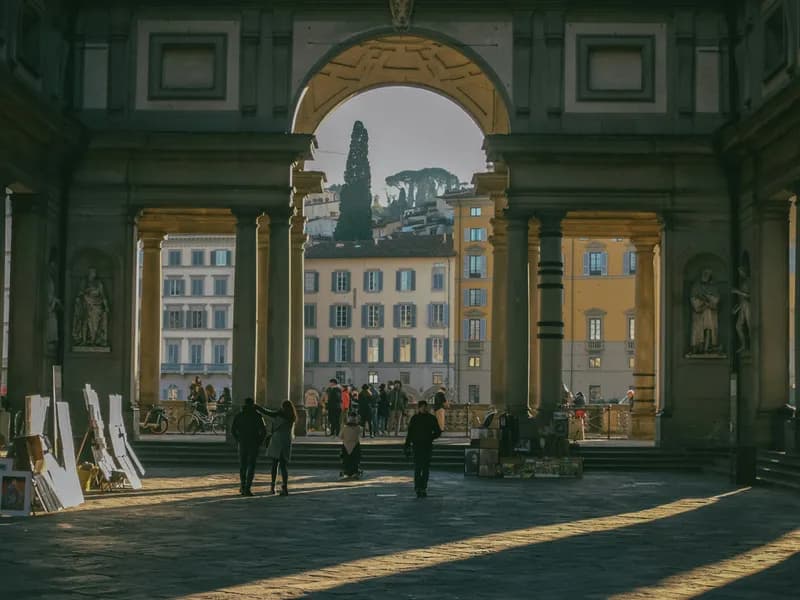
Uffizi Gallery
One of the world's great art museums, home to Botticelli's Birth of Venus and works by Leonardo, Michelangelo, and Caravaggio. Tickets are around €25 in high season (cheaper in winter). Reserve a timed entry online to skip the long queue. Allow 2-3 hours.

Siena & Piazza del Campo
The shell-shaped medieval square hosts the bareback Palio horse race each July 2 and August 16. Climb the Torre del Mangia (about €10) for rooftop views and tour the striped marble cathedral. An hour south of Florence by car or bus. Allow a full day.

San Gimignano
The 'Medieval Manhattan' bristles with 14 surviving stone towers above the Val d'Elsa. Wander free through the lanes, then try the world-champion gelato at Gelateria Dondoli on Piazza della Cisterna (about €3). Best visited early or late, as day-trippers pack it midday. Allow 2-3 hours.
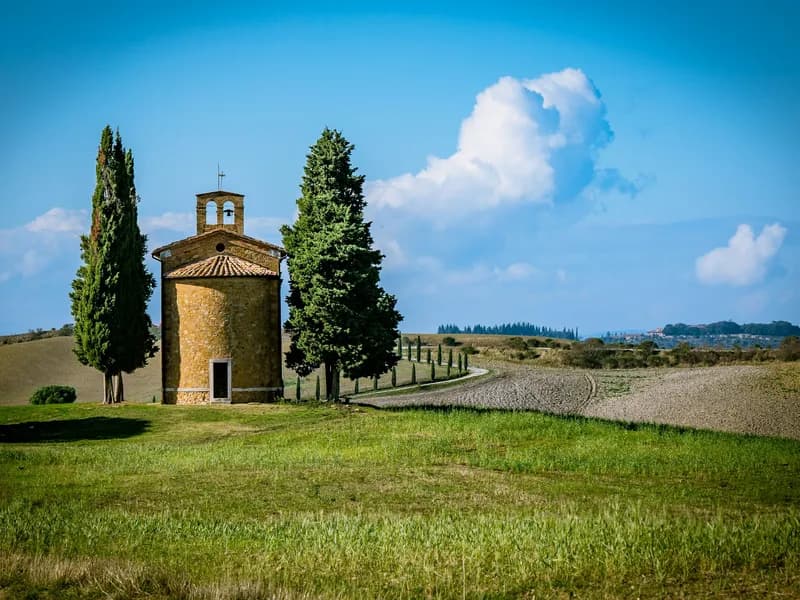
Val d'Orcia & Pienza
A UNESCO landscape of lone cypress trees, golden wheat, and hilltop hamlets between Montalcino and Montepulciano — the postcard of Tuscany. Pienza is famous for pecorino cheese; pair a wedge with local honey. You'll need a car to chase the best photo spots. Allow a full day.

Chianti Wine Road
The SR222 'Chiantigiana' winds through Greve, Panzano, and Radda past Sangiovese vineyards and stone wineries. Many estates offer tastings for €15-40 with a Black Rooster Chianti Classico — book ahead and nominate a driver. Combine with lunch at an agriturismo.

Leaning Tower of Pisa
The famously tilted 56m bell tower on the Piazza dei Miracoli. The grass field is free; climbing the tower's 251 steps costs around €20 with a timed ticket (no large bags, no under-8s). Pair it with the marble cathedral and baptistery. Allow 2 hours.
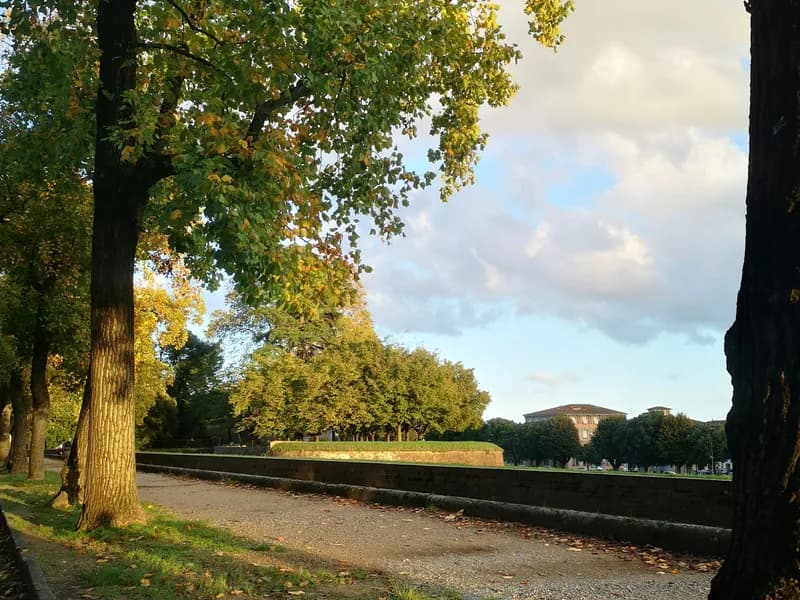
Lucca's Walls
A perfectly preserved Renaissance city ringed by intact tree-topped ramparts you can cycle in an hour. Rent a bike near Porta Santa Maria (about €4/hour), climb the Guinigi Tower with its rooftop oak trees, and catch an opera-night concert in this hometown of Puccini. Allow half a day.
Planned Itinerary
7-Day Tuscany Itinerary
Arrival in Florence
Land at Florence-Peretola (FLR) and settle into the Renaissance capital. Don't rent a car yet — Florence's center is a pedestrian-friendly ZTL zone, so save the wheels for the countryside later in the week. Ease in with a gentle orientation stroll and an early dinner.
Airport transfer to central Florence(30 minutes)
The T2 tram from FLR to Unità station is €1.70 and runs every few minutes; a taxi is a fixed €24 to the historic center. Avoid driving in — the ZTL cameras will fine you €80+.
Check in near Santa Maria Novella or Oltrarno(1 hour)
Stay walkable to the Duomo. The quieter Oltrarno (south of the Arno, around Santo Spirito) trades crowds for authentic artisan workshops and aperitivo bars.
Orientation walk to Piazza della Signoria and Ponte Vecchio(1.5 hours)
Pass the replica David outside Palazzo Vecchio, then walk the goldsmith-lined Ponte Vecchio at golden hour before the day-trip buses clear out.
Aperitivo and dinner in the Oltrarno(2 hours)
A Negroni (invented in Florence) at a Santo Spirito bar, then dinner at Trattoria Sabatino — a no-frills family canteen with €10 mains and house wine by the carafe.
Renaissance Florence: Duomo & Uffizi
A full day on foot through Florence's headline sights. Book everything in advance — the Brunelleschi Pass dome slot and the Uffizi timed entry both sell out days ahead in peak season. Hit the dome climb early before the heat and queues build.
Climb Brunelleschi's Dome at Santa Maria del Fiore(2 hours)
The 463-step climb up the terracotta dome needs a timed slot on the Brunelleschi Pass (around €30, which also covers Giotto's bell tower and the baptistery). Reserve the earliest morning slot.
Uffizi Gallery(2.5 hours)
Botticelli's Birth of Venus, plus Leonardo, Michelangelo, and Caravaggio. Around €25 in high season with a reserved timed entry to skip the hours-long line. Focus on the second-floor Botticelli rooms if short on time.
Long Tuscan lunch near Mercato Centrale(1.5 hours)
Trattoria Mario (lunch only, cash, expect to share a table) does a legendary bistecca and ribollita for around €15; or grab a schiacciata sandwich at All'Antico Vinaio for €7.
Sunset at Piazzale Michelangelo(1.5 hours)
Walk up (20 min from the river) or take bus 12/13 for the classic panorama of the city and dome at dusk. Bring a bottle of wine for the steps.
David, Markets & Free Florence
A lighter, slower Florence day — see Michelangelo's David first thing, then leave the museums behind to wander markets and the artisan Oltrarno. Built-in downtime in the afternoon to recover before tomorrow's countryside drive.
Accademia Gallery for Michelangelo's David(1.5 hours)
Book the first 8:15AM slot (around €16) to stand alone-ish with the David before tour groups arrive. Buy only through the official site — ignore the 'skip-the-line' touts outside.
Mercato Centrale & San Lorenzo browsing(1.5 hours)
Graze the upstairs food hall and ground-floor butchers and cheesemongers. Try a lampredotto tripe panino from a street cart (around €5) if you're brave.
Free afternoon / rest(3 hours)
Decompress at the hotel, or wander the Oltrarno's artisan workshops around Via Santo Spirito — leather, gilding, and bookbinding studios with no agenda.
Sunset aperitivo on a rooftop(2 hours)
Drinks at the SE·STO or La Terrazza (Hotel Continentale) rooftop bar overlooking the Arno and Ponte Vecchio — around €18 a cocktail but the view is the point.
Pick Up the Car & Chianti Wine Road
Collect your rental car this morning (booked automatic, picked up at a depot just outside the center to dodge the ZTL) and head south into Chianti. Today is about slow vineyard roads, not ticking boxes — nominate a driver who sips, not swallows.
Pick up rental car outside Florence(1 hour)
Collect from a depot near the airport or Firenze Campo di Marte rather than the city center. Confirm the automatic you reserved — most Italian rentals are manual.
Drive the SR222 'Chiantigiana' to Greve in Chianti(1 hour)
The classic Chianti wine road winds past Sangiovese vineyards and stone hamlets. Stop in Greve's funnel-shaped Piazza Matteotti and the historic Antica Macelleria Falorni butcher.
Winery tasting near Panzano or Radda(2 hours)
Book ahead at an estate like Castello di Volpaia (Radda) or Vignamaggio — tastings of Black Rooster Chianti Classico run €20-40 with cheese and salumi. The designated driver tastes lightly.
Agriturismo lunch in the hills(1.5 hours)
Lunch at an agriturismo such as Rignana near Greve — handmade pici pasta and grilled meats with a vineyard view, around €30-40 a head.
Check into a Chianti agriturismo(1 hour)
Base yourself in the countryside for two nights at a farm stay near Greve or Radda — pools, cypress views, and silence after Florence's bustle.
Siena & San Gimignano
From your Chianti base, loop through two of Tuscany's great hill towns. Siena gets the morning before the heat; San Gimignano gets the late afternoon after the day-trippers leave. Park outside both walls — they're strict ZTL zones.
Drive to Siena and explore Piazza del Campo(2.5 hours)
Park in the Santa Caterina or Il Campo garage outside the walls. The shell-shaped square hosts the Palio horse race; climb the Torre del Mangia (around €10) for rooftop views.
Siena Cathedral (Duomo)(1 hour)
The striped black-and-white marble cathedral with its inlaid floor and Piccolomini Library frescoes — around €13. One of the most spectacular Gothic interiors in Italy.
Lunch in Siena(1.5 hours)
Pici cacio e pepe and wild boar ragù at Trattoria La Tellina or Osteria il Grattacielo (cash, tiny, around €15). Save room for a panforte from a local pasticceria.
Late afternoon in San Gimignano(2.5 hours)
The 'Medieval Manhattan' of 14 stone towers. Arrive after 4PM as crowds thin; wander free through the lanes and try the world-champion gelato at Gelateria Dondoli on Piazza della Cisterna (around €3).
Val d'Orcia & Montalcino
Shift south into the UNESCO-listed Val d'Orcia — the lone-cypress, golden-wheat postcard of Tuscany. This is a driving and photography day chasing viewpoints, with cheese and Brunello in between. End the day at a base near Montepulciano or Pienza.
Drive into the Val d'Orcia(1.5 hours)
From Chianti it's about 1.5 hours south. Stop for the iconic viewpoints: the cypress cluster of San Quirico, the lone Cipressi di San Quirico, and the chapel of Vitaleta on the Pienza–San Quirico road.
Pienza for pecorino(2 hours)
Pope Pius II's 'ideal Renaissance town.' Buy aged pecorino paired with local honey or chestnut jam, walk the panoramic back-wall path, and lunch on pici at Trattoria Latte di Luna.
Brunello tasting in Montalcino(2 hours)
Detour to Montalcino for a tasting of Brunello, one of Italy's finest reds (€15-30 at a cellar like Fattoria dei Barbi). Climb the medieval Fortezza for sweeping valley views.
Check into a Val d'Orcia agriturismo(1 hour)
Settle near Pienza or Montepulciano for the night. Sunset over the rolling hills from a farm terrace is the quintessential Tuscan moment.
Montepulciano & Departure
A final hill-town morning before looping back to the airport. Tuscany's spread out, so budget the drive: Montepulciano to Florence FLR is roughly 1.5-2 hours. Return the car at the airport depot, not in the city, to avoid the ZTL trap one last time.
Montepulciano old town & Vino Nobile(2 hours)
Climb the steep main street to Piazza Grande, then taste Vino Nobile di Montepulciano in a historic cantina carved into the hillside — many offer free cellar tours with a €10-15 tasting.
Last shopping & espresso al banco(1 hour)
Pick up a final wedge of pecorino, a bottle of Vino Nobile, and cantucci almond biscuits. Drink a standing espresso at the bar (al banco) the Italian way — around €1.20.
Drive to Florence airport & return car(2 hours)
Allow 1.5-2 hours plus a buffer for fuel and the rental return at the FLR depot. Aim to arrive at the airport at least 2 hours before an international flight.
14-Day Tuscany Itinerary
Arrival in Florence
Land at Florence-Peretola (FLR) and settle into the Renaissance capital. Skip the car for now — Florence's center is a pedestrian ZTL zone — and ease into the trip with a riverside orientation walk and a relaxed first dinner.
Airport transfer to central Florence(30 minutes)
The T2 tram from FLR to Unità is €1.70; a taxi is a fixed €24 to the center. Don't drive in — ZTL cameras issue €80+ fines.
Check in near the Duomo or Oltrarno(1 hour)
The Oltrarno (around Santo Spirito) is quieter and full of artisan workshops; the Duomo side puts you steps from the main sights.
Orientation walk: Signoria to Ponte Vecchio(1.5 hours)
The replica David at Palazzo Vecchio, then the goldsmiths' Ponte Vecchio at golden hour before the crowds clear.
Dinner at Trattoria Sabatino(1.5 hours)
A no-frills Oltrarno family canteen with €10 mains and house wine by the carafe — the antidote to tourist-trap piazzas.
Renaissance Florence: Duomo & Uffizi
The headline Florence day. Reserve the dome slot and Uffizi entry in advance — both sell out days ahead in peak season. Climb early before heat and crowds, then dive into the Uffizi.
Climb Brunelleschi's Dome(2 hours)
463 steps up Santa Maria del Fiore on a timed Brunelleschi Pass slot (around €30, also covering Giotto's bell tower and the baptistery). Book the earliest morning entry.
Uffizi Gallery(2.5 hours)
Botticelli's Birth of Venus plus Leonardo, Michelangelo, Caravaggio. Around €25 high season with a reserved timed entry to skip the line.
Lunch at Trattoria Mario(1.5 hours)
Lunch only, cash, shared tables near San Lorenzo — bistecca and ribollita around €15. Or All'Antico Vinaio schiacciata for €7.
Sunset at Piazzale Michelangelo(1.5 hours)
Walk up or bus 12/13 for the classic skyline-and-dome panorama at dusk. Bring wine for the steps.
David, Markets & Slow Florence
A lighter Florence day: David first thing, then markets, artisan quarters, and an afternoon of downtime before leaving the city tomorrow.
Accademia Gallery for Michelangelo's David(1.5 hours)
Book the 8:15AM slot (around €16) to beat the groups. Official site only — ignore the touts.
Mercato Centrale & San Lorenzo(1.5 hours)
Food hall upstairs, butchers and cheesemongers below. Try a lampredotto tripe panino from a cart (€5) if you dare.
Free afternoon in the Oltrarno(3 hours)
Rest, or wander artisan workshops around Via Santo Spirito — leather, gilding, bookbinding. No agenda.
Rooftop aperitivo over the Arno(2 hours)
Cocktails at La Terrazza (Hotel Continentale) or SE·STO with Ponte Vecchio views, around €18.
Day Trip to Lucca & Pisa by Train
Two coast-leaning towns in one easy rail day — no car needed yet. Frequent regional trains from Firenze Santa Maria Novella reach both in about 1.5 hours; Lucca and Pisa are only 30 minutes apart.
Train to Lucca and cycle the walls(2.5 hours)
Regional train from Florence (~1h20, ~€8). Rent a bike near Porta Santa Maria (€4/hour) and ride the intact tree-topped Renaissance ramparts in under an hour. Climb the Guinigi Tower with its rooftop oaks.
Lunch in Lucca(1.5 hours)
Tordelli lucchese (meat-stuffed pasta) at Trattoria da Leo (cash, lively, around €12). Caffè di Simo for a Puccini-era espresso.
Train to Pisa & the Leaning Tower(2.5 hours)
30 minutes from Lucca by train. The Piazza dei Miracoli grass is free; climbing the 251-step tower is around €20 with a timed ticket (no big bags, no under-8s). Pair with the marble cathedral.
Train back to Florence(1 hour)
Direct regional service from Pisa Centrale (~1h, ~€9). Late dinner in Florence — a bowl of pappa al pomodoro hits the spot.
Pick Up the Car & Into Chianti
Collect your rental this morning (automatic, from an out-of-center depot to dodge the ZTL) and slip into the Chianti hills for a two-night farm stay. A slow vineyard day — designated driver sips, doesn't swallow.
Pick up rental car outside Florence(1 hour)
Collect near the airport or Campo di Marte, not the city center. Confirm the automatic you reserved.
Drive the SR222 Chiantigiana to Greve(1 hour)
The classic Chianti wine road past Sangiovese vineyards. Stop in Greve's Piazza Matteotti and the historic Falorni butcher.
Winery tasting near Radda or Panzano(2 hours)
Book Castello di Volpaia (Radda) or Vignamaggio — Black Rooster Chianti Classico tastings €20-40 with cheese and salumi.
Check into a Chianti agriturismo(1 hour)
Two nights at a farm stay near Greve or Radda — pool, cypress views, total quiet.
Dinner at an agriturismo(1.5 hours)
Handmade pici and grilled meats at a farm restaurant like Rignana, around €30-40 a head with a vineyard sunset.
Siena & San Gimignano
A hill-town loop from your Chianti base. Siena in the cooler morning, San Gimignano in the late afternoon after the day-trippers leave. Park outside both walls — strict ZTL zones.
Siena: Piazza del Campo & Torre del Mangia(2.5 hours)
Park in the Santa Caterina garage outside the walls. The shell-shaped Palio square; climb the Torre del Mangia (€10) for rooftop views.
Siena Cathedral(1 hour)
Striped marble Gothic masterpiece with an inlaid floor and the frescoed Piccolomini Library — around €13.
Lunch in Siena(1.5 hours)
Pici and wild boar ragù at Osteria il Grattacielo or Trattoria La Tellina (cash, tiny, ~€15). Panforte for the road.
Late afternoon in San Gimignano(2.5 hours)
Arrive after 4PM as crowds thin. 14 medieval towers, free lanes, and world-champion gelato at Gelateria Dondoli on Piazza della Cisterna (€3).
Chianti Cooking Class & Rest
Slow down with a hands-on Tuscan cooking class at an agriturismo, then a free afternoon at the pool. The deliberate downtime midway through a two-week trip is the secret to not burning out.
Tuscan cooking class at the farm(4 hours)
Roll fresh pici and pasta, make ragù and tiramisù with a local nonna at an agriturismo cooking school (around €90-120), then feast on what you cooked with estate wine.
Free afternoon at the agriturismo(3 hours)
Pool, a book under an olive tree, or a short walk through the vines. No driving, no museums — just decompress.
Evening passeggiata in Greve(1.5 hours)
A gentle stroll and an aperitivo on Piazza Matteotti before a light dinner of crostini and a glass of Chianti Classico.
Shift South to the Val d'Orcia
Pack up and drive about 1.5 hours south into the UNESCO Val d'Orcia, basing near Pienza or Montepulciano for three nights. A photography-led transfer day chasing the region's most famous viewpoints.
Drive to the Val d'Orcia with photo stops(2 hours)
From Chianti, ~1.5h south. Stop for the cypress clusters near San Quirico d'Orcia and the Cappella di Vitaleta on the Pienza road — golden-wheat postcards of Tuscany.
Check into a Val d'Orcia agriturismo(1 hour)
Three-night base near Pienza or Montepulciano. Pick a place with a terrace facing the rolling hills for sunset.
Pienza for pecorino(2 hours)
Pope Pius II's ideal Renaissance town. Buy aged pecorino with local honey, walk the panoramic back-wall path.
Dinner of pici in Pienza(1.5 hours)
Trattoria Latte di Luna for pici and roast suckling pig (around €20), or a terrace dinner at the agriturismo.
Montalcino & Brunello Country
A day devoted to Tuscany's most prestigious red. Tour cellars around Montalcino, climb a medieval fortress, and let lunch run long. Nominate a driver who tastes, not drinks.
Brunello tasting in Montalcino(2.5 hours)
Book a winery like Fattoria dei Barbi or Banfi for a cellar tour and Brunello tasting (€15-30). One of Italy's finest reds, made only from Sangiovese Grosso.
Montalcino Fortezza & town(1.5 hours)
Climb the 14th-century Fortezza ramparts (around €4) for sweeping valley views, then browse the enoteca inside its walls.
Long lunch with a view(2 hours)
A leisurely lunch at an estate restaurant or in town — pinci al ragù di cinghiale and a glass of Rosso di Montalcino, around €30.
Sant'Antimo Abbey at golden hour(1 hour)
The 12th-century Romanesque abbey near Castelnuovo dell'Abate glows honey-gold at dusk — a serene, free detour with occasional Gregorian chant.
Montepulciano & Vino Nobile
Explore the steep, handsome Renaissance town of Montepulciano and its Vino Nobile cellars dug deep into the hill. A relaxed pace with plenty of wine and a slow lunch.
Climb Montepulciano's main street to Piazza Grande(2 hours)
Steep, beautiful, and lined with palazzi. The piazza's well-head and Duomo featured in the Twilight films; the views over the Val d'Orcia are superb.
Vino Nobile cellar tour(1.5 hours)
Descend into a historic cantina like Contucci or De' Ricci carved into the hillside — many offer free cellar tours with a €10-15 Vino Nobile tasting.
Lunch in Montepulciano(1.5 hours)
Pici all'aglione (garlic-tomato) and pecorino plates at Osteria Acquacheta (famous bistecca, cash, book ahead, around €20).
Free afternoon / spa at Bagno Vignoni(3 hours)
Optional: soak at the thermal pools of Bagni San Filippo (free natural travertine pools) or visit Bagno Vignoni's steaming square-pool. Or just rest at the agriturismo.
Cortona & Lake Trasimeno Edge
Drive east to the hilltop town of Cortona, made famous by 'Under the Tuscan Sun,' perched above the Valdichiana. A slower day of wandering, Etruscan history, and big views.
Drive to Cortona(1 hour)
About an hour from the Val d'Orcia. Park below the walls in Piazza Garibaldi or the Spirito Santo lot and walk up.
Explore Cortona's old town(2.5 hours)
Climb the steep lanes to Piazza della Repubblica, visit the MAEC Etruscan museum (around €10), and take in the panorama over Lake Trasimeno from the Santa Margherita basilica.
Lunch on Piazza della Repubblica(1.5 hours)
A long lunch at Trattoria Dardano (family-run, grilled meats, around €18) on the main square — pure 'Under the Tuscan Sun' atmosphere.
Return drive & farewell dinner(1.5 hours)
Back to the Val d'Orcia base for a final agriturismo dinner — a tasting menu of local crostini, pici, and Vino Nobile under the stars.
Drive North & Arezzo Stopover
Begin the loop back toward Florence with a stop in the antique-loving city of Arezzo, then settle into a final Florence base. Budget the drive — the Val d'Orcia to Florence is about 1.5-2 hours with the Arezzo detour.
Drive to Arezzo(1.5 hours)
Roughly 1.5 hours north. Park outside the center; the old town climbs to a sloping piazza.
Arezzo: Piero della Francesca frescoes(2 hours)
The Basilica of San Francesco's 'Legend of the True Cross' fresco cycle (timed ticket, around €8) is a Renaissance masterpiece. Wander the sloping Piazza Grande, setting of 'Life Is Beautiful' and the monthly antiques fair.
Lunch in Arezzo(1.5 hours)
Tuscan grills and local Sangiovese at Antica Osteria L'Agania (cash-friendly, hearty, around €15).
Drive to Florence & return the car(1.5 hours)
Continue to Florence and return the rental at an out-of-center depot to avoid the ZTL. Check into a final Florence hotel near the center.
Florence Encore & Pitti Palace
A second, deeper Florence day with the car gone — see what you missed and slow down. Mix one big sight with aimless wandering and a final great meal.
Pitti Palace & Boboli Gardens(2.5 hours)
The Medici grand-ducal palace in the Oltrarno holds the Palatine Gallery's Raphaels and Titians; the terraced Boboli Gardens behind are perfect for a stroll (combined ticket around €22).
Lunch at a Sant'Ambrogio trattoria(1.5 hours)
Eat where Florentines do near the Sant'Ambrogio market — trippa, ribollita, and a quartino of red for around €15.
Free afternoon / last shopping(2.5 hours)
Browse leather at the Scuola del Cuoio (behind Santa Croce), pick up olive oil and cantucci, or just sit with a gelato at Gelateria della Passera.
Farewell Florentine dinner(2 hours)
Book the bistecca alla fiorentina at Trattoria Sostanza (tiny, cash, candlelit, around €40-50 with the steak) — a proper send-off.
Departure from Florence
A relaxed final morning before flying out of FLR (or transferring to Pisa PSA for budget connections). With the car already returned, getting to the airport is a simple tram or taxi ride.
Morning espresso & last market run(1.5 hours)
A standing cappuccino al banco (before 11AM, the Italian way) and a final lap of San Lorenzo or Sant'Ambrogio for edible souvenirs — pecorino, truffle paste, cantucci.
Hotel checkout(30 minutes)
Most Florence hotels hold bags after checkout if your flight is later — useful for one more wander.
Transfer to the airport(30 minutes)
T2 tram (€1.70) or a fixed €24 taxi to FLR; allow extra time and a regional train if departing from Pisa PSA (~1h). Arrive at least 2 hours before an international flight.
21-Day Tuscany Itinerary
Arrival in Florence
Land at Florence-Peretola (FLR) and ease into the Renaissance capital. No car yet — the center is a pedestrian ZTL zone — so start slow with a riverside orientation and a relaxed first dinner.
Airport transfer to central Florence(30 minutes)
T2 tram from FLR to Unità (€1.70) or a fixed €24 taxi. Never drive into the ZTL — cameras issue €80+ fines.
Check in near the Duomo or Oltrarno(1 hour)
The Oltrarno around Santo Spirito is quieter and full of artisan workshops; the Duomo side is steps from the sights.
Orientation walk to Ponte Vecchio(1.5 hours)
Piazza della Signoria's replica David, then the goldsmiths' Ponte Vecchio at golden hour before the crowds thin.
Dinner at Trattoria Sabatino(1.5 hours)
No-frills Oltrarno canteen, €10 mains, house wine by the carafe — the antidote to piazza tourist traps.
Renaissance Florence: Duomo & Uffizi
The headline Florence day. Reserve the dome slot and Uffizi entry well ahead — both sell out days in advance in peak season. Climb early to beat heat and crowds.
Climb Brunelleschi's Dome(2 hours)
463 steps up Santa Maria del Fiore on a timed Brunelleschi Pass (~€30, also covering the bell tower and baptistery). Book the earliest slot.
Uffizi Gallery(2.5 hours)
Botticelli's Birth of Venus plus Leonardo, Michelangelo, Caravaggio. ~€25 high season, reserved timed entry to skip the line.
Lunch at Trattoria Mario(1.5 hours)
Lunch only, cash, shared tables near San Lorenzo — bistecca and ribollita ~€15, or All'Antico Vinaio schiacciata for €7.
Sunset at Piazzale Michelangelo(1.5 hours)
Walk up or bus 12/13 for the skyline-and-dome panorama at dusk. Bring wine for the steps.
David, Markets & Slow Florence
A gentler Florence day: David first thing, then markets and the artisan Oltrarno, with a built-in afternoon of rest before leaving the city tomorrow.
Accademia Gallery for Michelangelo's David(1.5 hours)
Book the 8:15AM slot (~€16) to beat the groups. Official site only — ignore the touts.
Mercato Centrale & San Lorenzo(1.5 hours)
Food hall upstairs, butchers and cheesemongers below. Brave a lampredotto tripe panino from a cart (€5).
Free afternoon in the Oltrarno(3 hours)
Rest or wander artisan studios on Via Santo Spirito — leather, gilding, bookbinding. No agenda.
Rooftop aperitivo over the Arno(2 hours)
Cocktails at La Terrazza (Hotel Continentale) with Ponte Vecchio views, ~€18.
Pick Up the Car & Into Chianti
Collect your rental this morning (automatic, from an out-of-center depot) and drift into the Chianti hills for a three-night farm stay. A slow vineyard day — designated driver sips, doesn't swallow.
Pick up rental car outside Florence(1 hour)
Collect near the airport or Campo di Marte, not the center. Confirm the automatic you reserved.
Drive the SR222 Chiantigiana to Greve(1 hour)
Classic Chianti wine road past Sangiovese vineyards. Stop in Greve's Piazza Matteotti and the Falorni butcher.
Winery tasting near Radda or Panzano(2 hours)
Book Castello di Volpaia (Radda) or Vignamaggio — Black Rooster Chianti Classico tastings €20-40 with cheese and salumi.
Check into a Chianti agriturismo(1 hour)
Three nights at a farm stay near Greve or Radda — pool, cypress views, deep quiet.
Dinner at an agriturismo(1.5 hours)
Handmade pici and grilled meats at a farm restaurant like Rignana, ~€30-40 with a vineyard sunset.
Siena & San Gimignano
A hill-town loop from your Chianti base. Siena in the cool morning, San Gimignano late afternoon once the day-trippers leave. Park outside both walls — strict ZTL zones.
Siena: Piazza del Campo & Torre del Mangia(2.5 hours)
Park in the Santa Caterina garage outside the walls. The shell-shaped Palio square; climb the Torre del Mangia (€10) for rooftop views.
Siena Cathedral(1 hour)
Striped marble Gothic masterpiece with an inlaid floor and the frescoed Piccolomini Library — ~€13.
Lunch in Siena(1.5 hours)
Pici and wild boar ragù at Osteria il Grattacielo (cash, tiny, ~€15). Panforte for the road.
Late afternoon in San Gimignano(2.5 hours)
Arrive after 4PM. 14 medieval towers, free lanes, and world-champion gelato at Gelateria Dondoli on Piazza della Cisterna (€3).
Chianti Cooking Class & Rest
Slow it right down with a hands-on Tuscan cooking class at the agriturismo, then a free afternoon at the pool. Deliberate early downtime sets the rhythm for a three-week trip.
Tuscan cooking class at the farm(4 hours)
Roll fresh pici and pasta, make ragù and tiramisù with a local nonna (~€90-120), then feast on what you cooked with estate wine.
Free afternoon at the agriturismo(3 hours)
Pool, a book under an olive tree, or a short walk through the vines. No driving, no museums.
Evening passeggiata in Greve(1.5 hours)
Gentle stroll and aperitivo on Piazza Matteotti before a light crostini dinner with Chianti Classico.
Vespa Tour Through the Chianti Hills
See Chianti the romantic way — on two wheels. A guided Vespa tour weaves the back roads between vineyards and stone hamlets, with stops for views and a long lunch.
Guided Vespa tour of Chianti(4 hours)
A half-day Vespa convoy (from ~€120 with guide, helmet, and brief lesson) along quiet ridge roads past Castellina and Panzano — the most cinematic way to ride the hills.
Lunch at Dario Cecchini's in Panzano(2 hours)
The theatrical 'poet-butcher' Dario Cecchini's Antica Macelleria — Officina della Bistecca or Solociccia set meat menus (~€30-50, book ahead). A carnivore's pilgrimage.
Free afternoon back at the farm(2 hours)
Rest by the pool after the ride; the Chianti heat is best slept off mid-afternoon.
Shift South to the Val d'Orcia
Pack up and drive ~1.5 hours south into the UNESCO Val d'Orcia, basing near Pienza or Montepulciano for three nights. A photography-led transfer chasing the region's most famous viewpoints.
Drive to the Val d'Orcia with photo stops(2 hours)
Stop for the cypress clusters near San Quirico d'Orcia and the Cappella di Vitaleta on the Pienza road — the golden-wheat postcards of Tuscany.
Check into a Val d'Orcia agriturismo(1 hour)
Three-night base near Pienza or Montepulciano. Choose a terrace facing the rolling hills.
Pienza for pecorino(2 hours)
Pope Pius II's ideal Renaissance town. Buy aged pecorino with local honey, walk the panoramic back-wall path.
Dinner of pici in Pienza(1.5 hours)
Trattoria Latte di Luna for pici and roast suckling pig (~€20), or a terrace dinner at the agriturismo.
Montalcino & Brunello Country
A day for Tuscany's most prestigious red. Tour cellars around Montalcino, climb a fortress, and let lunch run long. Designated driver tastes, doesn't drink.
Brunello tasting in Montalcino(2.5 hours)
Book Fattoria dei Barbi or Banfi for a cellar tour and Brunello tasting (€15-30) — one of Italy's finest reds, pure Sangiovese Grosso.
Montalcino Fortezza & town(1.5 hours)
Climb the 14th-century Fortezza ramparts (~€4) for valley views, then browse the enoteca inside.
Long lunch with a view(2 hours)
Pinci al ragù di cinghiale and a glass of Rosso di Montalcino at an estate restaurant, ~€30.
Sant'Antimo Abbey at golden hour(1 hour)
The honey-gold 12th-century Romanesque abbey near Castelnuovo dell'Abate — a serene, free dusk detour.
Montepulciano, Vino Nobile & Thermal Soak
Explore the steep Renaissance town of Montepulciano and its deep Vino Nobile cellars, then unwind in the Val d'Orcia's thermal waters. A relaxed wine-and-rest day.
Montepulciano main street to Piazza Grande(2 hours)
Steep, handsome, palazzo-lined. The piazza and Duomo featured in the Twilight films; superb Val d'Orcia views.
Vino Nobile cellar tour(1.5 hours)
Descend into a historic cantina like Contucci or De' Ricci carved into the hill — often free tours with a €10-15 tasting.
Lunch at Osteria Acquacheta(1.5 hours)
Famous bistecca and pici all'aglione (cash, book ahead, ~€20) in Montepulciano.
Thermal soak at Bagni San Filippo(2 hours)
Free natural travertine hot pools in the woods (the 'Fosso Bianco' white whale formation), or the steaming square at Bagno Vignoni. Bring sandals and a towel.
Truffle Hunt & Cortona
Start with a morning truffle hunt in the oak woods, then drive east to hilltop Cortona of 'Under the Tuscan Sun' fame. A day of forest, dogs, and big Valdichiana views.
Truffle hunt with a tartufaio and dog(2.5 hours)
Join a local hunter and trained lagotto dog in the woods (~€80-130 including a tasting). Summer scorzone or autumn prized truffles, finished with truffle scrambled eggs and wine.
Drive to Cortona & explore(2.5 hours)
About an hour east. Park below the walls, climb to Piazza della Repubblica, visit the MAEC Etruscan museum (~€10), and the Trasimeno panorama from Santa Margherita.
Lunch on Cortona's main square(1.5 hours)
Grilled meats at family-run Trattoria Dardano (~€18) on Piazza della Repubblica — pure 'Under the Tuscan Sun' atmosphere.
Return drive at sunset(1 hour)
Back to the Val d'Orcia for a quiet agriturismo dinner.
Drive to the Maremma Coast
Leave the wine country for Tuscany's wild south-west — the Maremma, a coast of pine forests, butteri cowboys, and Etruscan tombs. Drive ~2 hours and base near Castiglione della Pescaia or Capalbio for three nights.
Drive to the Maremma(2.5 hours)
About 2 hours south-west to the coast. Stop in the Etruscan tufa town of Pitigliano, dramatically perched on a cliff, for lunch on the way.
Check into a Maremma base(1 hour)
Three nights near Castiglione della Pescaia, Capalbio, or an inland farm — a different, wilder Tuscany of beaches and macchia scrub.
Beach evening(2 hours)
Unwind on a Maremma beach — the wild pine-backed sands of Cala Violina (a short walk in) or the long dunes south of Castiglione.
Maremma Wild & Free Day
A deliberate slow day on the coast — nature park, beach, and seafood, with no museum agenda. The kind of unhurried break that makes a three-week trip sustainable.
Parco Naturale della Maremma walk(3 hours)
Hike a marked trail (A2 to the beach via the towers, ~€10 entry) through umbrella pines and macchia — wild boar, deer, and maybe the long-horned Maremmana cattle.
Seafood lunch on the coast(1.5 hours)
Spaghetti alle vongole and grilled catch of the day at a beach trattoria in Castiglione della Pescaia or Talamone (~€25).
Free beach afternoon(3 hours)
Swim, nap, and read. Rent a lounger at a stabilimento or stake out a free public stretch. Pure rest.
Day Trip to Elba Island
A full-day excursion to Tuscany's largest island, Napoleon's place of exile, ringed by turquoise coves. Drive to Piombino and take the car ferry — book ahead in summer.
Ferry from Piombino to Portoferraio(1.5 hours)
Drive ~1h to Piombino, then a ~1h Toremar/Moby car ferry to Elba (~€40-70 return with car, reserve ahead). Or go as a foot passenger and bus on the island.
Portoferraio & Napoleon's villa(2 hours)
Wander the harbor old town and visit the Villa dei Mulini, Napoleon's residence during his 1814-15 exile (~€5), with views over the bay.
Swim at a turquoise cove(2.5 hours)
Drive to a cove like Sansone or Cavoli — clear water, pebble beaches, and snorkeling. Lunch on fresh fish at a beach bar.
Evening ferry back to the mainland(2 hours)
Return ferry to Piombino and drive back to your Maremma base for a late, light dinner.
Drive North to Lucca
Leave the coast and cross to north-west Tuscany, basing in walled Lucca for three nights — a relaxed, bike-friendly town and gateway to Pisa and the mountains. Drive is ~2.5 hours.
Drive to Lucca(3 hours)
About 2.5 hours north. Park outside the walls (Parcheggio Palatucci) — Lucca's center is a ZTL. Check into a three-night base.
Cycle Lucca's Renaissance walls(2 hours)
Rent a bike near Porta Santa Maria (€4/hour) and ride the intact tree-topped ramparts in under an hour. Climb the Guinigi Tower with its rooftop oaks.
Lucca old town & Piazza Anfiteatro(1.5 hours)
Wander the oval Piazza dell'Anfiteatro (a former Roman amphitheater) and Via Fillungo's shops. Puccini's birthplace museum sits just off the square.
Dinner at Trattoria da Leo(1.5 hours)
Tordelli lucchese and roast meats at this lively cash-only institution, ~€12-15.
Pisa & the Leaning Tower
An easy half-hour hop to Pisa for the Piazza dei Miracoli, with the afternoon free back in Lucca. Take the train and skip the parking hassle entirely.
Train to Pisa(30 minutes)
Regional train from Lucca to Pisa Centrale (~30 min, ~€4). Walk or hop a bus to the Piazza dei Miracoli.
Leaning Tower & Piazza dei Miracoli(2.5 hours)
The grass field is free; climbing the 251-step tower is ~€20 with a timed ticket (no large bags, no under-8s). Pair with the marble cathedral and baptistery.
Lunch in Pisa's Borgo(1.5 hours)
Cecìna (chickpea flatbread) and pasta at a trattoria off the tourist drag, like Osteria dei Cavalieri, ~€15.
Free afternoon back in Lucca(3 hours)
Train back and rest — an aperitivo on Piazza San Michele, or a second loop of the walls at golden hour.
Garfagnana Mountains & Marble
Trade vineyards for mountains on a day trip up the Serchio valley into the wild Garfagnana and the marble heart of the Apuan Alps. Dramatic, cool, and far from the crowds.
Drive into the Garfagnana(1.5 hours)
North up the Serchio valley from Lucca. Stop at the Ponte della Maddalena ('Devil's Bridge'), a perfect medieval hump-back arch reflected in the river.
Carrara marble quarry tour(2 hours)
A jeep or van tour into the blinding-white marble quarries above Carrara where Michelangelo sourced his stone (~€30-50). Vast, surreal, and unforgettable.
Mountain lunch in Garfagnana(1.5 hours)
Hearty mountain fare — farro soup, chestnut polenta, and local pecorino — at a trattoria in Castelnuovo di Garfagnana, ~€18.
Return drive to Lucca(1.5 hours)
Wind back down the valley for a quiet evening in town.
Return to Florence via the Vendemmia
Loop back toward Florence, dropping the car after a final countryside experience. In September-October, time it for the vendemmia (grape harvest) — otherwise a relaxed Chianti farewell lunch.
Drive toward Florence with a Chianti stop(2 hours)
Lucca to Florence is ~1.5h; detour back through northern Chianti for one last vineyard.
Grape harvest experience (seasonal) or wine lunch(3 hours)
In harvest season (Sept-Oct), join a vendemmia — pick grapes and lunch with the pickers at an estate (~€60-90). Otherwise a long farewell lunch and tasting at a Chianti winery.
Return the rental car(1 hour)
Drop the car at an out-of-center Florence depot to avoid the ZTL. Check into a final central Florence hotel.
Evening passeggiata in Florence(1.5 hours)
Stroll back into city life with a gelato at Gelateria della Passera and an aperitivo in Santo Spirito.
Florence Encore: Pitti & Hidden Corners
A deeper Florence day with the car gone — see what the first stay missed and slow down. One big sight, then aimless wandering through quieter quarters.
Pitti Palace & Boboli Gardens(2.5 hours)
The Medici palace's Palatine Gallery (Raphaels, Titians) and the terraced Boboli Gardens behind (combined ~€22).
Lunch near Sant'Ambrogio market(1.5 hours)
Eat where Florentines do — trippa, ribollita, and a quartino of red for ~€15 by the Sant'Ambrogio market.
Free afternoon in the artisan Oltrarno(3 hours)
Browse the Scuola del Cuoio leather school behind Santa Croce, or simply wander and rest. A deliberate easy afternoon.
Aperitivo at Le Volpi e l'Uva(1.5 hours)
A tiny wine bar near Ponte Vecchio with superb small-grower Tuscan pours and crostini, ~€6-10 a glass.
Florence Markets, Crafts & Farewell Feast
A final full day to indulge in Florence's food, crafts, and a great last dinner — relaxed pacing, no rush, plenty of room for whatever you loved most.
Bargello or Brancacci Chapel(1.5 hours)
Choose your last masterpiece: the Bargello's Donatello sculptures (~€10) or Masaccio's revolutionary frescoes in the Brancacci Chapel (~€10, book ahead) in the Oltrarno.
Last shopping for edible souvenirs(2 hours)
Olive oil, aged pecorino, truffle paste, cantucci, and a bottle of Brunello from a specialist enoteca. The San Lorenzo and Sant'Ambrogio markets deliver.
Free afternoon / rest(2.5 hours)
A last gelato, a quiet hour by the river, or a final loop of a favorite neighborhood before dinner.
Farewell dinner at Trattoria Sostanza(2 hours)
Book the bistecca alla fiorentina at this tiny candlelit institution (cash, ~€40-50 with the steak) — a proper Tuscan send-off.
Departure from Florence
A relaxed final morning before flying out of FLR (or transferring to Pisa PSA for budget connections). With the car long returned, the airport is a simple tram or taxi away.
Morning cappuccino al banco(1 hour)
A standing cappuccino before 11AM (the Italian way) and a last lap of a favorite piazza.
Hotel checkout & bag drop(30 minutes)
Most hotels hold luggage after checkout if your flight is later — time for one final wander.
Transfer to the airport(30 minutes)
T2 tram (€1.70) or a fixed €24 taxi to FLR; allow a regional train (~1h) if departing from Pisa PSA. Arrive at least 2 hours before an international flight.
Travel Tips
Visa & Entry
Schengen Zone Entry
Italy is in the Schengen area. US, UK, Canadian, and Australian citizens get 90 days visa-free in any 180-day period. From 2025 the ETIAS travel authorization (around €7) is required for visa-exempt travelers — apply online before you fly.
transport
Rent a Car for the Countryside
Florence, Siena, Pisa, and Lucca are well linked by train, but the vineyards, Val d'Orcia, and hill towns demand a car. Rent outside Florence's center to avoid traffic, and book an automatic early — most Italian rentals are manual.
The ZTL Driving Trap
Historic centers like Florence, Siena, and Lucca enforce ZTL limited-traffic zones monitored by cameras. Driving in unwittingly triggers fines of €80+ that arrive months later via your rental company. Park in a signposted garage outside the walls and walk in.
Budget
Lunch Like a Local
Skip restaurants on the main piazzas, where a cover charge (coperto, €2-4 per person) and tourist prices add up. Eat your big meal at lunch with a fixed-price menu, buy a porchetta or schiacciata sandwich for €5-7, and order the house wine by the carafe.
Local Customs
Order Coffee the Italian Way
Italians drink cappuccino only before 11AM and an espresso (un caffè) after meals — ordering a milky coffee with dinner marks you as a tourist. Drink standing at the bar (al banco) for the cheapest price; table service costs several times more.
Safety
Book Major Sights in Advance
The Uffizi, Accademia (Michelangelo's David), and Florence's dome climb routinely sell out their timed slots days ahead in peak season. Reserve online, and beware touts near the Duomo offering 'skip-the-line' deals — buy only through official sites.
Related Articles
StoriesWhat Tuscans Know: Local Secrets to Eating, Drinking and Traveling Like an Insider
Ask anyone who lives here and they'll tell you the same things — eat at lunch, drink your coffee standing, and never, ever drive into the old town. Here's what locals know about Tuscany.
SeasonalTuscany in Autumn: Why the Harvest Season Is the Best Time to Visit
Golden light, fewer crowds, and the vendemmia grape harvest in full swing — autumn might just be Tuscany at its absolute best. Here's how to do it.
Travel Guides12 Unmissable Things to Do in Tuscany (And How to Do Them Right)
Renaissance Florence, cypress-lined roads, Brunello cellars, and gelato worth crossing a country for. Here are 12 things to do in Tuscany — with the booking tricks and local moves that make the difference.