
Yakushima

Photo: Marek Piwnicki / Unsplash
Key Facts
Best Time to Visit
May to July (lush greenery, sea turtle nesting) and October to November (autumn color); avoid typhoon risk August-September
Language
Japanese only; very limited English — download offline translation apps
Currency
Japanese Yen (JPY)
Time Zone
JST (UTC+9)
Airport
Yakushima Airport (KUM) — small regional airport with flights from Kagoshima, Osaka Itami, and Fukuoka
Population
~12,000 residents (island)
Climate
Subtropical to alpine (coast to mountain), annual rainfall up to 10,000mm in the interior — it rains '35 days a month' locals say
Safety Rating
Very Safe (Level 1)
UNESCO Status
UNESCO World Heritage Site since 1993 for its ancient cedar forests and unique island biodiversity
Top Highlights
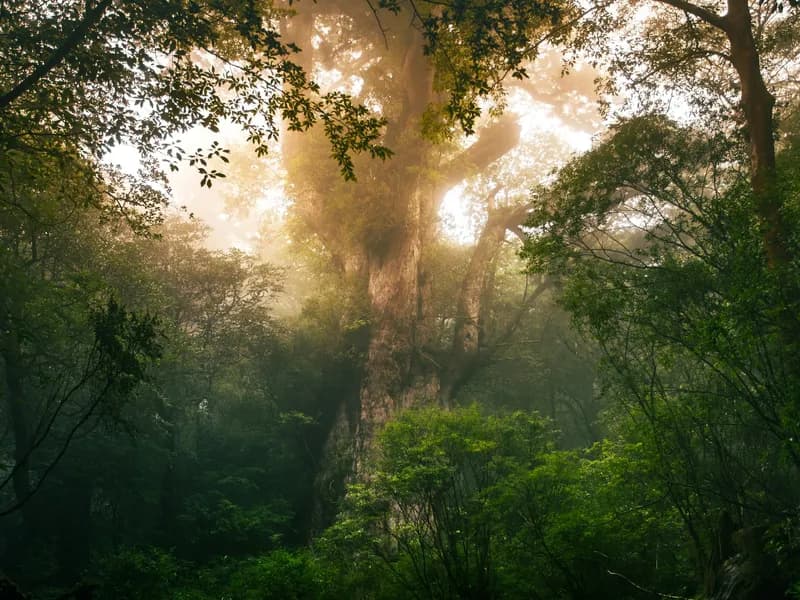
Jomon Sugi (Ancient Cedar Tree)
Japan's oldest and largest cryptomeria cedar, estimated 2,170-7,200 years old with a trunk circumference of 16.4m. The round-trip hike is 22km and takes 8-10 hours from Arakawa Trailhead. A shuttle bus (from 1,400 JPY round trip) is required March-November. Start by 5-6AM. Moderate to strenuous difficulty — proper hiking gear and packed lunch essential.
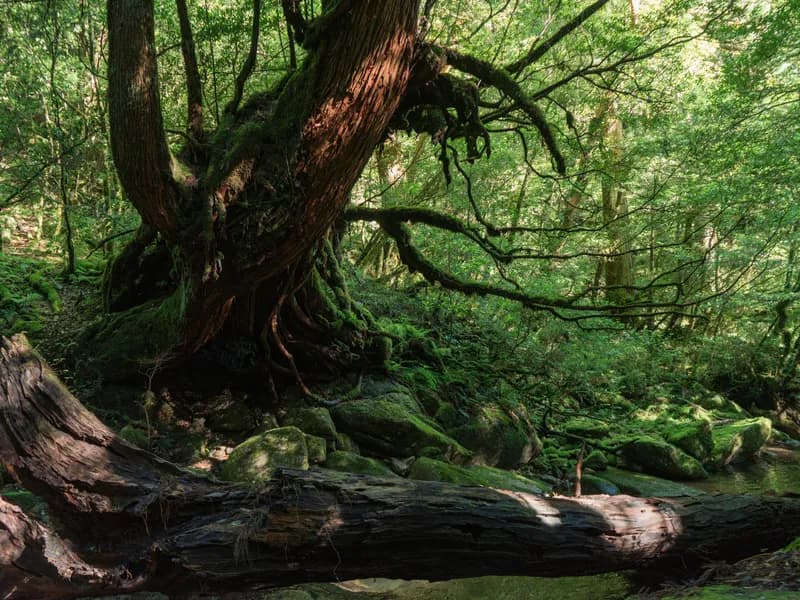
Shiratani Unsuikyo Ravine
A moss-covered primeval forest that inspired the setting of Studio Ghibli's Princess Mononoke. Multiple trail options: 1-hour loop (easy), 3-hour loop to Taiko-iwa rock (moderate), or 5-hour full course. Conservation fee: 500 JPY. The moss garden (Mononoke-no-mori) is ethereally beautiful, especially after rain. 30 minutes by car from Miyanoura Port.
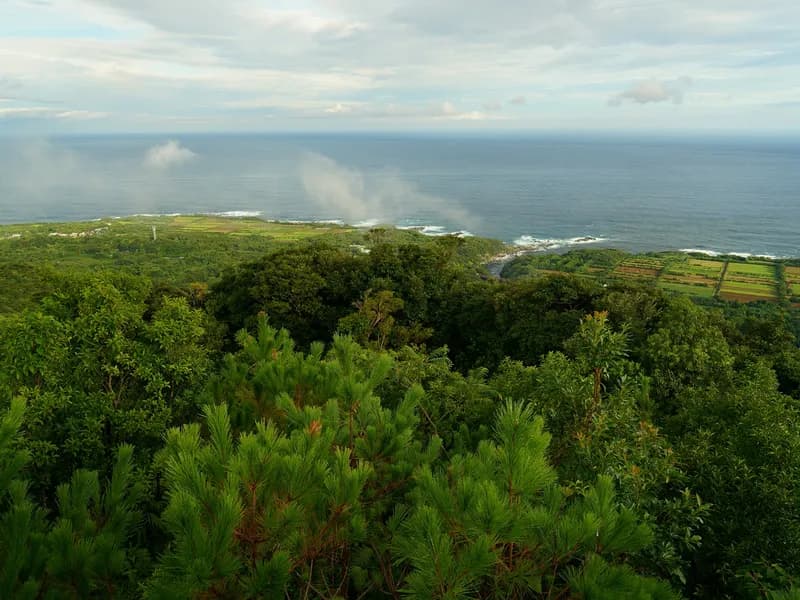
Sea Turtle Nesting at Inakahama Beach
Loggerhead sea turtles nest on this 1km white sand beach from May to July. Guided night observation tours (free but require registration at Yakushima Umigame-kan turtle museum, 300 JPY) let you watch turtles lay eggs — an unforgettable experience. Hatchlings emerge July-September. Flash photography strictly prohibited. The beach itself is stunning by day.
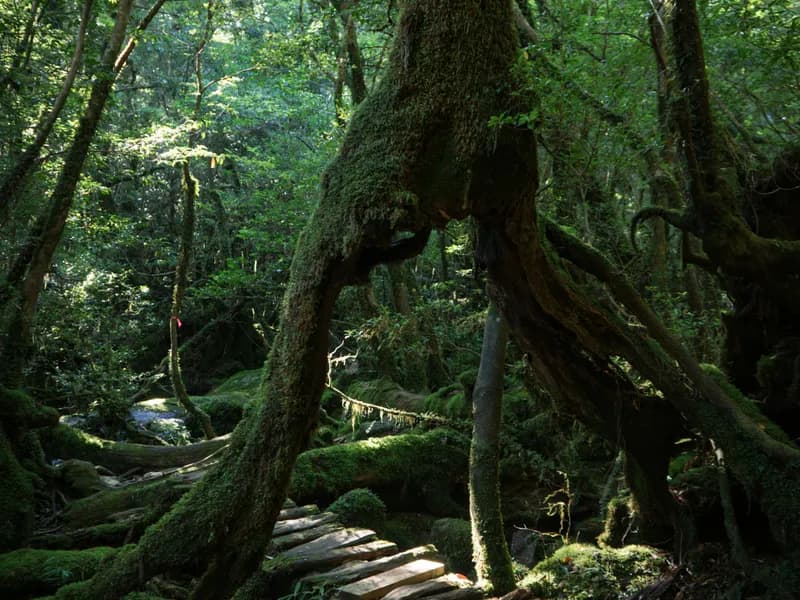
Yakusugi Land
A more accessible cedar forest park with boardwalk trails ranging from 30 minutes to 2.5 hours. Conservation fee: 500 JPY. Notable trees include the Buddhasugi and Futago-sugi (twin cedars). Great alternative for those who cannot do the grueling Jomon Sugi hike. Well-maintained wooden walkways are wheelchair-friendly on the shortest course. 40 minutes by car from Anbo.
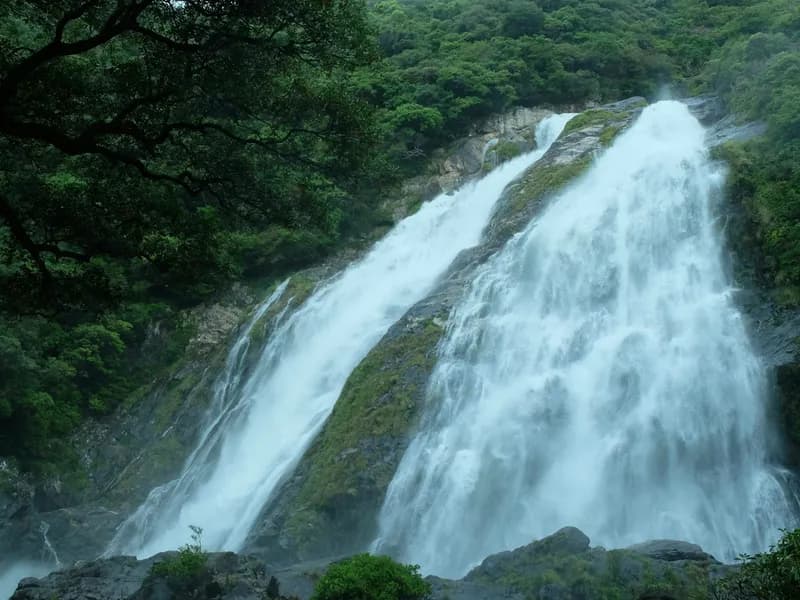
Oko-no-taki Waterfall
Yakushima's largest waterfall at 88m height, selected as one of Japan's top 100 waterfalls. A short 5-minute walk from the parking lot. Free viewing. The volume is most impressive after heavy rain (which is frequent). Located on the south coast road, easy to combine with a driving tour of the island. A smaller but beautiful cascade, Senpiro-no-taki, is nearby.
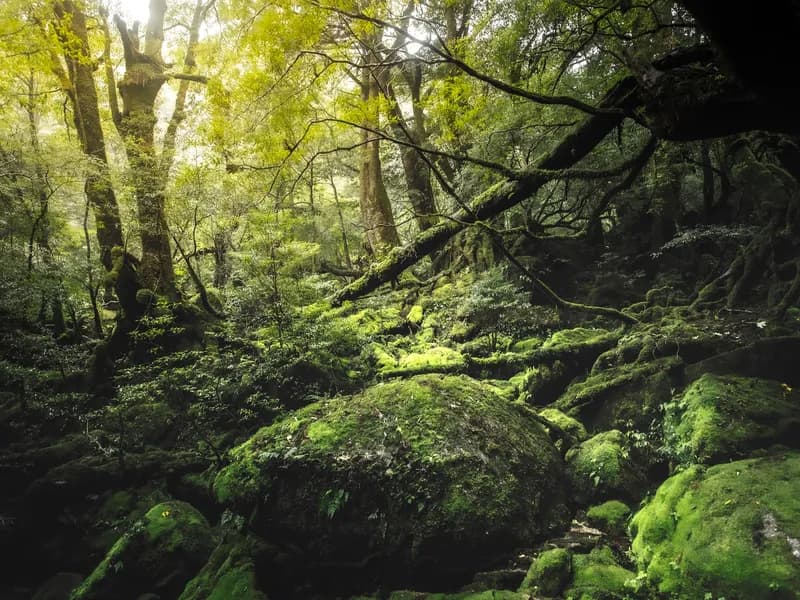
Wilson Stump
A massive hollow cedar stump (circumference 13.8m) named after British botanist Ernest Wilson who documented it in 1914. Step inside and look up — the opening forms a heart shape, making it one of Yakushima's most photographed spots. Located 3 hours into the Jomon Sugi trail. Free (part of the hiking trail). A magical rest stop on the long hike.
Planned Itinerary
7-Day Yakushima Itinerary
Arrival & Island Orientation
Arrive on Yakushima — a primeval island of ancient cedars and waterfalls. Rent a car and get oriented.
Arrive at Yakushima(varies)
Fly from Kagoshima (35 min) or Osaka Itami (1 hr 25 min). Or high-speed ferry Toppy/Rocket from Kagoshima (2 hrs, ~8,000 JPY). Airport is near Koseda on the east coast
Rent a car(30 minutes)
Almost essential — buses run infrequently. Compact car from 5,000-7,000 JPY/day. Book ahead as supply is limited. Island ring road is about 100km
Check-in at guesthouse in Anbo or Miyanoura(30 minutes)
Guesthouses from 6,000 JPY/night. Miyanoura is the main ferry port, Anbo has more restaurants
Afternoon drive to Oko-no-taki waterfall(1.5 hours)
Yakushima's largest waterfall at 88m. 5-minute walk from parking. Free. Most impressive after rain. Nearby Senpiro-no-taki is also beautiful
Stock up at A-Coop supermarket(30 minutes)
In Miyanoura or Anbo. Buy trail snacks, lunch supplies, and drinks for tomorrow's hiking. No convenience stores in the interior
Shiratani Unsuikyo Ravine — Princess Mononoke Forest
Explore the moss-covered primeval forest that inspired Studio Ghibli's Princess Mononoke.
Drive to Shiratani Unsuikyo(30 minutes)
30 min from Miyanoura Port. Conservation fee 500 JPY. Multiple trail options available
Shiratani Unsuikyo full course hike(5 hours)
The full course to Taiko-iwa rock offers panoramic views (3-hour moderate loop). The moss garden (Mononoke-no-mori) section is ethereally beautiful, especially after rain. Well-marked trails
Packed lunch on the trail(30 minutes)
Eat at one of the rest points. Carry all trash out. No shops on trail
Afternoon rest and hot spring(1.5 hours)
Soak sore muscles at Onoaida Onsen (200 JPY) or the free seaside Hirauchi Kaichu Onsen (accessible only at low tide — check times). The outdoor ocean-side baths are unforgettable
Jomon Sugi — Ancient Cedar Trek
The legendary 22km round-trip hike to Japan's oldest and largest cedar tree. Start early.
Early shuttle bus from Yakusugi Museum(35 minutes)
Shuttle mandatory March-November (1,400 JPY round trip). First bus 5AM — arrive early. Buy tickets in advance at convenience stores or online
Jomon Sugi hike (22km round trip)(9 hours)
8-10 hours total. First 8km on abandoned rail tracks (flat), then forest trail. Wilson Stump at 3-hour mark — look up inside for the heart-shaped opening. Jomon Sugi (est. 2,170-7,200 years old, 16.4m circumference) is the reward. Bring 2L water, lunch, rain gear, headlamp, warm layers
Evening rest(flexible)
You'll be exhausted. Eat at your guesthouse or a simple restaurant in Anbo. Early bed
Rest Day — Beaches & Waterfalls
Recovery day after the Jomon Sugi hike with easy coastal driving and beach time.
Sleep in and late breakfast(flexible)
Your legs will thank you. Stretch and hydrate
Drive the southern coastal road(2 hours)
The ring road circles the island. Stop at viewpoints for Pacific Ocean vistas and Senpiro-no-taki waterfall
Inakahama Beach(1 hour)
1km white sand beach where loggerhead sea turtles nest (May-July). Beautiful for walking any season. Turtle museum (Yakushima Umigame-kan, 300 JPY) nearby
Lunch at a seaside restaurant(45 minutes)
Try tobiuo (flying fish) — Yakushima's signature seafood. Also excellent saba (mackerel). Small restaurants dot the coastal road
Yakusugi Land — Accessible Cedar Forest
A more relaxed cedar forest experience with boardwalk trails for all fitness levels.
Drive to Yakusugi Land(40 minutes)
From Anbo. Conservation fee 500 JPY. Four trail options from 30 min to 2.5 hours
Yakusugi Land 80-minute course(1.5 hours)
Well-maintained wooden boardwalks past notable trees including Buddhasugi and Futago-sugi (twin cedars). Great for those who couldn't do the Jomon Sugi hike
Evening hot spring soak(1 hour)
Yakushima has several free or cheap onsen. Try Yudomari Onsen (free, seaside) if weather permits
Wildlife & River Adventures
Explore Yakushima's diverse wildlife and river scenery.
Early morning deer and monkey watching(1.5 hours)
Drive slowly in the mountain roads — yakushika deer and yakuzaru monkeys frequently cross. The Seibu Rindo forest road is the best spot. Don't feed them
River kayaking or SUP on Anbo River(2.5 hours)
Guided tours from 7,000 JPY. Paddle through clear mountain water surrounded by ancient forest. Multiple operators in Anbo
Lunch at a Yakushima cafe(45 minutes)
The island has several charming cafes. Try Yakushima gelato made with local citrus (tankan) at Cafe Smiley
Farewell tobiuo dinner(1 hour)
Flying fish tempura, fried flying fish, or flying fish tsukudani (preserved). Try at a local izakaya in Anbo or Miyanoura
Departure Day
Final morning on Yakushima.
Last coastal drive and photo stops(1 hour)
One final loop past waterfalls and ocean views
Return rental car(15 minutes)
Return to airport or port location
Depart Yakushima(varies)
Flight to Kagoshima (35 min) or ferry (2-4 hours). Connect to mainland Japan from Kagoshima
14-Day Yakushima Itinerary
Arrival & Orientation
Arrive on Yakushima and rent a car.
Arrive at Yakushima(varies)
Fly from Kagoshima (35 min) or ferry (2-4 hrs)
Rent a car(30 minutes)
5,000-7,000 JPY/day. Essential
Check-in(30 minutes)
From 6,000 JPY/night
Oko-no-taki waterfall(1.5 hours)
88m waterfall. Free. 5-min walk
Shiratani Unsuikyo — Mononoke Forest
Princess Mononoke's moss-covered forest.
Drive to Shiratani Unsuikyo(30 minutes)
500 JPY conservation fee
Full course hike to Taiko-iwa(5 hours)
Moss garden, ancient cedars. Moderate
Evening onsen(1.5 hours)
Onoaida 200 JPY or Hirauchi Kaichu free seaside onsen
Jomon Sugi Trek
22km hike to Japan's oldest cedar.
Shuttle bus 5AM(35 minutes)
1,400 JPY. Mandatory
Jomon Sugi hike(9 hours)
Wilson Stump heart photo. Jomon Sugi (2,170-7,200 years). Bring 2L water, food, rain gear, headlamp
Rest Day — Beaches & Coast
Recovery after Jomon Sugi.
Inakahama Beach(1 hour)
Turtle nesting beach. Museum 300 JPY
Yakusugi Land
Accessible cedar boardwalk trails.
Drive to Yakusugi Land(40 minutes)
500 JPY
80-minute boardwalk course(1.5 hours)
Buddhasugi, Futago-sugi
Wildlife & River
Deer, monkeys, and river kayaking.
Morning wildlife drive(1.5 hours)
Seibu Rindo road for deer and monkeys
Anbo River kayaking(2.5 hours)
From 7,000 JPY
Sea Turtle & Snorkeling
Ocean activities on the island's coast.
Snorkeling at Isso Beach(2 hours)
Clear waters on the north coast. Guided tours from 6,000 JPY or bring your own gear. Sea turtles sometimes spotted
Isso Beach walk(45 minutes)
Scenic granite-lined beach
Nagata Inakahama turtle walk (May-July)(1.5 hours)
Guided night observation tours — watch loggerheads lay eggs. Register at Umigame-kan. Free. Flash photography prohibited
Mountain Hike — Miyanoura-dake
Hike to Yakushima's highest peak at 1,936m — the tallest in Kyushu.
Early drive to Yodogawa Trailhead(1 hour)
Start by 6AM. The trailhead is at 1,360m elevation
Hike to Miyanoura-dake summit(6 hours)
Round trip 8km, 6 hours. Moderate-strenuous. The view from 1,936m summit spans the entire island and ocean. Pass through rare alpine flora. Bring layers — it's 10-15°C cooler than the coast
Rest Day — Onsen Hopping
Visit multiple hot springs around the island.
Hirauchi Kaichu Onsen (low tide only)(1 hour)
Free. Ocean-side natural hot springs accessible only at low tide. Check tidal schedule. Unforgettable
Onoaida Onsen(1 hour)
200 JPY. Local public bath. No-frills, authentic
Lunch in Kurio(45 minutes)
Small fishing village with local restaurants
Day Trip to Tanegashima
Ferry to the neighboring island — Japan's space center and surfing paradise.
Ferry to Tanegashima(1.5 hours)
Jet foil from Miyanoura (3,900 JPY). Check schedule
JAXA Tanegashima Space Center(2 hours)
Free. Japan's main rocket launch facility. Excellent museum. Space Center tours available (book online)
Beach and surf spots(1.5 hours)
Tanegashima has world-class surf breaks and beautiful beaches. The island is flatter and warmer than Yakushima
Guided Nature Walk
Join a local guide for a deeper understanding of Yakushima's ecology.
Guided ecology walk(4 hours)
Local naturalist guides from 10,000-15,000 JPY. They know hidden waterfalls, rare plants, and deer behavior. A completely different experience than hiking alone. Book through Yakushima tourism office
Stargazing(1 hour)
Yakushima has minimal light pollution. The mountain interior is excellent for stars. Best on clear nights
Rest Day — Village Life
Experience daily life in Yakushima's small communities.
Morning fish market in Miyanoura(1 hour)
Small but authentic morning market. See the day's catch including tobiuo and saba
Yakushima Fruit Garden(1 hour)
500 JPY. Subtropical fruit garden with tastings. Tankan citrus, guava, papaya. The island's latitude supports tropical plants
Night drive for wildlife(1 hour)
Slow drive on mountain roads at dusk — excellent for deer and monkey sightings
Western Coast Exploration
The less-visited western coast with waterfalls and pristine coastline.
Drive the western ring road(3 hours)
Stops at multiple waterfalls and viewpoints. The Seibu Rindo forest road section is particularly beautiful
Ohko-no-taki waterfall(30 minutes)
On the western coast. Less visited than Oko-no-taki. Beautiful cascade
Kurio River walk(1.5 hours)
Follow the river upstream through old-growth forest. Quiet and uncrowded
Departure Day
Final morning on Yakushima.
Depart Yakushima(varies)
Flight or ferry to Kagoshima
21-Day Yakushima Itinerary
Arrival & Orientation
Arrive and rent a car.
Rent car(30 minutes)
5,000-7,000 JPY/day
Oko-no-taki waterfall(1.5 hours)
88m. Free
Shiratani Unsuikyo
Princess Mononoke forest.
Full hike to Taiko-iwa(5 hours)
500 JPY. Moss garden
Jomon Sugi Trek
22km hike to oldest cedar.
5AM shuttle(35 minutes)
1,400 JPY
Jomon Sugi hike(9 hours)
Wilson Stump, Jomon Sugi
Rest Day — Coast
Recovery and beaches.
Yakusugi Land
Boardwalk cedar trails.
Yakusugi Land(2 hours)
500 JPY
Wildlife & River
Kayaking and animal watching.
Anbo River kayaking(2.5 hours)
From 7,000 JPY
Snorkeling & Sea Turtles
Ocean activities.
Isso Beach snorkeling(2 hours)
From 6,000 JPY guided
Miyanoura-dake Summit
Kyushu's highest peak at 1,936m.
Summit hike(6 hours)
8km round trip. Alpine flora
Rest Day — Onsen Hopping
Hot springs around the island.
Hirauchi Kaichu Onsen(1 hour)
Free. Low tide only
Onoaida Onsen(1 hour)
200 JPY
Tanegashima Day Trip
Japan's space center island.
Ferry to Tanegashima(1.5 hours)
3,900 JPY
JAXA Space Center(2 hours)
Free
Guided Nature Walk
Ecology walk with local naturalist.
Guided walk(4 hours)
10,000-15,000 JPY
Rest Day — Village Life
Small community experience.
Fruit Garden(1 hour)
500 JPY
Western Coast
Less-visited western side.
Nagata-dake Hike
Hike to the second-highest peak with ocean views.
Nagata-dake hike(5 hours)
Round trip hike through diverse forest zones. Views of Tanegashima and Kagoshima on clear days
Rest Day — Reading & Relaxation
True rest day.
Canyoning Adventure
Descend waterfalls and swim through river canyons.
Canyoning tour(4 hours)
Guided canyon descent with rope work and waterfall jumping. From 10,000 JPY. Multiple operators. No experience needed
Scuba Diving or Snorkeling
Explore Yakushima's underwater world.
Scuba diving or deep snorkel tour(3 hours)
From 12,000 JPY for 2 dives. Sea turtles, coral reefs, and tropical fish. Beginners welcome with intro dives
Rest Day — Craft & Culture
Exploring Yakushima's cultural side.
Yakusugi woodcraft workshop(2 hours)
Carve or polish a yakusugi cedar piece. Workshops from 3,000 JPY
Yakushima Environmental Culture Village Center(1 hour)
530 JPY. IMAX-style giant screen film about Yakushima's nature
Shiratani Unsuikyo Return
Return to the Mononoke forest for a different trail or conditions.
Shiratani short course(2 hours)
500 JPY. Try the 1-hour easy loop if you did the long course before, or the full course if you did the short one
Farewell Day
Last full day on Yakushima.
Departure Day
Final morning.
Travel Tips
Visa & Entry
Japan Visa-Free Entry
Most Western passport holders receive 90-day visa-free entry. Complete Visit Japan Web registration before arrival. Yakushima is reached by air from Kagoshima (35 min), Osaka Itami (1 hr 25 min), or by high-speed ferry from Kagoshima (2-4 hours).
transport
Rent a Car — Public Transit is Limited
Public buses exist but run infrequently (1-3 times per day on some routes). A rental car is almost essential — book in advance as supply is limited. Compact car from 5,000-7,000 JPY/day. The island ring road is about 100km. Some trailhead roads are narrow and steep. Drive slowly — yakushika deer and yakuzaru monkeys cross roads.
Jomon Sugi Shuttle Bus is Mandatory
March to November, private cars cannot access the Arakawa Trailhead for the Jomon Sugi hike. A shuttle bus from Yakusugi Museum (1,400 JPY round trip) is required. Buses depart from 5AM — arrive early. Purchase tickets in advance at convenience stores or online. The bus ride takes 35 minutes. Check timetables at yakushima-tozan.com.
Local Customs
Rain Gear is Non-Negotiable
Yakushima receives some of the heaviest rainfall in Japan — up to 10,000mm annually in the mountains. Quality rain jacket, waterproof pants, and waterproof boots are essential for any hike. Rental shops near ports offer full hiking gear sets (2,000-3,000 JPY/day). Rain makes the moss-covered forests even more magical, so don't let it deter you.
Budget
Yakushima is More Expensive Than Mainland Japan
Limited supply drives up prices: guesthouses from 6,000 JPY/night, restaurants limited and pricier than cities. Guided hikes cost 10,000-15,000 JPY/person (recommended for Jomon Sugi). Pack food from the A-Coop supermarket in Miyanoura or Anbo for trail lunches. There are no convenience stores in the interior — stock up before heading to trailheads.
Safety
Hiking Preparedness is Critical
The Jomon Sugi hike is 22km and takes 8-10 hours — underestimating it is the most common tourist mistake. Start by 5-6AM, carry headlamp, 2L water, lunch, rain gear, and warm layers (mountain temps can be 10°C lower). Trail is well-marked but conditions change fast. Register your hiking plan at the trailhead. Mountain rescue is slow due to remoteness.
Related Articles
Stories4 Days in Yakushima: Hiking Through the Forest That Inspired Princess Mononoke
Day 1: a coastal onsen. Day 2: the Mononoke forest. Day 3: 22km to see a 3,000-year-old tree. Day 4: sea turtles at dawn. The unfiltered journal.
SeasonalYakushima in Rainy Season: Why June and July Are the Best Months to Visit Japan's Ancient Forest
Yakushima gets 10 meters of rain a year. The locals say it rains 35 days a month. And the forest looks its absolute best when it's soaking wet.
StoriesA Yakushima Forester on the Trees That Have Seen Everything
Haruki has worked in Yakushima's forests for 18 years. He guides visitors to trees older than civilization and has opinions about the tourists who treat them like selfie backdrops.