
Zermatt

Photo: Fabrice Villard / Unsplash
Key Facts
Best Time to Visit
December to April for skiing; July to September for hiking; year-round glacier skiing is possible
Language
German (Swiss German dialect); English widely spoken in the resort
Currency
Swiss Franc (CHF); euros sometimes accepted at poor rates
Time Zone
CET (UTC+1), CEST (UTC+2) in summer
Airport
Geneva (GVA) ~3.5 hr and Zurich (ZRH) ~3.5 hr by train; the final leg is the cog train from Täsch
Population
Approx. 5,800 (village)
Climate
High alpine; cold snowy winters (-8 to 2°C), cool summers (10-22°C), thin air at altitude
Safety Rating
Generally Safe (Level 1) — extremely low crime; real risks are altitude, weather, and alpine terrain
Car-Free Village
No combustion cars allowed; arrive by train and use electric taxis — park at Täsch and ride 12 min in
Top Highlights

Gornergrat Railway
Europe's highest open-air cog railway climbs from the village to 3,089m in about 33 minutes, opening up a grandstand of the Matterhorn and 29 surrounding 4,000m peaks plus the Gorner Glacier. Return fares run around CHF 132 (Swiss/half-fare cards discount it). Allow a half day.
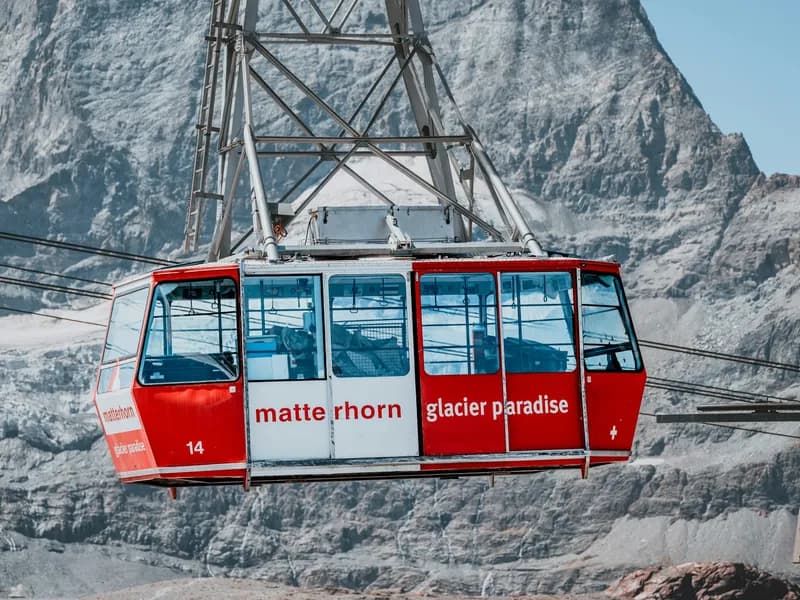
Matterhorn Glacier Paradise
The highest cable-car station in Europe at 3,883m, with a glacier palace of ice sculptures, a viewing platform over the Alps, and year-round glacier skiing. Return tickets are around CHF 120; dress for sub-zero cold and take it slow at altitude. Allow a half day.

Sunnegga & the Five Lakes Walk
An underground funicular whisks you up to Sunnegga in minutes, the start of the famous 5-Seenweg (Five Lakes Walk) — a 9.3 km, ~2.5-hour summer trail past lakes where the Matterhorn reflects in Stellisee. Funicular around CHF 26. Best July to September. Allow a half day.

Matterhorn Viewpoint from the Village
You don't need a lift for the classic shot: walk to the old Kirchbrücke bridge over the Vispa river at dawn to catch the Matterhorn glowing gold and reflected in the water. Free and open all hours; arrive before sunrise for still air and empty streets. Allow 30-60 minutes.
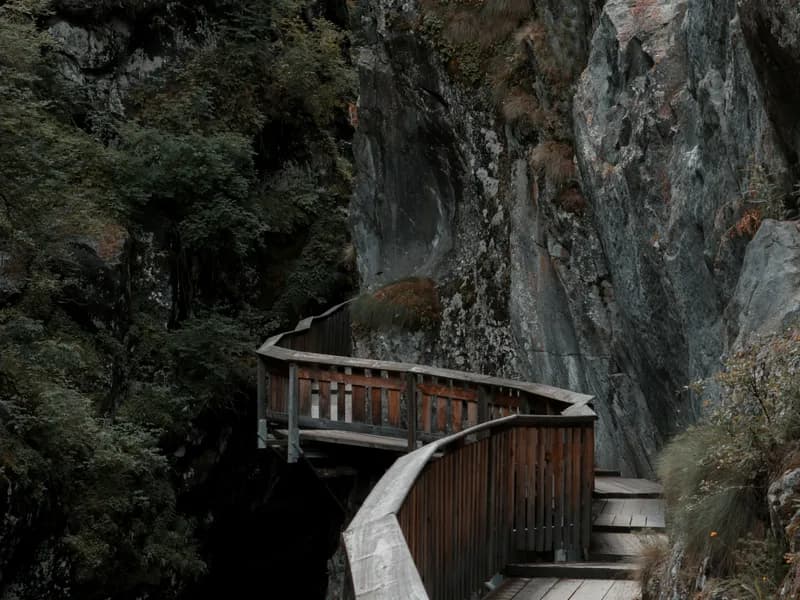
Gorner Gorge
A dramatic ravine on the village edge where wooden walkways cling to polished green serpentine rock above the rushing Gornervispa. Entry is around CHF 8; open roughly mid-June to October. A cool, shady alternative on a hot day, reached by a short walk from town. Allow 1 hour.
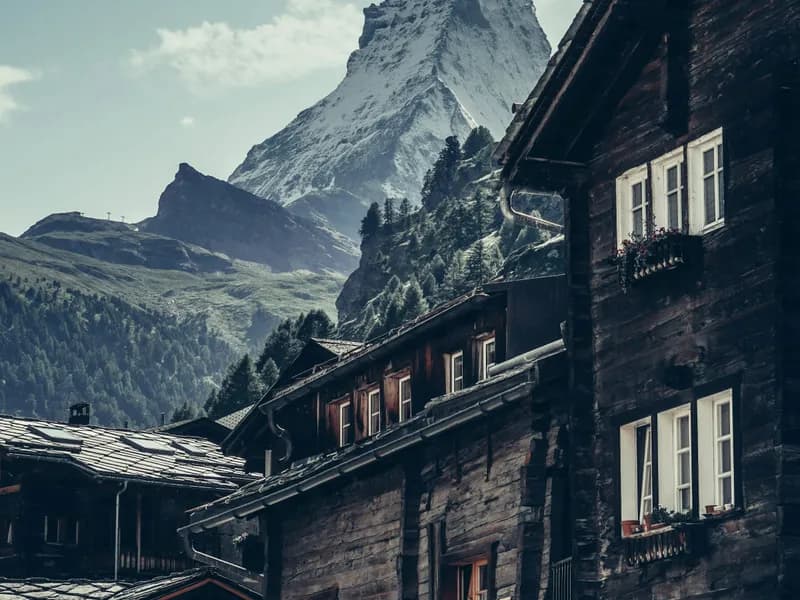
Hinterdorf — Old Zermatt
The village's historic quarter preserves centuries-old timber stadel barns raised on stone discs to keep out mice, a glimpse of mountain life before tourism. Free to wander the narrow lanes. A quiet, atmospheric contrast to the boutique-lined Bahnhofstrasse. Allow 30-45 minutes.
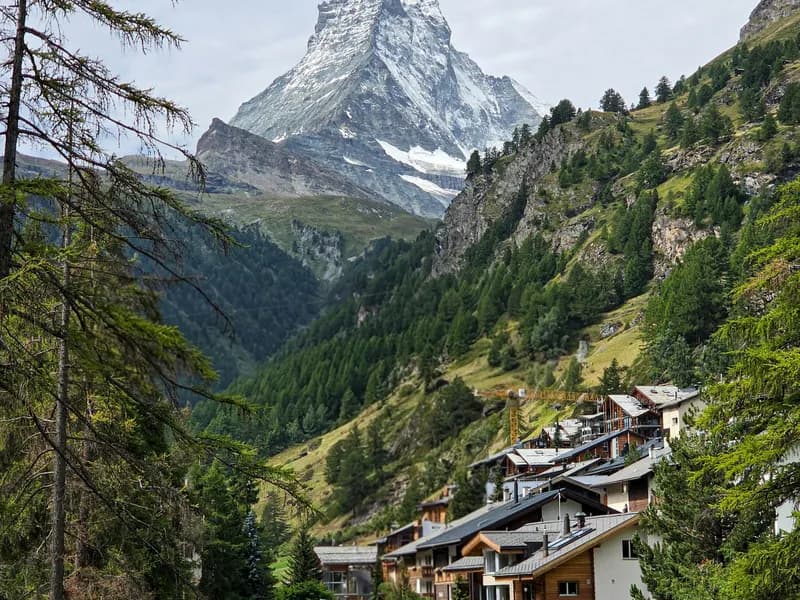
Matterhorn Museum (Zermatlantis)
A partly subterranean museum recreating an old village and telling the gripping story of the Matterhorn's first 1865 ascent and the fatal descent, with the actual broken rope on display. Entry around CHF 12. Open most afternoons year-round. Allow 1-1.5 hours.
Planned Itinerary
7-Day Zermatt Itinerary
Arrival in Car-Free Zermatt
Travel by Switzerland's rail network into the foot of the Matterhorn. From Geneva (GVA) or Zurich (ZRH) it's roughly 3.5 hours by train, changing at Visp onto the red Matterhorn Gotthard Bahn for the scenic final climb. Drivers must leave combustion cars at the Matterhorn Terminal in Täsch (~CHF 16/day) and ride the 12-minute shuttle train in. Settle in, then orient yourself on foot — the village is small and walkable.
Train to Zermatt via Visp(3.5 hours)
Geneva or Zurich to Visp on the main line, then change to the Matterhorn Gotthard Bahn (~1h 10m, ~CHF 38 one-way from Visp). If you'll travel widely, a Swiss Travel Pass covers this and discounts mountain lifts.
Check in and electric-taxi transfer(30 minutes)
No private cars in the village — an electric taxi or hotel e-shuttle from the station handles luggage. Hotel areas: central Bahnhofstrasse for convenience, or quieter Winkelmatten for Matterhorn views.
Bahnhofstrasse and Hinterdorf orientation walk(1.5 hours)
Stroll the boutique-lined main street, then duck into Hinterdorf, the old quarter of centuries-old timber stadel barns raised on flat stone discs to keep mice out. Free to wander.
Sunset on the Kirchbrücke bridge(45 minutes)
Walk to the old Kirchbrücke over the Vispa for the classic Matterhorn view glowing gold at day's end. Free and open all hours.
Welcome fondue dinner(1.5 hours)
Cheese fondue at Whymper-Stube near the church (~CHF 30-40 pp), named for Edward Whymper who first climbed the Matterhorn in 1865. Book ahead in season.
Gornergrat Railway and the Riffelsee Reflection
Use your first clear morning for the showpiece cog railway, since cloud often swallows the Matterhorn by midday. The Gornergrat Bahn is Europe's highest open-air cog railway, climbing to 3,089m and a grandstand of 29 surrounding 4,000m peaks plus the Gorner Glacier. Ride up early, then walk down past the famous reflecting lake.
First Gornergrat Bahn at 8:00(33 minutes)
Cog railway from the Gornergratbahn station opposite the main rail station, ~CHF 132 return (Swiss/half-fare cards discount it). Sit on the right going up for Matterhorn views.
Gornergrat summit terrace and 3100 Kulmhotel(1.5 hours)
Panorama platform at 3,089m over the Gorner Glacier and the Monte Rosa massif. Coffee at the 3100 Kulmhotel, Switzerland's highest hotel.
Hike down to Rotenboden for the Riffelsee(45 minutes)
Short, easy descent to the Riffelsee tarn, where the Matterhorn mirrors in still water — the iconic reflection shot. Re-board the train at Rotenboden station.
Lunch at Riffelalp or back in the village(1 hour)
Stop at Riffelalp (2,222m) for a terrace lunch, or descend to the village. Mountain restaurant mains run CHF 30-45.
Matterhorn Museum (Zermatlantis)(1.5 hours)
Partly subterranean museum recreating old Zermatt and telling the gripping 1865 first-ascent story, with the actual broken rope from the fatal descent on display. Entry ~CHF 12.
Sunnegga, the Five Lakes Walk and Stellisee
A flagship summer hiking day in the Sunnegga-Rothorn sector. The underground funicular whisks you up in minutes to the start of the 5-Seenweg (Five Lakes Walk), a roughly 9.3 km, 2.5-hour trail past five lakes — including Stellisee, where the Matterhorn reflects perfectly on a still morning. Lunch at one of Zermatt's best mountain restaurants.
Sunnegga funicular up(5 minutes)
Underground funicular from the Sunnegga station near the river, ~CHF 26 return. Continue by gondola toward Blauherd to begin the lakes loop higher up.
Five Lakes Walk (5-Seenweg)(2.5 hours)
9.3 km past Stellisee, Grindjisee, Grünsee, Moosjisee and Leisee. Reach Stellisee early for the still-water Matterhorn reflection. Best July to September.
Lunch at Chez Vrony(1.5 hours)
Legendary alpine restaurant above Sunnegga at Findeln (~2,100m) with a sun terrace facing the Matterhorn. Famous for its Vrony burger and rösti; mains CHF 30-50. Reserve ahead.
Walk down through Findeln hamlet(1 hour)
Easy descent through the larch-shaded Findeln hamlet back toward Sunnegga or the village, passing old chapels and farm chalets.
Raclette dinner in the village(1.5 hours)
Try traditional Valais raclette at Restaurant du Pont, one of Zermatt's oldest eateries. Pair with a local Fendant white wine.
Matterhorn Glacier Paradise — Europe's Highest Cable Car
Save another clear morning for the top of Europe. The cable car climbs to Matterhorn Glacier Paradise at 3,883m, the highest cable-car station on the continent, with a glacier palace of ice sculptures, a viewing platform over the Alps, and year-round glacier skiing. Thin air is real here — ascend slowly, hydrate, and bring warm layers even in summer.
Cable car to Matterhorn Glacier Paradise(45 minutes)
Stages from Zermatt via Furi and Trockener Steg to 3,883m, ~CHF 120 return. Ride the panoramic Matterhorn Glacier Ride (the 3S/Alpine Crossing) for cabins with glass floors.
Glacier Palace and viewing platform(1.5 hours)
Walk through ice tunnels and sculptures, then the summit platform over the Breithorn and toward Italy. Take it slow at altitude; avoid alcohol up top.
Lunch at Trockener Steg or Furi(1 hour)
Descend a stage to eat lower where the air is thicker — try the restaurant at Furi (~1,860m) for a relaxed mountain lunch.
Gorner Gorge on the way down(1 hour)
Dramatic ravine where wooden walkways cling to polished green serpentine rock above the Gornervispa. Entry ~CHF 8, open mid-June to October — a cool, shady contrast after the glacier.
Spa and easy evening(2 hours)
Recover from altitude with a soak — many Zermatt hotels have pools and saunas. A light dinner of air-dried Valais Trockenfleisch and bread suits a quieter night.
Schwarzsee, the Hörnli Trail and Matterhorn Lore
Get close to the base of the Matterhorn itself. A gondola climbs to Schwarzsee (2,583m), home to a tiny lakeside chapel and the start of the trail toward the Hörnli Hut — the springboard for climbers attempting the peak. You don't need to summit anything; the approach gives a visceral sense of the mountain's scale.
Gondola to Schwarzsee(30 minutes)
From Zermatt via Furi to Schwarzsee at 2,583m (covered by the Peak Pass; combine with a day ticket). Sit facing the Matterhorn's east face on the way up.
Schwarzsee chapel and lake(45 minutes)
The little Maria zum Schnee chapel sits beside the dark lake directly beneath the Matterhorn — a famously photogenic, peaceful spot.
Walk toward the Hörnli Hut trail(2 hours)
Follow the well-marked path up the moraine toward the Hörnlihütte (3,260m), starting point of the standard climbing route. Turn back at a comfortable point — the views of the north face are immense.
Descent and lunch at Furi(1.5 hours)
Hike or ride down to Furi and lunch at the rustic Restaurant Aroleid or Furri, surrounded by larch forest. Mains CHF 30-45.
Apéro on a sun terrace(1 hour)
Back in the village, an early-evening apéro at a Bahnhofstrasse terrace with a Walliser platter, watching alpenglow build on the peak.
Rest, Weather Buffer and Village Culture
A deliberately lighter day — your buffer if clouds, rain, or tired legs rearranged the week, and a chance to enjoy Zermatt at ground level. Keep it flexible: if the morning is unexpectedly clear and you missed a summit, swap this for the lift you skipped. Otherwise, slow down and soak up village life.
Lazy morning and Hinterdorf in detail(1.5 hours)
Return to the old quarter's timber barns and the mountaineers' cemetery beside the church, where many who died on the Matterhorn are buried — a quietly moving spot.
Edelweissweg or riverside stroll(2 hours)
If energy allows, the gentle Edelweissweg path leads up to the Edelweiss restaurant above the village for coffee and a valley view; otherwise an easy walk along the Vispa.
Lunch and local shopping(1.5 hours)
Browse Bahnhofstrasse for Swiss chocolate, cheese, and a souvenir; lunch at a bakery-café. Fill your bottle at the public fountains — water is free and excellent.
Spa afternoon(2 hours)
Sauna, steam, and pool time — a perfect bad-weather option. Many hotels open their wellness areas to non-guests for a fee (~CHF 35-60).
Fine fondue or gourmet dinner(2 hours)
Splurge night — a cheese-and-truffle fondue or a mountain-modern tasting menu. Zermatt mains run CHF 35-50; book ahead.
Dawn Matterhorn and Departure
A final sunrise with the mountain, then the journey out. Because Zermatt is car-free, allow time for the connection at Visp (or the Täsch shuttle if you parked there) and the onward train to Geneva or Zurich airport — roughly 3.5 hours total. Build in a buffer; missing the cog train can cascade through your connections.
Sunrise at the Kirchbrücke(45 minutes)
One last dawn shot of the Matterhorn reflected in the Vispa before the streets fill. Free and open all hours.
Breakfast and pack-out(1 hour)
Final breakfast; arrange an electric taxi or hotel e-shuttle to carry luggage to the station.
Matterhorn Gotthard Bahn to Visp(1 hour 10 minutes)
Scenic descent to Visp (or 12-minute shuttle to Täsch if you drove). Validate any rail pass or ticket before boarding.
Onward train to GVA or ZRH airport(2.5 hours)
Swiss trains run frequently and on time; both airports are about 3.5 hours total from Zermatt. Aim to arrive 2-3 hours before your flight.
14-Day Zermatt Itinerary
Arrival in Car-Free Zermatt
Travel by Switzerland's rail network into the foot of the Matterhorn. From Geneva (GVA) or Zurich (ZRH) it's roughly 3.5 hours by train, changing at Visp onto the red Matterhorn Gotthard Bahn for the scenic final climb. Drivers must leave combustion cars at the Matterhorn Terminal in Täsch (~CHF 16/day) and ride the 12-minute shuttle train in. Settle in slowly — over two weeks there's no need to rush the first evening.
Train to Zermatt via Visp(3.5 hours)
Geneva or Zurich to Visp on the main line, then the Matterhorn Gotthard Bahn (~1h 10m, ~CHF 38 one-way). A Swiss Travel Pass pays off over a long stay — it covers trains and discounts mountain lifts.
Check in and electric-taxi transfer(30 minutes)
No private cars in the village — an electric taxi or hotel e-shuttle handles luggage from the station. Consider quieter Winkelmatten for Matterhorn views on a longer stay.
Bahnhofstrasse and Hinterdorf orientation walk(1.5 hours)
Stroll the main street, then explore Hinterdorf, the old quarter of timber stadel barns on stone discs that kept mice out of the grain. Free.
Sunset on the Kirchbrücke bridge(45 minutes)
The classic Matterhorn-over-the-Vispa view, glowing at dusk. Free and open all hours.
Welcome fondue dinner(1.5 hours)
Cheese fondue at Whymper-Stube by the church (~CHF 30-40 pp). Book ahead in season.
Gornergrat Railway and the Riffelsee Reflection
Use an early clear morning for the showpiece cog railway before midday cloud builds. The Gornergrat Bahn climbs to 3,089m and a grandstand of 29 surrounding 4,000m peaks plus the Gorner Glacier. Ride up early, then walk down to the famous reflecting lake.
First Gornergrat Bahn at 8:00(33 minutes)
Cog railway opposite the main station, ~CHF 132 return (rail-pass holders discounted). Sit on the right going up.
Gornergrat summit terrace and 3100 Kulmhotel(1.5 hours)
Panorama over the Gorner Glacier and Monte Rosa; coffee at Switzerland's highest hotel.
Hike down to Rotenboden for the Riffelsee(45 minutes)
Easy descent to the Riffelsee tarn for the mirrored Matterhorn shot; re-board at Rotenboden.
Lunch at Riffelalp(1 hour)
Terrace lunch at 2,222m, mains CHF 30-45, before the train down.
Matterhorn Museum (Zermatlantis)(1.5 hours)
The 1865 first-ascent story with the actual broken rope on display. Entry ~CHF 12.
Sunnegga, the Five Lakes Walk and Stellisee
A flagship summer hiking day in the Sunnegga-Rothorn sector. The underground funicular reaches the start of the 5-Seenweg, a roughly 9.3 km, 2.5-hour trail past five lakes — Stellisee mirrors the Matterhorn on a still morning. Lunch at one of Zermatt's most celebrated mountain restaurants.
Sunnegga funicular and gondola to Blauherd(20 minutes)
Funicular (~CHF 26 return) then gondola to Blauherd to begin the loop higher. Covered/discounted by the Peak Pass.
Five Lakes Walk (5-Seenweg)(2.5 hours)
9.3 km past Stellisee, Grindjisee, Grünsee, Moosjisee and Leisee. Reach Stellisee early for the reflection. Best July-September.
Lunch at Chez Vrony(1.5 hours)
Iconic alpine restaurant at Findeln (~2,100m) with a Matterhorn-facing terrace; the Vrony burger is legendary. Mains CHF 30-50; reserve.
Walk down through Findeln hamlet(1 hour)
Larch-shaded descent past old chapels back toward Sunnegga or the village.
Matterhorn Glacier Paradise — Europe's Highest Cable Car
Save a clear morning for the top of Europe at 3,883m, the highest cable-car station on the continent, with a glacier palace, an Alpine viewing platform, and year-round glacier skiing. Thin air is real — ascend slowly, hydrate, skip alcohol up top, and pack warm layers even in July.
Matterhorn Glacier Ride to 3,883m(45 minutes)
Via Furi and Trockener Steg, ~CHF 120 return; the 3S/Alpine Crossing cabins include glass-floor crystal cabins.
Glacier Palace and summit platform(1.5 hours)
Ice tunnels and sculptures, then the platform over the Breithorn and toward Italy. Move slowly at altitude.
Optional summer glacier skiing(2 hours)
Rent gear at Trockener Steg for a few runs on the Theodul Glacier — a rare summer-ski experience. Lift pass extra.
Lunch at Furi and easy descent(1.5 hours)
Eat lower where the air is thicker — Restaurant Furri among the larches, mains CHF 30-45.
Spa evening(2 hours)
Sauna and pool to shake off altitude; a light Trockenfleisch-and-bread dinner suits the night.
Schwarzsee, the Hörnli Trail and Matterhorn Lore
Get close to the base of the Matterhorn. A gondola climbs to Schwarzsee (2,583m) with its tiny lakeside chapel and the trail toward the Hörnli Hut, springboard for climbers. You needn't summit — the approach conveys the mountain's raw scale.
Gondola to Schwarzsee(30 minutes)
From Zermatt via Furi to 2,583m; covered by the Peak Pass. Face the Matterhorn on the way up.
Schwarzsee chapel and lake(45 minutes)
The Maria zum Schnee chapel beside the dark lake directly under the peak — a serene photo spot.
Hike toward the Hörnli Hut(2.5 hours)
Up the moraine path toward the Hörnlihütte (3,260m), turning back at a comfortable point below the climbers' route.
Lunch at Furi or Stafelalp(1.5 hours)
Rustic mountain lunch on the descent; mains CHF 30-45.
Village Culture, Gorge and a Slow Day
A lighter, ground-level day to balance the high-altitude push of the first week and act as a weather buffer. Explore the gorge, the museum quarter, and the mountaineers' history at a relaxed pace — and if the morning is unexpectedly clear and you missed a summit, swap in that lift instead.
Gorner Gorge walkways(1 hour)
Wooden walkways above the Gornervispa through polished green serpentine rock. Entry ~CHF 8, open mid-June to October — cool and shady.
Mountaineers' cemetery and church(45 minutes)
Beside the parish church lie many who died on the Matterhorn; a quietly powerful counterpoint to the postcards.
Hinterdorf and lunch(1.5 hours)
Wander the timber-barn lanes, then a relaxed village lunch. Refill bottles at the public fountains.
Spa afternoon(2 hours)
Sauna, steam, and pool — an easy reset (non-guest wellness entry ~CHF 35-60).
Raclette dinner(1.5 hours)
Traditional Valais raclette at Restaurant du Pont, one of the village's oldest. Pair with a Fendant white.
Gornergrat-to-Riffelalp Day Hike
A signature high-trail day in the Gornergrat sector that you skip on a short trip. Ride the cog railway to the top, then hike down the panorama path through Rotenboden and Riffelberg to Riffelalp, with the Matterhorn ahead and the Gorner Glacier tumbling below the whole way.
Gornergrat Bahn to the summit(33 minutes)
Early train to 3,089m for clear morning light, ~CHF 132 return or pass-discounted.
Hike Gornergrat to Riffelberg(1.5 hours)
Descend the well-graded panorama trail past the Riffelsee and Rotenboden to Riffelberg (2,582m), Matterhorn dead ahead.
Lunch at Riffelberg(1 hour)
Sun terrace at the historic Riffelberg hotel-restaurant; mains CHF 30-45.
Continue to Riffelalp(1 hour)
Forest-edge path down to Riffelalp (2,222m); ride the little Riffelalp tram to the station, then the cog train down.
Quiet village evening(1.5 hours)
An apéro and simple supper to rest the legs after a long descent.
Day Trip to Saas-Fee, the Pearl of the Alps
Switch valleys for a day. Saas-Fee, another car-free glacier village ringed by 4,000m peaks, sits a short train-plus-bus ride away via Visp. Its Allalin revolving restaurant and the world's highest underground funicular contrast nicely with Zermatt — and give your legs a different backdrop.
Train and PostBus to Saas-Fee(1.5 hours each way)
Matterhorn Gotthard Bahn to Visp, then the yellow PostBus up to Saas-Fee (~CHF 20 one-way, covered by Swiss Travel Pass). Like Zermatt, it's car-free.
Metro Alpin to Allalin(1.5 hours)
The world's highest underground funicular climbs to 3,500m and the Allalin revolving restaurant and Mittelallalin ice pavilion. Lift ~CHF 70.
Lunch at the revolving restaurant(1 hour)
Slow-turning 360° panorama over the Fee Glacier while you eat; mains CHF 30-45.
Village stroll and back to Zermatt(2 hours)
Wander Saas-Fee's chalet lanes and glacier viewpoint before the bus-and-train return. Aim for a mid-afternoon departure.
Spa, Rest and Photography Day
A genuine rest day midway through the trip — and a flexible weather buffer. Sleep in, indulge the wellness areas Zermatt's hotels are known for, and pick up the photography threads: the best light comes at the edges of the day, not midday. Keep plans loose so a sudden clear window can be repurposed for a missed lift.
Slow morning and bakery breakfast(1.5 hours)
Coffee and a fresh Nussgipfel; watch the live mountain webcams to read the day's weather.
Half-day spa session(3 hours)
Pool, sauna, steam, and a massage if booked. A perfect bad-weather refuge (entry ~CHF 35-60, treatments extra).
Golden-hour photo walk(1.5 hours)
Scout the Kirchbrücke, the Hinterdorf barns, and the riverside for late-light Matterhorn compositions.
Wine-and-cheese apéro(1.5 hours)
A Walliser platter of air-dried meat and alpine cheese with a glass of Heida or Fendant on a sun terrace.
Edelweissweg, Trift Valley and a High Hut Lunch
A quieter, less-touristed hiking day reached on foot straight from the village — no lift needed. The Edelweissweg climbs to the Edelweiss restaurant, and the trail continues into the wild Trift valley toward the Trift hut, a classic mountaineers' approach with waterfalls and steep meadows.
Climb the Edelweissweg(1.5 hours)
Steady ascent from the village to the Edelweiss restaurant perched above the rooftops; coffee with a valley view.
Hike up the Trift gorge(2 hours)
Continue into the dramatic Trift valley, gaining height past cascades toward the Triftbach. Turn around at a comfortable point.
Lunch at Hotel du Trift(1 hour)
The remote, family-run Berggasthaus du Trift (~2,337m) serves homemade soup, rösti, and cake — a true mountain hut. Cash useful here.
Descend to Zermatt(1.5 hours)
Knee-friendly descent back into the village; the loop returns you near the Hinterdorf.
Glacier Express Leg to Brig and the Aletsch Region
Sample the world's slowest express train. Ride a leg of the Glacier Express line (or a regional service on the same route) down toward Brig, gateway to the Upper Valais and the UNESCO Aletsch Glacier region. It's a scenic, low-effort day that shows the valley beyond the resort.
Train down to Brig(1.5 hours)
Matterhorn Gotthard Bahn via Visp to Brig; the Glacier Express panorama coaches require a seat reservation (~CHF 49) but regional trains run the same beautiful route.
Explore Brig and Stockalper Palace(2 hours)
The grand 17th-century baroque Stockalper Palace, with its onion-domed towers, dominates this old trading town. Guided tours ~CHF 12.
Lunch in Brig's old town(1 hour)
Café or trattoria on the Sebastiansplatz — noticeably cheaper than Zermatt.
Optional Aletsch glimpse from Riederalp(2 hours)
If time allows, a cable car from nearby Mörel to Riederalp opens the view onto the 20 km Aletsch Glacier, Europe's largest. Otherwise return to Zermatt at leisure.
Rothorn Summit and the Marmot Trail
Top out the Sunnegga-Rothorn sector you only sampled earlier. The cable car continues from Blauherd to the Rothorn at 3,103m for a panorama that arguably rivals the Gornergrat, then a relaxed downhill trail famous for marmots and wildflowers in summer.
Funicular and cable car to Rothorn(30 minutes)
Sunnegga funicular to Blauherd, then cable car to the Rothorn at 3,103m. Peak Pass or day ticket; book a clear morning.
Rothorn panorama and platform(1 hour)
Sweeping view of the Matterhorn, Monte Rosa, and the Mischabel range from the highest point of this sector.
Marmot-watching descent to Blauherd(1.5 hours)
The well-known marmot trail down to Blauherd; mornings and late afternoons are best for sightings.
Lunch at Fluhalp(1.5 hours)
Cozy mountain restaurant above Stellisee with a big sun terrace; the Matterhorn fills the view. Mains CHF 30-45.
Descend via Stellisee for a second reflection(1 hour)
Pass Stellisee again on the way down — late-afternoon stillness can give a fresh reflection. Ride the funicular from Sunnegga.
Flexible Buffer, Markets and Farewell Feast
A final flexible day held in reserve for weather, a re-do of any missed summit, or simply a slower pace before departure. If the skies cooperated all fortnight, spend it indulging in Zermatt at its most relaxed; if a lift was clouded out, this is your second chance.
Open morning — re-do or relax(3 hours)
Check the webcams: if the Gornergrat or Glacier Paradise is finally clear and you missed it, go now; otherwise enjoy a leisurely village morning.
Souvenir and provisions shopping(1.5 hours)
Bahnhofstrasse for Swiss chocolate, Valais cheese, and a keepsake. Many shops vacuum-pack cheese and meat for travel.
Easy riverside or Gorner Gorge stroll(1.5 hours)
A gentle last walk along the Vispa or a final loop through the gorge walkways.
Farewell gourmet dinner(2 hours)
A splurge final meal — a truffle fondue or an alpine-modern tasting menu. Book ahead; mains CHF 40-60.
Dawn Matterhorn and Departure
A last sunrise with the mountain, then the journey out. Because Zermatt is car-free, allow time for the Visp connection (or the Täsch shuttle if you parked) and the onward train to Geneva or Zurich airport — roughly 3.5 hours total. Build in a generous buffer.
Sunrise at the Kirchbrücke(45 minutes)
One final dawn shot of the Matterhorn reflected in the Vispa. Free and open all hours.
Breakfast and pack-out(1 hour)
Final breakfast; arrange an electric taxi or e-shuttle to the station.
Matterhorn Gotthard Bahn to Visp(1 hour 10 minutes)
Scenic descent to Visp, or the 12-minute shuttle to Täsch if you drove. Validate tickets before boarding.
Onward train to GVA or ZRH airport(2.5 hours)
Frequent, punctual Swiss trains; both airports run about 3.5 hours total from Zermatt. Arrive 2-3 hours pre-flight.
21-Day Zermatt Itinerary
Arrival in Car-Free Zermatt
Travel by Switzerland's rail network into the foot of the Matterhorn. From Geneva (GVA) or Zurich (ZRH) it's roughly 3.5 hours by train, changing at Visp onto the red Matterhorn Gotthard Bahn for the scenic final climb. Drivers must leave combustion cars at the Matterhorn Terminal in Täsch (~CHF 16/day) and ride the 12-minute shuttle train in. With three weeks ahead, ease in.
Train to Zermatt via Visp(3.5 hours)
Geneva or Zurich to Visp, then the Matterhorn Gotthard Bahn (~1h 10m, ~CHF 38 one-way). For a three-week trip a Swiss Travel Pass and/or Peak Pass strongly pays off.
Check in and electric-taxi transfer(30 minutes)
No private cars — electric taxi or hotel e-shuttle from the station. For a long stay, consider a self-catering apartment in Winkelmatten for Matterhorn views and a kitchen.
Bahnhofstrasse and Hinterdorf orientation walk(1.5 hours)
Main-street stroll, then the old quarter's timber stadel barns raised on stone discs against mice. Free.
Sunset on the Kirchbrücke bridge(45 minutes)
Classic Matterhorn-over-the-Vispa view at dusk. Free.
Welcome fondue dinner(1.5 hours)
Cheese fondue at Whymper-Stube by the church (~CHF 30-40 pp). Reserve in season.
Gornergrat Railway and the Riffelsee Reflection
Use an early clear morning for the showpiece cog railway before midday cloud builds. The Gornergrat Bahn reaches 3,089m and a grandstand of 29 surrounding 4,000m peaks plus the Gorner Glacier. Ride up, then walk down to the reflecting lake.
First Gornergrat Bahn at 8:00(33 minutes)
Cog railway opposite the main station, ~CHF 132 return or pass-discounted. Right-hand side going up.
Gornergrat summit terrace and 3100 Kulmhotel(1.5 hours)
Panorama over the Gorner Glacier and Monte Rosa; coffee at Switzerland's highest hotel.
Hike down to Rotenboden for the Riffelsee(45 minutes)
Easy descent to the mirrored Matterhorn at the Riffelsee tarn; re-board at Rotenboden.
Lunch at Riffelalp(1 hour)
Terrace lunch at 2,222m; mains CHF 30-45.
Matterhorn Museum (Zermatlantis)(1.5 hours)
The 1865 first-ascent story and the actual broken rope. Entry ~CHF 12.
Sunnegga, the Five Lakes Walk and Stellisee
A flagship summer hiking day in the Sunnegga-Rothorn sector. The funicular reaches the start of the 5-Seenweg, a roughly 9.3 km, 2.5-hour trail past five lakes — Stellisee mirrors the Matterhorn on still mornings. Lunch at a celebrated mountain restaurant.
Sunnegga funicular and gondola to Blauherd(20 minutes)
Funicular (~CHF 26 return) then gondola to Blauherd. Peak Pass discounts apply.
Five Lakes Walk (5-Seenweg)(2.5 hours)
9.3 km past Stellisee, Grindjisee, Grünsee, Moosjisee and Leisee. Stellisee early for the reflection.
Lunch at Chez Vrony(1.5 hours)
Iconic Findeln restaurant (~2,100m) with a Matterhorn-facing terrace; the Vrony burger is famous. Mains CHF 30-50; reserve.
Walk down through Findeln hamlet(1 hour)
Larch-shaded descent past old chapels back toward Sunnegga.
Matterhorn Glacier Paradise — Europe's Highest Cable Car
Save a clear morning for the top of Europe at 3,883m, the highest cable-car station on the continent, with a glacier palace, an Alpine viewing platform, and year-round glacier skiing. Thin air is real — ascend slowly, hydrate, skip alcohol up top, and pack warm layers even in summer.
Matterhorn Glacier Ride to 3,883m(45 minutes)
Via Furi and Trockener Steg, ~CHF 120 return; the 3S cabins include glass-floor crystal cabins.
Glacier Palace and summit platform(1.5 hours)
Ice tunnels and sculptures, then the platform over the Breithorn toward Italy. Move slowly at altitude.
Lunch at Furi(1.5 hours)
Eat lower where the air is thicker — Restaurant Furri among the larches; mains CHF 30-45.
Gorner Gorge on the way down(1 hour)
Wooden walkways through polished green serpentine above the Gornervispa. Entry ~CHF 8, open mid-June to October.
Spa evening(2 hours)
Sauna and pool to shake off altitude; light Trockenfleisch dinner.
Rest and Acclimatisation Day
An early rest day by design — four big days in, your body benefits from a low-altitude pause, and it doubles as a weather buffer. Keep it gentle and let any sudden clear window be repurposed for a missed lift. This is also a planning day for the multi-day excursions ahead.
Slow morning and webcam weather check(1.5 hours)
Bakery breakfast while reading the mountain webcams to plan the coming clear-weather days.
Mountaineers' cemetery and church(45 minutes)
Beside the parish church lie many who died on the Matterhorn — a quietly moving stop.
Easy riverside walk and lunch(2 hours)
Gentle Vispa-side stroll; refill bottles at the public fountains; relaxed village lunch.
Spa afternoon(2 hours)
Pool, sauna, steam (entry ~CHF 35-60). Book the Cervinia and Glacier Express days now while resting.
Schwarzsee, the Hörnli Trail and Matterhorn Lore
Get close to the base of the Matterhorn. A gondola climbs to Schwarzsee (2,583m) with its lakeside chapel and the trail toward the Hörnli Hut, springboard for climbers. The approach conveys the mountain's scale without any summiting.
Gondola to Schwarzsee(30 minutes)
From Zermatt via Furi to 2,583m; covered by the Peak Pass. Face the Matterhorn ascending.
Schwarzsee chapel and lake(45 minutes)
The Maria zum Schnee chapel beside the dark lake under the peak — a serene photo spot.
Hike toward the Hörnli Hut(2.5 hours)
Up the moraine toward the Hörnlihütte (3,260m), turning back below the climbers' route.
Lunch at Stafelalp(1.5 hours)
Remote alp restaurant beneath the Matterhorn's west face; rösti and homemade tart. Mains CHF 30-45.
Gornergrat-to-Riffelalp Panorama Day Hike
A signature high-trail day in the Gornergrat sector. Ride the cog railway up, then hike down the panorama path through Rotenboden and Riffelberg to Riffelalp, with the Matterhorn ahead and the Gorner Glacier below the whole way.
Gornergrat Bahn to the summit(33 minutes)
Early train to 3,089m for clear morning light; ~CHF 132 return or pass-discounted.
Hike Gornergrat to Riffelberg(1.5 hours)
Panorama trail past the Riffelsee and Rotenboden to Riffelberg (2,582m), Matterhorn dead ahead.
Lunch at Riffelberg(1 hour)
Sun terrace at the historic Riffelberg hotel; mains CHF 30-45.
Continue to Riffelalp and ride the tram(1.5 hours)
Forest-edge path to Riffelalp (2,222m); the little Riffelalp tram links to the cog station for the train down.
Over the Glacier into Italy — Cervinia and Breuil
A full cross-border day using the new Alpine Crossing. Ride the cable car to the top of Europe and continue over the watershed glacier into Italy, descending to Breuil-Cervinia for a proper Italian lunch before returning. Switzerland isn't in the EU but is Schengen, so the border is seamless — carry your passport and watch separate customs duty-free limits.
Alpine Crossing to Testa Grigia (Italy)(1 hour)
Matterhorn Glacier Ride to 3,883m, then the cross-border cable car over the Theodul Glacier to Testa Grigia on the Italian side. Combined ticket ~CHF 145-180; bring your passport.
Descend to Breuil-Cervinia(30 minutes)
Cable cars down to the Italian resort of Cervinia (~2,000m), gazing back at the Matterhorn's Italian face — the Cervino.
Italian lunch in Cervinia(1.5 hours)
Pasta, polenta, and espresso at noticeably lower prices than Switzerland; pay in euros here.
Return crossing to Zermatt(2 hours)
Re-ascend and recross the glacier before afternoon lifts close — check the last-crossing time carefully. Dress warm for the high station.
Rest, Spa and Photography Day
A deliberate recovery day after the demanding Italy crossing, and a flexible weather buffer. Indulge Zermatt's renowned wellness, then chase the best light at the edges of the day. Keep plans loose so a clear window can be repurposed for any missed lift.
Late start and bakery breakfast(1.5 hours)
Coffee and a Nussgipfel; read the webcams for the week's weather windows.
Half-day spa session(3 hours)
Pool, sauna, steam, optional massage. A perfect bad-weather refuge (entry ~CHF 35-60).
Golden-hour photo walk(1.5 hours)
Kirchbrücke, Hinterdorf barns, and riverside compositions in late light.
Walliser apéro(1.5 hours)
Air-dried meat and alpine cheese with a glass of Heida or Fendant on a sun terrace.
Rothorn Summit and the Marmot Trail
Top out the Sunnegga-Rothorn sector. The cable car continues from Blauherd to the Rothorn at 3,103m for a panorama rivaling the Gornergrat, then a relaxed downhill trail famous for marmots and summer wildflowers.
Funicular and cable car to Rothorn(30 minutes)
Sunnegga funicular to Blauherd, then cable car to 3,103m. Peak Pass or day ticket; choose a clear morning.
Rothorn panorama and platform(1 hour)
Sweeping Matterhorn, Monte Rosa, and Mischabel views from this sector's high point.
Marmot-watching descent to Blauherd(1.5 hours)
The marmot trail down to Blauherd; mornings and late afternoons best for sightings.
Lunch at Fluhalp(1.5 hours)
Cozy restaurant above Stellisee with a big sun terrace; the Matterhorn fills the view. Mains CHF 30-45.
Descend via Stellisee(1 hour)
Pass Stellisee for a late-afternoon reflection; ride the funicular down from Sunnegga.
Hut-to-Hut Slow Travel — Europaweg to the Europahütte (Stage 1)
Begin a two-day slow-travel hut adventure on the famous Europaweg, the high balcony trail that links Zermatt to Grächen along the valley's east flank. Today you climb out of the village and traverse to the Europahütte, sleeping at altitude with the Matterhorn glowing across the valley — a real mountaineering rite of passage. Check trail status, as rockfall sometimes closes sections.
Confirm trail and pack for the hut(45 minutes)
Verify the Europaweg is open at the tourist office (rockfall closures happen), and pack a sleeping liner, headlamp, layers, and cash for the hut.
Climb to the Europaweg trailhead(1.5 hours)
Ascend from Zermatt toward the high traverse; the path gains height steadily above the Mattertal.
Traverse to the Europahütte(3.5 hours)
Exposed but well-secured balcony trail with fixed cables in places, crossing the dramatic Charles Kuonen suspension bridge — one of the world's longest pedestrian suspension bridges (494m).
Overnight at the Europahütte(Evening)
Simple bunk-room hut at ~2,220m with a communal dinner and a head-on Matterhorn view at sunset. Half-board ~CHF 70-90; book ahead.
Europaweg Return and Recovery (Stage 2)
Wake to alpenglow at the hut, then either continue the traverse or descend back toward the valley and return to Zermatt by train for a well-earned rest. A short, satisfying day that closes the hut-to-hut loop and leaves the afternoon free.
Sunrise at the Europahütte(45 minutes)
Coffee on the terrace as the Matterhorn lights up — one of the trip's quietest, finest moments.
Descend toward Randa(2.5 hours)
Trail down to Randa in the valley, recrossing or admiring the suspension bridge in morning light.
Train back to Zermatt(15 minutes)
Matterhorn Gotthard Bahn from Randa up to Zermatt; a quick, scenic ride.
Spa and rest afternoon(2.5 hours)
Soak tired legs in the hotel wellness area and take a genuinely easy evening.
Glacier Express Journey Toward Chur and St. Moritz
A grand-scale rail excursion on the world-famous Glacier Express, the 'slowest express train in the world.' Ride the panoramic line east through the Oberalp Pass and the Rhine Gorge toward Chur — gateway to St. Moritz. This is a long, magnificent day best treated as the journey itself rather than the destination.
Board the Glacier Express at Zermatt(Full day)
The panoramic train departs Zermatt mid-morning. Seat reservation required (~CHF 49 plus fare; rail passes cover the base fare). Pre-order the at-seat lunch with the famously tilted wine glasses.
Oberalp Pass and Rhine Gorge(Aboard)
Cross the 2,033m Oberalp Pass and the 'Swiss Grand Canyon' of the Rhine; the route crosses 291 bridges and 91 tunnels.
Lunch aboard the panorama coach(1.5 hours)
Three-course at-seat meal as the scenery rolls by; a signature Glacier Express experience (~CHF 45).
Reach Chur or continue toward St. Moritz(Afternoon)
Disembark at Chur, Switzerland's oldest town, or carry on to glamorous St. Moritz. Consider an overnight here rather than the long same-day return.
St. Moritz / Engadine Day and Return
If you overnighted east, spend the morning in the chic Engadine before the scenic return; if you returned to Zermatt last night, take this as a slower recovery day. Either way it balances the big rail epic with some downtime and a second helping of mountain scenery.
Stroll St. Moritz and Lake St. Moritz(2 hours)
Lakeside promenade, the Leaning Tower, and the glossy boutiques of this legendary resort; coffee with an Engadine nut tart (Nusstorte).
Optional Muottas Muragl funicular(2 hours)
A short funicular to a panoramic terrace over the Upper Engadine lakes — a gentle, high-reward outing. ~CHF 40.
Return train toward Zermatt(Afternoon)
Retrace via the scenic line to Zermatt (or a faster mainline routing via Chur-Zurich-Visp). A long but beautiful ride; relax and watch the valleys change.
Light supper back in Zermatt(1 hour)
A simple soup-and-bread or self-catered meal after a travel-heavy day.
Rest, Village Life and the Gorge
A genuine rest day after the rail epic — and a weather buffer. Stay at valley level, enjoy the gorge and museum quarter, and keep the day flexible so a sudden clear morning can be redirected to any lift you still want to repeat in perfect conditions.
Gorner Gorge walkways(1 hour)
Wooden walkways above the Gornervispa through green serpentine rock. Entry ~CHF 8 — cool and shady.
Hinterdorf and a relaxed lunch(1.5 hours)
Wander the timber-barn lanes, then a slow village lunch; refill at the public fountains.
Souvenir browsing on Bahnhofstrasse(1 hour)
Swiss chocolate, Valais cheese, and keepsakes; shops vacuum-pack cheese and meat for travel.
Spa and reading afternoon(2.5 hours)
Pool, sauna, and a quiet book — a low-key reset before the next active stretch.
Saas-Fee Day Trip — the Pearl of the Alps
Switch valleys for a day. Saas-Fee, another car-free glacier village ringed by 4,000m peaks, is a short train-plus-bus ride via Visp. Its Allalin revolving restaurant and the world's highest underground funicular offer a fresh backdrop and a glacier-pavilion novelty.
Train and PostBus to Saas-Fee(1.5 hours each way)
Matterhorn Gotthard Bahn to Visp, then the yellow PostBus to Saas-Fee (~CHF 20 one-way, Swiss Travel Pass covered). Car-free like Zermatt.
Metro Alpin to Mittelallalin(1.5 hours)
World's highest underground funicular to 3,500m, the Allalin revolving restaurant, and the ice pavilion carved into the glacier. Lift ~CHF 70.
Lunch at the revolving restaurant(1 hour)
Slow 360° turn over the Fee Glacier; mains CHF 30-45.
Village stroll and return(2 hours)
Wander the chalet lanes and glacier viewpoint, then the bus-and-train return mid-afternoon.
Mountaineering Intro and the Theodul Glacier
A niche, bucket-list day: a guided introduction to glacier travel and basic mountaineering on the Theodul Glacier near Trockener Steg, learning crampon and rope skills with a Zermatt-based guide — the perfect way to touch the high-alpine world safely. Book a certified guide through the Zermatt Alpin Center in advance.
Meet your guide at the Alpin Center(45 minutes)
Gear fitting (crampons, harness, ice axe) and a safety briefing at the Zermatt Alpin Center. Private/small-group intro courses ~CHF 200-350 pp.
Lift to Trockener Steg(45 minutes)
Ascend toward the glacier terrain at ~2,900-3,000m; the guide checks conditions and chooses the practice ground.
Glacier skills session(3 hours)
Roped travel, crampon technique, self-arrest, and crevasse awareness on the Theodul Glacier — genuinely hands-on alpine instruction.
Descent and debrief(1.5 hours)
Ride down, return gear, and toast the day; an easy evening to recover from the altitude and effort.
Rest Day and a Cheese-Alp Visit
A slower day pairing recovery with a tasty local experience. Visit a working alp to see Valais cheese and the famous Zermatt dish in the making, then take it easy. This is also a weather buffer — if it rains, the alp visit and a long spa session carry the day perfectly.
Walk or ride to Findeln or Zmutt(1 hour)
Gentle path to the chalet hamlets of Findeln or Zmutt, where traditional alp restaurants and dairy traditions endure.
Cheese and Cholera lunch at Zmutt(1.5 hours)
Try 'Cholera,' the Valais vegetable-and-cheese pie, at a rustic Zmutt restaurant beneath the Matterhorn's west flank. Mains CHF 25-40.
Easy stroll back to the village(1.5 hours)
Downhill amble through larch and meadow; an undemanding, scenic return.
Spa and early night(2.5 hours)
Wellness session and a light supper to bank energy for the Jungfrau excursion.
Side Trip to Interlaken and the Jungfrau Region
A long but spectacular day trip north to the Bernese Oberland. Train to Interlaken and up into the Jungfrau region — a different, glacier-and-waterfall landscape from the Valais. Because it's a big travel day, choose one high point rather than trying to see everything; consider an overnight to do it justice.
Train to Interlaken via the valley(2.5-3 hours each way)
Matterhorn Gotthard Bahn to Visp, then mainline to Spiez and Interlaken. Swiss Travel Pass covers it; an early start is essential.
Up to Lauterbrunnen and the Schilthorn or Jungfraujoch(Half day)
Choose the dramatic Lauterbrunnen valley of waterfalls plus the Schilthorn (Piz Gloria), or splurge on the Jungfraujoch 'Top of Europe' at 3,454m (~CHF 240). Pick one.
Lunch with a view(1 hour)
A terrace meal at Mürren or aboard the mountain, soaking in the Eiger-Mönch-Jungfrau wall.
Return to Zermatt or overnight(Afternoon/evening)
Long scenic return, or stay over in Lauterbrunnen/Wengen to avoid a rushed day. Confirm last connections to Visp.
Flexible Buffer and Farewell Feast
A final flexible day held in reserve for weather, a re-do of any cloud-spoiled summit, or simply a gentle wind-down before departure. If three weeks of skies cooperated, indulge in Zermatt at its most relaxed; if a marquee lift was clouded out, this is your last chance in perfect light.
Open morning — re-do or relax(3 hours)
Check the webcams: if the Gornergrat or Glacier Paradise is finally crystal-clear and you missed it, go now; otherwise a leisurely village morning.
Edelweissweg coffee viewpoint(1.5 hours)
A short climb to the Edelweiss restaurant above the rooftops for a last elevated Matterhorn view and a pastry.
Final provisions and packing prep(1.5 hours)
Vacuum-packed cheese and chocolate for home; begin organizing luggage for the car-free departure logistics.
Farewell gourmet dinner(2 hours)
A splurge final meal — truffle fondue or an alpine-modern tasting menu. Book ahead; mains CHF 40-60.
Dawn Matterhorn and Departure
A last sunrise with the mountain, then the journey out. Because Zermatt is car-free, allow ample time for the Visp connection (or the Täsch shuttle if you parked) and the onward train to Geneva or Zurich airport — roughly 3.5 hours total. Build in a generous buffer so a missed cog train doesn't cascade.
Sunrise at the Kirchbrücke(45 minutes)
One final dawn shot of the Matterhorn reflected in the Vispa. Free.
Breakfast and pack-out(1 hour)
Final breakfast; arrange an electric taxi or e-shuttle to the station for luggage.
Matterhorn Gotthard Bahn to Visp(1 hour 10 minutes)
Scenic descent to Visp, or the 12-minute shuttle to Täsch if you drove. Validate tickets before boarding.
Onward train to GVA or ZRH airport(2.5 hours)
Frequent, punctual Swiss trains; both airports run about 3.5 hours total from Zermatt. Arrive 2-3 hours pre-flight.
Travel Tips
Visa & Entry
Schengen Entry (Switzerland)
Switzerland isn't in the EU but is part of Schengen, so US, UK, Canadian, and Australian travelers get 90 visa-free days per 180, with ETIAS (around €7) required from 2025. Customs are separate from the EU, so don't exceed duty-free limits when arriving from Italy or France.
transport
You Must Park at Täsch
Zermatt bans combustion vehicles, so drivers park at the Matterhorn Terminal in Täsch (around CHF 16/day) and take the 12-minute shuttle train into the village. Many prefer to arrive entirely by Switzerland's superb rail network and skip the car. In the village, use electric taxis or walk.
Budget
Switzerland Is Expensive — Plan Ahead
Zermatt is one of the priciest resorts in a pricey country; restaurant mains run CHF 30-50 and lift tickets add up fast. Self-cater some meals, fill a water bottle at public fountains, and if you'll travel widely consider a Swiss Travel Pass, which covers trains and discounts many mountain lifts.
Safety
Acclimatise to the Altitude
The cable car to Matterhorn Glacier Paradise reaches 3,883m, where thin air can cause headaches, breathlessness, and nausea. Ascend gradually, drink plenty of water, avoid alcohol up top, and descend if symptoms worsen. Even in summer the high stations are freezing, so bring warm layers.
Local Customs
Book Lifts on Clear Days Early
Cloud often swallows the Matterhorn by midday, so ride the Gornergrat or Glacier Paradise first thing for the best chance of a clear summit. A common mistake is waiting until afternoon and finding the peak hidden. Check the live webcams in your hotel before deciding the day's plan.
Related Articles
Travel GuidesThe Complete Zermatt Travel Guide: Matterhorn Village, Lifts, Food and Everything Else
Everything you need to plan a trip to Zermatt — when to go, how to get there, where to stay, what to do, what to eat, and how to handle the car-free, high-altitude reality.
SeasonalZermatt in Winter: The Complete Ski-Season Guide to Switzerland's Matterhorn Village
Snow-dusted chalets, the Matterhorn glowing at dawn, and year-round glacier skiing. Here's everything you need for the perfect Zermatt winter, from packing to powder.
Travel GuidesZermatt vs St. Moritz: Which Swiss Alpine Icon Should You Actually Book?
Two of Switzerland's most famous mountain resorts, two very different holidays. Here's an honest category-by-category breakdown to help you pick the right one.