5 Days in Goa: Sun, Vindaloo, and the Beach Shack That Changed My Mind About India
5 Days in Goa: Sun, Vindaloo, and the Beach Shack That Rewrites What You Know About India
Everyone calls Goa India's party state. Raves on the beach, cheap beer, backpackers everywhere. That Goa is real — it lives in North Goa, it's loud, and it's only a sliver of the story.
The other Goa is the one worth your five days. The one with 16th-century Portuguese churches, fresh-catch kingfish grilled over coals at beach shacks, and a culinary tradition so distinct from the rest of India that it feels like crossing a border. Here's how to find it.
Day 1: Arrival & Fontainhas — India's Most Underrated Neighborhood
Land at Dabolim airport (GOI) — easy from Delhi. A pre-paid taxi to Panaji, Goa's capital, runs about 900 INR and takes 45 minutes. Base yourself in Fontainhas, Goa's UNESCO-listed Portuguese colonial quarter.
Fontainhas will catch you off guard. Narrow lanes lined with houses painted in confident yellows, blues, and greens. Wrought-iron balconies spilling with bougainvillea. Art galleries tucked into converted colonial buildings. Bakeries selling bebinca — a layered Goan cake that takes seven hours to make.
This doesn't look like India. It looks like Lisbon transplanted into the tropics. A heritage walking tour (~500 INR through Make It Happen) unpacks the layers: 450 years of Portuguese rule left its mark on the architecture, the religion — Goa is significantly Catholic — and especially the food.
For dinner, settle into a local restaurant in Fontainhas: prawn balchao (spicy pickled prawns), pork vindaloo (the original Portuguese recipe, not the British curry-house version), and a cold Kingfisher. Around 700 INR for a meal that quietly rearranges everything you thought you knew about Indian food.
Day 2: Old Goa's Churches & South Goa's Secret Beaches
Old Goa sits 10km east of Panaji and was once larger than Lisbon. Disease emptied most of the city, but the churches endured. The Basilica of Bom Jesus (free entry, built in 1605) holds the remains of St. Francis Xavier and ranks among the finest Baroque buildings in Asia. Se Cathedral nearby is the largest church in India.
In the afternoon, rent a scooter — 300 INR/day for an Activa, the Goa way — and ride 70km south to Palolem Beach. The road winds through small villages, past churches and temples standing side by side, through spice plantations and coconut groves.
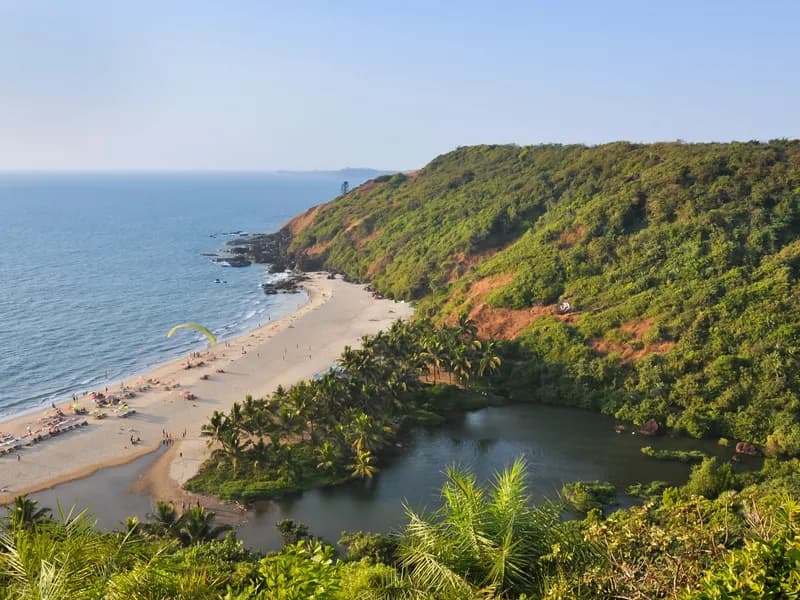
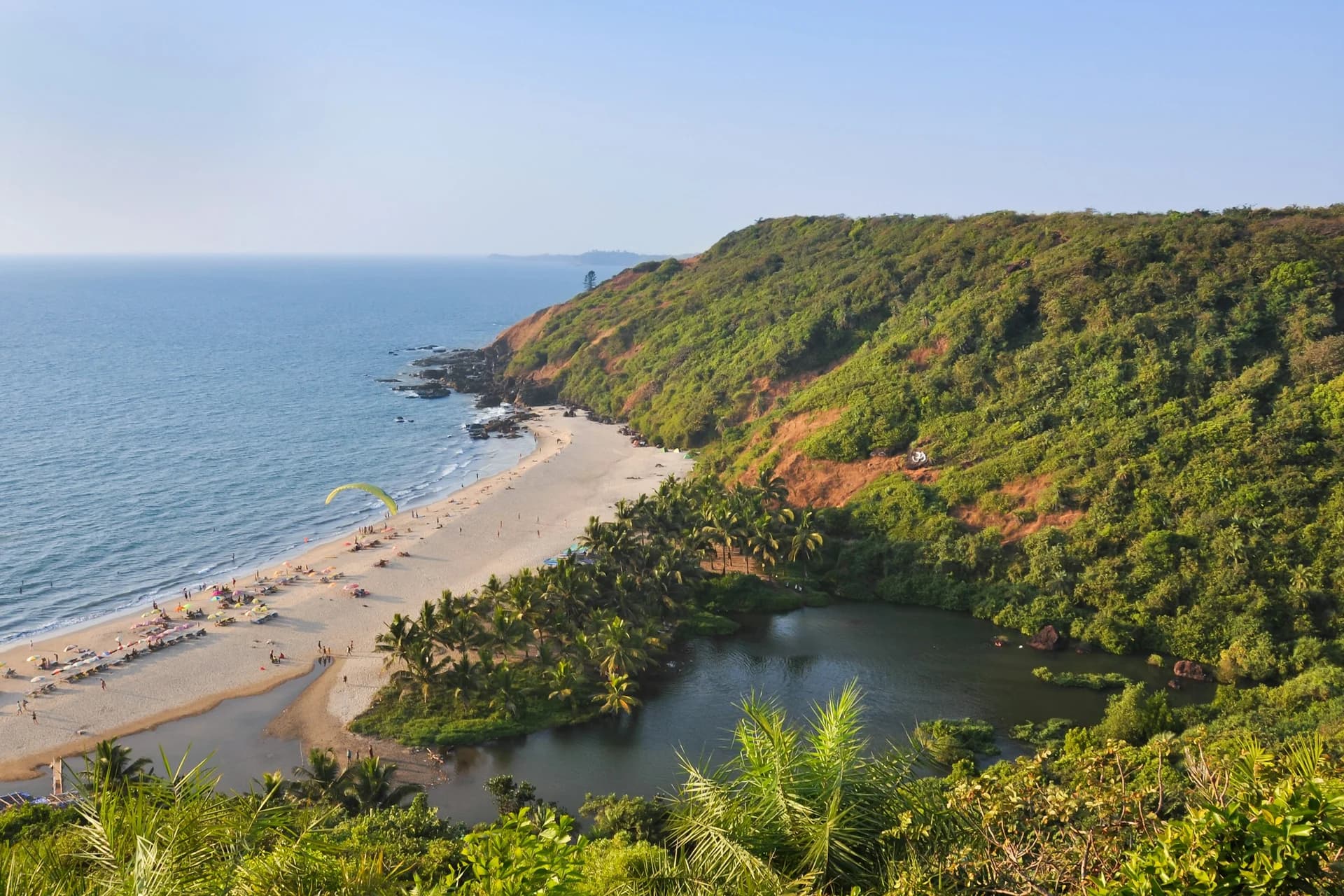
Palolem is a crescent-shaped beach in South Goa with calm, swimmable water. Check into a beach hut for 2,500 INR/night — a wooden cabin literally on the sand — and watch the sunset from a shack with your feet buried and a grilled pomfret on your plate.
That pomfret was caught the same morning. The chef will mention it not as a sales pitch but as plain fact. It costs 350 INR, and it sets a bar the rest of the trip keeps chasing.
Day 3: Kayaking to Butterfly Beach & Feni Tasting
Rent a kayak at Palolem (500 INR/hour) and paddle around the southern headland to Butterfly Beach — reachable only by water or a rough jungle trail. You'll likely have it nearly to yourself: clear water, a few fishing boats, and the kind of silence that reminds you how noisy normal life is.
In the evening, try feni. Goa's signature spirit is distilled from either cashew fruit or coconut palm sap. The cashew version smells like a tropical orchard that caught fire — an acquired taste, and one the second shot tends to settle, 40 INR per glass at a local bar in Palolem.
Day 4: Chapora Fort & Anjuna Markets
Point the scooter north. Chapora Fort is the hilltop ruin made famous by the Bollywood film "Dil Chahta Hai," with sweeping views over Vagator Beach and the Chapora River. Free entry, a 10-minute climb, no facilities — bring water.
Anjuna's Wednesday flea market (9AM–6PM) is a hippie-era holdover: jewelry, hammocks, clothing, and an atmosphere that still hums with the 1970s. Hand-tooled leather sandals go for around 400 INR.
For lunch, find a beach shack near Vagator: prawn curry rice (250 INR) and a Goan sausage appetizer. Goan sausage is the local answer to chorizo — spiced with Kashmiri chilies, vinegar, and garlic, then sun-dried. The heat builds slowly and the smokiness lingers.
The Saturday Night Market at Arpora (6PM–midnight, November–April) is the better market: live music, sharper food stalls, and genuine crafts. Save your last night for it.
Day 5: Departure & Last Swim
Open the final morning with a swim at Palolem. The water is warm, the beach is quiet, and a fishing boat heads out into the morning light while a woman sells fresh fruit from a cart.
Circle back to the beach shack where the pomfret started it all on Day 2 and order the same dish. It holds up. For more, dive into our Goa travel story.
Worth Coming Back For?
Without question — and worth skipping North Goa's party beaches (Calangute, Baga) entirely. South Goa — Palolem, Agonda, and the inland villages — is where the real Goa lives. Quieter, more beautiful, better food, and that rare feeling of finding something mass tourism hasn't reached yet.
Give Fontainhas more time, too. That neighborhood alone rewards two full days of wandering, eating, and tracing how Portuguese, Indian, and Catholic cultures fused into something entirely its own.
Goa isn't India's party state. It's India's most fascinating cultural mashup — and the seafood is just the bonus. If Jaipur is also on your itinerary, check out our Jaipur travel guide.