19 Aarhus Tips That'll Save You Money, Time, and Confusion
19 Aarhus Tips That'll Save You Money, Time, and Confusion
Aarhus rewards travelers who arrive knowing the local rhythm — and quietly punishes the ones who don't. Wander into a bike lane and you'll get an earful of bell. Reach for cash at the wrong counter and you'll pay for the privilege. Show up at Den Gamle By on a Monday and half the buildings are dark. None of that has to be your trip.
Here's the list worth having in your pocket before you go — the nineteen things that turn a good Aarhus visit into a smooth one.
Getting There & Getting Around
1. Fly Into Billund, Not Aarhus
Aarhus Airport (AAR) exists, technically, but Billund (BLL) carries far more international routes and sits only 100 km south. The shuttle bus runs about 150 DKK and takes 80 minutes. Copenhagen's airport is 3 hours away by train — doable, but it'll cost you half a day.
2. Rent a Bike on Day One
Treat this as a rule, not a suggestion. Aarhus is flat, the bike lanes are excellent, and locals cycle everywhere. The Donkey Republic app lets you grab a bike from 60 DKK/day, and most attractions sit within 15 minutes of each other on two wheels. You'll cover triple the ground you would on foot.
3. Never Walk in the Bike Lanes
This one can't be overstated. Danish cyclists are fast, disciplined, and they will not swerve for you. The bike lane is clearly marked — stay out of it on foot. When you're the one cycling, always signal a turn by extending your arm. After dark, your bike needs front and rear lights; skip them and the fine is 700 DKK.
4. Skip Taxis Entirely
The light rail (Letbanen) and buses are efficient and cheap — and bikes beat both. A taxi from the airport to the city center runs 400+ DKK. The same trip by bus comes in under 100 DKK.
Money & Budget
5. Leave Your Cash at the Hotel
Denmark is effectively cashless. You'll see people buy a single banana with an Apple Watch and not blink. Cards, contactless, and MobilePay work everywhere — even for the vendor selling strawberries at the farmers market. Some spots set a 50 DKK minimum for card payment, but that's rare.
6. Buy the Aarhus Card Immediately
The 48-hour Aarhus Card costs 449 DKK and covers free entry to ARoS (160 DKK), Den Gamle By (175 DKK), MOMU (170 DKK), plus unlimited public transport. Hit all three museums in two days and that's 505 DKK in savings — the card pays for itself before lunch on day one.
7. Supermarket Lunch Is Not Sad — It's Smart
Netto and Rema 1000 are on every corner. Build the classic Danish lunch: rugbrød (rye bread), leverpostej (liver pate), pickled herring, and a Tuborg — total cost around 50 DKK. Eat it on a bench by the harbor. That's not budget travel; that's exactly what Danes do.
8. Denmark Is Expensive — Accept It
Budget 300-500 DKK ($43-72) per person per day for food. A cafe lunch runs 100-150 DKK. A nice dinner with a beer lands at 250-400 DKK. There's no hack around it — and if you're arriving from Prague, brace for the sticker shock.
Sightseeing
9. Visit ARoS on Wednesday Night
The museum stays open until 10PM on Wednesdays. Walking the Rainbow Panorama at sunset — those colored glass panels shifting the whole city from gold to blue — is a completely different experience from the daytime version. Aim for after 6PM, once the day crowds thin.
10. Den Gamle By Is Not What You Think
It looks like a quaint old-town museum, and in part it is. But the 1970s apartment section — shag carpet, an avocado-green kitchen, a fake TV playing period shows — is quietly one of the most entertaining exhibits in Scandinavia. Budget 3-4 hours and don't rush it.
11. MOMU Is Outside Town — Take Bus 18
Moesgaard Museum sits 10 km south. Its grass-covered roof is walkable (and skiable in winter), and inside, the Grauballe Man — a 2,000-year-old bog body with facial features still intact — stays with you long after. Worth the bus ride. Allow 2-3 hours.
12. The Free Stuff Is Incredible
Marselisborg Deer Park (100+ wild deer that wander right up to you), the Dokk1 library (striking architecture, free rooftop views), the Botanical Garden, and the Infinite Bridge on Varna Beach. All free. All worth your time.
13. Time Your Cathedral Visit Right
Aarhus Cathedral is free but closes at 4PM most days, so go in the morning ahead of the tour groups. The medieval frescoes reward a slow, careful look. Allow 45 minutes.
Food & Drink
14. La Cabra for Coffee, No Exceptions
The specialty coffee at La Cabra on Mejlgade in the Latin Quarter is arguably the best cup in Denmark. The space is small, so time it off-peak. For coffee people, this is the pilgrimage.
15. Street Food Market for Lunch
The covered market near the train station packs in 30+ stalls — Korean fried chicken, smoked salmon open sandwiches, Mexican — all for 60-120 DKK. Communal seating, good energy. Arrive between 11:30AM and 1PM for the full buzz.
16. Skip the Tourist Restaurants on Åboulevarden
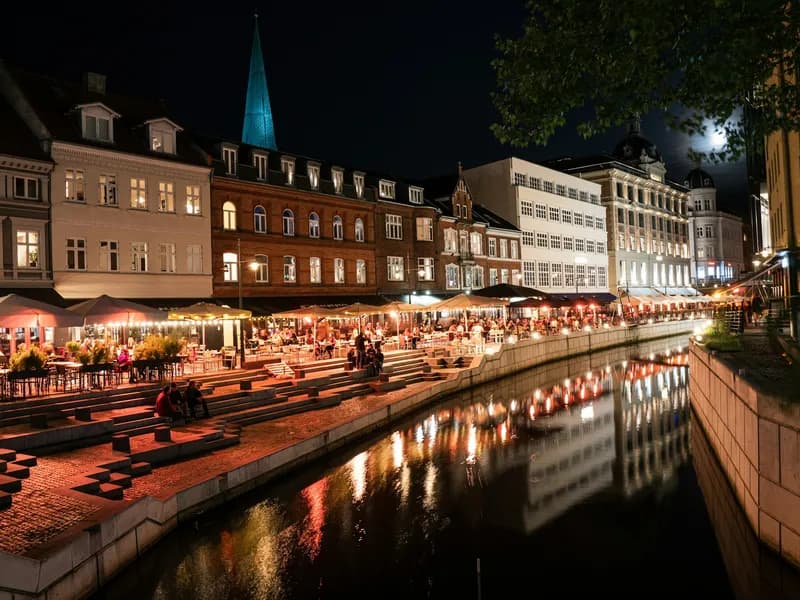
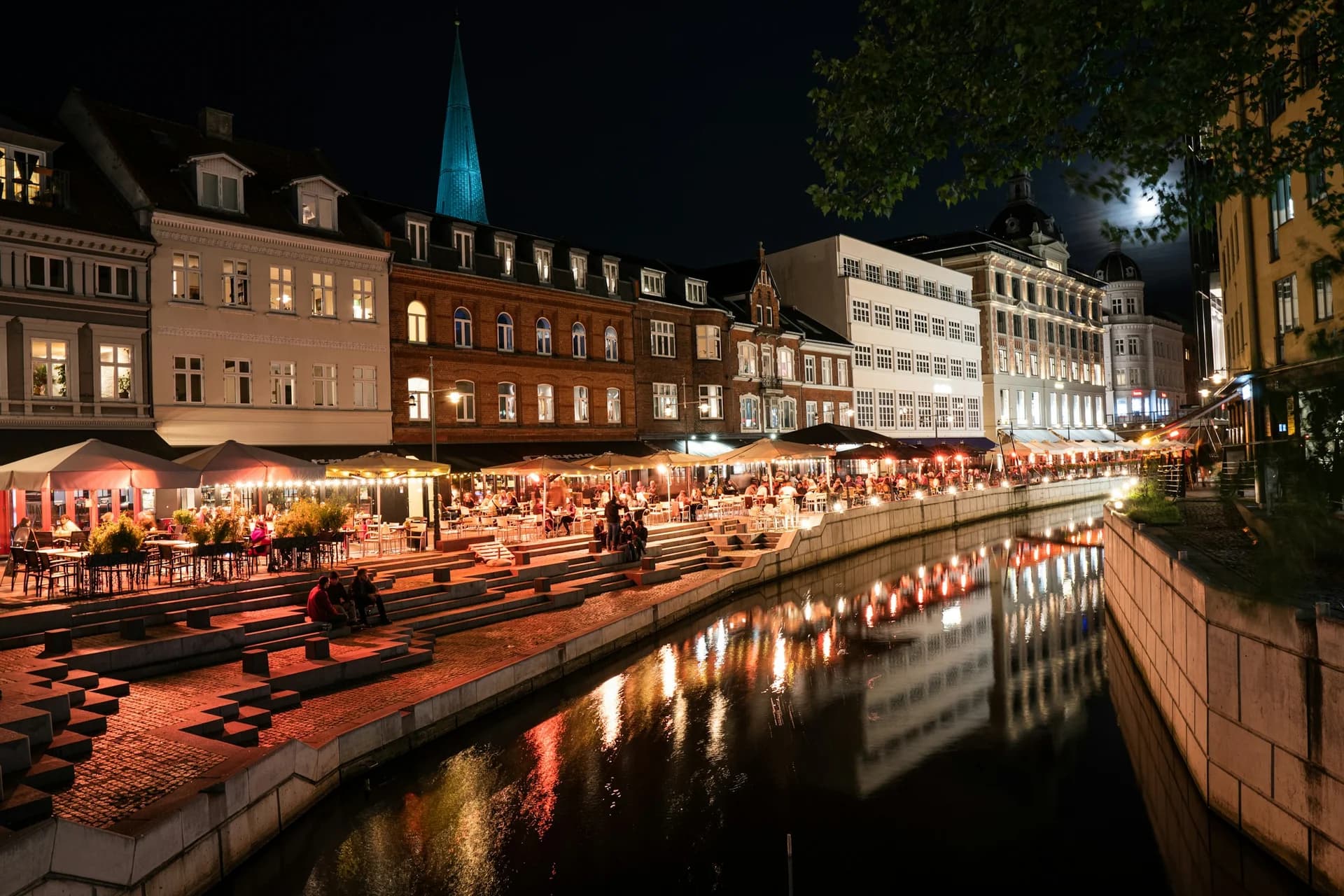
The bars and restaurants lining the canal are fine for a drink with a view, but the prices carry a tourist premium. Walk 10 minutes to the Latin Quarter for better food at better rates.
Customs & Culture
17. Danes Are Friendly — After the First Beer
Danish people can read as reserved at first. It isn't coldness — it's culture. Buy someone a Tuborg and the wall drops instantly. The Latin Quarter's bar scene is where you'll actually meet locals.
18. Don't Jaywalk
The street may be empty. There may be no cars for 200 meters. Danes still wait for the green pedestrian light — jaywalk and you'll draw looks. Just stand there with everyone else.
19. Pack Layers and a Rain Jacket
Aarhus weather turns several times a day: sun, wind, rain, sun again, all before lunch. A compact rain jacket is non-negotiable. Even in July, mornings can dip to 12°C.
Packing Essentials
- Lightweight rain jacket (non-negotiable)
- Comfortable cycling-friendly clothes
- Layers — mornings are cool even in summer
- Reusable water bottle (tap water is excellent)
- Power adapter (Type C/K plugs)
- A good appetite for rye bread
Aarhus doesn't need a hard sell. It's a city where 1,000 years of Viking history and 21st-century Scandinavian design coexist without fuss — the kind of place you plan for two days and leave wishing you'd given four. If Copenhagen is Denmark's headline, Aarhus is the article worth actually reading.