
The Complete Guanajuato Travel Guide: Tunnels, Colors, and Midnight Serenades
The Complete Guanajuato Travel Guide: Tunnels, Colors, and Midnight Serenades
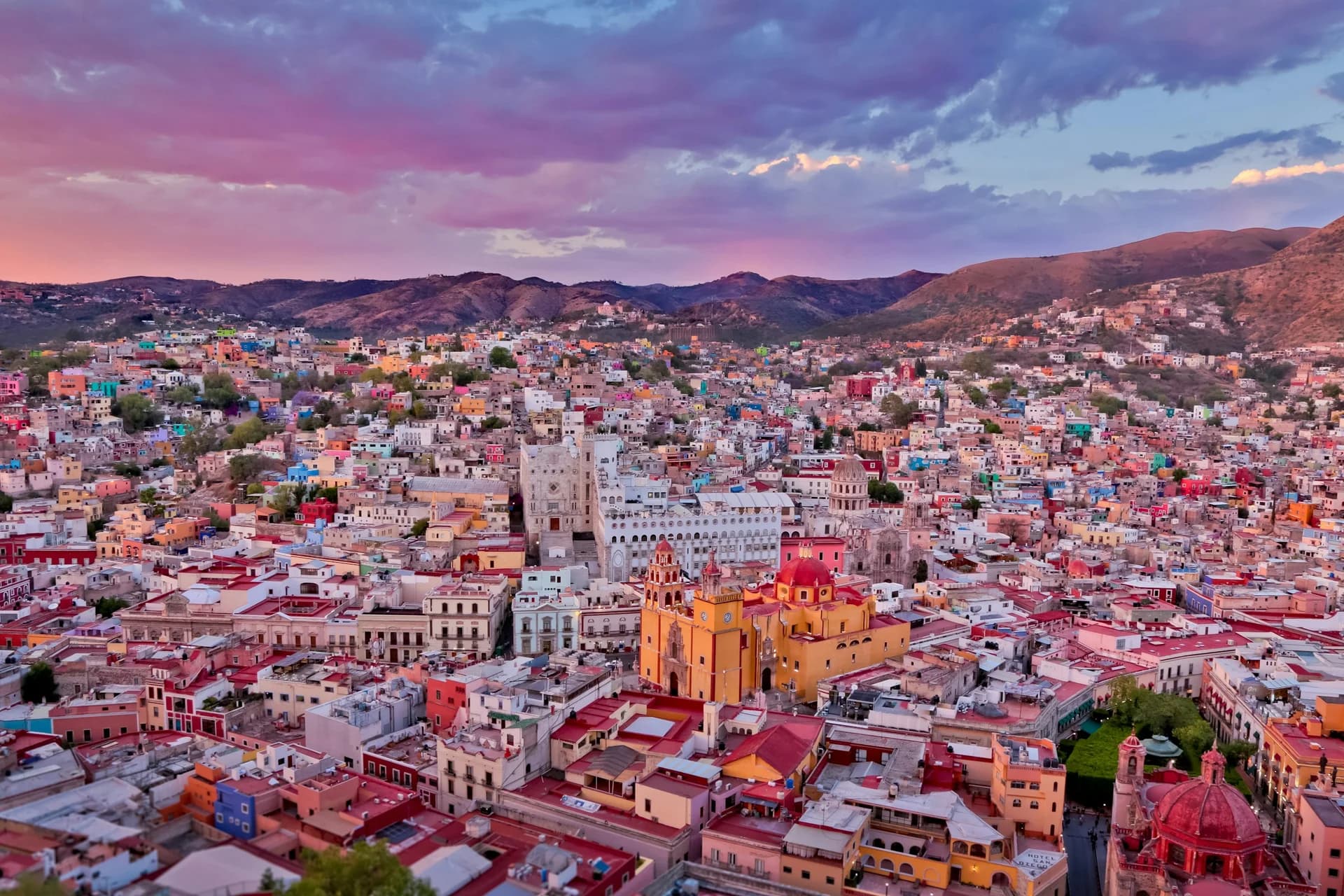
Guanajuato doesn't look real. It looks like someone built a city inside a painting — multicolored houses stacked on hillsides at impossible angles, traffic flowing through underground mining tunnels, and narrow alleys where balconies nearly touch across the gap.
This is one of Mexico's most extraordinary cities. A UNESCO World Heritage Site built on silver-mining wealth, with a university that keeps it young, a mummy museum that keeps it weird, and a troubadour tradition that keeps it romantic. Here's everything you need to know.
Overview
- Getting there: Fly into Leon/Bajio (BJX, 30 minutes). Bus from Mexico City: 5 hours (ETN or Primera Plus, $550-700 MXN)
- Best time: October-April (dry, warm, perfect). Festival Cervantino (October) is extraordinary but busy
- Budget: Very affordable. $60-80 MXN street food, $150-250 MXN restaurants, $800-1,500 MXN boutique hotels
- Getting around: Walk. The Centro is compact but extremely hilly. Comfortable shoes essential.
What to Do
The Underground Tunnels
Guanajuato's most unique feature. Colonial-era mine drainage tunnels and a former river channel were converted into underground roads. Cars and pedestrians share these atmospheric stone tunnels that wind beneath the entire city.
The longest tunnel (Calle Hidalgo) stretches 2.5 km. Walking through them is disorienting and wonderful — shafts of light pierce from street-level openings, shadows move along curved stone walls, and the echo of your footsteps follows you.
Free to walk through. Best experienced on foot (not in a car).
Callejoneada (Troubadour Street Walk)
Uniquely Guanajuatan. University student musicians dress in traditional costumes and lead groups through narrow alleys (callejones), singing, playing guitar, and telling romantic legends. Wine is passed around in a bota bag. The route winds through atmospheric streets and always stops at the Callejon del Beso.
Tours: $100-150 MXN ($5-8 USD). Depart from Jardin de la Union most evenings around 8PM. Duration: about 2 hours. One of the most charming experiences in Mexico.
Callejon del Beso (Alley of the Kiss)
A narrow alley — 68 cm wide — where opposite balconies nearly touch. Legend says lovers who kiss on the third step will have 7 years of happiness. Those who don't? 7 years of bad luck.
It's touristy and it's charming. Free to visit. Best during a callejoneada when the legend is told properly.
El Pipila Monument and Viewpoint
The single best view in the city. A statue of El Pipila — the folk hero who torched the Alhondiga door during the independence battle — sits on a hilltop with a panoramic view of Guanajuato's kaleidoscopic houses cascading into the valley.
Access: funicular ($50 MXN round trip, 3 minutes) or a steep 15-minute walk. Free to visit. Best at sunset when the city glows orange and gold.
Museo de las Momias (Mummy Museum)
Over 100 naturally mummified bodies exhumed from the city cemetery — preserved by the region's dry, mineral-rich soil. It's macabre, fascinating, and not for the squeamish. Includes mummified infants and the world's smallest mummy.
Entry: $95 MXN ($5 USD). Open 9AM-6PM daily. 20 minutes uphill from Centro.
Alhondiga de Granaditas
The massive 18th-century grain warehouse where the first major battle of Mexican Independence took place in 1810. Now a museum with murals, pre-Hispanic artifacts, and independence-era exhibits. The exterior still shows bullet marks from the battle.
Entry: $90 MXN. Closed Mondays.
Where to Eat
Mercado Hidalgo — An iron-frame market building designed by Gustave Eiffel's firm. The upstairs food stalls serve the local specialty: enchiladas mineras (enchiladas with potatoes, carrots, and cheese, $60 MXN). Also excellent for fresh juice, tamales, and gorditas.
Jardin de la Union cafes — The elegant trimmed-laurel plaza has outdoor cafe terraces perfect for people-watching. Coffee ($40-60 MXN), beer ($50-70 MXN). Not the cheapest, but the atmosphere is worth it.
Los Campos Eliseos — Traditional Mexican cuisine in a converted colonial house. Mole negro ($150 MXN), chiles en nogada (seasonal, $180 MXN). Candlelit, romantic, excellent.
Street tacos — Look for the carts near the university. Tacos al pastor, suadero, and longaniza for $20-30 MXN each. The student crowds tell you which ones are good.
Where to Stay
- Budget: Hostels around the university area, $200-400 MXN ($11-22 USD)
- Mid-range: Boutique hotels in Centro, $800-1,500 MXN ($45-85 USD)
- Splurge: Converted colonial mansions, $2,000-4,000 MXN ($110-220 USD)
Getting Around
Walk. The Centro Historico is compact but hilly — steep stairways, narrow alleys, and cobblestones that require good shoes. City buses run along the main tunnels ($8 MXN). Taxis within Centro: $40-60 MXN.
Cars are nearly useless in the historic center. Streets are too narrow and there's nowhere to park.
Budget Breakdown
| Category | Daily Budget (MXN) | Daily Budget (USD) |
|---|---|---|
| Hostel dorm | 250-400 | $14-22 |
| Food (3 meals) | 200-350 | $11-19 |
| Activities | 100-200 | $6-11 |
| Transport | 50-100 | $3-6 |
| Total | $600-1,050 | $33-58 |
Guanajuato is one of the most affordable destinations in Mexico.
Day Trips
San Miguel de Allende (1.5 hours by bus, $150-200 MXN, Primera Plus) — Colonial jewel with art galleries, hot springs, and the pink Parroquia. Perfect 2-day combination with Guanajuato.
Dolores Hidalgo (1 hour by bus) — The birthplace of Mexican Independence. Visit the church where Father Hidalgo gave his famous "Grito" cry. Try the exotic ice cream flavors (shrimp, avocado, beer) sold on the main plaza.
Safety
The tourist center is safe and well-patrolled. The broader state has security concerns, but Centro Historico and the main tourist routes are fine. Stick to well-traveled areas. Use authorized taxis or Uber. Avoid driving outside the city at night.
The Contrarian Take
Everyone does the Mummy Museum. It's fine — interesting, slightly disturbing, worth 45 minutes. But the Alhondiga de Granaditas is the more meaningful cultural experience. The murals inside tell the story of Mexican Independence, the building itself is a battlefield, and the history is genuinely moving. Most tourists prioritize the mummies and rush through the Alhondiga. Do the opposite.


