The Complete Guide to Mykonos: Everything You Need to Know for 2026
The Complete Guide to Mykonos: Everything You Need to Know for 2026
Mykonos is two islands in one. There's the daytime version — whitewashed alleys, windmills, turquoise water, Instagrammable everything. And there's the nighttime version — beach club DJs, 20 EUR cocktails, crowds that don't thin until 5AM.
Both versions are real. This guide covers both without pretending one is better than the other.
Overview
Mykonos is a small Cycladic island (86 km², about 10 km across) in the central Aegean Sea. Permanent population: 10,700. Summer population: over 100,000. That math tells you everything about the vibe.
The island is known for three things: nightlife, beaches, and architecture. It delivers on all three, but at prices that make your credit card weep. This is Greece's most expensive island by a significant margin.
Best Time to Visit
The season runs May through October, but the sweet spots are:
- Late May to mid-June: Warm (24-28°C), clubs are open, beaches aren't packed, hotels are 30-40% cheaper than peak.
- September: Similar weather to June, sea is warmer (25°C), crowds thin after the first week, prices drop.
- July-August: Peak everything. 30-33°C heat. Maximum nightlife. Maximum crowds. Maximum prices. The meltemi wind blows strongly from the north, which keeps temperatures bearable but makes north-facing beaches choppy.
Avoid: October onward. Many businesses close, ferry schedules shrink, and the island goes quiet — which is either peaceful or depressing depending on your outlook.
Getting There
By Air: Mykonos International Airport (JMK) is 4 km from Mykonos Town. Direct flights from Athens (45 minutes, from 40 EUR on Aegean or Olympic), plus seasonal direct flights from London, Paris, Milan, and other European cities. The airport is tiny — expect chaos during changeovers.
By Ferry: From Athens' Piraeus port, high-speed ferries take 2.5 hours (from 45 EUR) and conventional ferries take 5 hours (from 25 EUR). SeaJets and Golden Star are the main operators. Book at directferries.com or ferryhopper.com. Peak season ferries sell out — book 2-3 weeks ahead.
Where to Stay
Mykonos Town (Chora) is the center of everything — nightlife, restaurants, shopping, ferry port. Stay here if you want walkability and nightlife access. Hotels from 150-500 EUR/night in summer.
Platis Gialos and Psarou are south coast beach areas with resort hotels. Calmer, beach-focused, 10-15 minutes by bus from town.
Ornos is a family-friendly middle ground — sheltered beach, restaurants, regular bus to town. Slightly cheaper.
Budget option? There isn't one, really. The cheapest rooms in peak season start around 100 EUR/night for basic. Hostels are rare. Self-catering apartments on Booking.com offer the best value.
What to Do
Mykonos Town (Chora)
The labyrinthine whitewashed alleys were deliberately designed to confuse pirates — and they'll confuse you too. Get lost on purpose. Matoyianni Street is the main shopping lane (designer boutiques, jewelry). The Aegean Maritime Museum (4 EUR) and Folklore Museum (free) provide culture breaks.
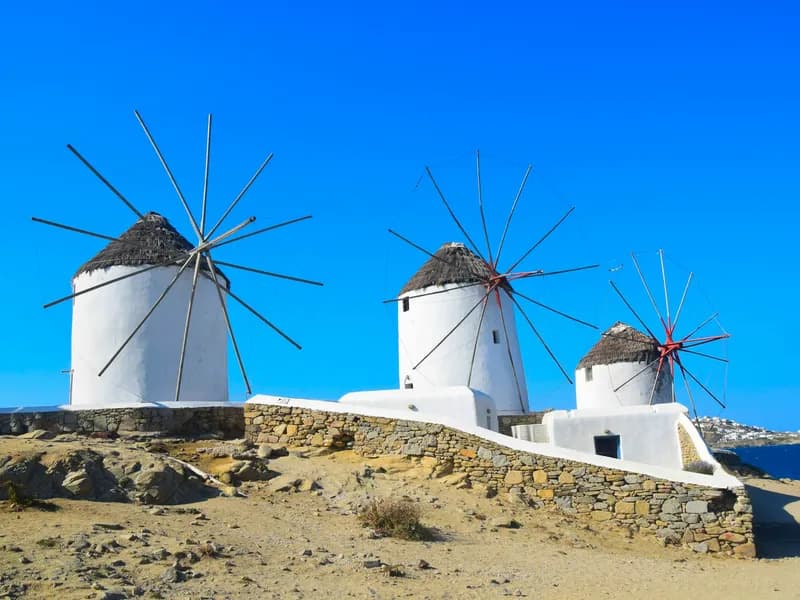
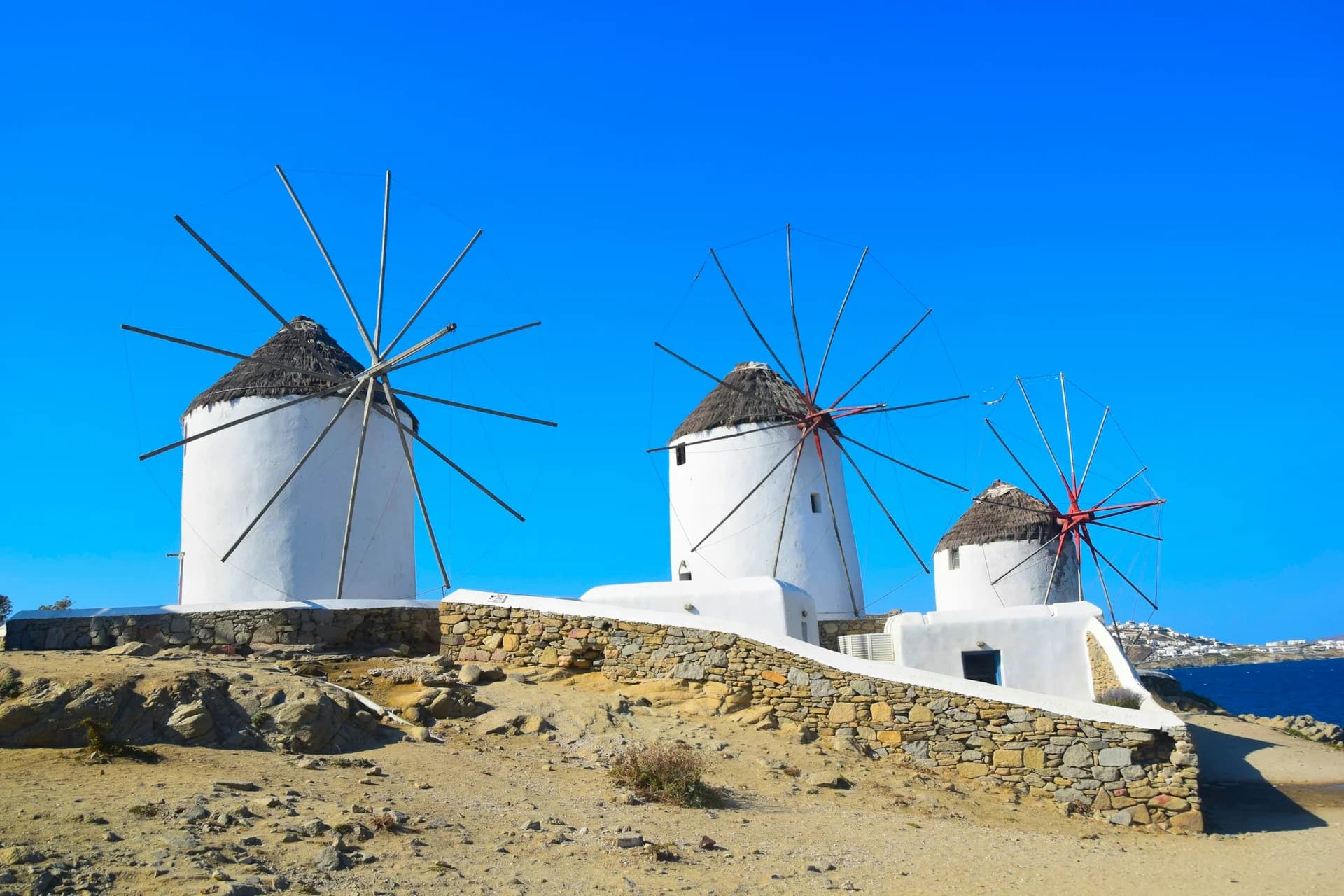
The Windmills (Kato Mili) on the hill above the harbor are Mykonos's most photographed landmark. Free, open anytime, best at sunset. Boni's Windmill is open as a small museum in summer.
Little Venice (Mikri Venetia)
18th-century houses with wooden balconies hanging over the sea. The waterfront bars — Caprice and Galleraki — are prime sunset spots. Cocktails run 15-20 EUR. Get there by 6:30PM in summer to secure a table. The nearby Paraportiani Church is the most photographed church in Greece.
Delos Archaeological Site
The sacred island birthplace of Apollo and Artemis — one of Greece's most important archaeological sites, UNESCO-listed. If ancient history excites you, Rhodes offers 3,000 years of layered ruins from Greek temples to Crusader fortresses. Boats depart from Mykonos old port at 9AM, 10AM, 11AM (round trip about 22 EUR, 30 minutes each way). Site entry: 12 EUR.
The Terrace of the Lions, ancient mosaics, and theatre are the highlights. Allow 3-4 hours on the island. Book ahead — morning boats sell out days in advance in peak season. Book at delostoursgreece.com or at the ticket kiosk the day before.
Critical: there's zero shade on Delos. Bring hat, sunscreen, water. No food vendors. Last boat back at 3PM or 5PM depending on the schedule.
Beaches
Party beaches: Paradise and Super Paradise have all-day DJ sets, sunbed service (30-80 EUR/day depending on row), and bottle service. Tropicana and Cavo Paradiso at Paradise; JackieO' Beach at Super Paradise. Free areas exist at the edges.
Quiet beaches: Agios Sostis on the north coast — no sunbeds, no bars, no crowds. Crystal-clear water, sandy bottom. Kiki's Taverna above it is legendary (no reservations, cash only, expect a 30-60 minute wait, about 15-20 EUR/person for grilled meat and fish).
Family beaches: Ornos and Platis Gialos — sheltered, shallow, facilities.
Wind shelter guide: When the meltemi blows from the north (July-August), north-facing beaches (Panormos, Agios Sostis) get choppy. Head to south-facing beaches (Psarou, Platis Gialos, Paradise) for calmer water.
Food
Budget eating on Mykonos takes effort. Waterfront restaurants in the old port charge premium prices for average food. Here's how to eat well without mortgage-level bills:
- Bakeries: Tyropita (cheese pie) for about 3 EUR. There are several good ones on the back streets of Chora.
- Supermarket: Self-cater from the AB Vasilopoulos near the bus station.
- Inland tavernas: Walk 2-3 streets from the waterfront for 30-40% lower prices. Joanna's Niko's Place and M-eating serve authentic food at fair prices.
- Fish warning: Fish is typically priced per kilogram (50-80 EUR/kg). Always ask what a portion costs before ordering.
A basic dinner for two at a waterfront restaurant: 60-100 EUR. A smarter dinner at an inland taverna: 35-50 EUR.
Budget
Mykonos is expensive by any European standard. Daily budget estimates (per person):
- Budget: 100-150 EUR (hostel/basic room, bakery meals, free beaches, bus transport)
- Mid-range: 200-350 EUR (3-star hotel, restaurant meals, one beach club day)
- Luxury: 500+ EUR (boutique hotel, fine dining, VIP beach club, nightlife)
Shoulder season (May, late September) cuts hotel prices by 40-50%, which makes the biggest difference to your total spend.
Getting Around
The KTEL bus system connects Chora to all major beaches for about 2 EUR per ride. Frequent service in summer. Catches: the last bus from some beaches leaves at 8PM.
ATV/quad rental: 30-50 EUR/day. The most popular option but accidents are common and insurance often doesn't cover ATVs. Drive carefully — Mykonos roads are narrow and other drivers are not cautious.
Car rental: useful but parking in Chora is impossible. If you rent a car, park at the designated lots outside town and walk or bus in.
Taxis: scarce. Pre-book via the Mykonos taxi app.
Safety
- Meltemi wind can cause ferry cancellations — always have a buffer day before your flight home
- Drink spiking exists at nightlife venues — watch your drinks
- UV index hits 9-10 in summer — SPF 50 minimum, reapply constantly
- ATV accidents are the most common tourist injury — wear helmets, don't speed
- Overcharging at restaurants: always check menu prices before sitting down
Useful Phrases
For another Cycladic comparison, check our Mykonos vs. Santorini breakdown to decide between the two most famous Greek islands.
English is spoken almost everywhere in tourist areas, but a few Greek words go a long way:
- Yasas (hello/goodbye)
- Efharisto (thank you)
- Parakalo (please/you're welcome)
- Nero (water)
- Logariasmo (the bill)