Mykonos vs. Santorini: The Honest Comparison Nobody Wants to Make
Mykonos vs. Santorini: The Honest Comparison Nobody Wants to Make
Every year, roughly 3 million tourists face this decision: Mykonos or Santorini? They're both Cycladic islands. They're both whitewashed. They're both expensive. And every travel forum on the internet has a thread asking which one is "better."
Here's the thing — they're not competing for the same prize. Choosing between them is like choosing between a house party and a candlelit dinner. Both are great. But they serve completely different moods.
I've spent two weeks on each over the past three years. Let me break it down honestly.
The Vibe
Mykonos is energy. It's beach clubs with DJs playing at noon. It's Little Venice cocktails at sunset followed by clubs that don't peak until 4AM. It's a town designed to confuse pirates that now confuses well-dressed tourists looking for their hotel. The permanent population is 10,700; in August, it swells past 100,000. The island runs on an engine fueled by Aperol and bass drops.
Santorini is atmosphere. It's caldera views from infinity pools. It's watching the sun sink below the Aegean from Oia while 800 people collectively gasp. It's volcanic black and red sand beaches. It's wine from grapes grown in volcanic soil. The energy is romantic, contemplative, and slightly overwhelmed by its own beauty.
Mykonos: 9/10 for energy | Santorini: 9/10 for romance
Beaches
Mykonos wins. And it's not particularly close.
Mykonos has sandy beaches with turquoise water on the south coast — Paradise, Super Paradise, Platis Gialos, Psarou, Ornos. The north coast has quiet gems like Agios Sostis (no sunbeds, no crowds, Kiki's Taverna above it serving grilled food for 15-20 EUR — cash only, expect a wait).
Santorini's beaches are volcanic and dramatic but not exactly comfortable. Red Beach is photogenic but the red pebbles are sharp and the cliff behind it has rock-fall warnings. Perissa and Kamari have black sand that gets scorching hot in summer. The water is deep and drops off quickly.
If beaches are your priority, Mykonos. No question. Beach sunbeds at Paradise and Super Paradise: 30-80 EUR/day depending on position and club.
Mykonos: 9/10 | Santorini: 5/10
Views & Scenery
Santorini wins. The caldera is one of the most dramatic natural features in the Mediterranean — a submerged volcanic crater ringed by cliffs with whitewashed villages cascading down the edge. There's nothing like it in Mykonos. There's nothing like it anywhere.
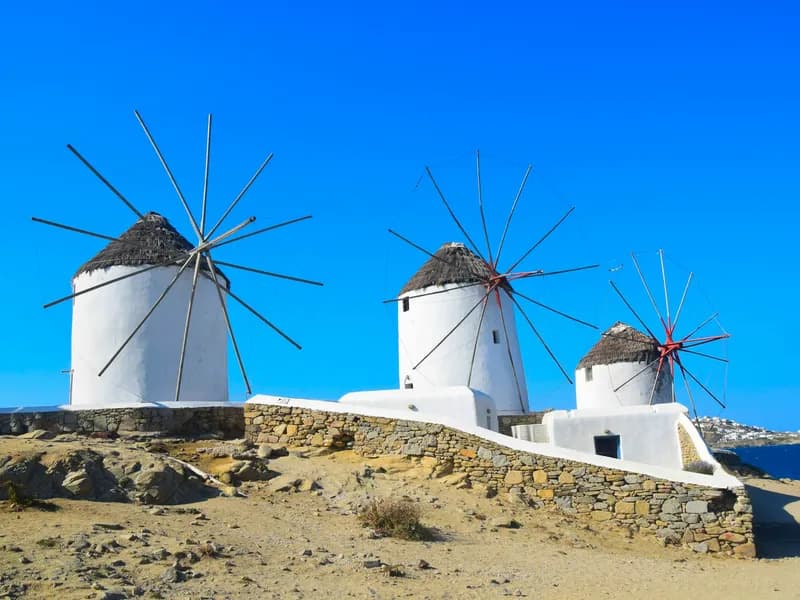
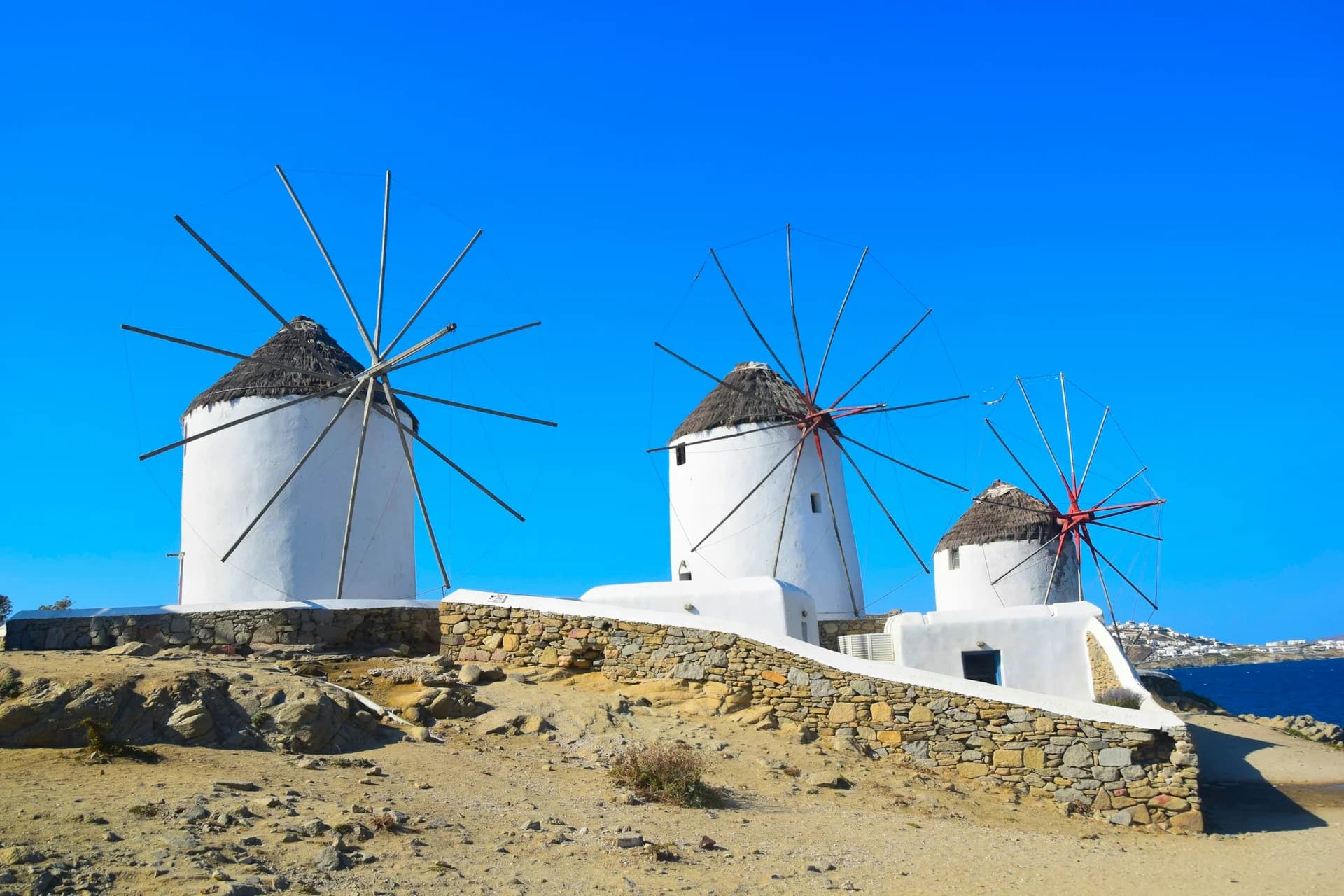
Mykonos is pretty — the windmills, Little Venice, the Cycladic architecture — but it's flat. The highest point is 341 meters and the landscape is mostly brown hills with scattered beaches. Beautiful in the way a well-designed village is beautiful. Not beautiful in the way a geological wonder is beautiful.
Mykonos: 6/10 | Santorini: 10/10
Nightlife
Mykonos, overwhelmingly. Pacha, Amnesia, Ushuaia (entry: 30-80 EUR depending on DJ), plus dozens of waterfront bars in Chora that stay open until dawn. Paradise Beach's Tropicana and Cavo Paradiso are open-air clubs where the party runs continuously from afternoon through sunrise.
Santorini has bars — nice bars, with caldera views. But it closes early by Greek island standards. There are no superclubs. The nightlife is cocktails at sunset, maybe a wine bar after dinner, and bed by 1AM. If you're looking for the kind of night that starts at midnight and ends at sunrise, you're on the wrong island.
Mykonos: 10/10 | Santorini: 4/10
Food
Roughly tied, but different. Both are expensive. Mykonos waterfront dinners run 60-100 EUR for two. Santorini caldera-view restaurants are similar.
Mykonos has better budget eating: bakeries with tyropita for 3 EUR, inland tavernas with 30-40% lower prices than the waterfront. The trick is walking 2-3 streets back from the port.
Santorini has a unique wine angle. Assyrtiko grapes grown in volcanic soil produce crisp whites that don't exist elsewhere. Wine tasting at Santo Wines or Venetsanos costs about 15-20 EUR for 4-5 wines. The local fava (split pea purée) and tomatokeftedes (tomato fritters) are Santorini-specific dishes worth seeking out.
Mykonos: 7/10 | Santorini: 7/10
History & Culture
Mykonos edges it thanks to Delos. The sacred island of Apollo's birth — one of Greece's most significant archaeological sites, UNESCO-listed — is a 30-minute boat ride from Mykonos old port (round trip about 22 EUR, site entry 12 EUR). The Terrace of the Lions, ancient mosaics, and amphitheatre are extraordinary.
Santorini has the Akrotiri archaeological site — a Minoan city preserved by volcanic ash around 1627 BC, sometimes called the "Pompeii of the Aegean." Entry about 12 EUR. It's fascinating but smaller and less varied than Delos.
Both islands have their own town-museum charm. Mykonos's Chora is a disorienting maze. Santorini's Oia and Fira are caldera-edge gems.
Mykonos: 7/10 | Santorini: 6/10
Budget
Neither is cheap. But gun to my head, Mykonos has slightly better budget options — hostels exist (rare on Santorini), bakery eating is cheaper, and bus transport (about 2 EUR per ride) covers most beaches.
Santorini's caldera-side hotels start at 200 EUR/night and go into the thousands. Staying on the eastern side (Kamari, Perissa) brings prices down to 80-120 EUR/night but you lose the views that are the entire point.
| Expense | Mykonos | Santorini |
|---|---|---|
| Mid-range hotel (summer) | 200-350 EUR | 250-500 EUR |
| Dinner for two | 60-100 EUR | 60-120 EUR |
| Beach sunbed | 30-80 EUR | 10-20 EUR |
| Club entry | 30-80 EUR | N/A |
| Key attraction | 34 EUR (Delos) | 12 EUR (Akrotiri) |
Mykonos: 5/10 | Santorini: 4/10
The Verdict by Traveler Type
| You Are... | Go To... |
|---|---|
| Party-focused | Mykonos |
| Romantic couple | Santorini |
| Beach lover | Mykonos |
| Photographer | Santorini |
| Solo traveler | Mykonos |
| Honeymooners | Santorini |
| History enthusiast | Mykonos (for Delos) |
| Wine lover | Santorini |
| Budget traveler | Neither (try Naxos or Rhodes) |
| Family with kids | Neither (try Paros) |
Can You Do Both?
Yes, and many people do. Ferries connect Mykonos and Santorini in about 2-3 hours (from 40 EUR one-way). The catch: you need minimum 3 days on each island to do them justice. Anything less and you're spending your time on ferries instead of beaches.
If you only have one week in the Cyclades, pick one island and explore it properly. The ferry day eats into limited time.
My personal pick? Mykonos for a trip with friends. Santorini for a trip with a partner. Both for a two-week Cycladic blowout that will empty your bank account and fill your camera roll.
No wrong answers. Just different right ones. For the full Mykonos experience, read our complete Mykonos guide.