
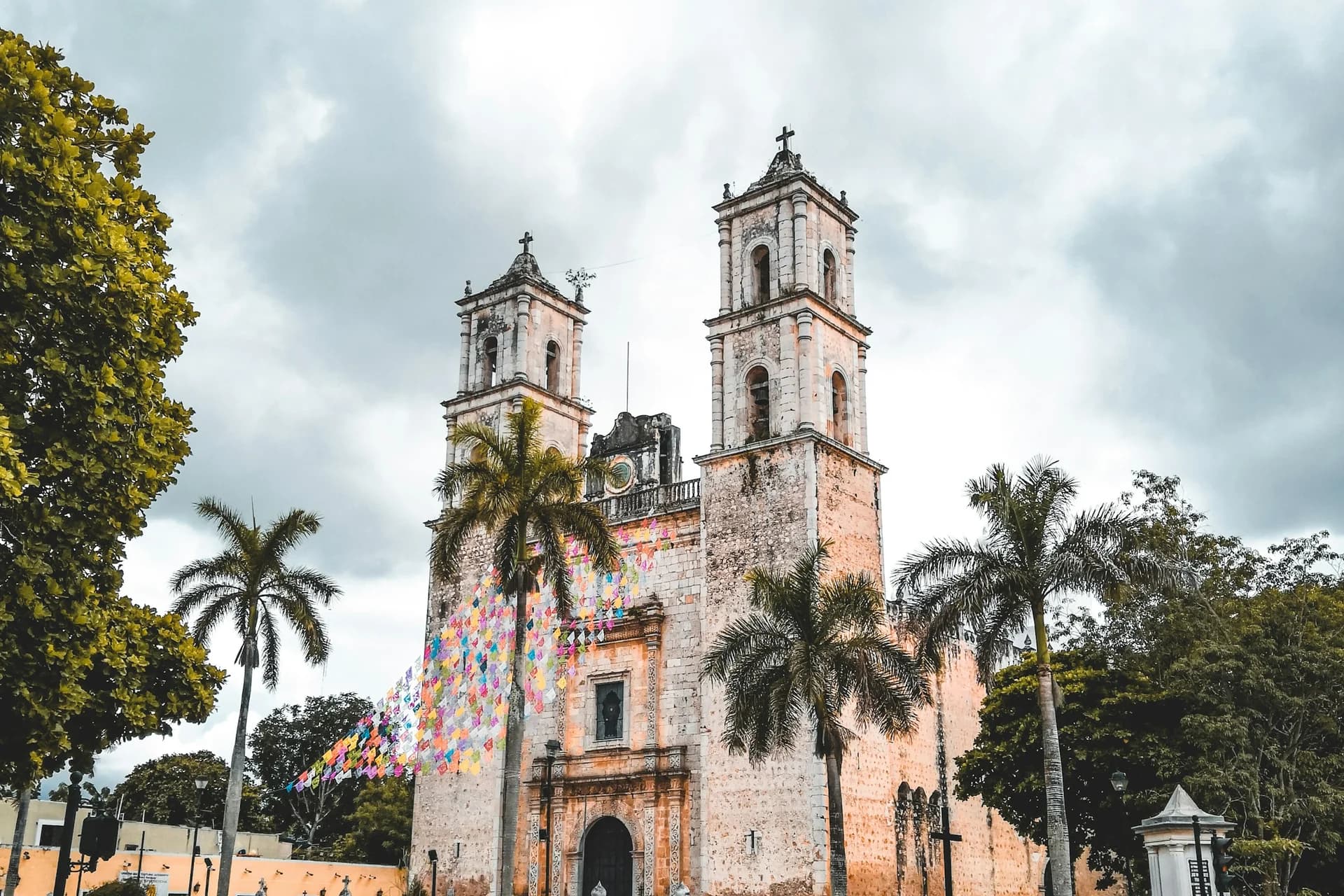
A Conversation with Don Miguel: What It's Really Like Living in Valladolid
A Conversation with Don Miguel: What It's Really Like Living in Valladolid
Don Miguel Canche Poot is 68 years old. Born in a small village outside Valladolid, he taught mathematics at the local secondary school for 35 years, raised four children in a colonial house on Calle 41, and has watched his town transform from a sleepy Yucatecan backwater into a destination international travelers actively seek out.
Find him on the main plaza most mornings, a horchata in one hand and the local newspaper in the other. Buy him a second horchata, and he'll tell you exactly what it means to belong to this place.
On Growing Up Near Valladolid
He grew up in a pueblo 12 kilometers south, where Maya was the language of the house and his mother barely spoke Spanish. He came to Valladolid for secondary school, stayed for the teachers' college, and never left. The city was quieter then — the plaza held maybe two restaurants, both serving the same food, and the cenotes were simply where children swam. Nobody charged entry, because nobody imagined tourists would line up to jump into a hole in the ground.
The shift came about 15 years ago. Cancún's visitors started hunting for day trips beyond the hotel zone. Chichén Itzá had always drawn crowds, and people began stopping in Valladolid on the way. Then someone posted Cenote Suytun to Instagram — and the rest writes itself.
His Favorite Spots
Ask about cenotes and he steers you away from the famous ones. His own favorite sits between Valladolid and Tinum — he won't name it, because naming it would ruin it — a hole in the limestone his family has swum in since he was a boy. No ticket booth, no changing rooms. Just a wooden ladder and water so clear you can see the bottom at 15 meters.
For visitors, he points to Cenote Zaci as the most honest experience. It's right in the center of town, entry runs 80 pesos, and the afternoon there stays simple: you swim, you watch the cliff jumpers, you eat at the restaurant above. Not a production. Just a cenote.
Breakfast, for 40 years, has meant the Municipal Market — panuchos with turkey and pickled onion, orange juice, coffee, 30 pesos. Some of the women cooking there are the daughters and granddaughters of the women who cooked there when he was young. For something special, he and his wife go to La Casona on the plaza, where the sopa de lima is the real thing — not the hotel version drowning in lime and short on broth, but the kind that tastes like a grandmother's kitchen.
And the dish most tourists miss entirely? Lomitos de Valladolid — pork in a spiced tomato sauce you won't find in Cancún, Mérida, or Mexico City. It belongs to Valladolid, served at the market stalls for 50–70 pesos. Tell people the town has a signature dish and they look surprised. It does.
On Tourism and Change
His feelings about the boom are complicated, and honestly so. His nephew runs a cenote tour company that employs 12 people. The crumbling colonial houses along Calzada de los Frailes are now boutique hotels — preserved precisely because there's finally money to preserve them.
Some of the cenotes, though, have edged toward amusement parks: rope swings, zip-lines, platforms built for the perfect photo. A cenote was a sacred place to the ancient Maya, who believed these pools were portals to Xibalba, the underworld. That history is worth carrying lightly into the water with you.
The most common mistake travelers make is treating Valladolid as a stop on the road to Chichén Itzá — one night, an early departure, and the town slips past unseen. They miss the convent light show on Friday evenings. They miss Calzada de los Frailes at golden hour, when the pastel buildings glow. They miss the ice cream at Sorbetería El Colón, scooping since 1907 in flavors you've likely never tried — mamey, pitaya, sour orange. Valladolid isn't a pit stop. It's a destination, and it asks for three days minimum.
There's a larger truth underneath it. Travelers arrive thinking they're visiting Mexico, and they are — but a very specific Mexico. The Yucatán peninsula carries its own language (Maya), its own food (cochinita pibil, papadzules, sopa de lima, none of them from central Mexico), its own architecture, its own history as a place that was briefly its own country. Ask Don Miguel if he's Mexican and the answer comes back proud: "Soy yucateco." Yucatecan first.
His Recommendations
With three days, here's the rhythm he recommends.
Day one — the town. Start at the plaza, eat at the market, walk Calzada de los Frailes to the convent, swim in Cenote Zaci in the afternoon, and end with marquesitas on the plaza after dark.
Day two — the cenotes. Hire a taxi. Hit Suytun in the morning for the light beam, then Samulá and Xkeken (they're adjacent, so you see both), and finish at Cenote Oxman at the hacienda for the rope swing and lunch.
Day three — Chichén Itzá at dawn. Leave at 7AM and arrive as the gate opens at 8, buying yourself two hours before the buses roll in. Stop at Cenote Ik Kil on the way back, and keep the afternoon free for shopping and rest.
Have a fourth day? Make it Ek Balam, where you can still climb the Acrópolis pyramid — the view from the top and the stucco monster mouth make it the best-kept secret in the Yucatán.
A word on what to skip: the souvenir shops on the main plaza, which sell the same imported crafts as Cancún at marked-up prices. Go instead to the hammock workshops outside town or the craft shops on Calzada de los Frailes for genuine Yucatecan work — a hand-woven hammock will outlast 20 years, while a plaza fridge magnet lasts until you lose it. And when Valladolid is done with you, the car-free Caribbean island of Isla Holbox sits just a few hours north, or Cancún waits for your flight home.
As for safety, Don Miguel only laughs. Yucatán is one of the safest states in Mexico — this is a town where he walks home at midnight without a second thought. The cenotes, the roads, the buses: all safe. The real hazard is the habanero in the salsa, which visitors reliably underestimate.
Parting Words
One last thing he wants you to carry: learn a single phrase in Maya. Just one. "Bix a beel?" — how are you? Say it to a vendor at the market or a driver at the wheel, and watch the face change. It tells them you see them — not only the cenotes and the pyramids and the food, but the people who have lived here for a thousand years, since before the pyramids were ruins.
That's the heart of Valladolid. The best of it isn't underground or behind museum glass. It's standing right in front of you, selling panuchos for 15 pesos.
When the second horchata is gone, Don Miguel folds his newspaper and walks home across the plaza, waving to three people on the way. Every one of them waves back.


